
Best CPAP Mask for You: 5 Types Compared | Ueno Snoring Clinic
We frequently hear the following concerns from patients who have just started CPAP therapy:
- The mask feels so tight I can’t fall asleep
- My nose or cheeks start to hurt
- Air leaks out from gaps around the mask
- The mask shifts out of place when I roll over
- Air leaks from my mouth and wakes me up
- I feel a sense of suffocation and end up removing it without realizing it
If these problems continue, it’s easy to start feeling like “CPAP just isn’t for me” or “I can’t keep doing this.”
But the discomfort of CPAP often has nothing to do with the treatment itself — the real issue may simply be that the mask you’re currently using doesn’t fit your face, breathing style, or sleeping position.
CPAP masks come in several different types: nasal masks that cover the entire nose, masks that sit just under the nostrils, and full-face masks that cover both the nose and mouth.
Switching to a mask that suits you better can improve air leakage, tightness, nasal pain, and feelings of suffocation — and make it far easier to stick with CPAP long term.
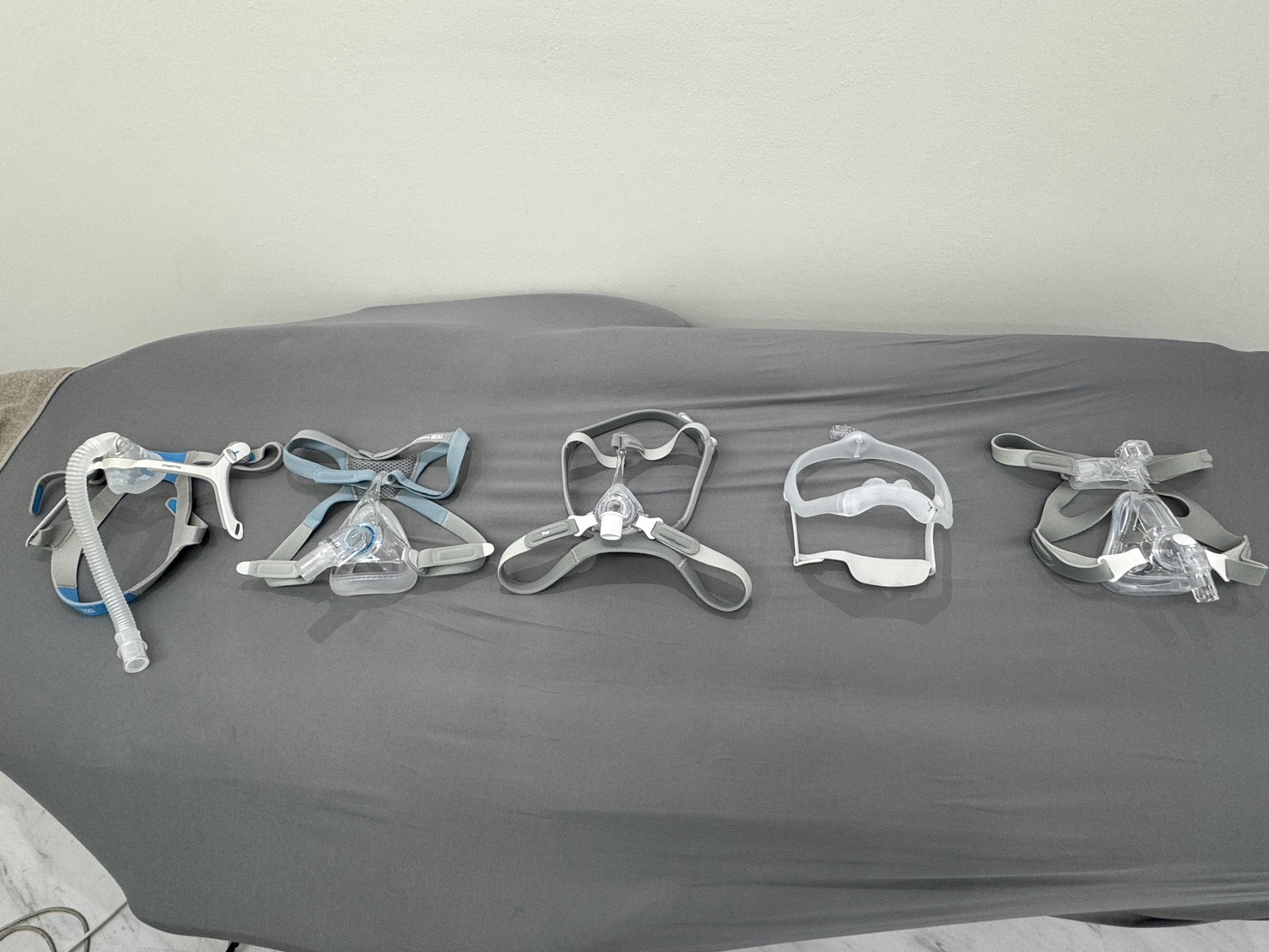
In this article, we compare five of the most commonly used CPAP masks, based on real-world fit and comfort.
- ResMed AirFit N20
- Fisher & Paykel Vitera
- Philips Pico Nasal Mask
- Philips DreamWear Nasal Mask
- Philips Amara View
We break down the features, benefits, cautions, and who each mask is best suited for, from a physician’s perspective.
Ueno Snoring Clinic offers a range of options tailored to each patient’s condition, including insurance-covered sleep testing and CPAP management, as well as self-pay laser treatment for snoring. If you’d like to find out which treatment is right for you, please book an initial consultation.
Details of the tests and treatments offered at Ueno Snoring Clinic can be found here


Reviewed by Our Director
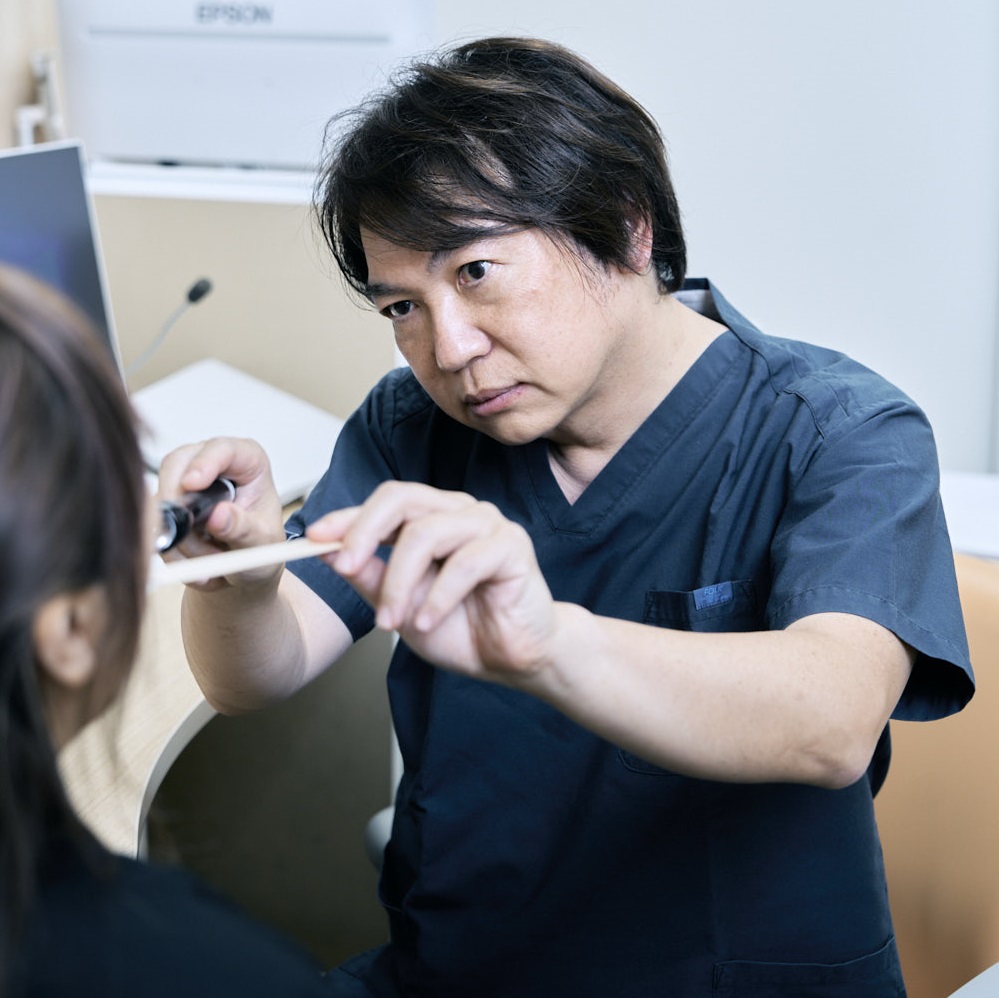
Kazuyuki Sugaya
Director / Anesthesiologist, Ueno Snoring Clinic
With more than 20,000 general anesthesia cases, our director provides care centered on the diagnosis and treatment of snoring and sleep apnea, tailored to each patient. [Insurance-Covered] Ueno Snoring Clinic
This article has been medically reviewed by Director Kazuyuki Sugaya and explains, in plain language, medical information about CPAP mask types, fitting, air leakage, and feelings of pressure or tightness.
Snoring and sleep apnea syndrome can stem from many causes — airway structure, body weight, nasal congestion, and lifestyle habits among them. Ueno Snoring Clinic doesn’t rely on a single treatment approach; instead, we recommend a treatment plan based on your test results and individual condition.
Insurance-Covered Testing & CPAP Management
- Home sleep test / PSG: Evaluates apnea and drops in oxygen during sleep
- CPAP therapy: The standard treatment that uses air pressure to keep the airway open
- Ongoing CPAP management: Checking usage data, residual AHI, and mask leak
Self-Pay Treatment Tailored to Your Condition
- Laser snoring treatment: Suited to snoring driven mainly by soft palate vibration
- Medical weight-loss support: An option for patients whose weight contributes to airway narrowing
Struggling with CPAP Mask Discomfort?
The discomfort of CPAP is often not the treatment itself, but rather a mismatch in mask type, size, tightness, or positioning. Please talk to your physician or CPAP provider before stopping treatment on your own.
CPAP Discomfort Is Not Your Fault
CPAP is a highly effective treatment for sleep apnea syndrome.
At the same time, many people aren’t used to sleeping with a mask on their face right after starting treatment, and it’s common to feel discomfort or a sense of unfamiliarity in the early days.
Especially right after starting, people can feel close to giving up on CPAP for reasons like these:
- The mask presses painfully against the face
- Air leaks toward the eyes
- The mask has to be pulled tight to stop leaking
- It shifts out of place when rolling over
- A stuffy nose makes breathing feel difficult
- Air leaks out through the mouth
- The inside of the mask gets humid and uncomfortable
- There’s a feeling of suffocation or pressure
- The mask has been removed unconsciously by morning
When these problems come up, the answer isn’t to grit your teeth and push through, and it isn’t to stop treatment right away either.
What matters is reassessing the mask type, size, positioning, and how tightly it’s fastened.
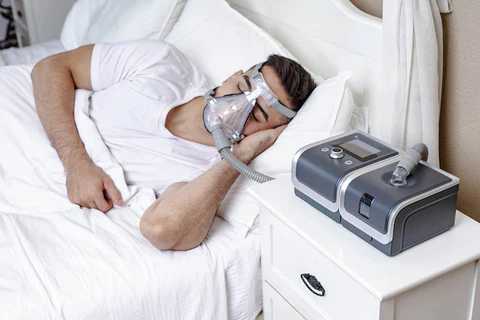
Mask Choice Makes a Huge Difference in CPAP Comfort
The CPAP unit itself delivers air at a set pressure to keep your airway from collapsing during sleep.
But it’s the mask that actually delivers that air from the machine to your nose or mouth.
When a mask doesn’t fit your face properly, it can cause the following problems:
- Air leaks out through gaps between the mask and skin
- The airway doesn’t receive enough of the prescribed pressure
- Leaking air blows into the eyes
- The mask gets over-tightened to stop leaks, causing facial pain
- Sleep is interrupted repeatedly through the night
- Using CPAP at all starts to feel unbearable
On the other hand, choosing a mask that fits your face and sleep style properly makes it easier to get a good seal without over-tightening, and improves overall comfort.
Before concluding that “CPAP just doesn’t work for me,” it’s worth reconsidering your mask first.
Main Types of CPAP Masks
CPAP masks generally fall into three broad categories.
| Mask Type | Coverage Area | Best Suited For | Things to Watch For |
|---|---|---|---|
| Nasal Mask | Covers the entire nose | People who breathe through the nose and want a stable seal | Can cause pressure around the bridge and sides of the nose |
| Under-the-Nose Style | Sits just under the nostrils | People who prioritize a clear field of view, an open feeling, and ease of rolling over | Precise alignment of the nostrils and cushion is important |
| Full-Face Mask | Covers both nose and mouth | People with significant mouth breathing or nasal congestion | Larger contact area can cause a feeling of suffocation |
Comparing 5 CPAP Masks
| Product | Type | Seal | Openness | Rolling Over | Mouth Breathing | Best Suited For |
|---|---|---|---|---|---|---|
| AirFit N20 | Nasal | High | Standard | Relatively stable | Not suited | Those who prioritize seal and stability |
| F&P Vitera | Full-Face | High | Somewhat low | Tends to stay stable | Supported | Those with mouth leaks or nasal congestion |
| Philips Pico | Nasal | Standard | High | Standard | Not suited | Those who want simplicity and a clear field of view |
| DreamWear Nasal | Under-the-Nose | Depends on fit | Very high | Easy | Not suited | Frequent movers who dislike a closed-in feeling |
| Amara View | Low-Contact Full-Face | Depends on fit | High | Relatively easy | Supported | Mouth breathers who find standard full-face masks uncomfortable |
*The above reflects general characteristics. Actual fit and seal quality vary by individual.
AirFit N20 | A Nasal Mask Built for Seal and Stability
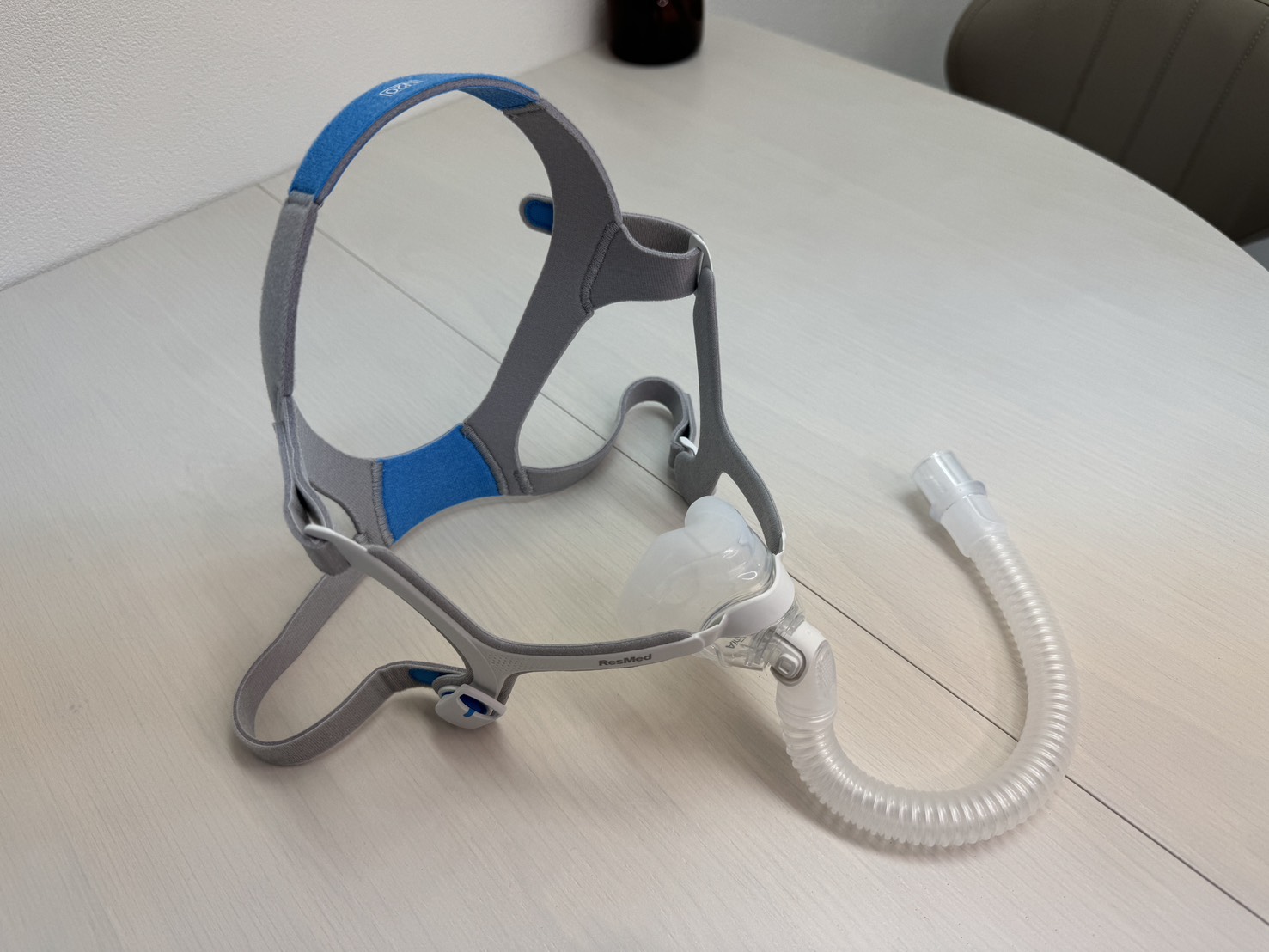
The AirFit N20 is a nasal mask that covers the entire nose.
This is very likely the mask the largest number of patients are using — it holds a substantial share of the Japanese market and is one of the first masks new CPAP users are often given to try. Many patients start with it alongside ResMed’s AirSense series. Because it covers the area around the nose with a cushion, it tends to offer a fairly stable seal, and doesn’t shift much even when you roll over.
Benefits of the AirFit N20
- Covers the nose thoroughly, making a strong seal easier to achieve
- Stays in place well during sleep
- Fits a relatively wide range of face and nose shapes
- Often becomes the standard starting choice when beginning CPAP
Things to Watch For with the AirFit N20
- Can cause pressure around the bridge and sides of the nose
- Over-tightening can leave marks on the skin
- Significant mouth breathing can cause air to leak through the mouth
- Can be difficult to use while wearing glasses
Who the AirFit N20 Is Best For
- People who breathe comfortably through the nose
- People who want to reduce air leakage
- People who want a mask that stays stable even when rolling over
- People who prioritize a strong seal over an open feeling
F&P Vitera | A Full-Face Mask Suited to Mouth Breathing and Nasal Congestion
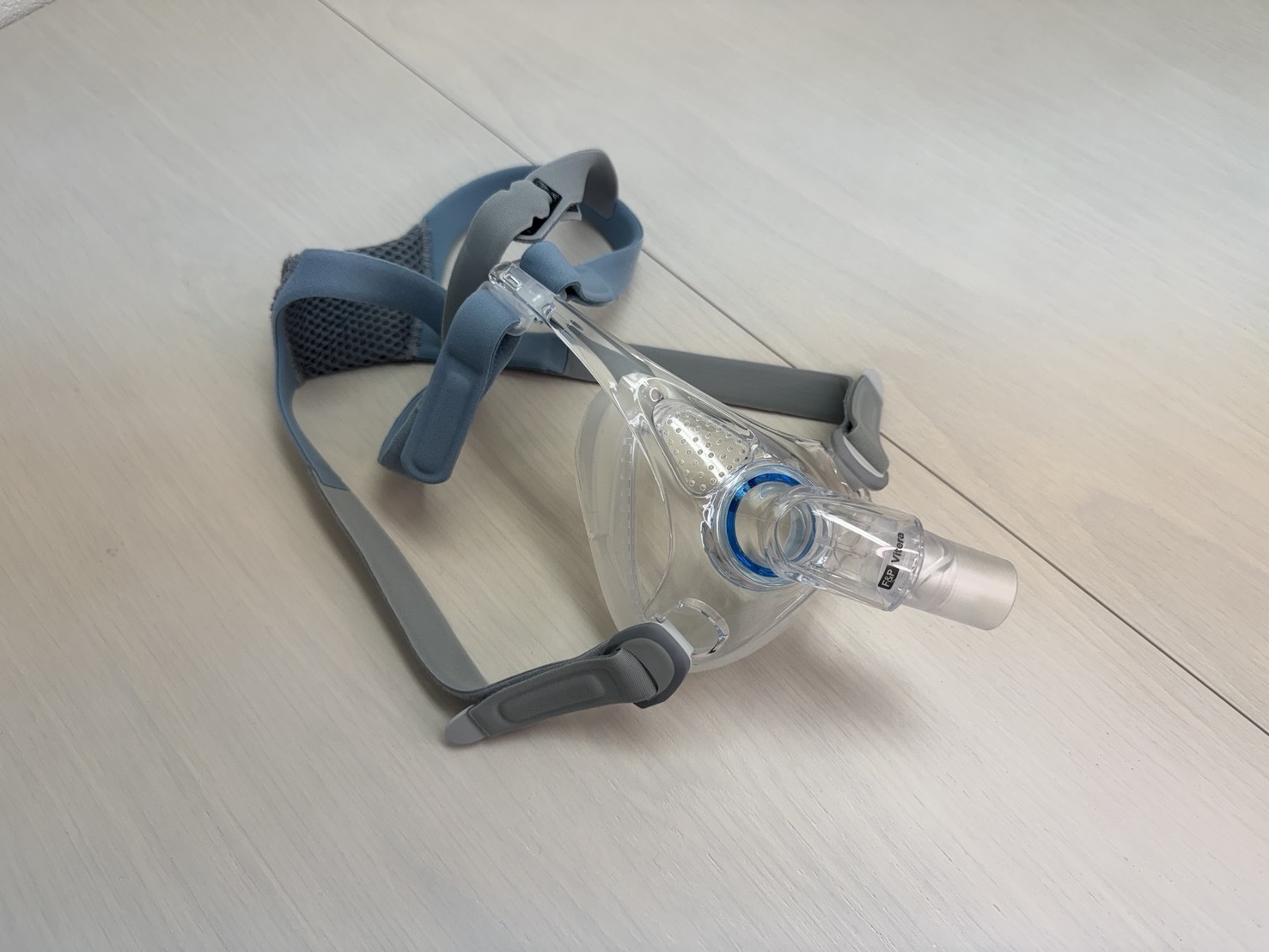
The F&P Vitera is a full-face mask that covers both the nose and mouth. It’s one of the most widely used full-face masks available. Like the AirFit N20, many patients pair it with ResMed’s AirSense series when starting CPAP.
It’s well suited to people whose mouth tends to open during sleep, or who find breathing through the nose alone difficult due to congestion.
Benefits of the F&P Vitera
- Allows breathing through both the nose and mouth
- Helps prevent air from escaping through the mouth
- Delivers CPAP pressure effectively even for strong mouth breathers
- Tends to offer a relatively stable, secure fit
Things to Watch For with the F&P Vitera
- Covers a larger area of the face
- Can feel more confining than a nasal mask
- The inside of the mask can become humid
- Side-sleepers should be mindful of contact with the pillow
Who the F&P Vitera Is Best For
- People whose mouth opens during sleep
- People with significant nasal congestion
- People who wake up due to mouth leaks
- People who struggle to maintain treatment pressure with a nasal mask
Philips Pico Nasal Mask | Simple, With a Clear Field of View
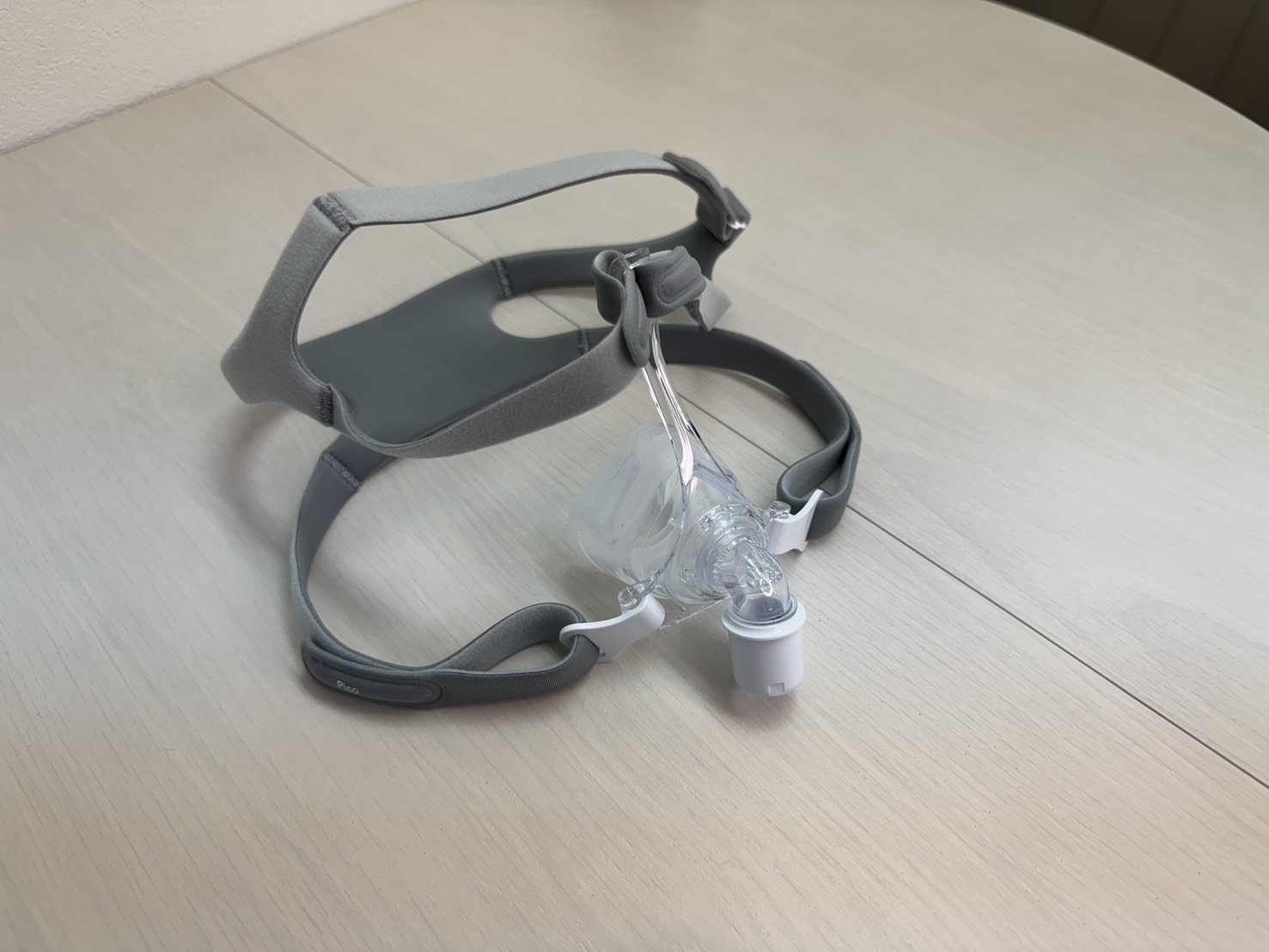
The Philips Pico is a relatively simple nasal mask.
With fewer parts and a compact frame around the mask, it’s known for offering an unobstructed field of view.
Compared to the two masks above (AirFit N20 and F&P Vitera), Philips masks also use a noticeably softer silicone where it contacts the skin. That said, softer isn’t automatically better — fit is highly individual, and opinions on comfort vary from person to person.
Benefits of the Philips Pico
- Simple structure
- Doesn’t obstruct your field of view much
- Easy to understand how to fit and wear
- Convenient for people who wear glasses before bed
- Easy to clean and maintain day to day
Things to Watch For with the Philips Pico
- The cushion makes contact around the nose
- Not well suited for people who struggle to breathe through the nose
- Air leaks if the mouth opens
- Fit varies depending on face and nose shape
Who the Philips Pico Is Best For
- People who want a simple mask
- People who prioritize a clear field of view
- People with stable nasal breathing
- People who find complex headgear cumbersome
DreamWear Nasal Mask | Easy to Roll Over In, With an Open Feel
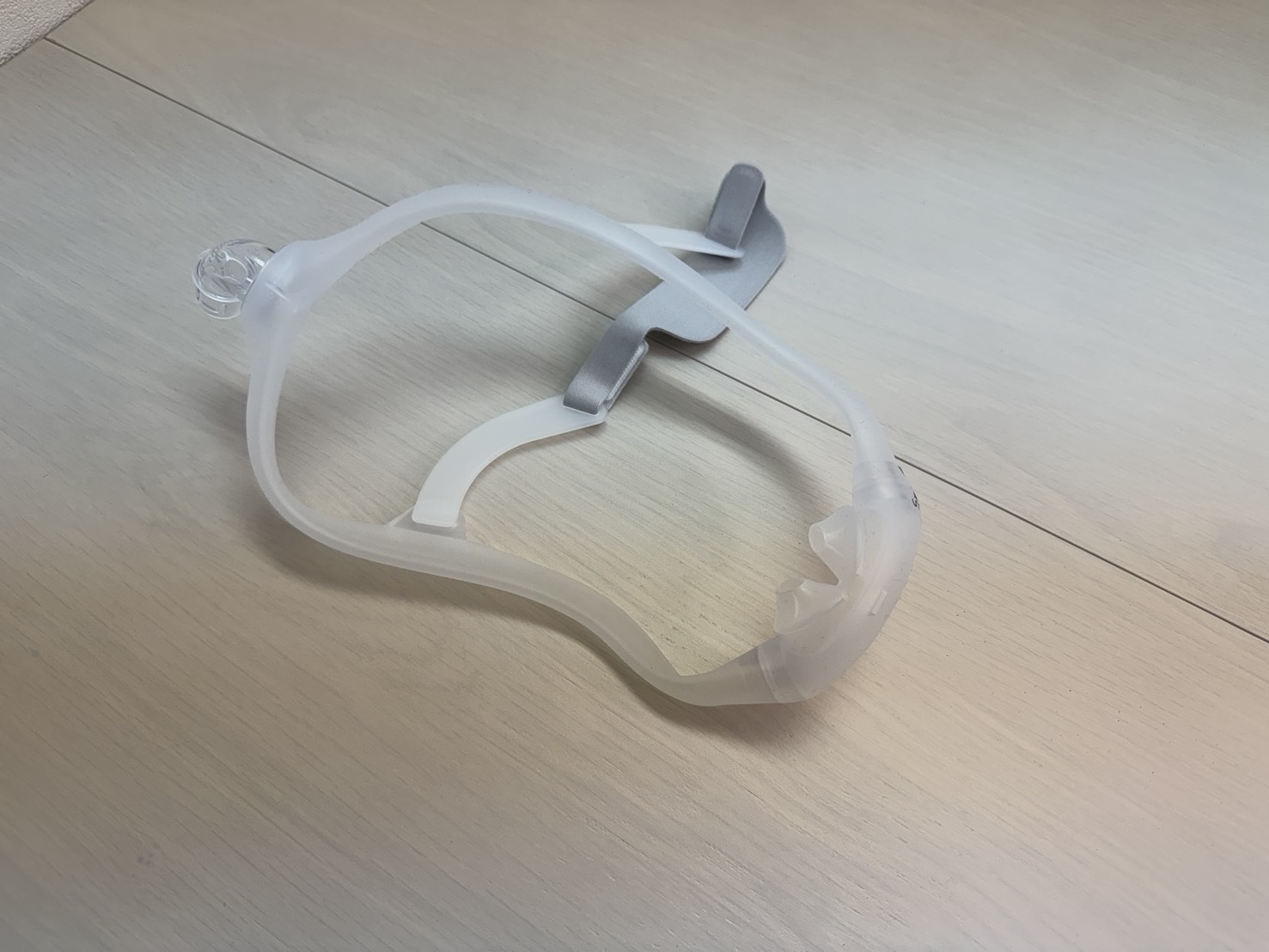
Rather than covering the entire nose, the DreamWear nasal mask places a cushion just under the nostrils.
Unlike other masks, its tube connector sits on top of the head rather than in front of the face or chest, which makes it much easier to roll over comfortably. It also uses a very soft silicone across a large portion of its skin-contact area.
Benefits of the DreamWear Nasal Mask
- Doesn’t put pressure on the bridge of the nose
- Tubing stays out of the way in front of the face
- Easy to roll over comfortably
- Clear field of view
- Less feeling of confinement
- Comfortable for side-sleepers as well
Things to Watch For with the DreamWear Nasal Mask
- Precise alignment between the nostrils and cushion is important
- If positioned incorrectly, air leaks can occur easily
- Mouth breathing can cause air to leak through the mouth
- Contact with the pillow can sometimes restrict the airflow path
Who the DreamWear Nasal Mask Is Best For
- People who roll over frequently
- People who mostly sleep on their side
- People who dislike pressure on the bridge of the nose
- People bothered by tubing hanging in front of the face
- People who dislike a confined feeling from the mask
Amara View | A Full-Face Mask With a Wide Field of View
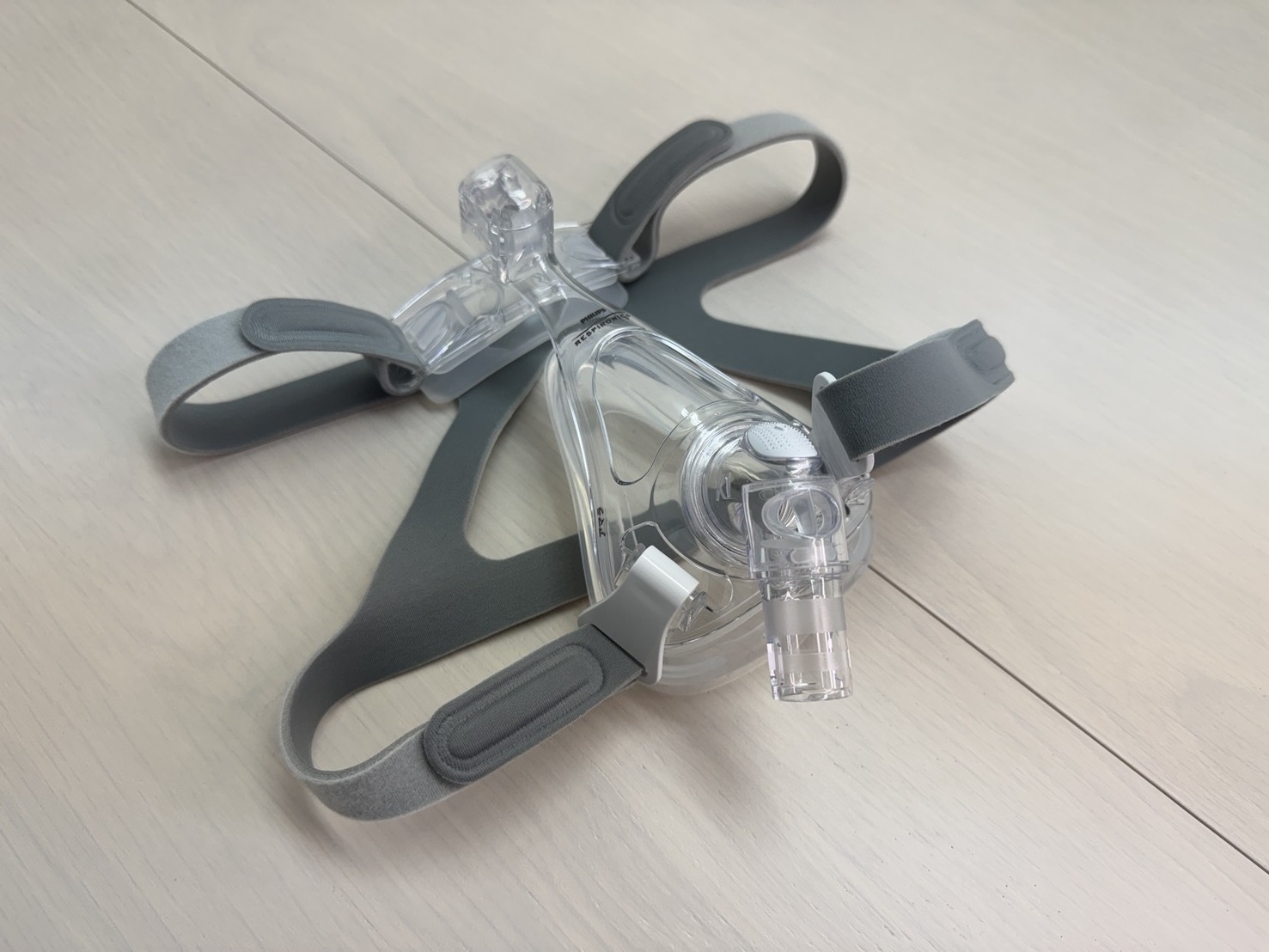
The Amara View is a full-face mask that covers the mouth while delivering air from just under the nose.
Because it doesn’t cover the bridge of the nose the way a typical full-face mask does, it accommodates mouth breathing while keeping your field of view relatively open.
Benefits of the Amara View
- Accommodates mouth breathing
- Doesn’t put pressure on the bridge of the nose
- Wider field of view than a standard full-face mask
- Helps reduce a feeling of confinement
- Convenient for wearing glasses before bed
Things to Watch For with the Amara View
- Positioning under the nose needs to be precise
- Depending on fit, leaks can occur around the nose
- Can feel unstable if the size doesn’t match your face
- Has a larger contact area than a standard nasal mask
Who the Amara View Is Best For
- People who breathe through the mouth
- People who feel confined by a standard full-face mask
- People who dislike a mask touching the bridge of the nose
- People who want to reduce mouth leaks while keeping an open feeling
Reconsider Your Mask Before Giving Up on CPAP
Air leakage, nasal pain, a feeling of confinement, mouth leaks, and difficulty rolling over can often be improved by changing masks or adjusting fit. After reviewing your current setup, please consult your physician or CPAP provider.
Choosing a CPAP Mask by Goal
If you want to reduce air leakage
The top priority is choosing a cushion size that matches your face and nose shape.
If you want a fairly reliable seal, candidates include the AirFit N20, which covers the whole nose, or the Vitera, which covers both nose and mouth.
That said, over-tightening the headgear to try to stop leaks can deform the cushion and end up causing even more leakage.
If air leaks from your mouth
If you’re using a nasal mask and your mouth opens, CPAP air can escape through your mouth.
If mouth leaks continue, it’s worth considering nasal congestion treatment, humidity settings, sleep position, a chin strap, or switching to a full-face mask.
The Vitera and Amara View, which cover both nose and mouth, are good options for people with significant mouth breathing.
If you roll over frequently
If your mask or tubing gets pulled every time you roll over, the DreamWear nasal mask — which connects its tubing at the top of the head — is a strong candidate.
Securing the CPAP tubing near the bed or routing it over the top of the pillow can also help reduce pulling.
If you dislike a feeling of confinement
If you dislike the sensation of your whole face being covered, a mask with less skin contact and a wider field of view is a better fit.
The DreamWear nasal mask, Pico, and Amara View are all types that tend to preserve a relatively open field of view.
If your nose hurts
If you have pain around the bridge or sides of your nose, check the following:
- Is the mask size too small?
- Is the headgear too tight?
- Has the cushion degraded over time?
- Has the mask shifted up or down?
- Could you switch to a style that doesn’t cover the bridge of the nose?
Avoid Over-Tightening Your CPAP Mask
When air is leaking, many people instinctively try to tighten the headgear further.
But a tighter mask doesn’t necessarily mean a better seal.
The cushion is designed to inflate with incoming CPAP air and conform to your face to create a seal.
Over-tightening can crush the cushion and reduce its ability to seal, leading to problems such as:
- Pain around the nose or cheeks
- Red marks left on the skin
- A deformed cushion that leaks even more
- Pressure around the head or jaw
- Wearing the mask becoming unbearable
It’s important to adjust the mask while lying down with the CPAP running, so you’re fitting it under actual treatment pressure.
Signs You Should Talk to Someone About Changing Masks
If the following continue happening, your current mask may not be the right fit:
- You wake up from air leaks nearly every night
- The mask has come off by morning
- You feel pain in your nose, cheeks, or the bridge of your nose
- Skin redness or irritation persists
- Your eyes feel dry or irritated
- Your mouth feels very dry
- Wearing the mask causes anxiety or a feeling of suffocation
- The mask shifts every time you roll over
- You can’t wear it long enough to make CPAP effective
- Your residual AHI or mask leak numbers stay high
Rather than giving up on CPAP, talk to your physician or CPAP provider about trying a different type of mask.
Is It OK to Sleep on Your Side While Wearing CPAP?
There’s no problem sleeping on your side while using CPAP.
In fact, for people whose tongue tends to fall backward and worsen apnea when lying on their back, side-sleeping can actually be beneficial.
That said, when you’re on your side, the pillow can press against the mask and push it out of place, causing air leaks.
If you frequently sleep on your side, check the following:
- Is the mask being pressed hard against the pillow?
- Is the tubing being pulled?
- Does the cushion stay in place while side-sleeping?
- Are you using a pillow with the right height?
- Could the tubing be routed from the top of your head instead?
For people who roll over frequently, a mask with a top-of-head tube connector, or a style where tubing doesn’t hang in front of the face, can be easier to live with.
A Poor Mask Fit Can Affect Treatment Effectiveness Too
If large amounts of air are leaking from the mask, the prescribed pressure may not be reaching your airway adequately.
Also, if you’re woken up repeatedly by air leaks or discomfort, your sleep quality can suffer even if your apnea itself has improved.
CPAP management doesn’t just track “whether the machine was used” — it also looks at data such as:
- Hours of use per day
- Number of days used
- Residual AHI
- Mask leak
- Treatment pressure
- Nighttime waking and subjective symptoms
If mask leak is high, we check fitting technique, size, cushion wear, and whether air is leaking through the mouth.
Who to Talk to About Changing Your CPAP Mask
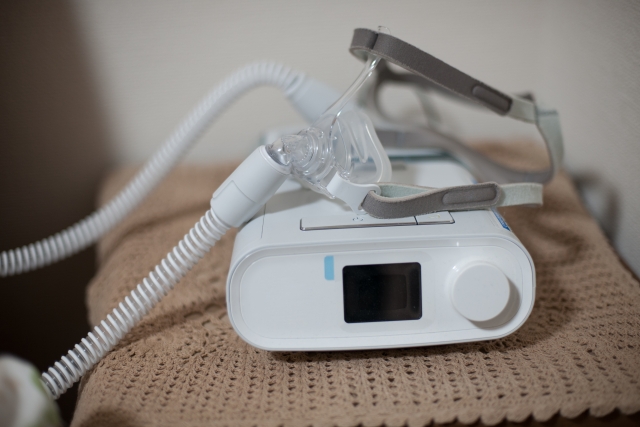
If you’re having trouble with your CPAP mask, the first step is talking to the provider that supplies your CPAP equipment.
If they can’t resolve the issue, or if treatment data, pressure settings, or medical judgment are needed, talk to the medical facility managing your CPAP care.
In general, this process tends to go smoothly:
- Clearly identify where the mask hurts, leaks, or feels uncomfortable
- Confirm the name and size of the mask you’re currently using
- Ask your provider about fitting technique and available replacement masks
- Consult your physician if needed
- Review your CPAP data and symptoms together to decide on a mask change
Rental terms, exchange timing, and cost for equipment and masks vary depending on your provider and medical facility.
If CPAP Still Doesn’t Work Even After Changing Masks
Some patients still can’t continue CPAP even after switching masks and adjusting humidity settings and fit.
In that case, rather than stopping treatment on your own, it’s important to re-evaluate the severity and underlying cause of the apnea.
Depending on the situation, the following approaches may be considered:
- A different type of CPAP mask
- Re-evaluating CPAP pressure or settings
- Adjusting the humidifier
- Treating nasal congestion
- Positional therapy
- Weight loss and lifestyle changes
- A dental oral appliance
- ENT-related treatment
- Laser snoring treatment, where appropriate
That said, for severe sleep apnea syndrome, treatments other than CPAP alone may not be enough to adequately control apnea.
Any alternative treatment should be pursued while reviewing test results and treatment outcomes along the way.
Frequently Asked Questions
Q. Can I change my CPAP mask partway through treatment?
Yes, in many cases. If your current mask causes air leakage, pain, mouth leaks, or a feeling of confinement, please talk to your provider or the medical facility managing your CPAP care. Exchange terms and costs vary depending on your contract.
Q. Which is better, a nasal mask or a full-face mask?
A nasal mask tends to work well for people with stable nasal breathing. A full-face mask is a good candidate for people with significant mouth breathing, nasal congestion, or ongoing mouth leaks. The right choice depends on your breathing pattern, face shape, and sleeping position.
Q. If air is leaking from the mask, should I just tighten it more?
Over-tightening can deform the cushion and actually increase air leakage. Check the mask size, positioning, and cushion condition, and make gentle adjustments while the CPAP is running.
Q. I just started CPAP — how long does it take to adjust?
The adjustment period varies from person to person. Rather than trying to wear it all night from day one, some people find it helpful to practice wearing it for short periods while awake first. If you’re experiencing significant discomfort, don’t push through it — reach out for help sooner rather than later.
Q. My mouth keeps opening during sleep
This can be related to nasal congestion, insufficient humidification, sleeping on your back, or your mask type. Options to consider include nasal treatment, adjusting humidity, a chin strap, or switching to a full-face mask.
Q. Mask marks are still visible on my face in the morning
This can result from over-tightened headgear, an ill-fitting size, or a worn-out cushion. Try adjusting the fit first, and if that doesn’t help, ask about a different size or type of mask.
Q. Should I wash my mask every day?
The cushion that touches your face tends to pick up skin oils and sweat, so please clean it regularly according to the manufacturer’s instructions. A buildup of skin oils can reduce the seal and cause air leaks.
Q. My CPAP mask doesn’t fit well — is it OK to just stop treatment?
We don’t recommend stopping on your own. Especially with moderate-to-severe sleep apnea syndrome, apnea can return on any night CPAP isn’t used. Please talk to your physician about changing masks, adjusting settings, or exploring alternative treatments.
Conclusion: The Best CPAP Mask Is the One That Fits You
Each CPAP mask has its own distinct characteristics.
- AirFit N20: Best for those who prioritize seal and stability
- F&P Vitera: Best for those with mouth breathing or nasal congestion
- Philips Pico: Best for those who want simplicity and a clear field of view
- DreamWear Nasal: Best for those who want ease of rolling over and an open feel
- Amara View: Best for those who need mouth-breathing support with less confinement
Which mask is “best” is different for everyone.
The right mask depends on your face and nose shape, whether you breathe through your mouth, nasal congestion, how much you roll over, your sleeping position, and your treatment pressure.
What matters most isn’t pushing through and continuing to use a mask that doesn’t work for you.
It’s finding a mask that suits you and setting up an environment where you can keep using CPAP comfortably.
If your current mask is causing you stress, please talk to your physician or CPAP provider about trying a different type of mask before giving up on CPAP treatment altogether.
Want to Keep CPAP Treatment Comfortable and Sustainable?
At Ueno Snoring Clinic, we manage ongoing CPAP care by reviewing your usage data, residual AHI, mask leak, and reported symptoms. If your mask is uncomfortable or leaking air, please talk to us before stopping treatment.
Please feel free to contact Ueno Snoring Clinic [same-day appointments available]
📞0120-899-930
5F Ueno Silk Building, 4-8-8 Ueno, Taito-ku, Tokyo 110-0005, Japan


English Support Available
We provide medical services for international patients. Please check our English website for details on how to visit our clinic.
Supervising Physician

Kazuyuki Sugaya, Director of Ueno Snoring Clinic
After graduating from Fujita Health University School of Medicine in 2004, Dr. Sugaya began his career as an anesthesiologist at Toho University Omori Medical Center. He has since gained extensive clinical experience at municipal hospitals and private clinics nationwide, administering general anesthesia in over 20,000 cases. In 2020, he founded the "Tokyo Spine Clinic," and has served as the Director of Ueno Snoring Clinic since 2025.
By Appointment Only
Specialized Snoring Treatment in Ueno
Ueno Snoring Clinic
Insurance-covered home testing available.
Following a physician’s consultation and result explanation,
we support the improvement of snoring and sleep apnea with "Dual Deep Thermia"—a non-surgical laser treatment, if necessary.
3-min walk from Ueno Station. Please feel free to consult us.