At Ueno Snoring Clinic, we offer testing for snoring and apnea — which affect your sleep quality — in a form you can complete entirely at home.
Details of the tests and treatments offered at Ueno Snoring Clinic can be found here
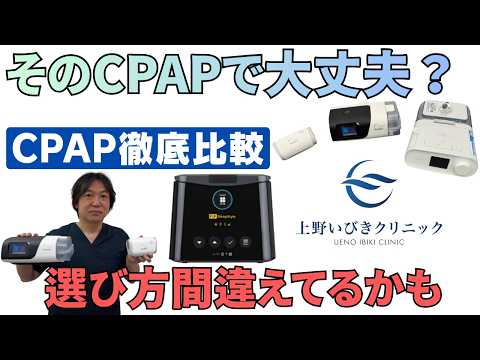
You’ll Want to Know This! A Complete Comparison of 5 CPAP Types — What Doctors Really Look For
Our doctor compares five different CPAP machines side by side and explains what actually matters when choosing one.
Watch the video
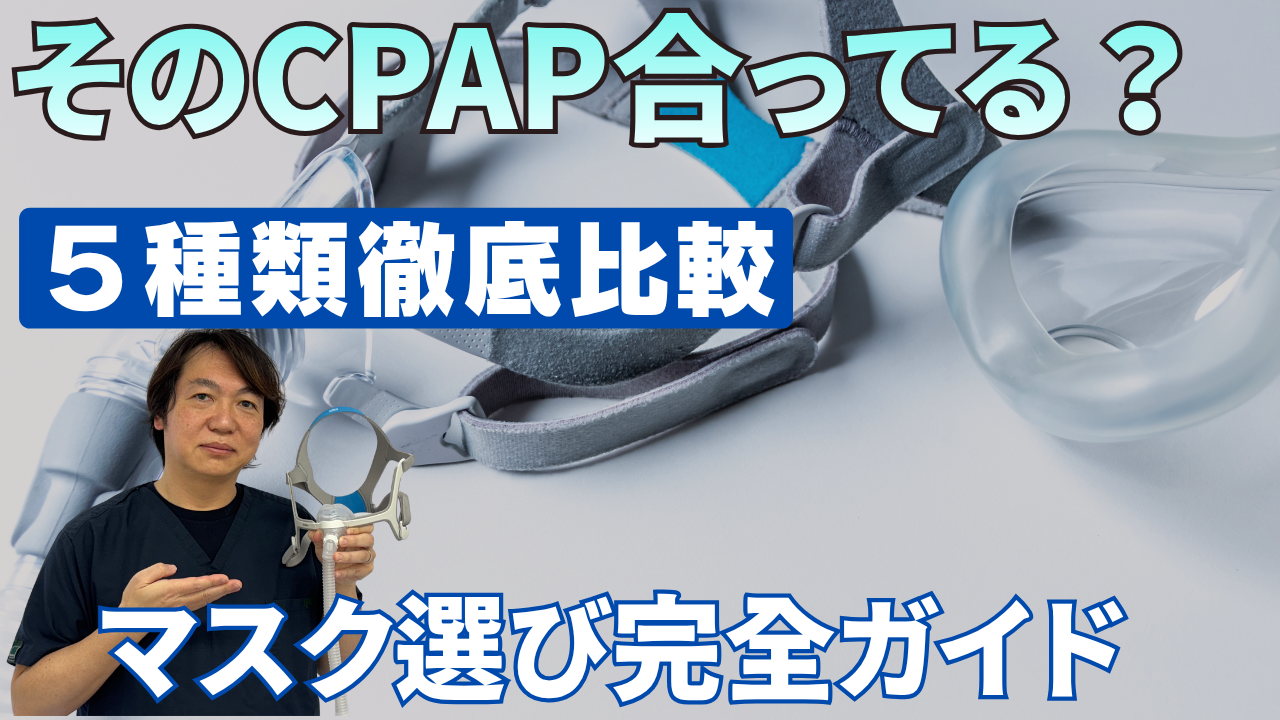
A Complete Comparison of CPAP Masks
We tried on and reviewed five different types of CPAP masks. 90% of CPAP comfort comes down to the mask.
Watch the video
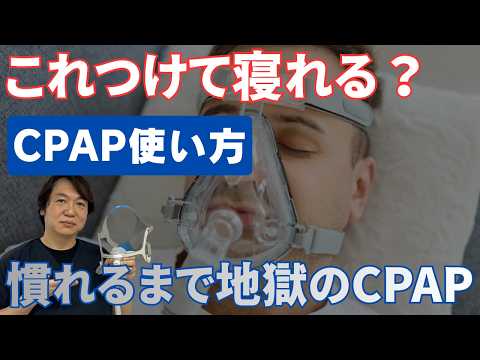
Do you have to use CPAP forever? A specialist explains how to use CPAP
A detailed explanation of how to use CPAP, with a real demonstration of what it feels like to wear the device.
Watch the video
Ueno Snoring Clinic was featured on Fuji TV’s “Live News It!” and on FNN Prime Online
Watch our clinic’s examination and explanation of sleep disorders, snoring, and sleep apnea.
Watch the video
Ueno Snoring Clinic was featured in an article on Nippon TV’s “news every.”
Please take a look as a starting point for thinking about getting evaluated for snoring, sleep apnea, or other sleep disorders.
Read the article
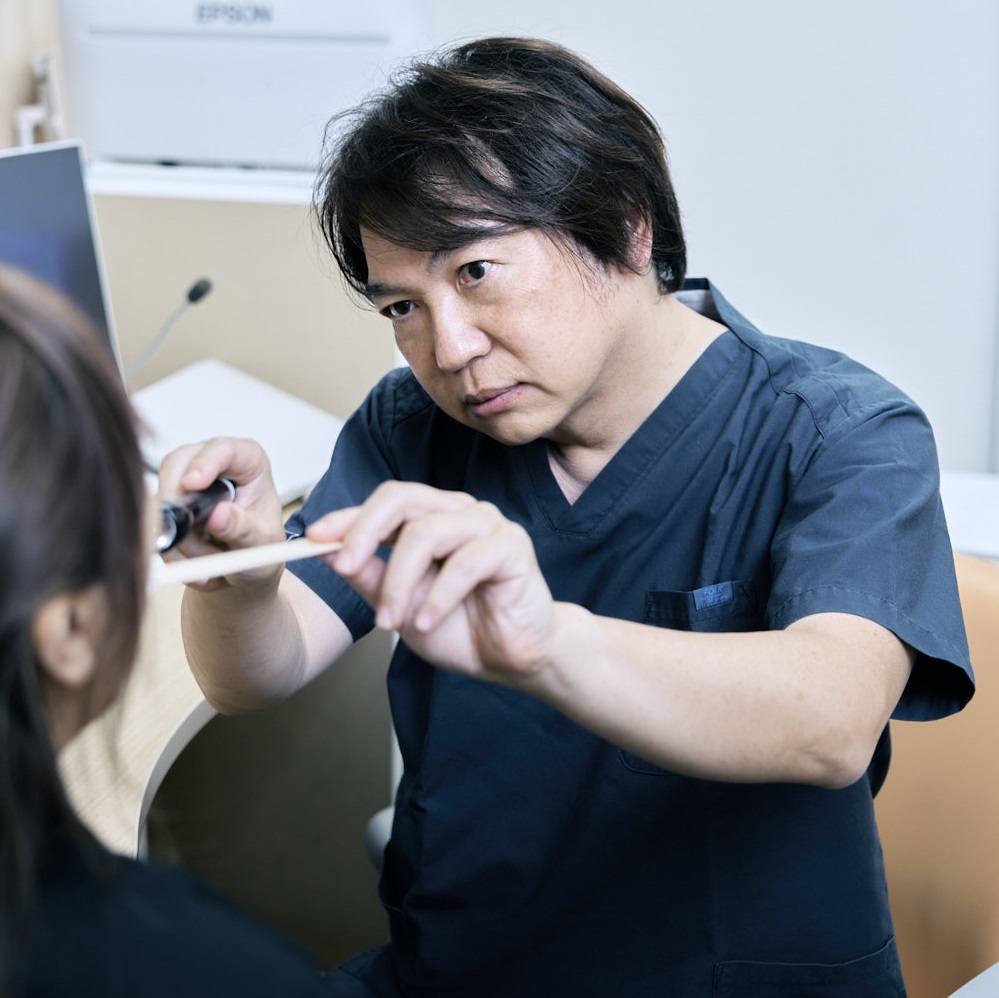
Reviewed by Our Director
Kazuyuki Sugaya
Director, Ueno Snoring Clinic / Anesthesiologist
Our director, with over 20,000 general anesthesia cases, focuses primarily on the diagnosis and treatment of snoring and sleep apnea, offering care tailored to each patient. [Insurance-Covered] Ueno Snoring Clinic
This article was written by our Director, Kazuyuki Sugaya, prompted by the news of Professor Yanagisawa’s Lasker Award, and explains the relationship between orexin and sleep, and why protecting your sleep quality matters.
🩺Comprehensive Snoring Treatment at Ueno Snoring Clinic
At Ueno Snoring Clinic, we support you with snoring and apnea — which affect sleep quality — from testing you can complete at home through to treatment proposals.
Insurance-Covered: Thorough Testing and Ongoing Treatment
- Simplified and at-home PSG testing: No hospital stay, completed at home
- CPAP treatment: The standard treatment for moderate-to-severe apnea
Self-Pay: Address the Root Cause, Short-Term Focus
- Snoring laser treatment: Courses of 3, 6, or 12 sessions available
- Medically supervised weight loss: An option when weight gain is a contributing factor
*Diagnosis and treatment of orexin-related sleep disorders such as narcolepsy are handled by specialized sleep medicine institutions. Our clinic primarily treats snoring and sleep apnea syndrome.
Our Director’s book, “Curing Snoring with the Latest Treatments” (an Amazon Japan bestseller — #1 in General Medicine, #1 in Clinical Internal Medicine, #2 in Family Health & Wellness), also covers this topic in more detail.
New Book by Our Director
“Curing Snoring with the Latest Treatments”
A guide to the latest snoring treatments, written by an anesthesiologist who has overseen the sleep of more than 10,000 patients.
View on Amazon
Quick Answer
Orexin is a neurotransmitter in the brain that stabilizes the state of wakefulness. It was discovered in 1998 by Professor Masashi Yanagisawa and colleagues. When orexin is lacking, a condition called narcolepsy — marked by strong daytime sleepiness — can result, and this discovery has led to two new classes of drugs: one for insomnia and one for narcolepsy. The Lasker Award is a reminder that “sleep quality” isn’t just a lifestyle topic — it’s an important subject in brain science. One major factor that strongly affects sleep quality is snoring and sleep apnea. Testing is now available at home for both the simplified test and the detailed test (at-home PSG), so if you’re concerned, a good first step is simply to get tested.
📋 What This Article Covers
- What Professor Yanagisawa’s Lasker Award is about
- What is orexin? The brain chemical that switches between sleep and wakefulness
- The new drugs that came from the discovery of orexin
- Why “sleep quality” is getting so much attention now
- Testing you can finish at home: simplified test and detailed test (at-home PSG)
What Professor Yanagisawa’s Lasker Award Is About
In 2026, Professor Masashi Yanagisawa of the University of Tsukuba’s International Institute for Integrative Sleep Medicine (IIIS) received the American Albert Lasker Basic Medical Research Award. Established in 1945, the award is one of the highest honors in the United States for medical and biomedical research, and is often called a “gateway to the Nobel Prize.” This year it was shared with Professor Emmanuel Mignot of Stanford University, known for his research on narcolepsy.
The award recognizes research on the brain chemical “orexin,” which Professor Yanagisawa and colleagues discovered in 1998. It was especially praised for carrying the work all the way from basic discovery to new drugs in about 28 years.
What Is Orexin? The Brain Chemical That Switches Between Sleep and Wakefulness
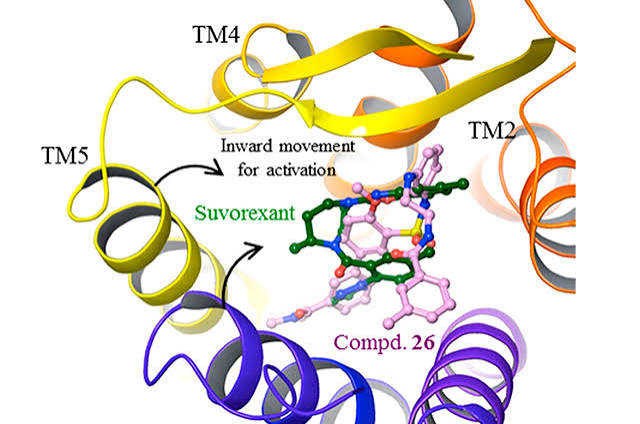
Orexin is a neurotransmitter produced in a part of the brain called the hypothalamus. Its most important role is “stabilizing the state of wakefulness.”
The brain has a “wake center” and a “sleep center,” and they suppress each other like a seesaw.
Orexin supports the wake center, acting as something like a stabilizer that keeps the switch between wakefulness and sleep from flipping unexpectedly. When orexin works properly, you stay clearly awake during the day and sleep in one consolidated block at night.
In fact, when orexin isn’t working sufficiently, a condition called narcolepsy — in which strong sleepiness suddenly strikes during the day — can result. In patients with narcolepsy, lower orexin levels in the cerebrospinal fluid have been reported (particularly in narcolepsy type 1).
The New Drugs That Came From the Discovery of Orexin
The discovery of orexin didn’t stop at basic research — it led to the development of actual treatments.
| Drug Type |
How It Works / Target |
| Orexin receptor antagonists |
Insomnia medications that temporarily suppress orexin’s action, weakening the wake state and making it easier to fall asleep. |
| Orexin receptor agonists |
Treatments that supplement orexin’s action, addressing the root cause of narcolepsy. |
It wasn’t a simple matter of “making sleep lighter or deeper” — the shift in thinking to target the wake-sleep switch itself is what gave rise to these new drugs.
Why “Sleep Quality” Is Getting So Much Attention Now
What this Lasker Award shows is that sleep isn’t merely rest — it’s a frontier topic in brain science and medicine. As with the discovery of orexin, much about the mechanisms that control sleep and wakefulness remains to be uncovered.
At the same time, one factor that lowers sleep quality for many people — and is relatively approachable and improvable — is snoring and sleep apnea. When apnea repeatedly fragments your sleep, you don’t get the deep sleep that allows your brain and body to recover, no matter how long you spend in bed. If you’re someone who feels sleepy even though you’re sure you’re sleeping properly, the realistic first step isn’t only to consider unusual conditions like those involving orexin, but to first check whether you have apnea.
Short sleep is also drawing wider attention lately. For the medical side of getting too little sleep, see our article on sleep debt and social jet lag. As interest in short sleep grows, it’s all the more important to confirm medically whether you’re really sleeping well.
Testing You Can Finish at Home: Simplified Test and Detailed Test (At-Home PSG)
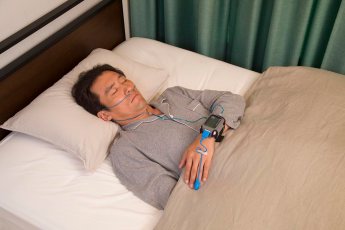
If you’d like to be tested but worry about the burden of a hospital stay or frequent visits, rest assured: for snoring and apnea, not only the simplified screening test but also the more detailed test (PSG) can now be completed at home, without any hospital stay, as “at-home PSG.”
• Simplified test: wear the device and sleep one night; covered by insurance
• At-home PSG: a more detailed set of measurements, including brain waves, taken over one night at home
• For both, the device is mailed to your home, and you simply send it back when you’re done
For more on how the two types of testing differ, see our article, Simplified Sleep Test vs. PSG: Understanding Insurance-Covered Sleep Apnea Testing.
What Ueno Snoring Clinic Can Do
Ueno Snoring Clinic is a sleep disorder clinic specializing in snoring and sleep apnea. For specialized diagnosis of conditions such as narcolepsy, which involve orexin, we refer patients to specialist institutions — but for the far more common issue of “reduced sleep quality from snoring and apnea,” we support you from testing you can complete at home all the way through treatment.
If you’d like to check whether you’re really sleeping well, please feel free to talk to us.
At Ueno Snoring Clinic, guided by our philosophy of “extending healthy life expectancy through quality sleep,” we offer a variety of treatments for snoring and apnea. In addition to testing for CPAP treatment — the simplified test and detailed testing (PSG) — we offer snoring and apnea laser treatment, medically supervised weight loss, and many other treatment options to meet each patient’s needs. Please feel free to come in for a consultation.
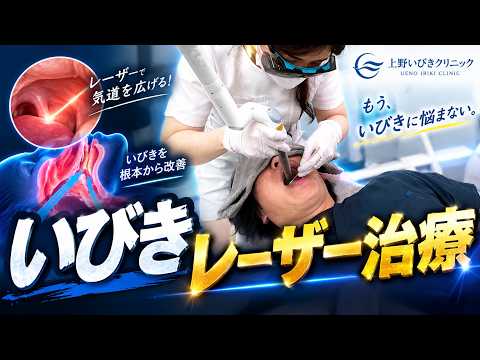
We Tried Snoring Laser Treatment Ourselves
What is snoring laser treatment really like? We walk through the flow of the procedure and what happens during treatment, in a documentary-style video at Ueno Snoring Clinic.
Watch the video
Summary: “Sleep Quality” Only Means Something if You Check It
Professor Yanagisawa’s Lasker Award reflects a major achievement in sleep science: the discovery of the brain chemical orexin, carried over 28 years into actual treatments. The news is also a good prompt to ask yourself: “Is my sleep really good quality?”
Even without a specialized condition like those involving orexin, snoring and apnea can greatly reduce sleep quality. Now that both the simplified test and the detailed test can be completed at home, a good first step is simply to get tested and find out.
Testing You Can Do at Home — Please Start by Consulting Us
Both the simplified test and at-home PSG are completed at home, with no hospital stay. Insurance coverage is available, and self-pay snoring laser treatment is also offered.
Frequently Asked Questions
Q. Is orexin related to snoring and sleep apnea?
A. Orexin is mainly relevant to conditions that affect the maintenance of wakefulness, such as narcolepsy, and works through a different mechanism than snoring and apnea. Both, however, are factors that affect sleep quality, so if you have strong daytime sleepiness, we recommend starting by checking for the more common snoring and apnea.
Q. Where should I go if I think I might have narcolepsy?
A. Diagnosing and treating narcolepsy requires a specialized sleep medicine institution. Our clinic focuses mainly on snoring and sleep apnea syndrome, so we can first check whether apnea is present and, if needed, guide you to a specialist institution.
Q. Can testing really be completed entirely at home?
A. For both the simplified test and the detailed test (at-home PSG), there are types where the device is mailed to your home, you wear it and sleep one night, then send it back to finish. We’ll explain the details at your consultation.
Q. I feel very sleepy during the day. Which department should I see?
A. The cause might be snoring and apnea, or it might be another sleep disorder. We recommend starting with testing at a clinic that specializes in sleep, like ours, to identify the cause.
*This article is a general explanation, written for a broad audience and based on the sources above together with our clinic’s own clinical experience. It is not a substitute for medical advice. If you’re concerned about daytime sleepiness or sleep problems, please consult a medical institution for a proper evaluation.