Ueno Snoring Clinic offers insurance-covered sleep testing and CPAP management, as well as self-pay laser treatment for snoring, tailored to your specific condition. If you’d like to find out which treatment fits you, please start with an initial consultation.
Details of the tests and treatments offered at Ueno Snoring Clinic can be found here
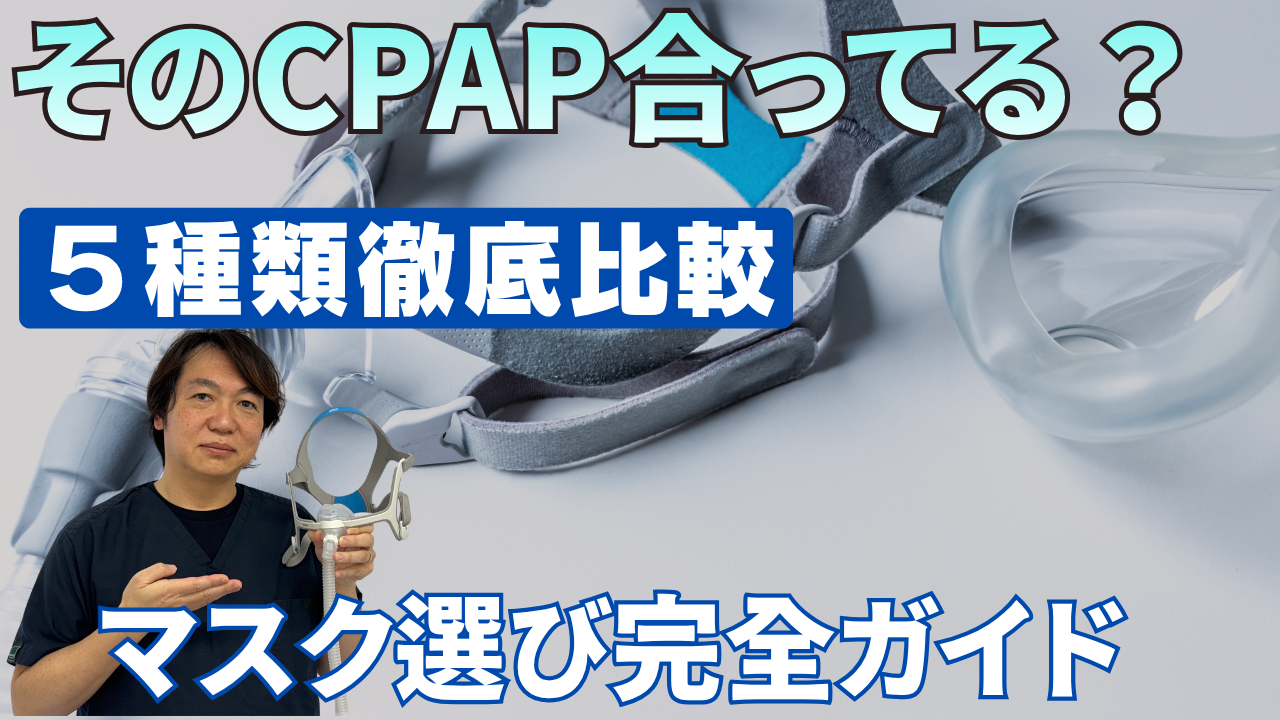
A Complete Comparison of CPAP Masks
We tried on and reviewed five different types of CPAP masks. 90% of CPAP comfort comes down to the mask.
Watch the video
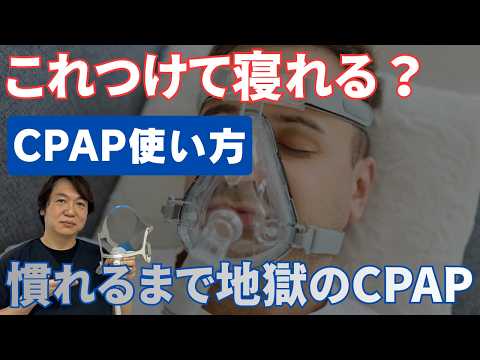
Do you have to use CPAP forever? A specialist explains how to use CPAP
A detailed explanation of how to use CPAP, with a real demonstration of what it feels like to wear the device.
Watch the video
Ueno Snoring Clinic was featured on Fuji TV’s “Live News It!” and on FNN Prime Online
Watch our clinic’s examination and explanation of sleep disorders, snoring, and sleep apnea.
Watch the video
Ueno Snoring Clinic was featured in an article on Nippon TV’s “news every.”
Please take a look as a starting point for thinking about getting evaluated for snoring, sleep apnea, or other sleep disorders.
Read the article
Reviewed by Our Director
Kazuyuki Sugaya
Director, Ueno Snoring Clinic / Anesthesiologist
Our director, with over 20,000 general anesthesia cases, focuses primarily on the diagnosis and treatment of snoring and sleep apnea, offering care tailored to each patient. [Insurance-Covered] Ueno Snoring Clinic
This article was reviewed by our Director, Kazuyuki Sugaya, and explains accurate medical information about testing and treatment for snoring, sleep apnea syndrome (SAS), and related sleep disorders in clear, accessible terms.
🩺Comprehensive Snoring Treatment at Ueno Snoring Clinic
The causes of snoring range from the structure of the throat to body weight. Ueno Snoring Clinic doesn’t rely on a single treatment approach — we’re set up to recommend the best plan for each patient from a broad, evidence-based range of options.
Insurance-Covered: Thorough Testing and Ongoing Treatment
- Simplified and PSG testing: A precise analysis of your sleep condition
- CPAP treatment: The standard treatment for moderate-to-severe apnea
Self-Pay: Address the Root Cause, Short-Term Focus
- Snoring laser treatment: A non-surgical approach to the underlying cause
- Medically supervised weight loss: Improving airway space through weight reduction
*As a clinic specializing in snoring treatment, we work to resolve “snoring that won’t stop” through both insurance-covered and self-pay options.
Our director’s book, “Curing Snoring with the Latest Treatments” (No.1 Amazon Bestseller in General Medicine, No.1 in Clinical Internal Medicine, No.2 in Home Medicine & Health) covers this topic in detail as well
New Book by Our Director
“Curing Snoring with the Latest Treatments”
A guide to the latest snoring treatments, written by an anesthesiologist who has overseen the sleep of more than 10,000 patients.
View on Amazon
Quick Answer
Sleep debt can’t be fully repaid by “catching up” on sleep alone. Sleeping much longer only on weekends can trigger “social jetlag,” which tends to make Monday morning fatigue worse rather than better. If oversleeping on days off has become a long-standing habit, an underlying sleep disorder such as sleep apnea syndrome may be part of the picture. Testing and treatment at a sleep specialty clinic can help you aim for waking up feeling rested — on weekdays and weekends alike.
📋 What This Article Covers
- Why you can’t stop oversleeping on weekends (sleep debt, social jetlag, sleep quality)
- A self-check: is your weekend oversleeping a warning sign?
- Telling apart ordinary fatigue, sleep debt, and sleep apnea
- When it’s worth seeing a specialist
- Practical ways to cut back on weekend oversleeping
- Common questions, answered
Why Can’t You Stop Oversleeping on Weekends?

1. The Buildup of Sleep Debt
Sleep debt is what happens when your actual sleep falls short of what you need, and that shortfall accumulates like a loan. Losing just one hour a day for five days adds up to five hours of debt. Your brain keeps close track of this and looks for any opportunity to “repay” it — which is why your body sends such a strong signal to sleep longer once the weekend arrives.
2. Social Jetlag
If you keep waking up at 7am on weekdays and 11am on weekends, your internal body clock effectively experiences “jetlag” twice a week. This is known as social jetlag, and it’s associated with chronic fatigue, reduced concentration, and low mood. The later you sleep in on weekends, the more likely you are to feel a jetlag-like grogginess and heaviness on Monday morning.
3. A Sleep Quality Problem (Sleeping, but Not Really Resting)
If ten hours of sleep still leaves you tired, the issue may not be how long you sleep, but how well. With sleep apnea syndrome (SAS), breathing repeatedly stops during sleep, and the brain is pulled repeatedly toward a near-waking state. The result is that no matter how long you sleep, you don’t get enough deep, restorative (non-REM) sleep — leaving you in a state similar to chronic sleep deprivation.
Is Your Weekend Oversleeping a Warning Sign? A Self-Check
If three or more of the following apply to you, both the quality and quantity of your sleep may be worth a closer look.
- ☐ You often sleep 6 hours or less on weekdays
- ☐ You feel like you “can’t function” unless you sleep 10+ hours on your days off
- ☐ Your weekday and weekend wake-up times differ by more than 2 hours
- ☐ Monday mornings are the hardest part of your week
- ☐ Even after long sleep, drowsiness lingers into the afternoon
- ☐ A partner or family member has mentioned your snoring
- ☐ You wake up at night to use the bathroom, or with a dry mouth
- ☐ You feel some guilt that your weekends are “just for sleeping”
Telling Apart “Fatigue,” “Sleep Debt,” and “Sleep Apnea”
|
Temporary Fatigue |
Sleep Debt |
Sleep Apnea Syndrome |
| Main cause |
Overtime, events, etc. |
Chronic sleep shortage |
Breathing disruption during sleep |
| Effect of catch-up sleep |
◎ Recovers in 1–2 days |
△ Only partially repaid |
✕ More sleep time doesn’t help |
| Monday fatigue |
Mild |
Moderate to strong |
Strong (recurs weekly) |
| Snoring/apnea |
None |
Usually none |
Present (may go unnoticed by the person) |
| How to address it |
Adequate rest |
Consistent daily sleep |
Diagnosis and treatment by a specialist |
💡 Can Catch-Up Sleep Really Pay Off Sleep Debt?
Research suggests that a day or two of extra-long sleep can temporarily ease sleepiness, but cognitive function, reaction time, and concentration don’t fully bounce back. What’s more, sleeping longer tends to shift your body clock further out of sync, which can worsen social jetlag the following week — a cycle that’s easy to fall into.
When It’s Worth Talking to a Specialist
- You’ve been oversleeping on weekends for a year or more, and feel tired throughout the week
- You feel strong drowsiness even in the morning, despite what should be enough sleep
- Someone has pointed out your snoring, or you’re concerned about it yourself
- A sleep-tracking app has flagged “snoring detected” or “irregular breathing”
- You have a lifestyle condition such as high blood pressure, obesity, or diabetes
- You’re either “too tired to sleep” or “sleeping but never feel rested” — and it keeps happening
What Ueno Snoring Clinic Offers
Ueno Snoring Clinic is a sleep specialty clinic offering insurance-covered care for snoring and sleep apnea syndrome (SAS). Our director, an anesthesiologist with over 20,000 general anesthesia cases, brings specialized expertise in airway management to every consultation.
🔍 At-Home Simplified Testing
Just wear the device overnight at home. It objectively measures whether you snore and how severe any apnea may be.
🏥 Precision Testing (PSG)
An overnight polysomnography test. It measures brain waves, breathing, and blood oxygen simultaneously, allowing a definitive SAS diagnosis.
💨 CPAP Therapy
The standard treatment for moderate-to-severe SAS, available on an ongoing basis under insurance.
✨ Laser Treatment
For mild-to-moderate snoring, laser treatment tightens the throat’s soft tissue to help improve symptoms.
Practical Ways to Cut Back on Weekend Oversleeping
If you find yourself oversleeping on weekends, the fix isn’t just adjusting your days off — it’s addressing weekday sleep shortage and body-clock misalignment together.
- Keep your weekend wake-up time within 1–2 hours of your weekday time. Waking up much later on weekends tends to push your body clock further out of sync. Even waking up just 30 minutes earlier than you currently do is a reasonable place to start.
- Move your weekday bedtime 15–30 minutes earlier at a time. Rather than trying to make up the shortfall only on weekends, gradually increase your weekday sleep. Trying to fall asleep 1–2 hours earlier all at once often doesn’t work, so a step-by-step adjustment is more realistic.
- Get morning light after waking up. Morning light is one of the most important cues for resetting your body clock. Open the curtains after waking, and get outside if you can.
- Keep naps short and early in the afternoon. If you nap, aim for about 15–30 minutes, and avoid long naps later in the day.
- If you snore, stop breathing during sleep, or feel strong daytime drowsiness, get tested. If your symptoms don’t improve even after securing enough sleep time, it’s worth checking for an underlying sleep disorder such as sleep apnea syndrome, not just adjusting your habits.
Summary: Catch-Up Sleep Is a Band-Aid, Not a Cure
Oversleeping on weekends isn’t simply “to be expected because you’re tired” — it can be a sign of sleep debt, social jetlag, or reduced sleep quality.
- Sleep debt can’t be fully repaid through catch-up sleep alone
- Sleeping in on weekends shifts your body clock and can make Monday fatigue worse
- If you’re sleeping but not feeling rested, a sleep quality issue such as SAS is worth ruling out
- Testing at a sleep specialty clinic can help identify the cause objectively
If you find yourself thinking “I don’t want my weekends to just disappear into sleep” or “Mondays are rough every single week,” it may be worth talking to a specialist. Left unaddressed, sleep problems are also thought to carry risks related to high blood pressure, diabetes, and heart disease.
Why Do People Oversleep on Weekends?
The main reason people sleep much longer on weekends is “sleep debt” built up from insufficient sleep on weekdays. That said, if you’re already getting adequate sleep yet still sleep 10+ hours on days off, don’t feel rested even after long sleep, or experience strong daytime drowsiness, reduced sleep quality from a condition such as sleep apnea syndrome may be involved.
Catch-up sleep may ease sleepiness temporarily, but it isn’t a fundamental fix for chronic sleep shortage or an underlying sleep disorder.
If You Don’t Want Your Weekends to Disappear Into Sleep
Feel free to reach out on LINE first. At Ueno Snoring Clinic, we work with you through insurance-covered testing and treatment to get to the bottom of why you’re sleeping but still exhausted.
Ueno Snoring Clinic | A Sleep Specialty Clinic
Insurance-covered care available | Led by an anesthesiologist director | Near Ueno / Okachimachi, Tokyo
Frequently Asked Questions
Q. Isn’t sleeping 10+ hours on weekends just a sign that I love sleep?
A. If you’re already getting enough sleep on weekdays and still enjoy long sleep on days off, that’s not necessarily a problem. But if you feel like you “can’t function” without it, that may point to an issue with your sleep quality or quantity — especially if it comes with snoring or waking during the night, which could be a sign of sleep apnea syndrome.
Q. How can I reduce social jetlag?
A. The most effective approach is thought to be waking up within an hour of your weekday wake-up time, even on days off. If you’re sleepy, a short nap (15–20 minutes) is considered a better way to compensate than sleeping in, since it keeps your body clock more stable. That said, if an underlying sleep disorder is involved, lifestyle adjustments alone may not be enough — in that case, it’s worth consulting a specialist.
Q. Is sleep apnea testing painful? Do I need to be hospitalized?
A. The simplified test is done at home, so no hospital stay is needed. It’s as simple as wearing sensors on your finger and under your nose overnight — there’s no pain involved. Even if a more detailed PSG test is needed, we’re set up to offer this at home as well. Both are available under insurance.
Q. I don’t snore, but I never feel rested even after sleeping — can I still get checked?
A. Yes, absolutely. Sleep apnea syndrome can be present even without noticeable snoring. If you’re sleeping but still not feeling rested, a sleep specialty clinic can run an objective test to help identify the cause.
Q. Where is Ueno Snoring Clinic, and what kind of doctor will see me?
A. We’re a sleep specialty clinic located in the Ueno area of Tokyo. Our director is an anesthesiologist with over 20,000 general anesthesia cases, bringing specialized expertise in airway and respiratory management to snoring and SAS care. We’re set up to make first-time visits comfortable and approachable.
Q. How many hours of weekend catch-up sleep is too many?
A. There’s no single hour count that applies to everyone. That said, if your weekend wake-up time is consistently more than 2 hours later than your weekday time, every week, your body clock is more likely to drift out of sync. How refreshed you feel on waking and how sleepy you are during the day matter just as much as total sleep time.
Q. Is it a medical problem if I’m still sleepy after sleeping 10+ hours?
A. Not necessarily, but if strong drowsiness continues even after what should be enough sleep, it’s worth checking for sleep apnea syndrome, a misaligned body clock, hypersomnia, an underlying medical condition, or medication side effects. If it comes with snoring, breathing pauses, or morning headaches, a sleep test is worth considering.
Q. Can I make up for weekday sleep loss on the weekend?
A. Sleeping longer on weekends can temporarily ease sleepiness, but it doesn’t necessarily undo the effects of chronic sleep shortage. The basic approach is to add 15–30 minutes of sleep on weekdays at a time and keep the gap with your weekend wake-up time small.






いびきを最新治療で治す-表紙-1.png)