Ueno Snoring Clinic offers insurance-covered sleep testing and CPAP management, as well as self-pay laser treatment for snoring, tailored to your specific condition. If you’d like to find out which treatment fits you, please start with an initial consultation.
Details of the tests and treatments offered at Ueno Snoring Clinic can be found here
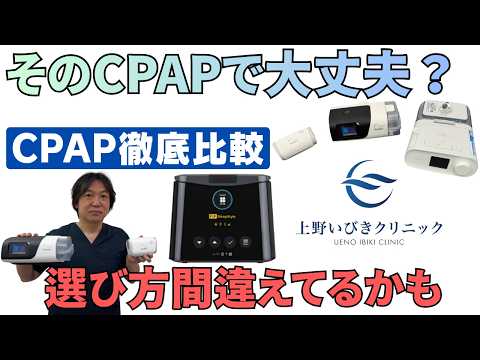
You’ll Want to Know This! A Complete Comparison of 5 CPAP Types — What Doctors Really Look For
Our doctor compares five different CPAP machines side by side and explains what actually matters when choosing one.
Watch the video
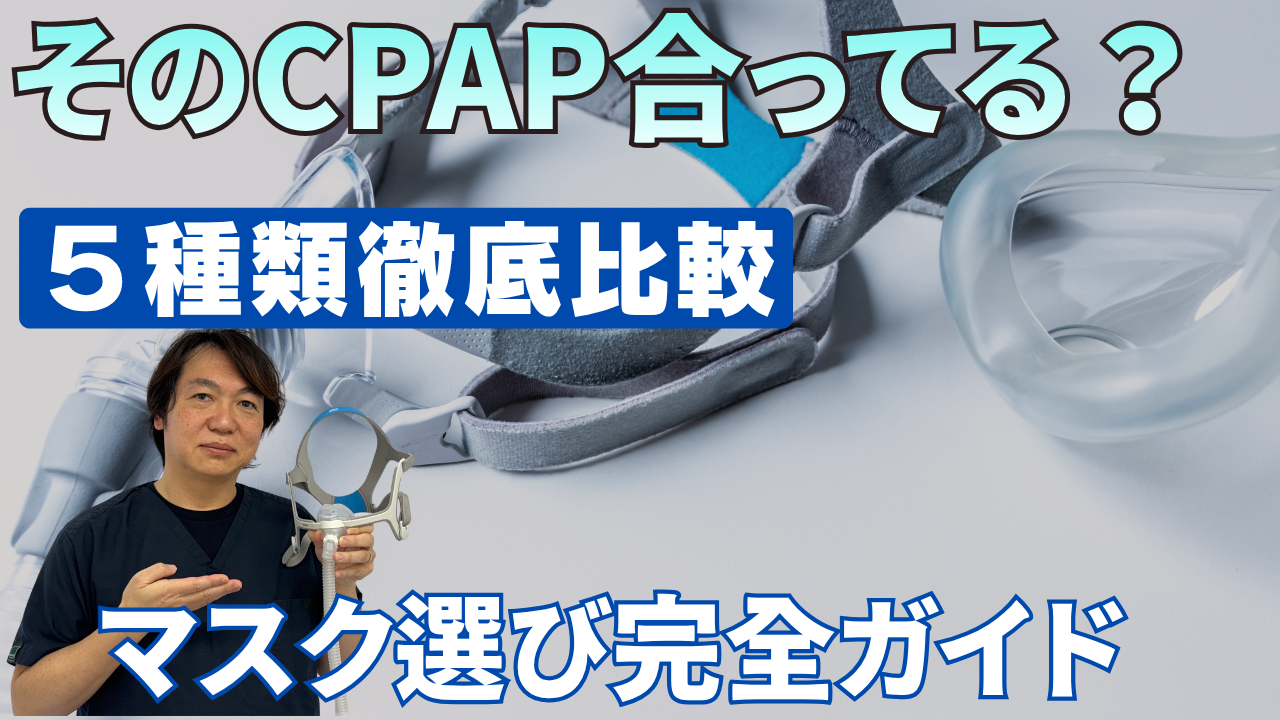
A Complete Comparison of CPAP Masks
We tried on and reviewed five different types of CPAP masks. 90% of CPAP comfort comes down to the mask.
Watch the video
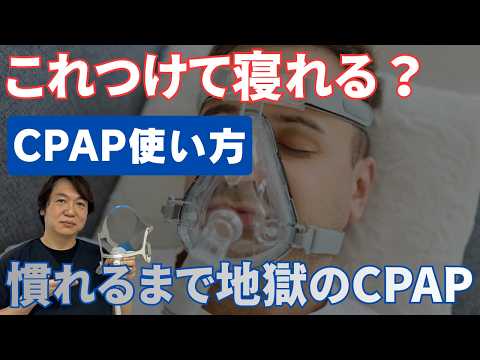
Do you have to use CPAP forever? A specialist explains how to use CPAP
A detailed explanation of how to use CPAP, with a real demonstration of what it feels like to wear the device.
Watch the video
Ueno Snoring Clinic was featured on Fuji TV’s “Live News It!” and on FNN Prime Online
Watch our clinic’s examination and explanation of sleep disorders, snoring, and sleep apnea.
Watch the video
Ueno Snoring Clinic was featured in an article on Nippon TV’s “news every.”
Please take a look as a starting point for thinking about getting evaluated for snoring, sleep apnea, or other sleep disorders.
Read the article
Reviewed by Our Director
Kazuyuki Sugaya
Director, Ueno Snoring Clinic / Anesthesiologist
Our director, with over 20,000 general anesthesia cases, focuses primarily on the diagnosis and treatment of snoring and sleep apnea, offering care tailored to each patient. [Insurance-Covered] Ueno Snoring Clinic
This article was reviewed by our Director, Kazuyuki Sugaya, and explains accurate medical information about the testing and treatment of snoring and sleep apnea syndrome (SAS) in clear, accessible terms.
🩺Comprehensive Snoring Treatment at Ueno Snoring Clinic
The causes of snoring range from the structure of the throat to body weight. Ueno Snoring Clinic doesn’t rely on a single treatment approach — we’re set up to recommend the best plan for each patient from a broad, evidence-based range of options.
Insurance-Covered: Thorough Testing and Ongoing Treatment
- Simplified and PSG testing: A precise analysis of your sleep condition
- CPAP treatment: The standard treatment for moderate-to-severe apnea
Self-Pay: Address the Root Cause, Short-Term Focus
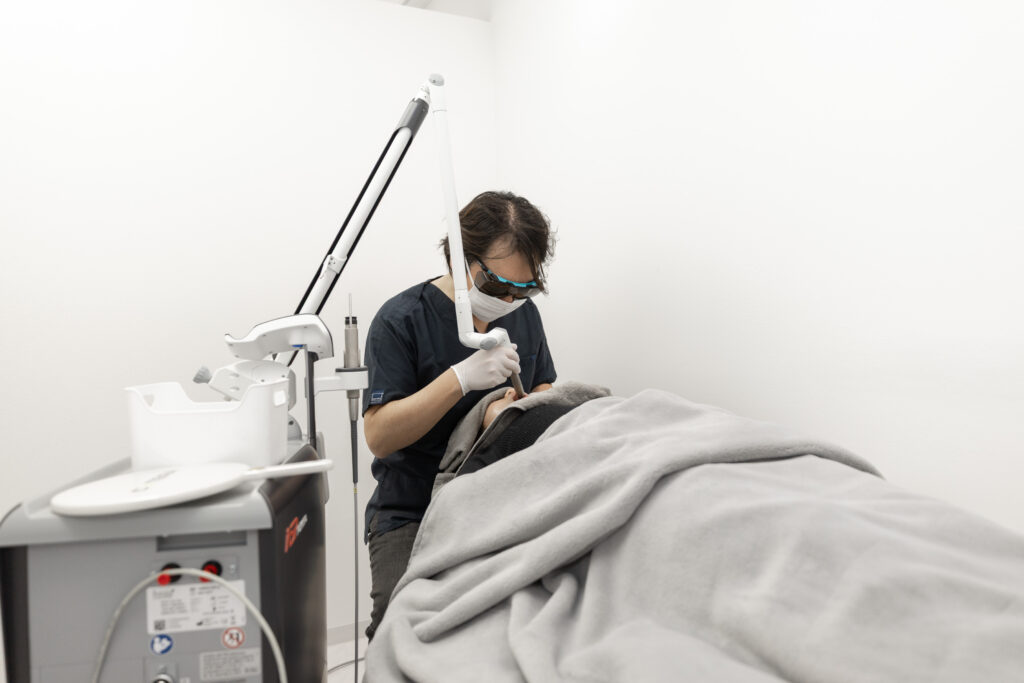
- Snoring laser treatment: A non-surgical approach to the underlying cause
- Medically supervised weight loss: Improving airway space through weight reduction
*As a clinic specializing in snoring treatment, we work to resolve “snoring that won’t stop” through both insurance-covered and self-pay options.
New Book by Our Director
“Curing Snoring with the Latest Treatments”
A guide to the latest snoring treatments, written by an anesthesiologist who has overseen the sleep of more than 10,000 patients.
View on Amazon
Quick Answer
Sleep apnea is evaluated through two main insurance-covered tests: a simplified (at-home) test using a small portable device, and PSG (polysomnography), an overnight sleep study conducted with more comprehensive monitoring. The simplified test is easy to access and a good first step, but it can sometimes underestimate severity because it can’t precisely track how much time you actually spent asleep. PSG is the more detailed, gold-standard test — recommended especially when the simplified test result doesn’t match your symptoms, or when a more accurate diagnosis is needed to guide treatment.
📋 What This Article Covers
- What the simplified (at-home) sleep test involves, and its strengths and limitations
- What PSG (polysomnography) is and what it can reveal that the simplified test can’t
- How the two tests are typically used together in practice
- Who should consider getting tested, and what to expect
“I’ve been told my snoring is bad.”
“My family says my breathing stops while I sleep.”
“I have strong daytime sleepiness that makes work or driving difficult.”
If any of this sounds familiar and you’re worried about sleep apnea, you may be wondering: What does the test actually involve? What’s the difference between the simplified test and PSG? Quite a few people feel anxious at the idea of suddenly having to undergo what sounds like a major exam.
In reality, when sleep apnea is suspected, the diagnosis shouldn’t rely on symptoms alone — an objective test of your breathing during sleep matters. The two representative tests are the simplified (at-home) sleep test and PSG (overnight polysomnography). Japan’s Respiratory Society notes that when sleep apnea is suspected, breathing during sleep should be evaluated using either a portable simplified device or full PSG.
In this article, we take a detailed look at these two tests — something that isn’t always well understood — and how they’re used to evaluate sleep apnea.
Why Testing Matters in the First Place
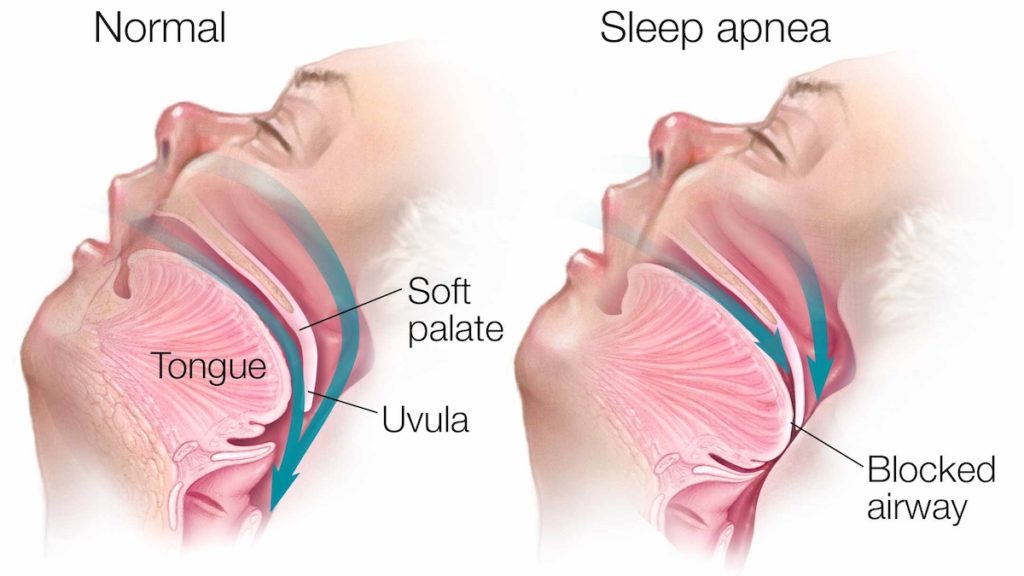
Snoring is common, but it isn’t always just a matter of noise. When the upper airway narrows during sleep, airflow becomes restricted — leading to loud snoring, shallow breathing, or breathing that stops altogether for short periods. When this repeats throughout the night, sleep quality drops, often resulting in morning grogginess, strong daytime sleepiness, and difficulty concentrating. Professional society materials for the public note that sleep apnea is commonly associated with snoring, nighttime urination, morning headaches, and daytime sleepiness, and can contribute to reduced work performance and even accidents.
That said, severity can’t be accurately judged from appearance or symptoms alone. Some people snore loudly but have relatively few actual breathing pauses, while others barely notice their own snoring despite having frequent disruptions to their breathing.
This is exactly why a test that quantifies what’s actually happening to your breathing during sleep is so important. Severity is typically measured using an index called the AHI (Apnea-Hypopnea Index) — the number of apnea and hypopnea events per hour. Public-facing guidance generally uses an AHI of 5 or higher (with symptoms) as the threshold for a diagnosis of sleep apnea syndrome, with 5–15 considered mild, 15–30 moderate, and 30 or higher considered severe.
What Is a Simplified (At-Home) Sleep Test?
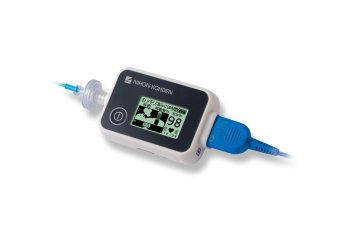
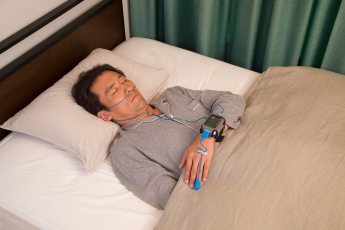
A simplified test is a screening test for sleep-related breathing that’s generally done at home. Using a small, portable device, it records blood oxygen saturation (via a finger sensor), airflow through the nose and mouth, breathing movement, and pulse rate. Because it doesn’t require hospitalization and can be done in a familiar environment, it’s widely used as the first step when snoring or sleep apnea is suspected. When symptoms or a clinical exam raise the possibility of sleep apnea, this type of portable, simplified test is generally used first.
Advantages of the Simplified Test
The biggest advantage of the simplified test is accessibility. Because it’s done at home, it’s easier to fit around work and family schedules, and the psychological barrier to taking the test is much lower than a hospital-based exam. For anyone who simply wants to get a first read on their own condition, or decide whether a more thorough test is warranted, it’s a genuinely useful starting point.
Limitations of the Simplified Test
That said, the simplified test does have real limitations. Clinical guidelines note that a simplified, out-of-center sleep test can’t precisely determine total sleep time and also can’t detect respiratory effort-related arousals (RERAs) — which means the resulting AHI is often underestimated. In other words, the number can come out lower than what’s actually happening, even when a genuine breathing problem exists. The simplified test is also generally less accurate than PSG for evaluating central-type apnea (where the brain, rather than a blocked airway, is the underlying cause — PSG is explained in more detail below), so PSG is recommended when there’s reason to suspect it.
Because of this, a clearly abnormal simplified-test result often points fairly directly toward next steps — but a negative or borderline simplified-test result doesn’t necessarily mean the story ends there, especially if symptoms or a family member’s observations remain concerning. Clinical guidelines specifically recommend proceeding to PSG when obstructive sleep apnea is still strongly suspected despite a negative simplified-test result.
What Is PSG (Polysomnography)?
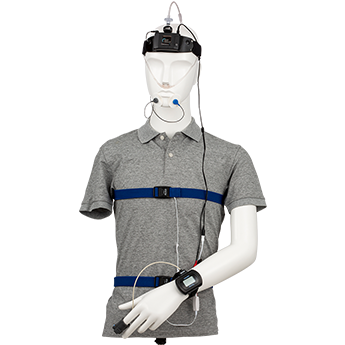
PSG stands for polysomnography, an overnight sleep study, and it’s the gold-standard, comprehensive test for evaluating sleep apnea. It simultaneously records a wide range of data throughout the night — brain waves, eye movement, muscle activity, heart activity (ECG), airflow, breathing effort, blood oxygen saturation, and body position. Materials from Japan’s Respiratory Society have historically described PSG as the gold standard for diagnosing sleep apnea.
What PSG Can Reveal
A key strength of PSG is that it can evaluate whether you were actually asleep, not just whether the device was attached. A simplified test can tell you how long the device was worn, but it’s harder to precisely capture how much of that time was spent actually sleeping. Because PSG records brain waves, it allows for detailed analysis of sleep stages and periods of wakefulness, leading to a more accurate assessment of severity.
PSG also allows for a closer look at more than just breathing events — sleep fragmentation, the relationship between symptoms and body position, and the degree of oxygen desaturation can all be examined in detail. This makes it especially valuable when a simplified-test result is unclear, when the severity of your symptoms doesn’t match your simplified-test numbers, or when a more precise evaluation is simply needed.
Simplified Test vs. PSG: How They’re Used Together
Put simply: the simplified test is for getting a first overall picture, while PSG is for a more detailed, precise evaluation. For those with suspected snoring or sleep apnea, the usual path starts with a clinical history and symptom check, followed by a simplified test if appropriate. If that result is clear, it often points the way toward a treatment plan directly. But if the result is mild or negative while symptoms or a family member’s observations remain concerning, PSG may follow for a closer look. Recent educational materials from sleep medicine specialists in Japan describe this same general flow — screening with a simplified device, followed by PSG when needed — as the standard approach.
Who Should Consider Getting Tested?
The following are worth taking seriously enough to consider testing:
- You’ve been told your snoring is loud
- Someone has noticed your breathing stopping while you sleep
- You don’t feel rested even after a full night’s sleep
- You wake up with a dry mouth or a headache
- You experience significant daytime sleepiness
- Sleepiness makes work or driving difficult
- You have high blood pressure, recent weight gain, or an increased neck circumference
- A family member has said your snoring has “gotten worse lately”
Being told by someone else that “your breathing stops” is a particularly important signal. Since you’re asleep at the time, it’s very difficult to notice this yourself — which is exactly why information from a family member or partner is so often what prompts someone to finally get tested.
What to Know Before Your Test
Testing can sound intimidating, but its purpose isn’t to hand down a diagnosis outright — it’s to make what’s happening during your sleep visible. Getting tested helps clarify whether you actually have sleep apnea, how severe it may be, and whether a more detailed evaluation is needed, which in turn makes it easier to decide on next steps.
Some people will only need the simplified test, while others will go on to need PSG as well. What matters most is weighing your symptoms, their impact on daily life, and your test results together. Clinical guidelines themselves note that because the simplified test can miss certain cases, PSG should be added when suspicion remains strong.
Conclusion
If you’re concerned about snoring or sleep apnea, it helps to think of it this way: the simplified test is an accessible first step, while PSG is the more detailed test used to fully understand your condition.
The simplified test is easy to do at home and useful for getting an initial read on where you stand. But it does have limitations — including difficulty precisely measuring actual sleep time — which can sometimes make results look milder than reality. When your symptoms are significant, when a family member keeps mentioning breathing pauses, or when the simplified test alone isn’t giving you a clear answer, PSG becomes genuinely valuable.
What you’ve been treating as “just snoring, nothing to worry about” may actually be affecting your sleep quality and daytime functioning more than you realize. If something feels off, getting an accurate picture of what’s happening during your sleep is the most reliable way to find the right next step.
References
- The Japanese Respiratory Society, public information on sleep apnea syndrome (SAS).
- The Japanese Respiratory Society, “Clinical Guidelines for the Diagnosis and Treatment of Sleep Apnea Syndrome (SAS), 2020.”
- Japan Society of Sleep Research–affiliated educational materials, “An Introduction to Sleep Medicine for Healthcare Providers.”
Frequently Asked Questions
Q. What’s the actual difference between the simplified sleep test and PSG?
A. The simplified test is done at home with a small portable device that tracks oxygen levels, airflow, and breathing movement — it’s convenient but can’t precisely measure how much you actually slept. PSG is an overnight, in-facility test that also records brain waves and other data, allowing for a more accurate, detailed evaluation of both sleep and breathing.
Q. Can the simplified test miss something that PSG would catch?
A. Yes, this can happen. Because the simplified test can’t precisely measure actual sleep time or detect certain subtler breathing-effort events, it can sometimes underestimate the severity of sleep apnea. If your symptoms remain concerning despite a mild or negative simplified-test result, your doctor may recommend PSG for a closer look.
Q. What is AHI, and why does it matter?
A. AHI (Apnea-Hypopnea Index) is the number of breathing pauses or shallow-breathing events per hour of sleep, and it’s the main measure used to determine severity. Generally, an AHI of 5–15 is considered mild, 15–30 moderate, and 30 or higher severe, though your doctor will interpret this alongside your symptoms.
Q. What happens after I get my test results?
A. Your results, together with your symptoms and their impact on daily life, are used to decide on next steps — this may mean starting CPAP treatment, considering laser treatment for the underlying cause, or, if the picture is still unclear, moving on to a more detailed PSG evaluation.






いびきを最新治療で治す-表紙-1.png)