
In this article, Ueno Snoring Clinic explains when a pillow may help snoring, when it is unlikely to work, how to choose a pillow correctly, and when medical evaluation for sleep apnea or laser snoring treatment should be considered.
Quick Answer
An anti-snoring pillow may help if your snoring mainly occurs when sleeping on your back and improves when you sleep on your side. However, a pillow usually cannot solve snoring caused by soft palate vibration, obesity, nasal obstruction, jaw structure, or obstructive sleep apnea. If you snore even when sleeping on your side, stop breathing during sleep, or feel sleepy during the day, you should consider medical evaluation rather than relying only on a pillow.
At Ueno Snoring Clinic, we offer options tailored to your condition, including insurance-covered sleep testing and CPAP management, as well as self-pay laser snoring treatment. If you would like to find the treatment that suits you, please start with an initial consultation.
You can find details on the examinations and treatments at Ueno Snoring Clinic here

Supervised by the Director
Kazuyuki Sugaya
Director, Ueno Snoring Clinic / Anesthesiologist
With experience in over 20,000 cases of general anesthesia, the director focuses primarily on the treatment of snoring and sleep apnea, providing care tailored to each individual patient. Ueno Snoring Clinic
This article has been supervised by Director Kazuyuki Sugaya to clearly explain accurate medical information regarding examinations and treatments for snoring, obstructive sleep apnea syndrome, and related conditions.
🩺Comprehensive Snoring Treatment at Ueno Snoring Clinic
Snoring has a wide range of causes, including throat anatomy, tongue position, nasal congestion, obesity, alcohol, sleeping posture, and sleep apnea. At Ueno Snoring Clinic, we provide a personalized treatment plan rather than relying on one single method.
Laser snoring treatment without surgery
- Dual Deep Thermia®: Non-surgical laser snoring treatment
- No cutting or hospitalization: Suitable for selected patients seeking minimal downtime
Sleep testing and medical evaluation
- Home sleep test / PSG: Evaluating breathing during sleep
- CPAP therapy: Standard treatment for moderate to severe obstructive sleep apnea
*As a clinic specializing in snoring treatment in Tokyo, we support patients through both self-pay laser treatment and insurance-covered medical evaluation when appropriate.
The director’s book “Treating Snoring with the Latest Treatments” also explains snoring, sleep apnea, CPAP therapy, and laser snoring treatment in detail.
いびきを最新治療で治す-表紙-1.png)
New Book by the Director
“Treating Snoring with the Latest Treatment Methods”
The definitive guide to the latest snoring treatments, explained by an anesthesiologist who has overseen the sleep of more than 10,000 people.
Looking for Snoring Treatment in Tokyo?
If an anti-snoring pillow did not solve your snoring, the problem may not be your pillow. Snoring may be caused by soft palate vibration, tongue base collapse, nasal obstruction, obesity, or obstructive sleep apnea.
- English-speaking medical consultation available
- Non-surgical laser snoring treatment
- Sleep apnea evaluation
- CPAP management when medically indicated
- Convenient location near Ueno Station, Tokyo
- International patients welcome
What Is an Anti-Snoring Pillow?
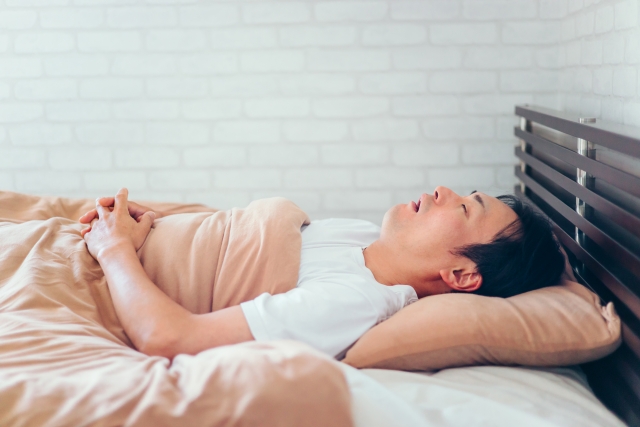
Anti-snoring pillows are designed to make breathing easier during sleep by adjusting head position, neck angle, or sleeping posture. They are commonly sold as “snoring pillows,” “anti-snore pillows,” “side-sleeping pillows,” or “sleep apnea pillows.”
Common design concepts include:
- Height and angle adjustment: Keeping the head and neck in a position that may reduce airway bending.
- Side-sleeping support: Encouraging a lateral sleeping position to reduce tongue base collapse.
- Smart vibration function: Detecting snoring and gently prompting a change in sleeping position.
- Foam and breathability design: Supporting the natural curve of the neck and reducing excessive sinking.
These ideas are not meaningless. However, they are all supportive measures. A pillow can help optimize sleep posture, but it does not directly treat the underlying cause of snoring in every patient.
Why Snoring Happens: The Airway Mechanism
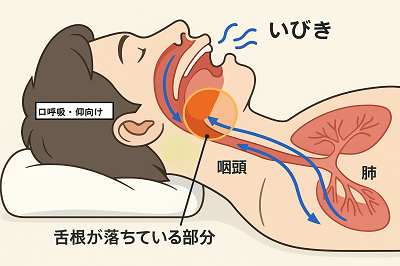
Snoring is the vibration sound that occurs when air passes through a narrowed airway during sleep. The important question is not simply “Which pillow is best?” but rather:
Where is the airway narrowing, and why?
As an anesthesiologist with experience in more than 20,000 general anesthesia cases, Director Sugaya has evaluated the airway in many sleeping patients. When muscles relax during sleep, the airway becomes more vulnerable to collapse. This is the same basic mechanism behind many cases of snoring and obstructive sleep apnea.
Main causes of airway narrowing during sleep
- Tongue base collapse: When sleeping on the back, the tongue may fall backward and narrow the throat. This type may improve with side sleeping.
- Soft palate and uvula vibration: The soft tissue at the back of the throat vibrates during breathing. A pillow alone often cannot solve this.
- Obesity and fat deposition: Fat around the neck and throat can compress the airway from outside.
- Jaw and skeletal structure: A small jaw or receding lower jaw can make the airway naturally narrow.
- Nasal obstruction: Nasal congestion or allergic rhinitis may promote mouth breathing and worsen snoring.
- Alcohol and fatigue: Muscle relaxation becomes stronger, making the airway more likely to narrow.
This is why one person improves with a pillow while another does not. If your snoring is mainly caused by tongue base collapse while sleeping on your back, a side-sleeping pillow may help. If your snoring is caused by soft palate vibration, obesity, nasal obstruction, or sleep apnea, the effect of a pillow is often limited.
Who May Benefit from an Anti-Snoring Pillow?
From a clinical perspective, an anti-snoring pillow may be worth trying if your symptoms match the following patterns:
- You snore mainly when sleeping on your back
- Your snoring improves when you sleep on your side
- Your BMI is within the normal range
- You do not have obvious neck or throat fat accumulation
- Your snoring worsens mainly after alcohol or extreme fatigue
- Your snoring is mild
- You have never been told that you stop breathing during sleep
- You do not have strong daytime sleepiness
In these cases, a pillow may work as a reasonable supportive tool. It may help maintain a posture that reduces tongue base collapse and keeps the airway more open.
Who Is Unlikely to Improve with a Pillow Alone?
A pillow alone is often insufficient if any of the following apply:
- You snore even when sleeping on your side
- Your family says you stop breathing during sleep
- You wake up choking or gasping
- You feel very sleepy during the day
- You have morning headaches
- Your snoring has worsened year by year
- You have obesity or a thick neck
- You have chronic nasal congestion
- You have enlarged tonsils
- You have a small jaw or receding lower jaw
Important: Possible Sleep Apnea
If you have loud snoring, witnessed pauses in breathing, daytime sleepiness, morning headaches, high blood pressure, or poor concentration, obstructive sleep apnea may be present. Sleep apnea cannot be treated properly with a pillow alone. Medical evaluation is recommended.
Types of Anti-Snoring Pillows and Their Limitations
1. Memory foam or high-resilience foam pillows
These pillows aim to support the natural curve of the neck and reduce excessive bending of the airway. They may help mild snoring related to poor neck position, but their effect is usually limited if the main cause is soft palate vibration or sleep apnea.
2. Side-sleeping pillows and body pillows
Side-sleeping pillows can help maintain a lateral sleeping position. They may be useful when snoring is caused by tongue base collapse in the supine position. However, many people return to sleeping on their back during the night, especially if the pillow is uncomfortable.
3. Smart pillows with snoring detection
Some smart pillows detect snoring sounds and vibrate to prompt a change in position. These may be interesting as tracking or posture-support tools. However, frequent vibration may disturb sleep quality in some people.
4. Wedge pillows or inclined pillows
Wedge pillows raise the upper body and may reduce airway narrowing in some people. They may also help patients with reflux symptoms. However, their effect on snoring varies widely and they may cause neck or back discomfort if the angle is not suitable.
How to Choose the Right Pillow for Snoring
If you want to try an anti-snoring pillow, the following points are important.
| Point | Medical Perspective |
|---|---|
| Check whether side sleeping helps | If snoring clearly decreases on your side, a side-sleeping pillow may help. |
| Choose the right height | The pillow should support the natural neck curve without pushing the chin too far forward or backward. |
| Do not rely on price alone | A more expensive pillow is not always more effective. Matching the cause of snoring is more important. |
| Use a trial period if possible | The effect cannot be known until you actually sleep with it. |
| Evaluate after 2–4 weeks | If there is no improvement after several weeks, medical evaluation should be considered. |
Can a Pillow Cure Sleep Apnea?
No. A pillow may reduce snoring in selected cases, but it cannot reliably treat obstructive sleep apnea.
Sleep apnea is a medical condition in which breathing repeatedly stops or becomes shallow during sleep. It can reduce oxygen levels and increase stress on the heart and brain. In moderate to severe cases, CPAP therapy is usually the standard treatment.
If sleep apnea is suspected, the first step is not to buy another pillow. The first step is to evaluate breathing during sleep through a sleep test.
Pillow vs CPAP vs Laser Snoring Treatment
| Option | Main Purpose | Best Candidates | Limitations |
|---|---|---|---|
| Anti-snoring pillow | Posture support | Back-sleeping snorers who improve on their side | Cannot treat many anatomical causes or sleep apnea |
| CPAP | Keeps the airway open with air pressure | Moderate to severe obstructive sleep apnea | Requires nightly device use and mask tolerance |
| Laser snoring treatment | Tightens soft palate and throat tissues | Simple snoring, soft palate vibration, selected mild to moderate cases | Not a replacement for CPAP in severe sleep apnea |
| Oral appliance | Moves the lower jaw forward | Selected mild sleep apnea or jaw-related snoring | May cause jaw discomfort and requires dental management |
When a Pillow Does Not Work: Possible Medical Causes
If your snoring does not improve after changing pillows, the cause may be medical rather than environmental.
1. Soft palate or uvula vibration
The soft palate and uvula may vibrate during breathing, producing loud snoring. Since a pillow does not directly tighten these tissues, improvement may be limited. In selected cases, non-surgical laser snoring treatment may be considered.
2. Obstructive sleep apnea
If breathing repeatedly stops during sleep, a pillow is not enough. Sleep testing is necessary to evaluate severity and determine whether CPAP or another treatment is needed.
3. Obesity or thick neck
Fat around the neck can compress the airway from outside. Weight management may be important. Medical weight loss and lifestyle support may be considered depending on the patient’s condition.
4. Nasal obstruction
Allergic rhinitis, sinusitis, or chronic nasal congestion may cause mouth breathing and worsen snoring. Treating nasal symptoms may be necessary.
5. Jaw or skeletal structure
A small jaw or receding lower jaw can make the airway narrow even with a good pillow. In such cases, an oral appliance or other medical approach may be considered.
What Ueno Snoring Clinic Can Do
At Ueno Snoring Clinic, we evaluate snoring from the perspective of airway anatomy, sleep quality, and sleep apnea risk. We do not assume that one treatment fits everyone.
1. Sleep apnea evaluation
When sleep apnea is suspected, sleep testing can help evaluate breathing, oxygen levels, and apnea severity during sleep.
2. CPAP therapy
For moderate to severe obstructive sleep apnea, CPAP therapy may be recommended as a standard treatment.
3. Laser snoring treatment
For snoring mainly caused by vibration of the soft palate or throat tissues, self-pay laser snoring treatment may be considered. Ueno Snoring Clinic uses Dual Deep Thermia®, a non-surgical laser approach for suitable patients.
4. Lifestyle and airway advice
Weight, alcohol, nasal breathing, sleeping posture, and mouth breathing can all affect snoring. Treatment planning should consider the full picture.
Why International Patients Choose Ueno Snoring Clinic
- English-speaking doctor: Medical consultation is available in English
- Convenient Tokyo location: Near Ueno Station
- Non-surgical laser snoring treatment: Suitable for selected patients who want minimal downtime
- Sleep apnea evaluation: Medical assessment when snoring may be a sign of apnea
- International patients welcome: Helpful for foreign residents and visitors in Japan
- Personalized treatment plan: Pillow, lifestyle, CPAP, laser, and testing are considered based on the cause
When Should You See a Doctor?
You should consider medical consultation if:
- Your snoring remains loud despite changing pillows
- You snore even when sleeping on your side
- Your partner says you stop breathing
- You wake up choking or gasping
- You have daytime sleepiness
- You have morning headaches
- You have high blood pressure
- Your snoring has worsened over time
- You are concerned about sleep apnea
Trying a pillow is not wrong. But if it does not work within 2–4 weeks, continuing to buy new products may delay proper diagnosis and treatment.
Summary: A Pillow Is a Support Tool, Not a Root Treatment
An anti-snoring pillow may help people whose snoring is strongly related to sleeping position, especially back sleeping. It may be useful when snoring improves clearly with side sleeping.
However, many causes of snoring cannot be solved by a pillow alone. Soft palate vibration, obesity, nasal obstruction, jaw structure, and obstructive sleep apnea require different approaches.
If your pillow did not work, that does not mean your snoring cannot be treated. It may simply mean that the cause is not something a pillow can address.
For patients looking for snoring treatment in Tokyo, laser snoring treatment in Japan, or an English-speaking sleep clinic near Ueno Station, Ueno Snoring Clinic provides medical evaluation and treatment options tailored to each patient.
Book a Snoring Consultation in Tokyo
If you have tried an anti-snoring pillow but still snore, or if sleep apnea may be present, please consult Ueno Snoring Clinic.
*The applicability of insurance vs. self-pay treatment differs depending on your symptoms and test results. The important first step is to check your current condition.
Frequently Asked Questions
Q. Can a pillow stop snoring completely?
A. It may reduce snoring in selected cases, especially when snoring occurs mainly on the back and improves with side sleeping. However, many cases require medical evaluation.
Q. What is the best pillow for snoring?
A. There is no single best pillow for everyone. The right pillow depends on whether your snoring is related to posture, tongue position, neck angle, or another cause.
Q. Does side sleeping help snoring?
A. Side sleeping may help when snoring is caused by tongue base collapse in the supine position. If snoring continues even on your side, another cause may be present.
Q. Can a pillow cure sleep apnea?
A. No. A pillow cannot reliably treat obstructive sleep apnea. If sleep apnea is suspected, a sleep test is recommended.
Q. How long should I try an anti-snoring pillow?
A. If there is no clear improvement after 2–4 weeks, medical evaluation should be considered.
Q. Are smart snoring pillows useful?
A. They may help with posture awareness or sleep tracking, but they do not treat the underlying medical cause of snoring or sleep apnea.
Q. Is a high pillow better for snoring?
A. Not always. A pillow that is too high may bend the neck and worsen airway narrowing. Proper neck alignment is more important than height alone.
Q. Is a wedge pillow good for snoring?
A. It may help some people, especially those with reflux or positional symptoms, but the effect on snoring varies.
Q. What should I do if my partner says I stop breathing?
A. You should consider a sleep apnea evaluation. Witnessed pauses in breathing are an important warning sign.
Q. Can laser treatment help if a pillow does not work?
A. If snoring is mainly caused by soft palate or throat tissue vibration, laser snoring treatment may be an option for suitable patients.
Q. Is CPAP better than a pillow?
A. For moderate to severe obstructive sleep apnea, CPAP is generally a standard medical treatment. A pillow is only a supportive tool.
Q. Can tourists visit Ueno Snoring Clinic?
A. International visitors and foreign residents in Japan may consult Ueno Snoring Clinic. Treatment suitability depends on symptoms, examination findings, and schedule.
Q. Is English consultation available?
A. Yes. Ueno Snoring Clinic provides English consultation for international patients and foreign residents in Japan.
References
- Clinical evidence on positional therapy for snoring and obstructive sleep apnea.
- Guidelines on diagnosis and treatment of obstructive sleep apnea.
- Evidence regarding CPAP therapy for moderate to severe obstructive sleep apnea.
- Clinical reports on non-surgical laser treatment for snoring and soft palate vibration.
- Research on upper airway anatomy, tongue base collapse, and sleep-disordered breathing.