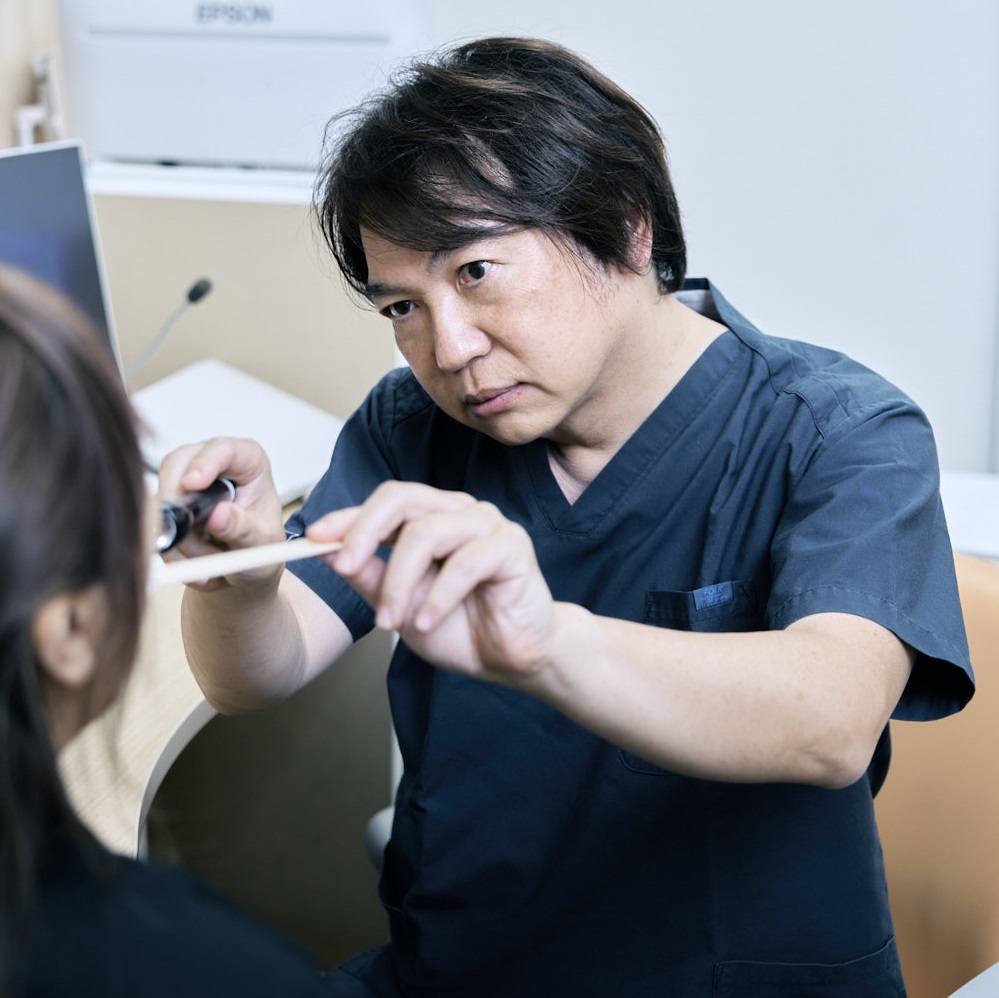
Ueno Snoring Clinic offers a range of options depending on your condition, including insurance-covered sleep testing and CPAP management, and self-pay snoring laser treatment. If you’d like to find out which treatment suits you, please start with an initial consultation.
Details of the tests and treatments offered at Ueno Snoring Clinic can be found here
Important: Snoring and Sleep Apnea Treatment Requires a Sleep Test
Some clinics that offer only self-pay care, and some cosmetic clinics, may not perform sleep testing. Before starting treatment, check whether the clinic performs a sleep test, or has a system for referring you to a medical institution where you can receive the necessary tests.
If sleep apnea is hidden behind your snoring and treatment begins without testing, it may be missed.
▶ Learn more about snoring and sleep apnea testing
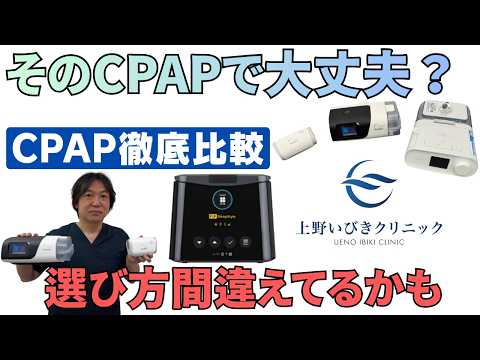
You’ll Want to Know This! A Complete Comparison of 5 CPAP Types — What Doctors Really Look For
Our doctor compares five different CPAP machines side by side and explains what actually matters when choosing one.
Watch the video
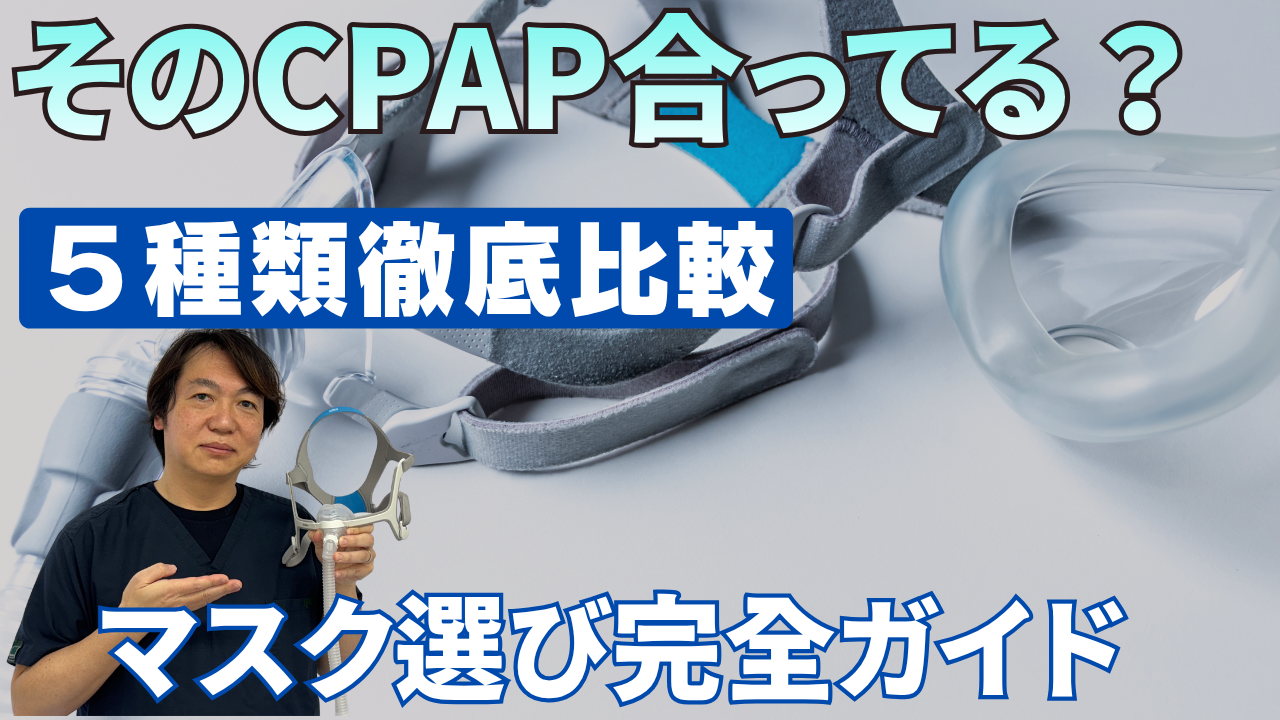
A Complete Comparison of CPAP Masks
We tried on and reviewed five different types of CPAP masks. 90% of CPAP comfort comes down to the mask.
Watch the video
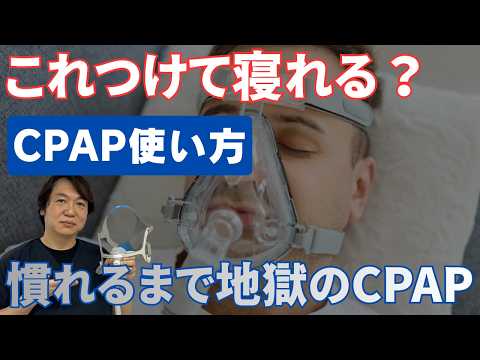
Do you have to use CPAP forever? A specialist explains how to use CPAP
A detailed explanation of how to use CPAP, with a real demonstration of what it feels like to wear the device.
Watch the video
Ueno Snoring Clinic was featured on Fuji TV’s “Live News It!” and on FNN Prime Online
Watch our clinic’s examination and explanation of sleep disorders, snoring, and sleep apnea.
Watch the video
Ueno Snoring Clinic was featured in an article on Nippon TV’s “news every.”
Please take a look as a starting point for thinking about getting evaluated for snoring, sleep apnea, or other sleep disorders.
Read the article
Reviewed by Our Director
Kazuyuki Sugaya
Director, Ueno Snoring Clinic / Anesthesiologist
Our director, with over 20,000 general anesthesia cases, focuses primarily on the diagnosis and treatment of snoring and sleep apnea, offering care tailored to each patient. [Insurance-Covered] Ueno Snoring Clinic
In this article, written for people troubled by a partner’s snoring, our Director, Kazuyuki Sugaya, explains the difference between insurance-covered care and self-pay laser treatment, how to think about costs, and what a visit involves.
🩺Comprehensive Snoring Treatment at Ueno Snoring Clinic
At Ueno Snoring Clinic, insurance-covered testing tells us whether apnea is present; depending on the results, we guide you to CPAP or to self-pay snoring laser treatment.
Insurance-Covered: Thorough Testing and Ongoing Treatment
- Simplified testing: Home screening for sleep apnea
- PSG testing: A detailed sleep study including brain waves, done at home
- CPAP treatment: The standard treatment for apnea that meets insurance criteria
Self-Pay: Address the Root Cause, Short-Term Focus
- Snoring laser treatment: For people whose testing confirms simple snoring
- Medically supervised weight loss: An option when weight gain is a contributing factor
*Whether a treatment is appropriate, and what it can achieve, differs from one person to the next, so an examination comes first.
Our Director’s book, “Curing Snoring with the Latest Treatments” (an Amazon Japan bestseller — #1 in General Medicine, #1 in Clinical Internal Medicine, #2 in Family Health & Wellness), also compares insurance-covered and self-pay snoring treatments.
New Book by Our Director
“Curing Snoring with the Latest Treatments”
A guide to the latest snoring treatments, written by an anesthesiologist who has overseen the sleep of more than 10,000 patients.
View on Amazon
Quick Answer
Loud snoring can be a sign of sleep apnea. In Japan, sleep apnea can be tested for (including with a home test) and treated (with CPAP) under health insurance, though insurance-covered CPAP requires meeting conditions such as an AHI threshold and symptoms. If testing shows snoring without apnea, options include self-pay snoring laser treatment. The smoothest order is insurance-covered testing first, then choosing treatment based on the results. Costs depend on the care provided and your co-payment rate, so please confirm at your visit. And if your partner won’t budge, you can come and consult us on your own first.
📋 What This Article Covers
- What happens if a partner’s snoring is left alone?
- Snoring has more than one cause
- Can snoring be treated under insurance? The steps of a visit
- When CPAP is insurance-covered, and how to think about costs
- Not keen on CPAP? Laser treatment as an option
- Insurance-covered care or laser treatment: which to choose?
- When it’s hard to say “please see a doctor”
What Happens If a Partner’s Snoring Is Left Alone?
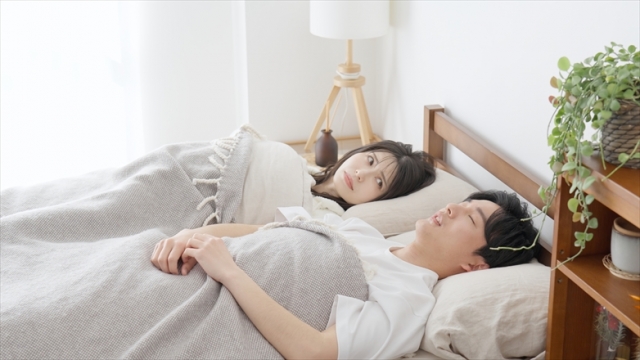
Snoring is more than a noise problem. For a partner kept awake night after night, it’s a sleep problem and a quality-of-life problem, and plenty of couples end up sleeping in separate rooms. Swedish researchers (Ulfberg et al., 2000) reported that women sharing a home with a heavy snorer had roughly double the rate of insomnia-type complaints, excessive daytime sleepiness, and fatigue seen in other women.
Just as important is the snorer’s own health. Loud snoring can be a sign of sleep apnea, a condition in which breathing stops again and again during sleep, often progressing without the person noticing. It’s not unusual for someone who thought they “just snored” to find abnormal results at a health checkup.
| Area of concern |
What has been linked to sleep apnea |
| Daytime symptoms |
Strong sleepiness, poor concentration, dozing off at work, and a higher risk of traffic accidents |
| Heart and circulation |
Links with high blood pressure, heart disease, and stroke |
| Metabolism |
Links with diabetes (see Sleep Apnea and Diabetes) |
| Mood |
Links with low mood and depressive symptoms (see Can Sleep Apnea Increase Your Risk of Depression?) |
For example, a scientific statement from the American Heart Association reports that obstructive sleep apnea is common in people with high blood pressure and other cardiovascular conditions. The size of the risk differs between individuals, but sleep apnea is a condition that can be expected to improve with proper testing and treatment. Wanting your partner to see a doctor is entirely reasonable.
Snoring Has More Than One Cause
Before thinking about treatment, it helps to understand the cause. Snoring arises when the airway narrows, but the reason it narrows varies.
| Type of cause |
What’s happening |
Related approach |
| Throat and soft palate |
The soft palate and uvula at the back of the throat slacken and vibrate; a common type of snoring |
After an examination confirms suitability, laser treatment may be an option (see The Soft Palate and Snoring) |
| Blocked nose or septum |
A blocked nose forces mouth breathing, which encourages snoring; allergic rhinitis or a deviated septum may be behind it |
Nasal treatment (see Hay Fever & Snoring) |
| Weight and the tongue falling back |
Fat around the neck and the tongue block the airway when lying on the back |
Weight loss and sleeping position (see Why Side-Sleeping Stops Some People’s Snoring) |
| Sleep apnea |
The factors above combine so that breathing repeatedly stops during sleep; severity is measured by the AHI |
Diagnosed by testing; CPAP and other treatment considered according to severity |
Because the right treatment depends on the cause, getting examined and tested first is what matters. For an explanation of the AHI, see What Is AHI?
Can Snoring Be Treated Under Insurance? The Steps of a Visit
In short, yes: when the conditions are met, testing and treatment for snoring and sleep apnea are covered by Japanese health insurance. The key is that coverage applies to diagnosing and treating sleep apnea, not to snoring on its own. A typical insurance-covered visit goes like this:
| Step |
What happens |
| 1) Interview and examination |
We check symptoms such as how loud the snoring is, daytime sleepiness, and morning headaches. If you come along and say “this is what the snoring sounded like” or “they stopped breathing,” that alone is valuable information. Even when the snorer has no awareness of it, a partner’s account is an important clue for diagnosis |
| 2) Simplified sleep test (at home) |
A small device is taken home and worn for one or two nights to record data during sleep. Blood oxygen levels and breathing are used to assess whether apnea is present and how severe it is. No hospital stay is needed, and it is insurance-covered (see Simplified Sleep Test vs. PSG) |
| 3) Results and diagnosis |
Based on the number of breathing pauses per hour (AHI), we decide whether treatment is needed. Sleep apnea is generally diagnosed when the AHI is 5 or more with symptoms, and the treatment plan depends on severity |
| 4) Treatment, if needed |
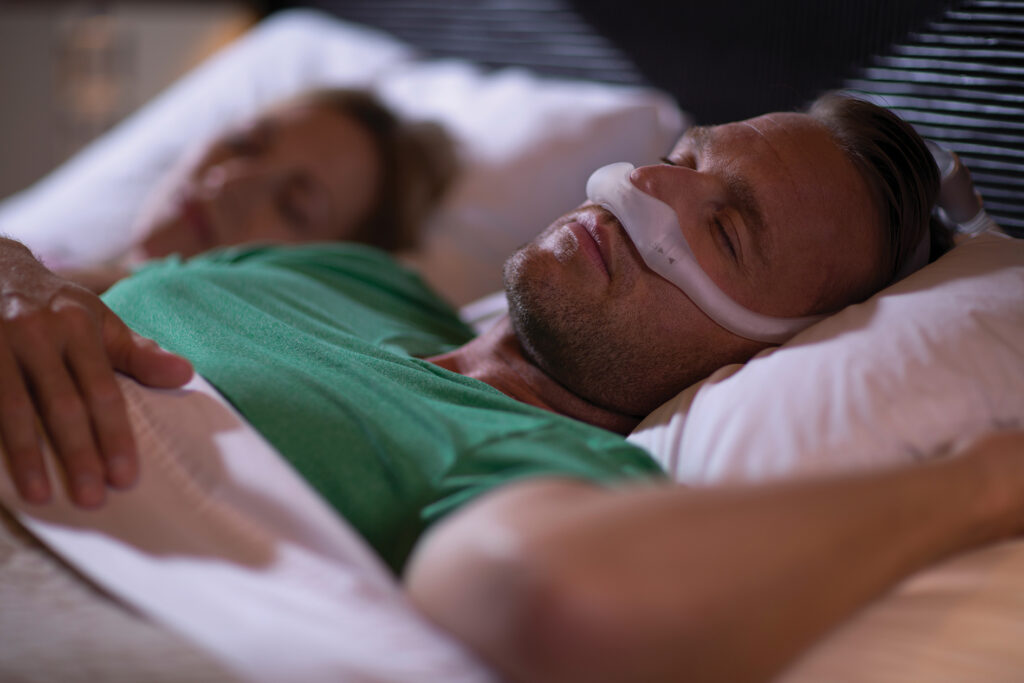
If the conditions are met, CPAP (continuous positive airway pressure) can be started under insurance. A mask worn at night delivers air pressure that keeps the airway open and prevents apnea, with regular visits to manage and adjust the machine |
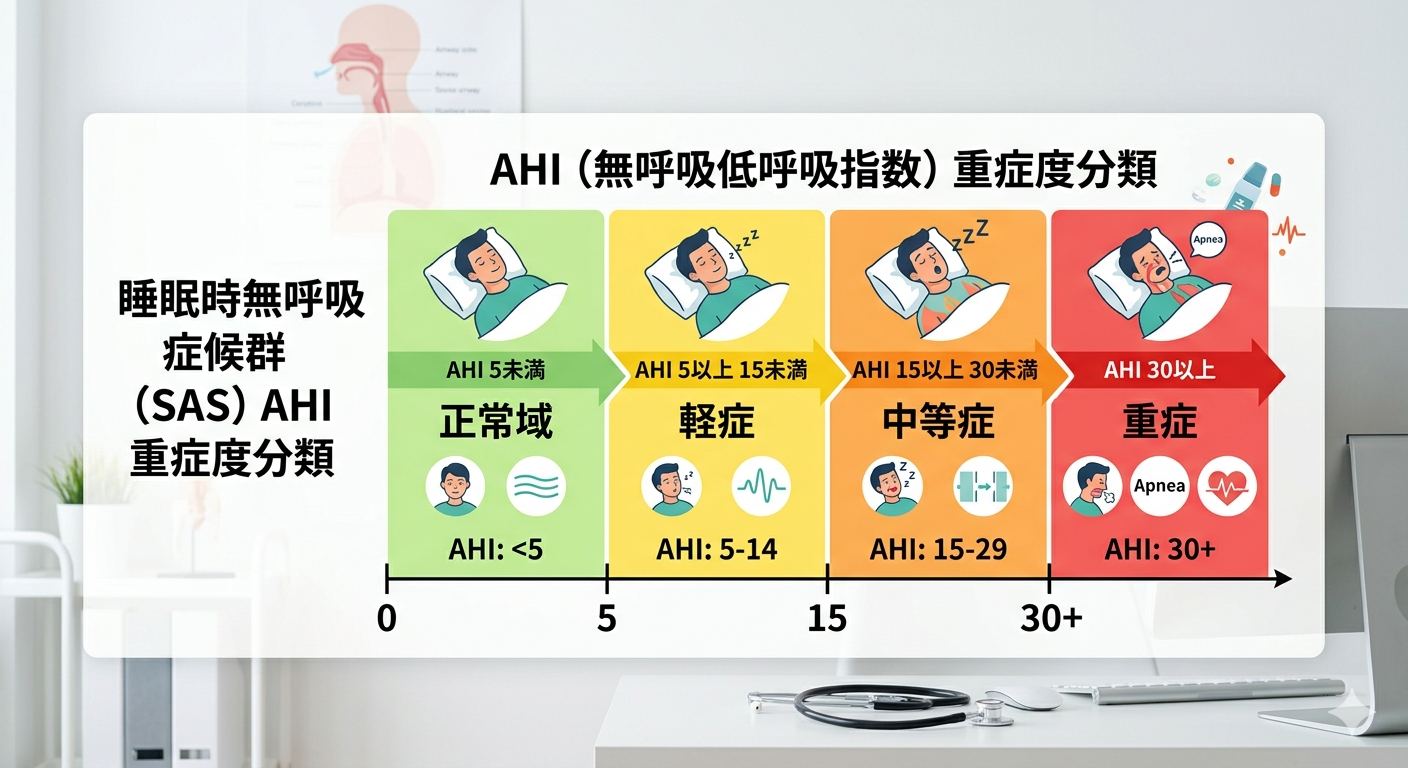
If a simplified test isn’t enough to reach a conclusion, a more detailed PSG study may be carried out, which can also be done at home at our clinic.
When CPAP Is Insurance-Covered, and How to Think About Costs
“Covered by insurance” doesn’t mean unconditionally. In the medical fee revision that took effect in June 2026, the AHI thresholds used as a guide were lowered as follows:
| Test |
Up to May 2026 |
From June 2026 |
| Simplified sleep test (home) |
AHI of 40+ |
AHI of 30+ |
| PSG (polysomnography) |
AHI of 20+ |
AHI of 15+ |
The published billing requirements look not only at the AHI number but also at whether there are symptoms such as strong daytime sleepiness or morning headaches that interfere with daily life. When the AHI is 30 or more, findings such as sleep fragmentation on PSG are not required, and the symptom requirement becomes the main condition. Whether coverage applies is decided by the doctor at examination; for the exact requirements, please check with a medical institution or the official Ministry of Health, Labour and Welfare notices. For an overview, see Snoring Treatment in Japan: A Complete Guide.
Watch out for outdated information
You may still see “CPAP if the AHI is 20 or more” in older explanations, but the criteria have since been revised.
Here is a simple way to think about the costs:
| Item |
Cost under insurance (as a rough guide) |
| First and follow-up consultations |
Consultation fees, depending on your co-payment rate (10–30%) |
| Simplified sleep test |
A test fee of a few thousand yen at a 30% co-payment |
| PSG |
Higher than the simplified test; please confirm at your consultation |
| CPAP (monthly management) |
Including machine rental and management fees, a few thousand yen a month at a 30% co-payment; varies with additional fees |
These are rough guides only. The actual amount depends on the care provided, your type of insurance, your co-payment rate, and Japan’s high-cost medical expense benefit, so please confirm at your visit. Because costs are lower than with self-pay care, this can make it easier to suggest a visit if money was the sticking point.

For what to expect after starting CPAP, see CPAP Treatment in Japan: How It Works, Cost, Insurance Coverage, and Alternatives.
Not Keen on CPAP? Laser Treatment as an Option
CPAP is the standard treatment for sleep apnea. Still, some people are reluctant to wear a mask every night, and others are bothered by snoring even though testing did not find apnea. For them, one option is snoring laser treatment (self-pay).
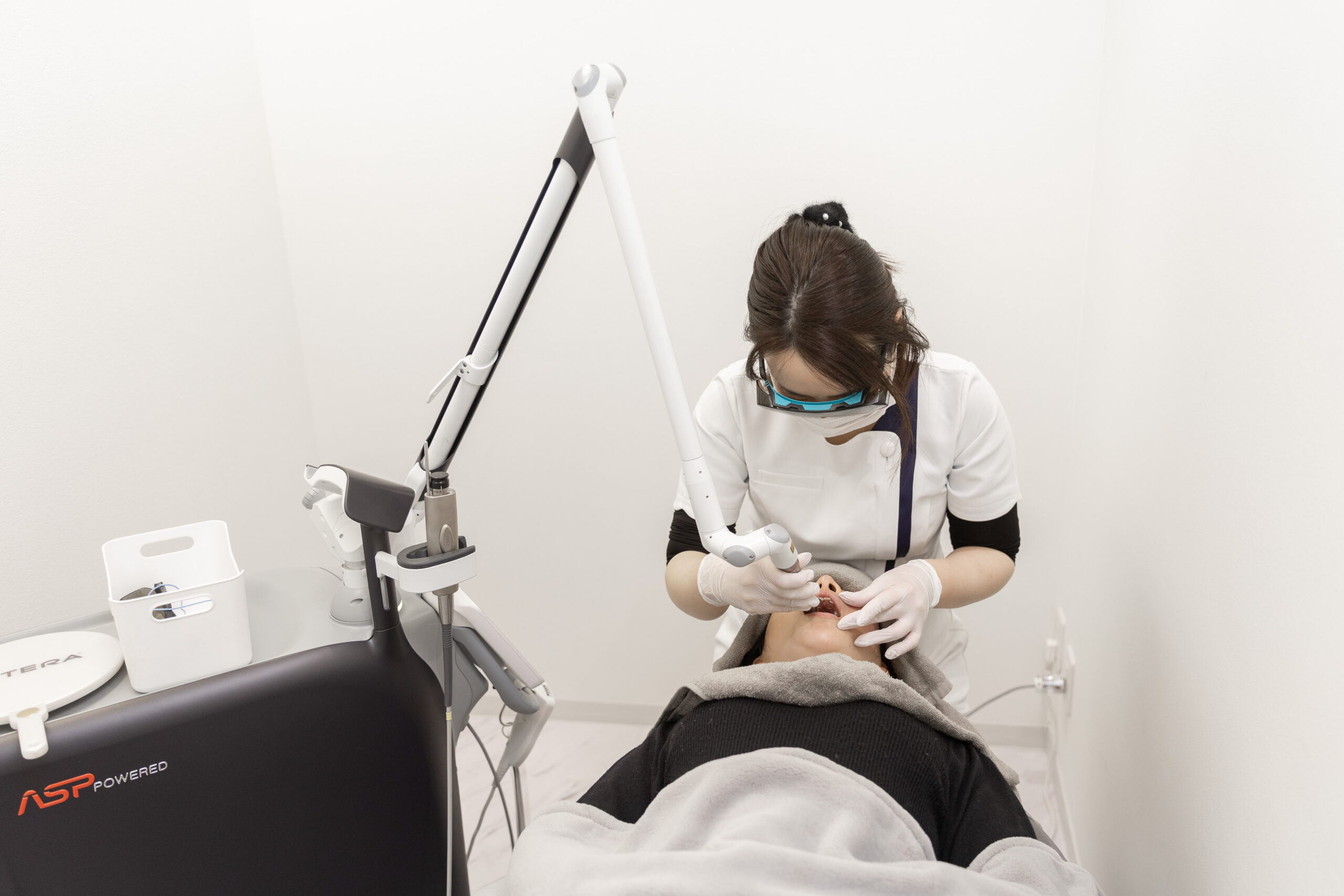
Snoring laser treatment applies laser energy to the soft palate, uvula, and nearby tissue at the back of the throat, aiming to firm the tissue and reduce the vibration that causes snoring. It isn’t surgery, and it is completed in a short outpatient visit.
| Item |
Details |
| Where and how long |
Outpatient, same day, no hospital stay (about 15–20 minutes of laser time as a guide) |
| Insurance |
Self-pay; not covered by health insurance |
| Discomfort and daily life |
How it feels and how quickly you recover vary; we explain what to do on the day (such as eating) at your consultation |
| Effect |
Results vary; suitability is decided after the cause is assessed at examination |
| May suit people who |
Were not diagnosed with sleep apnea but are bothered by snoring; don’t want to use CPAP; are afraid of surgery or can’t be admitted to hospital; want improvement soon before a trip or a shared stay |
For the thinking behind laser treatment, see Do You Need a Sleep Study Before Laser Snoring Treatment?; for the device we use, see Dual Deep Thermia® Laser Snoring Treatment in Tokyo. Note that laser treatment assumes there is no apnea, or at least that the condition has been checked by testing. Starting it without testing when apnea is present risks missing the apnea.
Fees differ between clinics. For ours, please see our English website or contact us. You’re welcome to ask us about laser treatment at any time.
Insurance-Covered Care or Laser Treatment: Which to Choose?
Put simply, the smoothest route is insurance-covered testing first, then choosing treatment based on the results.
| Test result |
Main options |
Points to note |
| Sleep apnea diagnosed and insurance criteria met |
CPAP (insurance-covered) |
The standard treatment. If the look or noise is a concern, don’t stop on your own; ask about changing the mask |
| No sleep apnea, or mild |
Lifestyle changes, nasal treatment, a mouthpiece (not offered at our clinic), laser treatment (self-pay), and others |
Chosen according to the cause; suitability for laser treatment is decided at examination |
| Doesn’t want to use CPAP, or can’t keep it up |
Find out why and adjust (see Can You Ever Stop Using CPAP?), then discuss combining other treatments |
Don’t stop on your own; talk to your doctor |
At our clinic, we suggest a treatment suited to each patient’s situation based on their test results. Even if you’re still at the “not sure which is better” stage, please feel free to ask.
When It’s Hard to Say “Please See a Doctor”
When you mention the snoring, your partner may brush it off: “You’re exaggerating,” “No need for a doctor,” “I don’t notice anything.” In that case, wording like this tends to work better:
| Try to avoid |
Try instead |
| “Your snoring is so loud. Do something about it.” |
“I’m not getting any sleep.” (Talk about not being able to sleep together, rather than “your snoring”) |
| “You might be ill, so go and see a doctor.” |
“For your health, I’d like you to get checked once.” |
| (Not addressing worries about cost) |
“It seems the test is covered by insurance and doesn’t cost that much.” “Apparently there’s also a same-day laser treatment.” |
Concrete information can give them the nudge they need. If they still won’t move, you can visit or call us on your own first; we’re also happy to talk through how to persuade them. For more on raising the subject, see Husband’s Snoring Keeping You Up? A Wife’s Guide to Getting Help.
Care at Ueno Snoring Clinic
Ueno Snoring Clinic is a sleep-disorder clinic specializing in snoring and sleep apnea. The following are available under insurance:
- Interview and examination
- Simplified sleep testing (at home)
- PSG (at home, no hospital stay)
- Explanation of results and diagnosis
- CPAP recommendation and management, where needed
We also offer snoring laser treatment as self-pay care. Our Director has administered general anesthesia in more than 20,000 cases and brings that knowledge of airway and breathing management to his practice. We are fully appointment-based, and patients often tell us they appreciate clear explanations of specialist topics.
Summary: A Partner’s Snoring Is Something a Doctor Can Look Into
- Sleep apnea can lie behind snoring
- Sleep apnea can be tested for and treated under insurance (CPAP has conditions)
- The simplified home sleep test is insurance-covered too
- Besides CPAP, same-day laser treatment (self-pay) is an option
- We recommend insurance-covered testing first, then choosing treatment based on the results
- If the snorer won’t come, the partner can consult on their own first
One reason snoring gets left alone is a vague worry: “I don’t know where to go” or “it’ll be expensive.” In reality, a system is in place that lets you go from testing to treatment under insurance. For your partner’s health and for your own sleep, please take the first step and talk to us.
Worried About Your Partner’s Snoring? Start With a Conversation
Partners are welcome to consult on their own. By appointment only; same-day appointments are often available.
Frequently Asked Questions
Q. Is it OK to have snoring treatment at a self-pay-only clinic or a cosmetic clinic?
A. Some clinics that offer only self-pay care, and some cosmetic clinics, may not perform sleep testing. Before starting treatment, check whether the clinic performs a sleep test, or has a system for referring you to a medical institution where you can receive the necessary tests. If sleep apnea is hidden behind your snoring and treatment begins without testing, it may be missed. We recommend first checking your condition at a medical institution that offers sleep testing (simplified testing or PSG). For details, see
Simplified Sleep Test vs. PSG.
Q. Where should my partner go for their snoring?
A. Look for a medical institution that treats sleep apnea, such as a sleep clinic, a snoring clinic, or a respiratory medicine department. Before treatment, check that it performs sleep testing (simplified testing or PSG) or can arrange the tests you need.
Q. Can health insurance be used for snoring treatment?
A. Not for snoring on its own, but when testing leads to a diagnosis of sleep apnea, treatment such as CPAP is insurance-covered. Sleep tests (simplified testing and PSG) are also insurance-covered. Snoring laser treatment is self-pay and not covered.
Q. What are the conditions for insurance-covered CPAP?
A. Since the June 2026 revision, the AHI guide is 30 or more on a simplified test (previously 40) and 15 or more on PSG (previously 20). Besides the AHI, conditions include symptoms such as strong daytime sleepiness or morning headaches that interfere with daily life, and PSG findings; when the AHI is 30 or more, the symptom requirement is the main condition. The doctor decides whether coverage applies, and the exact requirements should be confirmed with a medical institution or the official Ministry of Health, Labour and Welfare notices.
Q. How much does insurance-covered care cost?
A. It depends on the care provided, your type of insurance, and your co-payment rate. With a 30% co-payment, a simplified test costs a few thousand yen, and monthly CPAP management is also a few thousand yen a month as a rough guide, varying with additional fees. Please confirm the exact amount at your visit.
Q. Is snoring laser treatment covered by insurance?
A. No, it is self-pay. Fees differ between clinics; for ours, please see our English website or contact us.
Q. Can someone with apnea have laser treatment?
A. The first step is to check by testing whether there is apnea and how severe it is. If there is apnea that meets insurance criteria, CPAP is the standard option. Whether laser treatment is suitable is decided at examination.
Q. How does the simplified sleep test work?
A. You take a small device home and wear it for one or two nights to record blood oxygen levels and breathing during sleep. No hospital stay is needed, and you’re tested in your usual surroundings.
Q. What if my partner doesn’t want to see a doctor?
A. Try saying, without blame, “I’m not getting any sleep” or “For your health, I’d like you to get checked once.” Concrete facts, such as “the test is covered by insurance” and “it isn’t that expensive,” can also help. You can also consult us on your own first.
Q. Can I come for a consultation without my partner?
A. Yes. You’re welcome to visit or call us, and we’re happy to discuss how to persuade your partner.
*This article is a general explanation, written for a broad audience and based on the sources above together with our clinic’s own clinical experience. It is not a substitute for medical advice. Costs shown are rough guides and vary with the care provided and your insurance. If you are concerned about snoring or sleep apnea, please consult a medical institution for a proper evaluation.