Ueno Snoring Clinic offers a range of options depending on your condition, including insurance-covered sleep testing and CPAP management, and self-pay snoring laser treatment. If you’d like to find out which treatment suits you, please start with an initial consultation.
Details of the tests and treatments offered at Ueno Snoring Clinic can be found here
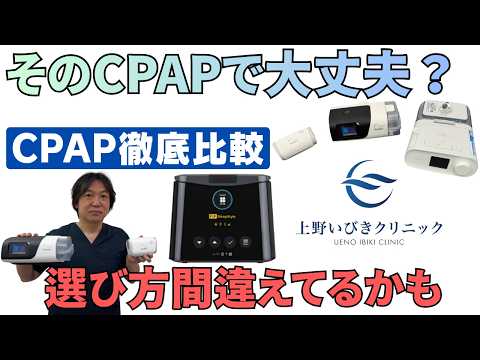
You’ll Want to Know This! A Complete Comparison of 5 CPAP Types — What Doctors Really Look For
Our doctor compares five different CPAP machines side by side and explains what actually matters when choosing one.
Watch the video
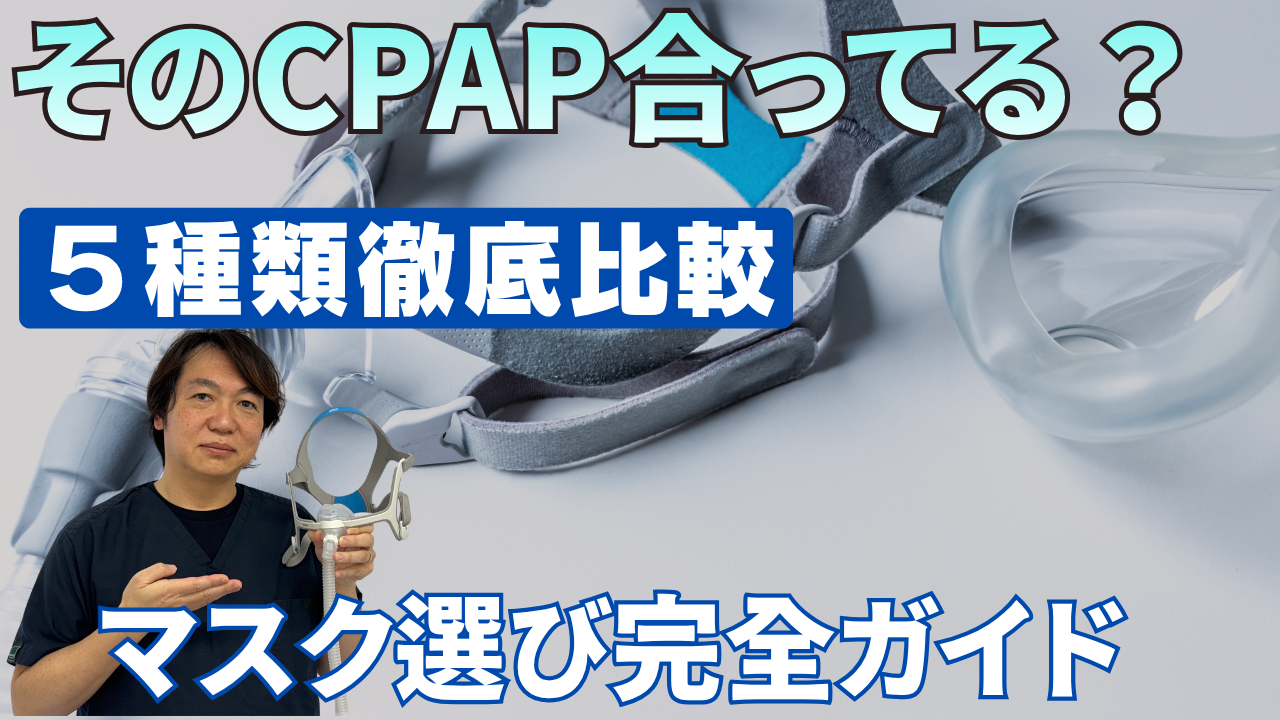
A Complete Comparison of CPAP Masks
We tried on and reviewed five different types of CPAP masks. 90% of CPAP comfort comes down to the mask.
Watch the video
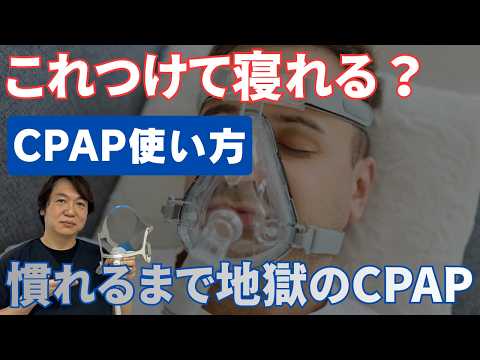
Do you have to use CPAP forever? A specialist explains how to use CPAP
A detailed explanation of how to use CPAP, with a real demonstration of what it feels like to wear the device.
Watch the video
Ueno Snoring Clinic was featured on Fuji TV’s “Live News It!” and on FNN Prime Online
Watch our clinic’s examination and explanation of sleep disorders, snoring, and sleep apnea.
Watch the video
Ueno Snoring Clinic was featured in an article on Nippon TV’s “news every.”
Please take a look as a starting point for thinking about getting evaluated for snoring, sleep apnea, or other sleep disorders.
Read the article
Reviewed by Our Director
Kazuyuki Sugaya
Director, Ueno Snoring Clinic / Anesthesiologist
Our director, with over 20,000 general anesthesia cases, focuses primarily on the diagnosis and treatment of snoring and sleep apnea, offering care tailored to each patient. [Insurance-Covered] Ueno Snoring Clinic
This article was reviewed by our Director, Kazuyuki Sugaya, and explains, from a practicing physician’s perspective, what to check before choosing a clinic, for snoring treatment and beyond.
🩺Comprehensive Snoring Treatment at Ueno Snoring Clinic
The causes of snoring range from throat structure to weight. Ueno Snoring Clinic does not lean toward any single treatment; instead, we propose the plan that suits you from a wide range of evidence-based options.
Insurance-Covered: Thorough Testing and Ongoing Treatment
- Simplified and PSG testing: A detailed analysis of your sleep
- CPAP treatment: The standard treatment for moderate-to-severe apnea
Self-Pay: Address the Root Cause, Short-Term Focus
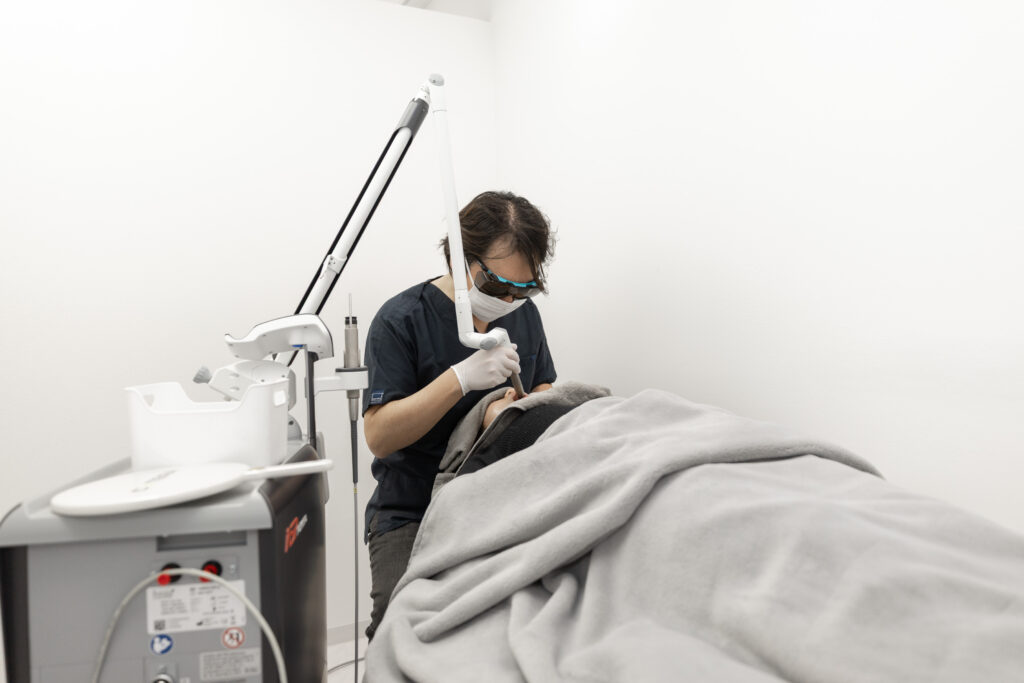
- Snoring laser treatment: A non-surgical procedure that tightens the tissue around the soft palate and uvula
- Medically supervised weight loss: An option when weight gain is a contributing factor
*As a clinic specializing in snoring, we work to resolve persistent snoring through both insurance-covered and self-pay care. Whether a treatment is suitable, and how well it works, varies from person to person.
Our Director’s book, “Curing Snoring with the Latest Treatments” (an Amazon Japan bestseller — #1 in General Medicine, #1 in Clinical Internal Medicine, #2 in Family Health & Wellness), also explains how to approach snoring treatment in more detail.
New Book by Our Director
“Curing Snoring with the Latest Treatments”
A guide to the latest snoring treatments, written by an anesthesiologist who has overseen the sleep of more than 10,000 patients.
View on Amazon
Quick Answer
A ranking-site position or a large number of reviews does not directly guarantee the quality of medical care, and claims such as “nationwide network” or “one of the largest in the industry” say little about the experience and skill of the individual doctor who will treat you. The two things most worth checking are: (1) whether the total cost is clearly shown, including the number of sessions and any extra fees, and (2) whether the director’s and treating doctors’ names and career histories are published, so it is clear who is responsible for your care. Use rankings and reviews as reference information only, and ask the clinic directly about anything that is unclear.
📋 What This Article Covers
- Why online ratings and real care don’t always match
- The five checks: rankings, reviews, size, pricing, and doctors
- Trustworthy clinics vs. clinics that need caution: a comparison table
- A final checklist before your visit
- Frequently asked questions
Why Online Ratings and Real Care Don’t Always Match

Why does this gap happen? One reason is that online ratings and rankings are not always a neutral evaluation.
Particularly in self-pay (non-insurance) medicine, attracting patients through heavy advertising spending is a common business model, so what you see online can easily be skewed. Advertising is not bad in itself; it can help necessary care reach the people who need it. But there can be a gap between what is being promoted most strongly and the care that truly serves the patient’s interests.
Below are five checks for choosing a clinic, useful for snoring treatment and for many other specialties. By the end, you should know exactly what to look at next.
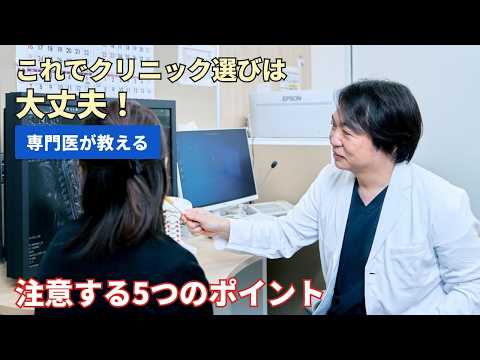
The Definitive Guide to Choosing a Clinic: 5 Points to Watch Out For
Our doctor explains in detail the five points to watch when choosing a clinic for snoring treatment.
Watch the video
Check 1: Don’t Take Ranking Sites at Face Value
Pages such as “Top 3 Clinics for X Treatment” or “5 Recommended Clinics” have become increasingly common in social media feeds and search results. They look like neutral comparison sites, and it’s tempting to think, “If it’s number one, it must be good.”
The first thing to do is check whether the page is an advertisement. On Facebook and other ad networks, a small “Sponsored” or “Ad” label often appears near the logo or in a corner of the post. If it’s an ad, the ranking is likely not an independent third-party evaluation but something created on behalf of the advertiser.
Also watch out for rankings with no clear basis. If the criteria and survey method are not disclosed, yet a clinic is confidently declared “No. 1,” the page may be steering you rather than ranking anything. It’s not unusual for every link to lead straight to one particular clinic’s booking page.
Ranking sites can be one piece of reference information, but it’s safest to assume that a ranking position does not equal quality of care.
Good to know: Japan’s rules on medical advertising
Under guidance from Japan’s Ministry of Health, Labour and Welfare, which also covers clinic websites, medical institutions may not advertise that they are superior to other clinics, may not use exaggerated or misleading claims, and may not advertise patients’ personal accounts of treatment results. For self-pay treatments described in detail, websites are expected to give information on usual costs and on the main risks and side effects. Superlative claims or glowing testimonials on a clinic’s own site can therefore be a warning sign in themselves.
Check 2: Use Reviews in Moderation, Not as Gospel

The next most common pattern is, “The reviews on Google or a portal site were good, so I went.”
Reviews include real experiences, so there’s no need to ignore them. A clinic generally cannot simply delete an unfavorable review because it dislikes it; platforms such as Google remove reviews mainly when they break the platform’s content policies. In that sense, reviews carry a certain degree of reliability.
On the other hand, reviews are not always completely fair. Google’s own policy prohibits fake, incentivized, and conflict-of-interest reviews, which shows that these problems do occur. For example:
- Low ratings posted deliberately against a competing clinic
- Unusually large numbers of glowing reviews gathered through requests or incentives
- Reviewers with extreme expectations whose ratings reflect emotion more than experience
- So few reviews that the overall impression comes down to luck
When reading reviews, don’t judge by the star rating alone; read the actual text. Does it say specifically what was good or what was disappointing? Are there runs of posts in a similar writing style? Is there a row of short, gushing comments? Look at the quality of the information, not just the score.
Check 3: “Big Means Safe” Rarely Holds in Medicine
Phrases like “nationwide network,” “dozens of locations,” or “a large group of clinics” are reassuring. In everyday service businesses, chains often standardize quality and have well-organized training.
Medicine, however, is different from a restaurant chain or convenience store that delivers the same product at the same quality everywhere. Examinations and procedures depend largely on a one-to-one relationship between the doctor or nurse and the patient, so skill, the care taken in explanations, and the quality of clinical judgment inevitably vary between individuals.
Being large can bring advantages, such as more available information or easier booking, but it does not guarantee the quality of care. There are excellent doctors at large clinic groups; equally, a large group may rotate staff frequently or assign less experienced doctors.
What matters is not size but who will actually treat you and what experience they have. Keep in mind, too, that larger budgets can also mean more prominent advertising.
Check 4: Is the Pricing Clear? Beware of Prices That Look Too Low

Pricing is the next key point. Most clinics publish their fees, but some ways of presenting them are easy to misread. Typical examples include:
- “From ¥XX” with no upper limit or conditions stated
- An unusually low price shown in large type
- “Just a few thousand yen a month,” framed around a payment plan
- A cheap first session, with little explanation of later sessions
- Many “options,” making the total impossible to predict
In these cases, problems such as “I was pushed into add-on options and paid far more than expected” or “I was pressured into a loan” are more likely after you arrive.
Of course, medical care is individual, and costs can legitimately vary with your symptoms and condition. The problem is when the reasons for, and range of, that variation are not explained. Trustworthy clinics tend to present their fees in an organized way, so you can see the approximate total, the number of sessions, and whether extra costs may apply.
Clear pricing is one of the most important foundations of trust in medical care.
Check 5: On a Clinic’s Website, the Doctors’ Careers and Who Is Responsible Matter Most

This last point is the most important. On a clinic’s website, look past the design and attractive photos to who is responsible for your care. Specifically, check:
- Whether the director’s and doctors’ names are listed
- Whether their careers (past positions, specialties, qualifications) are described specifically
- Whether you can tell which doctor handles which treatment
- Whether the clinic relies mainly on part-time doctors, or has full-time doctors who take responsibility
In Japan, after passing the national medical licensing exam, doctors complete a mandatory two-year initial clinical training program, and most then train further in a specialty. In recent years, however, a trend known as “chokubi” has drawn attention: young doctors who go straight into self-pay cosmetic medicine after initial training, without further specialty training in insurance-covered fields.
To be clear, this does not mean every such doctor is a poor choice, and self-pay medicine includes care of real value to patients. But when you are considering a treatment that is more invasive or that may require managing complications, enough clinical experience to respond calmly if something unexpected happens becomes important. Medical safety is often decided not by how things go when all is well, but by what happens when something goes wrong.
Be especially careful with clinics that don’t even list their doctors’ names. In some cases, the real owner may not be a physician, the doctors may be part-time and frequently changing, and the director may be little more than a name on paper. When that happens, responsibility for treatment can become unclear, and the risk of harm to patients rises.
That’s why, on any clinic’s website, you should check first who the director is, whether their career is clearly presented, and whether it is clear who is responsible.
Trustworthy Clinics vs. Clinics That Need Caution: A Comparison
Here are the five checks side by side. Use the table when looking into a clinic before your visit.
| Item |
Signs of a trustworthy clinic |
Signs that call for caution |
| Rankings |
Evaluation criteria and survey method are stated |
Unclear ad labeling and an unexplained “No. 1” claim |
| Reviews |
Specific content, with no unnatural bursts of posts |
Runs of short, purely glowing posts |
| Size claims |
Shows the treating doctor’s own background rather than size |
Stresses only size, such as “nationwide” or “industry No. 1” |
| Pricing |
Total cost, number of sessions, and any extra fees are clear |
Only “from ¥XX,” with the total including options unclear |
| Doctors’ backgrounds |
Names, careers, and areas of responsibility of the director and doctors are listed |
Doctors’ names not disclosed, or mainly part-time staff with unclear responsibility |
*These are general guidelines only. Please judge each clinic after checking and asking directly.
A Final Checklist Before Your Visit
- ☐ The director’s and treating doctors’ names and careers are listed
- ☐ Fees are shown so you can understand the total cost
- ☐ Reviews are specific, with no unnatural bursts of posts
- ☐ Any ranking explains its criteria and survey method
- ☐ You can check the experience of the doctor who will actually treat you, not just the clinic’s size
If two or more of these items can’t be checked, it’s a good idea to confirm directly through the clinic’s official website or by phone before your visit.
What Ueno Snoring Clinic Can Do
Ueno Snoring Clinic is a sleep-disorder clinic specializing in snoring and sleep apnea. Our Director, an anesthesiologist, takes responsibility for your care, and we start by checking your condition with testing before explaining options that range from insurance-covered CPAP to self-pay laser treatment.
If you have questions about our fees or how treatment works, please feel free to ask us before you book.
Summary: When Information Is Everywhere, Narrow Down What You Look At
This article covered five checks for choosing a clinic:
- Don’t trust ranking sites too much (consider whether they are ads)
- Treat reviews as reference only (check how specific they are)
- Big doesn’t automatically mean safe (individual skill varies in medicine)
- Make sure pricing is clear (can you see the total, and is there pressure to buy more?)
- Most important: the doctors’ careers and who is responsible for your care
A good clinic is not defined by flashy advertising or an attractive look. It is a medical institution that takes your concerns seriously, shows the basis for its advice, offers suitable treatment options, and takes responsibility for your care.
If you’re unsure where to go, use these five points as a checklist. The doctors’ careers and the responsibility structure in particular bear directly on your safety, and much of this can be checked on a clinic’s website. A little effort before your visit can help you make a choice you won’t regret.
In short: whether a clinic is a good one can be judged not by how its advertising looks or how big it is, but by whether it is clear who treats you, with what experience, and at what cost.
Talk to a Snoring Specialist
We’ll start with testing to see which treatment suits you, and explain the costs and options clearly before you decide. By appointment only; same-day appointments are often available.
Frequently Asked Questions
Q. What should I check at a minimum when choosing a clinic?
A. At a minimum, check two things: whether the names and careers of the director and treating doctors are listed, and whether fees are shown so you can understand the total cost. If either is unclear, be cautious.
Q. Can I trust a clinic with a lot of reviews?
A. A large number of reviews can be a rough guide, but judging by the count alone is risky. Check the quality of the content: whether posts are specific, and whether there are unnatural runs of posts in a similar style.
Q. Is the No. 1 clinic on a ranking site a safe choice?
A. Ranking sites may be advertising placements, and a ranking does not guarantee quality of care. Check whether the criteria and survey method are stated, and treat the ranking as just one piece of reference information.
Q. Do the same points apply when choosing a clinic for snoring treatment?
A. Yes. Snoring and sleep apnea care often combines insurance-covered and self-pay treatment, so it is even more important to check the breakdown of costs and whether explanations are based on test results.
Q. Should I get a second opinion?
A. If you are unsure or uneasy about a treatment plan, a second opinion is a reasonable option. Especially when considering treatment that includes self-pay care, hearing from more than one doctor can help you make a choice you are comfortable with.
*This article is a general explanation, written for a broad audience and based on the sources above together with our clinic’s own clinical experience. It is not a substitute for medical advice, and it does not evaluate any specific medical institution. If you are concerned about snoring or sleep apnea, please consult a medical institution for a proper evaluation.







いびきを最新治療で治す-表紙-1.png)