Ueno Snoring Clinic also welcomes questions about CPAP care and when to replace consumable parts. If you’re unsure how to clean your equipment, or when to replace a part, please don’t hesitate to ask.
Details of the tests and treatments offered at Ueno Snoring Clinic can be found here
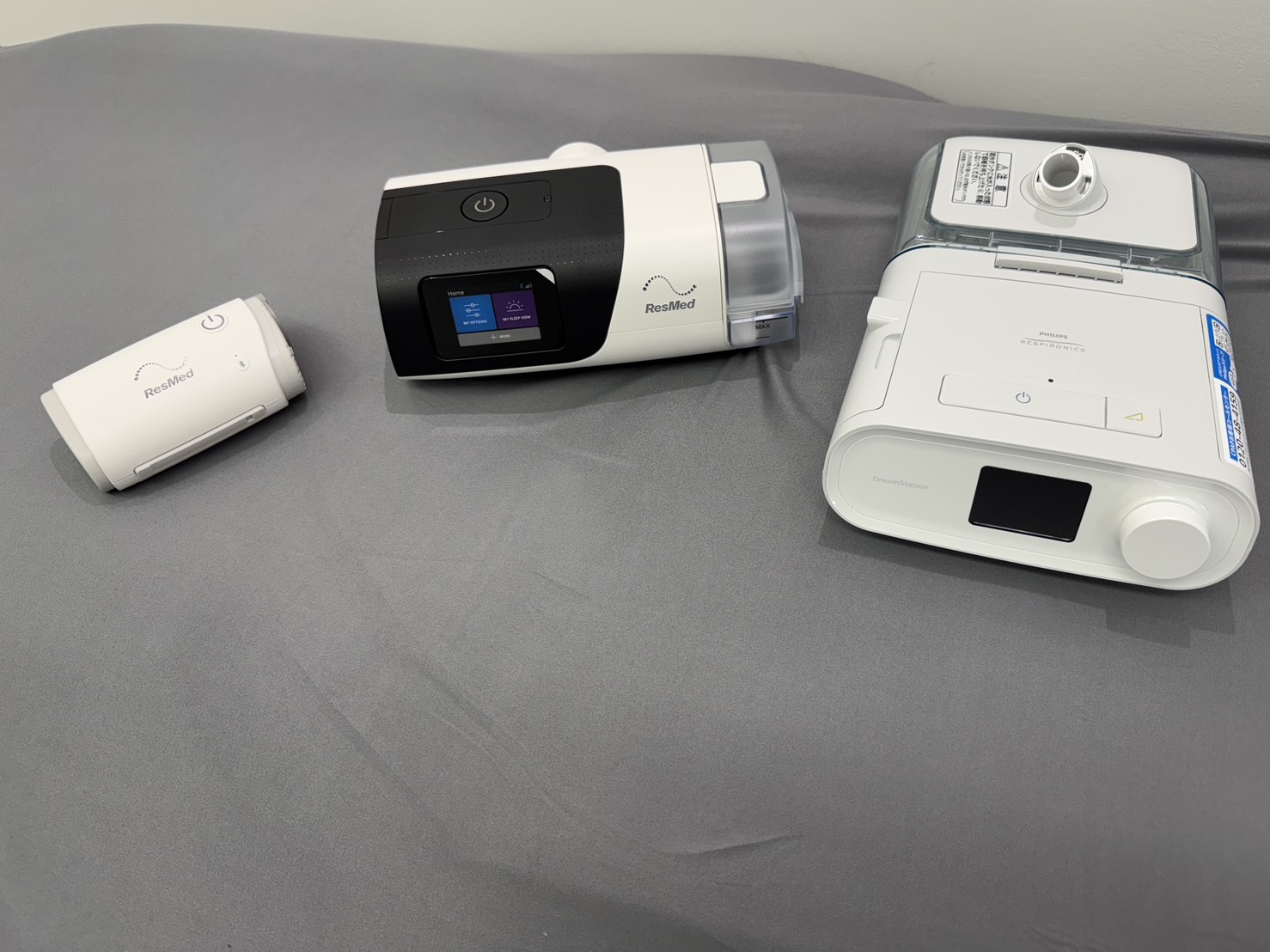
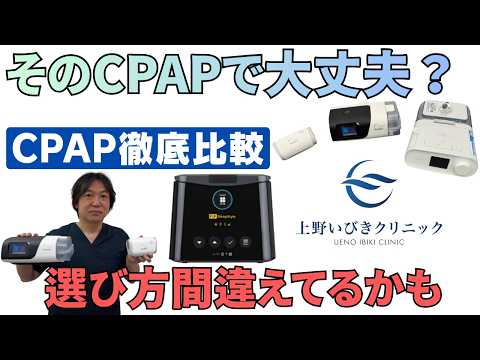
You’ll Want to Know This! A Complete Comparison of 5 CPAP Types — What Doctors Really Look For
Our doctor compares five different CPAP machines side by side and explains what actually matters when choosing one.
Watch the video
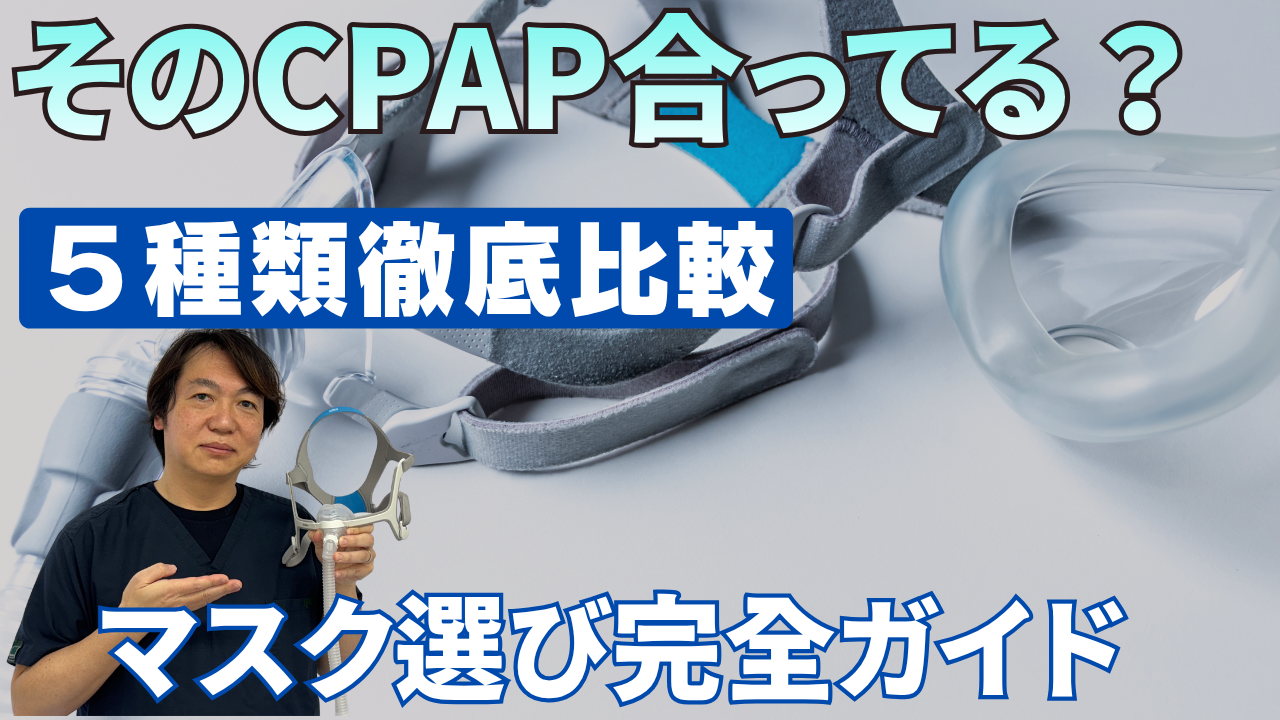
A Complete Comparison of CPAP Masks
We tried on and reviewed five different types of CPAP masks. 90% of CPAP comfort comes down to the mask.
Watch the video
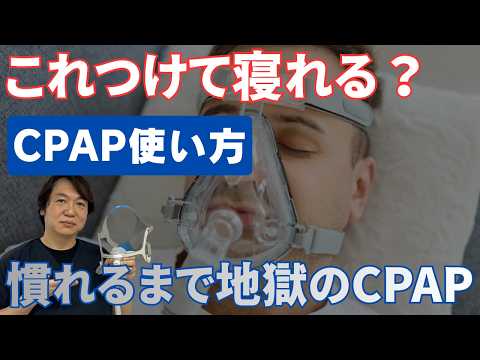
Do you have to use CPAP forever? A specialist explains how to use CPAP
A detailed explanation of how to use CPAP, with a real demonstration of what it feels like to wear the device.
Watch the video
Ueno Snoring Clinic was featured on Fuji TV’s “Live News It!” and on FNN Prime Online
Watch our clinic’s examination and explanation of sleep disorders, snoring, and sleep apnea.
Watch the video
Ueno Snoring Clinic was featured in an article on Nippon TV’s “news every.”
Please take a look as a starting point for thinking about getting evaluated for snoring, sleep apnea, or other sleep disorders.
Read the article
Reviewed by Our Director
Kazuyuki Sugaya
Director, Ueno Snoring Clinic / Anesthesiologist
Our director, with over 20,000 general anesthesia cases, focuses primarily on the diagnosis and treatment of snoring and sleep apnea, offering care tailored to each patient. [Insurance-Covered] Ueno Snoring Clinic
This article was reviewed by our Director, Kazuyuki Sugaya, and explains how to clean CPAP masks and hoses correctly and when to replace parts.
🩺Comprehensive Snoring Treatment at Ueno Snoring Clinic
Ueno Snoring Clinic provides ongoing CPAP support, from instruction on how to use the device to care and consumable parts.
Insurance-Covered: Thorough Testing and Ongoing Treatment
- Simplified and PSG testing: A detailed assessment of the cause of your snoring and apnea
- CPAP treatment: The standard treatment for moderate-to-severe apnea, with support to help you keep using it comfortably
Self-Pay: Address the Root Cause, Short-Term Focus
- Snoring laser treatment: Available as 3-, 6-, or 12-session courses
- Medically supervised weight loss: An option when weight gain is a contributing factor
*Replacement timing varies with how you use the equipment and with the manufacturer and model. Treat the figures as a guideline, and please consult us early if you notice signs of wear.
Our Director’s book, “Curing Snoring with the Latest Treatments” (an Amazon Japan bestseller — #1 in General Medicine, #1 in Clinical Internal Medicine, #2 in Family Health & Wellness), also covers this topic in more detail.
New Book by Our Director
“Curing Snoring with the Latest Treatments”
A guide to the latest snoring treatments, written by an anesthesiologist who has overseen the sleep of more than 10,000 patients.
View on Amazon
Quick Answer
Think of CPAP care in two tiers: daily and weekly. Each day, a quick wipe or rinse of the mask cushion and emptying the humidifier is enough. Once a week, take the mask, headgear, and hose apart and wash them with a mild, neutral detergent. As a rule, use only mild detergent, and avoid bleach, alcohol, drying in direct sunlight, and ozone or UV “sanitizing” devices. Parts also wear out: a typical guideline is 1–3 months for the cushion and roughly 6–12 months for the headgear and hose, though some manufacturers recommend shorter intervals, so check your manual and watch for signs of wear.
📋 What This Article Covers
- Why CPAP needs regular cleaning
- Daily care
- The weekly deep clean
- What NOT to do when cleaning
- Replacement guidelines for each part
Why Does CPAP Need Regular Cleaning?
CPAP is worn tight against your nose or mouth for hours every night. Moisture and skin oils from your breath, plus dust from the air, keep collecting inside the mask and hose, so if you skip cleaning, it becomes an environment where bacteria and mold grow easily.
Buildup can lead to skin irritation and breakouts, a stale smell from the mask, and clogged filters that change how air is delivered. Keeping your equipment clean is the foundation for staying comfortable with treatment.
It’s simplest to think of care in two tiers: light daily care and a weekly deep clean.
Daily care is a quick wipe that takes seconds; the weekly clean is a proper wash with the parts taken apart. Splitting the work this way makes it much easier to turn into a habit.
Daily Care
Daily care is simple enough to fit in while you brush your teeth in the morning. The key is to make it part of your routine.
| Part |
What to do |
| Mask cushion |
Gently wipe the surface that touches your skin with a damp cloth or an alcohol-free wipe. (Some manufacturers recommend a quick hand wash of silicone cushions each day, so check your manual.) |
| Humidifier tank (if you use one) |
Empty any leftover water right after use, rinse the tank, and refill with fresh water |
| Mask and hose |
Detach them during the day and spread them out in a well-ventilated spot so moisture doesn’t stay trapped |
Avoid wipes that contain alcohol and disinfectant sprays on the mask cushion, since they can speed up the deterioration of the silicone.
The Weekly Deep Clean
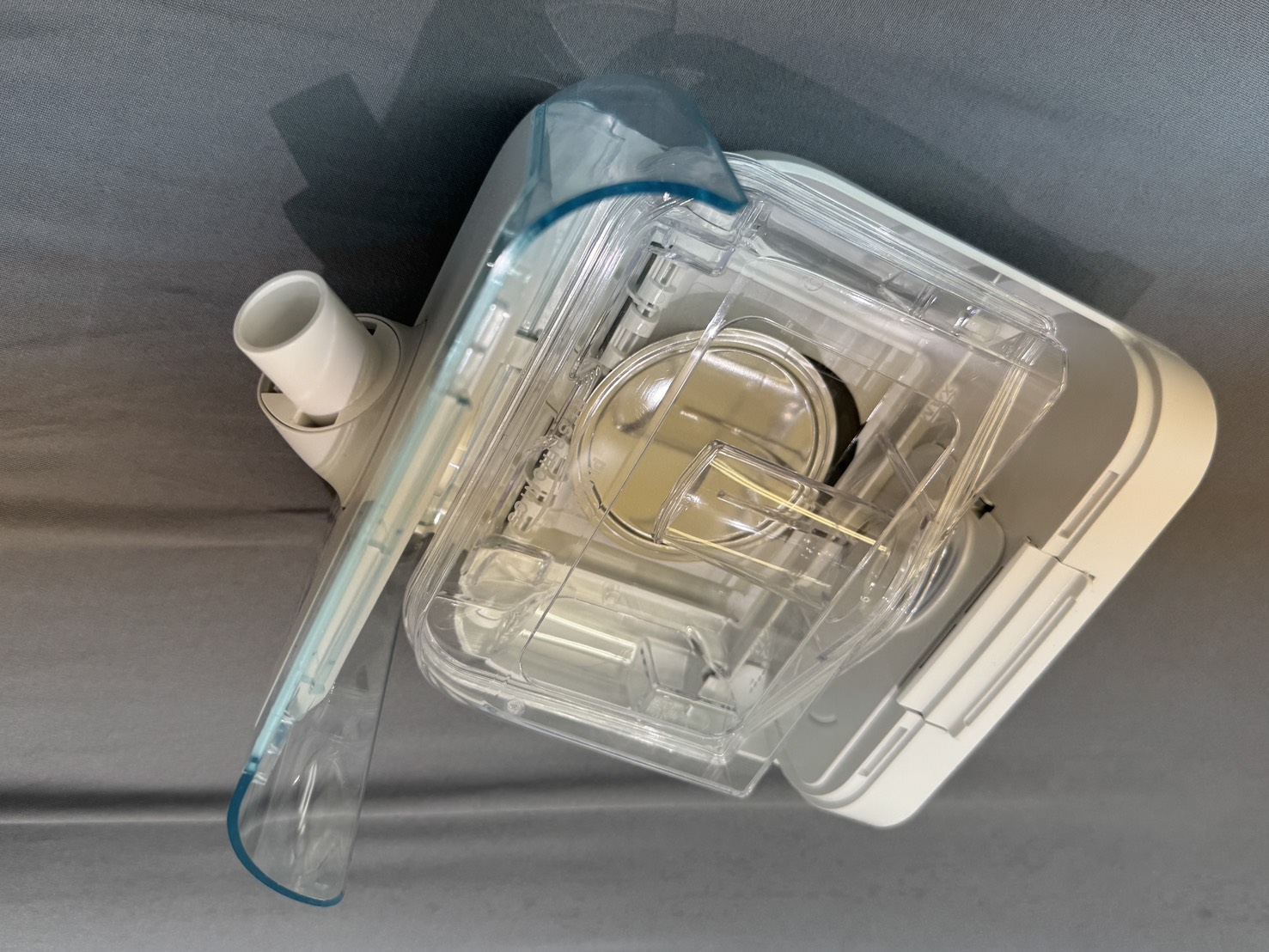
Once a week, take the mask, headgear, and hose apart and wash each part thoroughly. Picking a fixed time, such as a weekend morning, makes it easier to stick with.
| Part |
How to wash |
| Mask (cushion and frame) |
Take the parts apart, hand wash gently in lukewarm water with a mild, neutral detergent, and rinse well under running water |
| Headgear |
Gently press-wash or soak in water with a mild, neutral detergent |
| Hose (tubing) |
Fill the hose with lukewarm water and mild detergent, shake it from side to side, repeat two or three times, then rinse |
| Humidifier tank (if you use one) |
Wash with mild detergent. For stubborn white mineral deposits, soak in a solution of about 1 part white vinegar to 9 parts water, following your manufacturer’s instructions, then rinse thoroughly |
| Filter |
A reusable sponge-type filter can be rinsed and dried; a non-woven disposable filter should not be washed and should simply be replaced |
After washing, hang the hose so it isn’t bent and let it dry completely, and let the mask and headgear air dry in a shaded, well-ventilated place. Reassembling parts while still damp invites bacteria and mold, so make sure everything is fully dry.
What NOT to Do When Cleaning
CPAP parts are medical device components made of delicate materials. Care that is meant well can sometimes speed up wear or cause damage.
① Using bleach, alcohol, or strong detergents
② Using scented detergents or aromatic oils (they can degrade resin parts and may trigger allergies)
③ Drying parts in direct sunlight (the material can harden or discolor)
④ Using store-bought ozone or UV “sanitizing” devices (damage they cause may not be covered by the manufacturer’s warranty)
When in doubt, stick to a basic rule: mild detergent only, and dry in the shade. If odor bothers you during the rainy season or summer, wash more often, or add a short soak in diluted vinegar water. As for sanitizing devices, the US FDA has stated that it is unknown whether ozone and UV CPAP cleaners are safe and effective, and recommends following the manufacturer’s cleaning instructions, which typically means soap and water.
Replacement Guidelines for Each Part
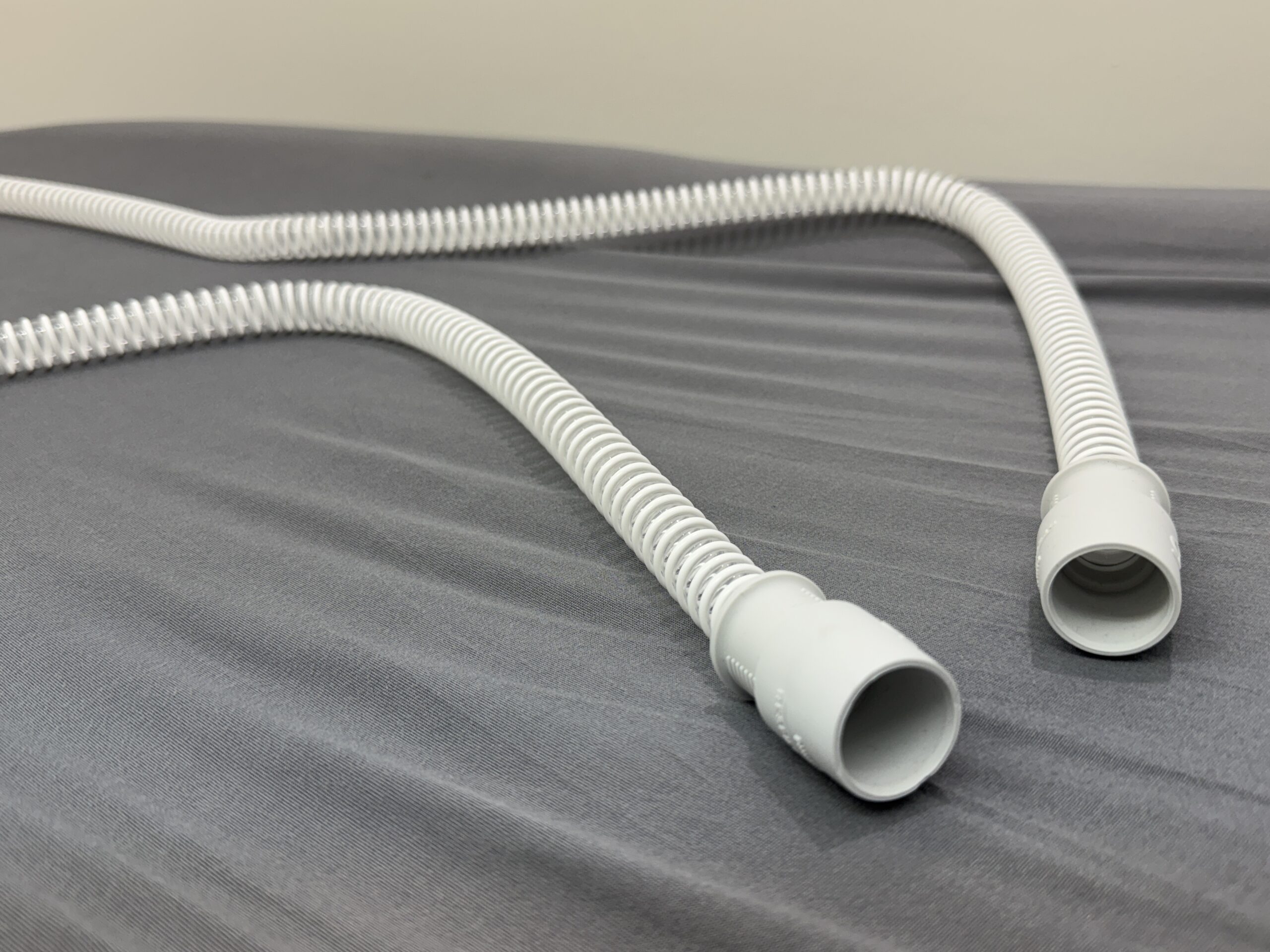
CPAP parts are consumables. However carefully you clean them, the material wears down with use, leading to a poorer fit, air leaks, and bacterial growth. Regular replacement matters just as much as cleaning for keeping treatment effective.
| Part |
Typical replacement guideline |
Signs it’s time to replace |
| Mask cushion |
1–3 months |
Loss of elasticity, poorer fit, more air leaks |
| Mask frame |
6–12 months |
Cracks, discoloration, loose parts |
| Headgear |
About 6 months |
Stretched elastic, fraying, loose fit |
| Hose (tubing) |
6 months–1 year |
Cracks, holes, odor, deformation |
| Filter (disposable) |
1–2 months |
Discoloration, clogging |
| Humidifier tank |
6–12 months |
Cracks, white cloudiness, discoloration |
These are only guidelines, and they vary with how often you use the equipment and with the manufacturer and model. Some manufacturers recommend shorter intervals. For example, ResMed’s US guidance suggests roughly monthly for the cushion, about every 3 months for the mask frame and hose, and about every 6 months for the headgear and humidifier tank. Please also check the manual for your own device.
If your air leaks are increasing even though you’re cleaning properly, a worn cushion may be the cause. The article below explains other possible reasons for a high AHI on CPAP.
If dryness or congestion is a problem, the humidifier setting may need adjusting. The article below covers common early CPAP frustrations, including humidifier adjustment.
What Ueno Snoring Clinic Can Do
Ueno Snoring Clinic is a sleep-disorder clinic specializing in snoring and sleep apnea. We support you on an ongoing basis, from instruction on how to use CPAP when you start, to how to care for it and when to replace consumable parts.
CPAP is covered by insurance once testing leads to a diagnosis of sleep apnea. In our understanding, the cost of replacement parts is included in the medical fee paid at the clinic, so there is no additional charge for replacing parts. Arrangements can differ between clinics and equipment providers, so if you would like to replace a part, please feel free to ask your equipment manufacturer or your clinic. (For how supplies and equipment support are handled, see our article on buying a CPAP versus using one through insurance-covered care.)
If your mask has started to smell, or you’re not sure when to replace a part, please feel free to get in touch.
Summary: Clean CPAP Is the Foundation for Staying on Treatment
Thinking of CPAP care as a quick daily wipe plus a weekly deep clean makes it easy to keep up. Avoid bleach and drying in direct sunlight, and stick to mild detergent and shade drying.
Cleaning isn’t enough on its own: the cushion, headgear, hose, and other consumables also need regular replacement. If you notice signs of wear, consider replacing the part early.
Are You Caring for Your CPAP Correctly?
From cleaning methods to when to replace consumables, we’re here to support you. By appointment only; same-day appointments are often available.
Frequently Asked Questions
Q. Do I need to wash my mask and hose every day?
A. A quick wipe or rinse is enough each day for the mask cushion. A full wash with the parts taken apart is generally done about once a week. Some manufacturers recommend a quick daily hand wash of silicone cushions, so follow the manual for your mask.
Q. Can I wash CPAP parts with dish soap?
A. A neutral detergent without fragrance or abrasives is fine. Avoid anything containing bleach. For silicone mask cushions, some manufacturers specifically recommend a pure, mild soap, so check your manual.
Q. Is it okay to use the mask while it’s still damp after washing?
A. We don’t recommend it. A damp mask is where bacteria and mold grow easily, so let everything dry completely before you put it back together and use it.
Q. My mask smells. Is it time to replace it?
A. If the smell persists even with thorough washing and drying, a worn cushion or headgear may be the cause. Check the replacement guidelines and consider replacing the part early.
Q. Can I use a dishwasher or washing machine?
A. For the mask, headgear, and hose, hand washing is the basic rule, because high heat and strong water flow can deform or wear out the parts, and manufacturers generally advise against washing machines. Some humidifier tanks are top-rack dishwasher safe, but this depends on the model, so check your manual first.
*This article is a general explanation, written for a broad audience and based on the sources above together with our clinic’s own clinical experience. Replacement intervals and care instructions vary by manufacturer and model, so please follow the manual for your own device. It is not a substitute for medical advice. If you have concerns about your CPAP treatment, please consult your medical institution.