Ueno Snoring Clinic provides ongoing support after CPAP is introduced — from reviewing your machine data to adjusting your mask and revisiting your pressure settings. If your numbers aren’t improving despite consistent use, please don’t hesitate to reach out.
Details of the tests and treatments offered at Ueno Snoring Clinic can be found here
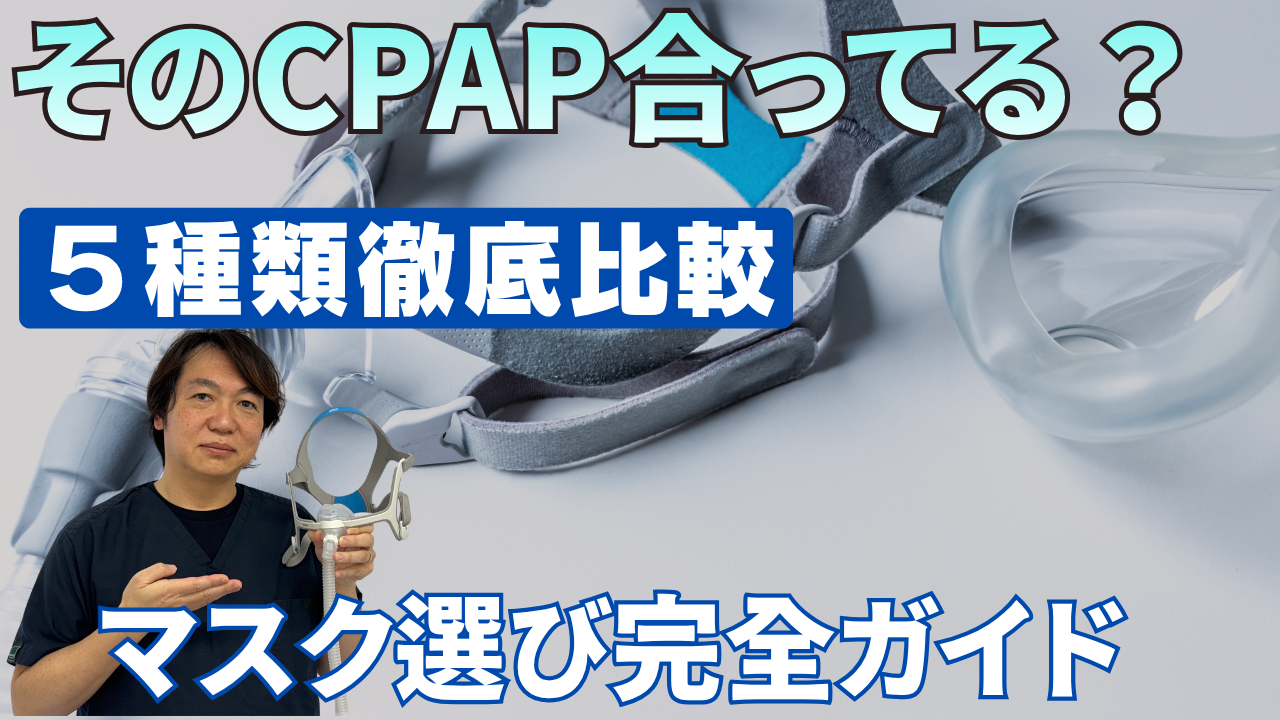
A Complete Comparison of CPAP Masks
We tried on and reviewed five different types of CPAP masks. 90% of CPAP comfort comes down to the mask.
Watch the video
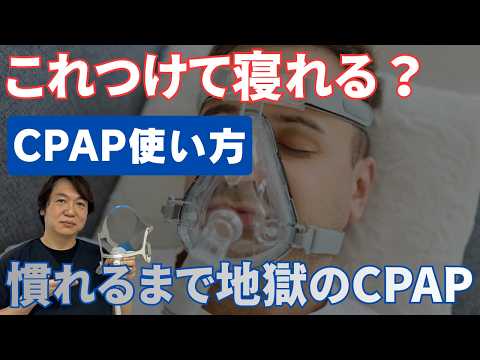
Do you have to use CPAP forever? A specialist explains how to use CPAP
A detailed explanation of how to use CPAP, with a real demonstration of what it feels like to wear the device.
Watch the video
Ueno Snoring Clinic was featured on Fuji TV’s “Live News It!”
Watch our clinic’s examination and explanation of sleep disorders, snoring, and sleep apnea.
Watch the video
Ueno Snoring Clinic was featured in an article on Nippon TV’s “news every.”
Please take a look as a starting point for thinking about getting evaluated for snoring, sleep apnea, or other sleep disorders.
Read the article
Reviewed by Our Director
Kazuyuki Sugaya
Director, Ueno Snoring Clinic / Anesthesiologist
Our director, with over 20,000 general anesthesia cases, focuses primarily on the diagnosis and treatment of snoring and sleep apnea, offering care tailored to each patient. [Insurance-Covered] Ueno Snoring Clinic
This article was reviewed by our Director, Kazuyuki Sugaya, and explains the possible causes — and solutions — when AHI doesn’t come down during CPAP treatment.
🩺Comprehensive Snoring Treatment at Ueno Snoring Clinic
Ueno Snoring Clinic continues to review your machine data even after CPAP is introduced, providing ongoing follow-up such as mask adjustments and reassessing your pressure settings whenever your numbers aren’t improving.
Insurance-Covered: Thorough Testing and Ongoing Treatment
- Simplified and PSG testing: A precise evaluation of the underlying causes of snoring and apnea
- CPAP treatment: The standard treatment for moderate-to-severe apnea, including post-introduction adjustments
Self-Pay: Address the Root Cause, Short-Term Focus
- Snoring laser treatment: Available in 3-, 6-, and 12-session packages
- Medically supervised weight loss: An option when weight gain is a contributing factor
*If you’d like to discuss your CPAP data, feel free to bring it with you to your next visit and we’ll review it together.
Our director’s book, “Curing Snoring with the Latest Treatments” (No.1 Amazon Bestseller in General Medicine, No.1 in Clinical Internal Medicine, No.2 in Home Medicine & Health) covers this topic in detail as well
New Book by Our Director
“Curing Snoring with the Latest Treatments”
A guide to the latest snoring treatments, written by an anesthesiologist who has overseen the sleep of more than 10,000 patients.
View on Amazon
Quick Answer
The main reasons AHI doesn’t come down during CPAP use are: ① air leaking from the mask, ② the wrong type of mask, ③ mouth breathing or mouth leak, ④ a pressure setting that doesn’t suit your body, ⑤ weight gain, ⑥ alcohol, smoking, or sleeping pills, and ⑦ the emergence of central sleep apnea (CSA). Weight in particular has a major impact — one study reports that a 10% increase in body weight is associated with roughly a 32% increase in AHI, while a 10% weight loss is associated with roughly a 26% improvement in AHI. Mask-related and mouth-breathing causes are often things you can address yourself, while adjusting your pressure setting or evaluating for central sleep apnea requires a doctor’s judgment. Rather than stopping CPAP on your own if your numbers aren’t improving, please talk to your treating physician first.
📋 What This Article Covers
- Quick answer: There are seven main reasons AHI doesn’t come down
- Going through causes ①–⑦ one by one
- When it’s okay if your AHI doesn’t reach “0”
- Don’t stop on your own — talk to your doctor first
Quick Answer: There Are Seven Main Reasons AHI Doesn’t Come Down
CPAP treatment can be highly effective when used correctly. However, if your machine data shows that your AHI just isn’t coming down, the following causes are often involved.
| Cause |
Can You Notice It Yourself? |
| ① Air leaking from the mask |
Usually noticeable |
| ② The wrong type of mask |
Usually noticeable |
| ③ Mouth breathing or mouth leak |
Often hard to notice |
| ④ A pressure setting that doesn’t suit your body |
Needs a doctor’s judgment |
| ⑤ Weight gain |
Usually noticeable |
| ⑥ Alcohol, smoking, or sleeping pills |
Usually noticeable |
| ⑦ Emergence of central sleep apnea (CSA) |
Needs a doctor’s judgment |
Let’s look at each of these causes in more detail in the next section.
Going Through Causes ①–⑦ One by One
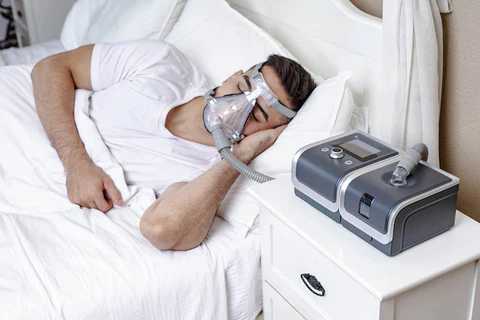
Cause ①: Air Leaking from the Mask
If there’s a gap between the mask and your face, air escapes through it, and enough pressure doesn’t reach your airway. The cushion part of a mask wears down with use, and the fit gradually loosens — which is a common cause of increased leaking. If your machine’s data displays a “leak rate,” that’s the first thing worth checking.
Cause ②: The Wrong Type of Mask
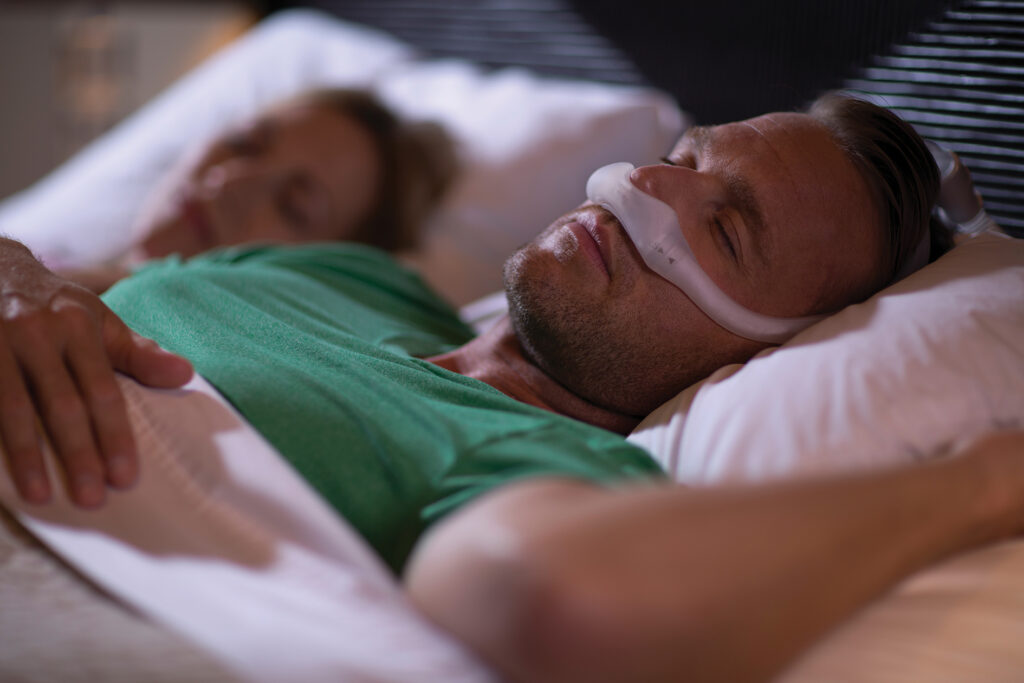
CPAP masks come in several types, including nasal masks, nasal pillow masks, and full-face masks. The mask that fits best varies from person to person, depending on face shape and breathing habits. A mask that fit well when you first started treatment can also stop fitting well over time.
Cause ③: Mouth Breathing or Mouth Leak
If you use a nasal mask and your mouth opens during sleep, the air being delivered escapes through your mouth, and pressure in the airway can’t be maintained. Since this happens while you’re asleep, it’s one of the causes you’re least likely to notice yourself. If you wake up with a dry mouth or throat, or a family member has told you that you sleep with your mouth open, this is worth paying attention to.
Cause ④: A Pressure Setting That Doesn’t Suit Your Body
If your CPAP pressure setting is too low, it may not be able to keep your airway open enough, leaving some apnea events unresolved. On the other hand, if the pressure is too high, it can sometimes trigger the central sleep apnea described below. Never adjust your pressure setting on your own — always talk to your doctor first.
Cause ⑤: Weight Gain
Weight gain is known to have a significant effect on AHI. One study reports that a 10% increase in body weight is associated with roughly a 32% increase in AHI, while a 10% weight loss is associated with roughly a 26% improvement in AHI. It’s worth reflecting on whether your weight has changed since starting CPAP.
Cause ⑥: Alcohol, Smoking, or Sleeping Pills
Alcohol relaxes the muscles around the throat, narrowing the airway. Smoking can lead to airway inflammation and swelling, and depending on the type, sleeping pills can have a muscle-relaxing effect that worsens apnea. Even if you’re using CPAP correctly, these lifestyle factors can end up canceling out its benefits.
Cause ⑦: Emergence of Central Sleep Apnea (CSA)
Even after CPAP has resolved airway blockage (obstructive apnea), “central sleep apnea” — where the brain’s own signal to breathe temporarily stops — can sometimes newly appear. This is a type that can emerge after treatment begins, and it requires specialized evaluation. If your AHI isn’t improving despite no issues with your mask or leaking, this possibility should also be discussed with your doctor.
When It’s Okay if Your AHI Doesn’t Reach “0”

Even with regular CPAP use, it’s uncommon for the AHI shown on your machine’s data to reach exactly zero. In general, a residual AHI of roughly under 5 is often considered a reasonable treatment target. There’s no need to think “if it’s not zero, the treatment has failed.”
What matters isn’t fixating on the number alone, but evaluating things comprehensively — including whether symptoms like daytime sleepiness and fatigue have improved. Since target values can also vary depending on your individual condition, we recommend confirming the right target with your doctor during a consultation.
Don’t Stop on Your Own — Talk to Your Doctor First

Some patients, frustrated that their AHI isn’t improving, decide to stop using CPAP altogether — but we don’t recommend this. Many of the causes, such as adjusting your mask or addressing mouth leak, are relatively easy to fix, and once the cause is identified, the numbers often improve significantly.
If you feel that “CPAP just doesn’t work for me” or that “wearing it is too uncomfortable,” please talk to us about the underlying cause before continuing to push through it or deciding to stop on your own.
What Ueno Snoring Clinic Offers
Ueno Snoring Clinic is a Sleep Disorder Medicine clinic specializing in snoring and sleep apnea syndrome. Even after CPAP is introduced, we continue to follow up based on your machine data — adjusting your mask, addressing mouth leak, reviewing your pressure settings, and evaluating for central sleep apnea when needed.
If your numbers aren’t improving despite using CPAP, or if you’re not sure how to read your machine’s data, please bring your data to your next visit, or feel free to reach out to us.
Summary: When AHI Doesn’t Improve, Work Through the Causes One by One
If your AHI isn’t improving during CPAP use, a range of causes may be involved — mask leaks, mouth breathing, weight gain, lifestyle habits, pressure settings, or the emergence of central sleep apnea. Some of these you can notice and address yourself, while others require your doctor’s evaluation.
If your numbers aren’t improving the way you’d hoped, don’t stop treatment on your own — instead, work through the possible causes one at a time.
Let’s Review Your CPAP Data Together
From mask adjustments to reviewing your pressure settings, we’ll help identify why your numbers aren’t improving.
Frequently Asked Questions
Q. How low does my CPAP AHI need to be for me to feel reassured?
A. A target of under 5 is common, but the right target can vary depending on your individual condition. Please confirm the specifics with your doctor.
Q. Can I check for air leaking from my mask myself?
A. In many cases, yes — you can check the “leak rate” shown in your machine’s data. If it’s high, it’s worth revisiting how your mask fits.
Q. Can I tell on my own whether I’m mouth-breathing?
A. It’s difficult to notice since it happens while you’re asleep, but a dry mouth in the morning or a family member pointing out that you sleep with your mouth open can be useful signs.
Q. How much does weight gain affect AHI?
A. One report indicates that a 10% increase in body weight is associated with roughly a 32% increase in AHI, while a 10% weight loss is associated with roughly a 26% improvement.
Q. Can central sleep apnea occur even while using CPAP?
A. On rare occasions, central sleep apnea can newly appear after CPAP has resolved obstructive apnea. Since this requires specialized evaluation, please talk to your doctor.
Q. My AHI isn’t coming down — is it okay to just stop using CPAP?
A. We don’t recommend stopping on your own. Many cases improve once the underlying cause is identified, so please talk to your doctor first.







いびきを最新治療で治す-表紙-1.png)