
Quick Answer
CPAP, or continuous positive airway pressure, is a standard treatment for moderate to severe obstructive sleep apnea. A small machine sends pressurized air through a mask to prevent the airway from collapsing during sleep. It can reduce apnea, snoring, daytime sleepiness, and sleep fragmentation. In Japan, CPAP may be covered by health insurance when diagnostic criteria are met. Regular medical follow-up is required, and patients should not stop CPAP without consulting their doctor.
At Ueno Snoring Clinic, we offer options tailored to your condition, including insurance-covered sleep testing and CPAP management, as well as self-pay laser snoring treatment. If you would like to find the treatment that suits you, please start with an initial consultation.
You can find details on the examinations and treatments at Ueno Snoring Clinic here


Supervised by the Director
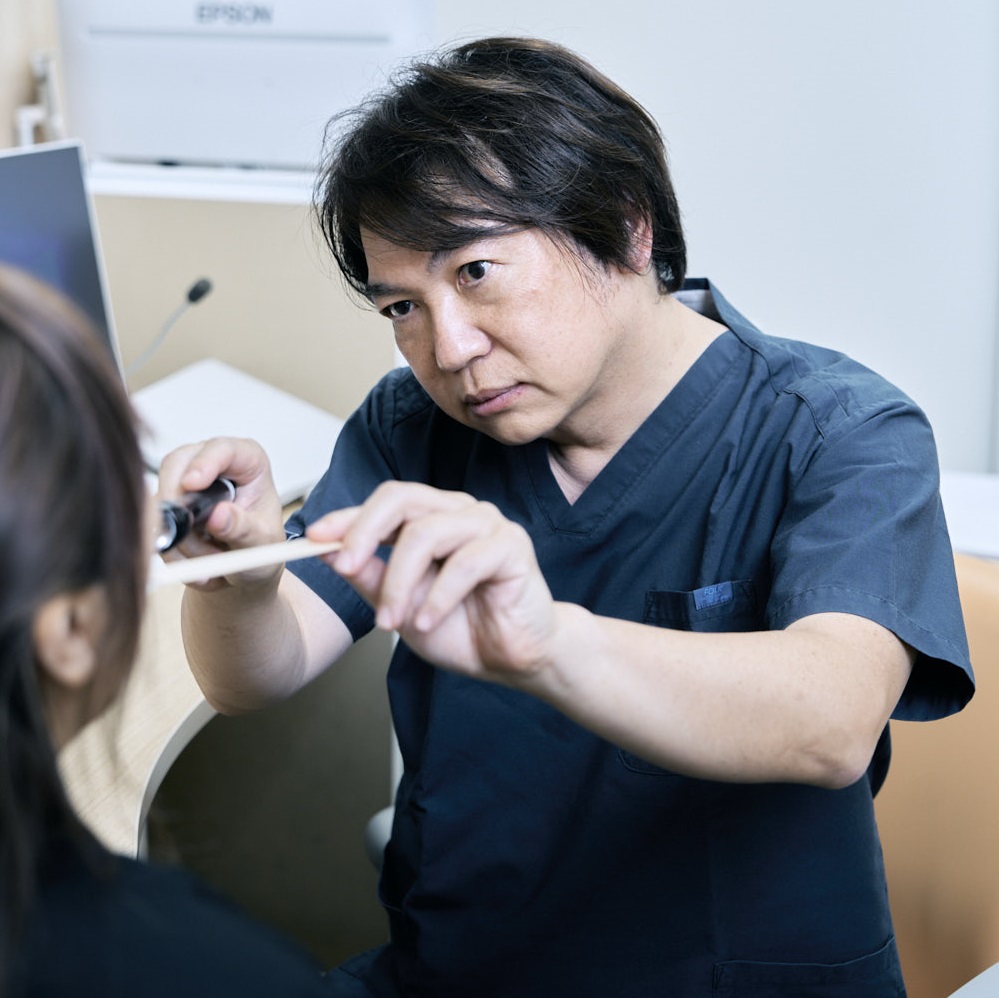
Kazuyuki Sugaya
Director, Ueno Snoring Clinic / Anesthesiologist
With experience in over 20,000 cases of general anesthesia, the director focuses on snoring and sleep apnea care, providing treatment tailored to each patient. Ueno Snoring Clinic
This article has been supervised by Director Kazuyuki Sugaya to explain medical information about snoring, obstructive sleep apnea, CPAP therapy, and related examinations in clear language.
🩺Comprehensive Snoring Treatment at Ueno Snoring Clinic
Snoring and sleep apnea can be caused by throat anatomy, tongue position, nasal congestion, obesity, alcohol, sleeping posture, and other factors. At Ueno Snoring Clinic, we evaluate the cause and recommend an appropriate combination of testing, CPAP, lifestyle care, oral appliance consideration, and non-surgical laser treatment.
Insurance-covered testing and treatment
- Home sleep test / PSG: Objective evaluation of sleep-related breathing
- CPAP therapy: Standard treatment for moderate to severe obstructive sleep apnea
Self-pay options for suitable patients
- Dual Deep Thermia®: Non-surgical laser snoring treatment
- Medical weight management: Supporting airway improvement through weight reduction
*Treatment suitability depends on symptoms, airway anatomy, sleep test results, and severity of obstructive sleep apnea.
Worried that your nightly snoring may be sleep apnea?
A home sleep test may help identify whether your breathing repeatedly stops during sleep.
What Is CPAP Treatment?

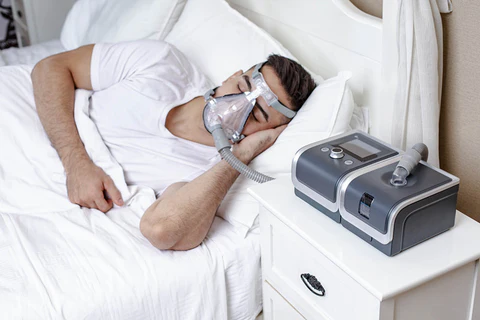
CPAP stands for Continuous Positive Airway Pressure. It is a treatment in which a small bedside machine sends air through a tube and mask while you sleep.
In obstructive sleep apnea, the tongue base or soft tissues of the throat repeatedly collapse and block the airway. CPAP uses air pressure to keep that airway open.
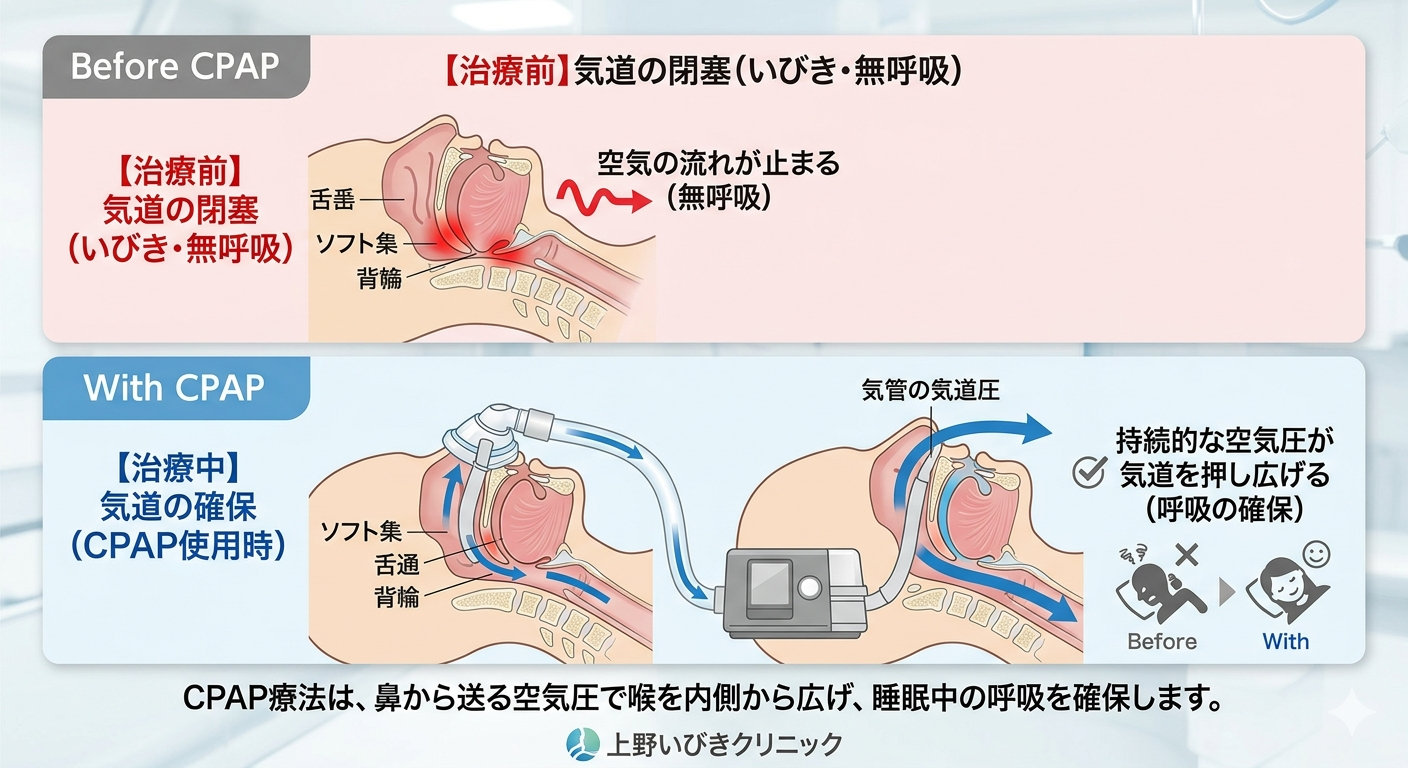
Expected benefits of CPAP
- Reduction of apnea and hypopnea events
- Reduction or elimination of snoring while CPAP is used
- Improved sleep continuity
- Reduced daytime sleepiness
- Improved concentration and morning alertness
- Better control of sleep apnea-related health risks
Some patients notice an improvement in daytime sleepiness and fatigue soon after starting CPAP, although the response varies depending on severity, adherence, mask fit, and other medical conditions.
What Equipment Does CPAP Use?

A standard CPAP system consists of three main parts.
| Component | Function |
|---|---|
| CPAP machine | A compact device that produces pressurized airflow and is placed near the bed. |
| Tube | Connects the machine to the mask and carries the airflow. |
| Mask | Fits over the nose, nostrils, or nose and mouth depending on the patient’s breathing pattern. |
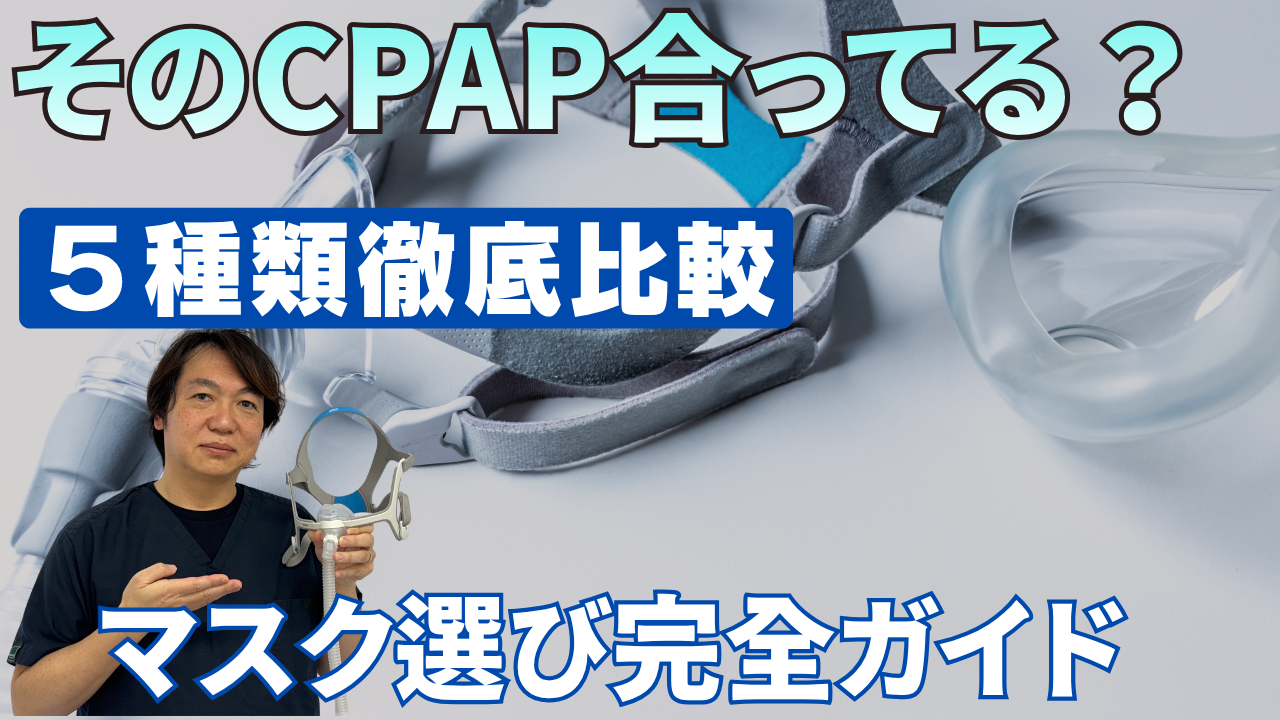
Common mask types include nasal masks, nasal pillow masks, and full-face masks. Mask selection is important because comfort, air leakage, mouth breathing, facial shape, facial hair, and sleeping position can all affect CPAP adherence.
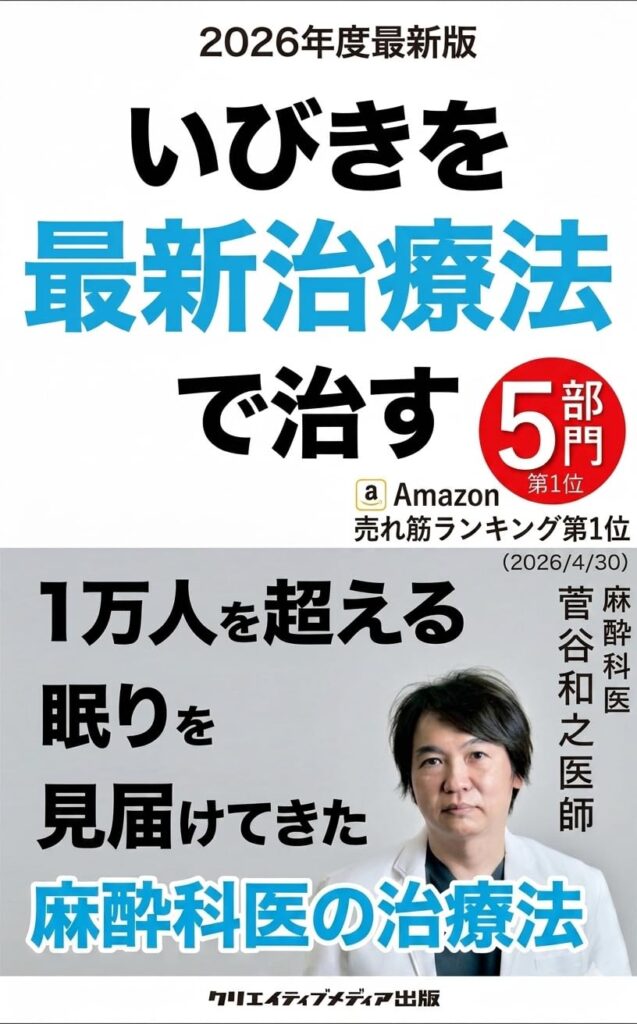
いびきを最新治療で治す-表紙-1.png)
New Book by the Director
“Treating Snoring with the Latest Treatment Methods”
A practical guide to CPAP, sleep testing, sleep apnea, and modern snoring treatment.
How Much Does CPAP Cost in Japan?
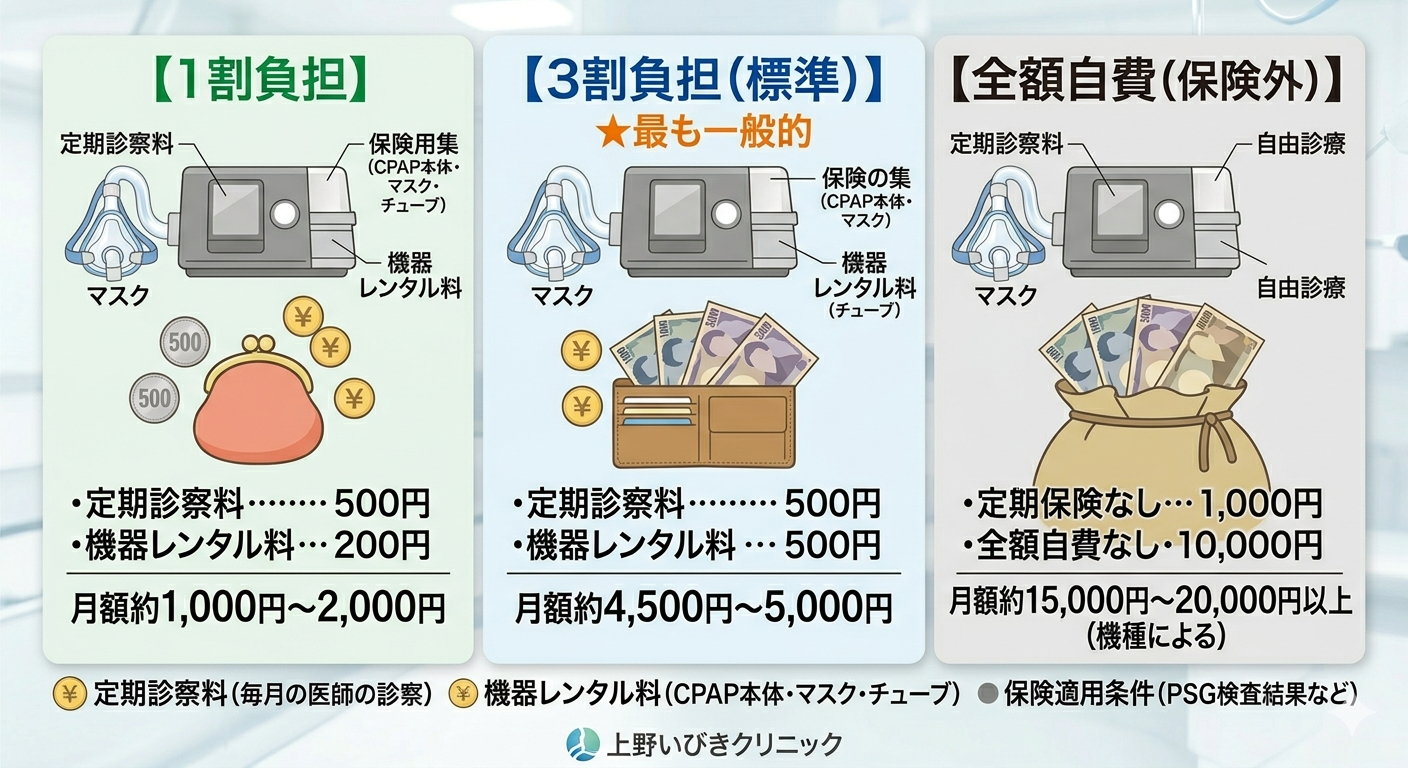
Under Japanese health insurance, CPAP is generally provided as a rental rather than purchased outright. The patient pays a monthly amount that includes device management and medical follow-up.
Approximate monthly cost with 30% copayment
| Item | Approximate Cost |
|---|---|
| CPAP device management and rental | Approximately ¥4,000–¥5,000 per month |
| Regular medical consultation | Approximately ¥500–¥1,500 |
| Estimated monthly total | Approximately ¥4,500–¥6,500 |
*Actual costs vary depending on insurance status, copayment rate, medical fees, additional treatment, and the clinic’s billing structure.
Questions About CPAP Cost or Insurance?
Eligibility and cost depend on your sleep test results and insurance status. Please contact us if you are unsure which test is required.
Insurance Criteria for CPAP in Japan
Insurance-covered CPAP generally requires objective evidence of obstructive sleep apnea from a sleep study. Commonly used criteria include:
- AHI of 40 or more on a simplified home sleep test, or
- AHI of 20 or more on polysomnography
However, exact eligibility and interpretation should be confirmed by the treating physician because testing method, clinical symptoms, insurance rules, and individual circumstances may affect the final decision.
Regular Follow-Up Is Required
CPAP treatment is not simply a device rental. Medical follow-up is necessary to confirm that treatment is effective and safe.
Modern CPAP machines record information such as:
- Nightly usage time
- Estimated residual AHI
- Mask leakage
- Pressure levels
- Treatment adherence
The doctor reviews this data and determines whether the mask, pressure, humidification, or treatment plan needs adjustment.
Concerned About the Burden of Regular CPAP Visits?
Ueno Snoring Clinic provides online consultation for eligible patients already receiving CPAP treatment. Eligibility depends on the patient’s condition, location, treatment status, and applicable medical requirements.
Common CPAP Problems and Solutions
1. The mask does not fit, moves, or causes pain
Changing the mask type or size often helps. A nasal mask, nasal pillow mask, or full-face mask may feel very different. Patients should not assume that one uncomfortable mask means CPAP itself is impossible.
2. Dry mouth or sore throat
This may be related to mouth breathing, air leakage, low humidity, or nasal obstruction. Heated humidification, mask adjustment, nasal treatment, or a chin strap may help.
3. The pressure feels too strong
Pressure settings can be reviewed. Auto-adjusting positive airway pressure, ramp settings, expiratory pressure relief, or mask correction may improve comfort.
4. Travel or business trips are inconvenient
Many current CPAP machines are compact and support international voltage. Travel-specific models also exist. Patients should check airline and power requirements before travel.
5. “I feel better, so I want to stop”
CPAP usually controls airway collapse while it is being used. If CPAP is stopped, apnea often returns unless the underlying condition has changed significantly.
Weight loss, surgery, oral appliance treatment, or other interventions may reduce the need for CPAP in selected patients, but stopping should be based on medical reassessment and, when appropriate, repeat sleep testing.
Do not stop CPAP on your own.
If you feel CPAP is no longer necessary, consult your doctor first. Untreated sleep apnea may return even when symptoms seem improved.
What If CPAP Is Difficult to Continue?
CPAP is highly effective, but it is not the only treatment used in sleep medicine. Alternatives depend on severity and anatomy.
Oral appliance therapy
A mandibular advancement device moves the lower jaw forward and may help selected patients with mild to moderate obstructive sleep apnea. It is compact and easier to travel with, but it may cause jaw discomfort or dental changes.
Weight management
Weight reduction may improve airway narrowing in patients with obesity. However, weight loss alone may not solve sleep apnea caused by jaw structure, enlarged tonsils, or tongue base collapse.
Positional therapy
Some patients have sleep apnea mainly while sleeping on their back. Side sleeping or positional devices may help selected cases.
Surgical evaluation
When a clear anatomical obstruction is present, ENT or maxillofacial evaluation may be considered.
Non-surgical laser snoring treatment
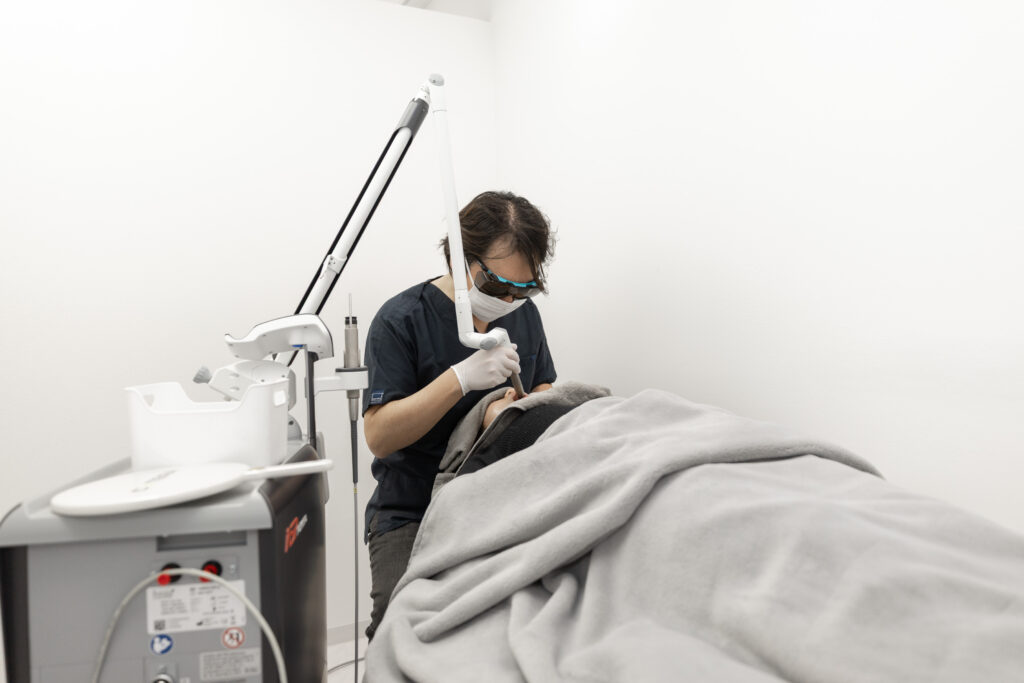
For suitable patients whose main problem is snoring or soft palate vibration, Dual Deep Thermia® may be considered as a self-pay treatment.
Laser treatment is not a guaranteed replacement for CPAP in moderate to severe sleep apnea. Its main role is reducing vibration and looseness of the soft palate and surrounding throat tissue.
If CPAP Does Not Fit Your Lifestyle
Treatment should be selected according to sleep apnea severity, airway anatomy, symptoms, and your ability to continue therapy. For selected patients, oral appliances, weight management, positional treatment, surgery, or laser treatment may be discussed.
CPAP vs Laser Treatment
| Treatment | Main Purpose | Best Candidates | Main Limitation |
|---|---|---|---|
| CPAP | Keeps the airway open with air pressure | Moderate to severe obstructive sleep apnea | Requires regular use and mask tolerance |
| Laser treatment | Reduces soft palate and throat tissue vibration | Simple snoring and selected mild to moderate cases | Not a substitute for CPAP in severe OSA |
CPAP Management at Ueno Snoring Clinic
Data-based follow-up
We review usage time, residual events, leakage, mask condition, and treatment response rather than simply continuing the device without evaluation.
Appointment-based care
Our appointment system is designed to reduce waiting time and make regular follow-up easier for working patients.
Multiple treatment options
We do not recommend CPAP for every patient. Depending on sleep test results and anatomy, we may discuss oral appliances, positional therapy, weight management, ENT evaluation, or non-surgical laser treatment.
Why International Patients Choose Ueno Snoring Clinic
- English-speaking doctor: Medical consultation is available in English
- Convenient Tokyo location: Near Ueno Station
- Home sleep testing: Evaluation for suspected obstructive sleep apnea
- CPAP management: Follow-up and review of treatment data
- Non-surgical laser treatment: Available for suitable patients with snoring
- International patients welcome: Support for foreign residents and visitors in Japan
Frequently Asked Questions
Q. Does CPAP cure sleep apnea permanently?
A. CPAP controls airway collapse while it is being used. It does not usually permanently change the structure of the airway.
Q. How quickly does CPAP work?
A. CPAP begins supporting the airway on the first night. Some patients notice improved daytime alertness quickly, while others need more time to adjust.
Q. Is CPAP noisy?
A. Modern machines are generally quiet. Air leakage from the mask may create more noise than the machine itself.
Q. Can I use CPAP overseas?
A. Many machines support international voltage. Check the device specifications, plug adapter, airline policy, and destination power supply.
Q. Can I stop CPAP after losing weight?
A. Possibly in selected cases, but only after medical reassessment. Repeat sleep testing may be necessary.
Q. What should I do if the mask is uncomfortable?
A. Ask about a different size or mask type. Mask selection is one of the most important factors in CPAP adherence.
Q. Is CPAP covered by Japanese health insurance?
A. It may be covered when diagnostic and follow-up requirements are met. Eligibility depends on sleep test results and medical assessment.
Q. Can laser treatment replace CPAP?
A. Not in severe obstructive sleep apnea. Laser treatment may be considered for selected patients with snoring or soft palate vibration.
Q. Is English consultation available?
A. Yes. Ueno Snoring Clinic provides English consultation for international patients and foreign residents in Japan.
Summary
- CPAP is a standard treatment for moderate to severe obstructive sleep apnea.
- It prevents airway collapse by delivering pressurized air through a mask.
- Japanese health insurance may cover CPAP when diagnostic criteria are met.
- Regular medical follow-up and data review are required.
- Mask discomfort, dryness, leakage, and pressure problems can often be improved.
- Patients should not stop CPAP without medical consultation.
- Oral appliances, weight management, positional therapy, surgery, and laser treatment may be considered in selected cases.
If you are considering CPAP, currently using CPAP, or having difficulty continuing treatment, please consult Ueno Snoring Clinic.
Book a CPAP or Sleep Apnea Consultation in Tokyo
*Insurance eligibility, follow-up frequency, and treatment cost depend on current medical rules, individual test results, and insurance status. Please confirm details during consultation.
Medical Disclaimer
This article provides general medical information and does not replace individual diagnosis or treatment. Do not start, stop, or change CPAP settings without consulting a qualified medical professional.