

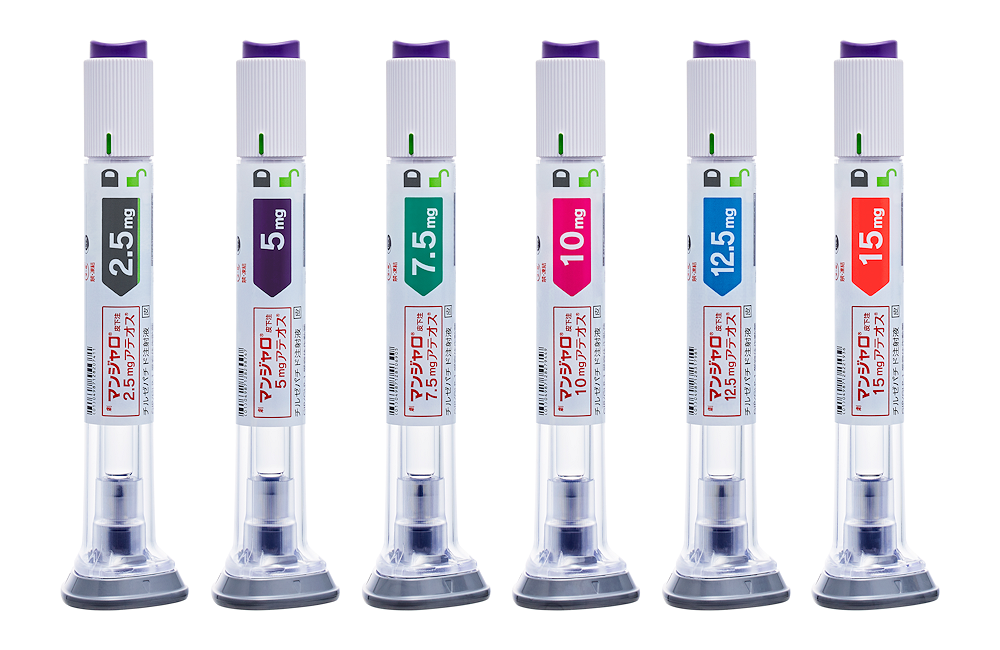



Studies making headlines worldwide show that after stopping GLP-1 obesity medications such as Mounjaro (tirzepatide) or Wegovy (semaglutide), patients regain weight
roughly four times faster than after simply stopping a conventional diet.
What often gets overlooked is that snoring and obstructive sleep apnea (OSA) tend to return right along with the weight.
The “Skinny Shot” Boom — and Its Downside
Since 2023, drugs like Mounjaro (tirzepatide) and Wegovy (semaglutide) have arrived one after another in Japan, marking a turning point for obesity treatment. By acting on GLP-1 receptors (tirzepatide also stimulates GIP receptors simultaneously), these drugs act directly on the brain’s appetite center, slow gastric emptying, and produce powerful appetite suppression.
In the landmark Phase 3 trial SURMOUNT-1, participants who received tirzepatide for 72 weeks achieved an average weight loss of 20.9%.
This far exceeds what conventional diet and exercise typically achieve, and the drugs have often been described as “miracle drugs.”
Average weight loss with tirzepatide in SURMOUNT-1: 20.9% (72 weeks)
Weight regained 52 weeks after discontinuation (SURMOUNT-4): 14%
Share of the discontinuation group who regained 25%+ of lost weight (SURMOUNT-4): 82%
The real issue is what happens “after” stopping. A simple but sobering fact — that a drug’s benefits only last as long as it remains in your system — is now being reinforced by large-scale evidence.
いびきを最新治療で治す-表紙-1.png)
New Book by Our Director
“Curing Snoring with the Latest Treatments”
Written by an anesthesiologist who has overseen the sleep of more than 10,000 patients, this book is a modern guide to the latest snoring treatments.
The Shock of “4x Speed” Rebound — The Latest Evidence

In early 2026, BBC News widely reported on a study by a University of Oxford team. Their meta-analysis found that the pace of weight regain after stopping GLP-1 receptor agonists was roughly four times faster than the pace of regain after stopping diet and exercise programs.
(West S, Koutoukidis D, et al., BMJ 2026)
Also in 2026, a University of Cambridge team led by Budini et al. (eClinicalMedicine 2026) conducted a mixed-effects nonlinear meta-regression covering 48 studies, 6 RCTs, and a total of 3,236 participants.
Semaglutide, tirzepatide, and liraglutide followed nearly identical trajectories, and weight regain after discontinuation followed what the researchers describe as an “exponential recovery model” — meaning regain is fastest in the first few months.
📊 Key Findings from SURMOUNT-4 (JAMA 2024)
Participants took tirzepatide for 36 weeks, losing about 20% of body weight, and were then split into a “continuation group” and a “placebo group” (effectively a discontinuation group), and followed for 52 more weeks.
The discontinuation group regained 14% of their body weight, and 82% of those who stopped regained at least 25% of the weight they had lost.
The continuation group lost an additional 5.5% of body weight. Metabolic and cardiovascular risk markers also worsened in the discontinuation group.
The researchers concluded that “tirzepatide works quickly, but is not a lasting solution for weight management on its own.”
A secondary analysis of SURMOUNT-4 published in JAMA Internal Medicine (Horn DB et al., 2025) further found that
not only weight, but also improvements in blood pressure and cholesterol reversed after discontinuation,
and that blood pressure appeared to rebound even faster than weight did.
Stopping the drug doesn’t just bring the weight back. Researchers believe that while a GLP-1 drug is active in the body, it builds a kind of “brake” on the brain’s appetite center — and once that brake disappears,
appetite can surge out of control, which is thought to be the main driver behind the accelerated pace of weight regain.
Aronne LJ et al., SURMOUNT-4, JAMA 2024;331(1):38–48
The Inseparable Link Between Snoring, Sleep Apnea, and GLP-1
There’s a pattern that snoring specialists and pulmonology clinics have increasingly noticed in recent years. Patients who were thrilled that GLP-1 medication helped them lose weight — and that their snoring disappeared or their CPAP was no longer needed — are now finding that as soon as they stop the medication and the weight comes back, so does the snoring.
🌙 The Vicious Cycle Between Obesity and SAS (Sleep Apnea Syndrome)
Fat accumulates around the neck and throat → the upper airway is compressed from front and back → airflow becomes turbulent, causing snoring and apnea →
sleep becomes fragmented → appetite-stimulating hormone (ghrelin) rises / appetite-suppressing hormone (leptin) falls → obesity progresses further
70%Share of obstructive SAS patients who are obese
40%Share of obese individuals who also have SAS
×2Increase in SAS risk for every 10 kg of weight gained
26%Reduction in AHI when body weight drops by 10%
These numbers carry real weight. Roughly 70% of patients with obstructive sleep apnea are obese, and the risk of developing SAS roughly doubles for every additional 10 kg of body weight.
Conversely, international data shows that a 10% reduction in body weight is associated with roughly a 26% drop in AHI — the number of apnea and hypopnea episodes during sleep.
Given that GLP-1 medications typically produce average weight loss of 15–20%, it’s easy to imagine how significant their effect on snoring can be.
In fact, “obstructive sleep apnea syndrome and obesity hypoventilation syndrome” are explicitly listed among the conditions that qualify obesity treatment for insurance coverage,
and prescriptions of GLP-1 medication for SAS patients continue to rise.
Why Fat Around the Neck Damages the Throat
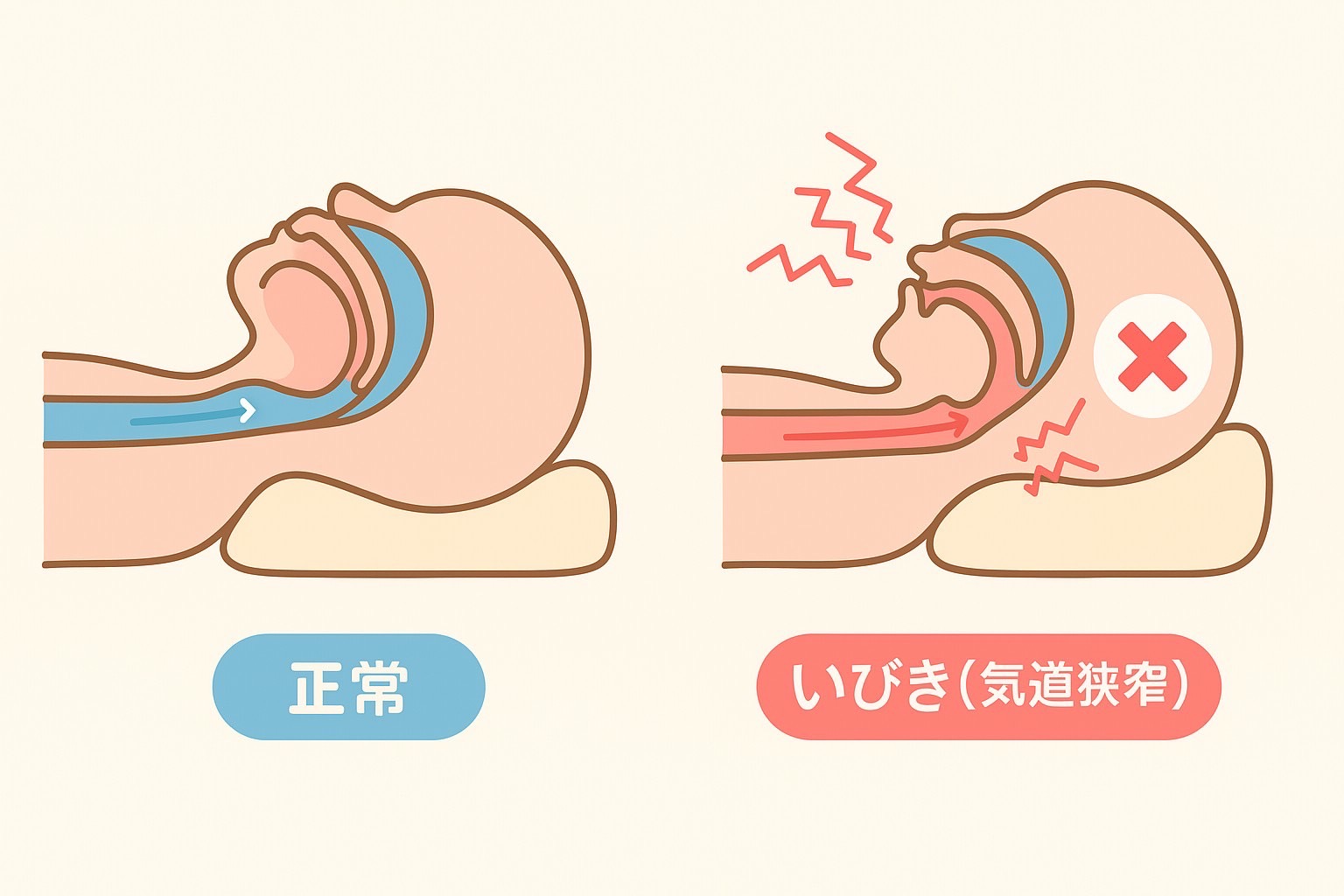
The mechanism behind obesity-related snoring is simple but serious.
As fat accumulates around the neck, the tongue is pushed backward, fat builds up at the back of the throat and pushes forward, and even the soft palate that supports the uvula thickens.
With the throat compressed from every direction, breathing causes the airflow to vibrate and produce snoring — and in cases of visceral obesity, abdominal fat also restricts lung expansion and puts pressure on the trachea itself.
When GLP-1 medication reduces body weight, fat around the neck decreases too, and space in the throat opens back up.
There are also reports that GLP-1 medication may reduce swelling in the tissue surrounding the throat, suggesting it may have real potential as a treatment approach for snoring.
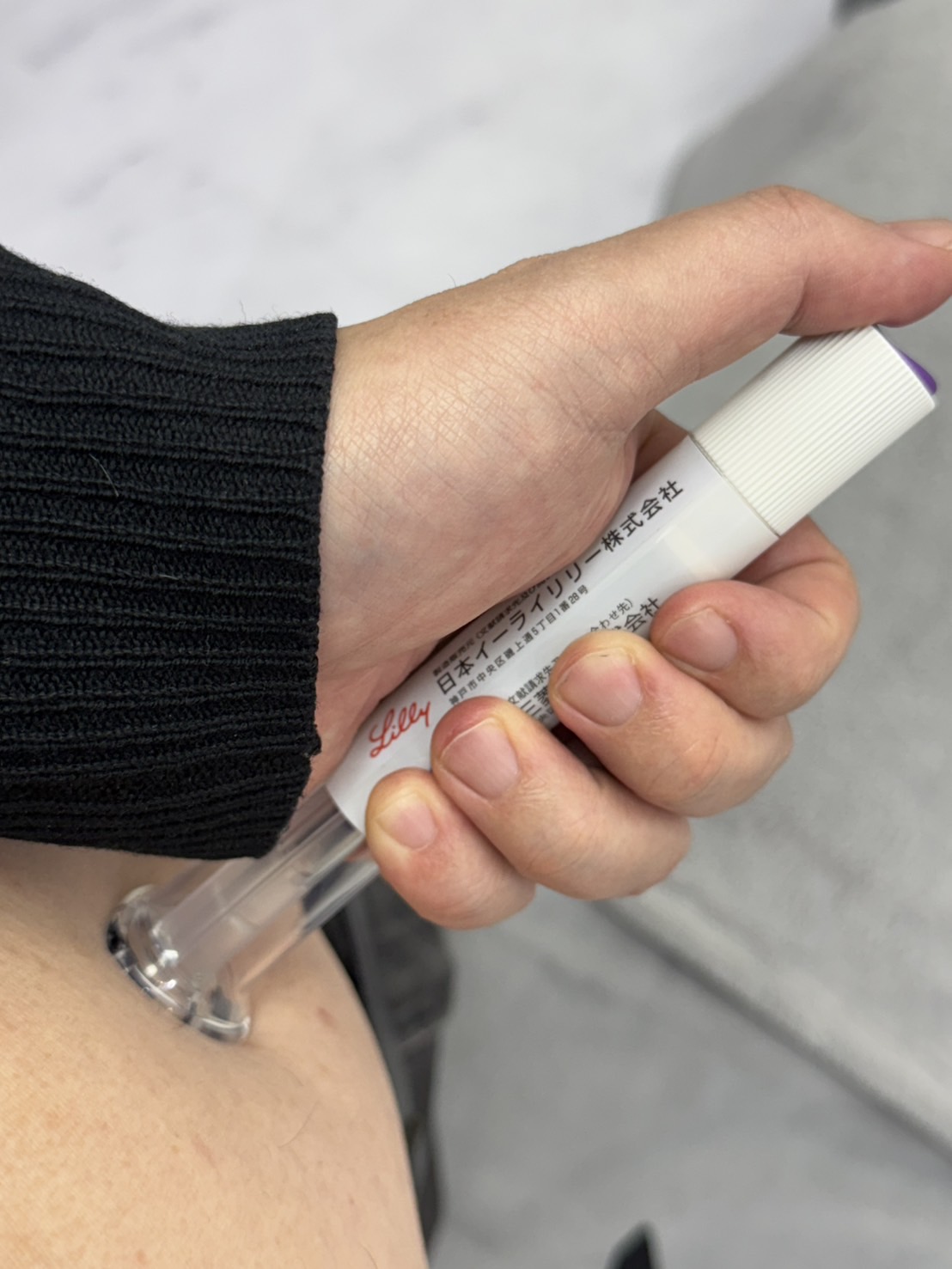
But when weight comes back through rebound, the fat returns too, and the airway narrows once again.
And as noted above, because rebound after stopping GLP-1 medication is about four times faster than after a typical failed diet, the return of snoring can happen just as quickly.
Six in Ten People Who Stop the Medication Return to Their Original Weight Within a Year
Nature (Abdelaal M, le Roux CW., 2024) points out that over 80% of patients who stop GLP-1 medication discontinue treatment altogether, and warns that “a strategy for managing weight after discontinuation should be planned from the very beginning.”
A meta-analysis reported by The Guardian (May 2025) similarly found that many people who stop semaglutide or tirzepatide tend to return to their original weight within a year.
Another study (Quarenghi M et al., J Clin Med. 2024) reported an average weight gain of +5.6 kg after discontinuing GLP-1 medication.
💡 Practical Strategies to Prevent Rebound
① Avoid stopping abruptly — build in a gradual tapering schedule. Continuing at the lowest dose (2.5mg) after reaching your target weight is considered a promising approach.
② Redesign your eating habits while still on the medication — only about 1 in 6 people (16.6%) maintain 80% or more of their weight loss after stopping, and most of them are the ones who established lasting dietary changes.
③ Consider switching to an alternative medication — when cost or side effects make discontinuation necessary, switching to semaglutide is recommended in expert guidelines (The Obesity Society, 2025).
④ Pursue SAS treatment in parallel — if snoring or apnea has been recognized as a related condition, check with your physician whether continued insurance-covered obesity treatment is possible.
“My Snoring Disappeared” Is Not the Finish Line
The improvement in SAS seen with GLP-1 medications is genuinely remarkable.
From 1980s research in the US and Canada showing that a 15% reduction in body weight can expand the upper airway, to today’s GLP-1 drugs achieving weight loss of over 25%, the treatment potential has been consistently demonstrated.
But there’s a real risk that the “success story” of snoring disappearing or no longer needing CPAP can create the mistaken impression that no further medication or treatment is needed.
At its core, obesity-related SAS is a matter of fat around the neck and airway — and if the medication stops and the weight returns, the snoring and apnea will return with it, along with worsening blood pressure, blood sugar, and cholesterol.
There is a vicious cycle between SAS and obesity. When sleep becomes fragmented, the appetite-stimulating hormone ghrelin rises while the appetite-suppressing hormone leptin falls — meaning obesity worsens snoring, and snoring further drives obesity. Breaking this cycle requires deliberately designing a “maintenance phase” for weight management.
Ueno Snoring Clinic also prescribes Mounjaro as part of medically supervised weight-loss treatment. GLP-1 medications should always be used under a carefully designed treatment plan from a specialist physician. You’re welcome to ask about medical weight-loss treatment via LINE.
Consult Ueno Snoring Clinic on LINE here
Conclusion: A GLP-1 Medication Is a “Beginning,” Not an “End”
Many patients describe Mounjaro or Wegovy as having “changed their life.”
That’s genuinely true for many people. But the latest evidence shows that stopping the medication can also trigger a return to life as it was before.
Four-times-faster rebound, a rapid return of high blood pressure, and snoring that once again disturbs the household at night —
the exit strategy for GLP-1 treatment matters just as much as how you started it.
The most important question for GLP-1 treatment in 2026 may not be “how long should I continue,” but rather “what should I put in place before I stop” — and that’s a conversation worth having with your physician.
If you’re struggling with snoring or sleep apnea — whether you’re currently using a GLP-1 medication or have used one in the past and stopped — we strongly recommend having your weight rebound and airway changes evaluated together.
Combining treatment with options such as our clinic’s laser snoring treatment can also help reduce the impact of rebound.
Snoring isn’t just noise — it’s a barometer of obesity, metabolic health, and cardiovascular risk. Rather than relying on a single treatment, we recommend combining approaches to achieve comfortable, lasting sleep.
Finding CPAP Follow-Up Visits Difficult to Manage?
Ueno Snoring Clinic has launched online consultations for patients currently on CPAP therapy.
If monthly or bi-monthly in-person visits are a burden, please check whether you’re eligible.
[Insurance-Covered] If you’re concerned about snoring or sleep apnea, we offer a fully appointment-based system for reassuring, unhurried care.
Please feel free to contact Ueno Snoring Clinic
📞0120-899-930
5F Ueno Silk Building, 4-8-8 Ueno, Taito-ku, Tokyo 110-0005, Japan

Please feel free to contact Ueno Snoring Clinic
📞0120-899-930
5F Ueno Silk Building, 4-8-8 Ueno, Taito-ku, Tokyo 110-0005, Japan
Feel free to reach out to us on LINE ↓↓↓


📚 Key References & Sources
- Aronne LJ, Sattar N, Horn DB, et al. Continued Treatment With Tirzepatide for Maintenance of Weight Reduction in Adults With Obesity: The SURMOUNT-4 Randomized Clinical Trial. JAMA. 2024;331(1):38–48.
- Horn DB, Linetzky B, Davies MJ, et al. SURMOUNT-4 secondary analysis (post-discontinuation changes in metabolic and blood pressure markers). JAMA Internal Medicine. 2025.
- Budini B, Luo S, et al. Trajectory of weight regain after cessation of GLP-1 receptor agonists. eClinicalMedicine. 2026. (University of Cambridge; mixed-effects nonlinear meta-regression, n=3,236)
- West S, Koutoukidis D, et al. New study finds that stopping weight-loss drugs is linked to faster regain than ending diet programmes. BMJ / Oxford University Press. 2026.
- Quarenghi M et al. Discontinuation of GLP-1 RAs and metabolic outcomes. J Clin Med. 2024. MDPI. (Average +5.6 kg weight gain after GLP-1 discontinuation)
- Abdelaal M, le Roux CW. What is the plan for the more than 80% of people who stop taking GLP-1 drugs? Nature. 2024. doi:10.1038/d41586-025-01770-0
- American Diabetes Association. Standards of Care in Diabetes 2026, Section 8.
- The Obesity Society. Clinical Management Guidelines, 3rd Edition. 2025.
- Sasanabe R et al. Metabolic syndrome in Japanese patients with obstructive sleep apnea syndrome. Hypertens Res. 2006;29:315–22.
- Peppard PE et al. Longitudinal study of moderate weight change and sleep-disordered breathing. JAMA. 2000;284(23):3015–21. (10% weight gain associated with 32% AHI increase; 10% weight loss associated with 26% AHI decrease)
- People who stop using Mounjaro suffer reversal of health benefits, says study. The Guardian. Nov 24, 2025.
- People who stop weight loss drugs return to original weight within year. The Guardian. May 14, 2025.
⚠️ This article is intended for general medical information purposes only and does not constitute diagnosis or treatment advice.
Please consult your physician before starting, continuing, or stopping any GLP-1 medication.
Stopping abruptly without medical guidance may cause disruptions in blood sugar control.
Please consult your physician before starting, continuing, or stopping any GLP-1 medication.
Stopping abruptly without medical guidance may cause disruptions in blood sugar control.