

Mounjaro, a GIP/GLP-1 receptor agonist, has become fairly well known — and it’s not just highly effective for weight loss, but can also help with snoring treatment.
In this article, we take a detailed look at Mounjaro.
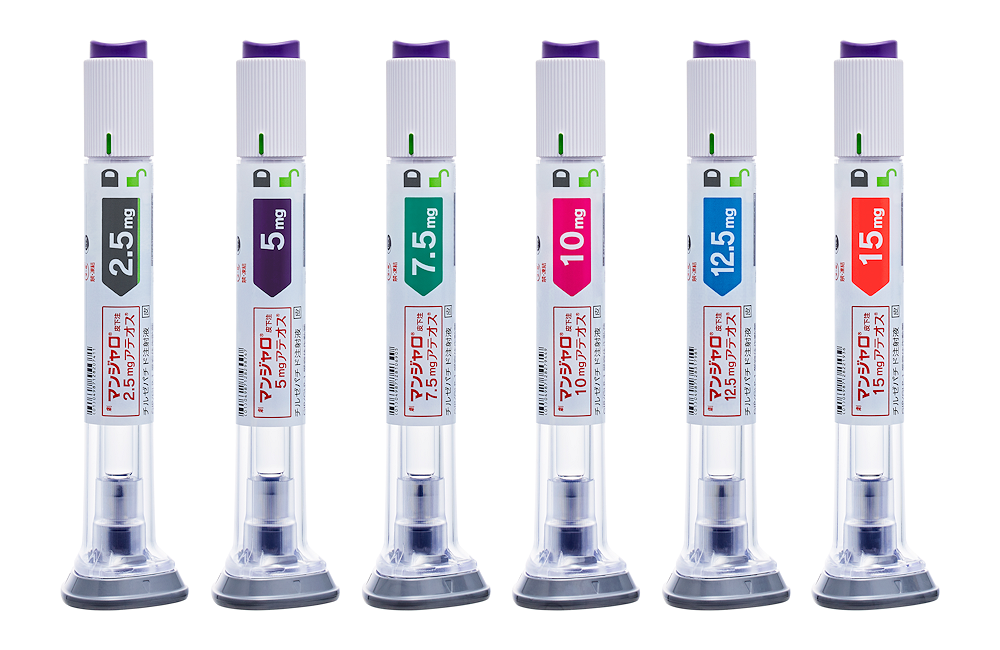
Mounjaro, a GIP/GLP-1 receptor agonist, has become fairly well known — and it’s not just highly effective for weight loss, but can also help with snoring treatment.
In this article, we take a detailed look at Mounjaro.
Kazuyuki Sugaya
Director, Ueno Snoring Clinic / Anesthesiologist
Our director, with over 20,000 general anesthesia cases, focuses primarily on the diagnosis and treatment of snoring and sleep apnea, offering care tailored to each patient. [Insurance-Covered] Ueno Snoring Clinic
This article was reviewed by our Director, Kazuyuki Sugaya, and explains accurate medical information about Mounjaro (tirzepatide) and its relationship to obesity-related snoring and sleep apnea syndrome in clear, accessible terms.
The causes of snoring range from the structure of the throat to body weight. Ueno Snoring Clinic doesn’t rely on a single treatment approach — we’re set up to recommend the best plan for each patient from a broad, evidence-based range of options.
Insurance-Covered: Thorough Testing and Ongoing Treatment
Self-Pay: Address the Root Cause, Short-Term Focus
*As a clinic specializing in snoring treatment, we work to resolve “snoring that won’t stop” through both insurance-covered and self-pay options.
Our director’s book, “Curing Snoring with the Latest Treatments” (No.1 Amazon Bestseller in General Medicine, No.1 in Clinical Internal Medicine, No.2 in Home Medicine & Health) covers this topic in detail as well
Quick Answer
Mounjaro (tirzepatide) is a GIP/GLP-1 receptor agonist originally approved for type 2 diabetes, and its strong appetite-suppressing effect can produce weight loss of over 10–20%. In the 2024 SURMOUNT-OSA trial, it produced a significant improvement in AHI (apnea-hypopnea index) among patients with moderate-to-severe obstructive sleep apnea (OSA) who also had obesity, and the same compound became the first drug approved in the U.S. specifically for OSA treatment. In short, Mounjaro is effective for snoring caused by “obesity plus OSA” — it is not a medication for simple snoring driven by a slim build or the shape of the upper airway. In Japan, it is covered by insurance only as a diabetes medication; use for weight loss or snoring is self-pay, off-label treatment.
📋 What This Article Covers
Obesity is one of the causes of snoring, and lately weight-loss approaches using the long-acting GIP/GLP-1 receptor agonist “Mounjaro” have been getting attention. Around this trend, Japan’s Nikkei newspaper ran a report worth noting.
“Dieting With Diabetes Drug ‘Mounjaro’ — Experts Warn of Possible Side Effects”
A growing number of people are using a drug approved to treat diabetes for weight-loss purposes instead. While self-pay prescriptions outside insurance coverage aren’t illegal, rising demand raises the risk that patients who genuinely need the drug — such as those with diabetes — may struggle to obtain it. Given the risk of side effects, experts including the Japan Medical Association are cautioning against casual use.
— The Nikkei
With that context in mind, this article looks in detail at the safety and effectiveness of Mounjaro treatment for obesity.
Mounjaro is tirzepatide, a GIP/GLP-1 receptor agonist, and in Japan it is approved mainly as a “type 2 diabetes treatment” (as of 2025). Use for obesity alone, or for “cosmetic dieting” purposes, is not covered by insurance in Japan and is, in principle, treated as off-label, self-pay use.
Its main effects:
It’s this powerful weight-loss effect that connects Mounjaro to snoring and sleep apnea.
Ueno Snoring Clinic offers insurance-covered sleep testing and CPAP management, as well as self-pay laser treatment for snoring, tailored to your specific condition. If you’d like to find out which treatment fits you, please start with an initial consultation.
Details of the tests and treatments offered at Ueno Snoring Clinic can be found here
Much of what makes snoring a real concern comes down to obstructive sleep apnea (OSA).
Epidemiological data also shows:
So for someone with “obesity plus snoring (plus possibly daytime sleepiness),” weight loss is central to treatment — and this is where Mounjaro is often effective.
In trials such as SURMOUNT, Mounjaro (tirzepatide) has:
A weight change of this scale is exactly the kind of impact one would expect to meaningfully affect snoring and sleep apnea syndrome.
This is the important part.
In the 2024 SURMOUNT-OSA trial (tirzepatide vs. placebo), patients with obesity and moderate-to-severe sleep apnea syndrome showed:
Based on this, the U.S. FDA approved Zepbound (the same compound, tirzepatide) in December 2024 as the world’s first drug specifically approved “for moderate-to-severe sleep apnea syndrome with obesity.”
In other words, this can be interpreted as:
“It has been officially recognized, at the drug-approval level, that tirzepatide can improve obesity-driven sleep apnea and its related symptoms — including snoring — through weight loss.”
More broadly, GLP-1 and GIP/GLP-1 medications as a class have reported AHI-improving effects, and are increasingly seen as a new pharmacological option for obesity-related sleep apnea syndrome.
For Patients Finding CPAP Follow-Up Visits Difficult
Ueno Snoring Clinic has started offering online consultations for patients on CPAP treatment. If monthly or every-other-month in-person visits are difficult for you, please ask us whether you qualify for this option.
Here we look at whether Mounjaro is effective for snoring that occurs without sleep apnea syndrome.
Assuming:
In such patients:
This reasonable mechanism is already backed by clinical trial data.
So it can be said that:
This much is supported by the evidence.
Conversely, in the following cases, there’s little justification for using Mounjaro specifically “for snoring”:
In conclusion:
Mounjaro can be a viable option for some patients with “obesity plus OSA-type snoring,” but it is not a medication for someone who is slim but has loud snoring.
| Type | Main Conditions | Mounjaro’s Effect |
|---|---|---|
| Obesity + OSA type | BMI around 30+, with loud snoring, observed breathing pauses, daytime sleepiness, high blood pressure, and other signs strongly suggesting OSA | Clinical trials show AHI reduction and improved snoring through weight loss. Can be a viable option. |
| Non-obese to mildly obese, simple snoring | No obesity, or only mild; anatomical factors (small jaw, congestion, enlarged tonsils) are the main cause | The drug’s weight-loss effect is limited here; little basis for use targeting snoring |
| Short-term, event-driven dieting | No plan to continue; used briefly and then stopped | Weight and snoring tend to return after stopping; not recommended |
Common side effects include:
Aside from acute pancreatitis, these are side effects that can occur with many medications in general, and none stand out as especially severe. Acute pancreatitis is thought to be a side effect somewhat specific to insulin-related regulation, but it doesn’t appear to occur very frequently.
In clinical practice, the most common side effects by far are constipation and nausea (an upset stomach). These are related to how the drug works: Mounjaro slows down digestion, which in turn slows bowel movement (contributing to constipation) and lengthens how long food stays in the stomach. That said, this same effect is also part of what helps suppress appetite.
Treatment usually starts with the 2.5mg formulation, which is used for about a week. Once stable, the dose is increased to 5.0mg, also used for about a week.
For weight-loss purposes, results vary, but using the 2.5mg formulation for about a month can lead to roughly 5kg of weight loss.
That said, individual results vary considerably, so please treat this only as a general guide.
Ueno Snoring Clinic offers insurance-covered sleep testing and CPAP management, as well as self-pay laser treatment for snoring, tailored to your specific condition. If you’d like to find out which treatment fits you, please start with an initial consultation.
Details of the tests and treatments offered at Ueno Snoring Clinic can be found here
Having used it myself and prescribed it to patients at our clinic, I’ve clearly noticed that this medication has a different level of effectiveness compared to earlier oral medications. When I ask fellow clinicians, most say the same thing — that Mounjaro “really works.” I’m personally cautious about its use for excessive dieting purposes, but for patients who have obesity-related symptoms such as snoring, sleep apnea, or high blood pressure — not just diabetes — I believe that using it at a low dose is often worth it, weighing the benefits against the side effects.
In Japan, it’s true that insurance coverage is limited to diabetes treatment. Even so, I don’t think it’s wrong to use Mounjaro, on a self-pay basis, to address obesity — a major risk factor for sleep apnea syndrome — and I believe it holds real value from a preventive-medicine standpoint, in helping prevent future obesity-related conditions.
That said, trying to lose weight with Mounjaro alone is risky. Combining it with diet and exercise remains, without question, the most effective and safest way to use it. If you’re struggling with obesity-related snoring, we’d encourage you to visit a medical institution.


English Support Available
We provide medical services for international patients. Please check our English website for details on how to visit our clinic.
Supervising Physician

Kazuyuki Sugaya, Director of Ueno Snoring Clinic
After graduating from Fujita Health University School of Medicine in 2004, Dr. Sugaya began his career as an anesthesiologist at Toho University Omori Medical Center. He has since gained extensive clinical experience at municipal hospitals and private clinics nationwide, administering general anesthesia in over 20,000 cases. In 2020, he founded the "Tokyo Spine Clinic," and has served as the Director of Ueno Snoring Clinic since 2025.
Related Columns
By Appointment Only
Specialized Snoring Treatment in Ueno
Ueno Snoring Clinic
Insurance-covered home testing available.
Following a physician’s consultation and result explanation,
we support the improvement of snoring and sleep apnea with "Dual Deep Thermia"—a non-surgical laser treatment, if necessary.
3-min walk from Ueno Station. Please feel free to consult us.






いびきを最新治療で治す-表紙-1.png)