Ueno Snoring Clinic offers insurance-covered sleep testing and CPAP management, as well as self-pay laser treatment for snoring, tailored to your specific condition. If you’d like to find out which treatment fits you, please start with an initial consultation.
Details of the tests and treatments offered at Ueno Snoring Clinic can be found here
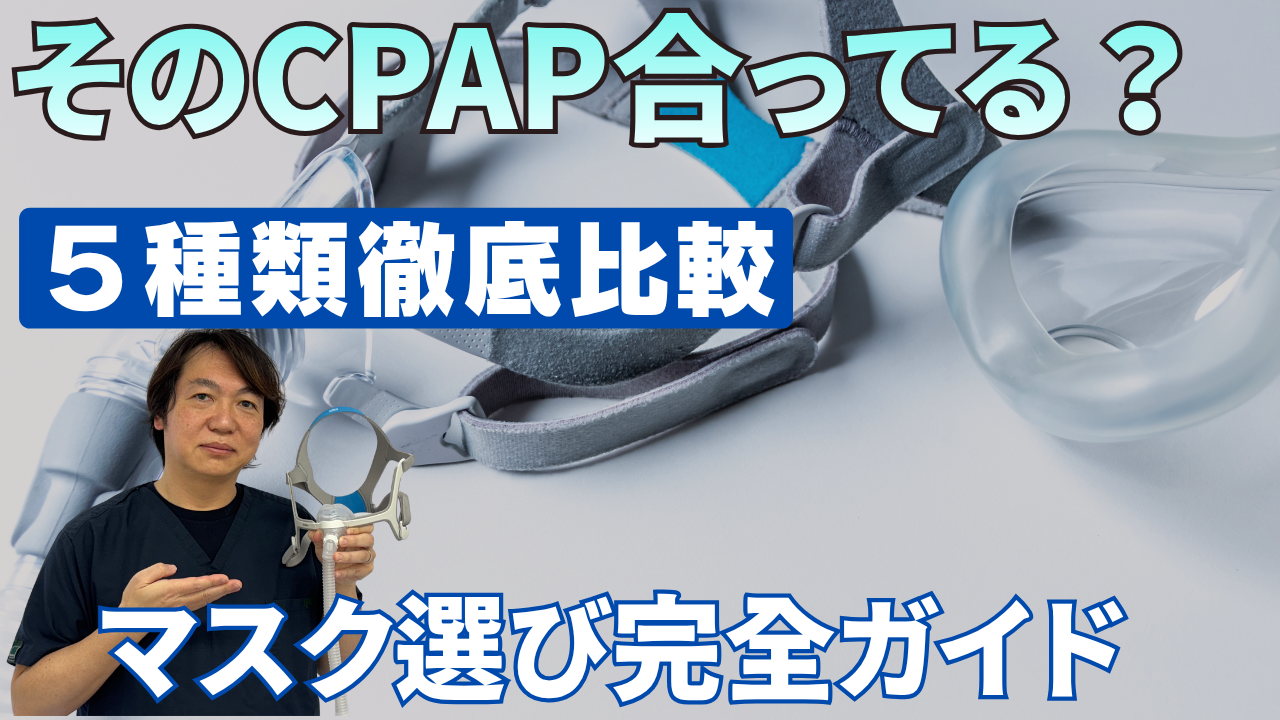
A Complete Comparison of CPAP Masks
We tried on and reviewed five different types of CPAP masks. 90% of CPAP comfort comes down to the mask.
Watch the video
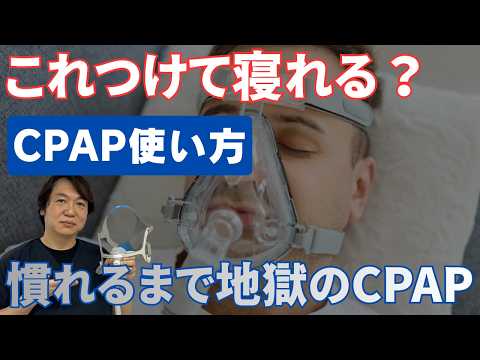
Do you have to use CPAP forever? A specialist explains how to use CPAP
A detailed explanation of how to use CPAP, with a real demonstration of what it feels like to wear the device.
Watch the video
Ueno Snoring Clinic was featured on Fuji TV’s “Live News It!” and on FNN Prime Online
Watch our clinic’s examination and explanation of sleep disorders, snoring, and sleep apnea.
Watch the video
Ueno Snoring Clinic was featured in an article on Nippon TV’s “news every.”
Please take a look as a starting point for thinking about getting evaluated for snoring, sleep apnea, or other sleep disorders.
Read the article
Reviewed by Our Director
Kazuyuki Sugaya
Director, Ueno Snoring Clinic / Anesthesiologist
Our director, with over 20,000 general anesthesia cases, focuses primarily on the diagnosis and treatment of snoring and sleep apnea, offering care tailored to each patient. [Insurance-Covered] Ueno Snoring Clinic
This article was reviewed by our Director, Kazuyuki Sugaya, and explains accurate medical information about the testing and treatment of snoring and sleep apnea syndrome (SAS) in clear, accessible terms.
🩺Comprehensive Snoring Treatment at Ueno Snoring Clinic
The causes of snoring range from the structure of the throat to body weight. Ueno Snoring Clinic doesn’t rely on a single treatment approach — we’re set up to recommend the best plan for each patient from a broad, evidence-based range of options.
Insurance-Covered: Thorough Testing and Ongoing Treatment
- Simplified and PSG testing: A precise analysis of your sleep condition
- CPAP treatment: The standard treatment for moderate-to-severe apnea
Self-Pay: Address the Root Cause, Short-Term Focus
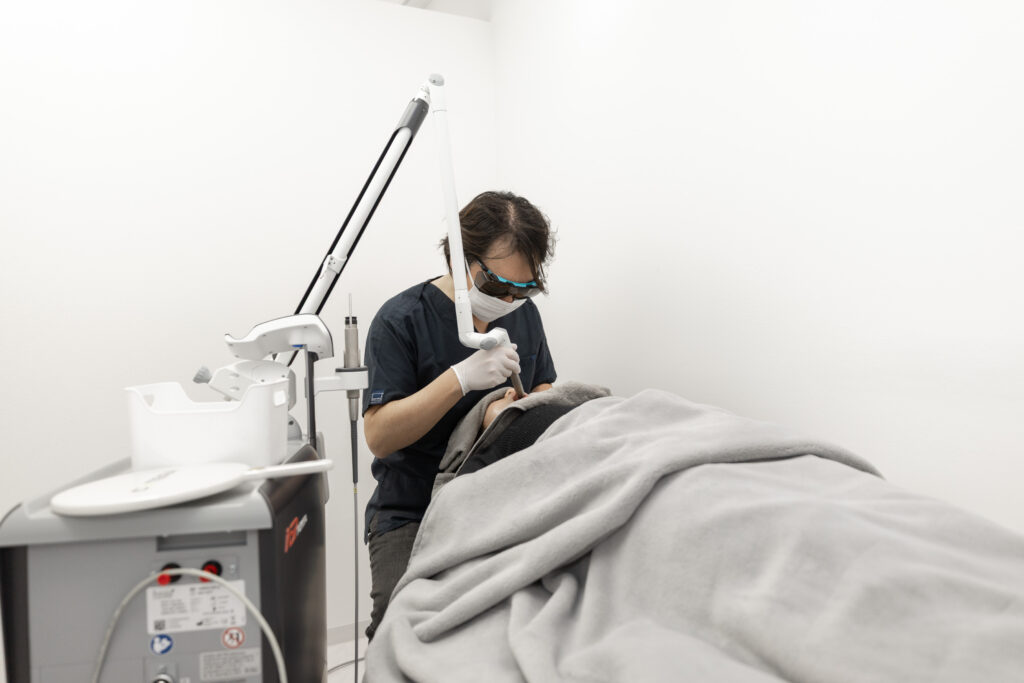
- Snoring laser treatment: A non-surgical approach to the underlying cause
- Medically supervised weight loss: Improving airway space through weight reduction
*As a clinic specializing in snoring treatment, we work to resolve “snoring that won’t stop” through both insurance-covered and self-pay options.
New Book by Our Director
“Curing Snoring with the Latest Treatments”
A guide to the latest snoring treatments, written by an anesthesiologist who has overseen the sleep of more than 10,000 patients.
View on Amazon
Quick Answer
Snoring caused by weak muscles in the mouth, tongue, and throat can, in some cases, be improved through targeted “oral fitness” training. Devices such as Patakara (a lip-muscle trainer), Oral Stim (a tongue-muscle trainer), Breath Fit (a respiratory-muscle trainer), and MFT trainers (which support overall oral-function therapy) each target a different muscle group involved in keeping the airway open during sleep. That said, training alone is rarely a complete solution — it tends to work best as one part of a broader plan that also includes lifestyle changes and, where needed, medical treatment.
📋 What This Article Covers
- How weak oral, tongue, and throat muscles contribute to snoring
- Four training devices, how each works, and who they suit
- The connection between tongue-base collapse and snoring
- Why training alone often isn’t enough on its own
In recent years, an approach that’s been drawing attention involves strengthening the muscles that support the upper airway — the muscles around the mouth, the tongue, and the throat — through targeted exercise, as a way to improve snoring.
This is what’s known as oral fitness, or oral muscle training.
Oral fitness devices are medical support tools or wellness products designed to strengthen the muscles in and around the mouth and face. They’re built to target things like tongue strength, the strength of the muscles around the lips and cheeks (the orbicularis oris and buccinator), the muscles at the back of the throat (the pharyngeal constrictors), the range of motion and stability of the lower jaw, and the muscles used in swallowing.
Training these muscle groups to work correctly is expected to help prevent or reduce issues like “the throat closing during sleep” or “the tongue falling backward.”
In this article, we’ll walk through how this kind of training can help improve snoring.
1. Patakara® (Oral Muscle Training Device)

What Is It?
Patakara® is an oral rehabilitation device designed to strengthen the muscles of the lips. You hold a soft rubber attachment between your lips and pull on it while pursing your lips into an “oo” shape, which intensively trains the muscle that closes the mouth (the orbicularis oris).
It was originally used widely for rehabilitation purposes — for people who had trouble closing their mouth, drooling due to a slack mouth, or speech and swallowing disorders. More recently, it’s gained attention as a supportive tool for snoring and sleep apnea, since it can also help “improve mouth breathing” and “prevent the mouth from opening during sleep.”
Its Connection to Snoring
One of the major causes of snoring is mouth breathing. When you sleep with your mouth hanging open, the tongue is more likely to fall backward into the throat, narrowing the airway and making loud snoring or apnea more likely.
Strengthening the muscles around the lips with Patakara® can lead to changes such as:
- Your mouth staying closed more easily during the day
- Your mouth being less likely to fall open while you sleep
- As a result, breathing through your nose becomes easier
Who Is It Suited For?
This device tends to be a particularly good fit for:
- People whose mouth naturally tends to fall open
- Those who find mouth tape uncomfortable, even though it helps
- Those who’ve been told they breathe through their mouth
- Those who’ve been told they have a small jaw and weak muscles around the mouth
That said, depending on your teeth alignment or dental crowns, there are cases where caution is needed — it’s a good idea to check with a dentist or snoring specialist before starting.
2. Oral Stim (Tongue Muscle Trainer)

What Is It?
Oral Stim is a device dedicated to strengthening the muscles of the tongue. It’s used to assist exercises that involve pushing the tongue forward, pressing it down, or lifting it.
The tongue’s muscles are responsible for:
- The strength to lift the tongue
- The strength to push it forward
- The strength to keep it from falling back into the throat
— and this last function is essential for preventing tongue-base collapse, where the base of the tongue falls backward into the throat.
Oral Stim was originally used for rehabilitation of conditions like dysphagia (difficulty swallowing food or liquid) and dysarthria (unclear speech), and it has a well-established track record in the field of oral rehabilitation.
Tongue-Base Collapse and Snoring
Tongue-base collapse is seen in many patients with snoring and sleep apnea. When you sleep on your back, gravity pulls the base of the tongue backward into the throat, blocking the airway.
When this happens, it can lead to:
- Loud, rumbling snoring
- Full pauses in breathing (apnea)
Strengthening the tongue muscles with Oral Stim is expected to help the tongue hold a forward, upward resting position on its own — in other words, to help prevent tongue-base collapse.
What Does the Training Actually Involve?
The specifics vary depending on the clinic or rehabilitation program, but common exercises include:
- Pressing the tip of the tongue against the device and pushing it forward
- Pressing the tongue up against the roof of the mouth
- Moving the tongue side to side in a controlled way
These movements are typically repeated a few dozen times, done consistently every day. Much like strength training at the gym, repeatedly moving the tongue in the correct direction gradually retrains its resting position and builds muscle strength over time.
3. Breath Fit® (Respiratory Muscle Strengthener)

What Is It?
Breath Fit® is a device designed to strengthen the respiratory muscles — the muscles responsible for inhaling and exhaling. As you breathe through your nose, the device applies moderate resistance to both your inhale and exhale.
Since every breath adds a bit of resistance, this efficiently trains muscles involved in breathing, including:
- The diaphragm
- The intercostal muscles
- Accessory breathing muscles
Benefits for Snoring and Sleep Apnea
Using a respiratory-muscle trainer like Breath Fit® can help with:
- Building the habit of breathing through your nose
- Developing a deeper, slower breathing pattern
- Improving ventilation during sleep as respiratory muscle strength increases
Snoring and apnea aren’t only about “a narrow throat” — “weak breathing” plays a role too. When the respiratory muscles are weak, they may not generate enough negative pressure when the airway narrows, and poor ventilation can make apnea worse.
Training the respiratory muscles isn’t only useful for snoring and apnea — it’s also applied to:
- Asthma
- COPD (chronic obstructive pulmonary disease)
- Improving performance in endurance sports like running and swimming
Which makes it a form of training with a fairly wide range of potential benefits.
4. MFT Trainers (Myofunctional Therapy)
What Is MFT?
MFT (Myofunctional Therapy) refers to a program that comprehensively trains the “functions around the mouth” — the tongue, lips, cheeks, chewing, swallowing, and breathing — as a coordinated system.
The goal of MFT is to correct habits such as:
- The tongue constantly resting low in the mouth
- The mouth hanging open
- Poor swallowing technique
- Habitual mouth breathing
— and replace them with a correct tongue resting position, nasal breathing, and a normal swallowing pattern.
What Is an MFT Trainer?
An MFT trainer is a medical mouthpiece-style device developed to support this myofunctional therapy.
It typically combines several design elements, such as:
- A shape that guides the tongue toward the roof of the mouth
- A design that makes it easier to keep the lips closed
- A shape that helps guide bite alignment and jaw position
You could describe it as a device that lets you carry out part of MFT simply by wearing it, or by wearing it for a set amount of time each day.
From Pediatric Orthodontics to Adult Sleep-Disordered Breathing
MFT trainers are used in particular in two fields:
- Pediatric orthodontics (guiding children’s dental alignment and jaw development)
- Snoring and sleep apnea in adults
In children, correcting tongue position and mouth-breathing habits early can have a positive effect on jaw growth, dental alignment, and facial development.
In adults, an improved tongue position and a shift from mouth breathing to nasal breathing can, in some cases, improve snoring and mild-to-moderate sleep-disordered breathing.
These devices are often recommended by dental clinics, orthodontists, and sleep clinics, and are generally intended to be used under professional guidance as part of a combined “training plus device” approach, rather than on their own.
Summary: These Devices Are Training Partners, Not a Magic Fix
In this article, we’ve introduced four representative devices:
- Patakara® (lip muscle training)
- Oral Stim (tongue muscle trainer)
- Breath Fit® (respiratory muscle strengthening)
- MFT trainers (comprehensive oral function correction)
What matters most is understanding that none of these devices will make snoring disappear like magic on their own.
What they can genuinely help build, with consistent use, is:
- Muscles that make it easier to keep your mouth closed
- Muscles that keep your tongue from falling back
- Respiratory muscles strong enough for proper breathing
- Oral function where nasal breathing becomes your natural default
In that sense, they’re best thought of as training partners, not a solution in themselves.
As described above, there are various self-training approaches that can help improve snoring. That said, as we’ve noted, training alone is often genuinely difficult to sustain, and many people find it hard to keep up over the long term.
In our view, the most effective approach to snoring treatment combines three elements — lifestyle changes, training, and medical treatment. Combining all three tends to reduce the burden of each individual piece, which makes the whole approach much easier to sustain.
In recent years, minimally invasive medical treatments have also become considerably more advanced. We’ll cover these in more detail in a future article.
Frequently Asked Questions
Q. Can snoring really be improved through training alone?
A. Some patients do see a measurable improvement from consistent oral muscle training, but it takes real patience, and results vary from person to person. Training tends to work best as part of a broader plan alongside lifestyle changes and, where needed, medical treatment — rather than as a stand-alone fix.
Q. How long does it typically take to see results from this kind of training?
A. As with any muscle training, it generally requires daily, consistent practice over weeks to months before a noticeable change in snoring appears. It’s similar to strength training at the gym — the muscles around the mouth, tongue, and throat need repeated, correct movement to change their resting position and strength over time.
Q. Who tends to benefit most from devices like Patakara or Oral Stim?
A. They tend to suit people whose mouth naturally falls open, people who’ve been told they breathe through their mouth, and people with a smaller jaw or weaker muscles around the mouth. Depending on your teeth alignment or dental work, some caution may be needed, so it’s worth checking with a dentist or snoring specialist before starting.
Q. Are these training devices a substitute for medical treatment?
A. No — they’re best used alongside medical treatment, not in place of it. If you have moderate-to-severe sleep apnea, training alone typically isn’t enough, and treatments such as CPAP or other medical interventions may be needed. We’d recommend a proper evaluation at a specialist clinic to determine what combination of approaches fits your situation.