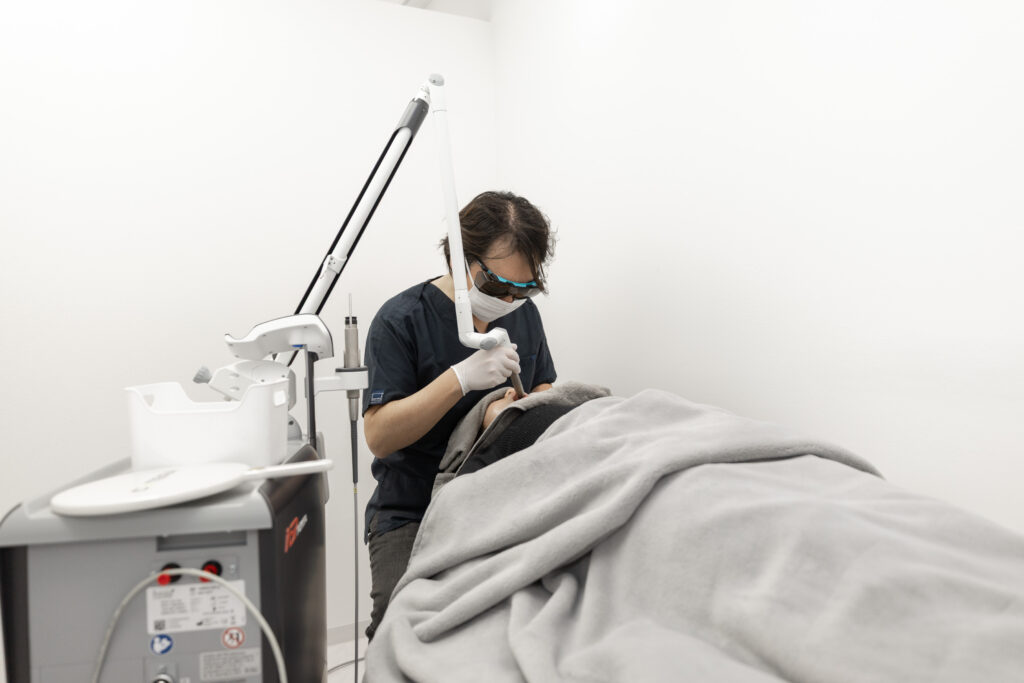
Ueno Snoring Clinic offers insurance-covered sleep testing and CPAP management, as well as self-pay laser treatment for snoring, tailored to your specific condition. If you’d like to find out which treatment fits you, please start with an initial consultation.
Details of the tests and treatments offered at Ueno Snoring Clinic can be found here
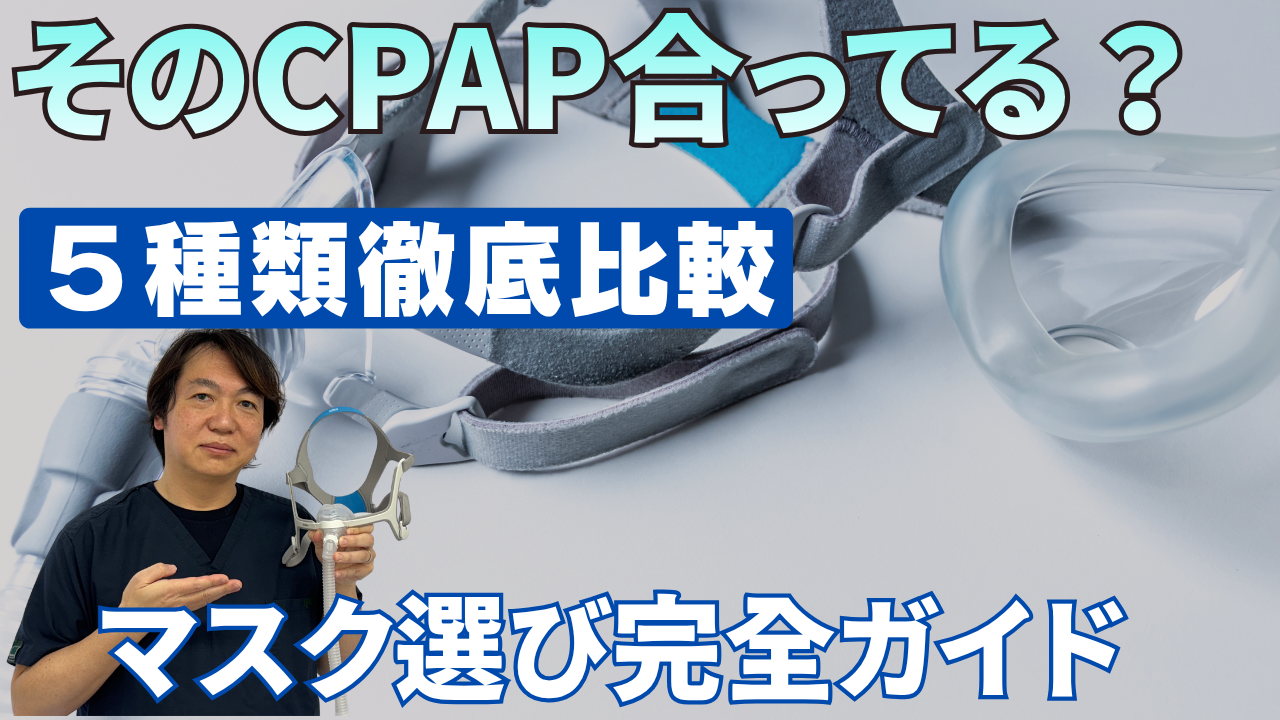
A Complete Comparison of CPAP Masks
We tried on and reviewed five different types of CPAP masks. 90% of CPAP comfort comes down to the mask.
Watch the video
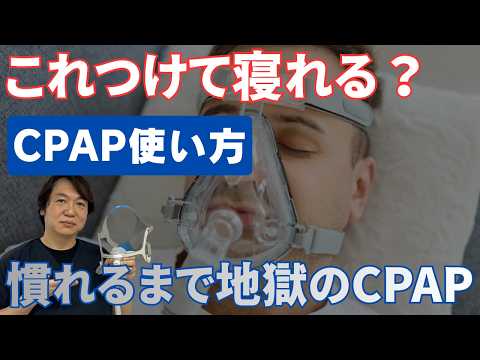
Do you have to use CPAP forever? A specialist explains how to use CPAP
A detailed explanation of how to use CPAP, with a real demonstration of what it feels like to wear the device.
Watch the video
Ueno Snoring Clinic was featured on Fuji TV’s “Live News It!” and on FNN Prime Online
Watch our clinic’s examination and explanation of sleep disorders, snoring, and sleep apnea.
Watch the video
Ueno Snoring Clinic was featured in an article on Nippon TV’s “news every.”
Please take a look as a starting point for thinking about getting evaluated for snoring, sleep apnea, or other sleep disorders.
Read the article
Reviewed by Our Director
Kazuyuki Sugaya
Director, Ueno Snoring Clinic / Anesthesiologist
Our director, with over 20,000 general anesthesia cases, focuses primarily on the diagnosis and treatment of snoring and sleep apnea, offering care tailored to each patient. [Insurance-Covered] Ueno Snoring Clinic
This article was reviewed by our Director, Kazuyuki Sugaya, and explains accurate medical information about the testing and treatment of snoring and sleep apnea syndrome (SAS) in clear, accessible terms.
🩺Comprehensive Snoring Treatment at Ueno Snoring Clinic
The causes of snoring range from the structure of the throat to body weight. Ueno Snoring Clinic doesn’t rely on a single treatment approach — we’re set up to recommend the best plan for each patient from a broad, evidence-based range of options.
Insurance-Covered: Thorough Testing and Ongoing Treatment
- Simplified and PSG testing: A precise analysis of your sleep condition
- CPAP treatment: The standard treatment for moderate-to-severe apnea
Self-Pay: Address the Root Cause, Short-Term Focus
- Snoring laser treatment: A non-surgical approach to the underlying cause
- Medically supervised weight loss: Improving airway space through weight reduction
*As a clinic specializing in snoring treatment, we work to resolve “snoring that won’t stop” through both insurance-covered and self-pay options.
Our director’s book, “Curing Snoring with the Latest Treatments” (ranked #1 in General Medicine, #1 in Clinical Internal Medicine, and #2 in Home Medicine & Health on Amazon Japan), covers this topic in more detail.
New Book by Our Director
“Curing Snoring with the Latest Treatments”
A guide to the latest snoring treatments, written by an anesthesiologist who has overseen the sleep of more than 10,000 patients.
View on Amazon
Quick Answer
Snoring happens when the airway in the throat or nose narrows — due to factors like obesity, alcohol, smoking, sleep position, aging, nasal conditions, or skeletal structure. Most cases can be reduced through self-care, but if it’s accompanied by strong daytime sleepiness or morning headaches, it may be a sign of sleep apnea syndrome (SAS), and seeing a specialist is recommended. One survey found that 48.5% of people have worried about their own snoring at some point (Source: France Bed, “2025 Survey on Snoring”).
📋 What This Article Covers
- Why snoring happens, and its most common causes
- A self-check for warning signs of sleep apnea
- Self-care steps you can try at home
- How to choose a specialist when self-care isn’t enough
Why Does Snoring Happen? Understanding the Causes
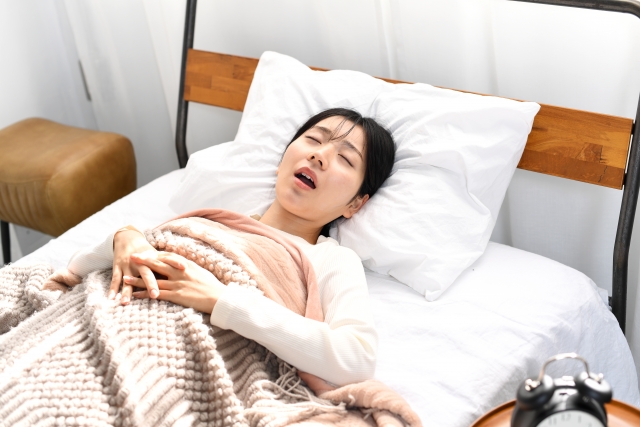
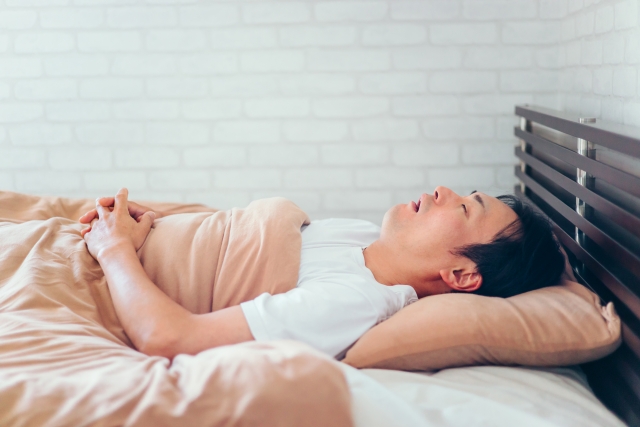
Snoring occurs when the airway — the passage for air running from the nose to the throat — narrows during sleep. As air passes through this narrowed space, the soft palate (near the back of the roof of the mouth) and the base of the tongue vibrate, producing that distinctive snoring sound. What causes the airway to narrow varies from person to person, depending on physical constitution, lifestyle, and skeletal structure.
Obesity
Fat around the neck compresses the airway from the outside, narrowing it. Losing weight to relieve this pressure is one of the most fundamental approaches to improving snoring.
Alcohol
Alcohol relaxes muscles throughout the body, including the throat muscles, which narrows the airway. Cutting back on alcohol, especially before bed, is one of the more effective changes you can make.
Smoking
Smoking irritates and swells the mucous membranes of the throat and nose, narrowing the airway.
Fatigue and Sleep Deprivation
When you’re tired, the throat muscles tend to relax more, making snoring more likely.
Sleep Position (Sleeping on Your Back)
Sleeping on your back lets gravity pull the tongue toward the back of the throat, blocking the airway. Many people find that switching to side-sleeping improves their snoring significantly.
Aging
As we age, our muscles naturally weaken, including the muscles of the throat, which makes them more prone to relaxing.
Nasal Conditions
Hay fever, rhinitis, sinusitis, and other conditions that block nasal airflow lead to mouth breathing, which makes snoring more likely.
Skeletal Structure
A naturally small jaw or a receded lower jaw can also narrow the airway. This is part of why some people who aren’t overweight still snore significantly — skeletal structure, rather than body weight, is often the driving factor in these cases.
Factors Specific to Women (Hormonal Balance)
Women tend to snore less often than men, but hormonal changes around menopause can make the throat muscles more prone to relaxing, increasing the likelihood of snoring.
From our Director: “Snoring rarely has just one cause — in most cases, several factors overlap. At our clinic, we identify the underlying cause through a consultation and testing, then recommend whichever treatment, insurance-covered or self-pay, best fits the patient.” (Kazuyuki Sugaya, Director and Anesthesiologist, Ueno Snoring Clinic)
Causes and Recommended Approaches at a Glance
| Cause |
Main Approach |
When to See a Doctor |
| Obesity |
Weight loss / medically supervised weight loss |
If no improvement after several months |
| Alcohol / smoking |
Cutting back / quitting |
If cutting back doesn’t help |
| Sleep position |
Side-sleeping / body pillow |
If it doesn’t improve |
| Nasal conditions |
Rhinitis treatment / nasal strips |
May need ENT treatment |
| Skeletal structure / apnea involved |
Difficult to resolve with self-care alone |
Early evaluation recommended |
Self-Check: Are You Snoring?
Many people aren’t sure whether they actually snore. See if any of these signs sound familiar.
- A family member or partner has told you your snoring is loud
- Your mouth or throat is very dry when you wake up
- You wake up multiple times during the night
- You feel strongly sleepy during the day no matter how much you sleep
- You wake up with a headache, or your body feels heavy
- You sweat heavily at night
- You’ve been diagnosed with high blood pressure or diabetes without a clear explanation
These signs could point to snoring alone, but they may also be warning signs of sleep apnea syndrome (SAS).
Self-Care Steps You Can Try at Home

Before seeing a doctor, here are some self-care steps you can try at home.
1. Change Your Sleep Position
Sleeping on your back makes it easier for the tongue to fall toward the back of the throat. If your snoring is severe, try sleeping on your side instead. A pillow or body pillow can help support this position, and side-sleeping helps prevent the tongue and soft palate from blocking the airway.
2. Reconsider Your Pillow
A pillow that’s too high or too low bends your neck and narrows the airway. Choosing a pillow with the right height for the natural curve of your neck matters. Custom-fitted pillows and pillows designed specifically for snoring are also available.
3. Lose Weight
If obesity is the cause, weight loss is the most fundamental solution. Aim for a balanced diet and moderate exercise, without pushing too hard. Reducing fat around the neck helps widen the airway and can meaningfully improve snoring.
4. Cut Back on Alcohol and Smoking
Drinking before bed leads to lighter sleep and relaxes the throat muscles, making snoring worse. Smoking irritates the throat’s mucous membranes as well. If snoring is a concern, consider cutting back on alcohol before bed and quitting smoking.
5. Improve Mouth Breathing
If nasal congestion is causing you to breathe through your mouth, treating the underlying rhinitis, using nasal strips, or running a humidifier can all help. Mouthpieces and lip tape designed to prevent mouth breathing are also available over the counter.
When Self-Care Isn’t Enough: Choosing a Specialist
If self-care doesn’t improve your snoring, or if you continue to experience strong daytime sleepiness or fatigue, we recommend seeing a specialist. These symptoms can be signs of sleep apnea syndrome that are easy to miss on your own.
What to Look for in a Specialist
Does the Clinic Specialize in Snoring Treatment?
Look for a clinic focused on sleep medicine, otolaryngology, respiratory medicine, or a dedicated sleep specialty — one that treats snoring and sleep disorders as a core part of its practice.
Does It Have Proper Testing Capabilities?
Check whether the clinic offers a simplified at-home test (pulse oximetry) as well as more detailed testing (a PSG sleep study) when needed.
Does It Offer a Range of Treatment Options?
A good clinic should be able to offer several treatment paths — CPAP therapy, laser treatment, medically supervised weight loss — tailored to each patient’s symptoms and lifestyle.
Does It Have a Strong Track Record?
It’s worth checking the clinic’s website or patient reviews to get a sense of its experience and track record treating snoring.
5 Points for Choosing the Right Clinic Without Getting Lost in Reviews and Rankings, and Finding a Medical Provider You Can Really Trust
January 16, 2026
Summary
In many cases, snoring can be improved through self-care alone. But sometimes an underlying condition, such as sleep apnea syndrome, is behind it.
If self-care doesn’t help, or if daytime sleepiness or fatigue is severe, it’s important to see a specialist as early as possible. Getting the right diagnosis and treatment doesn’t just improve your snoring — it can also lower your broader health risks.
Don’t let your snoring go unaddressed — take that first step for your own health, and your family’s.
Frequently Asked Questions
Q. Why do some thin people still snore?
A. Beyond obesity, skeletal features such as a small jaw or a receded lower jaw, or a nasal condition, can also be the cause. In people who aren’t overweight, skeletal structure is often the main factor behind their snoring.
Q. Are the causes of snoring different for women than men?
A. The basic mechanism is the same, but hormonal changes around menopause are a factor specific to women, since they can make the throat muscles more prone to relaxing.
Q. Could my snoring be caused by an underlying condition?
A. If simple snoring is accompanied by strong daytime sleepiness or morning headaches, sleep apnea syndrome (SAS) may be the underlying cause. In that case, testing and treatment — not just self-care — are needed.