




いびきを最新治療で治す-表紙-1.png)

Told You Stop Breathing in Your Sleep? A Guide to Insurance-Covered Sleep Apnea Testing in Japan
Have you ever been diagnosed with obstructive sleep apnea and wondered, “Will I need to sleep with a CPAP mask for the rest of my life?” Some people delay sleep testing because they are worried that a CPAP machine will be their only treatment option.
A major change may be approaching in sleep medicine. AD109, an investigational oral treatment developed by the U.S. biotechnology company Apnimed, has advanced through Phase 3 clinical development for obstructive sleep apnea. The drug is designed to reduce upper-airway collapse during sleep by supporting the activity of muscles that help keep the throat open.
Important medical update
AD109 remains an investigational medication and is not currently approved for routine treatment of obstructive sleep apnea. Regulatory submission, approval timing, commercial availability, and availability in Japan have not been guaranteed. Patients should not discontinue CPAP or delay diagnosis while waiting for a future medication.
Quick Answer
AD109 is an experimental once-nightly oral treatment for obstructive sleep apnea. It combines atomoxetine with aroxybutynin and is designed to improve upper-airway muscle activity during sleep. Phase 3 reports have described a meaningful reduction in apnea severity in selected patients, but the medication is not yet an approved replacement for CPAP. CPAP remains one of the most effective treatments for moderate to severe obstructive sleep apnea.
Is Regular CPAP Follow-Up Difficult?
Ueno Snoring Clinic offers online follow-up for eligible patients who are already receiving CPAP treatment. Initial diagnosis and sleep testing cannot be completed through online consultation alone.
At Ueno Snoring Clinic, we provide treatment options tailored to each patient, including insurance-covered sleep testing and CPAP management, as well as self-pay laser snoring treatment. If you would like to know which treatment may be suitable for you, please begin with an initial consultation.
Visit the Ueno Snoring Clinic English website for details.
🩺Comprehensive Snoring and Sleep Apnea Care
Snoring and obstructive sleep apnea may be caused by throat anatomy, tongue position, nasal obstruction, obesity, alcohol, sleep position, and reduced upper-airway muscle activity. At Ueno Snoring Clinic, we evaluate the cause and propose an appropriate treatment plan rather than relying on one treatment for every patient.
Insurance-covered evaluation and continuing care
- Home sleep testing and PSG: Objective evaluation of sleep-related breathing
- CPAP treatment: Standard treatment for appropriate moderate to severe OSA cases
Self-pay options for suitable patients
- Dual Deep Thermia®: Non-surgical laser snoring treatment
- Medical weight management: Supporting airway improvement through weight reduction
Medically Reviewed by the Director
Kazuyuki Sugaya
Director, Ueno Snoring Clinic / Anesthesiologist
With experience in more than 20,000 cases of general anesthesia, Dr. Sugaya applies extensive airway-management knowledge to the diagnosis and treatment of snoring and sleep apnea. Ueno Snoring Clinic
This article has been medically reviewed to explain current and investigational treatments for obstructive sleep apnea.
1. Why CPAP Remains Difficult for Some Patients
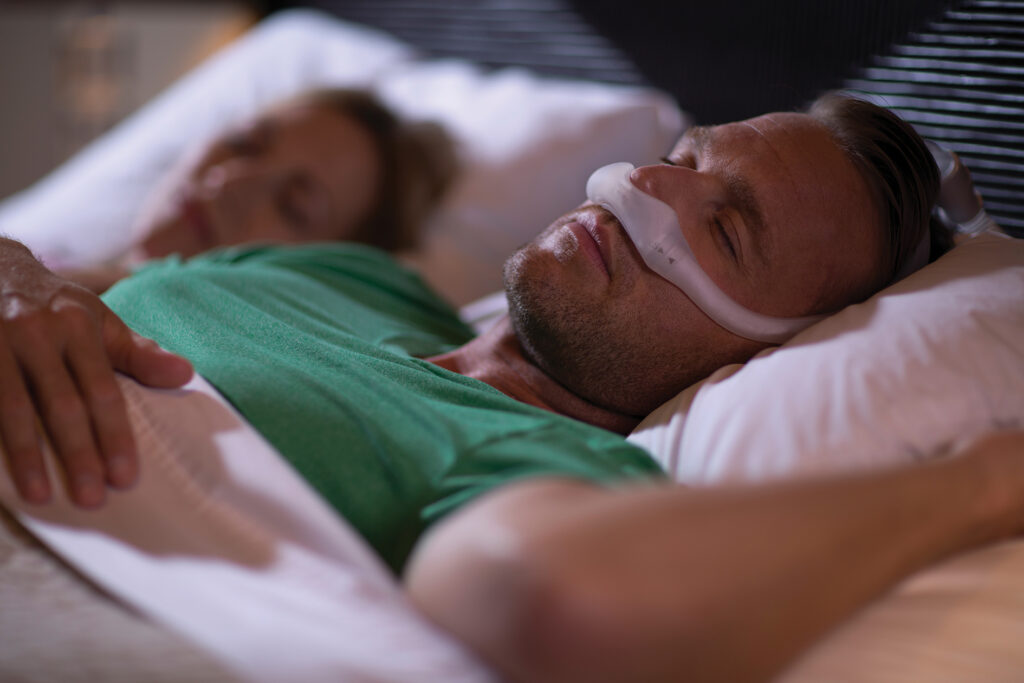
Continuous positive airway pressure, or CPAP, is a standard and highly effective treatment for moderate to severe obstructive sleep apnea. It sends pressurized air through a mask to prevent the airway from collapsing during sleep.
However, some patients find long-term use difficult because of:
- Mask discomfort: Pressure on the face, air leakage, skin irritation, and difficulty changing sleeping position
- Dryness: Dry nose, dry mouth, or throat discomfort
- Psychological resistance: Feeling dependent on a machine or feeling uncomfortable using it around a partner
- Travel inconvenience: Carrying the machine, tubing, mask, and power accessories
- Adherence problems: Removing the mask unconsciously or using it for only part of the night
An effective oral medication could offer a new option for some patients who cannot tolerate CPAP. However, an investigational pill should not be described as a confirmed replacement for CPAP before regulatory approval and long-term clinical use.
2. What Is AD109?
AD109 is an investigational once-nightly oral treatment developed for obstructive sleep apnea. It combines two pharmacological components:
- Atomoxetine: A norepinephrine reuptake inhibitor
- Aroxybutynin: An antimuscarinic compound related to oxybutynin
The combination is designed to improve the activity of upper-airway dilator muscles during sleep. The most important of these muscles include the muscles that help prevent the tongue and surrounding soft tissues from collapsing backward into the airway.
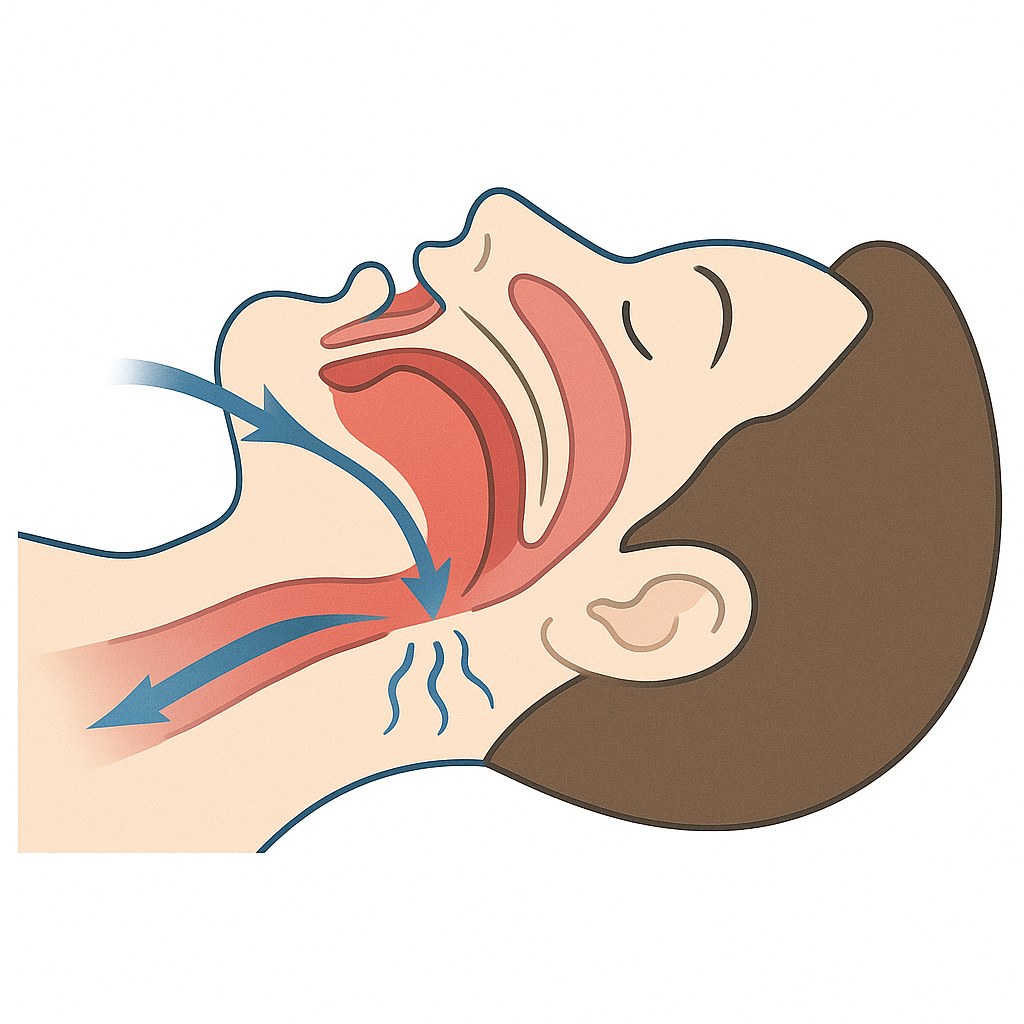
3. How Could a Sleep Apnea Pill Keep the Airway Open?
Most obstructive sleep apnea occurs because the upper airway becomes narrow or collapses while the patient is asleep. This may happen because of anatomy, obesity, a small jaw, a large tongue, soft palate vibration, and reduced muscle activity during sleep.
AD109 is designed to address the neuromuscular component of airway collapse.
Supporting upper-airway muscle activity
The drug aims to prevent the muscles surrounding the throat and tongue from relaxing excessively. Maintaining more muscle activity may make the airway less likely to collapse.
Acting during sleep rather than mechanically opening the airway
CPAP uses air pressure to hold the airway open. AD109 uses a pharmacological approach intended to improve the body’s own airway-supporting muscle activity.
Not the same as stimulating the entire brain
The goal is not to keep the patient awake. The treatment is designed to support the neural signals involved in upper-airway muscle tone while still allowing sleep. Whether this balance is maintained safely over long-term use remains part of the regulatory and clinical evaluation.
4. What Did the Phase 3 Trials Report?
Public reports from the Phase 3 program have described a substantial average reduction in obstructive sleep apnea severity over approximately 26 weeks. Some reports have cited an average reduction of about 47% in apnea severity.
How should this result be interpreted?
- An average percentage reduction does not mean every patient responded equally.
- A reduction in AHI does not necessarily mean that OSA was completely eliminated.
- CPAP can often reduce breathing events more completely when it is used correctly.
- Long-term cardiovascular outcomes and real-world adherence still require evaluation.
- Regulatory review may identify additional safety, dosing, or patient-selection requirements.
The findings are encouraging because they suggest that direct pharmacological treatment of airway collapse may be possible. Nevertheless, the results should not be described as proof that one tablet will replace CPAP for every patient.
5. Is AD109 Approved by the FDA?
As of this article’s publication, AD109 remains investigational. Reports indicate that the developer is preparing for or progressing toward a regulatory submission, but FDA approval has not been guaranteed.
Statements such as “available in 2027” should be understood as development targets or projections, not confirmed availability dates.
Approval depends on complete review of efficacy, safety, manufacturing quality, dosing, and patient selection.
6. When Could AD109 Become Available in Japan?
There is currently no guaranteed date for availability in Japan. A medication approved in the United States does not automatically become available in Japan.
Japanese availability would generally require a domestic development strategy, data acceptable to Japanese regulators, review by the Pharmaceuticals and Medical Devices Agency, approval by the Ministry of Health, Labour and Welfare, and pricing and reimbursement decisions.
Any commercial or research partnership involving Japanese companies may support development, but it does not guarantee rapid approval or insurance coverage.
7. AD109 vs Zepbound: What Is the Difference?
Tirzepatide, sold as Zepbound in the United States, became the first FDA-approved medication for moderate to severe obstructive sleep apnea in adults with obesity. It is used together with a reduced-calorie diet and increased physical activity.
| Treatment | Main Target | Current Status | Important Limitation |
|---|---|---|---|
| AD109 | Upper-airway neuromuscular activity | Investigational | Not yet approved; long-term use remains under evaluation |
| Tirzepatide / Zepbound | Obesity and weight-related airway narrowing | FDA-approved in the U.S. for adults with obesity and moderate to severe OSA | The OSA indication is specifically for adults with obesity |
| CPAP | Mechanical prevention of airway collapse | Established standard treatment | Requires regular mask use |
8. Could AD109 Help Lean Patients with Sleep Apnea?
Obstructive sleep apnea does not only affect people with obesity. Many patients in Japan have OSA related to a small or receding jaw, a relatively large tongue, narrow upper-airway anatomy, soft palate collapse, or reduced upper-airway muscle responsiveness.
A neuromuscular treatment could theoretically benefit some patients regardless of body weight. However, a medication cannot enlarge a small jaw, remove enlarged tonsils, or correct every structural cause of airway obstruction.
9. Possible Side Effects and Unanswered Questions
Reported concerns associated with the pharmacological components and clinical program include dry mouth, insomnia, changes in heart rate or blood pressure, urinary or anticholinergic effects, and other neurological or gastrointestinal symptoms.
The final safety profile cannot be defined until regulators complete their review and full prescribing information becomes available.
10. Why Waiting for a Future Pill Is Dangerous
It may be tempting to think, “A pill may arrive soon, so I will wait.” This is not a safe strategy.
Untreated obstructive sleep apnea may be associated with daytime sleepiness, poor concentration, traffic and workplace accidents, high blood pressure, arrhythmia, cardiovascular disease, metabolic dysfunction, and reduced quality of life.
Do not stop CPAP or postpone sleep testing while waiting for AD109.
Future approval, timing, price, insurance coverage, eligibility, and availability in Japan remain uncertain.
11. Current Treatment Options Available Now
CPAP therapy
CPAP remains one of the most effective treatments for moderate to severe obstructive sleep apnea. Problems with pressure, mask fit, leakage, dryness, or travel should be discussed with the treating clinic before giving up.
Oral appliance therapy
A mandibular advancement device may help selected patients with simple snoring or mild to moderate OSA, particularly when jaw position contributes to airway narrowing.
Weight management
Weight reduction may improve OSA in patients with obesity. Medical weight management may be considered after evaluating contraindications, expected benefits, and adverse effects.
Positional therapy
Patients whose breathing worsens mainly while sleeping on their back may benefit from side sleeping or a positional device.
ENT and surgical evaluation
Enlarged tonsils, major nasal obstruction, or clear structural airway narrowing may require specialist evaluation.
Dual Deep Thermia® laser treatment
For suitable patients with snoring caused mainly by soft palate and pharyngeal tissue vibration, Dual Deep Thermia® may be considered as a non-surgical, self-pay option. Laser treatment is not a substitute for CPAP in severe OSA.
Medical weight management with tirzepatide
Tirzepatide is used under the indications approved in each country. In the United States, Zepbound is approved for moderate to severe OSA in adults with obesity. Japanese indications, product names, reimbursement, and prescribing requirements differ and must be confirmed locally.
12. Could a Pill Completely Replace CPAP?
For some patients, an approved oral medication may eventually reduce or eliminate the need for CPAP. For others, it may become an additional treatment rather than a replacement.
The future may include medication alone for selected responders, medication combined with weight loss or an oral appliance, medication used to reduce CPAP pressure requirements, and treatment selected according to OSA phenotype.
However, CPAP provides immediate and powerful mechanical support. A medication that reduces AHI by approximately half is not necessarily equivalent to CPAP in a patient with severe OSA.
Frequently Asked Questions
Q. Is AD109 already available?
No. AD109 remains investigational and is not currently available as a routinely approved treatment for obstructive sleep apnea.
Q. Will it be available in 2027?
Some reports discuss a possible future launch target, but no commercial date is guaranteed. Regulatory review can change the timeline.
Q. Can I stop CPAP and wait for the medication?
No. Do not stop CPAP without medical reassessment. Untreated OSA may return immediately when CPAP is discontinued.
Q. Is AD109 a sleeping pill?
No. It is being developed specifically to support upper-airway muscle activity during sleep. It is not a conventional sedative medication.
Q. Is AD109 the same as Zepbound?
No. Zepbound contains tirzepatide and improves obesity-related OSA primarily through weight loss and associated metabolic effects. AD109 is designed to act on upper-airway neuromuscular control.
Q. Could it work in people who are not overweight?
Potentially, because its intended mechanism is not dependent on weight loss. However, the final approved indication and patient-selection criteria are not yet known.
Q. What should I do now if I suspect sleep apnea?
Arrange a medical consultation and sleep test. Effective treatments are already available, and waiting may expose you to avoidable health and safety risks.
Q. Is English consultation available?
Yes. Ueno Snoring Clinic provides English consultation for international patients and foreign residents in Japan.
Summary: A New Era of Sleep Apnea Treatment May Be Approaching
AD109 represents an important development because it directly targets the neuromuscular mechanisms involved in upper-airway collapse. Phase 3 findings are encouraging, and an effective oral treatment could expand options for patients who cannot tolerate CPAP.
However, AD109 is still investigational. It should not yet be described as an approved cure, a guaranteed CPAP replacement, or a medication that will definitely become available in Japan by a specific date.
The most important first step remains the same: understand your current sleep condition.
Do not ignore loud snoring, witnessed breathing pauses, daytime sleepiness, morning headaches, or poor concentration. A home sleep test or PSG can determine whether obstructive sleep apnea is present and which current treatment is appropriate.
New Book by the Director
“Treating Snoring with the Latest Treatment Methods”
A practical guide to sleep apnea, CPAP, sleep testing, and modern snoring treatment.
Concerned About Snoring or Sleep Apnea?
Ueno Snoring Clinic offers English consultation, home sleep testing, PSG, CPAP management, medical weight management, and non-surgical laser snoring treatment for suitable patients.
*This article provides general medical information. Investigational drug status, regulatory timelines, trial findings, and approved indications may change. Do not start, stop, or change OSA treatment without consulting a qualified physician.
[Insurance Treatment] Appointment-based care for patients concerned about snoring and sleep apnea
Please consult Ueno Snoring Clinic.
📞 0120-899-930
5F Ueno Silk Building, 4-8-8 Ueno, Taito-ku, Tokyo 110-0005

Please consult Ueno Snoring Clinic.
📞 0120-899-930
5F Ueno Silk Building, 4-8-8 Ueno, Taito-ku, Tokyo 110-0005
You can easily consult us via LINE ↓↓↓

English Support Available
We provide medical services for international patients. Please check our English website for details.