Ueno Snoring Clinic offers insurance-covered sleep testing and CPAP management, as well as self-pay laser treatment for snoring, tailored to your specific condition. If you’d like to find out which treatment fits you, please start with an initial consultation.
Details of the tests and treatments offered at Ueno Snoring Clinic can be found here
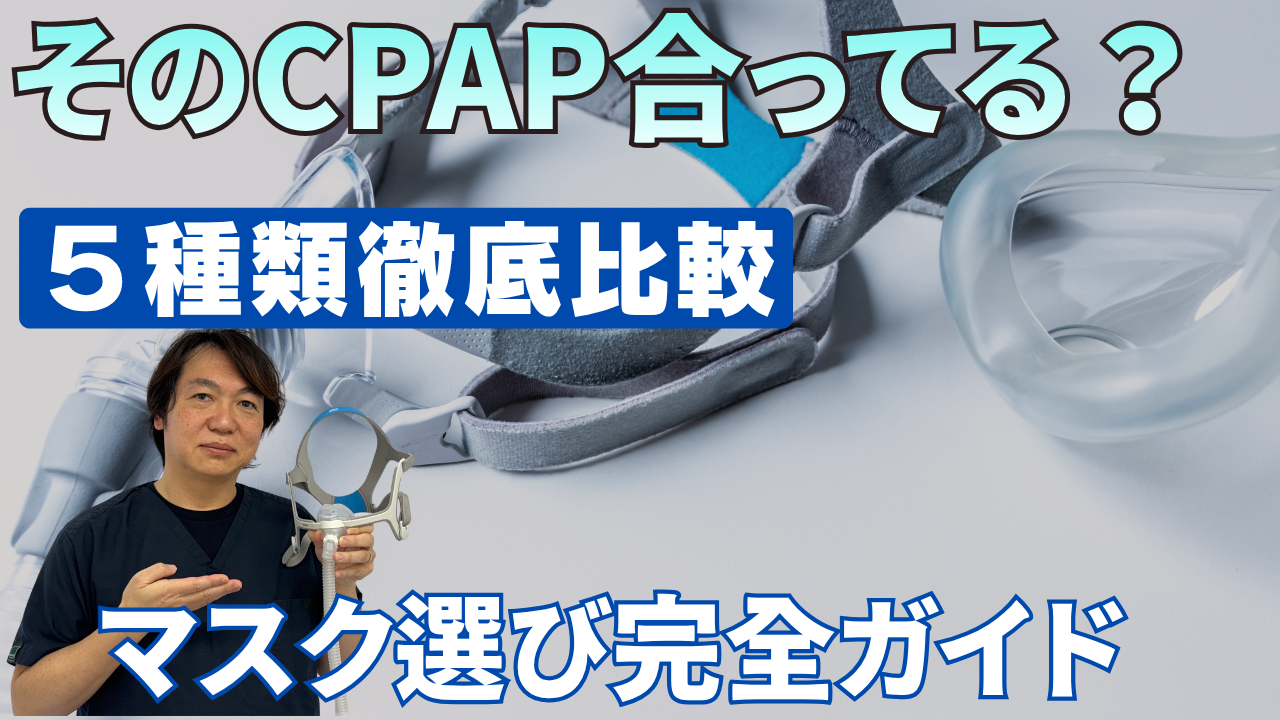
A Complete Comparison of CPAP Masks
We tried on and reviewed five different types of CPAP masks. 90% of CPAP comfort comes down to the mask.
Watch the video
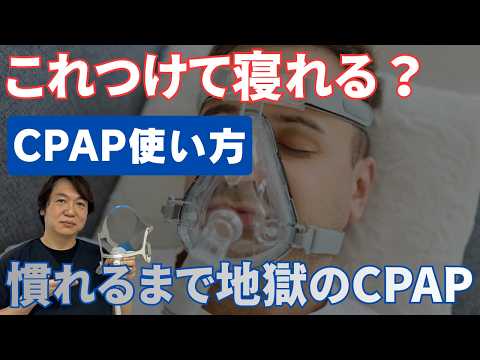
Do you have to use CPAP forever? A specialist explains how to use CPAP
A detailed explanation of how to use CPAP, with a real demonstration of what it feels like to wear the device.
Watch the video
Ueno Snoring Clinic was featured on Fuji TV’s “Live News It!”
Watch our clinic’s examination and explanation of sleep disorders, snoring, and sleep apnea.
Watch the video
Ueno Snoring Clinic was featured in an article on Nippon TV’s “news every.”
Please take a look as a starting point for thinking about getting evaluated for snoring, sleep apnea, or other sleep disorders.
Read the article
Reviewed by Our Director
Kazuyuki Sugaya
Director, Ueno Snoring Clinic / Anesthesiologist
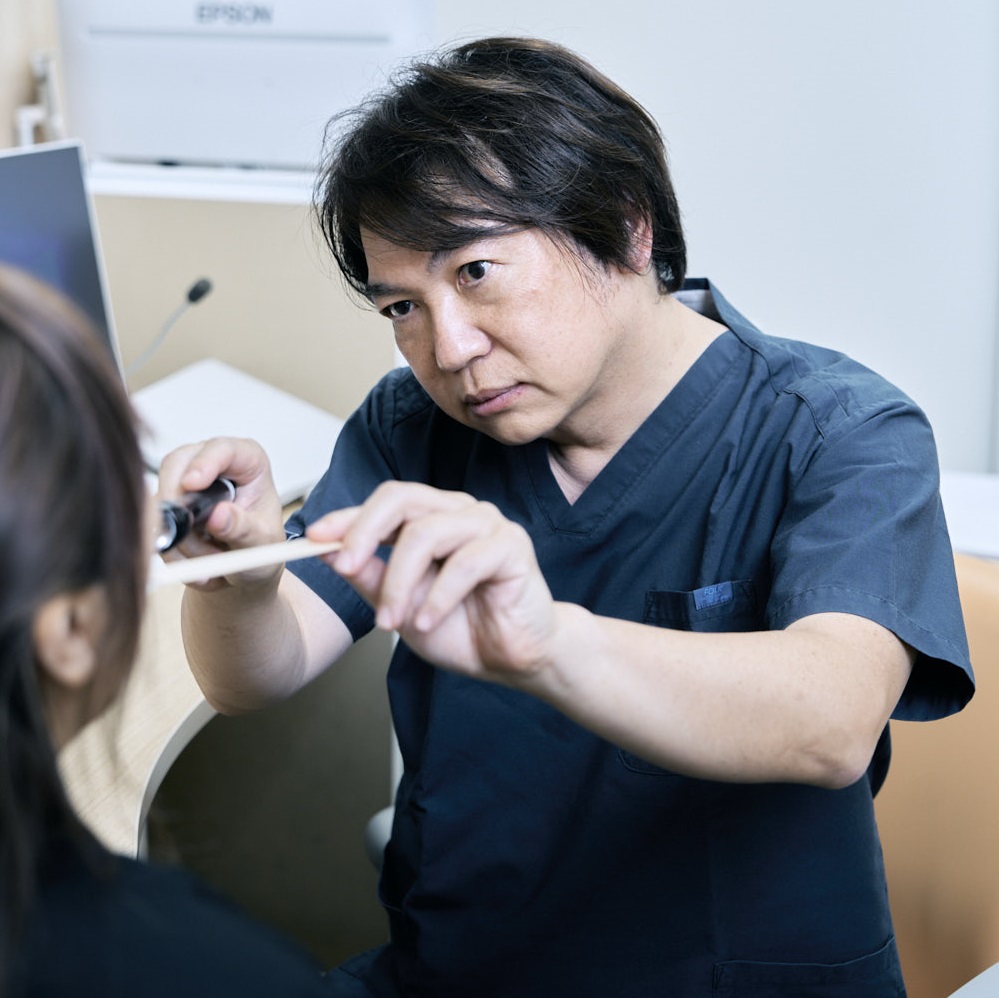
Our director, with over 20,000 general anesthesia cases, focuses primarily on the diagnosis and treatment of snoring and sleep apnea, offering care tailored to each patient. [Insurance-Covered] Ueno Snoring Clinic
This article was reviewed by our Director, Kazuyuki Sugaya, and walks through what happens during laser treatment for snoring — what the procedure feels like and what to watch for once you’re home — with accurate medical information explained clearly, so first-time patients can come in with confidence.
🩺Comprehensive Snoring Treatment at Ueno Snoring Clinic
The causes of snoring range from the structure of the throat to body weight. Ueno Snoring Clinic doesn’t rely on a single treatment approach — we’re set up to recommend the best plan for each patient from a broad, evidence-based range of options.
Insurance-Covered: Thorough Testing and Ongoing Treatment
- Simplified and PSG testing: A precise analysis of your sleep condition
- CPAP treatment: The standard treatment for moderate-to-severe apnea
Self-Pay: Address the Root Cause, Short-Term Focus
- Snoring laser treatment: A non-surgical approach to the underlying cause
- Medically supervised weight loss: Improving airway space through weight reduction
*As a clinic specializing in snoring treatment, we work to resolve “snoring that won’t stop” through both insurance-covered and self-pay options.
Our director’s book, “Curing Snoring with the Latest Treatments” (No.1 Amazon Bestseller in General Medicine, No.1 in Clinical Internal Medicine, No.2 in Home Medicine & Health) covers this topic in detail as well
New Book by Our Director
“Curing Snoring with the Latest Treatments”
A guide to the latest snoring treatments, written by an anesthesiologist who has overseen the sleep of more than 10,000 patients.
View on Amazon
Quick Answer
Laser treatment for snoring is an outpatient procedure that takes about 25 to 60 minutes from arrival to leaving the clinic. No general anesthesia or hospital stay is needed, and the treatment itself takes roughly 15–20 minutes. A local (topical) anesthetic is used, so most patients feel little to no significant pain during the procedure, and going home — or back to work — the same day is generally possible. Afterward, there’s almost no downtime beyond avoiding strenuous exercise and irritating foods for a short period. Because the effect builds up over multiple sessions, continuing treatment consistently matters.
📋 What This Article Covers
- The step-by-step timeline of treatment day (arrival to departure)
- What happens — and what it feels like — at each step
- An honest explanation of pain and sensation during the procedure
- What to do (and avoid) once you’re home, and in the days after
- What to wear, bring, and eat on the day
- Common questions and concerns, answered
Laser Treatment for Snoring: The Step-by-Step Timeline on Treatment Day

Let’s start with the big picture. From arrival to leaving the clinic, the whole visit takes about 25 to 60 minutes.
Check-in and intake form
🕐 About 5–10 minutes after arrival
At check-in, we confirm your insurance card and appointment, and you’ll fill out an intake form (not needed if you’ve already completed the online questionnaire in advance). We’ll confirm your current symptoms, any allergies, and medications you’re taking. If this is your first visit, we’ll also ask about your symptoms in more detail at this point.
Examination and oral cavity check by the doctor
🕐 About 10–15 minutes
Our director examines the condition of your oral cavity, soft palate, uvula, and pharynx. This identifies the area responsible for your snoring and determines where the laser will be applied. Whether treatment is appropriate for you is also decided at this point.
*A sleep test may be performed at your first visit to assess suitability (depending on the results, a treatment other than laser may be recommended for more severe cases).
Applying local (topical) anesthetic
🕐 About 5–10 minutes (including time for the anesthetic to take effect)
A topical anesthetic spray is applied to the back of your throat. No injection is used. You’ll wait about a minute for the anesthetic to take effect, at which point the throat area typically feels numb. There’s no need to worry about an anesthetic injection.
🔴 Laser application (the treatment itself)
🕐 About 15–20 minutes
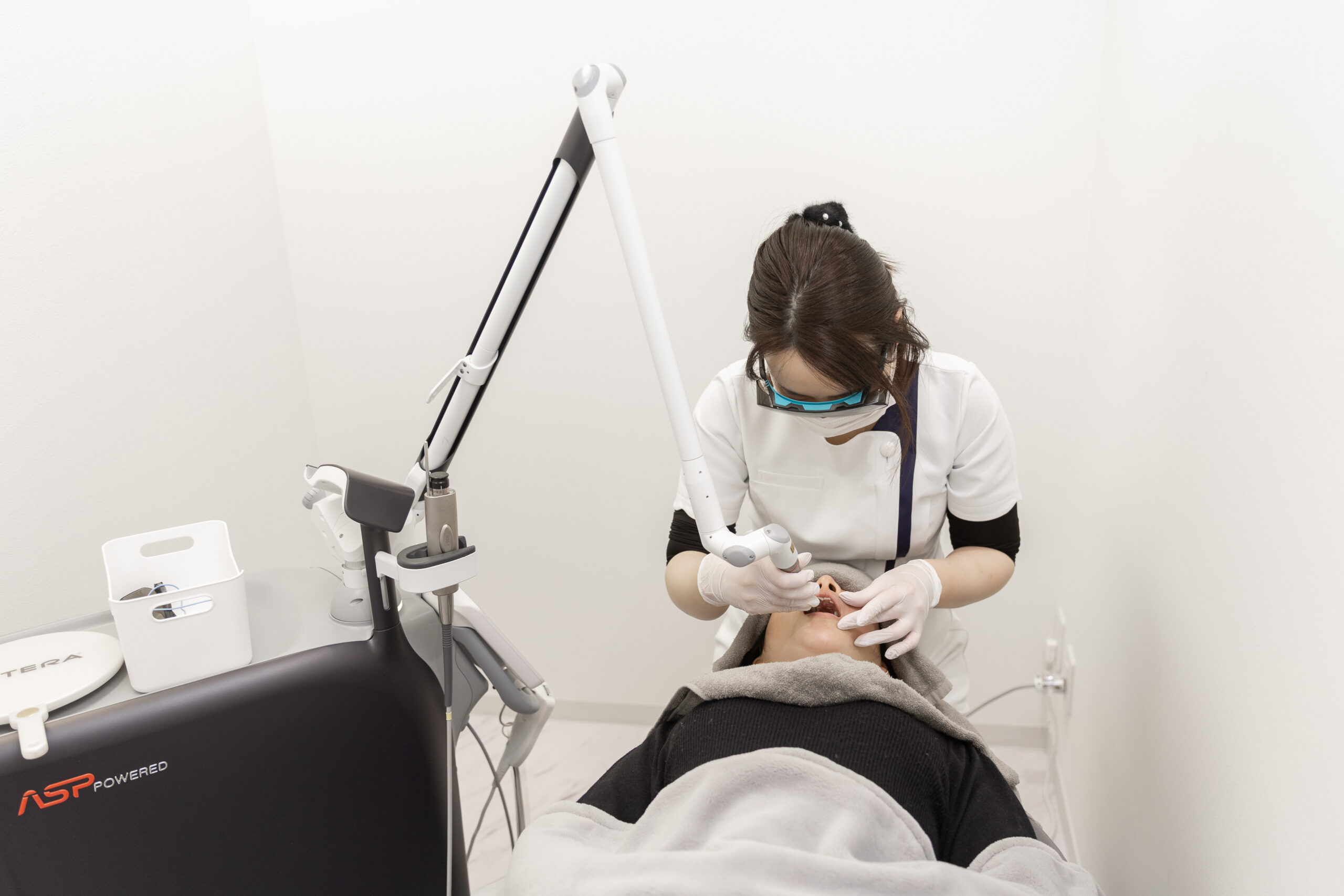
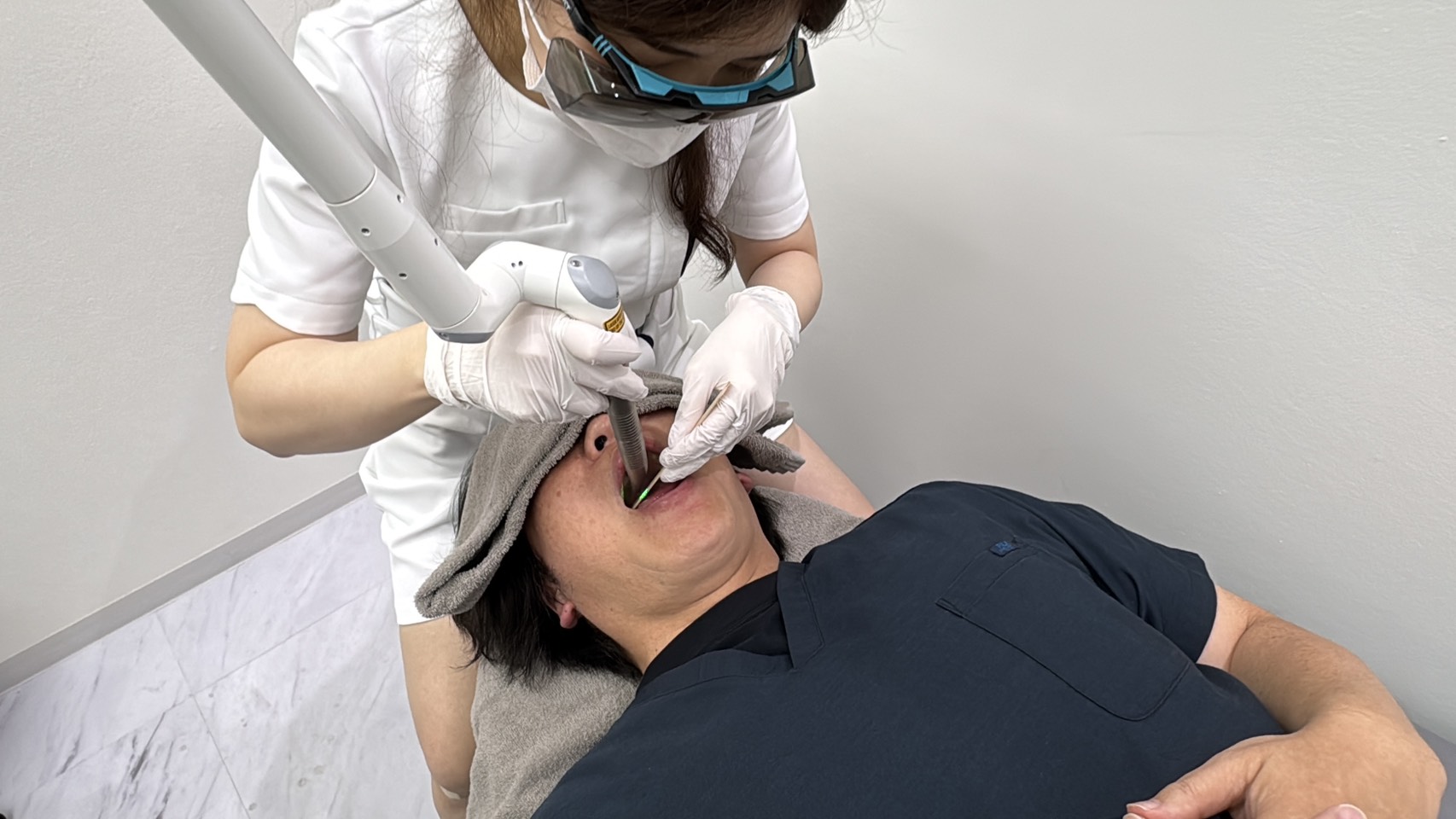
Seated in a chair with your mouth open, the laser is applied — mainly to the soft palate and uvula — to tighten the loose mucosal and muscle tissue in that area.
Because the anesthetic has taken effect, most patients feel little to no significant pain. A warm sensation or slight discomfort is common. You’ll be asked not to speak and to keep your mouth open wide throughout. Most patients report that it isn’t painful enough to require gritting through it.
Post-treatment check and pre-departure explanation
🕐 About 10 minutes
We check the oral cavity right after treatment. We’ll explain what to watch for once you’re home (avoiding irritating foods, for example) and give you a sense of when the next session should be. Medication is prescribed if needed.
✅ Booking your next appointment
🕐 About 5 minutes
You can book your next appointment before you leave, or book online later if you’re not sure of your schedule yet. You’re free to drive or ride a bike immediately after treatment. In most cases, treatment has little effect on your work or daily routine for the rest of the day.
What to Prepare Before You Arrive
| Item |
Details |
| Eating |
There’s no need to fast before treatment — please eat normally before you come in. That said, since you’ll need to avoid eating or drinking for about 30 minutes afterward, we’d suggest not overeating right beforehand. |
| Clothing |
No restrictions. Something with an open neckline makes the examination a bit easier. |
| What to bring |
Your insurance card (for your first visit) and a way to pay (cash or card, since this is self-pay treatment). If you have results from a past sleep test, please bring them along. |
| Alcohol |
Please avoid drinking before treatment on the day. Drinking is fine later that same day, after treatment. |
| Contacts and makeup |
Since treatment is performed inside the oral cavity, contacts and makeup aren’t affected — come in as you normally would. |
What Does the Procedure Feel Like? An Honest Answer
The biggest worry for most first-time patients is simply “how much will this hurt?” Here’s our honest answer.
💬 What patients commonly tell us about the procedure
- “It didn’t hurt nearly as much as I expected.”
- “There was a warm feeling, but more like a light tingle.”
- “My throat felt a bit itchy at the back.”
- “Keeping my mouth open wide the whole time was harder than the treatment itself.”
- “The anesthetic was working, so I barely felt anything.”
The topical anesthetic spray numbs the area where the laser is applied (the soft palate and uvula). Most of what patients feel during treatment is warmth or a mild tingling sensation, and it’s rare for treatment to be interrupted due to significant pain.
That said, everyone’s experience is a little different. If the anesthetic doesn’t seem to be working well, or if you’re in more pain than expected, please let your doctor know right away — additional anesthetic can be applied. There’s no need to push through discomfort.
Ueno Snoring Clinic also offers a newer, more advanced laser option called “Dual Deep Thermia,” which uses two types of laser to heat tissue from the surface layer down to deeper layers of the throat. If you’re interested in learning more about the mechanism and who it’s suited for, please feel free to ask us at your consultation.
What to Do (and Avoid) at Home Afterward
After treatment, your throat is in a state of mild inflammation. Taking care of yourself properly during this window speeds up recovery and helps you get the most out of your next session.
| Timing |
OK ✅ |
Avoid ❌ |
| Day of treatment |
Normal work, commuting by train, driving, light conversation |
Strenuous exercise, hot food, irritating foods, smoking, saunas |
| Next 3 days |
Normal eating, work, light exercise |
No particular restrictions |
| After 1 week |
Life as normal |
Excessive drinking or smoking before your next session (may affect results) |
✅ About the Day After Treatment
Most patients are back to their normal work routine the very next day. Mild throat discomfort or a feeling of swelling usually settles within a few days. If pain is significant or discomfort lasts more than a week, please contact the clinic.
How Many Sessions Do You Need? Why Continuing Matters
Laser treatment for snoring doesn’t produce a permanent improvement from a single session. The effect builds up as you complete multiple sessions. Stopping after just one session tends to let your snoring return to its previous state.
| Session |
General course of progress |
| Session 1 |
Tightening of the treated tissue begins; some patients notice a change in their snoring as early as the next morning |
| Sessions 2–6 |
The effect builds up, and it becomes more common for a partner or family member to notice things have gotten quieter |
| Session 7 onward |
Results stabilize and are maintained; individual results vary, and periodic maintenance sessions help sustain the effect |
The interval between sessions and the total number needed varies from person to person, depending on the cause and severity of your snoring and how you respond to treatment. It’s important to work with your doctor to find the pace that’s right for you.
Who Laser Treatment Is a Good Fit For — and Who Should Check First
✅ Often a good fit
- Snoring mainly caused by a loose soft palate or uvula
- Those who find CPAP uncomfortable or hard to stick with
- Those who’d like to avoid hospitalization or surgery
- Those who want minimal disruption to work and daily life
- Mild-to-moderate snoring
⚠️ Worth checking with a doctor first
- Severe sleep apnea (a high AHI)
- Snoring mainly caused by obesity (may respond better combined with weight management)
- Snoring mainly caused by nasal congestion or enlarged tonsils
- Those who are pregnant or breastfeeding
Laser treatment isn’t suited to every case of snoring. Identifying the specific cause of your snoring through an examination and testing is the first step toward finding the treatment that’s right for you.
What Ueno Snoring Clinic Offers
Ueno Snoring Clinic is a sleep specialty clinic focused on snoring and sleep apnea syndrome. Our anesthesiologist director, with over 20,000 general anesthesia cases, brings specialized expertise in airway and respiratory management to diagnosis and treatment.
Whether you’d like to check if laser treatment fits your case, or you’d simply like to start with a sleep test, either is a perfectly fine reason to book an initial consultation. We’re fully appointment-based, keeping wait times to a minimum.
Summary
Laser treatment for snoring is an outpatient procedure that takes about 60 minutes from arrival to departure. No general anesthesia or hospital stay is needed, and the topical anesthetic means most patients feel little to no significant pain during treatment. It’s compatible with going to work or driving the same day, and most people return to normal life the next day.
Once home, it’s recommended to avoid strenuous exercise and irritating foods for a few days. Getting the most out of treatment means completing multiple sessions — stopping after just one may allow your snoring to return.
The idea that this treatment is “scary” or “a big deal” is very different from the actual experience most patients describe. The first step is an initial consultation and examination, to find out where you stand and whether laser treatment is a good fit for you.
Now That You Know What to Expect, Here’s How to Book
Ueno Snoring Clinic is fully appointment-based. You can book online or reach out on LINE. An initial consultation or test-only visit is also welcome.
Start With an Initial Consultation
Whether you’d like to check whether laser treatment is right for you, get a sleep test, or discuss CPAP, we’re happy to help with any of it.
Frequently Asked Questions
Q. Can I drive myself home if I come to the clinic by car on treatment day?
A. Yes, that’s no problem. Since no general anesthesia or sedative is used, you’re able to drive a car or ride a bike immediately after treatment.
Q. Can I eat the same day after treatment?
A. Please avoid eating or drinking for about 30 minutes right after treatment. After that, normal meals are fine, though we’d recommend avoiding hot, spicy, or hard foods for the rest of the day.
Q. Can I get treatment on my lunch break and go back to work in the afternoon?
A. The full visit, including treatment and wait time, takes about 60 minutes (around 30 minutes for a returning patient), so a one-hour lunch break is generally enough for a follow-up session. For a first visit, it’s reassuring to allow a little extra time. Talking and working afterward is rarely affected.
Q. Will my throat hurt afterward?
A. Once the anesthetic wears off, you may notice mild throat discomfort or a feeling of swelling. In most cases, this settles within a few days. If pain is significant, pain relief medication can be prescribed — please ask us about this.
Q. Can you tell me in advance how many sessions I’ll need to see results?
A. It’s difficult to give an exact number at your first visit, since this varies with the cause, severity, and your individual constitution. In general, the effect builds up over multiple sessions, and we’ll work with you to adjust the plan as we track your progress.






いびきを最新治療で治す-表紙-1.png)