
Amazon and other retailers sell hundreds of products marketed as “snoring remedies.” Many are inexpensive and easy to try, so it’s natural to think, “let’s just start with a gadget.” But when the underlying cause of snoring is obstructive sleep apnea syndrome (OSA/SAS), over-the-counter products almost never address the root problem. In this article, a specialist explains the structural reasons why.
Why Over-the-Counter Snoring Remedies Don’t Treat Sleep Apnea | Ueno Snoring Clinic
Ueno Snoring Clinic offers insurance-covered sleep testing and CPAP management, as well as self-pay laser treatment for snoring, tailored to your specific condition. If you’d like to find out which treatment fits you, please start with an initial consultation.
Details of the tests and treatments offered at Ueno Snoring Clinic can be found here


Reviewed by Our Director
Kazuyuki Sugaya
Director, Ueno Snoring Clinic / Anesthesiologist
Our director, with over 20,000 general anesthesia cases, focuses primarily on the diagnosis and treatment of snoring and sleep apnea, offering care tailored to each patient. [Insurance-Covered] Ueno Snoring Clinic
This article was reviewed by our Director, Kazuyuki Sugaya, and explains accurate medical information about the testing and treatment of snoring and sleep apnea syndrome (SAS) in clear, accessible terms.
🩺Comprehensive Snoring Treatment at Ueno Snoring Clinic
The causes of snoring range from the structure of the throat to body weight. Ueno Snoring Clinic doesn’t rely on a single treatment approach — we’re set up to recommend the best plan for each patient from a broad, evidence-based range of options.
Insurance-Covered: Thorough Testing and Ongoing Treatment
- Simplified and PSG testing: A precise analysis of your sleep condition
- CPAP treatment: The standard treatment for moderate-to-severe apnea
Self-Pay: Address the Root Cause, Short-Term Focus
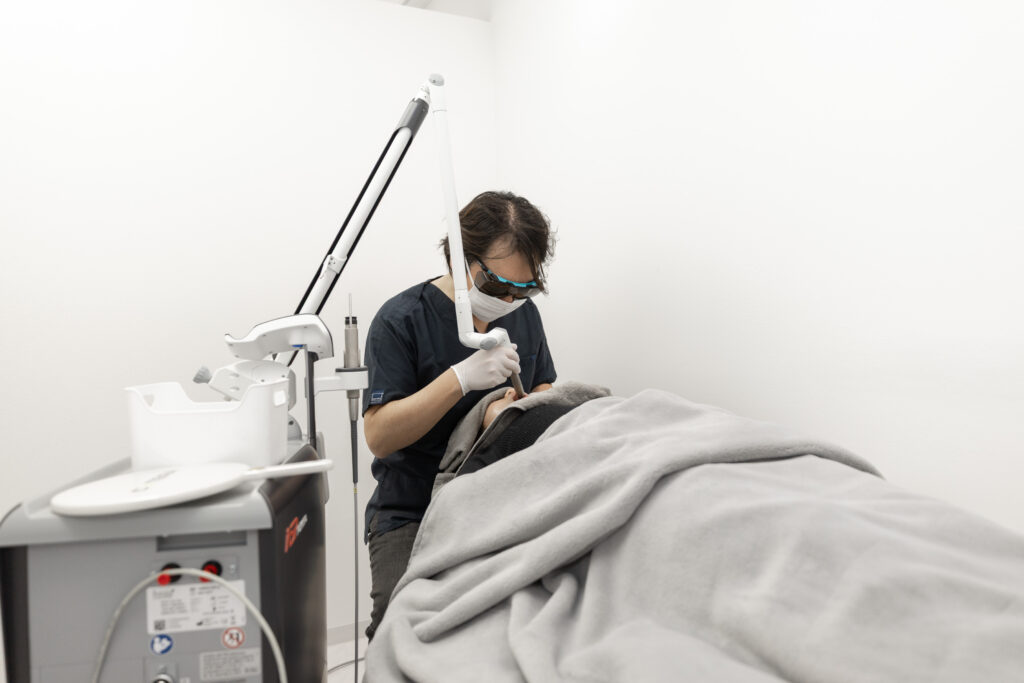
- Snoring laser treatment: A non-surgical approach to the underlying cause
- Medically supervised weight loss: Improving airway space through weight reduction
*As a clinic specializing in snoring treatment, we work to resolve “snoring that won’t stop” through both insurance-covered and self-pay options.
いびきを最新治療で治す-表紙-1.png)
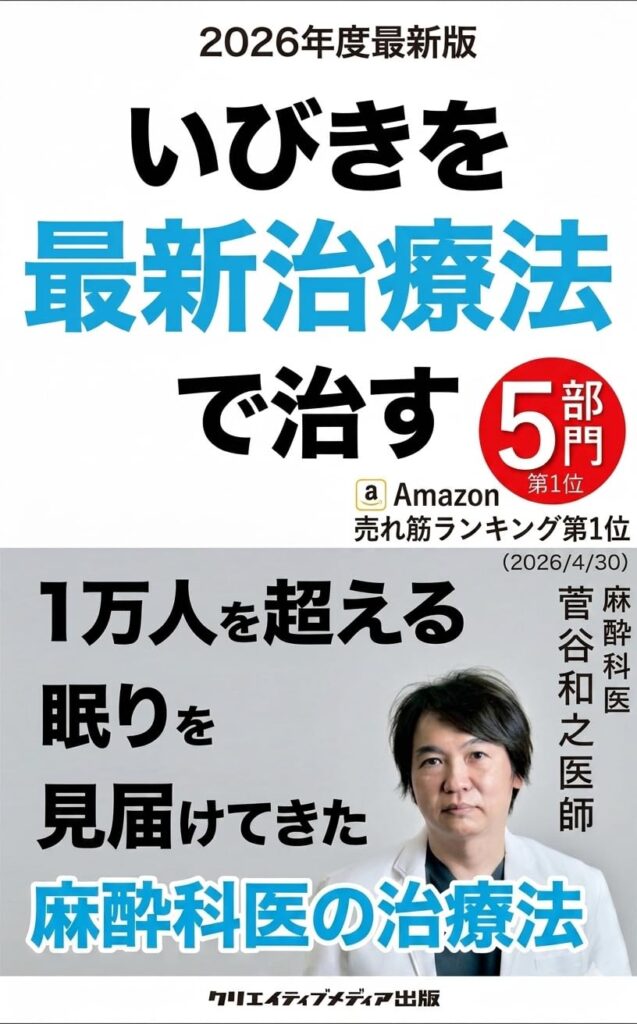
New Book by Our Director
“Curing Snoring with the Latest Treatments”
A guide to the latest snoring treatments, written by an anesthesiologist who has overseen the sleep of more than 10,000 patients.
Quick Answer
Snoring and sleep apnea syndrome (SAS) are not the same thing — snoring is a sound caused by a narrowed airway, while SAS is a disorder in which breathing repeatedly stops or becomes shallow during sleep. Over-the-counter products like mouthpieces, nasal strips, and anti-snoring pillows can sometimes reduce the noise, but they cannot diagnose SAS or reliably treat the underlying airway obstruction, especially when it originates deep in the throat (the pharynx). A quieter snore does not mean the apnea has improved. If you have red-flag signs — witnessed breathing pauses, strong daytime sleepiness, morning headaches, high blood pressure, or snoring that stops and then resumes loudly — a sleep test should come before trying more gadgets.
📋 What This Article Covers
- Why snoring and sleep apnea syndrome (SAS) are not the same condition
- The health risks of an undiagnosed, untreated SAS
- What over-the-counter snoring products can and can’t do
- The key difference between OTC and medical-grade mouthpieces
- Who should prioritize a sleep test over trying more products
- Common questions about OTC snoring remedies, answered
“I was told my snoring is loud, but surely it’s not sleep apnea?”
“Is it fine to just try an over-the-counter mouthpiece or nasal strip and see how it goes?”
A lot of people think this way. But the first thing worth knowing is that snoring and sleep apnea syndrome (SAS) are not the same thing.
Snoring is a “sound” that occurs when the airway narrows during sleep and the soft palate and surrounding throat tissue vibrate.
SAS, on the other hand, is a disorder in which the airway becomes repeatedly blocked during sleep, causing breathing to stop or become shallow.
In other words, some people who snore also have SAS — but snoring does not automatically mean SAS. Conversely, it’s not unusual to discover that “what seemed like just snoring” was actually sleep apnea syndrome requiring treatment.
Before reaching for an over-the-counter product, it’s important to understand this distinction correctly.
Snoring Is a “Sound” — SAS Is a Breathing Disorder

Severity can’t be judged by how loud someone snores.
That’s because some people snore loudly with relatively few breathing pauses, while others snore only mildly yet stop breathing repeatedly throughout the night.
Sleep apnea syndrome is generally defined as five or more episodes of apnea or hypopnea per hour of sleep.
When this continues night after night, the brain and body don’t get to rest properly — even though the person feels like they’ve been sleeping. Sleep quality declines significantly, often without the person even noticing. This can lead to symptoms such as:
- Feeling tired even after waking up
- Strong daytime sleepiness
- Difficulty concentrating
- Waking up repeatedly during the night
- A dry mouth on waking
- Being told your blood pressure runs high
Many people write these off as “just snoring” and leave them unaddressed, only to discover through proper testing that it was actually SAS.
The Risks of Missing an SAS Diagnosis
The biggest problem with missing a sleep apnea syndrome diagnosis is that it doesn’t stay a simple sleep complaint.
SAS affects the whole body and is known to raise the risk of lifestyle-related diseases and accidents, including:
- High blood pressure
- Stroke
- Cardiovascular disease
- Diabetes
- Traffic accidents and workplace incidents caused by daytime sleepiness
What makes this especially concerning is that people tend to assume, “I’m just sleeping, so I’m fine.” In reality, oxygen levels may be dropping repeatedly through the night, putting real strain on the body.
It’s also common to mistake a quieter snore — thanks to an over-the-counter product — for the problem being “cured.” But a reduction in snoring volume is not the same as an improvement in apnea.
Feeling reassured by how things look or sound, without objective confirmation, can mean missing the window for testing and treatment you actually needed.
How Much Can Over-the-Counter Snoring Products Really Do?
Many people consider store-bought mouthpieces, nasal strips, or anti-snoring pillows. These can play a limited, supportive role in some cases — but their limits are just as clear.
| Product | What It Can Help With | Limitations / Cautions | Diagnosing / Treating SAS |
|---|---|---|---|
| OTC mouthpiece | Helps hold the lower jaw forward to widen the airway | Can cause jaw joint pain, bite changes, or strain on the teeth | No |
| Nasal strips | Widens the nostrils to support nasal breathing | Doesn’t meaningfully address blockages deep in the throat | No |
| Anti-snoring pillow | Adjusts sleep position or neck angle | Not enough for severe apnea or strong anatomical obstruction | No |
| Sleep test | Confirms apnea/hypopnea, oxygen drops, and severity | Requires a visit to a medical institution | Necessary for diagnosis |
*Over-the-counter products may offer some supportive benefit depending on the cause and severity. However, a quieter snore alone does not mean that sleep apnea has improved.
OTC Mouthpieces
These aim to slightly widen the airway by holding the lower jaw forward. Some people with mild snoring find them helpful, but since most are one-size-fits-all, they can’t be finely adjusted for how far forward the jaw should sit.
Used without a proper fit, they can cause jaw joint pain, a change in bite alignment, or added strain on the teeth.
Nasal Strips
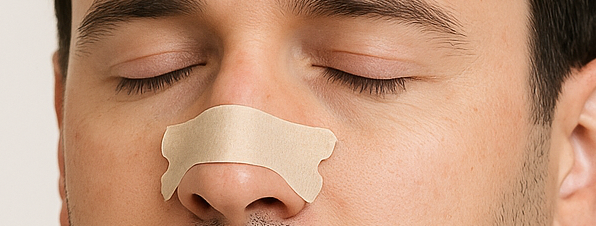
These widen the nostrils to make nasal breathing easier. They can be somewhat helpful for people whose mouth breathing is driven by nasal congestion.
However, if the main site of obstruction in SAS is deep in the throat (the pharynx), simply widening the nose may not lead to meaningful improvement.
Anti-Snoring Pillows
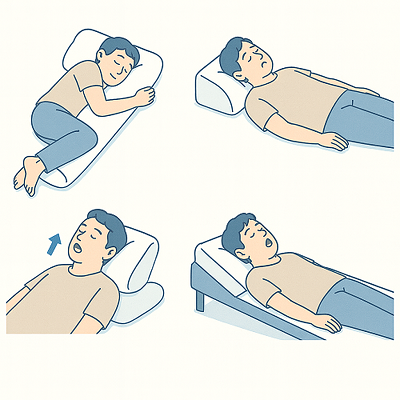
The idea here is to support side-sleeping or adjust the angle of the neck, reducing posture-related snoring.
In practice, though, a pillow alone rarely resolves cases involving severe apnea or a strong anatomical obstruction.
In short, over-the-counter products can be meaningful for some mild or supportive cases, but they are not a way to determine whether SAS is present, or how severe it is.
The Real Difference Between OTC and Medical-Grade Mouthpieces
You might assume a mouthpiece is a mouthpiece, whether store-bought or prescribed. In practice, though, the two are quite different.
Over-the-counter products are mass-produced, one-size-fits-all devices. As a result, they come with real limitations:
- Difficult to fine-tune exactly how far forward the jaw is held
- No way to assess strain on the jaw joint
- No way to check compatibility with your bite or tooth alignment
- No follow-up testing to confirm whether it’s actually working
Medical-grade devices, by contrast, are built around a proper diagnosis, individual fitting, and ongoing follow-up. A dentist checks the bite, makes adjustments as needed, and results are evaluated against whether sleep actually improved.
Even if they look similar, “wearing something with no testing or evaluation” and “using a device under diagnosis and management” are simply not the same thing.
Why OTC Products Fall Short for SAS
Understanding SAS starts with knowing where the obstruction actually happens.
Air travels from the nasal cavity, through the mouth, down through the pharynx at the back of the throat, and into the lungs. In SAS, it’s typically the pharynx that narrows or closes off during sleep.
In other words, products that act only on the nose or mouth often don’t sufficiently reach the pharynx — the actual source of the problem.
Helping someone breathe through the nose is not a bad thing in itself, but if the core issue is pharyngeal obstruction, addressing it without first identifying that is insufficient. In particular, if you:
- Have been told by family that your breathing stops during sleep
- Snore, then stop, then resume loudly after a pause
- Experience strong daytime sleepiness
- Tend toward obesity
- Have high blood pressure
- Have a thick neck
- Wake up with headaches or heavy grogginess
— it makes more sense to get tested before shopping for the next gadget.
Who Should Prioritize a Sleep Test Over OTC Products
If any of the following apply to you, it’s recommended to prioritize testing for sleep apnea syndrome rather than continuing to rely on over-the-counter products alone:
- A family member or partner has noticed your breathing stop during sleep
- Your snoring stops, then resumes loudly after a pause
- You feel very sleepy during the day despite what should be enough sleep
- You’ve felt drowsy while driving or working
- You wake up with headaches, a dry mouth, or heavy grogginess
- You’ve been told you have high blood pressure, diabetes, or cardiovascular disease
- You tend toward obesity, or have recently gained weight
- Symptoms haven’t improved despite using over-the-counter products
Breathing pauses and strong daytime sleepiness, in particular, warrant attention regardless of how loud your snoring actually is. Since people with SAS often can’t tell on their own that anything is wrong during sleep, a family member’s observation can be an important reason to seek care.
The Right Order Is “Test First”
This isn’t a case against snoring products altogether. The issue is the order in which you use them.
What should come first is confirming whether your snoring is simply a sound issue, or whether it comes with sleep apnea syndrome. And the only way to know that for certain is through testing.
An insurance-covered simplified sleep test can be done overnight at home, checking your breathing patterns and any drops in oxygen level during sleep.
Based on the results, your care team can determine:
- Whether simple monitoring is enough
- Whether lifestyle changes are needed
- Whether CPAP treatment is appropriate
- Whether other treatment options should be considered
Skipping this step and settling for “an OTC product for now” can delay the treatment you actually need. It might feel like a detour, but getting tested first is usually the fastest way to an actual solution.
Ueno Snoring Clinic Offers Insurance-Covered Simplified Testing and CPAP
Ueno Snoring Clinic offers insurance-covered simplified sleep testing for anyone concerned about snoring or sleep apnea syndrome.
A single overnight measurement gives an objective picture of your breathing during sleep, and we’ll guide you toward CPAP or other treatment as needed based on the results.
If you’ve been thinking “it’s probably just snoring,” or “I’ve been managing with an OTC product,” or “my family has mentioned that I stop breathing” — that’s exactly the situation worth getting properly checked.
Our clinic is within walking distance of Ueno Station, and consultations and appointments can also be arranged through LINE.
Snoring isn’t always just about the sound. That’s exactly why it’s worth confirming what’s actually behind it through testing, rather than relying on guesswork.
The question isn’t just “do I snore?” — it’s “what’s behind my snoring?” Answering that is the first step toward protecting your health and safety.
Frequently Asked Questions
[Insurance-Covered] If you’re concerned about snoring or sleep apnea, we offer a fully appointment-based system for reassuring, unhurried care.
Please feel free to contact Ueno Snoring Clinic [same-day appointments available]
📞0120-899-930
5F Ueno Silk Building, 4-8-8 Ueno, Taito-ku, Tokyo 110-0005, Japan

Please feel free to contact Ueno Snoring Clinic [same-day appointments available]
📞0120-899-930
5F Ueno Silk Building, 4-8-8 Ueno, Taito-ku, Tokyo 110-0005, Japan
Feel free to reach out to us on LINE ↓↓↓

English Support Available
We provide medical services for international patients. Please check our English website for details on how to visit our clinic.
Supervising Physician

Kazuyuki Sugaya, Director of Ueno Snoring Clinic
After graduating from Fujita Health University School of Medicine in 2004, Dr. Sugaya began his career as an anesthesiologist at Toho University Omori Medical Center. He has since gained extensive clinical experience at municipal hospitals and private clinics nationwide, administering general anesthesia in over 20,000 cases. In 2020, he founded the "Tokyo Spine Clinic," and has served as the Director of Ueno Snoring Clinic since 2025.
Related Columns

By Appointment Only
Specialized Snoring Treatment in Ueno
Ueno Snoring Clinic
Insurance-covered home testing available.
Following a physician’s consultation and result explanation,
we support the improvement of snoring and sleep apnea with "Dual Deep Thermia"—a non-surgical laser treatment, if necessary.
3-min walk from Ueno Station. Please feel free to consult us.