Ueno Snoring Clinic also welcomes consultations about dry mouth and sore throat on CPAP, including a review of your mask and humidifier settings. If dryness is making it hard to keep going, please don’t hesitate to get in touch.
Details of the tests and treatments offered at Ueno Snoring Clinic can be found here
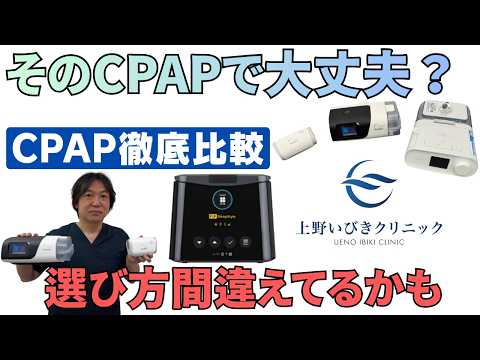
You’ll Want to Know This! A Complete Comparison of 5 CPAP Types — What Doctors Really Look For
Our doctor compares five different CPAP machines side by side and explains what actually matters when choosing one.
Watch the video
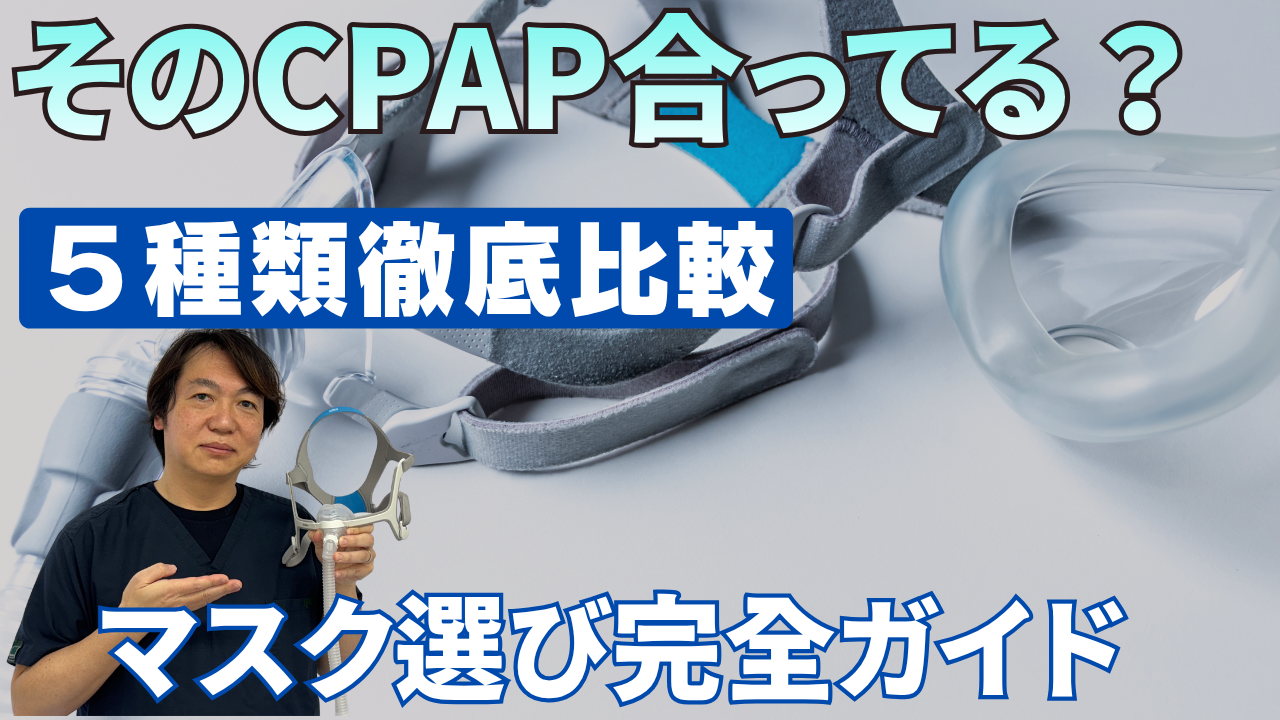
A Complete Comparison of CPAP Masks
We tried on and reviewed five different types of CPAP masks. 90% of CPAP comfort comes down to the mask.
Watch the video
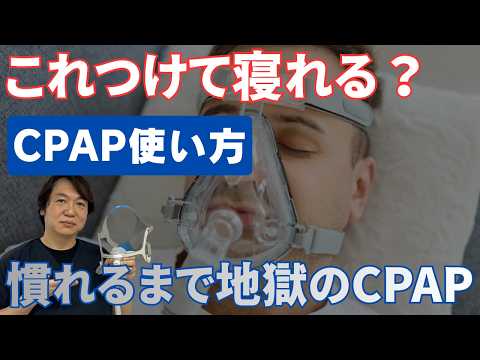
Do you have to use CPAP forever? A specialist explains how to use CPAP
A detailed explanation of how to use CPAP, with a real demonstration of what it feels like to wear the device.
Watch the video
Ueno Snoring Clinic was featured on Fuji TV’s “Live News It!” and on FNN Prime Online
Watch our clinic’s examination and explanation of sleep disorders, snoring, and sleep apnea.
Watch the video
Ueno Snoring Clinic was featured in an article on Nippon TV’s “news every.”
Please take a look as a starting point for thinking about getting evaluated for snoring, sleep apnea, or other sleep disorders.
Read the article
Reviewed by Our Director
Kazuyuki Sugaya
Director, Ueno Snoring Clinic / Anesthesiologist
Our director, with over 20,000 general anesthesia cases, focuses primarily on the diagnosis and treatment of snoring and sleep apnea, offering care tailored to each patient. [Insurance-Covered] Ueno Snoring Clinic
This article was reviewed by our Director, Kazuyuki Sugaya, and explains why CPAP can cause dry mouth and a sore throat, and how to use a humidifier properly.
🩺Comprehensive Snoring Treatment at Ueno Snoring Clinic
Ueno Snoring Clinic provides ongoing support after you start CPAP, including mask fitting and humidifier setting adjustments.
Insurance-Covered: Thorough Testing and Ongoing Treatment
- Simplified and PSG testing: A detailed assessment of the cause of your snoring and apnea
- CPAP treatment: The standard treatment for moderate-to-severe apnea, with support to help you keep using it comfortably
Self-Pay: Address the Root Cause, Short-Term Focus
- Snoring laser treatment: Available as 3-, 6-, or 12-session courses
- Medically supervised weight loss: An option when weight gain is a contributing factor
*Humidifier specifications and care differ by model. Please also check the manual for your own device.
Our Director’s book, “Curing Snoring with the Latest Treatments” (an Amazon Japan bestseller — #1 in General Medicine, #1 in Clinical Internal Medicine, #2 in Family Health & Wellness), also covers this topic in more detail.
New Book by Our Director
“Curing Snoring with the Latest Treatments”
A guide to the latest snoring treatments, written by an anesthesiologist who has overseen the sleep of more than 10,000 patients.
View on Amazon
Quick Answer
The main causes of dry mouth and a sore throat on CPAP are (1) “mouth leak,” where air escapes because your mouth falls open during sleep, (2) mouth breathing caused by a stuffy nose, (3) too little humidification or no humidifier, and (4) a poorly fitting mask. If you use a humidifier, manufacturers recommend distilled water (in Japan, purified water sold at pharmacies is also used) because tap water leaves mineral deposits. Humidifier designs also differ by model: the ResMed AirMini has no water tank and uses a waterless accessory called HumidX, while AirSense machines have an integrated humidifier, and some Philips models use a separate attachable humidifier. Once you work out which cause applies to you, many people find the problem improves.
📋 What This Article Covers
- The main causes of dry mouth and a sore throat on CPAP
- What water to use in the humidifier
- How humidifiers differ by model (ResMed and Philips)
- What to do about mouth leak and a stuffy nose
- What to do if it still doesn’t improve
The Main Causes of Dry Mouth and a Sore Throat on CPAP
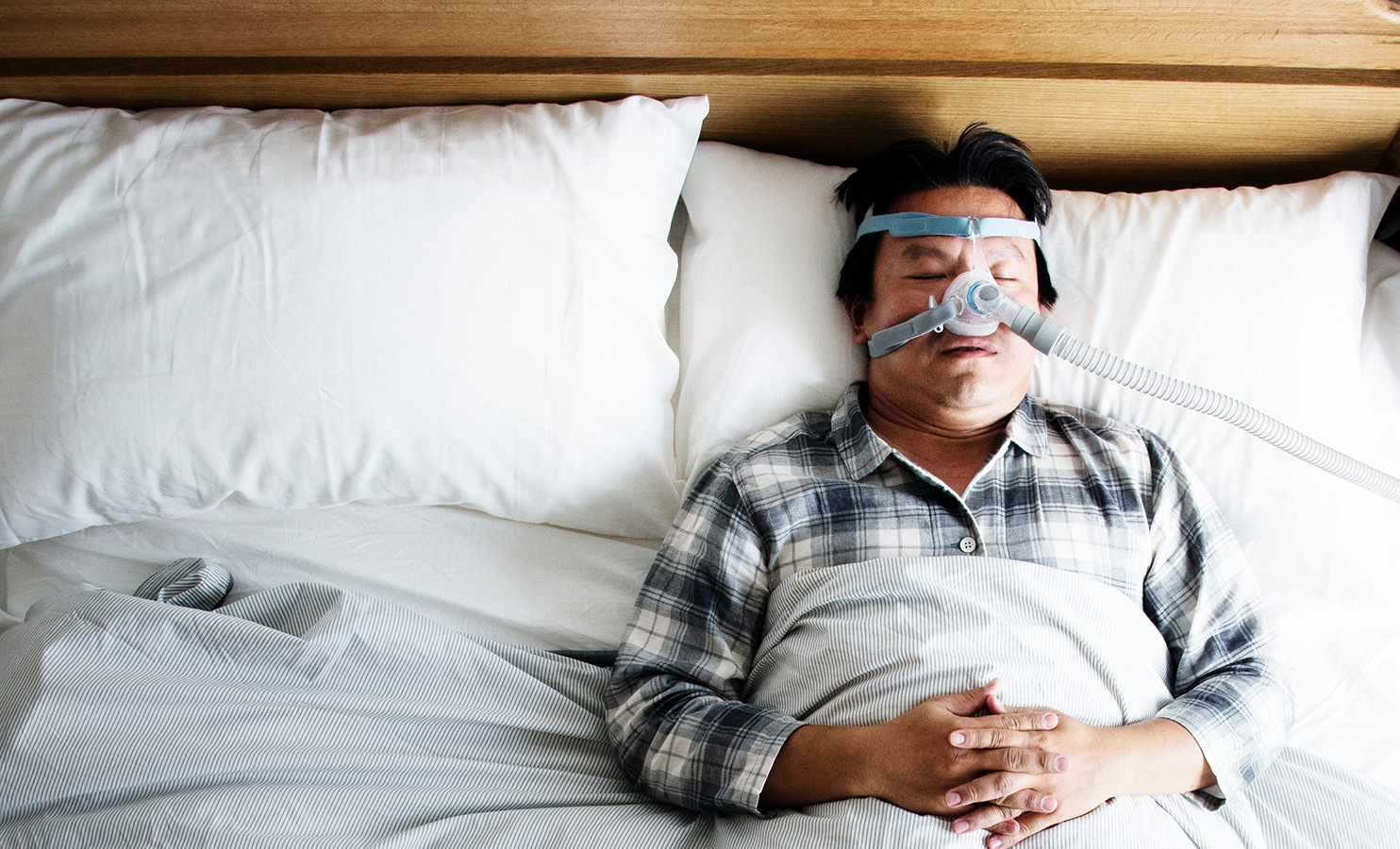
Dry mouth and throat irritation during CPAP use usually come down to the following.
① Your mouth falls open during sleep and the air from a nasal mask escapes through it (“mouth leak”)
② A stuffy nose prevents nasal breathing, so you breathe through your mouth
③ You aren’t using a humidifier, or the humidification level is too low
④ The mask size or fit doesn’t suit your face
Mouth leak (1) is the one most often overlooked. A large volume of air moves in and out of the mouth without being humidified, which makes it an especially common cause of strong dryness. Clinical guidance also notes that oral dryness strongly suggests mouth leak. (A humidifier set too hot can also lead to a dry mouth, so more is not always better.)
What Water Should You Use in a CPAP Humidifier?
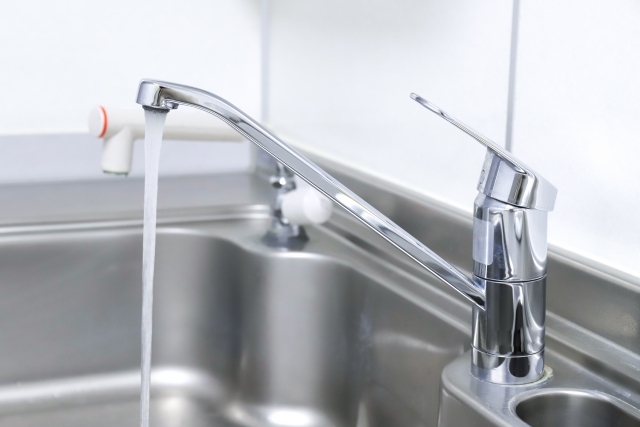
Even if you use a humidifier, the type of water can cause other problems. Tap water contains minerals (such as calcium), and with continued use they can build up in the humidifier tank and leave white deposits (mineral scale). Water left sitting in the tank can also allow bacteria to grow, so it’s important to empty and clean the tank regularly.
Distilled water is what manufacturers recommend for the humidifier.
Philips and ResMed both recommend distilled water, and Philips’s Japanese guidance specifies purified (distilled) water, which you can buy at pharmacies. Bottled drinking water is not a safe substitute: mineral water can contain minerals such as calcium and magnesium, so only water labeled distilled is suitable. If you do end up using tap water, change it every day and clean the tank regularly, and check your manual.
Cleaning intervals for the tank vary by manufacturer (Philips advises daily emptying and cleaning; ResMed describes a weekly wash). For step-by-step cleaning and when to replace the tank, see the article below.
How Humidifiers Differ by Model (ResMed and Philips)
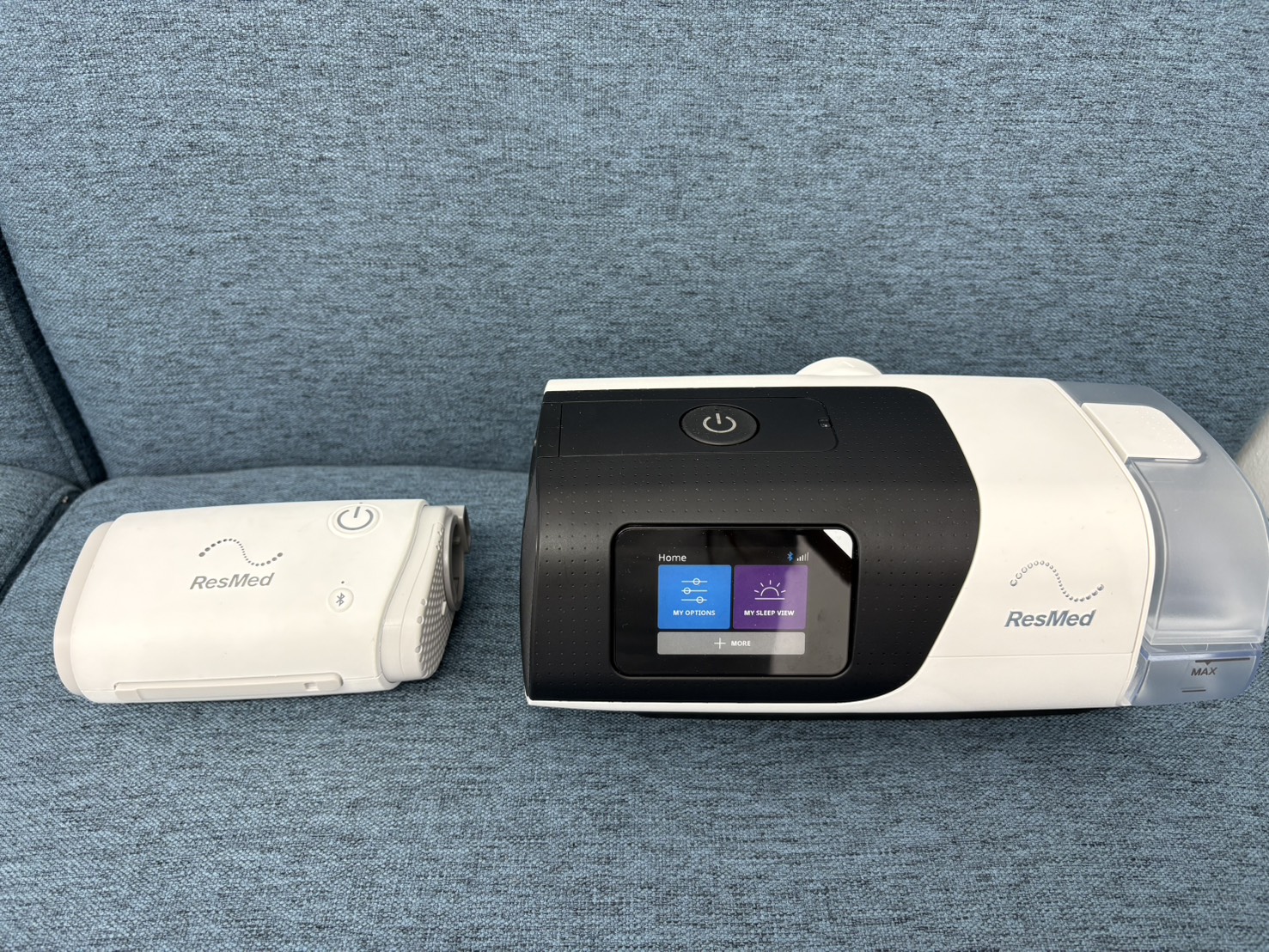
Whether you have a humidifier, and what kind, depends on your model. When you’re tackling dryness, it helps to know what your own device offers.
| Model |
Humidifier design |
| ResMed AirMini (travel CPAP) |
No water-tank humidifier. Instead, it uses a waterless accessory called HumidX, a heat and moisture exchanger built into compatible masks. It generally provides less humidity than a water-tank system |
| ResMed AirSense series (standard size) |
Comes with an integrated heated humidifier and water tank |
| Philips |
Depends on the model. The original DreamStation used a separate, attachable humidifier unit, while the newer DreamStation 2 is described as having a fully integrated humidifier |
The specifications and the way you care for the humidifier differ between models, so check your device’s manual. The differences between the major manufacturers are compared in more detail in the articles below.
What to Do About Mouth Leak and a Stuffy Nose
If you tend to sleep with your mouth open, a chin strap may help keep your mouth closed, and switching to a full-face mask, which covers the mouth as well as the nose, can also help. Research has found that heated humidification reduces dryness, but it doesn’t fully prevent moisture loss when air is leaking from the mouth, whereas a full-face mask did prevent it. Note that a full-face mask isn’t right for everyone, and some people find it leaks more or feels uncomfortable, so it’s worth fitting one with guidance.
Mouth tape is sometimes used for mouth leak, but the safety evidence is limited and a 2025 systematic review raised concern about serious harm, especially if your nose can ever become blocked. Please talk to your doctor before trying it. (See our article on nasal strips and mouth tape for more.)
If a stuffy nose is forcing you to breathe through your mouth, treating the nose can be the root fix. Options discussed in clinical guidance include saline nasal sprays and prescription nasal sprays, and persistent congestion may warrant an ear, nose, and throat (ENT) visit. The evidence that nasal steroid sprays improve CPAP use is mixed, so please ask your doctor what is appropriate for you. Chronic congestion deserves attention in its own right, not just a CPAP adjustment.
What Ueno Snoring Clinic Can Do
Ueno Snoring Clinic is a sleep-disorder clinic specializing in snoring and sleep apnea. For dry mouth and a sore throat after starting CPAP, we work out the cause and then guide you on changing your mask or adjusting your humidifier settings.
If dryness is making CPAP hard to keep up, please talk to us rather than putting up with it.
Summary: Pin Down the Cause of the Dryness and Most Cases Can Improve
Dry mouth and a sore throat on CPAP are most often caused by mouth leak, a stuffy nose, too little humidification, or mask fit, and each has a remedy. Use distilled water in your humidifier, and learn how the humidifier on your own model works.
If things still don’t improve, don’t stop using CPAP on your own. Please consult a doctor.
Is Dryness Making CPAP Hard to Keep Up?
From reviewing your mask to adjusting your humidifier settings, we’ll support you carefully. By appointment only; same-day appointments are often available.
Frequently Asked Questions
Q. Can I use mineral water in the humidifier?
A. We don’t recommend it. Mineral water can contain minerals such as calcium and magnesium, which can leave deposits. Use water labeled distilled (or purified water, as specified in Philips’s Japanese guidance).
Q. Should I change the humidifier water every day?
A. Yes, it’s a good habit. Water left sitting in the tank can allow bacteria to grow. Philips advises emptying and cleaning the tank daily, while ResMed describes a weekly wash, so follow your manual and empty any leftover water each morning.
Q. Can the AirMini humidify the air?
A. The AirMini has no water-tank humidifier, but it can use a waterless accessory called HumidX with compatible masks, which provides some humidification. It generally provides less humidity than a water-tank system.
Q. Can I use mouth tape while on CPAP?
A. Some people use it to reduce mouth leak, but safety evidence is limited, and a 2025 systematic review raised concern about serious harm, especially if your nose can become blocked. Please talk to your doctor before trying it on your own.
Q. What should I do if my sore throat lasts several days?
A. If it doesn’t improve after you adjust the humidifier and review your mask, there may be another cause. Please don’t just wait and see; consult a medical institution.
*This article is a general explanation, written for a broad audience and based on the sources above together with our clinic’s own clinical experience. Humidifier specifications and care instructions vary by manufacturer and model, so please follow the manual for your own device. It is not a substitute for medical advice. If you have concerns about your CPAP treatment, please consult your medical institution.