




いびきを最新治療で治す-表紙-1.png)
Told You Stop Breathing in Your Sleep? A Guide to Insurance-Covered Sleep Apnea Testing in Japan
Hay Fever & Snoring: The Hidden Connection | Ueno Snoring Clinic

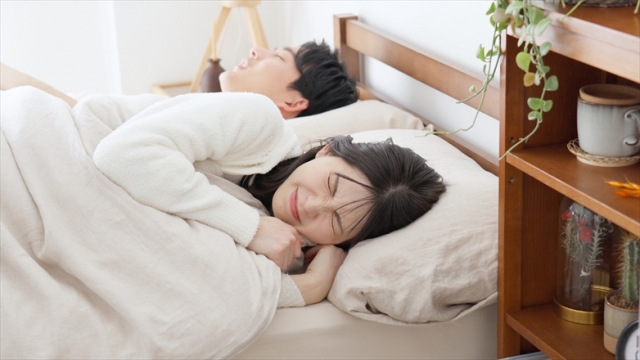
“Every spring, my partner tells me my snoring gets worse” — that might actually be allergic rhinitis at work.
I personally struggled with severe hay fever for years. But thanks to the treatment I’ll describe in this article, I’ve completely overcome it, and spring has genuinely become an enjoyable season again! In this article, we explain the connection between hay fever and snoring, along with treatment options.
Ueno Snoring Clinic offers a range of options tailored to each patient’s condition, including insurance-covered sleep testing and CPAP management, as well as self-pay laser treatment for snoring. If you’d like to find out which treatment is right for you, please book an initial consultation.
Details of the tests and treatments offered at Ueno Snoring Clinic can be found here
Reviewed by Our Director
Reviewed by Our Director
Kazuyuki Sugaya
Director / Anesthesiologist, Ueno Snoring Clinic
With more than 20,000 general anesthesia cases, our director provides care centered on the diagnosis and treatment of snoring and sleep apnea, tailored to each patient. [Insurance-Covered] Ueno Snoring Clinic
This article has been medically reviewed by Director Kazuyuki Sugaya and explains accurate medical information about testing and treatment for snoring and sleep apnea syndrome (SAS) in plain language.
🩺Comprehensive Snoring Treatment at Ueno Snoring Clinic
The causes of snoring range from throat structure to obesity. Ueno Snoring Clinic is not limited to a single treatment method — we offer a wide range of evidence-based options so we can propose the plan best suited to each patient.
Thorough Testing & Ongoing Treatment (Insurance-Covered)
- Home sleep test / PSG (polysomnography): Precise analysis of your sleep condition
- CPAP therapy: The standard treatment for moderate-to-severe apnea
Self-Pay Treatment for Root-Cause, Short-Term Results
- Latest laser snoring treatment: Incision-free, root-cause treatment
- Medical weight-loss support: Physically opening the airway through weight reduction
*As a clinic specializing in snoring treatment, we are committed to resolving “snoring that won’t stop” through both insurance-covered and self-pay options.
This topic is also covered in detail in our director’s book, “Curing Snoring with the Latest Treatments” (Amazon Japan Best Seller: #1 in General Medicine, #1 in Clinical Internal Medicine, #1 in Home Medical & Health, #1 in General Clinical Medicine, and #1 in Medicine & Pharmacy — a 5-category #1 sweep)
New Book by Our Director
“Curing Snoring with the Latest Treatments”
Written by an anesthesiologist who has overseen the sleep of more than 10,000 patients, this book is a modern guide to the latest snoring treatments.
Quick Answer
Yes — hay fever and allergic rhinitis are a common, often-overlooked cause of worsening snoring. Nasal congestion forces you to breathe through your mouth during sleep, which relaxes and dries out the soft palate and tongue base, making them vibrate more and increasing airway resistance. Treating the underlying nasal inflammation — through medication, home care, or sublingual immunotherapy — can meaningfully reduce snoring caused by seasonal or year-round allergies.
Every year, when cedar and cypress pollen begins to fly in early spring, or when dust mites and mold increase in autumn, we see a spike in patients telling us, “My snoring suddenly got much worse” or “My sleep feels shallower than usual.”
This is actually a phenomenon affecting a huge number of people: nasal congestion caused by hay fever or allergic rhinitis directly worsening snoring. In this article, a physician from our sleep specialty clinic explains the underlying mechanism and practical countermeasures.
Why Does Nasal Congestion Make Snoring Worse?
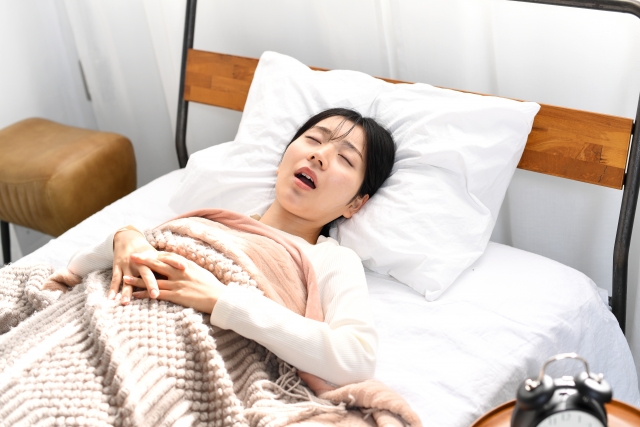
Normally, we breathe through our nose even during sleep. The nasal cavity acts as a filter that warms, humidifies, and cleans the air we breathe — playing a critical role in keeping the airway stable, far more so than mouth breathing does.
But when allergic rhinitis (hay fever) flares up, the nasal lining becomes inflamed and swollen, dramatically increasing airflow resistance in the nose. This triggers the following chain reaction:
🌸
Pollen or allergens are inhaled
▼
🔴
The nasal lining becomes inflamed and swollen
Nasal congestion sets in
Nasal congestion sets in
▼
👄
Breathing shifts to the mouth
▼
😪
The soft palate and tongue base vibrate
Snoring worsens
Snoring worsens
When you switch to mouth breathing, air passing through the back of the throat causes the dried-out, relaxed soft palate and tongue base to vibrate, producing the sound of snoring. As airway resistance increases further, this also makes it more likely for the airway to become completely blocked, resulting in apnea.
Key Points
- As nasal resistance increases, the likelihood of snoring rises significantly
- Nasal congestion from hay fever also increases the risk of sleep apnea
- In many cases, simply resolving nasal congestion is enough to improve snoring
By Season: When Snoring Tends to Get Worse
Many people associate “hay fever” strictly with spring, but allergens are present year-round. It’s worth knowing which seasons tend to make snoring worse.
| Time of Year | Main Allergens | Effect on Snoring |
|---|---|---|
| Feb–May (Spring) | Cedar and cypress pollen | The most common trigger. Symptoms can worsen sharply on high-pollen days |
| Aug–Oct (Fall) | Ragweed, Japanese hop, and mugwort pollen | Often overlooked as “fall pollen.” Dust mite activity also increases |
| Year-Round | House dust, dust mites, and mold | Perennial allergic rhinitis. Often worsens during heating season in winter |
If your snoring worsens specifically in spring, cedar or cypress pollen is the likely culprit. If it worsens every fall as well, consider ragweed or other fall pollens, as well as dust mite allergy.
The Risk That Worsening Snoring Leads to Sleep Apnea Syndrome (SAS)
Snoring isn’t just a matter of sound. When nasal congestion from hay fever narrows the airway even further, it raises the risk of sleep apnea syndrome (SAS) — a condition marked by repeated breathing pauses lasting 10 seconds or longer during sleep.
Multiple studies have reported that, left untreated, SAS raises the risk of systemic conditions including high blood pressure, arrhythmia, diabetes, and stroke. If you notice your snoring worsening seasonally, we recommend having it evaluated by a specialist.
Watch for These Warning Signs
- Stronger daytime sleepiness during pollen season
- Waking up with a headache or feeling foggy in the morning
- A partner has told you your breathing stops
- Waking up repeatedly during the night (including frequent nighttime urination)
Steps You Can Take Right Now
-
1
Proper Use of Antiallergy Medication and Steroid Nasal SpraysHay fever medications (antihistamines and steroid nasal sprays) reduce inflammation in the nasal lining and improve congestion. That said, some types can cause drowsiness that affects sleep quality — check with your physician about which option is right for you.
-
2
Optimizing Your Sleep Environment (Air Purifiers & Humidifiers)An air purifier and appropriate humidity level in your bedroom can help reduce exposure to pollen and dust mites. Dry air, in particular, can irritate the nasal lining and worsen congestion.
-
3
Nasal Rinsing (Saline Nasal Irrigation)Rinsing your nasal passages with saline solution before bed can physically remove allergens and inflammatory substances. This can be a helpful supplementary step for anyone with poor nasal airflow.
-
4
Sleeping on Your SideLying on your back makes it easier for the base of the tongue to fall backward and block the airway, so side-sleeping can serve as an effective, immediate countermeasure for snoring. Consider using a body pillow to help maintain this position.
-
5
Weight ManagementIf obesity is present alongside hay fever, fat deposits around the airway can further worsen snoring. Managing your weight helps address one of the underlying, root-level risk factors.
A Root-Cause Solution: What Is Sublingual Immunotherapy (Cedarcure)?
🌿 A Treatment That Changes Your Underlying Allergic Tendency
Antiallergy medications are a “symptomatic treatment” — they suppress symptoms as they occur. Sublingual immunotherapy, by contrast, is a “root-cause treatment” that actually corrects the immune response driving the allergy itself.
I’ll admit our director, Dr. Sugaya, started this treatment with some skepticism — but it completely resolved his own hay fever. His symptoms genuinely disappeared, and he considers it a truly effective treatment.
Cedarcure (a sublingual tablet for Japanese cedar pollen allergy), which is covered under national health insurance for cedar pollen allergy, works by administering tiny amounts of the allergen under the tongue, gradually desensitizing the body and weakening the allergic response over time. With daily use, patients can expect reduced nasal congestion and sneezing during pollen season.
One important caveat: this treatment is only approved for cedar pollen allergy specifically. For patients whose allergies also involve other allergens (such as ragweed), its effectiveness may be limited, and a blood allergy test is needed beforehand to confirm suitability.
Key Points About Sublingual Immunotherapy
✅ Covered under national health insurance for cedar pollen allergy
✅ Simply place a tablet under your tongue at home each day
✅ Treatment typically continues for 3–5 years
✅ If hay fever symptoms improve, snoring driven by nasal congestion may improve as well
✅ Suitable for both children and adults (subject to physician evaluation)
✅ Covered under national health insurance for cedar pollen allergy
✅ Simply place a tablet under your tongue at home each day
✅ Treatment typically continues for 3–5 years
✅ If hay fever symptoms improve, snoring driven by nasal congestion may improve as well
✅ Suitable for both children and adults (subject to physician evaluation)
*Treatment cannot begin during active cedar pollen season. Please consult us early regarding the right timing to start.
Our Director’s Book: #1 in 5 Amazon Categories
The specialist book on snoring treatment supervised by our clinic’s physician reached #1 simultaneously in 5 Amazon Japan categories, including “General Clinical Medicine.”
🏆 #1 in General Clinical Medicine
🏆 #1 in General Medicine
🏆 #1 in Clinical Internal Medicine
🏆 #1 in Home Medical & Health
🏆 #1 in Medicine & Pharmacy
🏆 #1 in General Medicine
🏆 #1 in Clinical Internal Medicine
🏆 #1 in Home Medical & Health
🏆 #1 in Medicine & Pharmacy
A comprehensive guide to the latest in snoring treatment —
we’re thrilled to have achieved a 5-category #1 sweep on Amazon 🎉
we’re thrilled to have achieved a 5-category #1 sweep on Amazon 🎉
Written by a physician from our sleep specialty clinic, this book covers the latest treatments for snoring and sleep apnea. It’s also a great resource if you’re curious about the connection with hay fever.
New Book by Our Director
“Curing Snoring with the Latest Treatments”
Written by an anesthesiologist who has overseen the sleep of more than 10,000 patients, this book is a modern guide to the latest snoring treatments.
7. What Ueno Snoring Clinic Can Do for You
As a sleep specialty outpatient clinic, we focus primarily on snoring and sleep apnea syndrome. We support patients dealing with snoring year-round, not just during pollen season.
| Test / Treatment | Details | Insurance |
|---|---|---|
| History-Taking & Physical Exam | Detailed evaluation of your nasal cavity, throat, and allergy history | Insurance-Covered |
| Home Sleep Test | A home-based screening test for sleep apnea syndrome (SAS) | Insurance-Covered |
| CPAP Therapy | Standard treatment for moderate-to-severe SAS. Ongoing management is also available via online consultation | Insurance-Covered |
| Laser Snoring Treatment | Tightens the soft palate and uvula with laser energy to reduce snoring | Self-Pay |
| Lifestyle Guidance | Advice on weight, alcohol use, sleep position, and other lifestyle factors related to snoring | Insurance-Covered |
Our clinic’s physician is a board-certified anesthesiologist with more than 20,000 general anesthesia cases, applying specialized airway-management expertise to snoring and sleep care. Accurately determining whether your snoring is driven by hay fever, or by a structural issue, is the fastest path to the right treatment.
Frequently Asked Questions
Struggling With Snoring During Allergy Season?
Consider Talking to a Specialist
Don’t just dismiss it as “seasonal” — please reach out to us.
Insurance-covered consultations are available, along with a range of at-home testing options.
[Insurance-Covered] If you’re concerned about snoring or sleep apnea, we offer a fully appointment-based system for reassuring, unhurried care.
Please feel free to contact Ueno Snoring Clinic [same-day appointments available]
📞0120-899-930
5F Ueno Silk Building, 4-8-8 Ueno, Taito-ku, Tokyo 110-0005, Japan

Please feel free to contact Ueno Snoring Clinic [same-day appointments available]
📞0120-899-930
5F Ueno Silk Building, 4-8-8 Ueno, Taito-ku, Tokyo 110-0005, Japan
Feel free to reach out to us on LINE ↓↓↓


English Support Available
We provide medical services for international patients. Please check our English website for details on how to visit our clinic.
Supervising Physician

Kazuyuki Sugaya, Director of Ueno Snoring Clinic
After graduating from Fujita Health University School of Medicine in 2004, Dr. Sugaya began his career as an anesthesiologist at Toho University Omori Medical Center. He has since gained extensive clinical experience at municipal hospitals and private clinics nationwide, administering general anesthesia in over 20,000 cases. In 2020, he founded the "Tokyo Spine Clinic," and has served as the Director of Ueno Snoring Clinic since 2025.
Related Columns



By Appointment Only
Specialized Snoring Treatment in Ueno
Ueno Snoring Clinic
Insurance-covered home testing available.
Following a physician’s consultation and result explanation,
we support the improvement of snoring and sleep apnea with "Dual Deep Thermia"—a non-surgical laser treatment, if necessary.
3-min walk from Ueno Station. Please feel free to consult us.