



いびきを最新治療で治す-表紙-1.png)
Masseter Botox for Teeth Grinding: Effects, Risks, Costs, and the Link With Sleep Apnea
Does Mouth Breathing Cause Bad Breath? A Doctor Explains

Have you ever woken up with a mouth that feels sticky, a throat so dry it feels parched, or been told by a family member that your breath smells in the morning?
Morning bad breath is not caused by insufficient brushing alone. Mouth breathing associated with snoring or obstructive sleep apnea (OSA) can dry out the oral cavity and reduce the effectiveness of saliva, and this is often an overlooked contributing factor.
Saliva performs a self-cleansing action that washes away debris and bacteria from the mouth, and an antibacterial action that suppresses bacterial growth. When you breathe through an open mouth during sleep, saliva evaporates and the oral cavity becomes dry.
As a result, bacteria multiply on the tongue and in periodontal pockets, generating the compounds responsible for bad breath. Mouth breathing is also linked to tongue position and the condition of the upper airway, and can worsen snoring and sleep apnea.
In this article, a physician specializing in sleep medicine explains the relationship between mouth breathing and bad breath, the connection to sleep apnea, the role of saliva, steps you can take at home, and signs that indicate it’s time to see a specialist.
Quick summary
- Mouth breathing during sleep dries the oral cavity and weakens saliva’s self-cleansing and antibacterial action, making bad breath worse.
- Bacterial breakdown of debris and protein produces volatile sulfur compounds (VSCs), the main chemical cause of bad breath.
- Mouth breathing is linked to nasal congestion, tongue and jaw position, obesity, and airway narrowing, and can form a vicious cycle with snoring and sleep apnea.
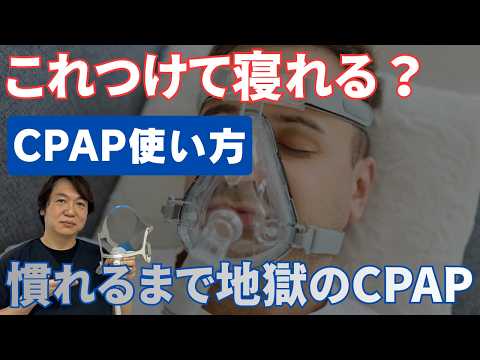
- CPAP therapy can reduce mouth breathing and dryness by treating the underlying apnea, but mask leaks or low humidification can dry the mouth even during treatment.
- Not all morning bad breath comes from mouth breathing — periodontal disease, tongue coating, and other causes should also be evaluated.
Ueno Snoring Clinic offers insurance-covered sleep testing and CPAP management, as well as self-pay laser snoring treatment, tailored to each patient’s condition. If you’d like to find out which option suits you, please book an initial consultation.
For details on the tests and treatments offered at Ueno Snoring Clinic, click here.
Reviewed by the Director
Kazuyuki Suganuya
Director, Ueno Snoring Clinic / Anesthesiologist
With more than 20,000 cases of general anesthesia experience, the director focuses on diagnosing and treating snoring and sleep apnea, offering treatment tailored to each patient. Ueno Snoring Clinic (insurance-covered care)
This article is supervised by Director Kazuyuki Suganuya and explains, in accessible terms, accurate medical information on the relationship between mouth breathing, bad breath, snoring, and sleep apnea (OSA).
🩺Comprehensive snoring treatment at Ueno Snoring Clinic
The causes of snoring range from throat anatomy to excess body weight. Ueno Snoring Clinic is not limited to a single treatment approach — we offer a wide range of evidence-based options and help each patient choose the plan that fits them best.
Insurance-covered testing and ongoing treatment
- Home sleep testing / PSG (polysomnography): precise analysis of sleep quality
- CPAP therapy: the standard treatment for moderate-to-severe sleep apnea
Self-pay options for a fundamental, short-term approach
- Latest laser snoring treatment: a non-surgical, root-cause approach
- Medical weight-loss support: reducing airway narrowing through weight management
*As a clinic specializing in snoring treatment, we draw on both insurance-covered and self-pay options to help resolve even the most persistent snoring.
Why does mouth breathing cause bad breath?
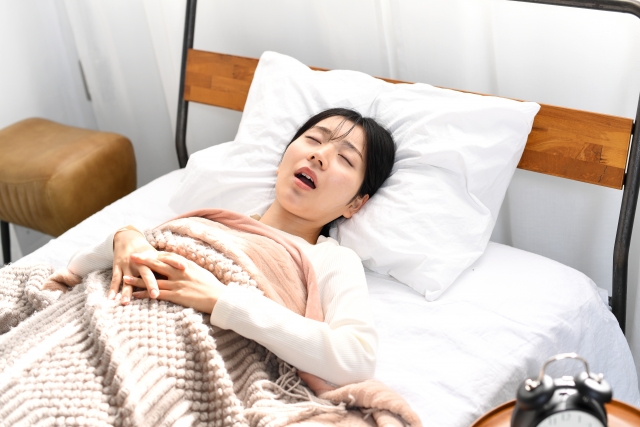
The main reason mouth breathing causes bad breath is that a dry oral cavity weakens the function of saliva.
Saliva normally washes away food debris and bacteria that collect on the teeth, tongue, and mucous membranes. But when you breathe with your mouth open, air continuously passes through the oral cavity, causing saliva to evaporate more quickly.
Saliva production is already lower during sleep than while awake. If mouth breathing continues all night on top of that, the mouth is often severely dry on waking, creating an environment where bacteria multiply easily.
Bad breath from mouth breathing isn’t simply “a dry mouth that smells.” The underlying problem is that saliva’s self-cleansing and antibacterial action weakens, allowing odor-causing bacteria to multiply.
What does saliva actually do?
Saliva is far more than a fluid that helps you swallow food. It plays several roles in protecting the health of the oral cavity.
1. Self-cleansing action
Saliva washes away food debris and bacteria that stick to the surface of the teeth, tongue, and gums. This is called its self-cleansing action. When saliva flow is adequate, odor-causing bacteria and debris are less likely to accumulate.
Conversely, when the mouth dries out from nighttime mouth breathing, this self-cleansing action weakens, and tongue coating and plaque build up more easily.
2. Antibacterial action
Saliva contains components that suppress bacterial growth. When saliva volume drops, this antibacterial action weakens too, letting odor-causing bacteria multiply. Bacteria that favor low-oxygen environments tend to live deep on the tongue and in periodontal pockets; when they break down proteins and shed mucosal cells, they produce strong-smelling gases.
3. Buffering action that neutralizes oral acids
The oral cavity becomes more acidic after eating or after bacterial activity. Saliva neutralizes this acid and helps keep the oral environment balanced. When saliva’s buffering action weakens due to dryness, the risk of cavities and gum disease can rise.
4. Remineralization that repairs teeth
Saliva contains calcium and phosphate that help repair the surface of teeth that has begun to dissolve from acid exposure. Prolonged dryness from mouth breathing can affect not only bad breath, but also cavity risk and enamel demineralization.
What are “volatile sulfur compounds,” the chemical cause of bad breath?
The primary chemical culprits behind bad breath are known as volatile sulfur compounds, often abbreviated VSCs.
When bacteria in the mouth break down food debris, proteins in saliva, and shed mucosal cells, they produce strong-smelling sulfur-based gases. The main ones are hydrogen sulfide, methyl mercaptan, and dimethyl sulfide.
- Hydrogen sulfide: smells like rotten eggs
- Methyl mercaptan: smells like rotten vegetables or has a raw, pungent odor
- Dimethyl sulfide: smells like garbage or seaweed
When mouth breathing continues overnight, saliva volume drops and bacteria multiply more easily. This can increase production of these volatile sulfur compounds, resulting in stronger bad breath on waking.
What causes mouth breathing during sleep?
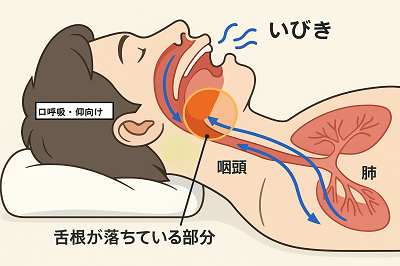
Mouth breathing isn’t just a habit — it’s related to the structure of the nose and throat, the relaxation of muscles during sleep, and body weight.
Nasal congestion
Allergic rhinitis, hay fever, sinusitis, a deviated septum, and similar conditions can obstruct nasal airflow, making it hard to maintain nasal breathing during sleep and leading to unconscious mouth breathing. Some people breathe through the nose fine during the day but switch to mouth breathing only at night, once lying down causes the nasal mucosa to swell.
Muscle relaxation during sleep
During sleep, the muscles supporting the tongue and throat relax. Lying on your back in particular makes gravity pull the tongue toward the back of the throat.
When the upper airway narrows, air has a harder time passing through and breathing effort increases. This process can cause the mouth to open, leading to mouth breathing and snoring.
Obesity and fat around the neck
Weight gain that adds fat around the neck and tongue tends to narrow the upper airway. A narrower airway increases resistance to breathing during sleep, making snoring, mouth breathing, and sleep apnea more likely.
A small or receding lower jaw
People with a small lower jaw, or a jaw positioned further back, have less space for the tongue, which makes the base of the tongue prone to falling backward during sleep. This can narrow the airway and lead to snoring, mouth breathing, and sleep apnea.
Age-related decline in upper airway muscle tone
Muscle strength in the tongue and throat naturally declines with age. Even people who didn’t snore when younger may develop snoring or mouth breathing as the soft palate and base of the tongue become more prone to sagging with age.
Does mouth breathing directly cause sleep apnea?
Medically speaking, mouth breathing alone is not necessarily the direct cause of sleep apnea.
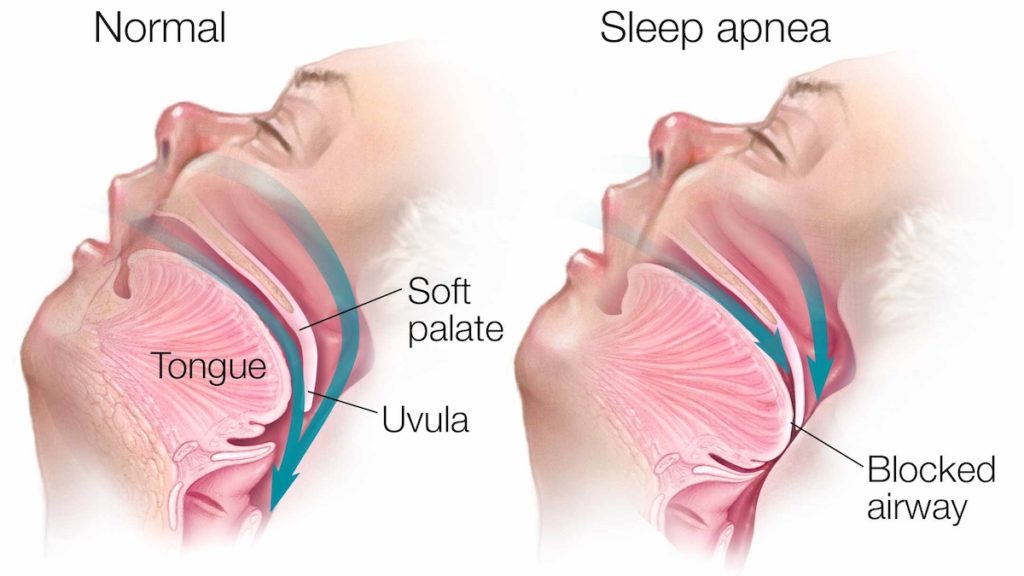
Obstructive sleep apnea occurs when the base of the tongue, soft palate, or lateral pharyngeal walls narrow during sleep, blocking the airway.
That said, when nasal congestion leads to mouth breathing, the position of the jaw and tongue can shift, which may narrow the upper airway. The strong breathing effort caused by sleep apnea can also make the mouth more likely to open.
In other words, mouth breathing and sleep apnea don’t run in only one direction — they can form the following vicious cycle.
The mouth-breathing / sleep-apnea vicious cycle
Nasal congestion / upper airway narrowing
↓
Mouth breathing begins
↓
The jaw and tongue shift further back
↓
Snoring and airway obstruction worsen
↓
Stronger breathing effort opens the mouth further
↓
The oral cavity dries out, and bad breath worsens too
Do people who snore tend to have worse breath?
Not every person who snores has bad breath. However, people who sleep with their mouth open while snoring are more prone to oral dryness, which can lead to stronger breath on waking.
Snoring occurs when air passing through a narrowed airway causes the soft palate, uvula, and base of the tongue to vibrate.
If you habitually sleep with your mouth open, dry air passes through the oral cavity with every breath. Over several hours, this leaves the mouth significantly dry by morning, and white or yellow tongue coating tends to accumulate on the surface of the tongue.
Mouth breathing during sleep should be suspected if several of the following apply:
- Your mouth or throat feels very dry when you wake up
- There are saliva marks on your pillow
- Family members say you sleep with your mouth open
- Your breath is noticeably strong in the morning
- Your throat hurts on waking
- You wake up wanting to drink water during the night
- Your snoring is loud
- Someone has told you that your breathing stops during sleep
If several of these apply, it’s worth evaluating not just your oral care habits, but also nasal congestion and the possibility of sleep apnea.
Not all morning bad breath comes from mouth breathing
Bad breath on waking can be worsened by mouth breathing during sleep, but it rarely has a single cause.
Periodontal disease, cavities, tongue coating, reduced saliva flow, smoking, alcohol, certain medications, and diabetes can all contribute to bad breath.
If bad breath persists over time, or is accompanied by bleeding gums, loose teeth, or tooth pain, it’s worth getting a dental evaluation in addition to considering sleep-related causes.
Main causes to check for bad breath
- Mouth breathing during sleep
- Periodontal disease or cavities
- Tongue coating on the surface of the tongue
- Nasal congestion from rhinitis or sinusitis
- Dehydration or reduced saliva production
- Smoking or heavy alcohol use
- Medications that reduce saliva flow
- Systemic conditions such as diabetes
The relationship between sleep apnea and bad breath
In obstructive sleep apnea, the upper airway narrows or closes repeatedly during sleep, causing episodes of apnea and shallow breathing (hypopnea).
As the airway narrows, the effort needed to keep breathing increases, which can cause the mouth to open more easily. In people with underlying nasal congestion, this makes mouth breathing during sleep even more likely.
Continued mouth breathing dries the oral cavity and reduces saliva’s self-cleansing and antibacterial action. This can allow bacteria to increase on the tongue and in periodontal pockets, worsening bad breath on waking.
That said, sleep apnea does not always cause bad breath. A comprehensive evaluation — including periodontal disease, tongue coating, oral hygiene, and medication use — is important.
When should you consider a sleep apnea test?
Bad breath alone is not enough to diagnose sleep apnea. However, if bad breath or morning oral dryness is accompanied by the following symptoms, a sleep test is worth considering.
- Family members point out loud snoring
- You’ve been told your breathing stops during sleep
- You experience gasping or choking during sleep
- Your mouth or throat feels very dry on waking
- You still feel fatigued even after enough sleep
- You experience strong daytime sleepiness
- You wake up with a headache
- You wake up repeatedly during the night
- You urinate frequently at night
- You’ve been told you have high blood pressure
- You are overweight or have gained weight rapidly
If “morning bad breath,” “oral dryness,” and “loud snoring” occur together, it’s worth checking your breathing during sleep, not just your oral care routine.
What does a sleep apnea test show?
Sleep apnea testing measures how many times breathing stopped or became shallow during sleep, drops in blood oxygen level, snoring, and pulse rate.
Home sleep test (simplified test)
A home sleep test uses a portable device you wear while sleeping at home to measure your breathing during sleep. It mainly measures airflow through the nose and mouth, snoring, blood oxygen level, and pulse to assess the likelihood of sleep apnea. Because you sleep in your normal environment, it doesn’t require hospitalization and is a relatively low-burden option.
In-lab polysomnography (precise test)
When a home test alone isn’t enough for diagnosis, or when the results don’t match your symptoms, a more detailed sleep study is performed. In addition to breathing and blood oxygen level, this test measures brain waves, eye movement, and muscle activity, allowing a precise assessment of actual sleep duration and sleep depth. While it doesn’t test for bad breath directly, evaluating apnea and hypopnea during sleep provides clues about the underlying causes of nighttime mouth breathing and oral dryness.
How can you improve bad breath caused by mouth breathing?
Improving bad breath caused by mouth breathing isn’t just about masking the smell with mouthwash — it’s important to identify why your mouth opens in the first place.
1. Hydrate before bed and after waking
Dehydration tends to reduce saliva production. Drink a moderate amount of water before bed and after waking to help prevent oral dryness. That said, drinking a large amount right before bed can cause nighttime urination, so sip small amounts instead.
2. Check tongue coating, not just brushing your teeth
Bacteria that cause bad breath live not only on the teeth but also on the surface of the tongue. If white or yellow coating has built up, especially toward the back of the tongue, it can be a source of bad breath. If you clean your tongue, use a tongue brush gently — scrubbing too hard can damage the tongue’s mucosa and make things worse.
3. Treat periodontal disease and cavities
Periodontal disease is one of the most significant causes of persistent bad breath. If you have bleeding gums, gum swelling, loose teeth, or pus from periodontal pockets, see a dentist. Even if mouth breathing improves, bad breath may not fully resolve if periodontal disease is left untreated.
4. Treat nasal congestion
If your nose isn’t clear, maintaining nasal breathing during sleep is difficult. If you suspect allergic rhinitis, hay fever, sinusitis, or a deviated septum, treatment tailored to the cause is needed. Rather than forcing your mouth shut while congestion remains untreated, it’s more effective to first restore the ability to breathe through the nose.
5. Adjust bedroom humidity
During dry seasons, oral dryness and sore throat from mouth breathing tend to worsen. Use a humidifier to keep your bedroom from becoming too dry — just be sure to clean it regularly to prevent mold and bacterial growth.
6. Cut back on alcohol
Alcohol relaxes the muscles of the tongue and throat, which can narrow the upper airway. It also tends to worsen oral dryness. If you have been told you snore loudly or have sleep apnea, avoid drinking before bed.
7. Manage your body weight
If you are overweight, fat accumulation around the tongue and neck can narrow the airway. Working toward a healthy weight may help improve snoring and sleep apnea, and can also reduce mouth breathing.
8. Sleep on your side
Sleeping on your back makes the tongue more likely to fall toward the back of the throat, which can worsen snoring and sleep apnea. Sleeping on your side widens the airway for some people and reduces apnea and snoring. That said, for severe sleep apnea, changing sleep position alone is usually not sufficient treatment.
Is it okay to use mouth-closing tape?
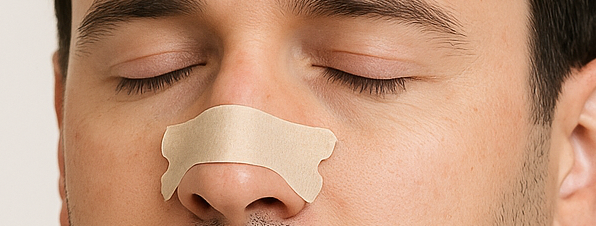
Over-the-counter mouth-closing tape is sometimes used to reduce mouth opening during sleep.
However, people with nasal congestion or suspected sleep apnea should be cautious about sealing the mouth on their own judgment.
If you can’t breathe adequately through the nose and then close the mouth, this can cause shortness of breath and disrupted sleep.
Situations where mouth-closing tape should be avoided
- You have significant nasal congestion
- You’ve been told your breathing stops during sleep
- You have severe obesity
- You are using it after drinking alcohol or taking sleeping medication
- You have a respiratory condition
- Wearing it causes shortness of breath or heart palpitations
Mouth-closing tape does not treat sleep apnea itself. If you have loud snoring or apnea, get a sleep test first.
Does CPAP therapy improve bad breath?
In people with sleep apnea whose mouth opens due to apnea episodes, CPAP therapy can reduce apnea and the strong breathing effort that goes with it — and as a result, mouth breathing and morning oral dryness may improve.
CPAP (continuous positive airway pressure) delivers pressurized air through a mask to keep the airway open during sleep.
That said, even people using CPAP can experience worse oral dryness if there is air leakage from the mask or from the mouth.
Common causes of a dry mouth during CPAP use
- The mouth is open while using a nasal mask
- The mask size or fit doesn’t match your face
- There is significant air leakage from the mask
- The heated humidifier setting is too low
- Nasal congestion is causing mouth breathing
- The CPAP pressure setting doesn’t match your condition
- The bedroom air is dry
If oral dryness is significant while using CPAP, don’t stop treatment on your own judgment — consult your medical provider or equipment supplier.
Adjusting the heated humidifier, changing the mask type or size, treating nasal symptoms, and checking for air leaks can often improve the problem.
If CPAP is causing a dry mouth, it doesn’t necessarily mean “CPAP doesn’t work for you” — it often means the mouth leak, mask, or humidification needs adjusting.
Does switching to a full-face mask solve the problem?
When mouth leakage is significant with a nasal mask, a full-face mask that covers both the nose and mouth may be selected instead.
Full-face masks can accommodate mouth breathing, but they aren’t the best option for everyone.
Because the contact area with the face is larger, they can cause a feeling of pressure, skin redness, or air leaks. And if the underlying cause of nasal congestion or oral dryness remains unaddressed, symptoms may persist even after switching masks.
If your current mask doesn’t feel right, check not just the mask type, but also its size, cushion position, headgear tightness, and humidification settings.
Does laser snoring treatment cure mouth breathing or bad breath?
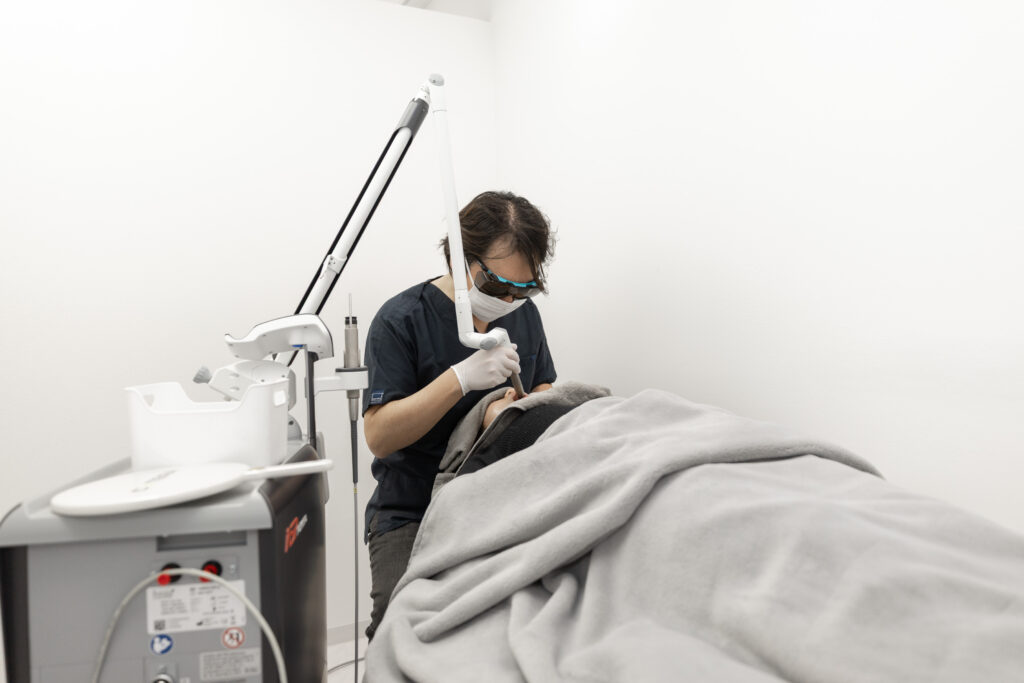
Laser snoring treatment applies thermal stimulation to the soft palate and surrounding pharyngeal tissue to promote tightening of the tissue.
For people whose main cause of snoring is vibration or sagging of the soft palate, this treatment may reduce snoring.
However, it does not directly treat bad breath itself. And if the cause of bad breath is nasal congestion, periodontal disease, tongue coating, or reduced saliva production, laser treatment alone will not resolve it.
Furthermore, attempting to treat severe sleep apnea with laser treatment alone is not appropriate.
At our clinic, we generally perform a sleep test to assess the severity of apnea and the condition of the airway before determining candidacy for laser treatment.
What Ueno Snoring Clinic offers
Ueno Snoring Clinic provides testing and treatment tailored to the cause and severity of each patient’s condition for those with suspected mouth breathing, snoring, or sleep apnea.
Sleep apnea testing
We offer home sleep testing and, when needed, in-lab polysomnography. If you have loud snoring, witnessed apnea during sleep, daytime sleepiness, or morning oral dryness, it’s worth having your breathing during sleep evaluated.
CPAP therapy
For patients whose test results indicate CPAP is appropriate, we provide CPAP setup and ongoing management. After treatment begins, we continue to check for mask leaks, oral dryness, nasal congestion, and comfort of fit, aiming for a treatment you can sustain long-term.
Evaluation of nasal congestion and lifestyle factors
We assess whether rhinitis, weight gain, alcohol habits, sleep position, or other factors are contributing to mouth breathing, and combine treatment for nasal symptoms, weight management, and sleep environment improvements as needed.
Laser snoring treatment for suitable candidates
For patients whose sleep test and examination indicate that sagging of the soft palate or lateral pharyngeal walls is the main cause of snoring, we may offer self-pay laser snoring treatment. Since this treatment isn’t appropriate for every case of snoring or sleep apnea, prior evaluation is essential.
Preventing bad breath starts with separating the causes
Oral dryness from mouth breathing is one factor that can worsen bad breath.
But bad breath has many possible causes, including periodontal disease, cavities, tongue coating, reduced saliva production, conditions of the nose and throat, and lifestyle habits.
Rather than relying on mouthwash or breath-freshening products to mask the odor temporarily, it’s important to separate out the underlying causes, as shown below.
- Teeth and gum problems: evaluate with a dentist
- Tongue coating and oral hygiene: proper brushing and tongue cleaning
- Nasal congestion: treatment for rhinitis or sinusitis
- Loud snoring or apnea: a sleep test
- Dryness during CPAP use: adjust mouth leak, humidification, and mask
- Weight gain or alcohol use: improve lifestyle habits
Summary
Ongoing mouth breathing during sleep dries the oral cavity and reduces saliva’s self-cleansing and antibacterial action.
As a result, bacteria multiply on the tongue and in periodontal pockets, producing volatile sulfur compounds that can worsen bad breath on waking.
Mouth breathing is also linked to nasal congestion, tongue base collapse, obesity, jaw shape, and upper airway narrowing during sleep, and can interact with snoring and sleep apnea in a mutually worsening cycle.
If morning bad breath is accompanied by loud snoring, witnessed apnea during sleep, daytime sleepiness, or morning headaches, don’t rely on oral care alone — consider a sleep test.
On the other hand, if periodontal disease or cavities are suspected, a dental evaluation is also needed. Identifying the cause through both sleep medicine and dentistry leads to a genuine, lasting improvement.
This topic is also covered in more depth in the director’s book, “Curing Snoring with the Latest Treatments” (Japanese-language; ranked No. 1 in Amazon Japan’s General Medicine and Clinical Internal Medicine categories, and No. 2 in Family Medicine & Health).
New book by the Director
“Curing Snoring with the Latest Treatments” (Japanese edition)
A guide to the latest snoring treatments, written by an anesthesiologist who has overseen the sleep of more than 10,000 patients.
Concerned about morning bad breath, oral dryness, or snoring?
In addition to insurance-covered sleep testing and CPAP management, Ueno Snoring Clinic evaluates the causes of mouth breathing and snoring, comprehensively assessing nasal symptoms, weight, sleep position, and CPAP mouth leakage. Based on your test results and examination findings, we propose a treatment plan tailored to you.
*Depending on your symptoms and test results, we may refer you to a dentist or an ENT specialist.
Related articles
Frequently asked questions
Q. Is mouth breathing the reason my breath is only bad in the morning?
Oral dryness from mouth breathing during sleep may be one contributing factor. However, periodontal disease, cavities, tongue coating, and reduced saliva production can also cause bad breath. If it persists, it’s best to be evaluated by both a dentist and a sleep medicine provider.
Q. Does mouth breathing always lead to sleep apnea?
Mouth breathing alone does not necessarily cause sleep apnea. However, when combined with nasal congestion, tongue position, jaw shape, or obesity, the airway can narrow further, worsening snoring and apnea.
Q. Can mouthwash cure bad breath?
Mouthwash may reduce odor temporarily, but if the underlying causes — mouth breathing, periodontal disease, tongue coating, or nasal congestion — aren’t treated, bad breath is likely to return.
Q. Is a dry mouth in the morning a sign of sleep apnea?
Oral dryness on waking can occur with sleep apnea, but dryness alone doesn’t confirm a diagnosis. If it’s accompanied by loud snoring, witnessed apnea, or daytime sleepiness, consider a sleep test.
Q. Does using CPAP improve bad breath?
It may, if reduced apnea and breathing effort lead to less mouth breathing and therefore less oral dryness. On the other hand, mask leaks or insufficient humidification can still cause a dry mouth even while using CPAP.
Q. What should I do if CPAP is drying out my mouth?
Check the heated humidifier setting, mask leaks, mouth leakage, nasal congestion, and mask type or size. Don’t stop treatment on your own — consult your medical provider or equipment supplier.
Q. Can mouth-closing tape cure sleep apnea?
Mouth-closing tape is not a treatment for sleep apnea. If someone with nasal congestion or apnea seals their mouth without medical guidance, shortness of breath can worsen.
Q. Which specialist should I see for bad breath?
If you have bleeding gums, tooth pain, or tongue coating, a dental evaluation is a good first step. If you also have loud snoring, witnessed apnea, daytime sleepiness, or morning oral dryness, consult a sleep medicine provider as well.
Bad breath can sometimes point to underlying sleep apnea
If you have morning bad breath or oral dryness along with loud snoring, witnessed apnea, or daytime sleepiness, it’s worth having your breathing during sleep evaluated.
[Insurance-covered care] If snoring or sleep apnea is a concern, we offer appointment-based care in a calm, private setting.
Please feel free to contact Ueno Snoring Clinic [same-day appointments available]
📞0120-899-930
5F Ueno Silk Building, 4-8-8 Ueno, Taito-ku, Tokyo 110-0005, Japan

Please feel free to contact Ueno Snoring Clinic [same-day appointments available]
📞0120-899-930
5F Ueno Silk Building, 4-8-8 Ueno, Taito-ku, Tokyo 110-0005, Japan
Feel free to reach out to us on LINE ↓↓↓


English Support Available
We provide medical services for international patients. Please check our English website for details on how to visit our clinic.
Supervising Physician

Kazuyuki Sugaya, Director of Ueno Snoring Clinic
After graduating from Fujita Health University School of Medicine in 2004, Dr. Sugaya began his career as an anesthesiologist at Toho University Omori Medical Center. He has since gained extensive clinical experience at municipal hospitals and private clinics nationwide, administering general anesthesia in over 20,000 cases. In 2020, he founded the "Tokyo Spine Clinic," and has served as the Director of Ueno Snoring Clinic since 2025.
Related Columns

By Appointment Only
Specialized Snoring Treatment in Ueno
Ueno Snoring Clinic
Insurance-covered home testing available.
Following a physician’s consultation and result explanation,
we support the improvement of snoring and sleep apnea with "Dual Deep Thermia"—a non-surgical laser treatment, if necessary.
3-min walk from Ueno Station. Please feel free to consult us.