Ueno Snoring Clinic offers a range of options tailored to your situation, from insurance-covered sleep testing and CPAP management to self-pay snoring laser treatment. If you’d like to find out which treatment fits you, please start with an initial consultation.
Details of the tests and treatments offered at Ueno Snoring Clinic can be found here
You’ll Want to Know This! A Complete Comparison of 5 CPAP Types — What Doctors Really Look For
Our doctor compares five different CPAP machines side by side and explains what actually matters when choosing one.
Watch the video
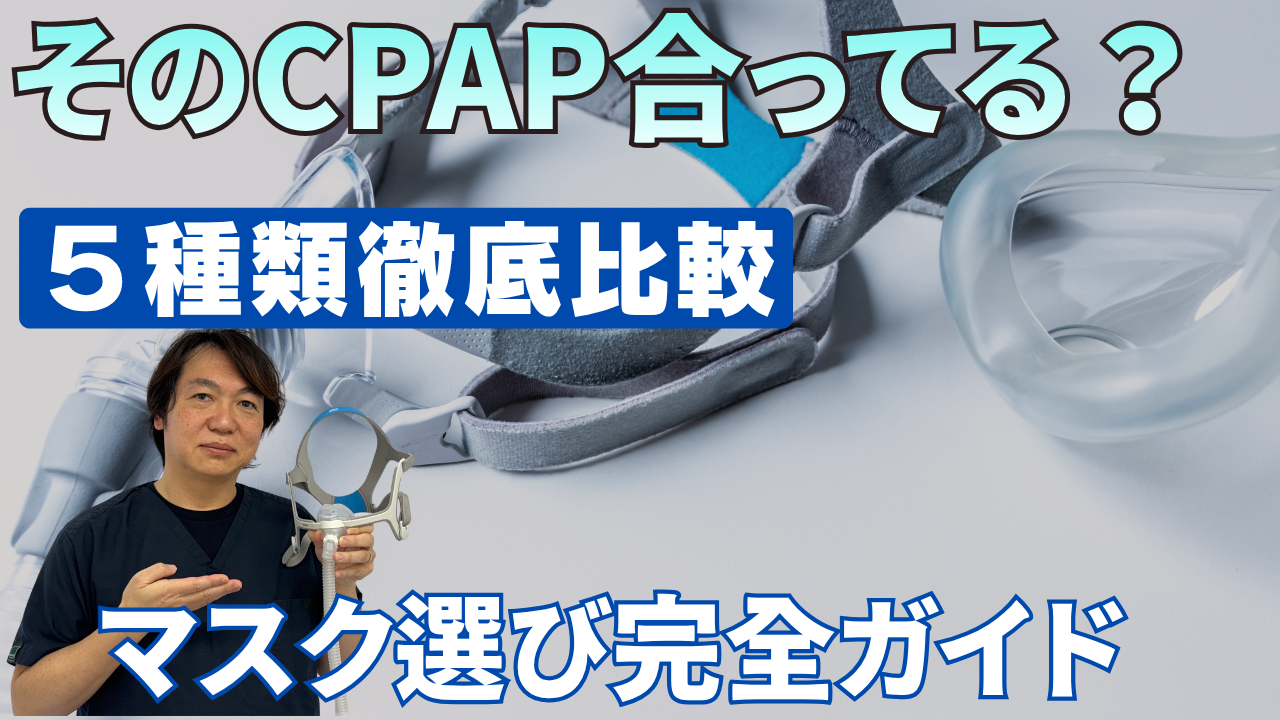
A Complete Comparison of CPAP Masks
We tried on and reviewed five different types of CPAP masks. 90% of CPAP comfort comes down to the mask.
Watch the video
Do you have to use CPAP forever? A specialist explains how to use CPAP
A detailed explanation of how to use CPAP, with a real demonstration of what it feels like to wear the device.
Watch the video
Ueno Snoring Clinic was featured on Fuji TV’s “Live News It!” and on FNN Prime Online
Watch our clinic’s examination and explanation of sleep disorders, snoring, and sleep apnea.
Watch the video
Ueno Snoring Clinic was featured in an article on Nippon TV’s “news every.”
Please take a look as a starting point for thinking about getting evaluated for snoring, sleep apnea, or other sleep disorders.
Read the article
Reviewed by Our Director
Kazuyuki Sugaya
Director, Ueno Snoring Clinic / Anesthesiologist
Our director, with over 20,000 general anesthesia cases, focuses primarily on the diagnosis and treatment of snoring and sleep apnea, offering care tailored to each patient. [Insurance-Covered] Ueno Snoring Clinic
This article was reviewed by our Director, Kazuyuki Sugaya, and explains the connection between insufficient sleep, undiagnosed sleep apnea, and everyday work performance.
🩺Comprehensive Snoring Treatment at Ueno Snoring Clinic
The causes of snoring range from the structure of the throat to body weight. Ueno Snoring Clinic doesn’t lean on any single treatment method — we’re set up to offer each patient the option that best fits their situation, based on sound medical evidence.
Insurance-Covered: Thorough Testing and Ongoing Treatment
- Simplified and PSG testing: A precise assessment of your sleep
- CPAP treatment: The standard treatment for moderate-to-severe apnea
Self-Pay: Address the Root Cause, Short-Term Focus
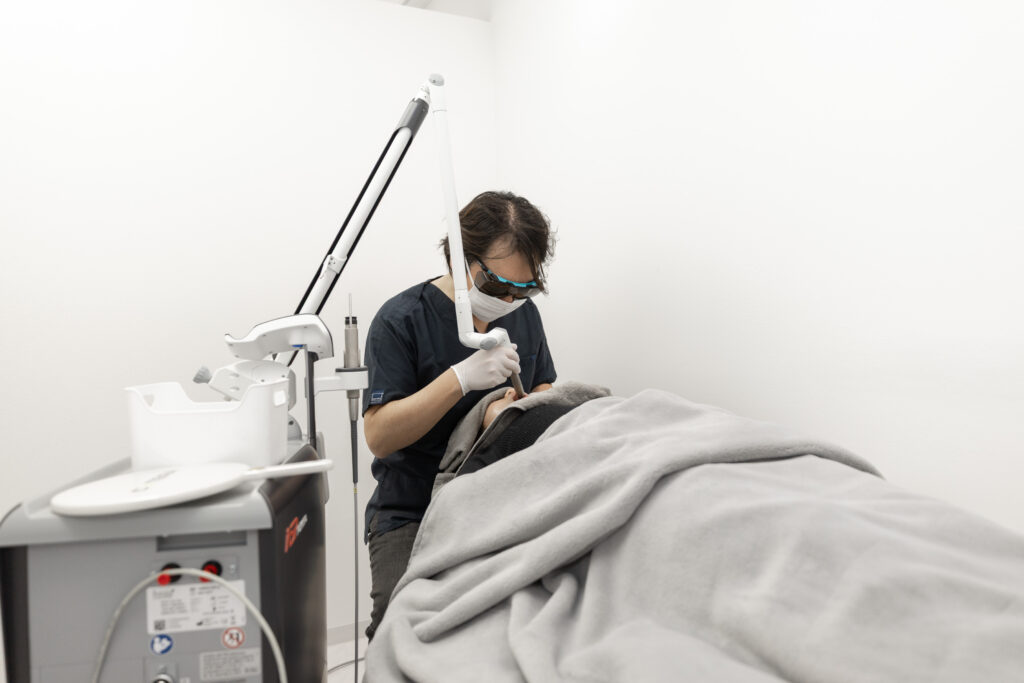
- The latest snoring laser treatment: A non-surgical, root-cause treatment
- Medically supervised weight loss: Physically opening the airway through weight reduction
*As a clinic specializing in snoring treatment, we’re committed to resolving “snoring that won’t stop” from both the insurance-covered and self-pay sides.
Our Director’s book, “Curing Snoring with the Latest Treatments” (an Amazon Japan bestseller — #1 in General Medicine, #1 in Clinical Internal Medicine, #2 in Family Health & Wellness), also covers this topic in more detail.
New Book by Our Director
“Curing Snoring with the Latest Treatments”
A guide to the latest snoring treatments, written by an anesthesiologist who has overseen the sleep of more than 10,000 patients.
View on Amazon
Quick Answer
Japanese adults average just 6.3 hours of sleep a night — among the shortest in the OECD — and insufficient sleep is estimated to cost Japan’s economy roughly ¥3.5 trillion a year through lost productivity, accidents, and healthcare spending. Even after work style reform gave many professionals more time in bed, sleep quality often hasn’t improved, and an estimated 40% of chronic poor sleepers may have an undiagnosed case of sleep apnea as the real underlying cause. Sleep apnea repeatedly interrupts deep sleep through nighttime oxygen drops, so even eight hours in bed can leave you with the equivalent of four or five hours of real rest. The good news: sleep apnea testing and CPAP treatment are covered by Japan’s national health insurance, and most patients notice a dramatic difference in alertness and performance soon after starting treatment.
📋 What This Article Covers
- Japan’s famously short sleep — what the numbers actually mean
- What “insufficient sleep syndrome” actually is, and how to self-check for it
- Why snoring is a hidden warning sign, not just noise
- Why sleep still isn’t improving, even after work style reform
- The insurance-covered path to diagnosing and treating sleep apnea
- The business case for treating sleep as an investment
- Five things you can start doing today
Japan’s Sleep Is Famously Short — Here’s What That Means
Among OECD member countries, Japan consistently ranks at or near the bottom for average sleep duration. The spread of smartphones, long commutes, and the blurred line between work and home life that remote work brought after the pandemic have all combined to leave many Japanese business professionals quietly living with chronic sleep deprivation.
| Metric |
Figure |
| Average sleep duration in Japan |
6.3 hours per night (OECD data) |
| Estimated annual economic loss in Japan from insufficient sleep |
Approximately ¥3.5 trillion |
| Estimated share of people with undiagnosed sleep apnea |
Around 40% |
You might think “it’s just a bit of lost sleep” isn’t a big deal. Medically speaking, though, just two weeks of 6-hour sleep has been shown to reduce cognitive performance to a level comparable with 48 hours of total sleep deprivation. And yet the person experiencing it often feels like they’ve simply “gotten used to it” — which is exactly what makes insufficient sleep so dangerous.
⚠️ Worth noting
“I always feel a bit tired, but I figured that was just normal” — that mindset is itself a textbook sign of insufficient sleep syndrome. Low self-awareness of the problem is the single biggest reason people delay doing anything about it.
What Is “Insufficient Sleep Syndrome”?
Insufficient sleep syndrome refers to a state in which someone chronically fails to get the amount of sleep they need, resulting in ongoing daytime sleepiness, poor concentration, emotional instability, and physical symptoms. It’s more than just “not sleeping enough” — it’s a recognized medical concept, listed in the DSM-5 (the Diagnostic and Statistical Manual of Mental Disorders).
What matters here is that the amount of sleep a person needs varies by individual. Seven to nine hours is generally recommended for adults, but people who are genuinely fine on less sleep due to genetics make up less than 3% of the population. For almost everyone else, the feeling that “I’m okay on little sleep” is simply the body adapting — going numb, in effect — to chronic sleep deprivation.
Key Symptoms to Check
☐ You can’t wake up naturally without an alarm
☐ You sleep more than two hours longer on weekends than on weekdays (“social jetlag”)
☐ You always get sleepy when sitting still — in meetings, on the train
☐ You can’t get through the morning without caffeine
☐ Decisions take longer, and small things irritate you more easily
☐ A partner or family member has told you that you snore loudly
If three or more of these apply to you, it’s worth considering a visit to a specialist. These signs aren’t simply fatigue or a personality trait — they’re very likely symptoms that can genuinely improve with medical treatment.
What makes insufficient sleep syndrome tricky is that it’s chronic rather than acute. Because there’s no sudden onset, there’s rarely an obvious trigger to see a doctor, and “this is just how it is” tends to settle in as the norm. But once people do get appropriate treatment, it’s extremely common for them to realize, for the first time, just how much their performance had been dragged down beforehand.
Snoring Isn’t Just Noise — It Can Be a Hidden Warning Sign
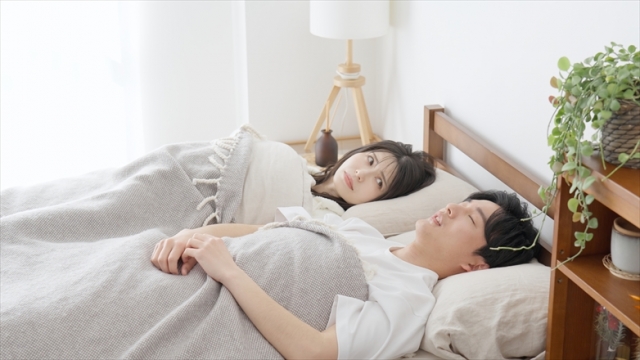
Many people brush off their snoring as unavoidable — “I’m just overweight,” or “I’m just tired.” But snoring is actually the most common outward sign of obstructive sleep apnea (OSA).
What Is Obstructive Sleep Apnea (OSA)?
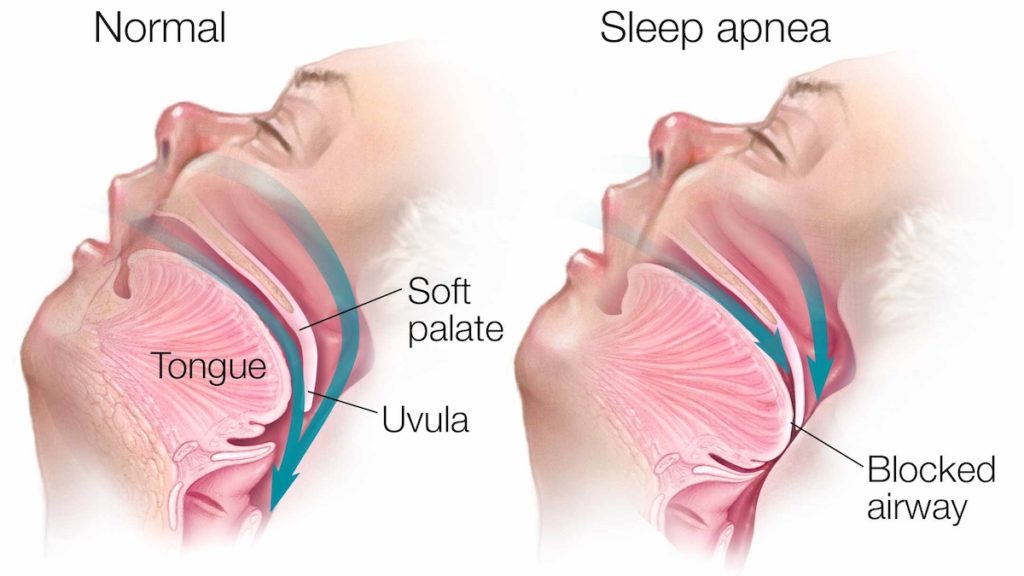
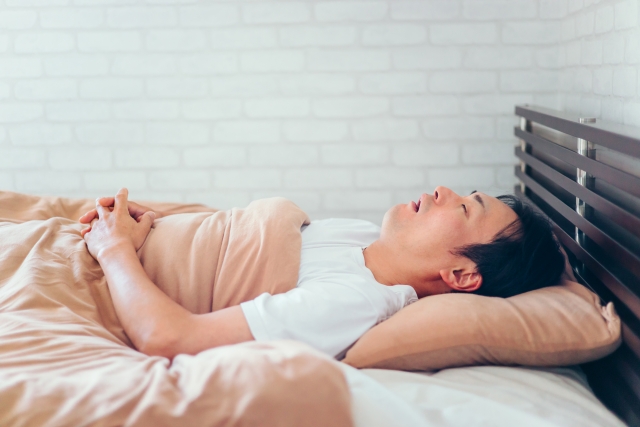
OSA is a condition in which the airway repeatedly collapses during sleep, causing breathing to stop for 10 seconds or more at a time. In severe cases, this can happen more than 30 times an hour, with blood oxygen levels dropping sharply each time — and the person experiencing it is often completely unaware it’s happening dozens of times a night.
🫁 What a repeated oxygen crash actually does
With OSA, the brain repeatedly senses something close to suffocation during sleep and pulls the body back into lighter sleep. Even with eight hours in bed, deep sleep (slow-wave and REM sleep) barely happens — leaving someone with sleep quality that’s effectively no better than four or five hours.
The Systemic Risks OSA Can Cause
High blood pressure (2–3× risk)
Heart attack / stroke
Type 2 diabetes
Depression / anxiety
Elevated dementia risk
Traffic accidents (5–7× risk)
This isn’t just a “sleep problem” — it’s a multi-organ condition that spreads across the cardiovascular, metabolic, and mental health systems. Left untreated, several large-scale cohort studies have shown it can meaningfully raise the risk of sudden death in your 40s and 50s.
For business professionals, there’s another impact that’s easy to overlook: a direct effect on decision-making, risk assessment, and creative thinking. The fragmented sleep caused by OSA significantly impairs prefrontal cortex function — which matters for every part of leadership, negotiation, and management.
OSA Isn’t Just a Disease of Overweight, Middle-Aged Men
In Japan, OSA is estimated to affect around 4% of adult men and 2% of adult women, and the true number — including mild or asymptomatic cases — is likely higher still. Even at a lower BMI, Japanese people are considered prone to OSA regardless of body size, due to skeletal traits such as a smaller jaw, larger tonsils, and a tongue base that collapses more easily compared with Western populations. Assuming “this doesn’t apply to me” isn’t a safe bet.
Why Sleep Still Isn’t Improving, Even After Work Style Reform
Since Japan’s work style reform legislation took effect in 2019, stricter caps on overtime have pushed many companies toward getting employees home earlier. But sleep experts are increasingly pointing to a paradox: more time in bed hasn’t translated into better sleep quality.
Modern Factors That Undermine Sleep Quality
① Smartphone blue light — using your phone before bed suppresses melatonin and delays sleep onset. “Night mode” has limited effect; simply not bringing the phone to bed works better.
② Drinking habits — alcohol used to “help you sleep” actually suppresses REM sleep and makes the second half of the night lighter. You may fall asleep faster, but the sleep itself doesn’t restore you.
③ Lack of exercise — moderate physical activity promotes deep sleep, but desk-based work makes this chronically easy to neglect.
④ Mental overarousal — work deadlines and relationship stress keep cortisol elevated, so the brain never fully winds down at night.
⑤ A poor sleep environment — a partner’s snoring, noise, light, and poor temperature control. The ideal bedroom temperature is around 18–20°C.
Beyond these behavioral and environmental factors, the most serious one is undiagnosed sleep apnea. No amount of lifestyle improvement will produce deep sleep if the airway is physically obstructed.
“I’m finally getting home earlier.
So why do I still feel exhausted?”
The answer may be sitting in your airway.
In 2026, wearable sleep trackers have become commonplace, letting people see their own sleep score for the first time. But even when the score comes back low, many people don’t realize the cause may be medical, and instead try to fix it with supplements or a new pillow. If the root cause is in the airway, those are only treating the symptom.
The Insurance-Covered Path to Diagnosis and Treatment
Many people assume a sleep clinic is expensive or too time-consuming, but sleep apnea is a condition covered by Japan’s national health insurance. Most of the diagnostic and treatment process takes place within standard insurance coverage.
The Standard Insurance-Covered Sleep Clinic Pathway
1. Consultation and screening (outpatient visit) — You’ll fill out a questionnaire, including a sleepiness score (ESS), and we’ll review your symptoms along with your build and skeletal structure. A take-home testing device may be arranged at this stage.
2. A simplified home sleep test — You simply wear a pulse oximeter on your finger and a breathing sensor on your nose while you sleep at home. No hospital stay is required, and the cost is typically a few thousand yen with standard insurance co-pay.
3. A detailed test (PSG — polysomnography) — If the simplified test suggests OSA, a more detailed overnight evaluation follows, recording brain waves, eye movement, muscle activity, and other indicators (at Ueno Snoring Clinic, this can also be done at home rather than requiring a hospital stay).
4. Starting CPAP treatment — For moderate-to-severe OSA, a device delivers air through a mask to keep the airway open during sleep. With insurance coverage, the monthly out-of-pocket cost is typically around ¥5,000–6,000.
5. Follow-up and ongoing monitoring — Your CPAP usage data is monitored remotely, alongside personalized sleep-hygiene guidance. Most patients come in once a month to review their data and make adjustments.
After starting CPAP, many patients are surprised by how dramatic the difference feels. “My head is clear from the morning, and work moves faster.” “I don’t get sleepy in meetings anymore.” “My blood pressure came down, and I need less medication.” These aren’t exaggerations — they’re outcomes reported repeatedly in the medical literature.
Options for Mild Cases or Snoring Alone
✓ Weight loss and lifestyle changes: For a BMI of 25 or higher, some data suggests a 10% weight reduction can improve your AHI (apnea-hypopnea index) by roughly 50%.
✓ Positional therapy: Avoiding sleeping on your back can reduce symptoms for some people, and dedicated wearable devices for this are becoming more common.
✓ Snoring laser treatment: For mild-to-moderate apnea or snoring alone, laser treatment can be a root-cause option in some cases (self-pay).
Which treatment is appropriate depends on the severity, cause, and your lifestyle. The first step is simply getting evaluated — a sleep specialty clinic, respiratory medicine, or similar departments can all serve as your entry point. Telling the clinic “my snoring is bad” or “I’m very sleepy during the day” is enough to start the testing process.
The Social and Business Cost — Sleep as an Investment
According to an estimate from the RAND Corporation, insufficient sleep costs Japan’s economy roughly ¥3.5 trillion a year (about 0.6% of GDP) — a combination of presenteeism (showing up but underperforming), absenteeism, traffic accidents, and higher healthcare spending.
From a company’s perspective, the sleep quality of managers and executives feeds directly into overall organizational performance. Sleep-deprived leaders tend to struggle with emotional regulation, give lower-quality feedback to their teams, and lean toward reactive responses rather than strategic thinking. This isn’t just a personal health issue — it’s a matter of organizational management.
Leading companies in the US — including Google and Nike — have installed on-site nap rooms and officially encourage napping. Some major Japanese companies have followed suit. But the more fundamental solution is medically ensuring the quality of nighttime sleep itself.
The ROI of “Sleep Investment”
Some corporate studies estimate that improved sleep quality can be worth several hundred thousand yen or more per employee annually in productivity gains. CPAP treatment, by comparison, typically costs around ¥60,000–80,000 a year with insurance coverage. It’s clear which side of that equation is the “cost,” and which is the “investment.”
From a health insurance association’s perspective, too, promoting OSA treatment directly supports long-term cost reduction. Lowering the prevalence of conditions closely tied to sleep disorders — high blood pressure, diabetes, depression — helps bring down overall healthcare spending. For executives and HR leaders, supporting employees’ sleep is a matter of strategic management, not just corporate social responsibility.
Five Things You Can Do Starting Today
① Ask your partner to record your snoring — objective evidence is often what finally prompts a visit to the doctor. A smartphone app can help; even just sharing a short video taken right after you wake up is a good habit to start.
② Check your score with the Epworth Sleepiness Scale (ESS) — a free self-assessment checklist available online. A score of 10 or higher is worth paying attention to; 16 or higher warrants prompt medical evaluation.
③ Book an appointment with your primary care doctor or a sleep clinic — simply saying “my snoring is bad” or “I’m very sleepy during the day” is enough. Respiratory medicine, general internal medicine, and dedicated sleep clinics can all serve as your entry point.
④ Stop using your phone for an hour before bed — a basic sleep-hygiene habit you can start tonight. Not bringing your phone into the bedroom works better than night mode.
⑤ Keep a fixed bedtime and wake-up time for seven days — “catching up” on sleep over the weekend can shift your body clock by more than two hours and bring on Monday-morning grogginess (social jetlag). Start by keeping the same schedule for just one week.
In Summary: Reclaiming Your Right to Sleep Properly
Sleep isn’t a sign of laziness, and it isn’t a luxury. It’s an essential repair process that your brain and body carry out for the sake of tomorrow’s performance. Insufficient sleep syndrome and sleep apnea aren’t problems you can solve through willpower or sheer effort — they’re medical conditions that can be reliably improved with the right treatment.
If work style reform addressed the question of quantity, the next frontier is quality — making sure your brain and body can actually recover. That’s something you can start working on right now, using the insurance-covered system that’s already in place.
The belief that “this is just how it’s always been” is the biggest obstacle of all. Please have it evaluated by a specialist, even just once. Many people rediscover, from the very day of their first visit, just how different things can feel.
Your First Step Toward Getting Your Sleep Checked
At Ueno Snoring Clinic, simply telling us you’d like to be tested for sleep apnea is enough to get started. Insurance coverage is available, and self-pay snoring laser treatment is also offered.
Frequently Asked Questions
Q. What’s the difference between ordinary tiredness and “insufficient sleep syndrome”?
A. Ordinary tiredness tends to resolve with a good night’s rest. Insufficient sleep syndrome is a chronic state where daytime sleepiness, poor concentration, and emotional instability persist over time because your actual sleep need is never being met — and it’s recognized as a medical condition, not just a personality trait.
Q. My wearable device gives me a low sleep score. Do I need to see a doctor?
A. A low score is a useful signal, but a wearable can’t tell you why your score is low. If you also snore, feel sleepy during the day, or have been told you stop breathing at night, it’s worth getting a proper sleep evaluation rather than relying on the device alone.
Q. I’m not overweight — can I still have sleep apnea?
A. Yes. Jaw shape, tonsil size, and tongue position can all cause sleep apnea regardless of body weight, and this is particularly relevant for people of Japanese and other East Asian backgrounds. Being thin doesn’t rule it out.
Q. Is testing and treatment really covered by insurance?
A. Yes. Simplified home testing, PSG, and CPAP treatment for moderate-to-severe cases are all covered under Japan’s national health insurance, with typical out-of-pocket costs in the range of a few thousand yen for testing and around ¥5,000–6,000 a month for CPAP.
*This article is a general explanation, written for a broad audience and based on the sources above together with our clinic’s own clinical experience. It is not a substitute for medical advice. If you suspect insufficient sleep syndrome or sleep apnea, please consult a medical institution for a proper evaluation.






いびきを最新治療で治す-表紙-1.png)