Ueno Snoring Clinic also welcomes consultations from people who haven’t found relief with over-the-counter products. If you’ve tried tape and your snoring hasn’t improved, please don’t hesitate to get in touch.
Details of the tests and treatments offered at Ueno Snoring Clinic can be found here
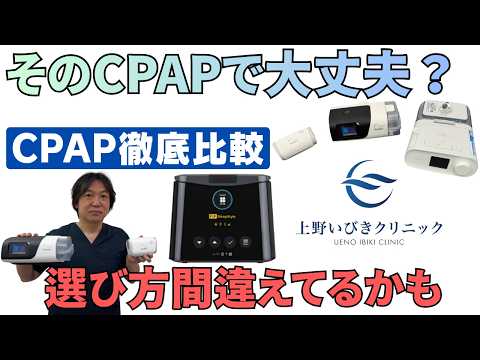
You’ll Want to Know This! A Complete Comparison of 5 CPAP Types — What Doctors Really Look For
Our doctor compares five different CPAP machines side by side and explains what actually matters when choosing one.
Watch the video
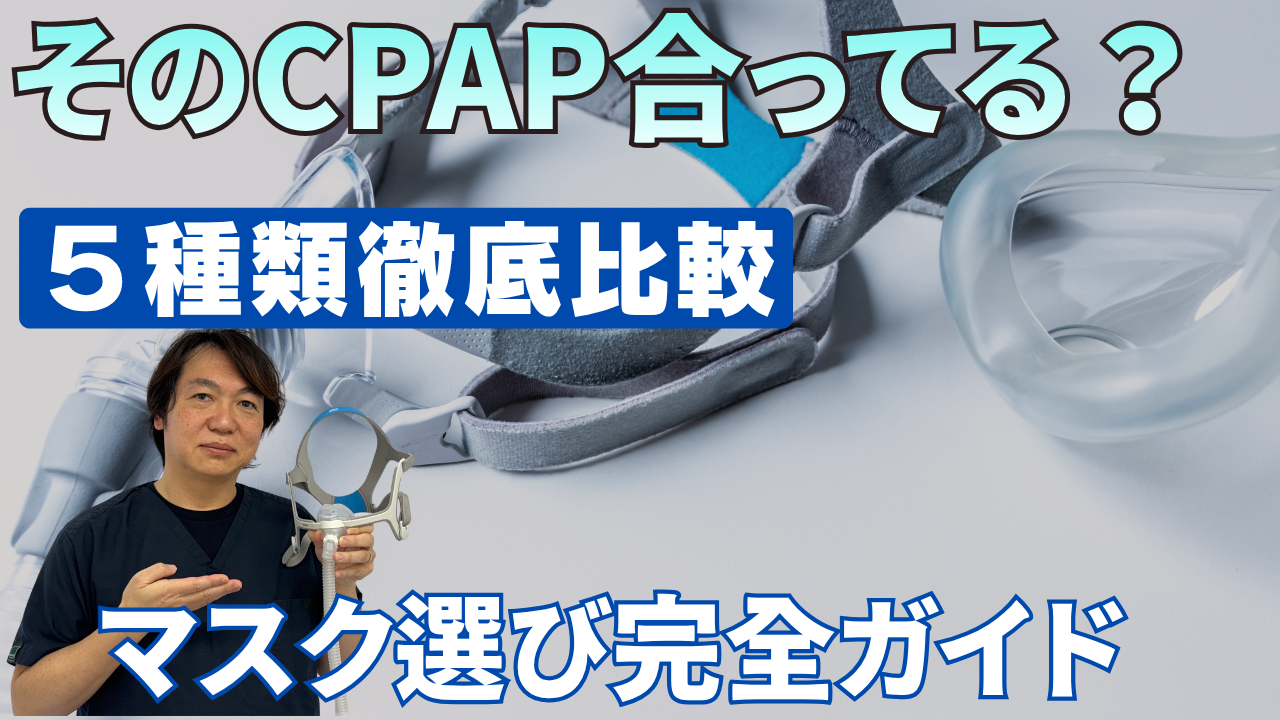
A Complete Comparison of CPAP Masks
We tried on and reviewed five different types of CPAP masks. 90% of CPAP comfort comes down to the mask.
Watch the video
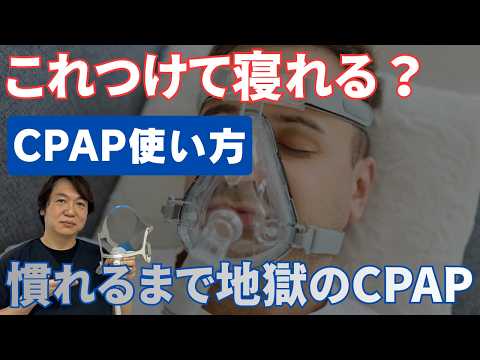
Do you have to use CPAP forever? A specialist explains how to use CPAP
A detailed explanation of how to use CPAP, with a real demonstration of what it feels like to wear the device.
Watch the video
Ueno Snoring Clinic was featured on Fuji TV’s “Live News It!” and on FNN Prime Online
Watch our clinic’s examination and explanation of sleep disorders, snoring, and sleep apnea.
Watch the video
Ueno Snoring Clinic was featured in an article on Nippon TV’s “news every.”
Please take a look as a starting point for thinking about getting evaluated for snoring, sleep apnea, or other sleep disorders.
Read the article
Reviewed by Our Director
Kazuyuki Sugaya
Director, Ueno Snoring Clinic / Anesthesiologist
Our director, with over 20,000 general anesthesia cases, focuses primarily on the diagnosis and treatment of snoring and sleep apnea, offering care tailored to each patient. [Insurance-Covered] Ueno Snoring Clinic
This article was reviewed by our Director, Kazuyuki Sugaya, and explains the effects and downsides of nasal dilator strips and mouth tape.
🩺Comprehensive Snoring Treatment at Ueno Snoring Clinic
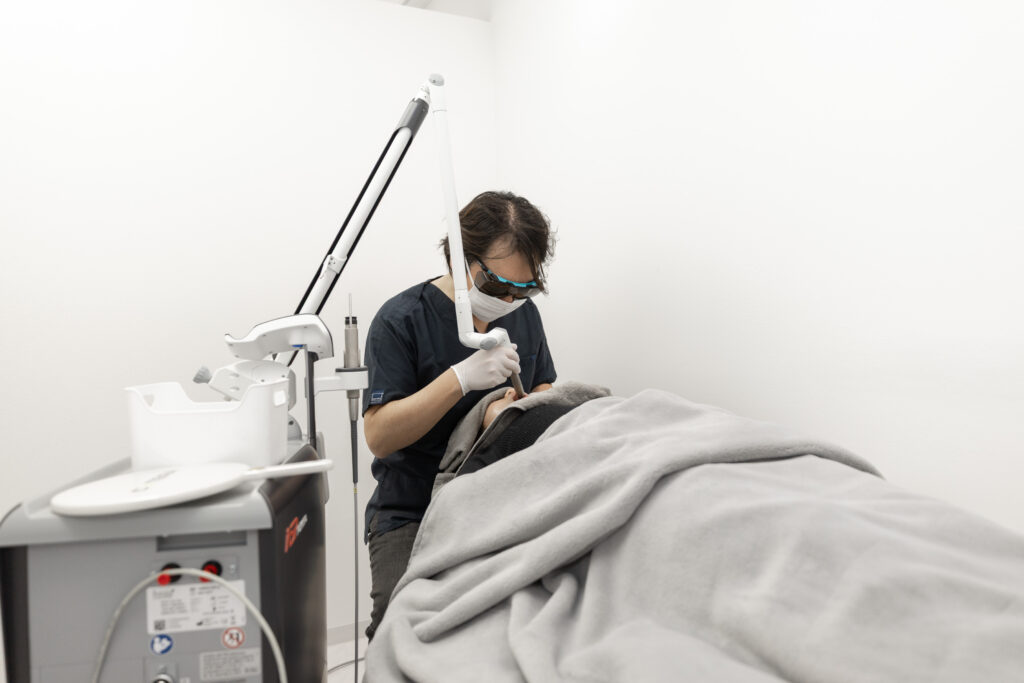
Ueno Snoring Clinic also takes approaches that act on the tissue deep in the throat itself, which over-the-counter products can’t reach.
Insurance-Covered: Thorough Testing and Ongoing Treatment
- Simplified and PSG testing: A detailed assessment of the cause of your snoring and apnea
- CPAP treatment: The standard treatment for moderate-to-severe apnea
Self-Pay: Address the Root Cause, Short-Term Focus
- Snoring laser treatment: A root-cause approach that tightens the tissue deep in the throat, offered as 3-, 6-, or 12-session courses
- Medically supervised weight loss: An option when weight gain is a contributing factor
*Whether laser treatment is suitable depends on your test results. We recommend starting by checking your current condition.
Our Director’s book, “Curing Snoring with the Latest Treatments” (an Amazon Japan bestseller — #1 in General Medicine, #1 in Clinical Internal Medicine, #2 in Family Health & Wellness), also covers this topic in more detail.
New Book by Our Director
“Curing Snoring with the Latest Treatments”
A guide to the latest snoring treatments, written by an anesthesiologist who has overseen the sleep of more than 10,000 patients.
View on Amazon
Quick Answer
Nasal dilator strips and mouth tape may reduce snoring in some cases, such as snoring caused by a stuffy nose, but they don’t act on the slackening of the soft palate and tongue base deep in the throat, where the snoring sound is made. That’s why many people notice little benefit, or only a temporary, symptom-level improvement. In addition, using mouth tape on your own when you have sleep apnea may actually interfere with breathing, a risk that has been raised in the research literature. If you want to address the root cause of your snoring, we recommend first checking the condition of your throat with a test, and then considering options such as laser treatment.
📋 What This Article Covers
- Do nasal strips and mouth tape work?
- What are the downsides?
- Why you may not notice much effect
- Tape vs. laser treatment: a comparison table
Do Nasal Strips and Mouth Tape Actually Work?

In short, they may help with snoring caused by a stuffy nose, but they don’t work for snoring in general.
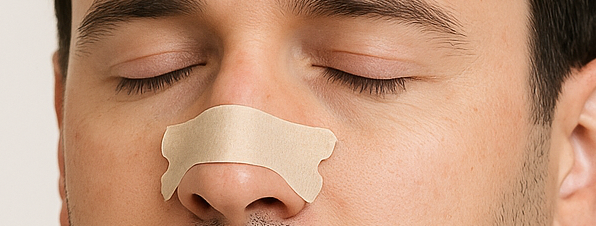
A nasal dilator strip is a spring-like strip applied to the outside of the nose. It pulls the nostrils outward and widens the entrance of the nasal passage (the external nasal valve). If hay fever or rhinitis is making it hard to breathe through your nose, and that is pushing you toward mouth breathing and louder snoring, it can make breathing easier. A 2016 meta-analysis found that nasal dilators improve nasal breathing, but did not show improvement in sleep apnea outcomes.
Mouth tape holds your lips gently closed during sleep to discourage mouth breathing and encourage nasal breathing. When the mouth falls open, the jaw and tongue tend to drop back and snoring can get worse, so keeping the mouth closed makes sense in theory. However, the evidence is thin. A 2025 systematic review of 10 studies (213 patients) rated all of them as poor quality, and small pilot studies in selected people with mild sleep apnea who could breathe through the nose have reported only modest improvements. Much of what circulates online rests on small studies and personal impressions rather than large clinical trials.
Nasal strips can help with snoring caused by nasal congestion, but they’re not a cure-all.
If the main cause is slackening of the tissue deep in the throat, tape alone tends to give little noticeable benefit.
What Are the Downsides?
Nasal strips and mouth tape come with the following downsides and cautions.
| Product |
Main downsides and cautions |
| Nasal dilator strip |
Skin irritation or rash from the adhesive; the effort and cost of applying a new strip every night; little benefit for snoring that originates deep in the throat |
| Mouth tape |
Can make breathing harder if you’re congested; skin irritation; may increase anxiety for some people |
| Both |
If you have undiagnosed sleep apnea, tape can give you a false sense that you’ve “taken care of it,” delaying testing and a visit to the doctor |
Particular caution is needed when someone with sleep apnea uses mouth-sealing tape on their own judgment. If your breathing is already stopping during sleep, sealing your mouth as well can interfere with breathing itself, especially if your nose gets blocked. The 2025 systematic review mentioned above warned of a potentially serious risk of harm when mouth taping is practiced indiscriminately. If you snore loudly or feel very sleepy during the day, we recommend getting tested before trying tape.
Why You May Not Notice Much Effect
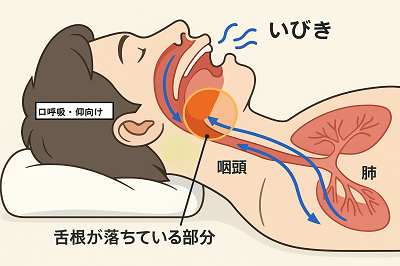
The reason tape often disappoints is that the place where the snoring sound is made is different from the place where tape acts.
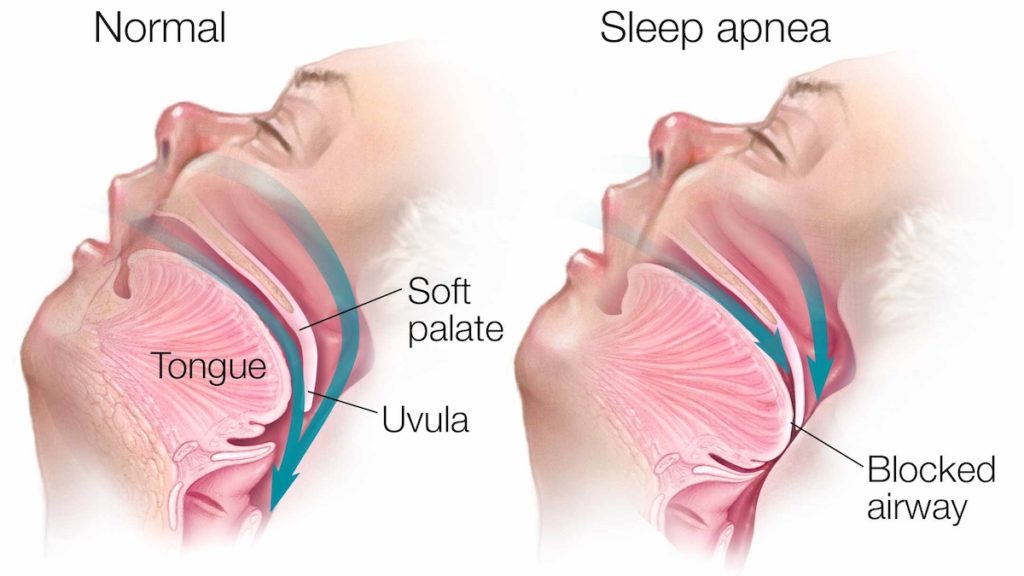
Most snoring sound comes from the soft palate and the base of the tongue deep in the throat vibrating with each breath. A nasal strip acts on the entrance of the nose, and mouth tape acts around the lips. Both work on the “entrance” of the airway.
Widening the opening of a hose won’t change the flow if it narrows further along.
In the same way, widening the nose or closing the mouth doesn’t change the vibration at the narrowed, slackened tissue deep in the throat.
In other words, tape is a symptom-level measure that changes how easily air passes through the entrance. It can’t directly address slackening of the tissue deep in the throat, which is the underlying cause of snoring. For more on mouth breathing itself, see the articles below.
We also look at over-the-counter snoring products more broadly in the article below.
Tape vs. Laser Treatment: A Comparison
Here is how tape compares with the snoring laser treatment at Ueno Snoring Clinic (Dual Deep Thermia) in terms of where it acts and how long it lasts.
| Item |
Nasal strip / mouth tape |
Snoring laser treatment |
| Where it acts |
Nasal entrance and the area around the mouth |
Tissue deep in the throat (around the soft palate and uvula) |
| Approach |
Symptom-level measure that temporarily changes the airway entrance |
A root-cause approach that tightens the tissue |
| Durability |
Must be reapplied every night |
Effects can continue after treatment and build up over a course of sessions |
| Range of use |
Limited to mild snoring caused by nasal congestion |
Can address a wider range of causes, depending on test results |
| Sleep apnea |
Can’t treat apnea itself |
Severity is confirmed by testing first, and an appropriate treatment is chosen |
Tape is easy to try, but it can’t change the tissue deep in the throat. If your snoring is chronic, it’s worth confirming the cause with a test first and then considering a root-cause approach such as laser treatment. (For the realistic limits of laser treatment, see our article on the limitations of snoring laser treatment.)
What Ueno Snoring Clinic Can Do
Ueno Snoring Clinic is a sleep-disorder clinic specializing in snoring and sleep apnea. For people who haven’t found relief with over-the-counter products, we first check the cause of the snoring with testing, and can also propose treatments that act on the tissue deep in the throat, such as laser treatment.
If you’ve tried tape without improvement, or simply want to know what is causing your snoring, please feel free to get in touch.
Summary: Tape Treats Symptoms — Get Tested to Address the Root Cause
Nasal strips and mouth tape can be useful in some cases, such as snoring caused by a stuffy nose, but they don’t act directly on the tissue deep in the throat where the snoring sound is made. If you haven’t noticed much effect, you may well be running into this built-in limitation.
If your snoring is chronic, go beyond symptom-level tape: confirm the cause with testing, then consider treatment that addresses the root cause.
Still Snoring Despite Tape? Let’s Talk
We’ll check the cause of your snoring with testing and propose a treatment that addresses the root cause. By appointment only; same-day appointments are often available.
Frequently Asked Questions
Q. Are there any downsides to nasal dilator strips?
A. The main downsides are skin irritation, the hassle of applying a new strip every night, and little benefit for snoring that originates deep in the throat. There’s also a risk that using a strip gives you enough reassurance to put off getting tested.
Q. Why don’t nasal strips seem to work for me?
A. Most snoring sound is produced by vibration of the soft palate and tongue base deep in the throat. A nasal strip only widens the entrance of the nose and doesn’t act on the tissue deep in the throat, so if that’s where the cause lies, you may notice little effect.
Q. Will mouth tape change the shape of my face?
A. The suggestion that long-term mouth breathing affects facial structure is discussed mainly in relation to growing children. There is no established medical evidence that using tape for a short period as an adult significantly changes your bone structure, so it’s best not to expect too much.
Q. How effective are nasal strips?
A. If a stuffy nose is behind your snoring, you may notice easier breathing. But if slackening of the tissue deep in the throat is the cause, a nasal strip alone often doesn’t give enough improvement.
Q. Can I use mouth tape if I have sleep apnea?
A. We don’t recommend using it on your own judgment. Sealing your mouth while apnea is present may make breathing even harder. If you suspect sleep apnea, please get tested at a medical institution first.
*This article is a general explanation, written for a broad audience and based on the sources above together with our clinic’s own clinical experience. It is not a substitute for medical advice. If you suspect sleep apnea, please consult a medical institution for a proper evaluation.







いびきを最新治療で治す-表紙-1.png)