Ueno Snoring Clinic checks the condition of your soft palate and also offers laser treatment to reduce snoring. If you’d like to tighten the area that causes your snoring at its source, please don’t hesitate to get in touch.
Details of the tests and treatments offered at Ueno Snoring Clinic can be found here
You’ll Want to Know This! A Complete Comparison of 5 CPAP Types — What Doctors Really Look For
Our doctor compares five different CPAP machines side by side and explains what actually matters when choosing one.
Watch the video
A Complete Comparison of CPAP Masks
We tried on and reviewed five different types of CPAP masks. 90% of CPAP comfort comes down to the mask.
Watch the video
Do you have to use CPAP forever? A specialist explains how to use CPAP
A detailed explanation of how to use CPAP, with a real demonstration of what it feels like to wear the device.
Watch the video
Ueno Snoring Clinic was featured on Fuji TV’s “Live News It!” and on FNN Prime Online
Watch our clinic’s examination and explanation of sleep disorders, snoring, and sleep apnea.
Watch the video
Ueno Snoring Clinic was featured in an article on Nippon TV’s “news every.”
Please take a look as a starting point for thinking about getting evaluated for snoring, sleep apnea, or other sleep disorders.
Read the article
Reviewed by Our Director
Kazuyuki Sugaya
Director, Ueno Snoring Clinic / Anesthesiologist
Our director, with over 20,000 general anesthesia cases, focuses primarily on the diagnosis and treatment of snoring and sleep apnea, offering care tailored to each patient. [Insurance-Covered] Ueno Snoring Clinic
This article was reviewed by our Director, Kazuyuki Sugaya, and explains how the soft palate is built and why it produces the sound of snoring.
🩺Comprehensive Snoring Treatment at Ueno Snoring Clinic
Ueno Snoring Clinic covers everything from testing and severity assessment to laser treatment that tightens tissue including the soft palate.
Insurance-Covered: Thorough Testing and Ongoing Treatment
- Simplified and PSG testing: A detailed assessment of the cause of your snoring and apnea
- CPAP treatment: The standard treatment for moderate-to-severe apnea,
Self-Pay: Address the Root Cause, Short-Term Focus
- Snoring laser treatment: A procedure that tightens the tissue around the soft palate and uvula
- Medically supervised weight loss: An option when weight gain is a contributing factor
*Whether a treatment is suitable, and how well it works, varies from person to person. We recommend starting with a test to check your condition.
Our Director’s book, “Curing Snoring with the Latest Treatments” (an Amazon Japan bestseller — #1 in General Medicine, #1 in Clinical Internal Medicine, #2 in Family Health & Wellness), also covers this topic in more detail.
New Book by Our Director
“Curing Snoring with the Latest Treatments”
A guide to the latest snoring treatments, written by an anesthesiologist who has overseen the sleep of more than 10,000 patients.
View on Amazon
Quick Answer
The soft palate is the soft, muscular rear part of the roof of your mouth. It continues from the hard palate at the front, and the uvula hangs from its tip. During sleep the muscles relax and the tissue can slacken, and with each breath the lining around the soft palate and uvula vibrates in the airway, which is the most common source of the snoring sound (other sites, such as the base of the tongue, can contribute too). Aging, fat deposition, alcohol, and sleeping on your back are the main factors that loosen the soft palate. Training may help in some cases, but when the slackening is pronounced, treatment that tightens the tissue itself, such as laser treatment, is a more direct approach. Because reducing snoring can also hide a breathing problem, checking for sleep apnea with a test first is advisable.
📋 What This Article Covers
- What the soft palate is, and where it sits
- What the soft palate does
- Why the soft palate is the “source” of snoring
- The main reasons the soft palate loosens
- Ways to address the soft palate
What Is the Soft Palate, and Where Is It?
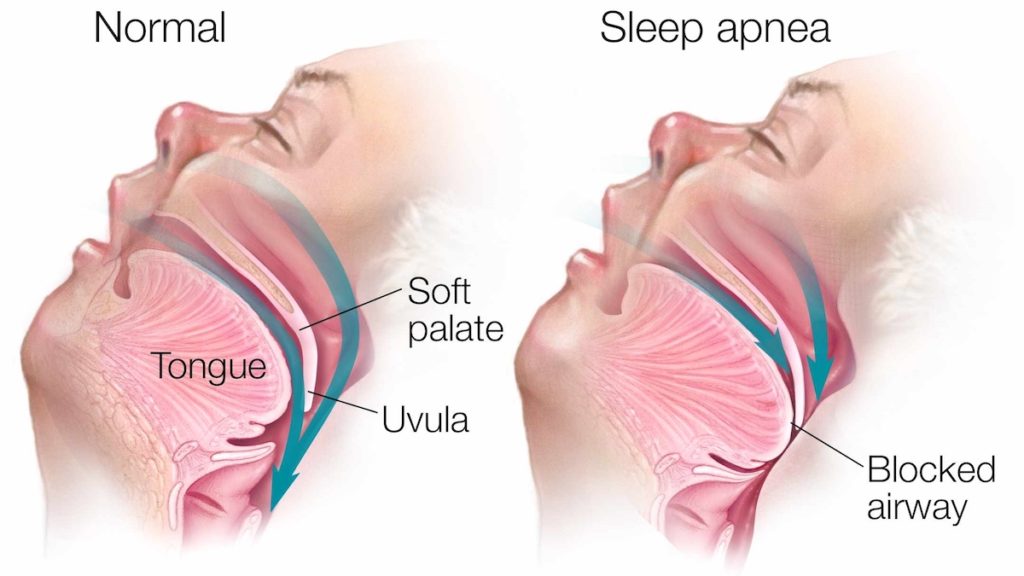
The roof of your mouth is called the palate, but it isn’t one uniform piece of tissue. The firm front part, supported by bone, is the hard palate. Behind it, the soft, muscular part with no bone is the soft palate.
Run your tongue along the roof of your mouth: it feels hard for a while behind your front teeth, then suddenly turns soft. Where it turns soft is where the soft palate begins. At its rear edge hangs the small projection you can see at the back of the throat in a mirror: the uvula, commonly called the “dangly bit” at the back of the throat.
The diagram below shows how these parts are positioned.

What Does the Soft Palate Do?
The soft palate isn’t just a part that causes snoring. It has important jobs of its own. The best known is that when you swallow food or drink, the soft palate lifts and closes off the passage between the nose and the throat (the nasopharynx). This is what keeps food and liquid from going up into your nose. If you’ve ever choked on a drink and felt water come out of your nose, you’ve experienced a moment when this closure didn’t work properly.
The soft palate also takes part in speech, helping you switch between sounds that pass through the nose, such as “n,” and sounds that don’t.
Why the Soft Palate Is the Source of Snoring
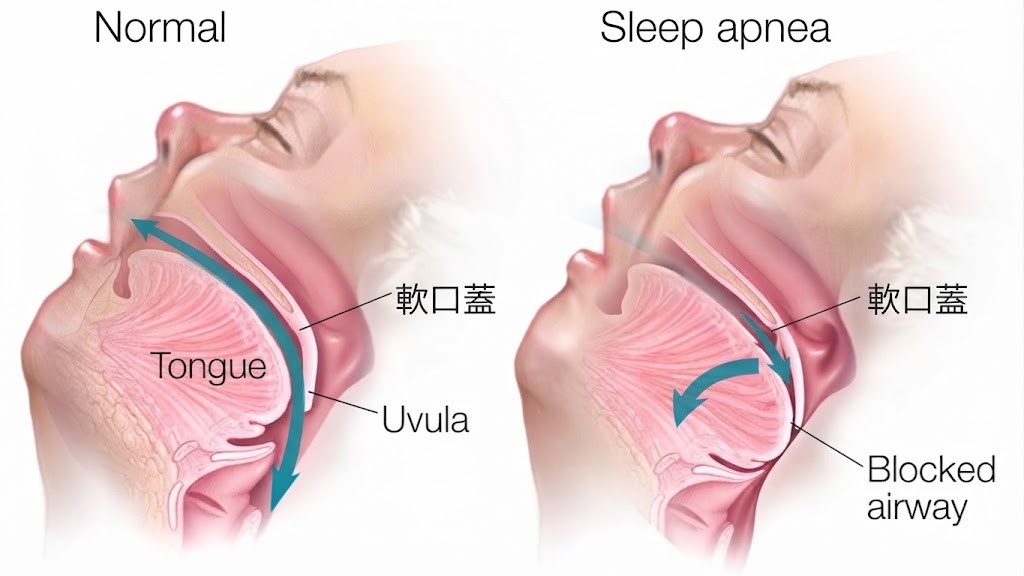
While you’re awake, the surrounding muscles keep the soft palate at a suitable tension. During sleep, that muscle tension drops, and the tissue around the soft palate and uvula slackens.
A slack soft palate partly narrows the airway. As air passes through the narrowed gap, the surrounding lining vibrates in small, rapid flutters, and that vibration is what we hear as snoring. It’s similar to the way a thin membrane in a whistle vibrates in the airflow and makes a sound. Medical references describe snoring in the same terms: airflow-induced flutter of soft tissue, particularly the soft palate.
The sound doesn’t always come from just one place.
The soft palate and uvula are the typical sources, but the airway can also narrow because the base of the tongue sinks back, and several factors can combine. The article below covers the structural causes of snoring more broadly.
The Main Reasons the Soft Palate Loosens
The following factors affect how easily the soft palate slackens.
| Factor |
What happens |
| Aging |
Muscle strength around the area declines, and the tissue as a whole slackens more easily |
| Fat deposition |
Weight gain adds fat around the soft palate and throat, making the tissue thicker and more likely to press on the airway (see Obesity and Snoring) |
| Alcohol |
Alcohol relaxes muscle tone, so the soft palate slackens more than usual (see Alcohol & Snoring) |
| Lying on your back, mouth breathing |
Gravity pulls tissue backward, narrowing the airway further (see Why Side-Sleeping Stops Some People’s Snoring) |
Ways to Address the Soft Palate
There are several options for a slack soft palate. Some studies report that exercises moving the tongue and throat muscles can reduce how often and how loudly people snore. In a small randomized trial, for example, snoring indices measured objectively fell in people with primary snoring or mild-to-moderate sleep apnea who did oropharyngeal exercises for three months. However, results vary between people, the exercises need to be done consistently, and when the soft palate itself is quite slack, training alone may not give enough change. For more on training, see the article below.
A more direct approach is laser treatment that tightens the tissue around the soft palate and uvula. At our clinic we offer “Dual Deep Thermia,” a procedure aimed at this tissue and designed to act directly on the part that is slackening. (For context, a small sham-controlled trial of a different non-ablative Er:YAG laser device in 40 adults with primary snoring or mild sleep apnea reported less snoring on bed-partner ratings three months after three sessions. Larger, longer-term controlled studies are still lacking, and some people do not benefit.) For details on our laser treatment, see this article.
There are also surgical options that cut away or reshape the soft palate or surrounding tissue (palatal surgery), but these place more burden on the body and make it more important to judge carefully who is a suitable candidate. See our article on snoring surgery for the types, benefits, and risks. Whichever approach you consider, reducing snoring can also hide a breathing problem, and the American Academy of Sleep Medicine has noted this risk in the case of laser-assisted uvulopalatoplasty, so we recommend that evaluation by testing comes first. (See Do You Need a Sleep Study Before Laser Snoring Treatment?)
What Ueno Snoring Clinic Can Do
Ueno Snoring Clinic is a sleep-disorder clinic specializing in snoring and sleep apnea. After checking the condition of your soft palate and uvula, we guide you through a wide range of options, from laser treatment that tightens the tissue to CPAP and other treatments aimed at the root cause.
If you’d like to know exactly what is causing your snoring, or you want to tighten the soft palate at its source, please feel free to get in touch.
Summary: The Sound of Snoring Comes From the Soft Palate
The soft palate is the soft, muscular tissue at the rear of the roof of your mouth, with the uvula hanging from its tip. During sleep this area slackens and vibrates with each breath, producing the sound of snoring.
Aging, fat deposition, alcohol, and sleeping on your back all contribute to the slackening. Training may bring some improvement in some cases, but when the slackening is pronounced, treatment that tightens the tissue itself is a more direct approach. Whatever you choose, start by checking your condition with a test.
Have Your Soft Palate Checked
We’ll start with testing to see which treatment suits you, and guide you carefully from there. By appointment only; same-day appointments are often available.
Frequently Asked Questions
Q. Where is the soft palate?
A. It’s the soft part at the back of the roof of your mouth, behind the hard palate at the front. If you run your tongue along the roof of your mouth, you can feel the spot where it turns from hard to soft.
Q. Will training the soft palate improve snoring?
A. Some studies report that exercises for the tongue and throat muscles reduce how often and how loudly people snore. Results vary between people, though, and if the soft palate is very slack, training alone may not give enough change.
Q. What is soft palate surgery (palatal surgery)?
A. It’s an operation that cuts away or reshapes tissue such as the soft palate and uvula. It places more burden on the body, so choosing the right candidates is important. We recommend checking your condition with a test and considering it alongside less burdensome options.
Q. Does a long uvula make you more likely to snore?
A. A long or large uvula can contribute to snoring. But slackening of the soft palate as a whole and other factors are involved too, so you can’t judge from the look of the uvula alone.
*This article is a general explanation, written for a broad audience and based on the sources above together with our clinic’s own clinical experience. It is not a substitute for medical advice. Treatment suitability and results vary from person to person. If you are concerned about snoring or sleep apnea, please consult a medical institution for a proper evaluation.