Ueno Snoring Clinic offers a range of options depending on your condition, including insurance-covered sleep testing and CPAP management, and self-pay snoring laser treatment and masseter botulinum toxin injections. If you’d like to find out which treatment suits you, please start with an initial consultation.
Details of the tests and treatments offered at Ueno Snoring Clinic can be found here
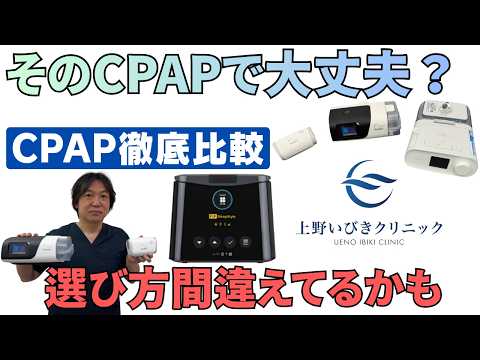
You’ll Want to Know This! A Complete Comparison of 5 CPAP Types — What Doctors Really Look For
Our doctor compares five different CPAP machines side by side and explains what actually matters when choosing one.
Watch the video
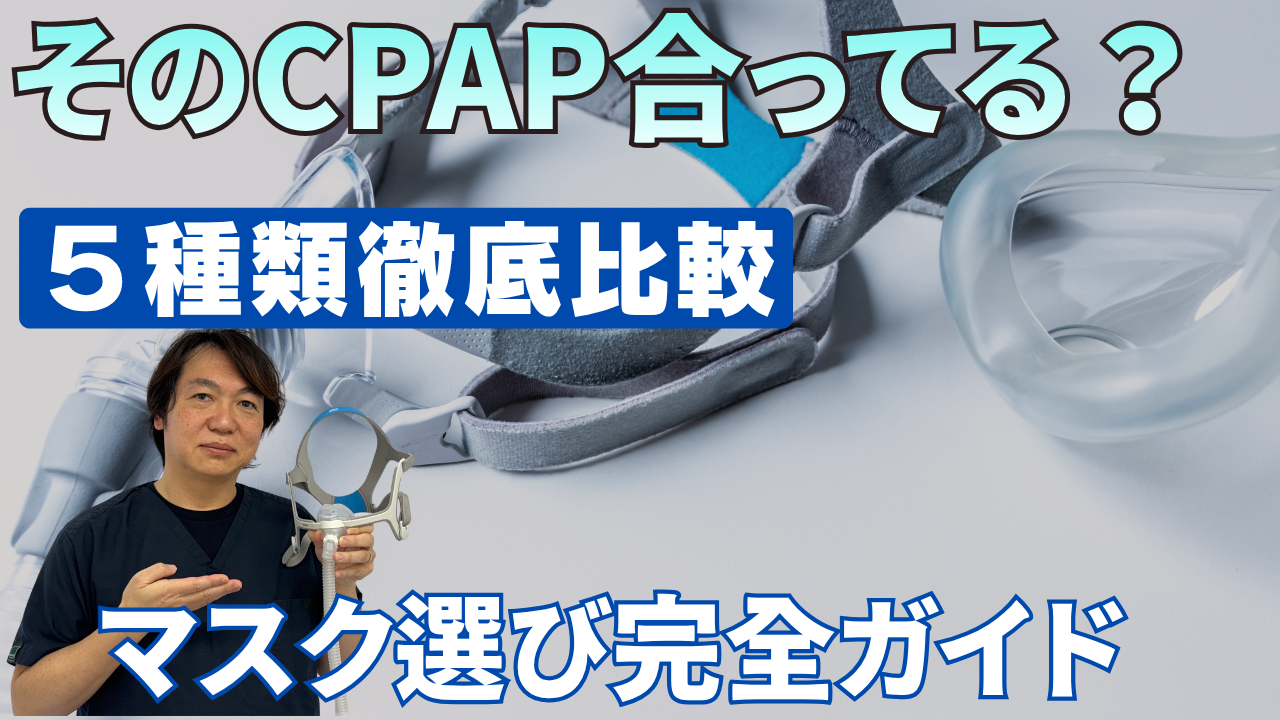
A Complete Comparison of CPAP Masks
We tried on and reviewed five different types of CPAP masks. 90% of CPAP comfort comes down to the mask.
Watch the video
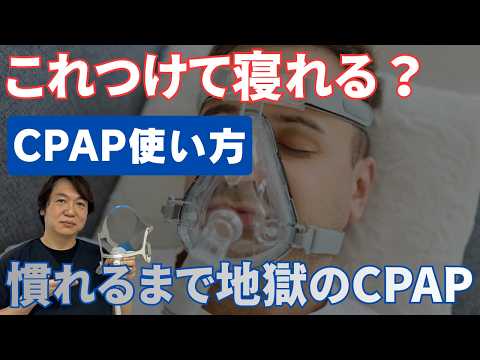
Do you have to use CPAP forever? A specialist explains how to use CPAP
A detailed explanation of how to use CPAP, with a real demonstration of what it feels like to wear the device.
Watch the video
Ueno Snoring Clinic was featured on Fuji TV’s “Live News It!” and on FNN Prime Online
Watch our clinic’s examination and explanation of sleep disorders, snoring, and sleep apnea.
Watch the video
Ueno Snoring Clinic was featured in an article on Nippon TV’s “news every.”
Please take a look as a starting point for thinking about getting evaluated for snoring, sleep apnea, or other sleep disorders.
Read the article
Reviewed by Our Director
Kazuyuki Sugaya
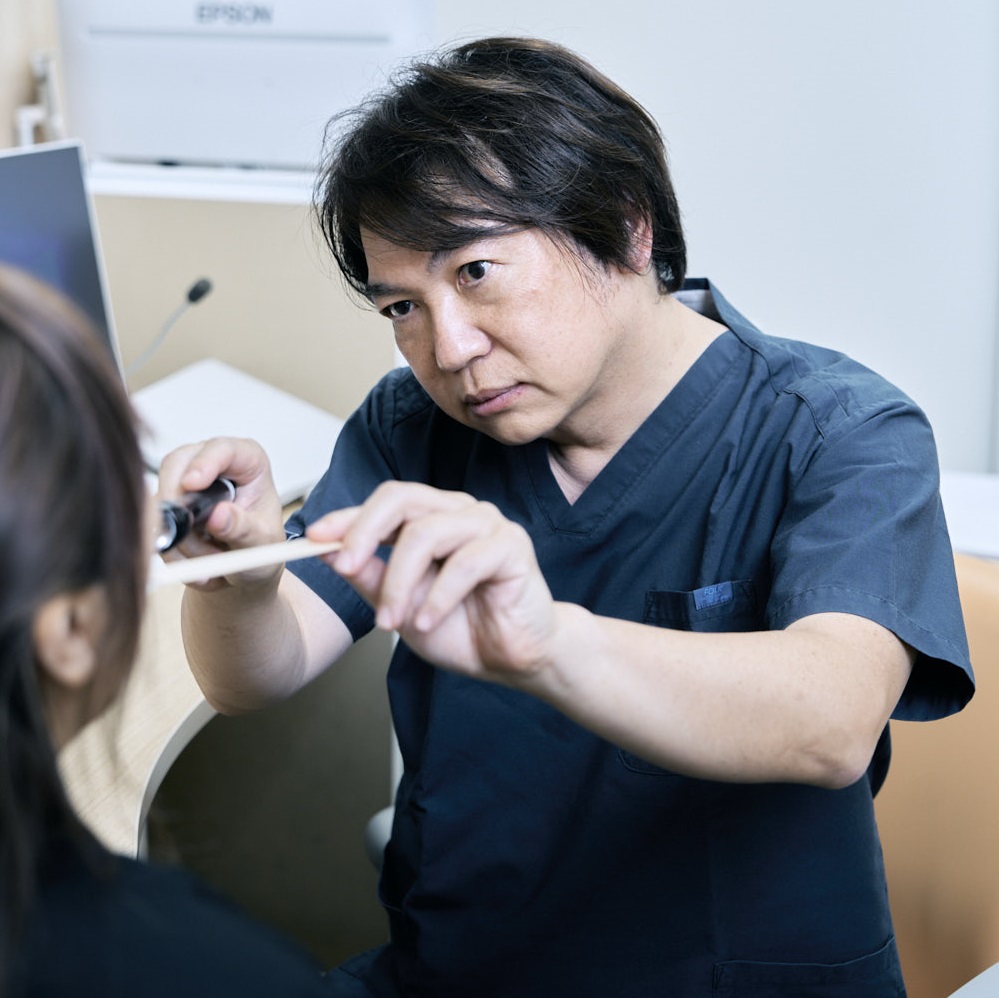
Director, Ueno Snoring Clinic / Anesthesiologist
Our director, with over 20,000 general anesthesia cases, focuses primarily on the diagnosis and treatment of snoring and sleep apnea, offering care tailored to each patient. [Insurance-Covered] Ueno Snoring Clinic
In this article, our Director, Kazuyuki Sugaya, explains the causes of teeth grinding and clenching, their relationship with snoring and sleep apnea, the effects and risks of masseter botulinum toxin injections, and how to think about combining treatments.
🩺Comprehensive Snoring Treatment at Ueno Snoring Clinic
At Ueno Snoring Clinic, we propose a plan suited to your condition, from testing for snoring and sleep apnea to easing the strain that grinding and clenching put on the masseter muscles.
Insurance-Covered: Thorough Testing and Ongoing Treatment
- Simplified testing: Home screening for sleep apnea
- PSG testing: A detailed sleep study including brain waves, done at home
- CPAP treatment: The standard treatment for apnea that meets insurance criteria
Self-Pay: Address the Root Cause, Short-Term Focus
- Snoring laser treatment: For people whose testing confirms simple snoring
- Medically supervised weight loss: An option when weight gain is a contributing factor
- Masseter botulinum toxin injections: An option to ease muscle strain from grinding and clenching
*We decide on a treatment plan after testing to check whether sleep apnea is hidden behind your grinding or clenching.
Our Director’s book, “Curing Snoring with the Latest Treatments” (an Amazon Japan bestseller — #1 in General Medicine, #1 in Clinical Internal Medicine, #2 in Family Health & Wellness), also explains how sleep, breathing, and snoring are connected.
New Book by Our Director
“Curing Snoring with the Latest Treatments”
A guide to the latest snoring treatments, written by an anesthesiologist who has overseen the sleep of more than 10,000 patients.
View on Amazon
Quick Answer
A large study found that about half of adults with sleep apnea also had sleep bruxism (grinding or clenching during sleep). Masseter botulinum toxin injections reduce the output of the chewing muscles, easing the strain on the jaw and teeth. The effect typically lasts about 3–6 months and is not permanent. Evidence that the injections reduce the number of grinding episodes themselves is still limited. That is why it matters to combine treatments: a night guard to protect the teeth, and testing and treatment for snoring and sleep apnea.
📋 What This Article Covers
- Are grinding and clenching linked to snoring and sleep apnea?
- Masseter botulinum toxin: how it works and what research shows
- What the treatment involves, and when you may notice effects
- Side effects, risks, and who should not have it
- The effect is not permanent: repeat treatment and costs
- Is Botox alone enough? A combined approach
Are Grinding and Clenching Linked to Snoring and Sleep Apnea?
Bruxism includes daytime clenching and grinding or clenching during sleep (sleep bruxism). Because you can’t notice it while asleep, symptoms often progress without you being aware of the habit itself.
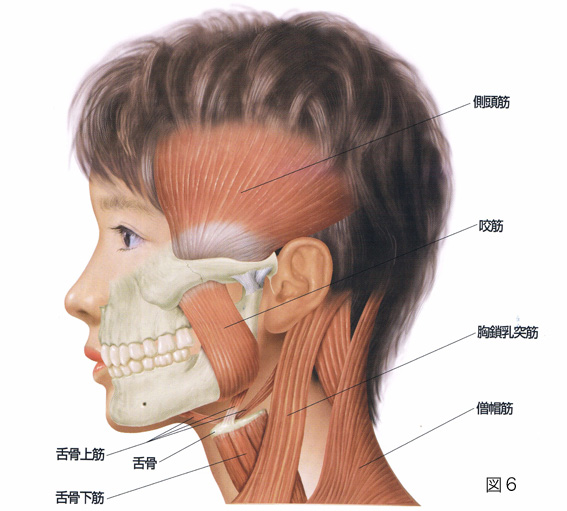
When clenching continues through the night, the masseter, the main muscle that generates biting force, becomes tense and hard. This can lead to problems such as:
| Common symptom |
What it’s like |
| Tired, heavy jaw in the morning |
Stiffness or fatigue in the jaw on waking |
| Pain at the temples, tension-type headache |
Tension in the temporal and masseter muscles can show up as headache |
| Worn, chipped, or sensitive teeth |
Strong forces act on the teeth again and again |
| Broken fillings or crowns |
Stress concentrates in the same spots |
| Worsening jaw joint (TMJ) problems |
Strain on the jaw joint and muscles builds up |
So how is bruxism related to snoring and sleep apnea? In a study of 914 adults with sleep apnea examined by polysomnography (PSG), 49.7% also had sleep bruxism. In other words, among people with snoring and sleep apnea, it is not unusual to find grinding as well.
Treating apnea won’t necessarily stop the grinding
The same study found no direct association between the jaw-muscle activity of bruxism and the severity of apnea (AHI). On the other hand, about 86% of that muscle activity occurred around the same time as brief awakenings from sleep (arousals). Bruxism and apnea often occur together, but treating one does not guarantee that the other will resolve.
That is why it’s important to think about both treating the grinding and testing for snoring and sleep apnea. For more on testing, see Simplified Sleep Test vs. PSG; for what counts as severe apnea, see Severe Sleep Apnea (AHI 30+).
Masseter Botulinum Toxin: How It Works and What Research Shows

Many people associate Botox with cosmetic wrinkle treatment. In fact, botulinum toxin has long been used as a medicine for nerve and muscle conditions such as blepharospasm, hemifacial spasm, cervical dystonia (torticollis), and overactive bladder. In aesthetic medicine, injections into the masseter have also been used for many years to slim the jawline.
The basic mechanism is to temporarily block the “contract” signal sent from nerves to muscles, reducing excessive muscle contraction. For bruxism, small amounts are injected into the masseter, the muscle that bulges at the angle of the jaw when you clench hard.
How far has research established its effect on bruxism? A recent systematic review and meta-analysis (five placebo-controlled trials, 101 participants) summarized the evidence as follows.
| What was measured |
What we know |
| Masseter muscle activity (EMG) |
Reported to decrease with botulinum toxin (certainty of evidence: low to moderate) |
| Frequency and symptoms of grinding (questionnaires, clinical assessment) |
Only 1 of 6 studies showed a clear benefit; certainty of evidence: very low |
| Safety |
Mild, temporary side effects were reported, with no serious events (but follow-up was short, from 2 weeks to 6 months) |
Another systematic review reported that botulinum toxin reduces biting force and pain, with effects appearing within 4 weeks, peaking at around 5–8 weeks, and lasting up to about 24 weeks. The same review noted that the benefit fades over time and that oral splints had a more lasting effect after 9–12 weeks. Effects beyond 24 weeks, and results after repeated injections, are not yet known.
This is not a “stop grinding” treatment
What current evidence supports is that Botox weakens the masseter and eases the strain on the jaw and teeth. It has not been reliably shown to stop grinding itself or reduce how often it happens. Individual responses also vary widely, so how much difference you feel will differ from person to person.
What the Treatment Involves, and When You May Notice Effects
The procedure is simple: several small injections into the masseter on each side. It takes only a few minutes, and the discomfort is usually tolerable without anesthesia. Changes don’t appear immediately; the typical course is as follows.
| Timing |
Typical course |
| Right after to a few days |
Little change is felt at first. Swelling or bruising may appear but usually fades within a few days |
| From about 3–7 days |
Some people begin to feel that their clenching is lighter |
| From about 2–4 weeks |
The effect strengthens; research suggests a peak at around 5–8 weeks, with individual variation |
| About 3–6 months |
The effect continues gradually, then slowly wears off |
Some people worry that they won’t be able to chew. In practice, normal eating is rarely affected; most people only find hard foods a little harder to chew. As muscle tension eases, some people notice less morning jaw stiffness, less discomfort in the jaw joint, and fewer tension-type headaches. Some also notice a side benefit: as the masseter relaxes, the jawline can look slimmer.
Side Effects, Risks, and Who Should Not Have It
Swelling or bruising may appear after the injections, but it usually fades within a few days, and you can generally go about your day as normal. Less commonly, people notice:
- Tenderness at the injection sites
- A temporary feeling that biting force is weaker
- Mild unevenness, such as a slightly asymmetric smile
Most of these are temporary, though how they appear varies from person to person. If anything concerns you, please contact us early.
When we generally do not give this treatment
As a rule, we do not give this treatment during pregnancy or breastfeeding. If you have a nerve or muscle condition such as myasthenia gravis, have had an allergic reaction to botulinum toxin in the past, or take any regular medication, please be sure to tell the doctor beforehand.
The Effect Is Not Permanent: Repeat Treatment and Costs
The effect of Botox is not permanent. Nerve endings regrow over time, so keeping things comfortable depends on repeat injections every few months.
| Item |
Details |
| Type of care |
Self-pay (not covered by health insurance) |
| How long it lasts |
About 3–6 months as a guide (varies between individuals) |
| Repeat injections |
Considered every few months, as the effect begins to fade |
| Typical cost |
A common guide is around ¥30,000–¥60,000 per session for both masseters (varies with the dose used and each clinic’s policy) |
In Japan, treating bruxism is not among the approved uses of botulinum toxin, so it is offered as self-pay care. For our clinic’s fees and the product we use, please see our English website or ask us at your consultation.
Is Botox Alone Enough? A Combined Approach
Botox is a useful option, but symptoms tend to be more stable when it is combined with other measures than when it is used alone. At our clinic, we explain the three parts using the analogy of “protective gear,” “engine tuning,” and “road repair.”
| Role |
Treatment |
Purpose |
| Protective gear |
A night guard (made by a dentist) |
Physically protects the teeth from wear and chipping |
| Engine tuning |
Masseter botulinum toxin injections |
Reduces biting force itself, lowering the strain on muscles and joints |
| Road repair |
Testing and treatment for snoring and sleep apnea (sleep position, weight management, keeping the nose clear, CPAP, upper-airway treatment, and more) |
Reduces nighttime arousals and mouth breathing, creating conditions in which grinding is less likely |
Check for apnea before getting a night guard
Night guards are important for protecting the teeth. However, a small randomized crossover study in people with sleep apnea found that apnea became slightly worse with a stabilization splint (10 patients; AHI rose by an average of 1.4 events per hour, a small effect the authors considered of limited clinical relevance). If snoring or apnea is suspected, we recommend checking with a sleep test first.
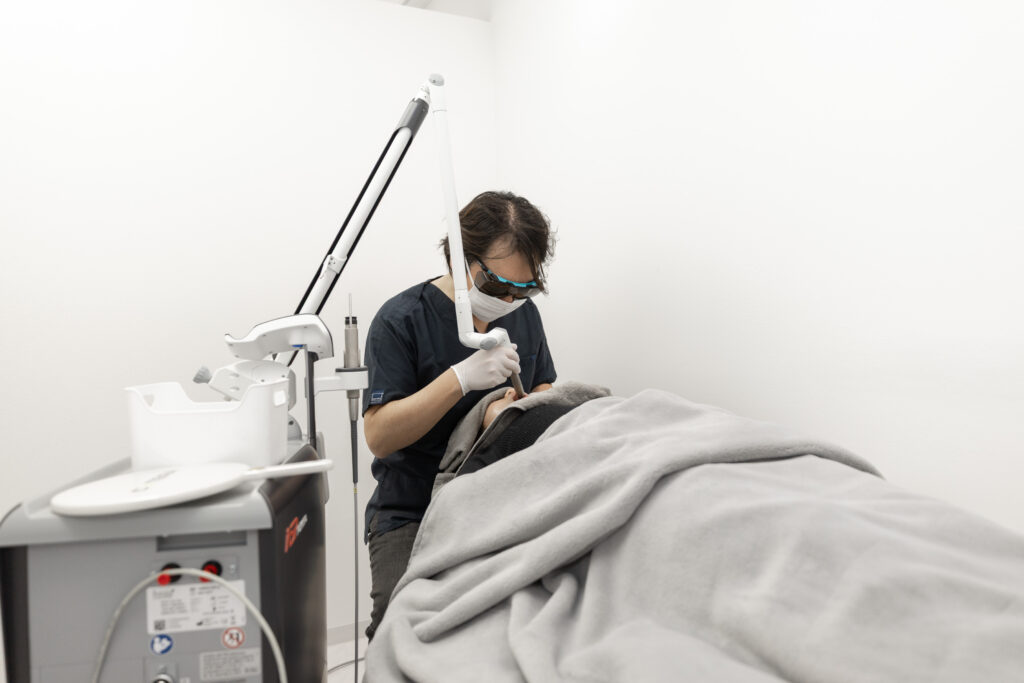
When snoring or apnea is part of the picture, we may also combine treatment of the upper airway, such as snoring laser treatment (Dual Deep Thermia). Improving breathing during sleep may reduce nighttime arousals and help grinding settle, but it will not necessarily stop grinding. For how the laser works, see Why Throat Laser Treatment Works for Snoring.
What Ueno Snoring Clinic Can Do
Ueno Snoring Clinic is a sleep-disorder clinic specializing in snoring and sleep apnea. We check for snoring and apnea with simplified testing you can do at home and with insurance-covered PSG (a detailed sleep study). Then we propose a plan that suits your condition, from insurance-covered CPAP to self-pay snoring laser treatment and masseter botulinum toxin injections.
If your jaw keeps bothering you in the morning, a mouthguard alone hasn’t helped, or you’ve also been told you snore or stop breathing, please feel free to talk to us.
Summary: Look at Sleep and Breathing, Not Just the Teeth
Grinding and clenching are connected to sleep and breathing; about half of people with sleep apnea also have sleep bruxism. Masseter botulinum toxin injections reduce the output of the chewing muscles and ease the strain on the jaw and teeth, with an effect lasting about 3–6 months. The effect is not permanent, and evidence that it reduces how often you grind is still limited.
That is why a combined approach matters: protecting the teeth with a night guard, easing muscle strain with Botox, and testing and treating snoring and sleep apnea at the same time. At our clinic, we recommend a plan tailored to you, based on your test results.
Let’s Find the Cause of Your Grinding and Snoring Together
If you have a tired jaw in the morning, have been told you grind your teeth, or are concerned about snoring or apnea, start with testing and a consultation. By appointment only; same-day appointments are often available.
Frequently Asked Questions
Q. How is Botox used for teeth grinding and clenching?
A. Botox (botulinum toxin) is a medicine that temporarily blocks signals from nerves to muscles, weakening the muscle. For grinding and clenching, small amounts are injected into the masseter to ease the strain caused by biting force. It is not a treatment that stops grinding itself; it reduces the load on the jaw and teeth.
Q. How long does the effect of Botox last?
A. About 3–6 months is a common guide, and it is not permanent. Research reports that effects appear within 4 weeks, peak at around 5–8 weeks, and last up to about 24 weeks. Staying comfortable depends on repeat injections every few months.
Q. Will Botox cure my teeth grinding?
A. It has been shown to lower masseter muscle activity, but evidence that it reduces the frequency or symptoms of grinding is not yet sufficient. Think of it not as a treatment that stops grinding, but as one that eases the strain on the muscles and teeth. Combining it with a night guard and measures for snoring and apnea is important.
Q. Is teeth grinding related to snoring and sleep apnea?
A. In a study of 914 adults with sleep apnea, 49.7% also had sleep bruxism. However, no direct association was found between the jaw-muscle activity of bruxism and apnea severity (AHI). They often occur together, but treating one does not guarantee the other will resolve.
Q. Is it safe to use a night guard?
A. A night guard is important for protecting the teeth, but a small study reported that apnea became slightly worse in people with sleep apnea who used one. If snoring or apnea is suspected, we recommend checking with a sleep test first.
Q. How much does it cost? Is it covered by insurance?
A. Masseter botulinum toxin injections are self-pay and not covered by insurance. A common guide is around ¥30,000–¥60,000 per session for both masseters, though this varies with the dose and each clinic’s policy. For our fees, please check our English website or ask us.
*This article is a general explanation, written for a broad audience and based on the sources above together with our clinic’s own clinical experience. It is not a substitute for medical advice. Treatment suitability, effects, and side effects vary from person to person. If you are concerned about teeth grinding, snoring, or sleep apnea, please consult a medical institution for a proper evaluation.






いびきを最新治療で治す-表紙-1.png)