Ueno Snoring Clinic offers a range of options depending on your condition, including insurance-covered sleep testing and CPAP management, and self-pay snoring laser treatment. If you’d like to find out which treatment suits you, please start with an initial consultation.
Details of the tests and treatments offered at Ueno Snoring Clinic can be found here
Important: Snoring and Sleep Apnea Treatment Requires a Sleep Test
Some clinics that offer only self-pay care, and some cosmetic clinics, may not perform sleep testing. Before starting treatment, check whether the clinic performs a sleep test, or has a system for referring you to a medical institution where you can receive the necessary tests.
If sleep apnea is hidden behind your snoring and treatment begins without testing, it may be missed.
▶ Learn more about snoring and sleep apnea testing
You’ll Want to Know This! A Complete Comparison of 5 CPAP Types — What Doctors Really Look For
Our doctor compares five different CPAP machines side by side and explains what actually matters when choosing one.
Watch the video
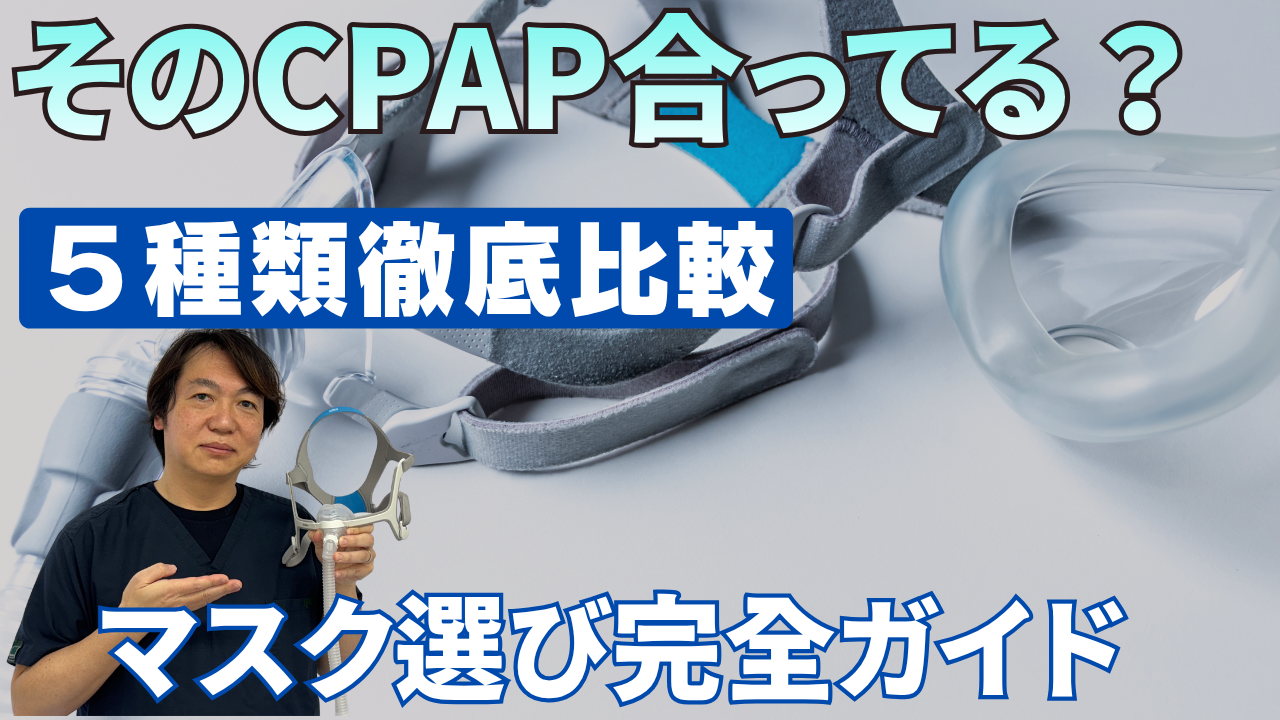
A Complete Comparison of CPAP Masks
We tried on and reviewed five different types of CPAP masks. 90% of CPAP comfort comes down to the mask.
Watch the video
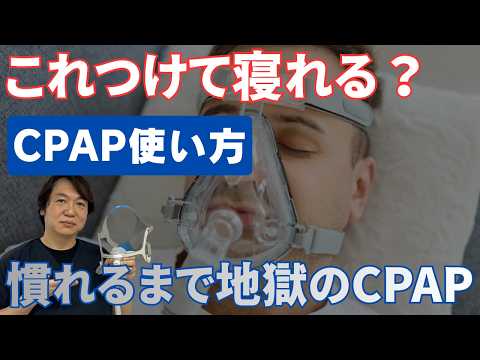
Do you have to use CPAP forever? A specialist explains how to use CPAP
A detailed explanation of how to use CPAP, with a real demonstration of what it feels like to wear the device.
Watch the video
Ueno Snoring Clinic was featured on Fuji TV’s “Live News It!” and on FNN Prime Online
Watch our clinic’s examination and explanation of sleep disorders, snoring, and sleep apnea.
Watch the video
Ueno Snoring Clinic was featured in an article on Nippon TV’s “news every.”
Please take a look as a starting point for thinking about getting evaluated for snoring, sleep apnea, or other sleep disorders.
Read the article
Reviewed by Our Director
Kazuyuki Sugaya
Director, Ueno Snoring Clinic / Anesthesiologist
Our director, with over 20,000 general anesthesia cases, focuses primarily on the diagnosis and treatment of snoring and sleep apnea, offering care tailored to each patient. [Insurance-Covered] Ueno Snoring Clinic
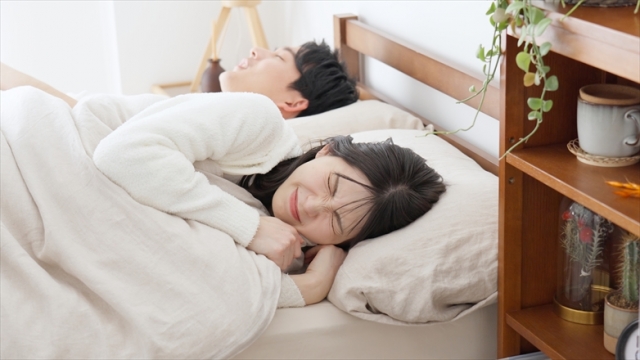
In this article, our Director, Kazuyuki Sugaya, explains how snoring affects the sleep of the person sharing the bedroom and the relationship itself (“snoring harassment”), and how to move forward, including testing and treatment.
🩺Comprehensive Snoring Treatment at Ueno Snoring Clinic
At Ueno Snoring Clinic, we use testing to check whether apnea lies behind your snoring, then propose a treatment plan that fits your results, symptoms, and daily life.
Insurance-Covered: Thorough Testing and Ongoing Treatment
- Simplified testing: Home screening for sleep apnea
- PSG testing: A detailed sleep study including brain waves, done at home
- CPAP treatment: The standard treatment for apnea that meets insurance criteria
Self-Pay: Address the Root Cause, Short-Term Focus
- Snoring laser treatment: For people whose testing confirms simple snoring
- Medically supervised weight loss: An option when weight gain is a contributing factor
*Suitability and the improvement you can expect vary from person to person, so an assessment at a consultation comes first.
Our Director’s book, “Curing Snoring with the Latest Treatments” (an Amazon Japan bestseller — #1 in General Medicine, #1 in Clinical Internal Medicine, #2 in Family Health & Wellness), also explains how snoring affects the people around you.
New Book by Our Director
“Curing Snoring with the Latest Treatments”
A guide to the latest snoring treatments, written by an anesthesiologist who has overseen the sleep of more than 10,000 patients.
View on Amazon
Quick Answer
“Ibihara” (snoring harassment) is a Japanese term for loud snoring that disrupts the sleep of someone sharing the same space. The person snoring means no harm and is unaware of it, but the person on the receiving end can suffer not only from lost sleep but also from daytime problems and less emotional reserve. Because snoring bad enough to trouble your family can be a sign of sleep apnea, it’s worth treating it as a signal from the body rather than just a noise problem. One study found that sleeping in a separate room did not reduce the partner’s health complaints. The realistic first step is to talk about it as a shared problem, without blame, and to check the snorer’s condition with a sleep test.
📋 What This Article Covers
- What is “snoring harassment,” and why does it happen?
- The harm to the partner goes beyond lost sleep
- “Just wake me up” doesn’t solve it
- Snoring may be a signal from the body, not just a noise
- Three triggers that strain a relationship
- Does sleeping in separate rooms solve it? What research shows
- Making it a shared problem: how to bring it up
- Tackling snoring with a plan, not willpower
What Is “Snoring Harassment,” and Why Does It Happen?
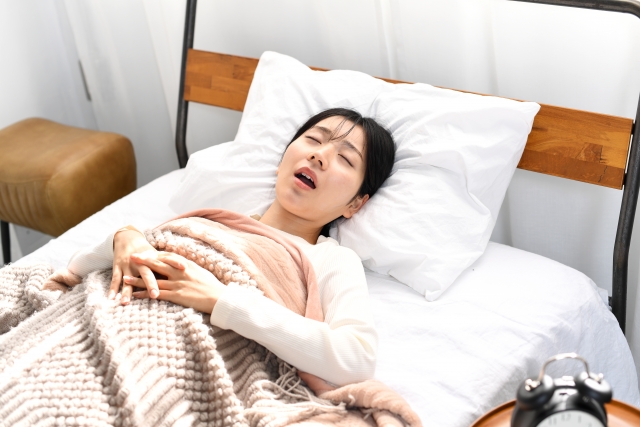
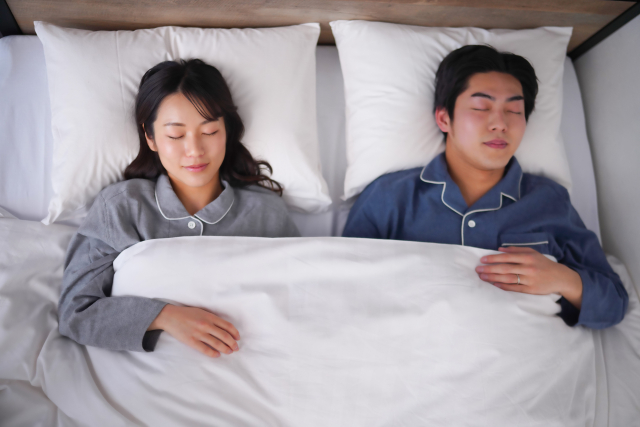
“Here it goes again…” A few minutes after the lights go out, a low, heavy rumble starts up beside you. At first it seemed like heavy breathing, but before long it has become a nightly ritual, a noise that steals your sleep. Waking your partner doesn’t stop it, or it stops and soon starts again. They are completely unaware, while your exhaustion keeps piling up. Does that sound familiar?
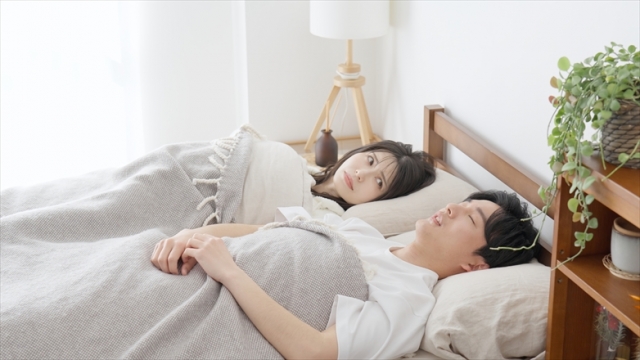
The definition is simple: loud snoring that disrupts someone else’s sleep. It can happen in any relationship where people sleep in the same space, whether spouses, partners, family members, or parents and children. But the distress it causes is anything but simple.
| Item |
Details |
| Meaning |
Loud snoring that disrupts the sleep of someone sharing the same space |
| Where it happens |
Between spouses, partners, family members, or parents and children sleeping in the same or nearby rooms |
| The person snoring |
Usually unaware, with no ill intent |
| The person affected |
May experience lost sleep, daytime problems, irritability, and less emotional reserve |
| Possible causes |
Tiredness, alcohol, weight gain, sleeping on the back, a blocked nose, and sometimes hidden sleep apnea |
Note that “ibihara” is an everyday expression in Japan, not a legally defined term. Here, we use it to mean sleep disruption caused by snoring.
The Harm to the Partner Goes Beyond Lost Sleep
The person snoring is almost always unaware of it. Precisely because there is no ill intent, raising it the wrong way can easily derail a conversation between partners. Meanwhile, the harm to the person on the receiving end goes beyond simple sleep loss:
- Trouble falling asleep, light sleep, waking repeatedly during the night
- A heavy head, poor concentration, and irritability the next day
- Lower performance in housework, childcare, or work
- Running out of energy by evening, and smiling less
- Anger that’s hard to contain, even while telling yourself “it’s not their fault”
Sleep is emotional reserve. When sleep is cut short, people struggle to be kind even to those they want to be kind to. Small comments turn into arguments, conversation dwindles, bedrooms are split, physical closeness fades, and the relationship cools. People often say “it’s only snoring,” but because it happens every night, it builds up and can shake the foundations of a relationship.
Research outside Japan has looked at the sleep and health of people living with snorers.
| Study |
What it found |
| Swedish study (Ulfberg et al., 2000) |
Women living with a heavy snorer (351) reported roughly twice as many problems falling and staying asleep, as well as excessive daytime sleepiness and fatigue, compared with other women (728), along with more morning headaches |
| Mayo Clinic study (Parish and Lyng, 2003) |
After patients with obstructive sleep apnea were treated with CPAP for 6 weeks, their 54 bed partners showed improvements in quality of life, including vitality, social functioning, and mental health |
Both are overseas studies with different populations and conditions, so the same results won’t necessarily apply to every household. Still, they show that snoring is not just the snorer’s problem.
“Just Wake Me Up” Doesn’t Solve It
Here is a common mismatch:
Wife: “You were so loud I couldn’t sleep at all!” / Husband: “Then just wake me up. Why are you angry?”
Both sides have a fair point, which is exactly why the conversation goes nowhere.
For the person doing the waking, getting up again and again in the middle of the night, when all they want is to sleep, is already a heavy burden. And snoring often returns within minutes, which turns into a sense of futility: “How many times do I have to wake him?” On top of that, they know he isn’t doing it on purpose. They understand that in their head, yet still feel irritated, and the guilt that follows leads many to wonder, “Am I being unreasonable?”
This tangle between logic and feelings is what makes communication between partners so difficult. Waking the snorer may buy a little time, but it does nothing about the cause.
Snoring May Be a Signal From the Body, Not Just a Noise
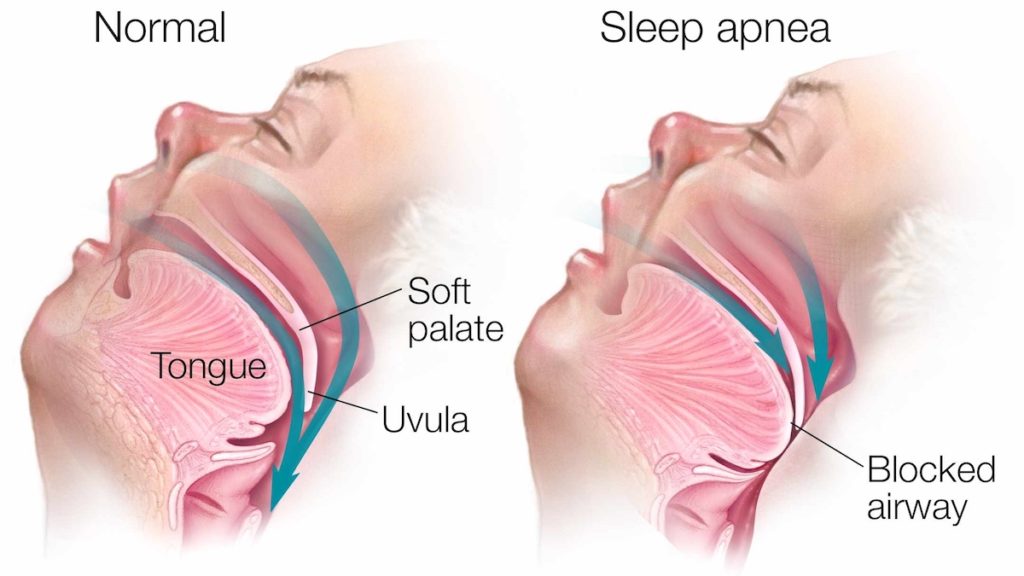
Snoring happens when the upper airway narrows and its lining and soft tissue vibrate. It is made worse by a combination of factors such as tiredness, alcohol, weight gain, sleeping on the back, and a blocked nose.
Crucially, sleep apnea (in its obstructive form, OSA) can lie behind snoring. In OSA, breathing repeatedly stops or becomes shallow during sleep; besides daytime sleepiness, it is considered linked in the long term to the risk of lifestyle-related and cardiovascular disease. The point is not to cause alarm, but to recognize that snoring bad enough to trouble your family may be a warning from the body.
And it isn’t only the partner who loses sleep. The snorer’s own sleep may be broken up by apnea and irregular breathing, so they may not be sleeping well either. Both partners can end up short of sleep, with their health suffering as a result.
| If you notice this, get tested early |
What it may mean |
| Someone has noticed you stop breathing in your sleep |
A possible sign of sleep apnea |
| Snoring has suddenly become louder or worse |
Weight gain, alcohol, nasal problems, or worsening apnea |
| Not feeling rested, or waking with a headache or dry mouth |
Poor sleep quality |
| Strong daytime sleepiness, at work or while driving |
Sleep loss, or sleep broken up by apnea |
| High blood pressure, weight gain, a thicker neck |
Risk factors for apnea |
Snoring can spark arguments between partners, and it can also be a sign of an underlying health issue. For the sake of the relationship and the snorer’s health, it’s best not to ignore it. For the apnea index, see What Is AHI?
Three Triggers That Strain a Relationship
When snoring harassment becomes serious, three triggers come up again and again.

| Trigger |
What tends to happen |
What helps |
| 1) The conversation starts with blame |
When you’re short of sleep, words get harsh. “You’re so loud,” “That’s enough,” “Go sleep in the other room”: even if true, these put the other person on the defensive |
Talk about what is happening and how you feel (“I can’t sleep, and it’s hard”), not about their character |
| 2) Only quick fixes are tried |
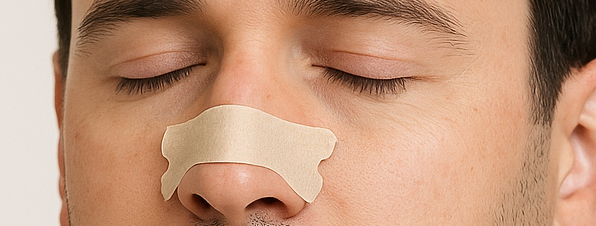
Nasal strips, pillows, side-sleeping, and separate rooms can help, but if the cause remains, they hit a limit, and disappointment builds: “We tried, and it didn’t work” |
Check the cause, including whether there is apnea, with a test |
| 3) Separate bedrooms become emotional distance |
Sleeping apart to protect sleep isn’t wrong in itself, but without explanation and agreement, it can feel like isolation or rejection |
Make clear “I’m not trying to avoid you,” and decide together |
Does Sleeping in Separate Rooms Solve It? What Research Shows
Sleeping in separate rooms to protect sleep is a realistic choice. But it doesn’t necessarily solve the problem on its own.
In the Swedish study mentioned above, women living with a heavy snorer were more likely to sleep in a separate room than the comparison group (reported as about 38% versus 11%). Yet the researchers reported that sleeping in another room did not reduce their health complaints.
Why separate rooms often don’t solve it
- Even in another room, tension (“Will I hear it again?”) and worry about the family member’s health tend to remain.
- If apnea lies behind the snoring, the snorer’s health problem remains, wherever they sleep.
- Separate bedrooms without agreement can widen the distance between partners.
*This is a general summary based on research reports; every household is different.
Whether or not you decide to sleep apart, we recommend checking the cause of the snoring.
Making It a Shared Problem: How to Bring It Up
Snoring can touch a nerve, especially a husband’s pride (though of course, sometimes it’s the wife who snores). That’s why how you raise it matters. We recommend treating it as a shared problem, like this:
| Try to avoid |
Try instead |
| “You’re so loud. Enough already.” |
“I’m not trying to blame you.” |
| “I can’t sleep because of you.” |
“I’m struggling because I can’t sleep. I’d like us to figure out what’s going on together.” |
| “Go sleep in the other room.” |
“I’m worried about your health too. Would you be willing to just get tested?” |
The key is to focus on what is happening, not on the person, and to explain the benefits for the snorer too: feeling more rested, possibly less daytime fatigue, and looking after their own health. If they feel “there’s nothing wrong with me,” starting with a test, rather than suggesting treatment right away, tends to make agreement easier.
Tackling Snoring With a Plan, Not Willpower
Snoring measures don’t last on grit or patience. In practice, it’s easier to work through them in this order:
- Review lifestyle factors: weight, alcohol, sleeping position, nasal inflammation, and so on
- Understand the condition: use simplified testing or similar to see whether apnea is suspected
- Choose treatment that fits the body: such as CPAP, laser treatment, a mouthpiece, or surgery
- Evaluate and adjust: don’t just start treatment and leave it
| Treatment or measure |
Typically for |
Key points |
| Lifestyle changes (weight loss, alcohol, sleeping position) |
Mild snoring, or snoring linked to weight gain or alcohol |
The effect varies; often combined with other treatment |
| Nasal treatment |
Snoring linked to a blocked nose or allergic rhinitis |
Snoring and mouth breathing can change with the state of the nose. See Hay Fever & Snoring |
| CPAP (insurance-covered) |
Sleep apnea that meets insurance criteria on testing |
Hours of use and settings matter. See Snoring Treatment in Japan: A Complete Guide for the current criteria |
| Mouthpiece (oral appliance) |
Suitability depends on apnea severity and the teeth and jaw |
Requires assessment by a doctor or dentist (not offered at our clinic) |
| Snoring laser treatment (self-pay) |
People judged suitable at consultation, such as those with simple snoring (snoring without apnea) |
Suitability and results vary. See Dual Deep Thermia® Laser Snoring Treatment |
| Surgery |
People with structural causes, among others |
Decided individually after examination and testing |
Above all, understand the condition with a sleep test before starting treatment. For the types of test and how to take them, see Simplified Sleep Test vs. PSG. For how to choose a clinic, see How to Choose a Clinic in Japan.
What You Can Discuss at Ueno Snoring Clinic

Snoring rarely has a single cause; the nose, throat, tongue, body shape, muscle tone, and lifestyle often combine. That’s why, when do-it-yourself measures stall, a specialist’s view of “what is the main cause” and “which option fits” is the quickest route.
Ueno Snoring Clinic is a sleep-disorder clinic specializing in snoring and sleep apnea. We assess your condition with simplified testing at home and insurance-covered PSG (also at home, no hospital stay), and can consider several options, from insurance-covered CPAP to self-pay snoring laser treatment, in light of your lifestyle and wishes. Because suitability and the improvement you can expect vary, an assessment at a consultation comes first.
Many of our patients come at their wife’s request, and many couples come in together.
Summary: Protecting Your Relationship Takes a Conversation, Not Endurance
Snoring harassment isn’t anyone’s fault. Unconscious snoring takes away one partner’s sleep, then their emotional reserve, then their conversations, and that chain can quietly erode a relationship. That’s why it helps to have a place to turn to early on.
Rather than “we’ll just sleep apart” or “it’ll go away eventually,” please take one proper look at the cause of the snoring, to protect your life together and the snorer’s health. Before nightly stress becomes the norm, feel free to talk to Ueno Snoring Clinic.
Find the Cause of the Snoring, Together
You’re welcome to come as a couple, or for a partner to consult on their own first. By appointment only; same-day appointments are often available.
Frequently Asked Questions
Q. Is it OK to have snoring treatment at a self-pay-only clinic or a cosmetic clinic?
A. Some clinics that offer only self-pay care, and some cosmetic clinics, may not perform sleep testing. Before starting treatment, check whether the clinic performs a sleep test, or has a system for referring you to a medical institution where you can receive the necessary tests. If sleep apnea is hidden behind your snoring and treatment begins without testing, it may be missed. We recommend first checking your condition at a medical institution that offers sleep testing (simplified testing or PSG). For details, see
Simplified Sleep Test vs. PSG.
Q. What is “ibihara” (snoring harassment)?
A. It is a Japanese expression for loud snoring that disrupts the sleep of someone sharing the same space. It is an everyday term, not a legal one. The person snoring almost always means no harm and is unaware of it.
Q. How should I tell a family member that their snoring is a problem?
A. Avoid a blaming tone. Try phrases like “I’m not trying to blame you,” “I’m struggling because I can’t sleep,” or “I’m worried about your health too; would you be willing to just get tested?” Focus on what is happening rather than the person, and treat it as a shared problem. If they feel nothing is wrong, suggesting a test rather than treatment tends to make agreement easier.
Q. Is it OK to sleep in separate rooms when snoring is bad?
A. Sleeping apart to protect your sleep is a realistic choice. But doing it without explanation or agreement can lead to feelings of isolation, and a study from Sweden found that sleeping in another room did not reduce the partner’s health complaints. We recommend checking the cause of the snoring as well.
Q. Can snoring be a sign of illness, such as sleep apnea?
A. Sleep apnea can lie behind snoring. If someone has noticed you stop breathing, you’re very sleepy in the daytime, or you don’t feel rested in the morning, we recommend a test. Some people snore without apnea, so a sleep test is needed for a diagnosis.
Q. What does a snoring test involve?
A. Simplified testing, done at home, records your fingertip oxygen level, airflow, and breathing movements. If a more detailed assessment is needed, PSG is performed. At Ueno Snoring Clinic, both are insurance-covered, and PSG can also be done at home with no hospital stay. We explain the details at your consultation.
Q. Will treating the snoring also improve my partner’s sleep and wellbeing?
A. A U.S. study found that after patients with obstructive sleep apnea were treated with CPAP, their bed partners’ quality of life improved. Results vary, however, depending on the cause of the snoring and the treatment used.
Q. What if the snorer doesn’t want to see a doctor?
A. Suggesting “just a test” rather than “treatment” can make it easier to accept. Many couples come in together, and many patients visit at their wife’s request. A consultation alone is also fine.
Q. What treatments are available for snoring?
A. Options include lifestyle changes, nasal treatment, CPAP (insurance-covered), a mouthpiece, snoring laser treatment (self-pay), and surgery. The right choice depends on the cause of the snoring and whether there is apnea, so start by understanding the condition through testing and a consultation.
*This article is a general explanation, written for a broad audience and based on the sources above together with our clinic’s own clinical experience. It is not a substitute for medical advice. Every relationship and household is different. If you are concerned about snoring or sleep apnea, please consult a medical institution for a proper evaluation.