


Masseter Botox for Teeth Grinding: Effects, Risks, Costs, and the Link With Sleep Apnea
Can Sleep Apnea Cause Car Accidents? Warning Signs Every Driver Should Know
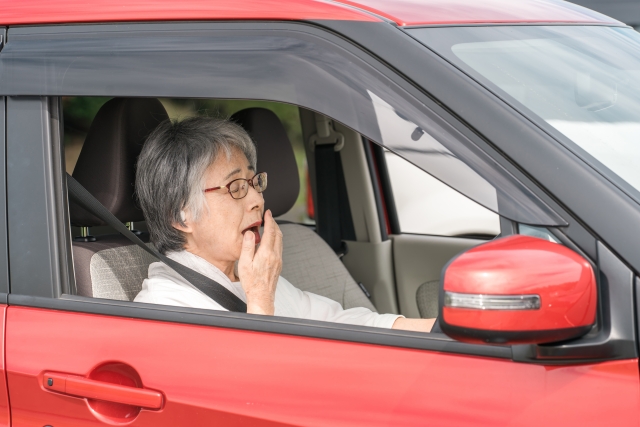
“I haven’t been drinking, so I’m fine to drive.”
That’s what most people assume.
But if severe sleep apnea syndrome goes untreated, your attention, judgment, concentration, and reaction time can decline significantly during the day — in some cases, your driving ability can deteriorate to a level comparable to driving under the influence of alcohol.
You may feel like you’re fully awake, but your brain hasn’t actually gotten enough rest.
On top of that, repeated episodes of apnea and oxygen drops during sleep mean your brain is being jolted awake over and over again, every single night.
As a result, the next day, your brain can end up functioning at a level that’s alarmingly close to how it would function while under the influence of alcohol.
In this article, we explain the connection between snoring, sleep apnea syndrome, brain function, drowsy driving, traffic accident risk, and how CPAP treatment can help.
Ueno Snoring Clinic offers a range of options tailored to each patient’s condition, including insurance-covered sleep testing and CPAP management, as well as self-pay laser treatment for snoring. If you’d like to find out which treatment is right for you, please book an initial consultation.
Details of the tests and treatments offered at Ueno Snoring Clinic can be found here
Reviewed by Our Director
Kazuyuki Sugaya
Director / Anesthesiologist, Ueno Snoring Clinic
With more than 20,000 general anesthesia cases, our director provides care centered on the diagnosis and treatment of snoring and sleep apnea, tailored to each patient. [Insurance-Covered] Ueno Snoring Clinic
This article has been medically reviewed by Director Kazuyuki Sugaya and explains accurate medical information about testing and treatment for snoring and sleep apnea syndrome (SAS) in plain language.
🩺Comprehensive Snoring Treatment at Ueno Snoring Clinic
The causes of snoring and sleep apnea range widely — throat structure, nasal congestion, obesity, tongue-base collapse, lifestyle habits, and alcohol use, among others. Ueno Snoring Clinic combines insurance-covered testing and CPAP management with self-pay laser snoring treatment, recommending the approach best suited to each patient.
Insurance-Covered Testing & CPAP Management
- Home sleep test / PSG: Evaluates apnea and oxygen drops
- CPAP therapy: The standard treatment for moderate-to-severe sleep apnea
Self-Pay Snoring Treatment Options
- Laser snoring treatment: Incision-free throat tightening treatment
- Impact on daily life and driving: We propose a treatment plan based on your test results
Feeling Sleepy While Driving?
If you experience drowsiness while driving, dozing off at red lights, drifting out of your lane, or hazy memory of the route you just drove, please stop driving and see a medical professional as soon as possible. Sleep apnea syndrome may be the underlying cause.
Key Points in This Article
- Untreated sleep apnea syndrome can reduce attention, judgment, and reaction time.
- In severe cases, cognitive function and driving ability may deteriorate to a degree comparable to being under the influence of alcohol.
- Brain function can be impaired even when the person doesn’t feel particularly sleepy.
- Sleep apnea syndrome has been reported to increase the risk of traffic accidents.
- Consistent, proper CPAP treatment can improve sleepiness, driving ability, and accident risk.
- If you feel sleepy while driving, don’t rely on your own judgment — getting a sleep test is important.
Do You Think It’s “Just Snoring”?
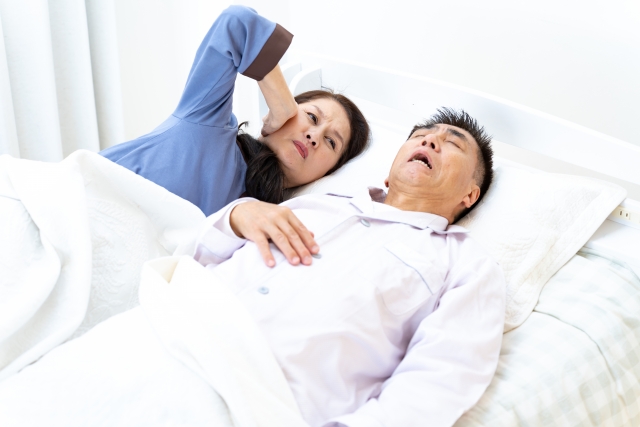
Snoring isn’t just a problem for the people around you.
If your loud snoring is repeatedly interrupted by pauses in breathing, followed by a sudden, forceful gasp for air, sleep apnea syndrome may be the cause.
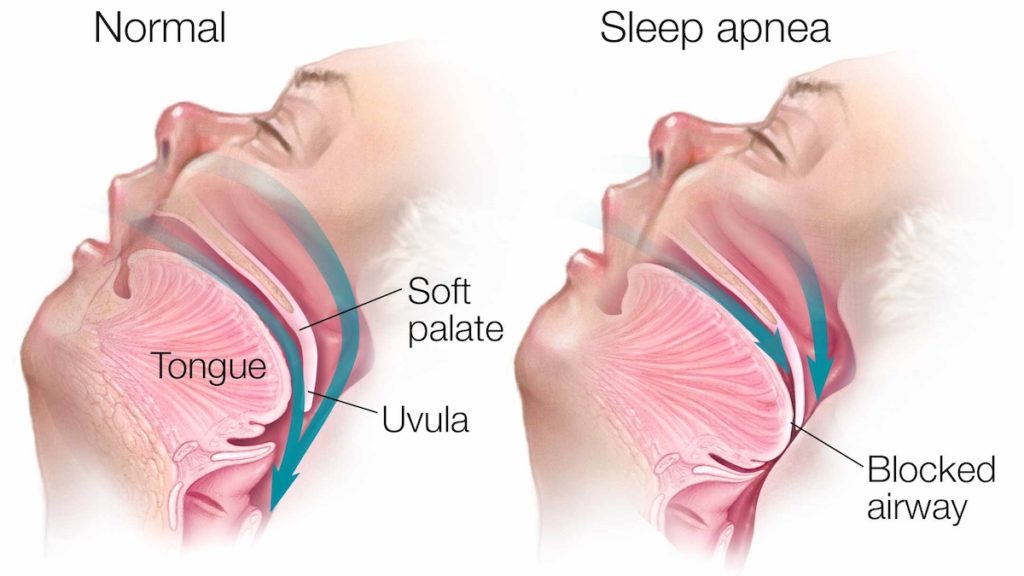
In sleep apnea syndrome, the airway narrows or closes repeatedly during sleep, causing episodes of apnea and hypopnea.
Each time this happens, blood oxygen levels drop, and the brain triggers a brief arousal response to restart breathing.
Even if you have no memory of waking up, your brain is being repeatedly jolted awake throughout the night.
A long time in bed doesn’t necessarily mean your brain actually got to rest.
If apnea is occurring repeatedly, even 7–8 hours of sleep can amount to fragmented, broken sleep from your brain’s perspective.
Why a Sleep-Apnea Brain Can Resemble a Brain Under the Influence of Alcohol
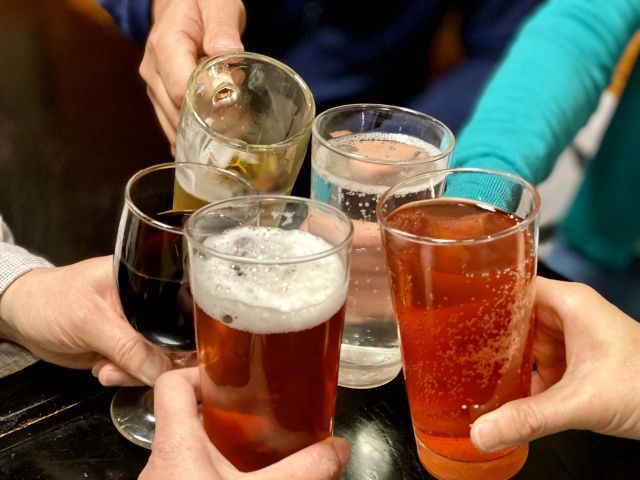
Drinking alcohol impairs brain function.
Judgment slows, attention scatters, and reaction time drops.
Sleep apnea syndrome can produce a similar decline in cognitive function, driven by fragmented sleep, low oxygen levels, and daytime sleepiness.
| Brain Function | Under the Influence of Alcohol | Sleep Apnea / Severe Sleepiness |
|---|---|---|
| Attention | Reduced awareness of surroundings | More likely to miss road signs or pedestrians |
| Judgment | Delayed hazard assessment | Delayed judgment of following distance and speed |
| Reaction Time | Delayed braking response | Delayed hazard-avoidance response |
| Concentration | Difficulty sustaining focus | Prone to lapses in awareness on monotonous highways |
| Alertness | Drowsiness and reduced awareness | Momentary lapses into sleep can occur |
That said, not every person with snoring or sleep apnea syndrome ends up in a state equivalent to driving under the influence.
The actual impact varies based on the severity of apnea, the extent of oxygen drops, sleep duration, daytime sleepiness, age, and medication use.
What matters most is this: not drinking alcohol doesn’t guarantee your brain is in a safe state to drive.
Every Night, the Brain Cycles Through “Oxygen Drops” and “Forced Arousal”
In sleep apnea syndrome, oxygen levels drop each time the airway closes.
To protect the body, the brain then triggers an arousal response to restart breathing.
This cycle can repeat dozens of times a night — in severe cases, hundreds of times.
| What Happens During Sleep | Effect the Next Day |
|---|---|
| Apnea / hypopnea | Sleepiness, reduced concentration, fatigue |
| Drops in blood oxygen | Headaches, mental fog, reduced judgment |
| Arousal response | Less deep sleep, making it harder for the brain to recover |
| Sympathetic nervous system activation | Elevated blood pressure, heart palpitations, fatigue |
Under these conditions, the brain enters the next morning without ever having gotten proper rest.
As a result, even when someone feels like they “slept normally” or “isn’t that sleepy,” their attention and reaction time may actually be significantly impaired.
Danger Can Exist Even Without Feeling Sleepy
One of the most dangerous aspects of sleep apnea syndrome is that patients often can’t accurately gauge their own sleepiness.
When chronic sleep deprivation or apnea continues for a long time, feeling “tired” simply becomes the new normal for that person.
As a result, some people end up thinking things like:
- “I’ve always been the type to feel sleepy — it’s not a problem”
- “Coffee will get me through the drive”
- “Opening the window will wake me up”
- “Turning up the music will keep me alert”
- “It’s a short trip, so it’s fine”
- “I’m an experienced driver, so I’ll be okay”
But temporarily masking sleepiness doesn’t necessarily mean your brain’s reaction time and judgment have fully recovered.
Momentary lapses into sleep are especially likely to occur on monotonous highways, late at night or early in the morning, after meals, and during long drives.
What Is a Microsleep?
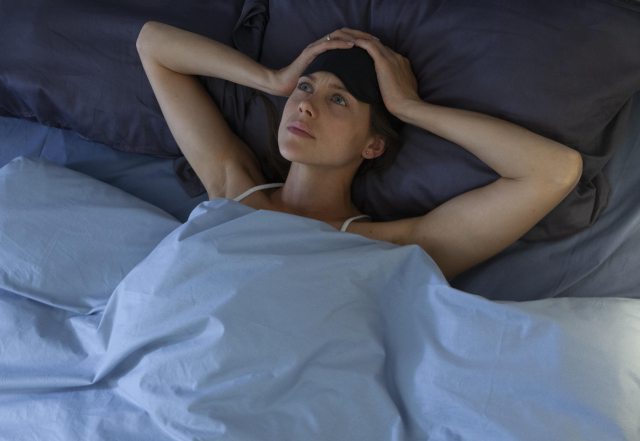
A microsleep is an extremely brief episode of sleep, typically lasting just a few seconds.
The person may have no memory of it happening at all, but during that time, their processing of the surrounding environment stops, and driving reactions are delayed.
At 100 km/h, even three seconds of driving covers roughly 83 meters.
If your eyes are closed, or your brain simply isn’t processing information, during even that short window, it can lead to a serious accident.
If you experience any of the following, stop driving immediately.
Heavy eyelids, repeated yawning, drifting out of your lane, missing road signs, hazy memory of the last few minutes of driving, or closing your eyes at red lights are all dangerous warning signs.
Sleep Apnea Syndrome Raises Your Risk of a Traffic Accident
Multiple studies have reported that untreated sleep apnea syndrome is associated with an elevated risk of traffic accidents.
The cause isn’t limited to simply falling asleep.
- Delayed braking response
- Delayed detection of pedestrians or road signs
- Misjudging following distance
- Unstable lane maintenance
- Delayed hazard prediction
- Inability to sustain concentration over time
In other words, an accident can happen even without falling fully asleep — simply from reduced brain function while technically “awake.”
If Any of These Sound Familiar From Your Own Driving, Take Note
- You’ve nearly fallen asleep at a red light
- You feel like you’ve “lost time” while driving on the highway
- You’ve triggered a lane-departure warning
- You can’t drive without stopping at every rest area
- You’ve opened the window or blasted music to fight off sleepiness
- A family member has expressed concern about your drowsiness while driving
- You’ve experienced a rear-end collision or a near-miss
- You often nap in your car during work
- You feel intensely sleepy after meals
- Early-morning or nighttime driving is particularly difficult for you
If even one of these applies to you, and you’ve also been told you have loud snoring or apnea, we recommend considering a sleep test.
Worried About Drowsy Driving?
If you experience loud snoring, apnea, morning headaches, or daytime sleepiness, sleep apnea syndrome may be behind it. Evaluation can start with a home sleep test.
Professional Drivers Need to Be Especially Cautious
For truck drivers, bus drivers, taxi drivers, delivery drivers, and sales representatives who drive for a living, early detection of sleep apnea syndrome is particularly important.
If an accident occurs, the consequences extend far beyond the driver themselves — to passengers, pedestrians, employers, and family.
For those working shift schedules or night shifts, disruption to the body’s internal clock combined with sleep apnea can make sleepiness even more severe.
If any of the following apply to you, we recommend considering testing even if your symptoms seem mild:
- A larger neck circumference
- A tendency toward obesity
- High blood pressure
- Being told you snore loudly
- Being told your breathing stops during sleep
- Waking up with headaches
- Frequent nighttime urination
- Difficulty maintaining concentration during the day
- Feeling sleepy while driving
“I’m Not Sleepy” Doesn’t Necessarily Mean You’re Fine
The severity of sleep apnea syndrome doesn’t always match how sleepy a person feels.
Some patients with severe apnea report that they “don’t feel sleepy at all.”
Still, even when self-awareness is low, it’s worth paying attention if family members have noticed things like:
- Constantly dozing off in front of the TV
- Zoning out during conversations
- Sleeping for long stretches on days off
- Falling asleep almost instantly when handing off driving duties
- Breathing stopping mid-snore
- Being irritable in the morning
- An increase in forgetfulness or mistakes
Sleepiness is a subjective symptom.
Rather than relying on self-awareness alone, it’s important to confirm snoring, apnea, and oxygen drops through a proper sleep test.
CPAP Treatment Can Help Improve Sleepiness and Reduce Accident Risk
CPAP is one of the standard treatments for sleep apnea syndrome.
It works by delivering air through a mask during sleep, using air pressure to keep the airway from collapsing.
With proper CPAP use, episodes of apnea, hypopnea, oxygen drops, and arousal responses decrease, making it easier for the brain to get consolidated, restorative sleep.
As a result, patients can typically expect improvements such as:
- Reduced daytime sleepiness
- Restored concentration
- Fewer morning headaches
- Improved reaction time
- Fewer near-misses while driving
- Fewer mistakes at work
A meta-analysis combining multiple studies reported a significant reduction in traffic accident risk following CPAP treatment.
That said, simply owning a CPAP machine doesn’t provide any benefit on its own.
Consistent, proper use every night during sleep is essential.
Is It Okay to Drive the Day After Starting CPAP?
Some patients notice reduced sleepiness relatively quickly after starting CPAP treatment.
However, sleepiness and cognitive function don’t necessarily normalize completely right away.
For patients who have accumulated significant sleep debt, had severe apnea, or aren’t yet using CPAP for enough hours each night, improvement can take time.
If you still feel sleepy while driving, please don’t resume driving based on your own judgment — talk to your physician first.
What to Check If You’re Still Sleepy Despite Using CPAP
| What to Check | Potential Problem |
|---|---|
| Hours of use | Only using CPAP for part of your sleep time |
| Mask leak | Air leakage preventing adequate pressure delivery |
| Residual AHI | Apnea events persisting even while using CPAP |
| Sleep duration | Simply not getting enough total sleep |
| Other sleep disorders | Insomnia, restless legs syndrome, hypersomnia, and similar conditions |
| Medication or alcohol | Sedating medications, or alcohol before bed |
If you’re still experiencing strong sleepiness despite using CPAP, it’s important to identify why treatment isn’t providing sufficient benefit.
Finding CPAP Follow-Up Visits Difficult to Manage?
Ueno Snoring Clinic offers online consultations for patients currently on CPAP therapy. If monthly or bi-monthly in-person visits are a burden, please check whether you’re eligible.
Can Laser Snoring Treatment Prevent Drowsy Driving?
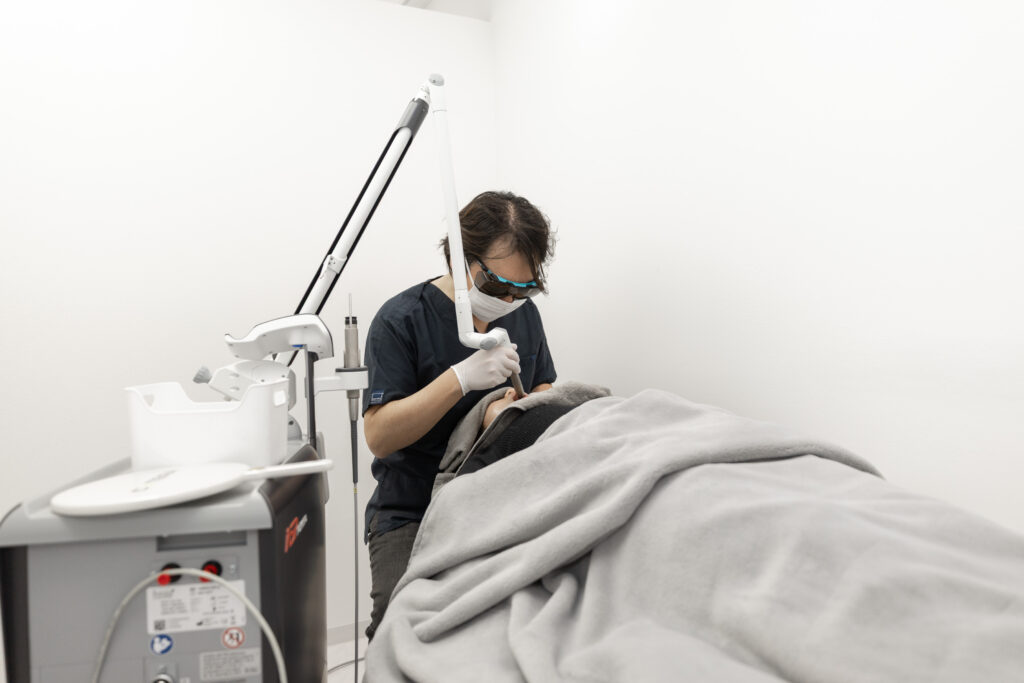
Laser snoring treatment tightens mucosal tissue in areas such as the soft palate, reducing the vibration that causes the sound of snoring.
For patients whose main issue is snoring, with only mild sleep apnea, it can be a viable option.
However, for moderate-to-severe sleep apnea syndrome, laser treatment alone may not sufficiently improve apnea or daytime sleepiness.
For anyone experiencing sleepiness while driving, rather than jumping straight into laser treatment, it’s important to first confirm your AHI, oxygen drops, and severity of apnea through a sleep test.
To Prevent Drowsy Driving, Start With a Sleep Test
The severity of sleep apnea syndrome can’t be accurately determined through a consultation alone.
A sleep test evaluates factors such as:
- The number of apnea/hypopnea events per hour
- Oxygen drops during sleep
- Snoring intensity
- Changes in pulse rate
- Differences based on sleeping on your back vs. your side
In many cases, evaluation can start with a simple home sleep test.
Based on the results, we consider options such as more detailed testing, CPAP, lifestyle changes, or laser snoring treatment.
Symptoms That Mean You Should Stop Driving Immediately
If you experience any of the following, stop driving immediately
- You can’t keep your eyes open while driving
- You fall asleep at red lights
- You don’t remember the route you just drove
- You’re drifting out of your lane
- You’ve had repeated sudden braking or rear-end incidents
- A passenger has told you that you were dozing off
- You need frequent breaks just to manage sleepiness
Coffee, gum, music, and opening the window are only temporary measures.
Do not continue driving while feeling sleepy — pull over somewhere safe instead.
If loud snoring or apnea is also present, it’s important to seek a proper sleep evaluation as soon as possible.
Frequently Asked Questions
Conclusion: Not Drinking Doesn’t Guarantee Your Brain Is Fit to Drive Safely
With untreated sleep apnea syndrome, repeated episodes of apnea, oxygen drops, and arousal responses during sleep prevent the brain from getting adequate rest.
As a result, the next day’s attention, judgment, concentration, and reaction time can decline — and in severe cases, driving ability can deteriorate to a level comparable to being under the influence of alcohol.
What makes this even more dangerous is that patients often can’t accurately recognize their own sleepiness or reduced capability.
“I haven’t been drinking, so I’m fine.”
“I’m just a little sleepy — it’s not a big deal.”
“I’m an experienced driver, so I’ll be okay.”
Assumptions like these can lead directly to serious accidents.
If you experience loud snoring, apnea, morning headaches, daytime sleepiness, or near-misses while driving, please get a sleep test first.
Sleep apnea syndrome is a condition that, once properly diagnosed, can genuinely improve with consistent treatment such as CPAP.
Struggling With Drowsiness, Snoring, or Apnea While Driving?
Ueno Snoring Clinic offers insurance-covered sleep testing and CPAP management, plus self-pay laser snoring treatment. You can start evaluating your current condition with a home sleep test.
*If you feel strong sleepiness while driving, please stop driving, ensure your safety, and consult a medical professional.
References
- Obstructive Sleep Apnea and Risk of Motor Vehicle Crash: A meta-analysis on untreated OSA and traffic accident risk
- Continuous Positive Airway Pressure Reduces Risk of Motor Vehicle Crash among Drivers with Obstructive Sleep Apnea: A meta-analysis on accident risk following CPAP treatment
[Insurance-Covered] If you’re concerned about snoring or sleep apnea, we offer a fully appointment-based system for reassuring, unhurried care.
Please feel free to contact Ueno Snoring Clinic [same-day appointments available]
📞0120-899-930
5F Ueno Silk Building, 4-8-8 Ueno, Taito-ku, Tokyo 110-0005, Japan

Please feel free to contact Ueno Snoring Clinic [same-day appointments available]
📞0120-899-930
5F Ueno Silk Building, 4-8-8 Ueno, Taito-ku, Tokyo 110-0005, Japan
Feel free to reach out to us on LINE ↓↓↓

English Support Available
We provide medical services for international patients. Please check our English website for details on how to visit our clinic.
Supervising Physician

Kazuyuki Sugaya, Director of Ueno Snoring Clinic
After graduating from Fujita Health University School of Medicine in 2004, Dr. Sugaya began his career as an anesthesiologist at Toho University Omori Medical Center. He has since gained extensive clinical experience at municipal hospitals and private clinics nationwide, administering general anesthesia in over 20,000 cases. In 2020, he founded the "Tokyo Spine Clinic," and has served as the Director of Ueno Snoring Clinic since 2025.
Related Columns

By Appointment Only
Specialized Snoring Treatment in Ueno
Ueno Snoring Clinic
Insurance-covered home testing available.
Following a physician’s consultation and result explanation,
we support the improvement of snoring and sleep apnea with "Dual Deep Thermia"—a non-surgical laser treatment, if necessary.
3-min walk from Ueno Station. Please feel free to consult us.