


いびきを最新治療で治す-表紙-1.png)
Masseter Botox for Teeth Grinding: Effects, Risks, Costs, and the Link With Sleep Apnea
Does Snoring Raise Dementia Risk? The Science Explained | Ueno Snoring Clinic
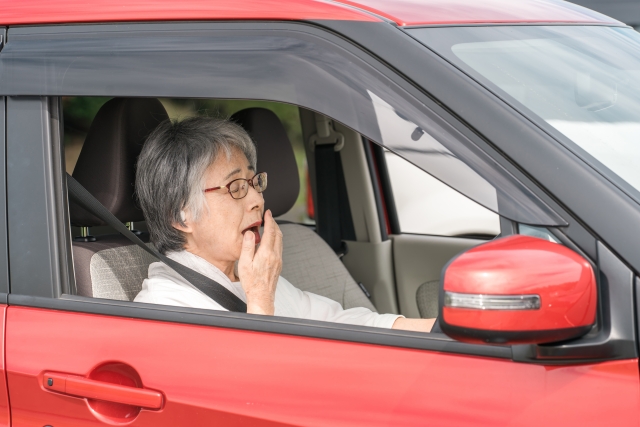
Have you ever heard that snoring can make you more likely to develop dementia? As it turns out, this isn’t a claim without medical basis.
Snoring often has sleep apnea syndrome (SAS) hiding behind it, and the low-oxygen episodes that repeat dozens or even hundreds of times each night can quietly accumulate damage to the brain.
In this article, our director — who has been involved in more than 20,000 general anesthesia cases as an anesthesiologist and now leads the sleep specialty outpatient clinic at Ueno Snoring Clinic — explains, in plain terms, the relationship between snoring and dementia risk.
Ueno Snoring Clinic offers a range of options tailored to each patient’s condition, including insurance-covered sleep testing and CPAP management, as well as self-pay laser treatment for snoring. If you’d like to find out which treatment is right for you, please book an initial consultation.
Details of the tests and treatments offered at Ueno Snoring Clinic can be found here
Reviewed by Our Director
Kazuyuki Sugaya
Director / Anesthesiologist, Ueno Snoring Clinic
With more than 20,000 general anesthesia cases, our director provides care centered on the diagnosis and treatment of snoring and sleep apnea, tailored to each patient. [Insurance-Covered] Ueno Snoring Clinic
This article has been medically reviewed by Director Kazuyuki Sugaya and explains accurate medical information about testing and treatment for snoring and sleep apnea syndrome (SAS) in plain language.
🩺Comprehensive Snoring Treatment at Ueno Snoring Clinic
The causes of snoring range from throat structure to obesity. Ueno Snoring Clinic is not limited to a single treatment method — we offer a wide range of evidence-based options so we can propose the plan best suited to each patient.
Thorough Testing & Ongoing Treatment (Insurance-Covered)
- Home sleep test / PSG (polysomnography): Precise analysis of your sleep condition
- CPAP therapy: The standard treatment for moderate-to-severe apnea
Self-Pay Treatment for Root-Cause, Short-Term Results
- Latest laser snoring treatment: Incision-free, root-cause treatment
- Medical weight-loss support: Physically opening the airway through weight reduction
*As a clinic specializing in snoring treatment, we are committed to resolving “snoring that won’t stop” through both insurance-covered and self-pay options.
This topic is also covered in detail in our director’s book, “Curing Snoring with the Latest Treatments” (Amazon Japan Best Seller: #1 in General Medicine, #1 in Clinical Internal Medicine, #2 in Home Medical & Health)
New Book by Our Director
“Curing Snoring with the Latest Treatments”
Written by an anesthesiologist who has overseen the sleep of more than 10,000 patients, this book is a modern guide to the latest snoring treatments.
Quick Answer
Yes — several studies suggest a link, though it isn’t the sound of snoring itself that raises dementia risk. Rather, it’s the repeated overnight drops in oxygen caused by sleep apnea syndrome (SAS), the condition that underlies most snoring, that may damage brain cells and elevate dementia risk over time. This effect tends to be more pronounced in people who spend longer periods with reduced oxygen during apnea events, where added strain on the brain’s blood vessels, reduced sleep quality, and daytime difficulty concentrating often occur together.
Concerned About Snoring, Apnea, or Memory Lapses?
The first step is finding out whether sleep apnea syndrome is present. Ueno Snoring Clinic offers insurance-covered home sleep testing.
Why Snoring and Sleep Apnea Can Harm the Brain: Three Mechanisms
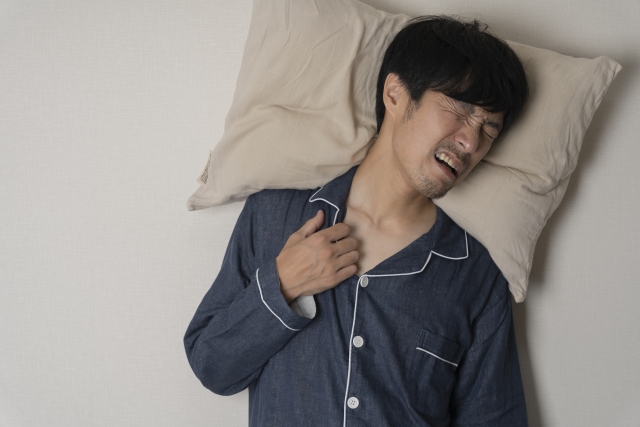
It can be hard to picture what “becoming low on oxygen while asleep” actually means. Below, we break down the pathway to brain damage into three mechanisms.
Mechanism 1: Direct Damage to Brain Cells From Intermittent Low Oxygen
1
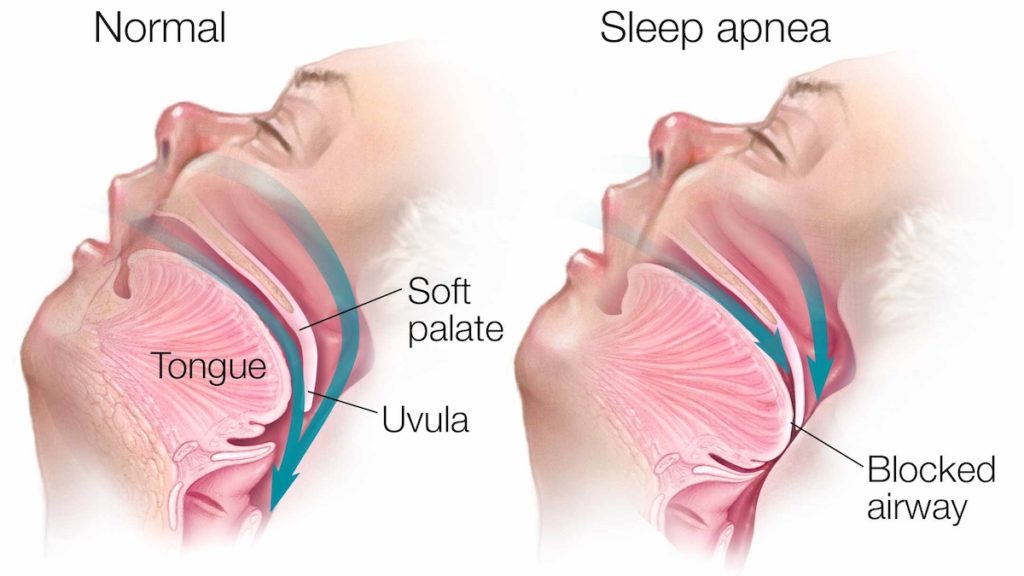
The airway becomes blocked — When lying on the back, the base of the tongue and soft palate can sink downward, narrowing the passage for air. Snoring is the sound produced as air vibrates through this narrowed airway.
2
Apnea leads to low oxygen — When breathing repeatedly stops or becomes shallow, blood oxygen saturation (SpO₂) drops multiple times throughout the night.
3
Brain cells become more vulnerable to damage — When oxygen delivery is impaired night after night, it places strain on brain cells and the walls of the brain’s blood vessels.
4
Risk of cerebrovascular damage increases — The accumulation of small vessel damage and high blood pressure may contribute to cognitive decline.
Mechanism 2: Disruption of the Glymphatic System
The glymphatic system, which has drawn growing scientific attention in recent years, is the brain’s mechanism for clearing out metabolic waste during sleep. It’s thought to be most active during deep, non-REM sleep.
However, when sleep apnea syndrome repeatedly interrupts sleep, deep sleep is reduced, and the brain’s waste-clearing process may not function as effectively. Over many years, this can potentially contribute to declines in memory and attention.
Mechanism 3: Vascular Dementia Risk From Chronic Inflammation, High Blood Pressure, and Arteriosclerosis
Overnight low oxygen and heightened sympathetic nervous system activity also place significant strain on the cardiovascular system.
- Blood pressure fails to drop at night as it normally would
- Early-morning high blood pressure becomes more likely
- Chronic inflammation and oxidative stress accelerate arteriosclerosis
- Cerebral infarction and small vessel damage may contribute to vascular dementia
Cognitive decline associated with SAS is thought to result from the overlap of multiple pathways — nighttime low oxygen, fragmented sleep, vascular damage, and the buildup of metabolic waste.
Are You at Risk? A Checklist for Snoring That May Raise Brain Risk
⚠ If two or more of the following apply to you, caution is warranted
- You snore every night, or family members have mentioned it
- You’ve been told your breathing stops during sleep
- You feel sleepy or can’t concentrate during the day despite getting enough sleep
- You’ve noticed more forgetfulness lately, or more mistakes at work
- You often wake up with a headache or dry mouth
- You don’t feel rested when you wake up
- You have high blood pressure, obesity, or diabetes
- You are a man over 40, or a postmenopausal woman
Do you assume that forgetfulness is simply an inevitable part of aging? Cognitive decline related to SAS may improve when sleep quality is addressed. The first step is finding out whether sleep apnea syndrome is present.
How SAS and Nighttime Low Oxygen Relate to Different Types of Dementia
| Type of Dementia | Relationship to SAS and Nighttime Low Oxygen | Main Mechanism |
|---|---|---|
| Vascular dementia | Strong association A relationship with nighttime low oxygen, high blood pressure, and cerebrovascular damage is considered likely. |
Arteriosclerosis, high blood pressure, small-vessel infarction, reduced cerebral blood flow |
| Alzheimer’s disease | A link with fragmented sleep and reduced waste-clearance function has been suggested. | Reduced deep sleep, impaired glymphatic function, buildup of metabolic waste |
| Mild cognitive impairment (MCI) | Can manifest as declines in attention, memory, and executive function. | Fragmented sleep, chronic low oxygen, daytime sleepiness, reduced concentration |
When These Symptoms Persist, It’s Time to See a Sleep Specialist
🏥 If any of the following apply to you, we recommend visiting a sleep specialty clinic sooner rather than later
- You snore every night, or are told about it four or more nights a week
- You’ve been told your breathing stops during sleep
- Daytime sleepiness is strong enough to affect work or driving
- You have ongoing forgetfulness or poor concentration, especially if you’re in your 50s or older
- Your blood pressure remains unstable despite being treated for hypertension
▶ Before assuming it’s “just age” or “just fatigue,” it’s important to check your sleep status. When SAS is the underlying cause, treatment may help improve daytime sleepiness, concentration, and blood pressure control.
What Ueno Snoring Clinic Can Offer
Sleep Specialty Outpatient Care (Insurance-Covered)
Ueno Snoring Clinic is a sleep specialty outpatient clinic led by a board-certified anesthesiologist. Drawing on specialized expertise in airway and respiratory management, we provide comprehensive care for snoring and sleep apnea syndrome.
- ✅ Home sleep testing — We lend out testing devices you can use at home. The equipment measures SpO₂ (blood oxygen level) and the Apnea-Hypopnea Index (AHI) to objectively assess the extent of nighttime low oxygen
- ✅ Referral for detailed testing (polysomnography / PSG) — When needed, we arrange for a more detailed sleep evaluation at a specialized facility
- ✅ CPAP therapy (insurance-covered) — The standard treatment for moderate-to-severe SAS, aimed at improving nighttime oxygen levels
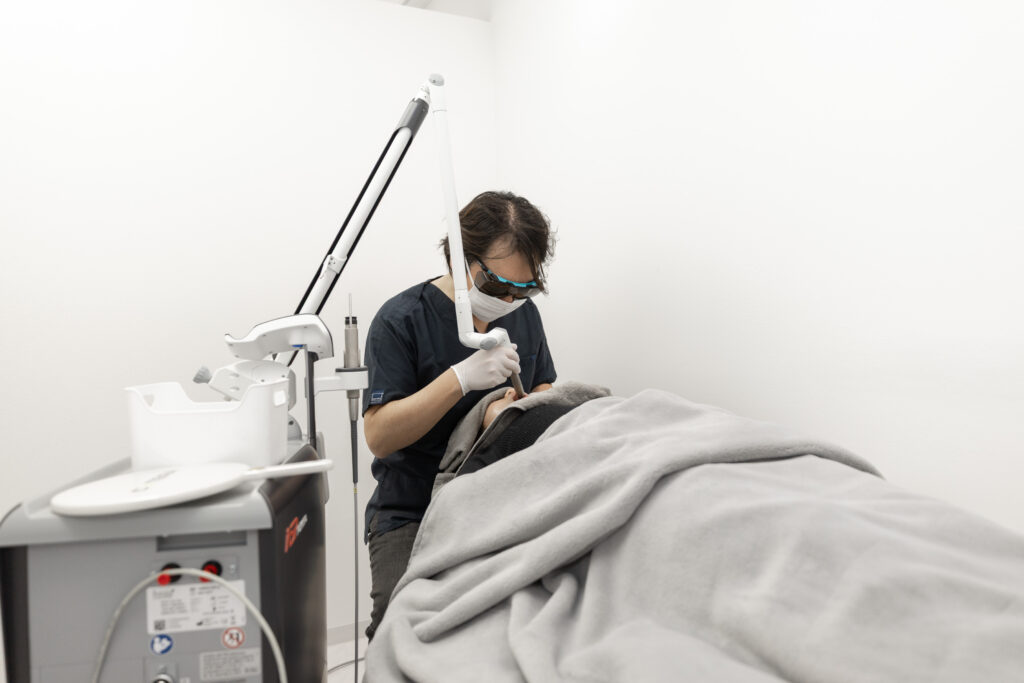
- ✅ Laser snoring treatment (self-pay) — For mild-to-moderate snoring, we perform in-office laser reshaping of the throat tissue. This is a same-day procedure with very little post-treatment pain or downtime
- ✅ Weight and lifestyle support — We address contributing factors behind SAS, including weight management and lifestyle habits
Concerned That “Snoring = Dementia Risk” Might Apply to You? Start With Testing
At Ueno Snoring Clinic, your initial visit and home sleep test are covered by insurance.
Online booking is available 24 hours a day, and you can also reach out to us via LINE.
Frequently Asked Questions
Key Points From This Article
- SAS (sleep apnea syndrome), which often underlies snoring, places strain on brain cells and blood vessels through repeated overnight drops in oxygen
- Cognitive decline can be linked to low oxygen, fragmented sleep, high blood pressure, arteriosclerosis, and reduced waste-clearance function
- If you experience forgetfulness, poor concentration, or daytime sleepiness, it’s worth checking your sleep rather than assuming it’s simply due to age
- Since the loudness of snoring alone can’t indicate severity, a home sleep test can confirm the apnea index and blood oxygen levels
- If you have snoring combined with forgetfulness, high blood pressure, or daytime sleepiness, an early visit is recommended
If You Have Forgetfulness, High Blood Pressure, or Daytime Sleepiness, Consider a Sleep Apnea Test
Symptoms you may have written off as “just age” could have sleep apnea syndrome behind them.
If you’re concerned, please reach out for an insurance-covered test.
This article is intended to provide general medical information and does not constitute individual diagnosis or treatment. If you have concerns about your symptoms, please consult a medical institution.
Ueno Snoring Clinic | Sleep Specialty Outpatient Clinic (Insurance-Covered)
[Insurance-Covered] If you’re concerned about snoring or sleep apnea, we offer a fully appointment-based system for reassuring, unhurried care.
Please feel free to contact Ueno Snoring Clinic [same-day appointments available]
📞0120-899-930
5F Ueno Silk Building, 4-8-8 Ueno, Taito-ku, Tokyo 110-0005, Japan

Please feel free to contact Ueno Snoring Clinic [same-day appointments available]
📞0120-899-930
5F Ueno Silk Building, 4-8-8 Ueno, Taito-ku, Tokyo 110-0005, Japan
Feel free to reach out to us on LINE ↓↓↓

English Support Available
We provide medical services for international patients. Please check our English website for details on how to visit our clinic.
Supervising Physician

Kazuyuki Sugaya, Director of Ueno Snoring Clinic
After graduating from Fujita Health University School of Medicine in 2004, Dr. Sugaya began his career as an anesthesiologist at Toho University Omori Medical Center. He has since gained extensive clinical experience at municipal hospitals and private clinics nationwide, administering general anesthesia in over 20,000 cases. In 2020, he founded the "Tokyo Spine Clinic," and has served as the Director of Ueno Snoring Clinic since 2025.
Related Columns

By Appointment Only
Specialized Snoring Treatment in Ueno
Ueno Snoring Clinic
Insurance-covered home testing available.
Following a physician’s consultation and result explanation,
we support the improvement of snoring and sleep apnea with "Dual Deep Thermia"—a non-surgical laser treatment, if necessary.
3-min walk from Ueno Station. Please feel free to consult us.