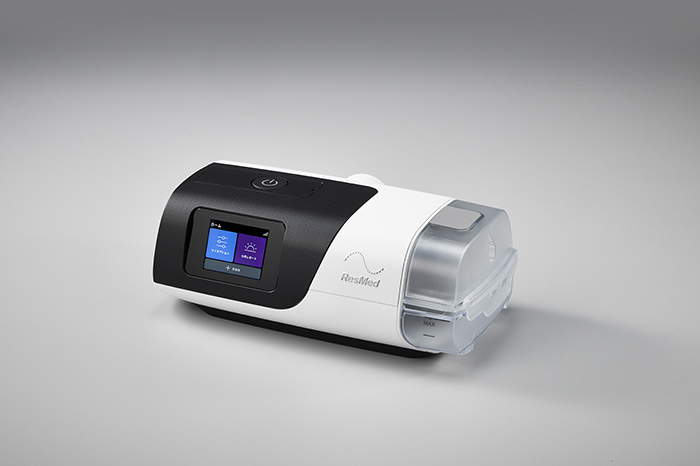
Ueno Snoring Clinic offers a full range of care, from evaluating AHI through home-based simplified sleep testing or PSG testing, to insurance-covered CPAP treatment. If you’d like to understand what your own AHI number means, please bring your test results and come speak with us.
Details of the tests and treatments offered at Ueno Snoring Clinic can be found here
A Complete Comparison of CPAP Masks
We tried on and reviewed five different types of CPAP masks. 90% of CPAP comfort comes down to the mask.
Watch the video
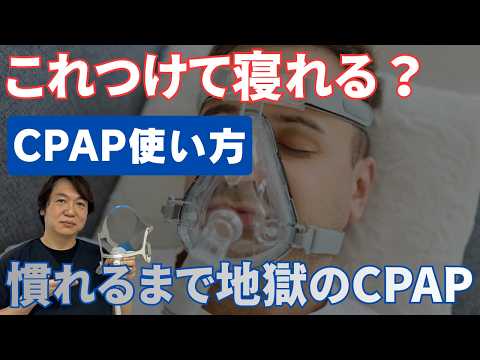
Do you have to use CPAP forever? A specialist explains how to use CPAP
A detailed explanation of how to use CPAP, with a real demonstration of what it feels like to wear the device.
Watch the video
Ueno Snoring Clinic was featured on Fuji TV’s “Live News It!”
Watch our clinic’s examination and explanation of sleep disorders, snoring, and sleep apnea.
Watch the video
Ueno Snoring Clinic was featured in an article on Nippon TV’s “news every.”
Please take a look as a starting point for thinking about getting evaluated for snoring, sleep apnea, or other sleep disorders.
Read the article
Reviewed by Our Director
Kazuyuki Sugaya
Director, Ueno Snoring Clinic / Anesthesiologist
Our director, with over 20,000 general anesthesia cases, focuses primarily on the diagnosis and treatment of snoring and sleep apnea, offering care tailored to each patient. [Insurance-Covered] Ueno Snoring Clinic
This article was reviewed by our Director, Kazuyuki Sugaya, and explains the meaning of AHI (Apnea Hypopnea Index), how severity is classified, and how it relates to the insurance eligibility criteria for CPAP treatment.
🩺Comprehensive Snoring Treatment at Ueno Snoring Clinic
Ueno Snoring Clinic offers insurance-covered CPAP treatment and self-pay laser treatment for snoring, based on an accurate evaluation of AHI through simplified sleep testing or PSG testing.
Insurance-Covered: Thorough Testing and Ongoing Treatment
- Simplified and PSG testing: A precise evaluation of AHI and the underlying causes of snoring and apnea
- CPAP treatment: The standard treatment for moderate-to-severe apnea
Self-Pay: Address the Root Cause, Short-Term Focus
- Snoring laser treatment: Available in 3-, 6-, and 12-session packages
- Medically supervised weight loss: An option when weight gain is a contributing factor
*We recommend a treatment plan based not only on your AHI value, but also on your symptoms and any related health risks.
Our director’s book, “Curing Snoring with the Latest Treatments” (No.1 Amazon Bestseller in General Medicine, No.1 in Clinical Internal Medicine, No.2 in Home Medicine & Health) covers this topic in detail as well
New Book by Our Director
“Curing Snoring with the Latest Treatments”
A guide to the latest snoring treatments, written by an anesthesiologist who has overseen the sleep of more than 10,000 patients.
View on Amazon
Quick Answer
AHI (Apnea Hypopnea Index) measures the number of apnea and hypopnea events per hour of sleep. As a general guide, under 5 is normal, 5 to under 15 is mild, 15 to under 30 is moderate, and 30 or above is severe. An AHI of 20 falls into the “moderate” category — meaning your breathing is disrupted roughly once every 3 minutes. Even at the moderate level, this has been linked to an increased risk of high blood pressure and cardiovascular disease, so it shouldn’t be taken lightly. Note that as of a June 2026 revision, the insurance eligibility criteria for CPAP treatment were relaxed — from AHI 40 to 30 for simplified testing, and from AHI 20 to 15 for PSG testing — meaning some patients who previously didn’t qualify may now be eligible for treatment.
📋 What This Article Covers
- Quick answer: AHI is “the number of apnea and hypopnea events per hour”
- Normal AHI values and severity classification — what 5, 15, and 30 mean
- Is an AHI of 20 severe? What moderate apnea does to your body
- Why you shouldn’t read too much into the AHI number alone
- AHI and CPAP insurance eligibility — what changed in the June 2026 revision
- What kind of test do you need to find out your AHI?
Quick Answer: AHI Is “the Number of Apnea and Hypopnea Events per Hour”
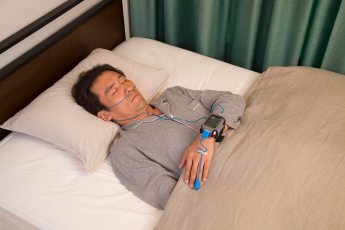
AHI stands for “Apnea Hypopnea Index.” It’s the number of times per hour of sleep that “apnea” (breathing stops for 10 seconds or more) or “hypopnea” (breathing becomes shallow) occurs. It’s the fundamental measure used to diagnose sleep apnea syndrome (SAS) and classify its severity, and it’s calculated automatically whenever you undergo a simplified sleep test or a PSG (overnight polysomnography) test.
For example, an “AHI of 20” means that, on average, your breathing becomes shallow or stops 20 times per hour — roughly once every 3 minutes. The higher the number, the more frequently your breathing is disrupted during sleep.
Normal AHI Values and Severity Classification — What 5, 15, and 30 Mean
AHI severity is generally classified using the following benchmarks.
| Severity |
AHI Range |
What It Looks Like |
| Normal |
Under 5 |
A healthy range |
| Mild |
5 to under 15 |
Breathing disrupted 5–14 times per hour |
| Moderate |
15 to under 30 |
Breathing disrupted more than once every 4 minutes |
| Severe |
30 or above |
Breathing disrupted more than once every 2 minutes |
This classification is a widely used general guideline, and the exact figures can vary slightly between institutions and medical societies. What matters more than which range your own AHI falls into is confirming with your doctor how much of a burden that number is actually placing on your body.
Is an AHI of 20 Severe? What Moderate Apnea Does to Your Body
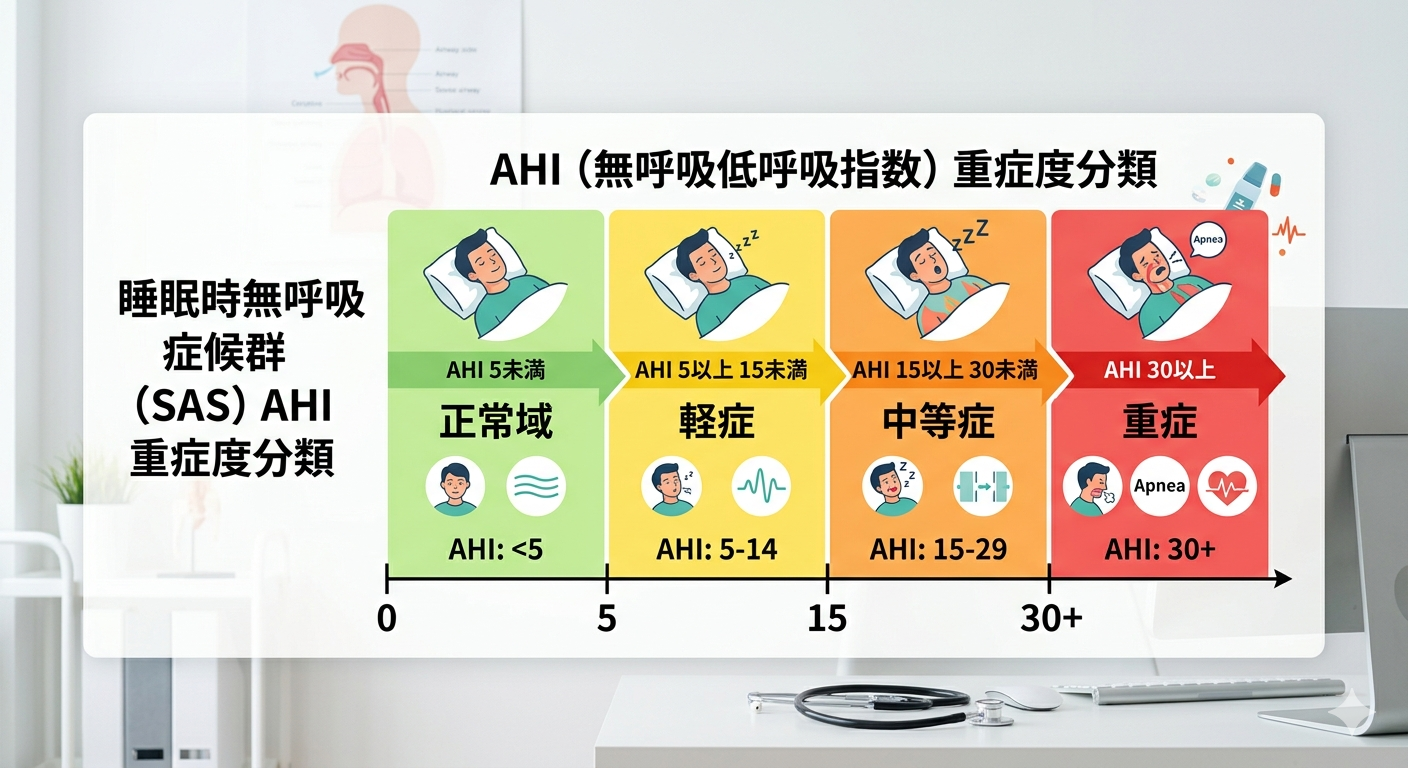
Based on the classification above, an AHI of 20 falls into the “moderate” category. Some people assume “it’s not severe, so it’s fine” — but even the moderate range shouldn’t be dismissed.
Even patients with an AHI in the 15–20 range have been reported to have an elevated risk of high blood pressure, cardiovascular disease, and stroke. Every apnea or hypopnea event causes blood oxygen levels to drop and brings the brain close to a state of arousal — and when this repeats dozens or even hundreds of times in a single night, the overall quality of sleep is significantly compromised.
If you experience symptoms such as strong daytime sleepiness, morning headaches, or difficulty concentrating, that’s reason enough to consider treatment, even if your AHI falls in the moderate range.
Why You Shouldn’t Read Too Much Into the AHI Number Alone
AHI is an important indicator, but it’s also important not to read too much into the number by itself. Even with the same AHI value, the burden on the body can differ from person to person depending on factors like when during sleep the apnea/hypopnea events occur, how much blood oxygen saturation drops, how loud the snoring is, and how strong daytime sleepiness is.
AHI can also fluctuate depending on your condition on the night of the test, alcohol consumption, and sleeping position. Rather than concluding “my AHI was 25 on one test, so I must have severe apnea,” it’s important to discuss a treatment plan with your doctor based on the overall picture — your symptoms and how they affect your daily life.
Conversely, even if your AHI falls in the mild range, treatment may still be worth considering if your snoring is loud enough to affect a family member’s sleep, or if you experience strong daytime sleepiness.
AHI and CPAP Insurance Eligibility — What Changed in the June 2026 Revision
AHI is also used as a criterion for determining whether CPAP treatment is covered by insurance. As of a June 2026 revision, the insurance eligibility criteria for CPAP treatment were relaxed.
| Test Type |
Before the Revision |
After the Revision (June 2026–) |
| Simplified test |
AHI 40 or above |
AHI 30 or above |
| PSG test |
AHI 20 or above |
AHI 15 or above |
This revision reflects growing evidence that even patients with an AHI in the 15–20 range face an elevated risk of high blood pressure and cardiovascular disease. Previously, patients whose simplified test showed an AHI of 30–39 needed a more detailed PSG test (which sometimes required hospitalization) before they could start insurance-covered CPAP treatment. After this revision, more patients will be able to start treatment based on a simplified test alone.
What Kind of Test Do You Need to Find Out Your AHI?
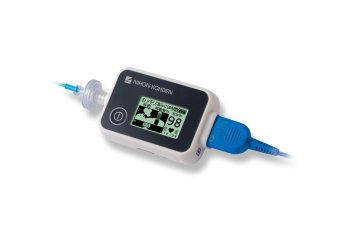
To find out your own AHI, you need a test that evaluates your breathing during sleep. The two main types of testing are the “simplified test” and the “PSG (overnight polysomnography) test.” A simplified test uses sensors attached to your finger and nose to measure your breathing overnight, while a PSG test is a more detailed evaluation that also includes brain wave monitoring. In most cases today, both can be done at home, with no need for hospitalization.
If you’re wondering what your own AHI looks like, the first step is simply getting tested to find out the actual number.
What Ueno Snoring Clinic Offers
Ueno Snoring Clinic is a Sleep Disorder Medicine clinic specializing in snoring and sleep apnea syndrome. We accurately evaluate AHI through simplified and PSG testing, and our care reflects the June 2026 revision to the insurance eligibility criteria.
If you’d like to understand what your AHI number actually means, or if you were previously told you didn’t qualify for insurance coverage and want to check whether that’s changed, please feel free to reach out to us.
Summary: AHI Is a Guide to Severity — Getting Tested Is What Reveals the Real Picture
AHI measures the number of apnea and hypopnea events per hour of sleep, classified as normal (under 5), mild (5 to under 15), moderate (15 to under 30), or severe (30 or above). An AHI of 20 falls in the moderate range — a number that shouldn’t be taken lightly in terms of the burden it places on your body.
The June 2026 revision also relaxed the insurance eligibility criteria for CPAP treatment, meaning some patients who previously didn’t qualify may now be eligible. If you’re curious about your own AHI, why not start by getting tested to find out the actual number?
Start by Finding Out Your Own AHI
We accurately evaluate your AHI through simplified or PSG testing, and recommend treatment options based on the June 2026 revised criteria.
Frequently Asked Questions
Q. What does AHI stand for?
A. AHI stands for “Apnea Hypopnea Index” — a measure of how many apnea and hypopnea events occur per hour of sleep.
Q. If my AHI is under 5, is there nothing to worry about?
A. That’s generally considered within the normal range, but if you have loud snoring or strong daytime sleepiness, we’d still recommend checking in with a doctor just to be safe.
Q. Is an AHI of 20 severe?
A. By classification, that falls into the “moderate” category. However, even moderate apnea has been linked to a higher risk of conditions like high blood pressure, so it shouldn’t be taken lightly.
Q. Does a high AHI always come with noticeable symptoms?
A. Not necessarily. Some people with a high AHI have few noticeable symptoms, while others feel strong sleepiness even with a lower AHI. It’s important to look at both the number and your actual symptoms together.
Q. How is AHI measured?
A. It’s measured through a simplified sleep test or a PSG test. In most cases today, either can be done at home, with no need for hospitalization.
Q. If I know my AHI, does that mean I can use CPAP with insurance coverage?
A. Following the June 2026 revision, you may be eligible for insurance-covered CPAP treatment with an AHI of 30 or above on a simplified test, or 15 or above on a PSG test. Please confirm the details with us during a consultation.
Q. Is the AHI threshold the same for children as for adults?
A. No, it’s different. For children, treatment for sleep apnea is generally considered at a lower AHI than for adults. If you’re concerned about your child’s snoring, please consult a medical institution that specializes in pediatric care.








いびきを最新治療で治す-表紙-1.png)