Ueno Snoring Clinic evaluates both AHI and SpO2 through a home-based simplified sleep test or PSG testing, and offers insurance-covered CPAP treatment. If you’re unsure what the numbers in your test results mean, please don’t hesitate to reach out.
Details of the tests and treatments offered at Ueno Snoring Clinic can be found here
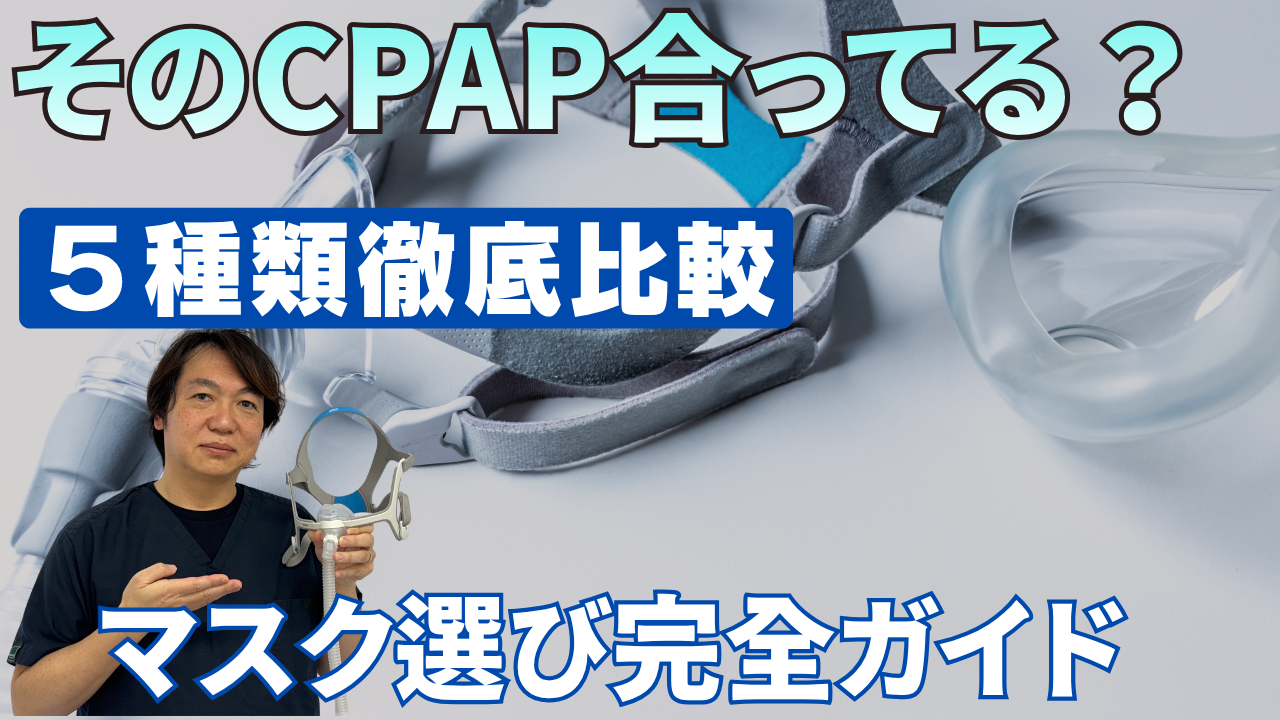
A Complete Comparison of CPAP Masks
We tried on and reviewed five different types of CPAP masks. 90% of CPAP comfort comes down to the mask.
Watch the video
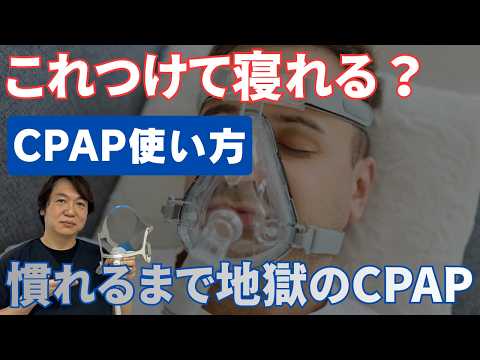
Do you have to use CPAP forever? A specialist explains how to use CPAP
A detailed explanation of how to use CPAP, with a real demonstration of what it feels like to wear the device.
Watch the video
Ueno Snoring Clinic was featured on Fuji TV’s “Live News It!”
Watch our discussion of sleep disorders, snoring, and sleep apnea diagnosis at Ueno Snoring Clinic
Watch the video
Ueno Snoring Clinic was featured in an article on Nippon TV’s “news every.”
Please use this as a starting point for thinking about testing or treatment for snoring, sleep apnea, and sleep disorders.
Read the article
Reviewed by Our Director
Kazuyuki Sugaya
Director / Anesthesiologist, Ueno Snoring Clinic
With more than 20,000 general anesthesia cases, our director provides care centered on the diagnosis and treatment of snoring and sleep apnea, tailored to each patient. [Insurance-Covered] Ueno Snoring Clinic
This article has been medically reviewed by Director Kazuyuki Sugaya and explains how to correctly interpret oxygen-saturation figures such as SpO2, ODI, and T90 that appear in sleep test results.
🩺Comprehensive Snoring Treatment at Ueno Snoring Clinic
Ueno Snoring Clinic evaluates both AHI and SpO2 through a simplified sleep test or PSG testing, and offers insurance-covered CPAP treatment as well as self-pay laser snoring treatment.
Thorough Testing & Ongoing Treatment (Insurance-Covered)
- Home sleep test / PSG (polysomnography): Precise evaluation of the causes of snoring and apnea, including AHI and SpO2
- CPAP therapy: The standard treatment for moderate-to-severe apnea
Self-Pay Treatment for Root-Cause, Short-Term Results
- Laser snoring treatment: Available in 3-, 6-, and 12-session packages
- Medical weight-loss support: An option when weight gain is a contributing factor
*We walk through the meaning of every number in your test results carefully during your appointment.
This topic is also covered in detail in our director’s book, “Curing Snoring with the Latest Treatments” (Amazon Japan Best Seller: #1 in General Medicine, #1 in Clinical Internal Medicine, #2 in Home Medical & Health)
New Book by Our Director
“Curing Snoring with the Latest Treatments”
Written by an anesthesiologist who has overseen the sleep of more than 10,000 patients, this book is a modern guide to the latest snoring treatments.
View on Amazon
Quick Answer
For a healthy adult, a normal SpO2 (blood oxygen saturation) range is roughly 96–99%. If SpO2 drops below 90% while you’re awake and conscious during the day, and it’s accompanied by shortness of breath, cyanosis (a bluish tinge to the lips or skin), or altered consciousness, you need prompt medical attention — and in some cases, emergency care. On the other hand, “nighttime SpO2 drops” that appear in sleep test results are a temporary phenomenon that repeats with each apnea or hypopnea event, and they don’t mean emergency care is needed the moment they’re recorded. That said, findings such as frequent drops below 90% (a high ODI), a very low minimum SpO2, or long stretches of time spent below 90% (a long T90) are known to be associated with risks like cardiovascular disease — and together with AHI, they’re an important indicator for judging whether treatment is needed.
📋 What This Article Covers
- Why “daytime SpO2 drops” and “nighttime SpO2 drops” need to be understood differently
- What SpO2 (blood oxygen saturation) is, and what counts as normal
- What it actually means when SpO2 drops below 90% in a sleep test
- How to read “minimum SpO2,” “ODI,” and “T90” in your results
- Why it’s important to look at both AHI and SpO2
- What risks are linked to repeated drops below 90%
Why “Daytime SpO2 Drops” and “Nighttime SpO2 Drops” Need to Be Understood Differently
You’ll often find information online saying “an SpO2 below 90% is dangerous.” That isn’t wrong, but most of that information is written with a different scenario in mind: a persistent daytime drop in SpO2, while conscious, caused by a respiratory condition such as pneumonia or COPD (chronic obstructive pulmonary disease). If that’s accompanied by shortness of breath, cyanosis (a bluish tinge to the lips or skin), or altered consciousness, prompt medical attention — or an emergency call — is needed.
By contrast, “nighttime SpO2 drops” as they appear in a sleep test (a simplified home test or PSG) are a different kind of phenomenon. SpO2 dips temporarily each time an apnea or hypopnea event occurs, then recovers once breathing resumes — and this cycle repeats many times over the course of a single night. Even if your results show something like “minimum SpO2: 85%,” that figure alone doesn’t mean you were in an emergency.
That said, when these temporary drops happen frequently, deeply, and for long stretches of time, they do place a real burden on the body. In the sections below, we’ll walk through what a normal range looks like and how to correctly read your test results.
What Is SpO2 (Blood Oxygen Saturation), and What’s Normal?
SpO2 (peripheral capillary oxygen saturation) is a percentage that shows how much of the hemoglobin in your blood is carrying oxygen. It can be measured easily with a device called a pulse oximeter, typically clipped onto a fingertip.
For a healthy adult, a normal SpO2 range is roughly 96–99%. In older adults, a slightly lower baseline (around 94–95%) can sometimes be normal. If a daytime reading consistently stays below 95%, it’s worth having it checked at a medical institution, since an underlying respiratory or cardiovascular condition — not just sleep apnea — could be involved.
The main focus of this article, though, isn’t this daytime figure — it’s the “overnight SpO2” recorded by a sleep test.
What Does It Actually Mean When SpO2 Drops Below 90% in a Sleep Test?
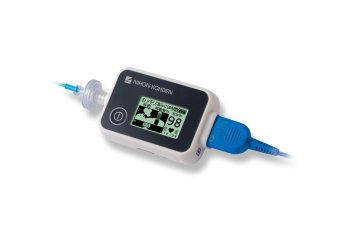
With sleep apnea syndrome, each time the airway becomes blocked and breathing stops (apnea) or becomes shallow (hypopnea), less oxygen reaches the lungs and SpO2 drops temporarily. In milder cases, the drop often stays in the low 90s. In more severe cases, drops into the 80s — and occasionally even the 70s — have been reported.
Once breathing resumes, SpO2 usually recovers quickly. This cycle of “drop and recovery” repeating dozens, sometimes hundreds, of times in a single night is the actual reality of moderate-to-severe sleep apnea syndrome. Even if your results note “below 90%,” that simply indicates the level dropped below 90% at least once — or repeatedly — during the test. It doesn’t mean emergency care was required at that exact moment.
What matters is looking at three factors together: how many times SpO2 dropped below 90%, how deep the drops were, and how long that state lasted.
Minimum SpO2, ODI, and T90: How to Read Your Results
Your sleep test results include several technical measures related to SpO2. The three most important ones are:
| Metric |
What It Means |
| Minimum SpO2 |
The lowest SpO2 value recorded during the test |
| ODI (Oxygen Desaturation Index) |
The number of times per hour SpO2 drops by a defined amount |
| T90 |
The percentage of total sleep time spent with SpO2 below 90% |
Minimum SpO2 reflects the single most severe moment during the test. ODI reflects how many times drops occurred. T90 reflects how long that state lasted. Even with the identical result of “minimum SpO2: 85%,” the burden on the body is completely different depending on whether that happened just once during the test or was repeated dozens of times. Looking at all three metrics together gives a much more accurate picture.
Why It’s Important to Look at Both AHI and SpO2
The severity of sleep apnea syndrome is generally classified using AHI (the apnea-hypopnea index). But even at the same AHI value, how SpO2 drops can vary considerably from person to person. For example, two patients could both have an AHI of 30, yet one might have short apnea events with only mild SpO2 drops, while the other has prolonged apnea events with much deeper SpO2 drops.
That’s why, at our clinic, we look beyond AHI alone and also check oxygen-saturation metrics like minimum SpO2, ODI, and T90 together, in order to judge how urgently treatment — including starting CPAP — may be needed.
Do You Really Understand What Your Test Results Mean?
From what your AHI and SpO2 figures mean to whether treatment is needed, we’ll walk you through everything carefully during your appointment.
What Risks Are Linked to Repeated Drops Below 90%?
When SpO2 repeatedly drops and recovers during sleep, it places a variety of burdens on the body. Each low-oxygen episode is thought to stimulate the sympathetic nervous system, constricting blood vessels, raising blood pressure, and making arrhythmia more likely. It can also cause temporary reductions in blood flow to the brain, contributing to morning headaches and fatigue.
When this cycle of apnea → low oxygen → arousal → resumed breathing repeats dozens or hundreds of times in a single night, sleep quality itself declines significantly. Over the long term, this has been linked to an increased risk of lifestyle-related and cardiovascular conditions, including high blood pressure, arrhythmia, heart attack, and stroke.
There’s no need to be overly alarmed just because your results show that SpO2 dropped below 90% once during the test. But if it’s happening frequently, deeply, and for extended periods, that’s an important sign that may be treatable. If you’re unsure what the numbers in your results mean, we recommend checking with your doctor rather than guessing on your own.
What Ueno Snoring Clinic Offers
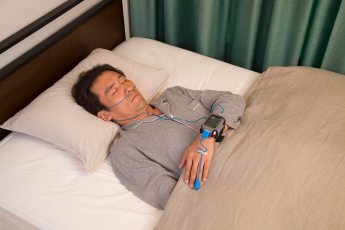
Ueno Snoring Clinic is a Sleep Disorder Medicine clinic specializing in snoring and sleep apnea syndrome. Through a simplified home sleep test or PSG testing (no hospital stay required), we evaluate not only AHI but also oxygen-saturation metrics like minimum SpO2, ODI, and T90, and carefully explain whether CPAP treatment is needed.
If you’re not sure what the SpO2 figures in your results mean, or you’re concerned about a reading below 90%, bring your results in and let’s discuss them together.
Summary: Understand What the Numbers Mean, and Get the Treatment You Need
A normal SpO2 range is roughly 96–99%. A daytime drop below 90% accompanied by symptoms is a medically urgent situation. On the other hand, “nighttime SpO2 drops” that appear in sleep test results are a temporary phenomenon that occurs with each apnea or hypopnea event, and it’s important to evaluate multiple metrics — minimum SpO2, ODI, and T90 — together with AHI.
If you feel uncertain about the numbers in your results, don’t rely on internet information alone to draw conclusions — start by checking with the medical institution that performed your test.
Start With an Initial Consultation
We’ll carefully walk you through how to read your results and whether treatment is needed. Fully appointment-based, with same-day appointments available.
Frequently Asked Questions
Q. My sleep test showed SpO2 dropping below 90%. Should I see a doctor right away?
A. If it only dropped below 90% temporarily during the test, that alone doesn’t mean emergency care is needed right away. That said, if the drops are repeated, or if you also experience symptoms like shortness of breath during the day, please consult a doctor promptly.
Q. What’s a normal SpO2 value?
A. For a healthy adult, roughly 96–99% is the benchmark. In older adults, a slightly lower baseline can sometimes be normal.
Q. Which matters more — minimum SpO2 or ODI?
A. It’s not a matter of one or the other — it’s important to evaluate both together, along with AHI. The depth, frequency, and duration of the drops are all relevant to the burden on your body.
Q. What symptoms occur when SpO2 drops below 90%?
A. If the drop is persistent during the day, symptoms like shortness of breath, headaches, dizziness, or fatigue can occur. With temporary nighttime drops, many people don’t notice any symptoms at all.
Q. I was told my T90 is long. What does that mean?
A. T90 is the percentage of your total sleep time spent with SpO2 below 90%. The longer this percentage, the longer your body went without adequate oxygen — and it’s one of the factors used to judge whether treatment is needed.
Q. Can treatment improve SpO2 drops?
A. If apnea or hypopnea is the cause, treatments like CPAP therapy — which prevent the airway from becoming blocked — can often significantly improve nighttime SpO2 drops.







いびきを最新治療で治す-表紙-1.png)