


いびきを最新治療で治す-表紙-1.png)
Told You Stop Breathing in Your Sleep? A Guide to Insurance-Covered Sleep Apnea Testing in Japan
Sleep Talking, Restless Sleep, or Thrashing? What It Might Mean | Ueno Snoring Clinic
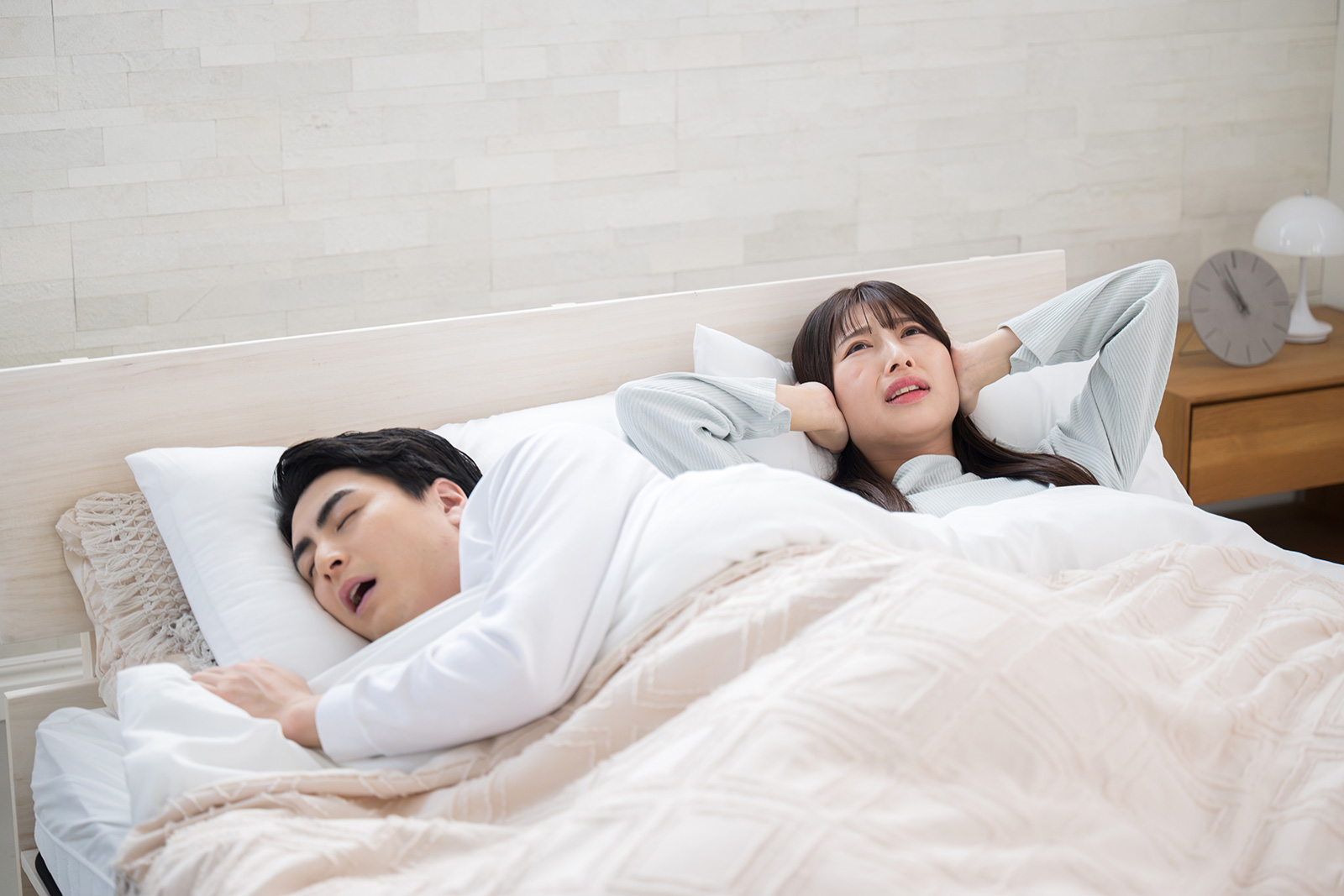
Symptoms like these are often written off as nothing more than restless habits or fatigue.
But behind sleep talking, restless sleep positions, and thrashing movements during sleep, a variety of sleep disorders can be hiding — including sleep apnea syndrome, REM sleep behavior disorder, periodic limb movement disorder, restless legs syndrome, medication side effects, and psychological stress.
In recent years, a growing number of medical institutions in Japan have adopted the department name “Sleep Disorder Medicine” (often paired with internal medicine), and this framing has been gaining attention.
For people who’ve long wondered, “What specialty handles snoring?” or “Should restless sleep or sleep talking even be a reason to see a doctor?” — having a department called Sleep Disorder Medicine makes it much clearer where to turn.
In this article, we’ll explain the relationship between sleep talking, restless sleep positions, thrashing during sleep, and snoring — and the warning signs that are worth discussing with a Sleep Disorder Medicine specialist.
Ueno Snoring Clinic offers a range of options tailored to each patient’s condition, including insurance-covered sleep testing and CPAP management, as well as self-pay laser treatment for snoring. If you’d like to find out which treatment is right for you, please book an initial consultation.
Details of the tests and treatments offered at Ueno Snoring Clinic can be found here
Reviewed by Our Director
Kazuyuki Sugaya
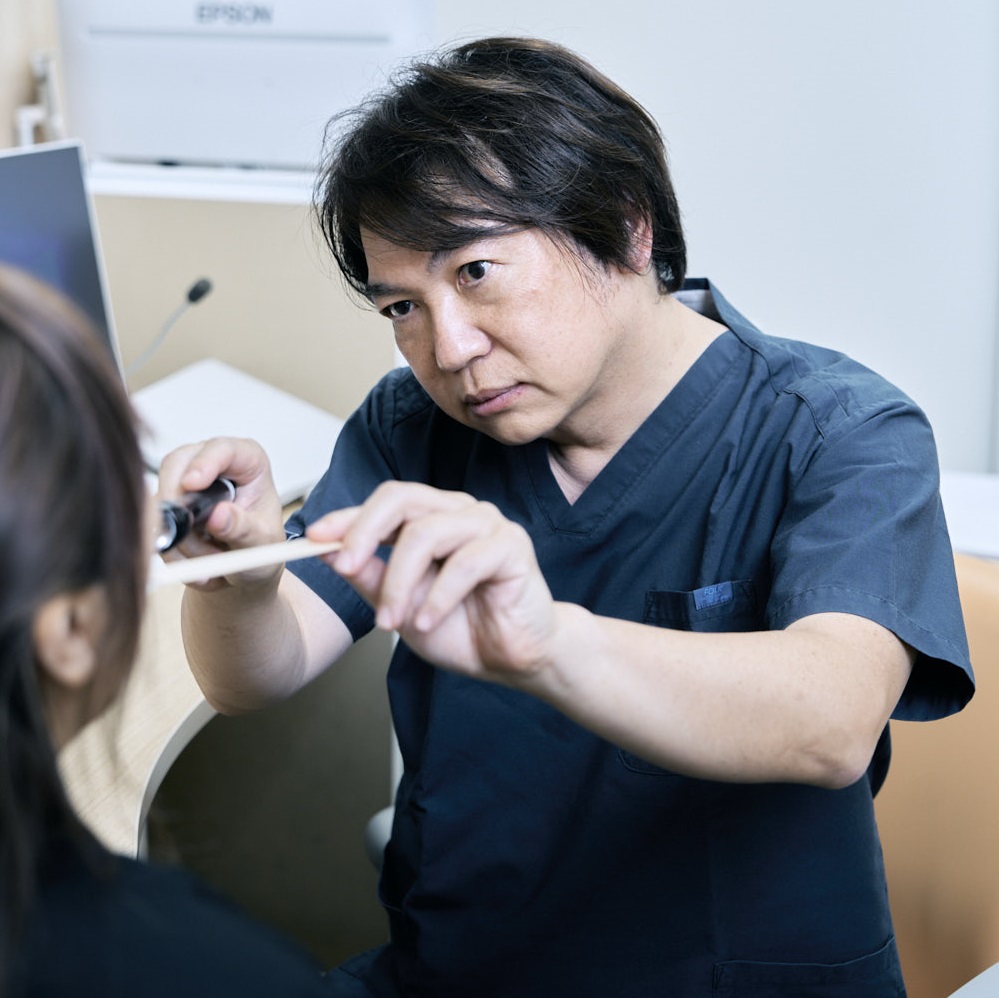
Director / Anesthesiologist, Ueno Snoring Clinic
With more than 20,000 general anesthesia cases, our director provides care centered on the diagnosis and treatment of snoring and sleep apnea, tailored to each patient. [Insurance-Covered] Ueno Snoring Clinic
This article has been medically reviewed by Director Kazuyuki Sugaya and explains accurate medical information about testing and treatment for snoring and sleep apnea syndrome (SAS) in plain language.
🩺Comprehensive Snoring Treatment at Ueno Snoring Clinic
The causes of snoring range from throat structure to obesity. Ueno Snoring Clinic is not limited to a single treatment method — we offer a wide range of evidence-based options so we can propose the plan best suited to each patient.
Thorough Testing & Ongoing Treatment (Insurance-Covered)
- Home sleep test / PSG (polysomnography): Precise analysis of your sleep condition
- CPAP therapy: The standard treatment for moderate-to-severe apnea
Self-Pay Treatment for Root-Cause, Short-Term Results
- Latest laser snoring treatment: Incision-free, root-cause treatment
- Medical weight-loss support: Physically opening the airway through weight reduction
*As a clinic specializing in snoring treatment, we are committed to resolving “snoring that won’t stop” through both insurance-covered and self-pay options.
This topic is also covered in detail in our director’s book, “Curing Snoring with the Latest Treatments” (Amazon Japan Best Seller: #1 in General Medicine, #1 in Clinical Internal Medicine, #2 in Home Medical & Health)
New Book by Our Director
“Curing Snoring with the Latest Treatments”
Written by an anesthesiologist who has overseen the sleep of more than 10,000 patients, this book is a modern guide to the latest snoring treatments.
Quick Answer
Yes — sleep talking, restless sleep positions, and thrashing during sleep can be connected to snoring, and in many cases both point to the same underlying issue: sleep apnea syndrome. When breathing repeatedly stops or becomes shallow during sleep, the brain briefly rouses over and over, and the body often expresses this as tossing, turning, changing position, or vocalizing — not just as snoring. Other conditions, including REM sleep behavior disorder, periodic limb movement disorder, and restless legs syndrome, can cause similar nighttime movement and are worth ruling out too, especially if symptoms include acting out dreams, hitting a family member, or falling out of bed. If you or a family member have noticed loud snoring, breathing pauses, or unusual movement during sleep, a Sleep Disorder Medicine evaluation — starting with a simplified home sleep test — can help identify what’s actually going on.
What This Article Covers
- The relationship between sleep talking, restless sleep, and snoring
- Sleep disorders that can cause thrashing during sleep
- The connection between sleep apnea syndrome and restless sleep
- Warning signs worth discussing with a Sleep Disorder Medicine specialist
- What you can discuss at Ueno Snoring Clinic
Is Sleep Talking or Restless Sleep Always a Medical Problem?
First, an important baseline: sleep talking and tossing and turning happen to everyone from time to time. On days when you’re especially tired, after drinking, after a stretch of poor sleep, or following a stressful day, you may talk in your sleep more or toss and turn more than usual.
So occasional tossing or mild sleep talking on its own isn’t something to immediately assume is a medical problem.
That said, the following situations do warrant closer attention.
Sleep Talking and Restless Sleep Signs Worth Watching
- Sleep talking that’s loud enough to sound like shouting
- Large arm or leg movements during sleep
- Hitting or kicking whoever is sleeping next to you
- Falling out of bed
- Body movements that appear to match the content of a dream
- Extremely loud snoring
- Breathing that stops during sleep
- Not feeling rested even after waking up
- Strong daytime sleepiness
- High blood pressure, frequent nighttime urination, or morning headaches
In these cases, the issue may not simply be a restless sleeping position — an underlying sleep disorder that warrants evaluation by a Sleep Disorder Medicine specialist could be involved.
Is There a Connection Between Snoring and Restless Sleep?
The short answer: yes, snoring and restless sleep can be connected. Sleep apnea syndrome deserves particular attention here.
With sleep apnea syndrome, the upper airway narrows or becomes blocked during sleep, causing breathing to become shallow or stop temporarily. As a result, the body experiences distress and the brain briefly rouses over and over throughout the night.
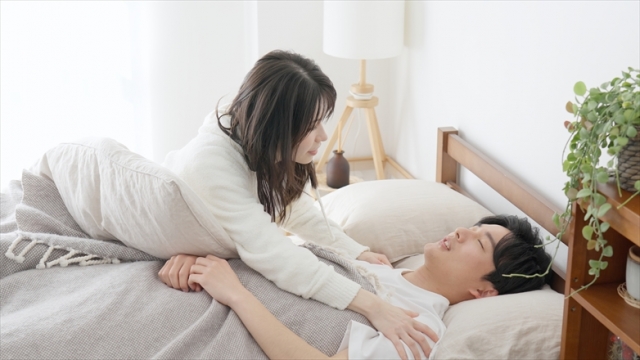
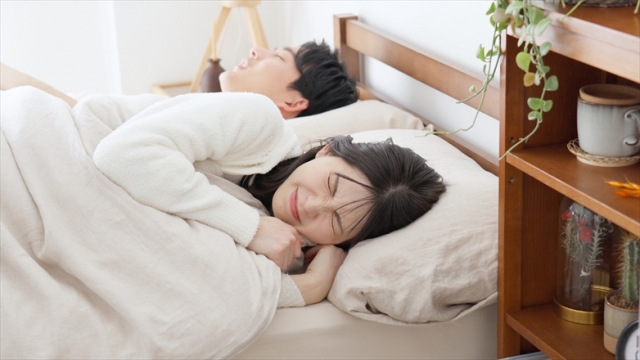
The person themselves usually doesn’t remember any of this, but each time it happens, the body may toss and turn, shift position, open the mouth, or move the neck.
To a family member watching, this can look like:
- Restless, constantly-shifting sleep
- Fidgeting and moving around all night
- Sudden loud snoring
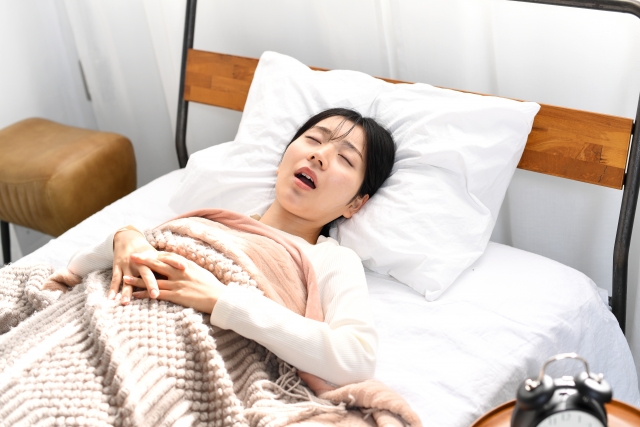
- A sharp gasp for air after breathing stops
- Looking unsettled even while asleep
In other words, what looks like restless sleep may actually be rooted in breathing difficulty. In that case, the real issue isn’t “fixing” the sleeping position — what genuinely matters is having a Sleep Disorder Medicine specialist check whether breathing is stopping during sleep.
What to Consider When Both Sleep Talking and Snoring Are Present
When sleep talking and snoring occur together, several patterns are worth considering.
1. Nighttime Arousals Caused by Sleep Apnea Syndrome
With sleep apnea syndrome, sleep becomes lighter every time breathing stops. As a result, sleep talking may increase, or the person may appear to be having a nightmare.
The following pattern in particular is worth paying attention to:
- Snoring stops
- A period of silence lasting several to more than ten seconds
- Followed by a sharp gasp for air
- A sleep-talking-like sound
- Rolling over
This sequence is one of the patterns commonly seen with sleep apnea syndrome. It can be evaluated at a Sleep Disorder Medicine clinic through a home sleep test or PSG (polysomnography) testing.
2. REM Sleep Behavior Disorder
One condition that deserves particular attention when sleep talking or thrashing during sleep is involved is REM sleep behavior disorder.
Normally, during REM sleep — the stage in which dreaming occurs — the body’s muscles lose most of their tone, so large body movements matching the content of a dream rarely happen. With REM sleep behavior disorder, however, the body can end up acting out the dream itself, which may include:
- Fighting someone in a dream
- Dreaming of being chased
- Shouting
- Flailing the arms
- Hitting whoever is sleeping next to you
- Falling out of bed
This isn’t simply a restless sleeping position — it calls for a specialist evaluation. In particular, if symptoms like these appear suddenly in middle age or later, it’s a symptom worth discussing with a Sleep Disorder Medicine or neurology specialist.
3. Periodic Limb Movement Disorder and Restless Legs Syndrome
If your legs twitch or kick during sleep, periodic limb movement disorder may be involved. And if you experience an itchy, crawling sensation in your legs before falling asleep that makes it hard to stay still — one that eases when you move your legs — restless legs syndrome is also a possibility.
Both of these lower sleep quality and can affect not just your own sleep but your family’s as well. Because they can also co-occur with snoring and apnea, a comprehensive evaluation at a Sleep Disorder Medicine clinic is important.
4. The Effects of Alcohol, Sleeping Pills, and Stress

Sleep talking and restless sleep can worsen with alcohol, sleeping pills, antidepressants, significant stress, or sleep deprivation.
Alcohol in particular is one of the most common factors that worsens snoring, since it relaxes the throat muscles and makes the airway more prone to narrowing.
- Snoring is noticeably worse only on nights you’ve been drinking
- You’re told your sleep talking or restlessness is worse after drinking
- You’ve been told your breathing stopped on a night you fell asleep while intoxicated
In these situations too, sleep apnea syndrome may be an underlying factor.
Warning Signs Worth Discussing With a Sleep Disorder Medicine Specialist
If you notice any of the symptoms below, we recommend consulting a Sleep Disorder Medicine specialist sooner rather than later.
Warning Signs a Family Member Might Notice
- Loud snoring
- Breathing that stops
- Appearing to struggle to breathe during sleep
- Suddenly gasping for air
- Sleep talking loud enough to sound like shouting
- Flailing arms or legs
- Hitting or kicking a family member
- Falling out of bed
- Excessive night sweats
- Appearing to wake up repeatedly during the night
Warning Signs You Might Notice Yourself
- Not feeling rested even after waking up
- Daytime sleepiness
- Getting sleepy during meetings or while driving
- Morning headaches
- A dry mouth
- Frequent nighttime urination
- High blood pressure
- Reduced concentration
- Increased irritability
- Not feeling well-rested despite having slept
Rather than looking at sleep talking or restlessness in isolation, it’s important to consider them together with snoring, apnea, daytime sleepiness, and morning fatigue.
Why “Just Restless Sleep” Shouldn’t Be Left Unaddressed
Restless sleep, frequent sleep talking, thrashing during sleep — these are all symptoms that are genuinely hard to notice in yourself. In most cases, a family member or partner is the first to notice.
And yet, people often delay seeing a doctor by telling themselves things like:
- “It’s not that bad”
- “I was just tired”
- “I’ve always had restless sleep”
- “Everyone snores a little”
But if sleep apnea syndrome is present, repeated low oxygen and arousal responses during sleep may be linked to high blood pressure, arrhythmia, cardiovascular disease, daytime sleepiness, and an increased risk of traffic accidents.
Some sleep disorders, like REM sleep behavior disorder, can also lead to injury — to the person themselves or to a family member.
That’s why, if you’re experiencing sleep talking, restlessness, or thrashing during sleep, it’s important to think of these not as a matter of “personality” or “habit,” but as something worth a medical evaluation by a Sleep Disorder Medicine specialist.
What Does a Sleep Disorder Medicine Evaluation Involve?
Depending on your symptoms, a Sleep Disorder Medicine evaluation may include the following.
1. A Detailed Interview
The interview is the essential starting point.
- Whether you snore
- Whether anyone has noticed your breathing stop
- How often you talk in your sleep
- Movement during sleep
- Whether you remember the content of your dreams
- Daytime sleepiness
- Drinking habits
- Current medications
- Medical history
- Whether you have high blood pressure or diabetes
- How your sleep looks from a family member’s perspective
Because sleep disorders are often hard to notice in yourself, information from a family member is genuinely valuable whenever possible. A smartphone recording or video of your snoring or sleep behavior can also be very useful for the evaluation.
2. A Simplified Sleep Test
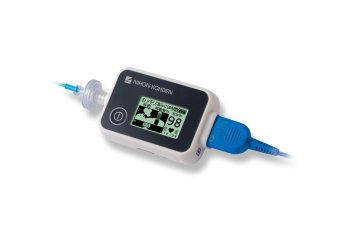
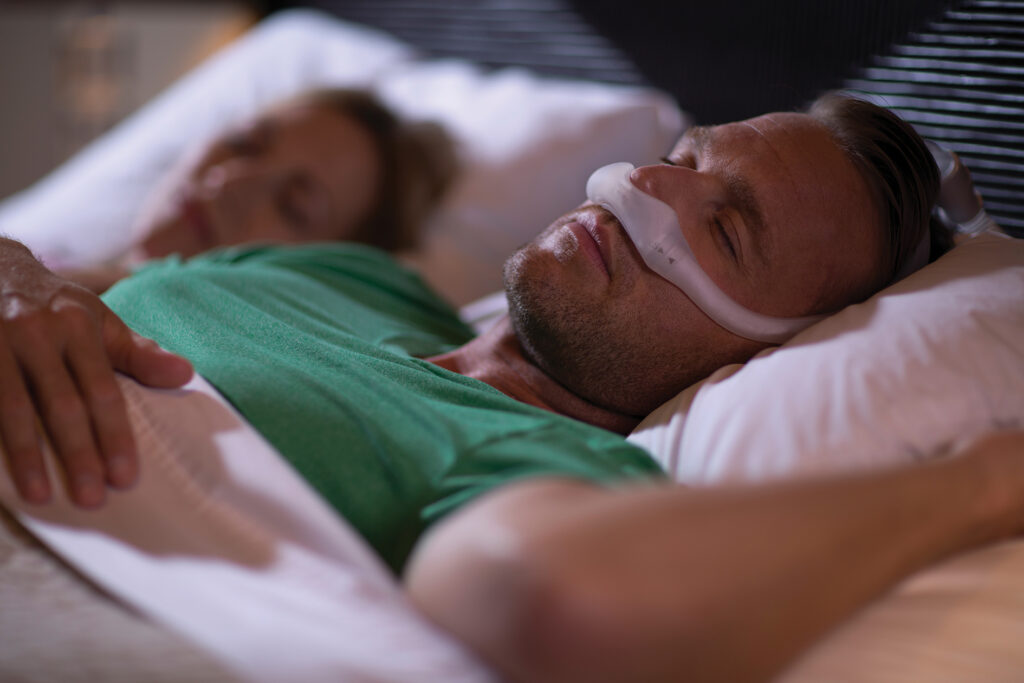
If snoring or apnea is suspected, a simplified test you can do at home may be used. It checks your breathing pattern, oxygen saturation, and pulse during sleep to evaluate the likelihood of sleep apnea syndrome.
Even when the initial concern is sleep talking or restless sleep, if snoring or apnea is part of the picture, evaluating your breathing is usually the first priority.
3. PSG Testing
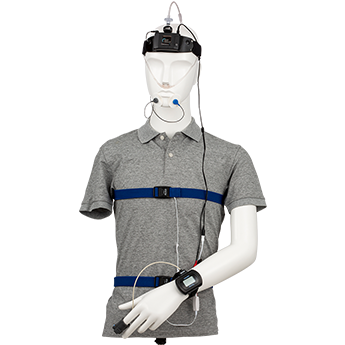
For a more detailed look at your sleep, PSG testing — an overnight polysomnography — may be used. PSG testing comprehensively records brain waves, eye movements, muscle activity, breathing, oxygen saturation, body position, and snoring.
When sleep talking, restlessness, or thrashing are involved, it’s important to look beyond simply “is there snoring?” and objectively assess what’s actually happening during sleep.
Why the Rise of Sleep Disorder Medicine Departments Matters
Until recently, people with sleep concerns often struggled to know where to turn: “Is snoring an ENT issue?” “Should I see a psychiatrist if I can’t sleep?” “Is daytime sleepiness something for internal medicine?” “Is restless sleep even something you go to a doctor for?”
Having Sleep Disorder Medicine as a clear entry point makes it much easier for patients to seek help. Sleep problems aren’t always simply a lifestyle issue — some genuinely warrant medical evaluation. In particular, snoring, apnea, sleep talking, restless sleep, abnormal behavior during sleep, and daytime sleepiness can all involve overlapping medical specialties.
That’s exactly why it’s worth knowing that consulting a Sleep Disorder Medicine specialist is an option whenever something about your sleep feels off.
What You Can Discuss at Ueno Snoring Clinic
At Ueno Snoring Clinic, you can discuss snoring, sleep apnea syndrome, breathing problems during sleep, daytime sleepiness, and persistent fatigue despite sleeping. In particular, we encourage the following people to reach out:
- A family member has pointed out your snoring
- You’ve been told your breathing stops during sleep
- You’ve been told your sleep is restless or unsettled
- Sleep talking or nightmares have become more frequent
- You don’t feel rested even after waking up
- You’re looking for a Sleep Disorder Medicine specialist
- You’re concerned about sleep apnea syndrome
- You’d like to discuss CPAP or testing
- You’d like to be tested under insurance coverage
Sleep talking and restless sleep are symptoms that are genuinely hard to notice in yourself. But to a family member, something may clearly seem off. That instinct may be picking up on a medically important sign.
Summary: Talk to a Sleep Disorder Medicine Specialist About Sleep Talking, Restlessness, or Thrashing
Sleep talking, restless sleep, and thrashing during sleep can sometimes be nothing more than a habit or the result of fatigue. But when they’re accompanied by snoring or apnea, sleep apnea syndrome may be hiding underneath. And if you experience symptoms like your body acting out a dream, shouting, flailing your arms and legs, hitting or kicking a family member, or falling out of bed, a specialist evaluation for a condition like REM sleep behavior disorder may be needed.
In recent years, the term Sleep Disorder Medicine has become more widely recognized, making it easier for people to bring sleep concerns to a medical professional.
“It’s just sleep talking.” “My sleep has always been restless.” “I’ve snored my whole life.” Rather than dismissing these symptoms, if a family member has pointed them out, we recommend consulting a Sleep Disorder Medicine specialist sooner rather than later.
As I also mentioned in a comment featured on Nippon TV’s “news every.,” not every medical institution that advertises itself as offering Sleep Disorder Medicine has the same testing capabilities or clinical expertise. Before choosing where to go, it’s worth checking a clinic’s website and looking into the background of the physician who will actually be seeing you.
Have Questions About Snoring, Sleep Apnea, or Sleep Disorder Medicine?
Ueno Snoring Clinic welcomes consultations about snoring, sleep apnea syndrome, breathing problems during sleep, and daytime sleepiness.
Frequently Asked Questions
[Insurance-Covered] If you’re concerned about snoring or sleep apnea, we offer a fully appointment-based system for reassuring, unhurried care.
Please feel free to contact Ueno Snoring Clinic [same-day appointments available]
📞0120-899-930
5F Ueno Silk Building, 4-8-8 Ueno, Taito-ku, Tokyo 110-0005, Japan

Please feel free to contact Ueno Snoring Clinic [same-day appointments available]
📞0120-899-930
5F Ueno Silk Building, 4-8-8 Ueno, Taito-ku, Tokyo 110-0005, Japan
Feel free to reach out to us on LINE ↓↓↓


English Support Available
We provide medical services for international patients. Please check our English website for details on how to visit our clinic.
Supervising Physician

Kazuyuki Sugaya, Director of Ueno Snoring Clinic
After graduating from Fujita Health University School of Medicine in 2004, Dr. Sugaya began his career as an anesthesiologist at Toho University Omori Medical Center. He has since gained extensive clinical experience at municipal hospitals and private clinics nationwide, administering general anesthesia in over 20,000 cases. In 2020, he founded the "Tokyo Spine Clinic," and has served as the Director of Ueno Snoring Clinic since 2025.
Related Columns

By Appointment Only
Specialized Snoring Treatment in Ueno
Ueno Snoring Clinic
Insurance-covered home testing available.
Following a physician’s consultation and result explanation,
we support the improvement of snoring and sleep apnea with "Dual Deep Thermia"—a non-surgical laser treatment, if necessary.
3-min walk from Ueno Station. Please feel free to consult us.