Ueno Snoring Clinic offers options tailored to your condition — from insurance-covered sleep testing and CPAP management to self-pay laser treatment for snoring. If you’d like to find out which approach suits you, please start with an initial consultation.
Details of the tests and treatments offered at Ueno Snoring Clinic can be found here
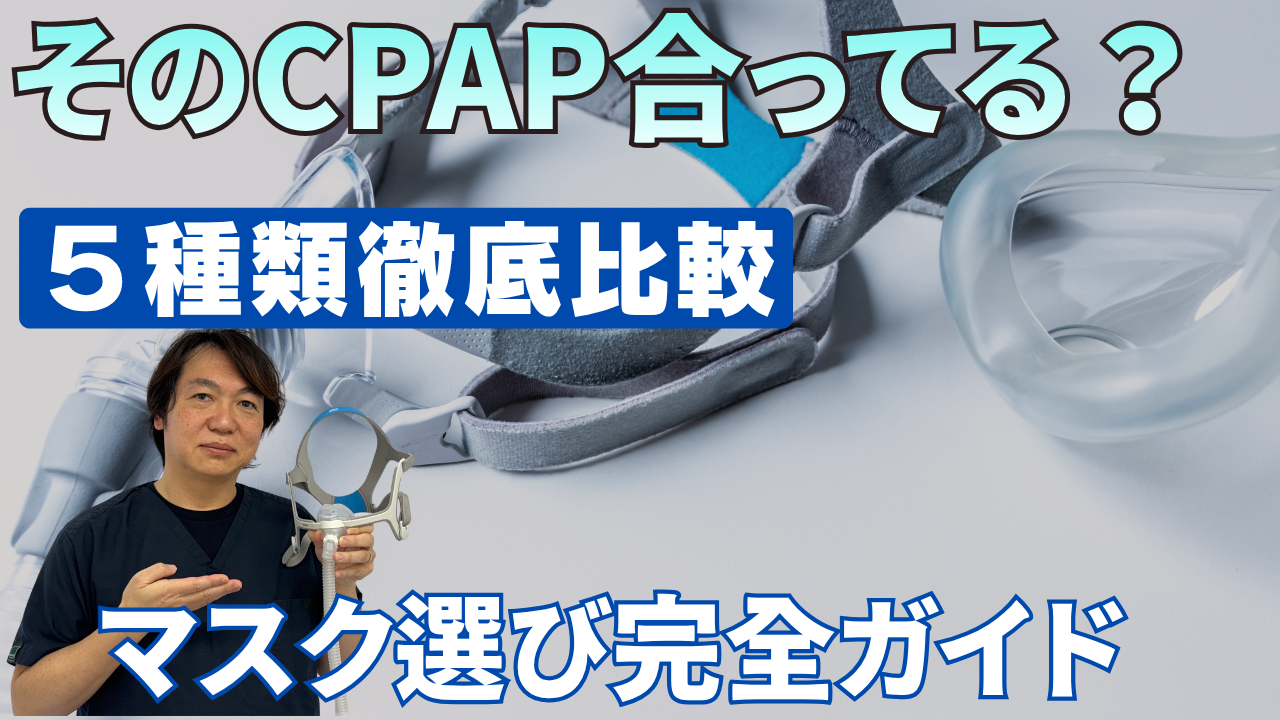
A Complete Comparison of CPAP Masks
We tried on and reviewed five different types of CPAP masks. 90% of CPAP comfort comes down to the mask.
Watch the video
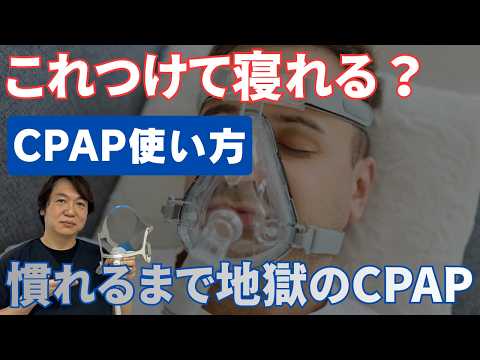
Do you have to use CPAP forever? A specialist explains how to use CPAP
A detailed explanation of how to use CPAP, with a real demonstration of what it feels like to wear the device.
Watch the video
Ueno Snoring Clinic was featured on Fuji TV’s “Live News It!”
Watch our clinic’s examination and explanation of sleep disorders, snoring, and sleep apnea.
Watch the video
Ueno Snoring Clinic was featured in an article on Nippon TV’s “news every.”
Please take a look as a starting point for thinking about getting evaluated for snoring, sleep apnea, or other sleep disorders.
Read the article
Reviewed by Our Director
Kazuyuki Sugaya
Director, Ueno Snoring Clinic / Anesthesiologist
Our director, with over 20,000 general anesthesia cases, focuses primarily on the diagnosis and treatment of snoring and sleep apnea, offering care tailored to each patient. [Insurance-Covered] Ueno Snoring Clinic
This article was reviewed by our Director, Kazuyuki Sugaya, and explains what separates people whose snoring stops with side-sleeping from those it doesn’t — along with the treatment options suited to each.
🩺Comprehensive Snoring Treatment at Ueno Snoring Clinic
Ueno Snoring Clinic also offers root-cause treatment options — including laser therapy and CPAP — for “non-positional” snoring that doesn’t improve with sleep position alone.
Insurance-Covered: Thorough Testing and Ongoing Treatment
- Simplified and PSG testing: Also evaluates how apnea changes with sleep position
- CPAP treatment: The standard treatment for moderate-to-severe apnea
Self-Pay: Address the Root Cause, Short-Term Focus
- Snoring laser treatment: For snoring that doesn’t stop even with side-sleeping. Available in 3-, 6-, and 12-session packages
- Medically supervised weight loss: An option when weight gain is a contributing factor
*Adjusting your sleep position is ultimately a way of managing symptoms. If you’re hoping for a more lasting improvement, laser treatment is also worth discussing with us.
Our director’s book, “Curing Snoring with the Latest Treatments” (No.1 Amazon Bestseller in General Medicine, No.1 in Clinical Internal Medicine, No.2 in Home Medicine & Health) covers this topic in detail as well
New Book by Our Director
“Curing Snoring with the Latest Treatments”
A guide to the latest snoring treatments, written by an anesthesiologist who has overseen the sleep of more than 10,000 patients.
View on Amazon
Quick Answer
Whether side-sleeping stops your snoring depends on whether the cause of your snoring sits in a spot affected by gravity, or in a spot that’s narrowed regardless of gravity. If tongue-base collapse (the tongue falling backward toward the throat under gravity) is the main cause, switching to your side tends to open up the airway and reduce or eliminate snoring — this is called “positional snoring.” On the other hand, if the cause is structural narrowing (enlarged tonsils, chronic nasal congestion, a small jaw), significant obesity, or severe sleep apnea, changing position often doesn’t improve things enough on its own — this is called “non-positional snoring” — and a different approach, such as laser treatment or CPAP, is usually needed. Which type you are can be estimated through testing.
📋 What This Article Covers
- Quick answer: whether snoring “stops” or “doesn’t stop” comes down to where it originates
- Why lying on your back triggers 2–3 times more snoring than lying on your side
- What sets apart people whose snoring stops with side-sleeping — positional snoring
- What sets apart people whose snoring doesn’t stop — non-positional snoring
- Which treatments suit the “doesn’t stop” type
- How to find out which type you are
Quick Answer: Whether Snoring “Stops” or “Doesn’t Stop” Comes Down to Where It Originates
It’s widely known that side-sleeping can help with snoring — but in practice, some people go quiet as soon as they switch to their side, while others barely notice a difference. This gap isn’t just a matter of individual constitution — it can largely be explained by where the snoring originates, and whether that narrowing is affected by gravity.
In sleep medicine, snoring that changes significantly with body position is sometimes called “positional,” while snoring that stays largely the same regardless of position is called “non-positional.” This article explains the difference between these two types, and the approach best suited to each.
Why Lying on Your Back Triggers 2–3 Times More Snoring Than Lying on Your Side
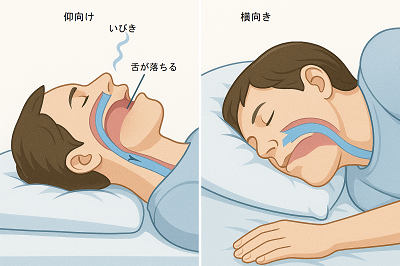
In our own day-to-day practice, patients who come in primarily for snoring tend to sleep on their backs more often, and statistically, lying on the back increases the frequency of snoring by roughly 2–3 times compared to lying on the side. This is because, when lying on the back, the tongue and soft palate are more likely to fall backward toward the throat under gravity, narrowing the airway. It’s an anatomically well-understood phenomenon, and a pattern shared by many patients.
For a closer look at why back-sleeping makes snoring worse, along with practical side-sleeping tips you can try tonight, see our companion article below.
What Sets Apart People Whose Snoring Stops With Side-Sleeping — Positional Snoring
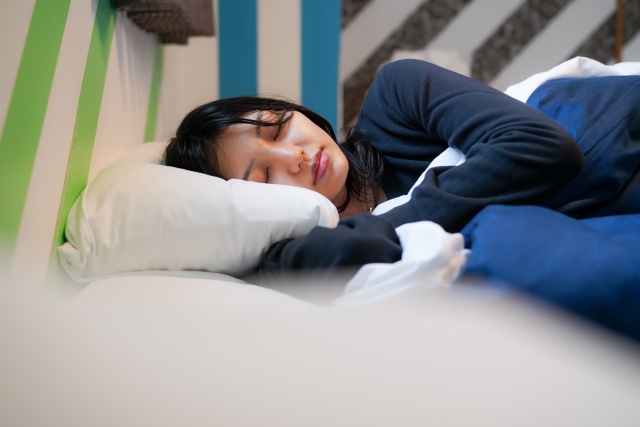
For people whose snoring nearly disappears or improves significantly when they switch to their side, the main cause is likely “tongue-base collapse” — the tongue falling backward toward the throat under gravity during sleep. On the back, the tongue falls in a direction that blocks the airway; on the side, it shifts sideways instead, which tends to keep the airway open.
This type is more commonly seen in people who are relatively young, have a standard BMI (body mass index), and have relatively little structural narrowing in the nose or throat. In some cases, testing can confirm that the severity of apnea improves significantly when lying on the side compared to the back.
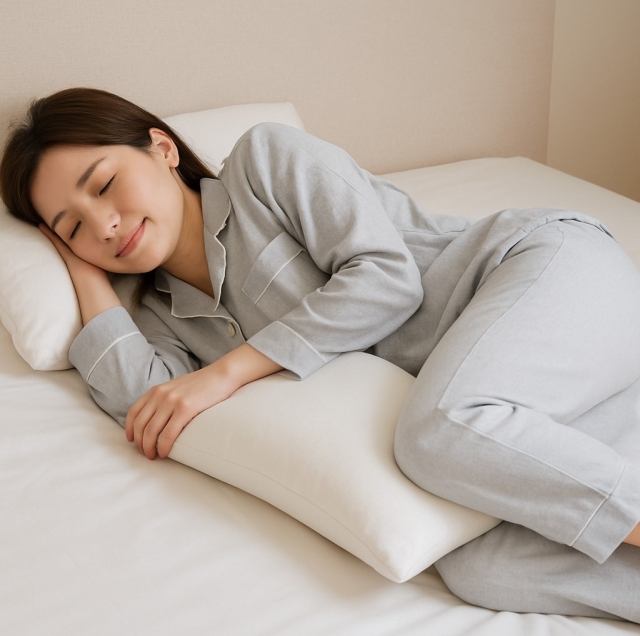
If this describes you, simply making a habit of side-sleeping — for example, by using a body pillow — can be expected to meaningfully improve your snoring.
What Sets Apart People Whose Snoring Doesn’t Stop — Non-Positional Snoring
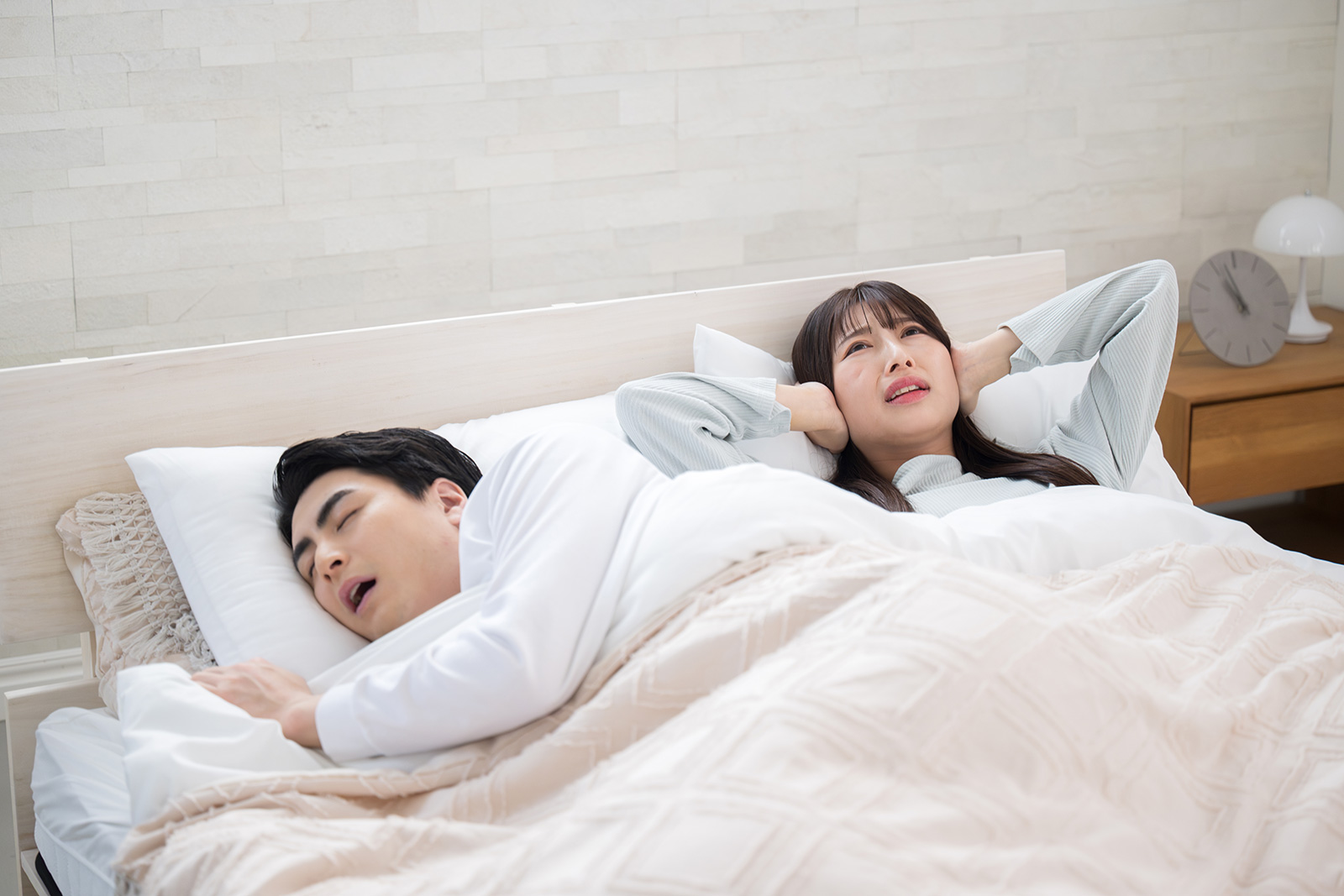
On the other hand, some people find that their snoring barely changes when they switch to their side, or improves somewhat but doesn’t stop completely. In this type, the cause of the snoring is likely located somewhere less affected by gravity, or the airway is narrowed regardless of position.
If side-sleeping “doesn’t seem to make a difference” for you, we’d recommend not relying on sleep position alone to solve the problem, and instead having the underlying cause properly evaluated. In the next section, we’ll walk through the most common causes.
Which Treatments Suit the “Doesn’t Stop” Type
Snoring that doesn’t stop even with side-sleeping is most often linked to one of the following causes.
| Common Cause |
Why Position Doesn’t Help Much |
| Enlarged tonsils or adenoids |
The tissue itself physically occupies the airway, largely regardless of position |
| Chronic nasal congestion |
A narrow nasal passage doesn’t open up just by changing position |
| A small or recessed jaw |
Structural narrowing from bone shape can’t be compensated for by sleep position alone |
| Significant obesity |
Fat deposits around the neck stay in place regardless of position |
| Severe sleep apnea syndrome |
The narrowing is too significant to be offset by position alone |
If one of these is the underlying cause, sticking with side-sleeping — even diligently — often doesn’t bring the improvement you’d hope for. For this type, treatments that address the underlying cause directly tend to be better suited.
When sagging tissue around the soft palate and throat is a factor, laser treatment for snoring can help tighten that tissue, aiming to reduce snoring regardless of sleep position. Laser treatment works by using collagen remodeling to change the condition of the tissue itself — unlike positional therapy, which manages symptoms in the moment, it’s characterized by addressing the underlying tissue directly.
💬 A Note From Our Director
We often meet patients who spent years relying solely on the idea that “side-sleeping will fix it,” only to find little had changed. Adjusting your sleep position is easy to start and easy to stick with, but it does have its limits depending on the cause. If side-sleeping hasn’t made a difference for you, rather than continuing to push through it, we’d recommend having the underlying cause evaluated.
For snoring that doesn’t respond to sleep position, laser treatment is another option
Our snoring laser treatment is available in 3-, 6-, and 12-session packages
Ask About Laser Treatment
Note that if severe sleep apnea is the underlying issue, CPAP treatment may be prioritized over laser treatment. It’s important to first confirm the presence and severity of apnea through testing.
How to Find Out Which Type You Are
To find out with confidence whether you’re a positional or non-positional case, it helps to compare the severity of apnea and snoring when lying on your back versus on your side, using a sleep test. Simplified tests and PSG tests can sometimes record data by position, letting you confirm objectively how much of a difference position actually makes for you.
Rather than judging by feel alone — “I’m probably fine on my side” or “side-sleeping didn’t help” — evaluating the cause based on actual test data lets you choose the right approach without wasting time on trial and error.
What Ueno Snoring Clinic Offers
Ueno Snoring Clinic is a Sleep Disorder Medicine clinic specializing in snoring and sleep apnea syndrome. For “non-positional” snoring that doesn’t improve with sleep position alone, we offer treatment matched to the underlying cause — including snoring laser treatment and CPAP.
If side-sleeping hasn’t made a difference for you, or you feel you’ve reached the limit of what adjusting your sleep position can do, we’d encourage you to consider a treatment that addresses the root cause.
Summary: If Side-Sleeping Isn’t Working, Look Beyond Sleep Position
Whether side-sleeping stops your snoring depends heavily on whether the cause sits somewhere affected by gravity. If tongue-base collapse is the main cause, side-sleeping tends to help significantly — but if the underlying cause is enlarged tonsils, chronic congestion, jaw shape, significant obesity, or severe apnea, adjusting sleep position alone often isn’t enough.
If you feel that side-sleeping hasn’t changed anything for you, rather than continuing to push through with sleep-position adjustments, why not have the underlying cause evaluated and consider root-cause options like laser treatment or CPAP?
For Snoring That Doesn’t Respond to Sleep Position, Consider Laser Treatment
Snoring laser treatment aims for improvement regardless of sleep position. We offer 3-, 6-, and 12-session packages, tailored to your consultation and test results.
Start With an Initial Consultation
Whether you need testing, laser treatment, or CPAP management, we’re here to help. Fully appointment-based, with same-day appointments available.
Frequently Asked Questions
Q. I tried side-sleeping, but my snoring hasn’t changed. Why not?
A. There may be an underlying cause less affected by sleep position, such as enlarged tonsils, chronic nasal congestion, jaw shape, significant obesity, or severe sleep apnea. We’d recommend having the cause evaluated through testing.
Q. How can I tell if I’m a positional or non-positional case?
A. This can be estimated by comparing the severity of apnea and snoring when lying on your back versus your side, using a sleep test. We’d recommend checking test data rather than relying on how it feels alone.
Q. Could someone whose snoring used to improve with side-sleeping eventually need treatment anyway?
A. Yes — weight gain or aging can change things over time, even for people who previously improved with side-sleeping. We’d recommend periodically reassessing your own condition.
Q. If side-sleeping doesn’t work for me, can I start laser treatment right away?
A. Suitability for laser treatment is determined after a consultation and testing confirm the cause and severity. If severe apnea is present, CPAP may be prioritized instead. We’d caution against any clinic that recommends laser treatment without testing first — that’s not a safe way to choose a treatment.
Q. Body pillows and other sleep-position products haven’t helped. What should I do?
A. These products tend to work well for positional snoring, but have limited effect for non-positional snoring. Rather than continuing to push through with these tools, we’d recommend getting evaluated to identify the underlying cause.







いびきを最新治療で治す-表紙-1.png)