


いびきを最新治療で治す-表紙-1.png)
The Soft Palate and Snoring: Where the Sound Comes From and Why It Loosens
Alcohol & Snoring: What It Means for Sleep Apnea | Ueno Snoring Clinic
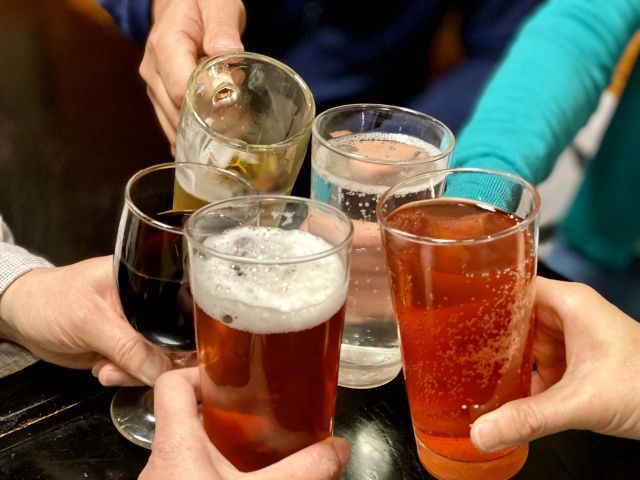
“I never snore normally, but on nights I drink, my family tells me I’m impossibly loud…”
“The morning after a night out, my throat is bone-dry, my head feels heavy, and I’m exhausted no matter how much I slept.”
We hear concerns like these constantly from patients at Ueno Snoring Clinic.
Ueno Snoring Clinic offers a range of options tailored to each patient’s condition, including insurance-covered sleep testing and CPAP management, as well as self-pay laser treatment for snoring. If you’d like to find out which treatment is right for you, please book an initial consultation.
Details of the tests and treatments offered at Ueno Snoring Clinic can be found here
🩺Comprehensive Snoring Treatment at Ueno Snoring Clinic
The causes of snoring range from throat structure to obesity. Ueno Snoring Clinic is not limited to a single treatment method — we offer a wide range of evidence-based options so we can propose the plan best suited to each patient.
Thorough Testing & Ongoing Treatment (Insurance-Covered)
- Home sleep test / PSG (polysomnography): Precise analysis of your sleep condition
- CPAP therapy: The standard treatment for moderate-to-severe apnea
Self-Pay Treatment for Root-Cause, Short-Term Results
- Latest laser snoring treatment: Incision-free, root-cause treatment
- Medical weight-loss support: Physically opening the airway through weight reduction
*As a clinic specializing in snoring treatment, we are committed to resolving “snoring that won’t stop” through both insurance-covered and self-pay options.
Reviewed by Our Director
Reviewed by Our Director
Kazuyuki Sugaya
Director / Anesthesiologist, Ueno Snoring Clinic
With more than 20,000 general anesthesia cases, our director provides care centered on the diagnosis and treatment of snoring and sleep apnea, tailored to each patient. [Insurance-Covered] Ueno Snoring Clinic
This article has been medically reviewed by Director Kazuyuki Sugaya and explains accurate medical information about testing and treatment for snoring and sleep apnea syndrome (SAS) in plain language.
Quick Answer
Yes — alcohol makes snoring (and apnea) more likely, more severe, and more prone to causing deeper drops in blood oxygen. And the people who “only snore on drinking nights” are often exactly the people whose airway is already borderline narrow the rest of the time. This article explains the mechanism, why it shouldn’t be dismissed as harmless, and what actually helps — including the role of alcohol type, jaw structure, and neck posture.
To put it plainly upfront: alcohol makes snoring (and apnea) more likely, more prolonged, and more likely to cause deeper drops in oxygen. And people who “only snore on drinking nights” are often, in reality, part of a group whose airway is already narrow to begin with — even if they don’t realize it.
This article explains, from a sleep specialty clinic’s perspective, why alcohol worsens snoring, why it shouldn’t be brushed off, and how factors like the type of alcohol and your jaw and neck structure come into play.
Why Does Drinking Make Snoring Worse? (The Medical Mechanism)
Alcohol worsens snoring through three main mechanisms.
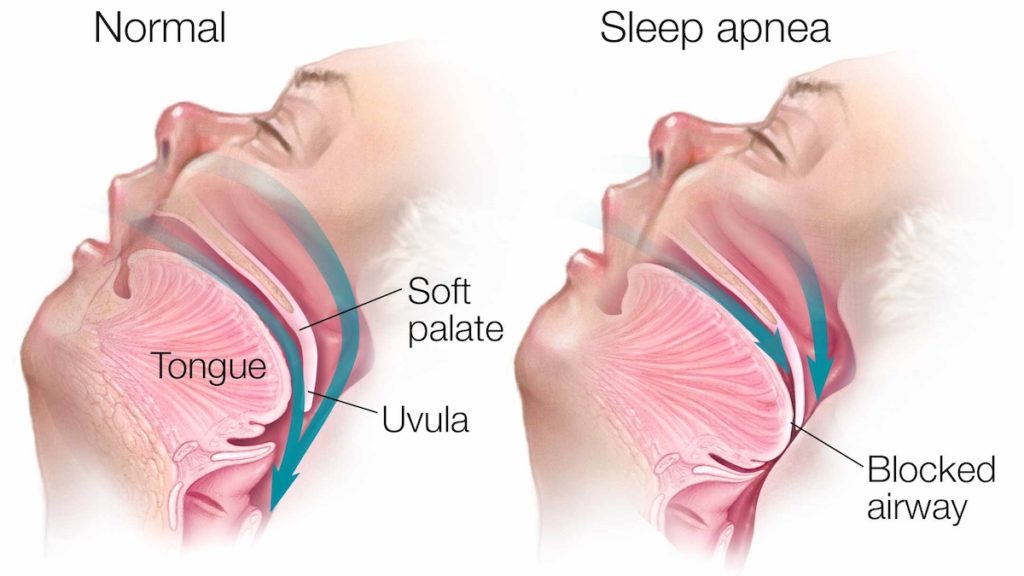
1. Excessive muscle relaxation (the tongue and soft palate collapse more easily)

Everyone’s throat muscles relax somewhat during sleep, but alcohol has a muscle-relaxing effect that causes them to relax even further than usual.
As a result, the base of the tongue and the soft palate sag further into the airway, narrowing the passage for air → producing vibration → louder snoring. When the narrowing becomes severe enough, breathing can begin to stop or become shallow.
2. Swelling and congestion of the nasal lining (a stuffy nose leads to more mouth breathing)
Just as alcohol causes facial flushing, it also dilates blood vessels inside the nose, making the nasal lining prone to swelling.
On nights when the nose feels blocked, breathing shifts to the mouth, which encourages a posture where the tongue falls further back into the throat — worsening snoring.
3. A dulled brain arousal response (the “breathe!” alarm becomes sluggish)
When breathing is about to stop, the brain normally triggers a brief arousal that opens the airway back up. But alcohol suppresses the central nervous system, which can delay this arousal response — the very mechanism meant to interrupt dangerous drops in oxygen.
As a result, breathing events can last longer, and oxygen levels can drop further than they otherwise would.
In fact, systematic reviews and meta-analyses have shown that after alcohol consumption, breathing indices during sleep (AHI) tend to increase on average, and the lowest blood oxygen level reached during sleep tends to drop further.
Ueno Snoring Clinic offers a range of options tailored to each patient’s condition, including insurance-covered sleep testing and CPAP management, as well as self-pay laser treatment for snoring. If you’d like to find out which treatment is right for you, please book an initial consultation.
Details of the tests and treatments offered at Ueno Snoring Clinic can be found here
Is “Snoring Only on Drinking Nights” Really Just Temporary? Why It Can Be a Sign of Borderline Sleep Apnea
It’s easy to assume: “I’m fine normally — it’s only on drinking nights, so it’s nothing to worry about.”
But meta-analyses show that people who already snore, or who have already been diagnosed with OSA (obstructive sleep apnea), tend to see a larger increase in AHI after drinking than others do.
In other words: if a “load” like alcohol is enough to tip you into worse symptoms, that’s a strong sign that your airway is already operating close to its limit even on ordinary nights.
Self-Check: Warning Signs Worth Getting Evaluated For (Even If They Only Happen on Drinking Nights)
The more of the following that apply to you, the more reason there is to suspect SAS (sleep apnea syndrome) or a borderline version of it, rather than ordinary snoring:
- A family member has told you your breathing stopped
- Your snoring becomes noticeably louder on drinking nights, or you make a sudden gasping “catch” of breath
- You wake up with a bone-dry mouth or throat (a sign of mouth breathing)
- You wake up groggy, with a heavy head, or feel strong daytime sleepiness
- You’ve been told you have high blood pressure, obesity, or abnormal blood sugar regulation
- You tend to hold your neck forward (forward head posture) or have significant shoulder tension
- You’ve been told you have a small jaw, or a lower jaw set further back than usual (retrognathia)
Why “Alcohol Plus Apnea” Is Especially Risky: The Damage Multiplies
When apnea occurs, oxygen levels drop and the sympathetic nervous system becomes overactive. When this happens repeatedly, it not only degrades sleep quality but also accumulates strain on cardiovascular and metabolic health over time.
Add alcohol into the mix, and — as explained above — both airway narrowing and delayed arousal response compound each other, tending to make oxygen drops deeper and breathing events longer.
New Book by Our Director
“Curing Snoring with the Latest Treatments”
Written by an anesthesiologist who has overseen the sleep of more than 10,000 patients, this book is a modern guide to the latest snoring treatments.
Real-World Patterns We See in Practice
Here are some of the most common patterns we see in patients (details have been altered to protect privacy).
Case 1: Man in his 40s, frequent business dinners, told his breathing “stops” after drinking
Due to his job, he has dinner meetings 3–4 times a week involving alcohol. He wasn’t aware of snoring normally, but his family told him his breathing “stopped at times” specifically on nights he’d been drinking.
He’d been dismissing it as simple tiredness, but after increasingly severe morning grogginess and falling asleep during meetings, he came in for an evaluation.
→ A home sleep test showed a clear trend: breathing events increased significantly on drinking nights. This was a textbook case of an airway that stays just barely open on ordinary nights, but collapses under the added strain of alcohol.
As countermeasures, he adjusted his drinking schedule (stopping at least 4 hours before bed), committed to side-sleeping, and improved nasal airflow. We also discussed a treatment option to reduce pharyngeal tissue vibration, helping limit how much his symptoms worsened during his busiest entertaining season.
Case 2: Woman in her 30s, average build, snores after just two glasses of wine
She came in saying, “I’m not overweight, so it’s embarrassing that I only snore on nights I drink.”
On examination, she had a somewhat small jaw with mild retrognathia (a lower jaw set slightly back), combined with a forward-head posture from long hours at a desk.
→ In her case, jaw structure and posture — rather than body weight — were likely the main factors narrowing her airway “container.” When alcohol relaxed her muscles further, her airway narrowed sharply enough to produce audible snoring.
Case 3: Man in his 50s, drinks a lot of beer, wakes up repeatedly through the night
He had a habit of drinking right up until bedtime, reasoning that “beer is mostly water, so it’s fine.”
On drinking nights, he woke up frequently, and woke in the morning with a dry mouth.
→ Because beer has a lower alcohol content, people tend to drink more of it — meaning total alcohol intake often ends up higher than expected, and the carbonation can also encourage faster drinking. On top of that, frequent nighttime urination fragmented his sleep, and the resulting mouth breathing dried out his throat — creating ideal conditions for snoring.
Case 4: Man in his 40s, sedentary with forward head posture, falls asleep drinking on the couch
After coming home, he would drink a canned highball on the couch and fall asleep there, with his neck held in a forward position the whole time. His family reported loud snoring.
→ Poor neck posture can narrow the shape of the upper airway (specifically, the space behind it). Systematic reviews have examined the relationship between OSA and neck posture or cervical spine alignment.
In cases like this, simply stopping the habit of falling asleep on the couch and switching to side-sleeping in bed with a properly adjusted pillow can lead to significant improvement.
Does the Type of Alcohol Matter? (Beer, Sake, Whiskey, and More)
The bottom line: what worsens snoring most isn’t the type of drink, but rather (1) total alcohol (ethanol) consumed, (2) how quickly you drink, and (3) how close to bedtime you stop.
That said, certain drinking patterns are genuinely more common with certain drink types.
Beer
- Its lower alcohol content means people tend to drink more of it, so total intake often ends up higher
- Carbonation tends to speed up drinking pace, and people often keep drinking right up until bedtime
- Frequent nighttime urination fragments sleep and worsens mouth breathing and dryness
Sake
Even a single serving contains a meaningful amount of ethanol, and its warming sensation can encourage people to keep drinking without noticing how much they’ve had.
It’s often paired with salty snacks, which can contribute to fluid retention and swelling in the upper airway.
Whiskey, Shochu, and Other Distilled Spirits
- Higher alcohol content means intake can rise quickly in a short period
- Mixed drinks like highballs can create the illusion of “weak” alcohol, leading people to drink more than they realize
- Research suggests a dose-response relationship — snoring and apnea tend to worsen as the amount consumed increases
Rather than blaming a particular type of drink, stopping 3–4 hours before bed, setting a total intake limit, and managing hydration and salt intake are far more reliable strategies.
Small Jaws and Forward Head Posture — Common in Japan — Can Amplify Alcohol-Related Snoring
It’s not unusual to see patients who “look nothing like the typical SAS case” because they’re not overweight. In particular, Japanese and other East Asian populations are thought to have jaw structure (a small or receded jaw) contribute to airway narrowing, independent of body weight.
Morphological studies of Japanese OSA patients have identified a small jaw (micrognathia) as a significant risk factor.
Additionally, forward head posture — common from long hours at a desk — can narrow the space behind the airway, and reviews have examined the relationship between OSA and posture or cervical spine factors.
When alcohol’s muscle-relaxing effect is added on top of this:
“an airway that’s already narrow due to bone structure, which was being held open by muscle tone alone, loses that support once alcohol relaxes the muscles” —
and this is exactly the sequence that produces dramatically loud snoring, but only on drinking nights.
What the Latest Research Shows About Alcohol and Breathing During Sleep
The standard measure of breathing events during sleep is the AHI (Apnea-Hypopnea Index). A systematic review and meta-analysis covering 14 studies and 422 participants found that after alcohol consumption:
AHI increased on average (an overall mean difference of approximately 2.33 events per hour)
The increase was even larger in people who already snore or have an OSA diagnosis (a mean difference of approximately 7.10 events per hour in the OSA group)
The lowest blood oxygen saturation (nadir SpO2) during sleep decreased
Observational studies have also reported that alcohol consumption may be associated with an increased risk of OSA.
Steps You Can Take Today (The Order Matters)
1. Stop drinking 3–4 hours before bedtime
A nightcap right before sleep is the worst possible timing. Changing just this one habit leads to real improvement for many people.
2. Commit to side-sleeping
Sleeping on your back makes it far easier for the tongue to fall backward. A body pillow or cushion can help you actually maintain a side-sleeping position through the night.
3. Keep your nasal airway clear (to reduce mouth breathing)
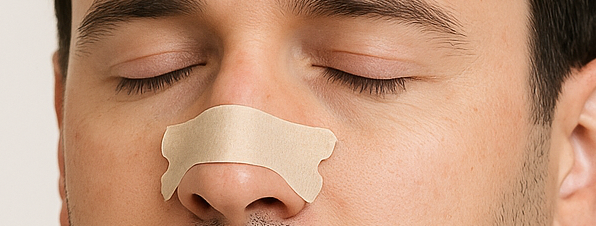
Adjusting bedroom humidity, nasal rinses, and nasal strips are all worth trying.
*If you have an existing medical condition or are taking medication, please consult your physician first.
4. Avoid salty snacks and late-night ramen
Fluid retention causes swelling in the upper airway, reinforcing the conditions that lead to snoring.
5. Manage the trio of body weight, neck circumference, and posture
Weight loss helps, of course — but simply correcting forward head posture (“tech neck”) alone has led to noticeable improvement for some patients.
Ueno Snoring Clinic offers a range of options tailored to each patient’s condition, including insurance-covered sleep testing and CPAP management, as well as self-pay laser treatment for snoring. If you’d like to find out which treatment is right for you, please book an initial consultation.
Details of the tests and treatments offered at Ueno Snoring Clinic can be found here
What Ueno Snoring Clinic Can Do for You
If you have even a slight concern that you might have sleep apnea, the fastest path forward is getting it properly evaluated rather than letting it go unchecked.
A home sleep test you can complete without leaving your house (ideal for busy patients)
No hospital stay required — we offer testing you can complete in your normal home environment.
Simply understanding how your breathing differs between drinking nights and non-drinking nights can significantly sharpen your treatment strategy.
Treatment Recommendations Tailored to the Underlying Cause (Self-Pay Options)
Snoring is typically driven by a combination of factors — the nose, the throat, jaw structure and posture, body weight, and lifestyle habits. Based on your consultation and test results, we help identify your specific bottleneck and recommend realistic options such as:
Optimizing lifestyle habits and sleep position
Medical weight-loss treatment
Laser treatment to reduce pharyngeal tissue vibration (suitability depends on individual evaluation)
(*Suitability for each option depends on your specific condition.)
Frequently Asked Questions
Alcohol-Related Snoring Is an SOS From Your Body — Getting It Evaluated Is the Fastest Path Forward
Worse snoring on nights you drink is not simply bad luck.
Data consistently shows that alcohol narrows the airway, dulls the body’s protective arousal response, and tends to deepen drops in oxygen during sleep.
And people who “only snore on drinking nights” are often, in reality, dealing with an airway that’s already close to its limit the rest of the time too — due to factors like jaw structure (a small jaw) or posture (forward head position).
At Ueno Snoring Clinic, we use sleep testing to give you a clear picture of what’s actually happening, and recommend a plan tailored to your specific cause.
If you’re worried about disturbing your family, concerned about your long-term health, or notice your snoring getting worse every time you drink, we encourage you to reach out sooner rather than later.
[Insurance-Covered] If you’re concerned about snoring or sleep apnea, we offer a fully appointment-based system for reassuring, unhurried care.
Please feel free to contact Ueno Snoring Clinic [same-day appointments available]
📞0120-899-930
5F Ueno Silk Building, 4-8-8 Ueno, Taito-ku, Tokyo 110-0005, Japan

Please feel free to contact Ueno Snoring Clinic [same-day appointments available]
📞0120-899-930
5F Ueno Silk Building, 4-8-8 Ueno, Taito-ku, Tokyo 110-0005, Japan
Feel free to reach out to us on LINE ↓↓↓

English Support Available
We provide medical services for international patients. Please check our English website for details on how to visit our clinic.
Supervising Physician

Kazuyuki Sugaya, Director of Ueno Snoring Clinic
After graduating from Fujita Health University School of Medicine in 2004, Dr. Sugaya began his career as an anesthesiologist at Toho University Omori Medical Center. He has since gained extensive clinical experience at municipal hospitals and private clinics nationwide, administering general anesthesia in over 20,000 cases. In 2020, he founded the "Tokyo Spine Clinic," and has served as the Director of Ueno Snoring Clinic since 2025.
Related Columns

By Appointment Only
Specialized Snoring Treatment in Ueno
Ueno Snoring Clinic
Insurance-covered home testing available.
Following a physician’s consultation and result explanation,
we support the improvement of snoring and sleep apnea with "Dual Deep Thermia"—a non-surgical laser treatment, if necessary.
3-min walk from Ueno Station. Please feel free to consult us.