At Ueno Snoring Clinic, we also welcome consultations about discomfort during CPAP use, such as reviewing pressure settings and mask fitting.
Details of the tests and treatments offered at Ueno Snoring Clinic can be found here
You’ll Want to Know This! A Complete Comparison of 5 CPAP Types — What Doctors Really Look For
Our doctor compares five different CPAP machines side by side and explains what actually matters when choosing one.
Watch the video
A Complete Comparison of CPAP Masks
We tried on and reviewed five different types of CPAP masks. 90% of CPAP comfort comes down to the mask.
Watch the video
Do you have to use CPAP forever? A specialist explains how to use CPAP
A detailed explanation of how to use CPAP, with a real demonstration of what it feels like to wear the device.
Watch the video
Ueno Snoring Clinic was featured on Fuji TV’s “Live News It!” and on FNN Prime Online
Watch our clinic’s examination and explanation of sleep disorders, snoring, and sleep apnea.
Watch the video
Ueno Snoring Clinic was featured in an article on Nippon TV’s “news every.”
Please take a look as a starting point for thinking about getting evaluated for snoring, sleep apnea, or other sleep disorders.
Read the article
Reviewed by Our Director
Kazuyuki Sugaya
Director, Ueno Snoring Clinic / Anesthesiologist
Our director, with over 20,000 general anesthesia cases, focuses primarily on the diagnosis and treatment of snoring and sleep apnea, offering care tailored to each patient. [Insurance-Covered] Ueno Snoring Clinic
This article was written by our Director, Kazuyuki Sugaya, and explains the mechanism of — and remedies for — abdominal bloating (aerophagia), one of the side effects commonly seen with CPAP therapy.
🩺Comprehensive Snoring Treatment at Ueno Snoring Clinic
At Ueno Snoring Clinic, we also handle consultations about discomfort that arises during CPAP therapy, supporting you in continuing treatment comfortably — including reviewing pressure settings and masks.
Insurance-Covered: Thorough Testing and Ongoing Treatment
- Simplified and PSG testing: Objective assessment of apnea severity
- CPAP treatment: Ongoing support, including pressure and mask adjustments
Self-Pay: Address the Root Cause, Short-Term Focus
- Snoring laser treatment: Courses of 3, 6, or 12 sessions available
- Medically supervised weight loss: An option when weight gain is a contributing factor
*Changing CPAP pressure settings requires a physician’s judgment. If uncomfortable symptoms persist, please consult us rather than stopping use on your own.
Our Director’s book, “Curing Snoring with the Latest Treatments” (an Amazon Japan bestseller — #1 in General Medicine, #1 in Clinical Internal Medicine, #2 in Family Health & Wellness), also covers this topic in more detail.
New Book by Our Director
“Curing Snoring with the Latest Treatments”
A guide to the latest snoring treatments, written by an anesthesiologist who has overseen the sleep of more than 10,000 patients.
View on Amazon
Quick Answer
Bloating and trapped gas during CPAP use is a condition called aerophagia (air swallowing), a side effect that is far from rare — estimates vary, but figures of roughly 16–50% of CPAP users are often cited. The main cause is that some of the air delivered under pressure ends up flowing toward the esophagus and stomach instead of the airway. It tends to happen more easily when the pressure setting is high, the mouth falls open and you breathe through it, or you sleep on your back with your chin tucked in. In many cases it improves with side sleeping, a mask review, and pressure adjustments (such as the EPR feature or APAP) — but if symptoms continue, don’t stop CPAP on your own; talk to your clinic.
📋 What This Article Covers
- Why bloating and gas on CPAP are called “aerophagia”
- Why you swallow air — how the mechanism works
- Who is more likely to get aerophagia
- What you can do yourself
- What the clinic can adjust
- Sources and references
Bloating and Gas on CPAP Are Usually “Aerophagia”

To put it plainly, the stomach bloating and trapped gas that people experience during CPAP use is a condition known as “aerophagia.” Estimates vary across studies, but figures of roughly 16–50% of CPAP users are often cited, making it one of the more common side effects of CPAP therapy.
A common misunderstanding is that the air from the CPAP machine flows directly into your stomach. More accurately, you unconsciously swallow air while you sleep, and that air collects in your stomach and intestines, producing symptoms such as bloating, belching, and increased gas.
Aerophagia itself isn’t dangerous enough to require stopping CPAP therapy.
However, if your symptoms are strong enough that you can’t sleep comfortably, or that you can’t keep wearing the CPAP at all, that’s a sign the pressure setting or mask needs to be reviewed. Our article on common problems in the first nights of CPAP use also touches on this briefly.
Why Do You Swallow Air? How the Mechanism Works
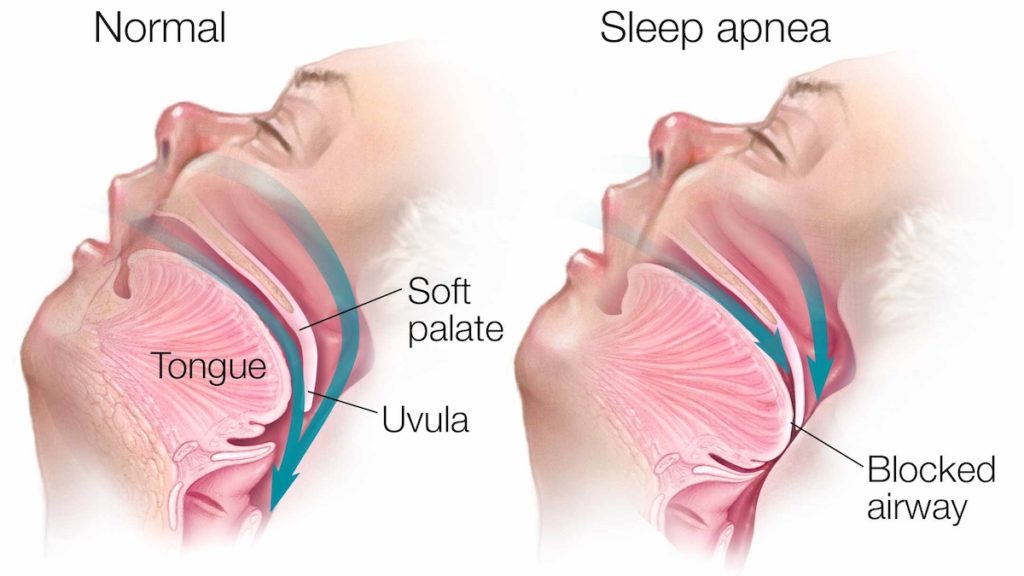
Normally, air delivered through the nose travels down the airway into the lungs. When several conditions line up, however, some of that air can veer toward the esophagus and enter the stomach.
| Factor |
Why It Makes Swallowing Air More Likely |
| How the esophageal sphincter works |
The lower esophageal sphincter, at the entrance to the stomach, is designed to relax naturally once pressure builds up to a certain level, letting air escape. If this reflex doesn’t work well, air tends to accumulate in the stomach. |
| A high pressure setting |
The greater the volume and force of the air delivered, the more likely it is that air which can’t be exhaled through the airway ends up flowing toward the esophagus. |
| An open mouth (mouth breathing) |
Even with a nasal mask, an open mouth makes air leak easily. This can push the pressure setting higher to compensate, or lead you to swallow air through the mouth as well. |
| Lying on your back with your chin tucked |
If a pillow that’s too high pulls your chin toward your chest, the airway narrows, and air flows more readily toward the esophagus instead of its proper path through the airway. |
| Mask air leaks |
If a poorly fitting mask lets air leak, the pressure tends to rise to compensate, which in turn raises the risk of aerophagia. |
In addition, research from overseas has shown that people with aerophagia have a higher rate of gastroesophageal reflux disease (GERD) — in one small study, around 77% in the aerophagia group versus around 36% in the comparison group — which suggests that reduced function of the lower esophageal sphincter itself may be involved. (This is an association, and the direction of cause and effect isn’t settled.)
Who Is More Likely to Get Aerophagia?

People with the following characteristics are considered more likely to experience aerophagia.
• You’ve just started CPAP and your body hasn’t yet adjusted to the pressure
• The pressure you need for treatment is relatively high
• You tend to breathe through your mouth, or your mouth falls open because of nasal congestion
• You often sleep on your back
• You have a history of gastroesophageal reflux disease (GERD)
• You often have carbonated drinks, alcohol, or caffeine before bed
The more of these apply to you, the more likely you are to notice symptoms. That said, aerophagia can still occur even if none of them apply, and individual differences are large.
What You Can Do Yourself
There are a few things you can try on your own, without waiting for an adjustment at a clinic.
| What to Try |
Key Points |
| Sleep on your side |
The airway tends to stay more open than when lying on your back, making it less likely that you’ll swallow air. A body pillow or cushion can help. |
| Review your pillow height |
Adjust it so your chin isn’t pulled in too far, and aim for a posture that keeps the airway straight. Our pillow guide may help. |
| Find ways to keep your mouth closed |
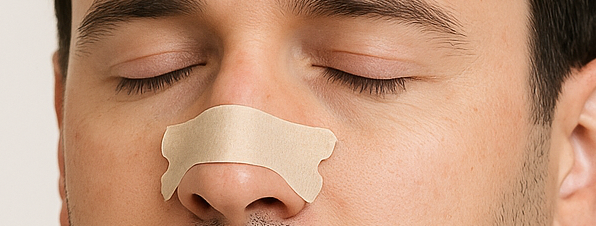
A chin strap (a band that supports the jaw) or mouth tape can help prevent air leaks and air swallowing caused by mouth breathing. |
| Review what you eat and drink before bed |
Carbonated drinks, caffeine, alcohol, and meals right before bed can loosen the lower esophageal sphincter or make you more likely to swallow air, so keep them modest. |
| Check how your mask fits |
A mask that’s the wrong size or worn out will leak more easily. Regular checks and replacement can also help — see our CPAP mask comparison guide. |
What the Clinic Can Adjust
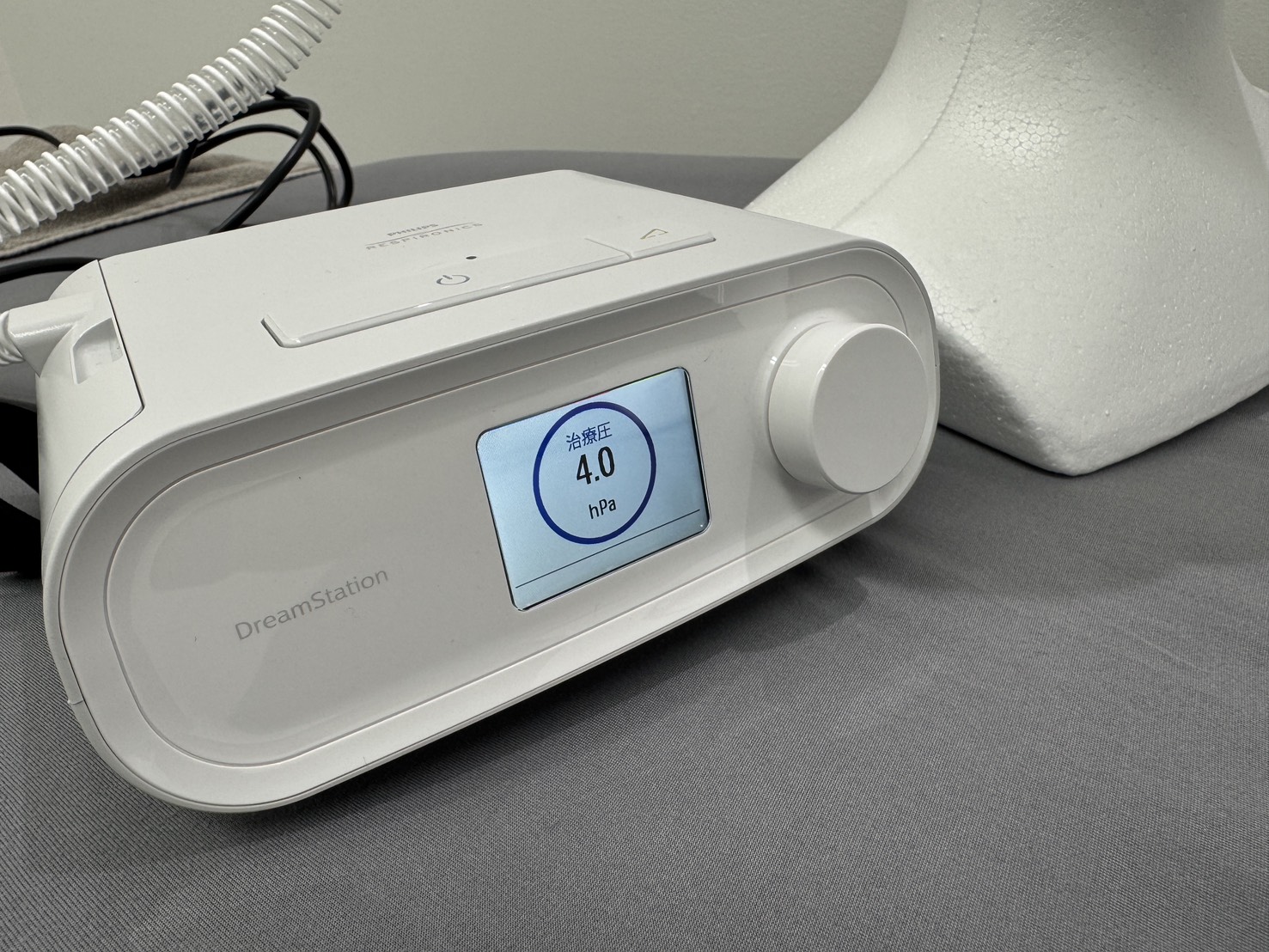
If self-care doesn’t help, an adjustment at a medical institution can be effective. Please don’t change the pressure setting or stop using CPAP on your own — consult us first.
Using expiratory pressure relief (EPR and similar features): Turning up the feature that slightly lowers the pressure only while you exhale makes it easier to breathe out.
Switching to APAP (auto-adjusting CPAP): Because the pressure adjusts automatically to your state during sleep, it can sometimes prevent unnecessarily high pressure from being applied throughout the night.
Reviewing the mask type: Switching to a nasal mask, or to a mask with a different fit, can sometimes help.
Re-evaluating the pressure setting itself: We consider whether the pressure can be adjusted to a more comfortable level while maintaining treatment effectiveness.
Because lowering the pressure too far can make the treatment less effective against apnea, it’s important that a physician adjusts it while balancing treatment effect and comfort. If you’re finding CPAP hard to tolerate in general, our article on what to do when CPAP doesn’t suit you may also help.
What Ueno Snoring Clinic Can Do
Ueno Snoring Clinic is a sleep disorder clinic specializing in snoring and sleep apnea. For uncomfortable symptoms during CPAP therapy, such as abdominal bloating and trapped gas, we welcome consultations that include reviewing pressure settings and mask fitting.
If the bloating has made you start to dread putting on your CPAP, please don’t just put up with it — talk to us. We’ll look for a way to continue treatment without strain.
Summary: Bloating Is “Aerophagia” — Don’t Put Up With It, Talk to Us
Most cases of abdominal bloating and trapped gas during CPAP use are caused by “aerophagia,” in which you unconsciously swallow air. The pressure setting, mask fit, sleeping position, and mouth breathing all play a part, and it’s not unusual for self-care such as switching to side sleeping or reviewing your mask to help.
If symptoms continue and you find it hard to keep up treatment, talk to your medical institution about adjusting the pressure or mask before giving up on CPAP on your own.
Putting Up With Uncomfortable CPAP Symptoms?
We welcome consultations about reviewing pressure settings and mask fitting, so you can continue treatment comfortably. Insurance coverage is available, and self-pay snoring laser treatment is also offered.
Frequently Asked Questions
Q. Why does CPAP make my stomach bloated?
A. Some of the air delivered by CPAP can end up being unconsciously swallowed toward the esophagus and stomach instead of going down the airway. This is called “aerophagia,” and it’s a commonly seen effect of CPAP therapy.
Q. I seem to be passing more gas since starting CPAP. Is that okay?
A. Air swallowed through aerophagia can collect in the intestines and be passed as gas. In most cases it’s within a range that doesn’t affect treatment, but if symptoms are strong, reviewing your mask or pressure setting may help.
Q. What should I do if the bloating doesn’t go away?
A. If switching to side sleeping, adjusting your pillow height, and changing what you eat and drink before bed don’t help, don’t stop CPAP on your own — consult your medical institution about adjusting the pressure setting or mask.
Q. Can I lower the pressure myself?
A. We don’t recommend changing it on your own, because lowering the pressure too far can make the treatment less effective against apnea. It’s important that a physician adjusts it while balancing treatment effect and comfort.
*This article is a general medical explanation based on the sources above. Symptoms and how to deal with them vary from person to person, so please consult a medical institution about changing pressure settings or reviewing your mask.







いびきを最新治療で治す-表紙-1.png)