


いびきを最新治療で治す-表紙-1.png)
Told You Stop Breathing in Your Sleep? A Guide to Insurance-Covered Sleep Apnea Testing in Japan
Apple Watch Sleep Apnea Alert? What to Do Next | Ueno Snoring Clinic
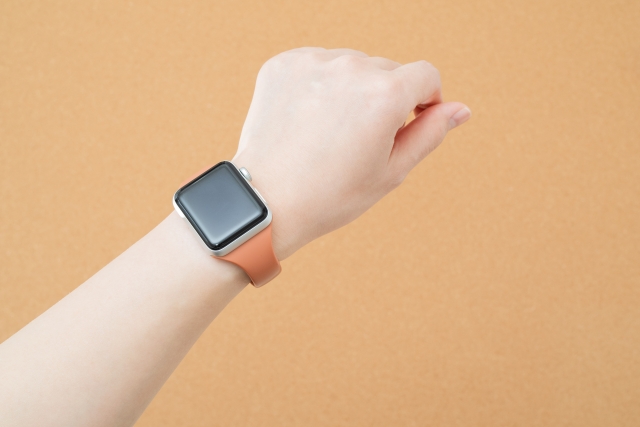
One morning, an Apple Watch notification reads: “Possible signs of sleep apnea detected.” A growing number of people are having exactly this experience. Others have started using smart rings — Oura Ring 4, Galaxy Ring, RingConn, and similar devices — and are unsettled by their “breathing disturbances” scores. These devices function as an entry point for flagging something that may be wrong; a definitive diagnosis and treatment can only be provided by a medical institution. In this article, our sleep specialty outpatient clinic offers a thorough guide to reading the sleep data from 2026’s newest devices, and explains how to properly connect that data to an insurance-covered PSG (polysomnography) test.
Ueno Snoring Clinic offers a range of options tailored to each patient’s condition, including insurance-covered sleep testing and CPAP management, as well as self-pay laser treatment for snoring. If you’d like to find out which treatment is right for you, please book an initial consultation.
Details of the tests and treatments offered at Ueno Snoring Clinic can be found here
Reviewed by Our Director
Kazuyuki Sugaya
Director / Anesthesiologist, Ueno Snoring Clinic
With more than 20,000 general anesthesia cases, our director provides care centered on the diagnosis and treatment of snoring and sleep apnea, tailored to each patient. [Insurance-Covered] Ueno Snoring Clinic
This article has been medically reviewed by Director Kazuyuki Sugaya and explains accurate medical information about testing and treatment for snoring and sleep apnea syndrome (SAS) in plain language.
🩺Comprehensive Snoring Treatment at Ueno Snoring Clinic
The causes of snoring range from throat structure to obesity. Ueno Snoring Clinic is not limited to a single treatment method — we offer a wide range of evidence-based options so we can propose the plan best suited to each patient.
Thorough Testing & Ongoing Treatment (Insurance-Covered)
- Home sleep test / PSG (polysomnography): Precise analysis of your sleep condition
- CPAP therapy: The standard treatment for moderate-to-severe apnea
Self-Pay Treatment for Root-Cause, Short-Term Results
- Latest laser snoring treatment: Incision-free, root-cause treatment
- Medical weight-loss support: Physically opening the airway through weight reduction
*As a clinic specializing in snoring treatment, we are committed to resolving “snoring that won’t stop” through both insurance-covered and self-pay options.
This topic is also covered in detail in our director’s book, “Curing Snoring with the Latest Treatments” (Amazon Japan Best Seller: #1 in General Medicine, #1 in Clinical Internal Medicine, #2 in Home Medical & Health)
New Book by Our Director
“Curing Snoring with the Latest Treatments”
Written by an anesthesiologist who has overseen the sleep of more than 10,000 patients, this book is a modern guide to the latest snoring treatments.
Quick Answer
No — Apple Watch and smart rings are not medical devices, and their alerts are not a diagnosis. These wearables can flag a possible risk of sleep apnea syndrome (SAS) based on patterns such as irregular breathing or low blood oxygen, but only a physician-administered, insurance-covered PSG (polysomnography) test can provide a definitive diagnosis and determine severity (AHI). If your device shows an alert, don’t ignore it — the appropriate next step is to visit a sleep specialty clinic promptly, not to treat the alert itself as a diagnosis.
What This Article Covers
- How 2026’s newest wearables (Apple Watch, Oura Ring 4, Galaxy Ring, RingConn, SOXAI RING) detect signs of sleep apnea
- How to read your device’s “breathing disturbances,” SpO₂, and sleep score data
- The difference between consumer snore-tracking apps like SnoreLab and medical-grade PSG testing
- What AHI (Apnea-Hypopnea Index) means and how severity is classified
- When an alert or concerning reading should prompt you to see a sleep specialist
- What to expect from insurance-covered PSG testing in Japan, including approximate cost
A 2026 Roundup: Sleep Apnea Detection Features in the Latest Wearables
Between 2025 and 2026, the sleep-monitoring accuracy of consumer wearable devices improved dramatically. From smartwatches to smart rings to smartphone apps, collecting health data while you sleep is no longer unusual. Below is a summary of the major devices and their sleep apnea-related features.
Apple Watch Series 9/10 · Ultra 2
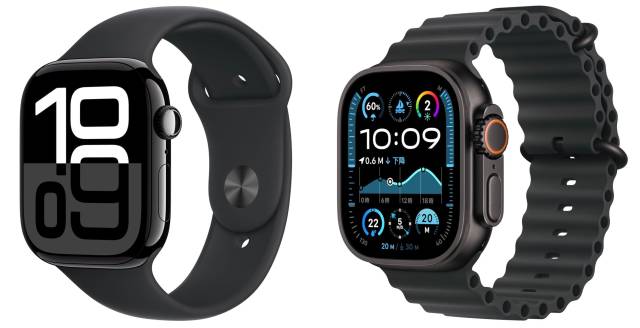
Uses the accelerometer to analyze subtle wrist movements and measure “breathing disturbances.” It accumulates 30 days of data and sends an alert if it detects signs consistent with moderate-to-severe apnea. Up to a year of records can be reviewed in the iPhone Health app, which can also generate a PDF report to share with a doctor.
✅ Available on watchOS 11-compatible models (Series 9 and later)
💍 Oura Ring 4
A full-titanium, fourth-generation ring that precisely tracks heart rate, HRV, SpO₂, skin temperature, and sleep stages across more than 30 metrics. It provides AI-generated sleep and recovery scores. Because the finger offers more accurate heart-rate readings than the wrist, its sleep tracking is considered highly reliable.
✅ Supports sleep apnea tendency analysis (subscription required)
💍 Samsung Galaxy Ring
Made with grade-5 titanium and offering up to 7 days of battery life, it tracks snoring, respiratory rate, heart rate, and skin temperature in real time. Integration with Galaxy AI delivers advanced health insights, and full functionality is available with no subscription required.
✅ Supports snoring analysis and respiratory rate monitoring
💍 RingConn Gen 2 / SOXAI RING 1.1
RingConn Gen 2 offers up to 12 days of battery life and supports detection of possible sleep apnea signs. SOXAI RING 1.1 scores sleep on a 100-point scale using an evaluation model developed under the supervision of the Japanese Society of Sleep Research. Both models continuously monitor SpO₂ to track blood oxygen levels.
✅ High-function models available for purchase in Japan
🔎 A 2026 Trend: The Smart Ring Market Is Expanding Rapidly
Since 2025, the Galaxy Ring, Oura Ring 4, SOXAI RING 1.1, and RingConn Gen 2 have all launched officially in Japan in quick succession, fueling a booming smart ring market. Despite price tags in the ¥35,000–¥64,000 range, these devices are valued for being comfortable enough to wear continuously and for the high blood-flow measurement accuracy the finger offers compared with the wrist.
How to Correctly Read Apple Watch’s “Breathing Disturbances” Alert
The “Breathing Disturbances” feature, introduced in watchOS 11, uses the accelerometer to analyze slight wrist movements during sleep and detect deviations from a normal breathing pattern. A key detail is the measurement requirement: you need to wear the watch to sleep on at least 10 of the previous 30 nights for the feature to generate a reading.
How the “Breathing Disturbances” Rating Works
Each morning, the previous night’s breathing is rated on a two-level scale: “elevated” or “not elevated.” If a sufficient number of nights are rated “elevated” within a 30-day window, the watch sends a notification stating that possible signs of sleep apnea have been detected. This notification is designed to flag signs consistent with moderate-to-severe sleep apnea, so it may not trigger for milder cases.
📱 Data You Can Review in the Health App
- A graph of “Breathing Disturbances” data covering the past month, six months, or year
- The date and time of each alert, along with a record of nights rated “elevated”
- A PDF report designed to share with your doctor, which you can bring to an appointment
- Overnight blood oxygen (SpO₂) trend data, on supported models
What Not to Do When You Receive an Alert
It’s risky to dismiss an alert as a fluke, or to decide to “just wait and see.” Apple Watch itself advises users to consult a doctor — a clear signal that the device cannot make a diagnosis on its own. It’s equally mistaken to assume that Apple Watch data alone is sufficient. A wearable device is only a starting point for discovering a potential problem.
🚫
Important: The absence of an Apple Watch notification does not mean you don’t have sleep apnea. Mild apnea, or temporary breathing irregularities caused by sleeping position, alcohol, or how you’re feeling that night, may not always be detected. If you notice snoring, daytime sleepiness, or morning headaches, consider seeing a doctor even without a notification.
How to Read Your Smart Ring’s Sleep Data
Because smart rings measure blood flow directly at the finger rather than the wrist, they’re generally considered to offer more accurate heart rate and SpO₂ readings than smartwatches. In particular, a drop in overnight SpO₂ (blood oxygen saturation) is an important indirect indicator of sleep apnea.
Sleep Data Metrics Worth Checking on Any Device
| Metric | Normal Range | Value to Watch | Interpretation for Possible SAS |
|---|---|---|---|
| SpO₂ (nighttime minimum) | 95% or higher | 90–94% | Needs evaluation if repeatedly below 90% |
| SpO₂ (average) | 96–99% | 93–95% | Caution ongoing decline warrants a check |
| Heart rate variability (HRV) | Varies by individual, but stable and high | Sudden drops or large swings | Caution sign of reduced sleep quality |
| Respiratory rate (per minute) | 12–20 breaths | Over 20, or sudden changes | Caution possible breathing disorder |
| Sleep score (device-specific) | 70+ (approximate guide) | 50–69 | Caution persistently low scores warrant further evaluation |
| Apple Watch “Breathing Disturbances” | Consistently “not elevated” | Intermittent “elevated” readings | Needs evaluation seek evaluation promptly upon receiving an alert |
📌 Bring Your Device Data to Your Appointment
Saving your Apple Watch PDF report or screenshots from your smart ring app — especially SpO₂ graphs and sleep score trends from the past one to two months — and bringing them to your appointment gives your doctor useful reference data for your evaluation. You don’t need a complete record; simply being able to describe when the readings started and what pattern they’ve followed will help make your consultation more efficient.
How Free Apps Like SnoreLab Differ From Medical Testing
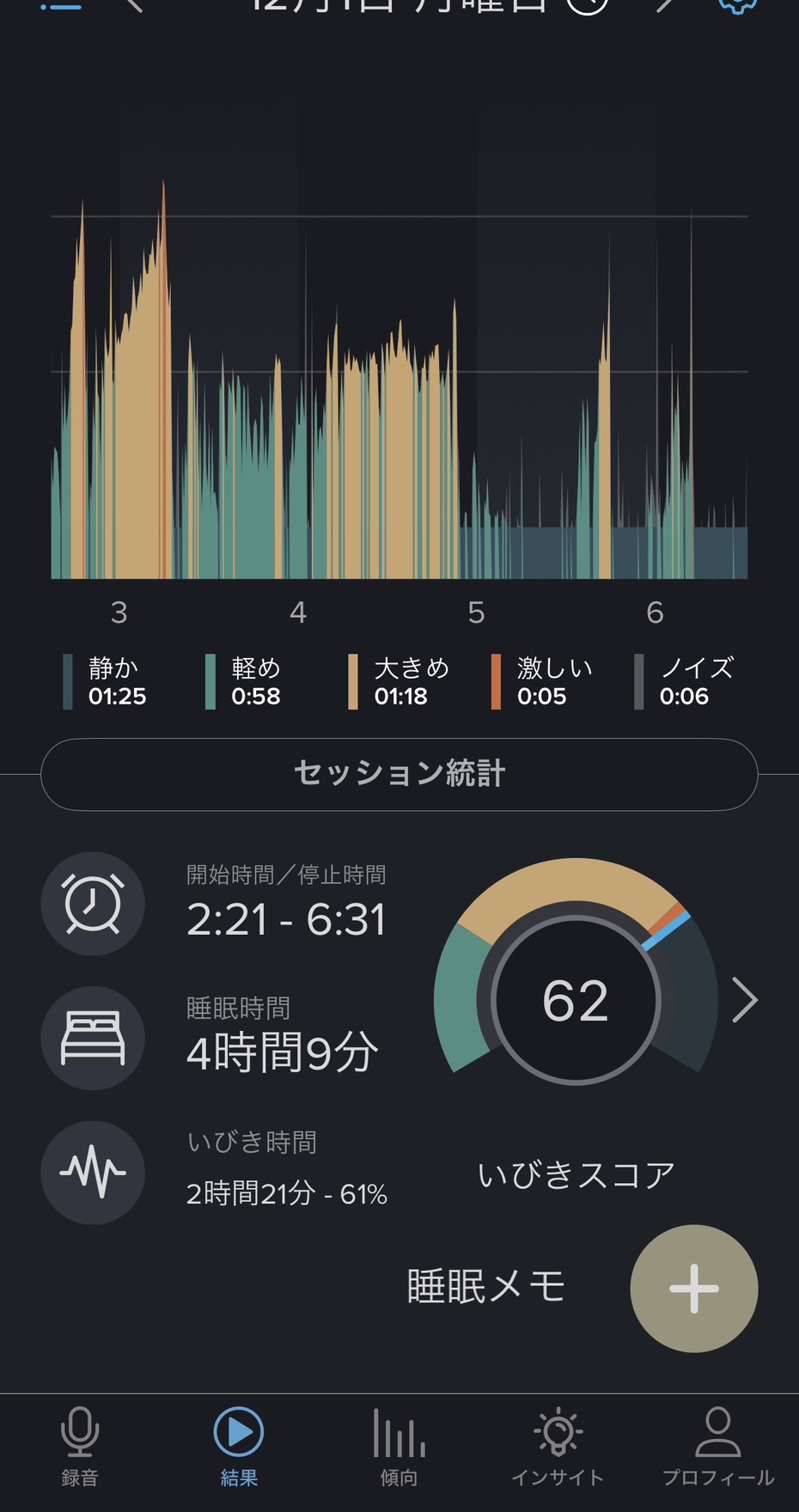
SnoreLab is one of the world’s largest snore-recording apps, developed by the UK-based Reviva Softworks and used to track more than 50 million nights of sleep. Using a smartphone’s microphone, it records and scores the volume, frequency, and pattern of your snoring. It’s free to try, and clinicians sometimes use its data as supplementary reference information.
What SnoreLab Can and Can’t Do
📱 SnoreLab
- Records snoring and measures volume
- Visualizes and compares your “Snore Score”
- Identifies the times of night when snoring is most intense
- Tracks the effect of alcohol and sleeping position
- Breathing stability score (newer feature)
- Integrates with Apple Health
- ❌ Cannot measure the Apnea-Hypopnea Index (AHI)
- ❌ Cannot provide a medical diagnosis
- ❌ Apnea episodes register as “silence,” not as an event
🏥 Insurance-Covered PSG Testing (Detailed Evaluation)
- Provides a definitive measurement of AHI (Apnea-Hypopnea Index)
- Accurately determines sleep stages using EEG (brain wave) monitoring
- Differentiates between obstructive and central sleep apnea
- Confirms whether you meet the criteria for insurance-covered CPAP therapy
- Simultaneously records ECG, SpO₂, and sleeping position
- Establishes a definitive treatment plan
- ✅ Covered by insurance (approximately ¥2,700–¥20,000 with 30% co-pay)
- ✅ Provides a definitive diagnosis and a legally valid medical record
SnoreLab’s “Snore Score” is known to vary considerably depending on the device and where it’s placed, so it’s important to look at the trend across multiple nights rather than a single reading. Rather than reacting to every up and down in the score, use it as a way to notice meaningful changes — such as several nights in a row of heavy snoring, or a sudden increase in intensity.
⚡ An Important Blind Spot When Using SnoreLab
SnoreLab detects snoring by its sound. But during a true apnea event, when breathing stops completely, the room is silent — and that silence isn’t reflected in the score. It can be risky to assume “my score is low, so I’m fine,” since this approach can miss the silent apnea episodes that are common in severe obstructive cases.
When an Alert Appears: When to Move Forward With PSG Testing
For those wondering, “I got an alert, or noticed a concerning reading, but I’m not sure whether it’s serious enough to see a doctor” — here’s a breakdown of when to strongly consider getting evaluated versus when it may be reasonable to keep watching. That said, whether or not you notice symptoms yourself matters just as much as the numbers.
Situations Where We Strongly Recommend Seeing a Doctor Right Away
If any of the following apply to you, please visit a sleep specialty clinic as soon as possible:
- ✅ You’ve received an Apple Watch notification about possible sleep apnea
- ✅ Your overnight SpO₂ has repeatedly been recorded below 90%
- ✅ A family member or someone you live with has told you your breathing stops
- ✅ You have significant daytime sleepiness or fall asleep unintentionally (Epworth Sleepiness Scale score of 11 or higher)
- ✅ You wake up with headaches or fatigue nearly every day
- ✅ You have a lifestyle-related condition such as high blood pressure, arrhythmia, or diabetes
The Path From Alert to Diagnosis
1. Check Your Wearable’s Alerts and Data
Save and review your Apple Watch notification PDF, your smart ring’s SpO₂ graph, or your SnoreLab score history. Get a clear sense of when the pattern started and how often it occurs.
2. Visit a Sleep Specialty Clinic for a Consultation
Bring your device data with you. The doctor will ask about your symptoms, medical history, body type, and lifestyle, and you’ll fill out questionnaires such as the Epworth Sleepiness Scale.
3. Home Sleep Test (Insurance-Covered)
Take a testing device home, wear it for one night as usual, and return it. It records nasal/oral airflow, chest and abdominal breathing movement, SpO₂, and sleeping position. Cost is approximately ¥2,700 with a 30% co-pay.
4. Detailed PSG Testing (When Needed, Insurance-Covered)
If your home test results are borderline, or don’t match your reported symptoms, your doctor may recommend this more detailed test, which includes EEG monitoring to precisely calculate your AHI. Cost is approximately ¥15,000–¥20,000 with a 30% co-pay.
5. Diagnosis and Treatment Plan
Your severity is confirmed based on your AHI and other measurements, and a treatment plan — such as CPAP therapy or, in some cases, surgery — is determined. At Ueno Snoring Clinic, this decision is guided by a board-certified anesthesiologist with more than 20,000 cases of experience.
What Is AHI? Understanding Severity by the Numbers
The most important metric from a PSG test is AHI (Apnea-Hypopnea Index) — the combined number of apneas (breathing stops for 10 seconds or longer) and hypopneas (breathing becomes noticeably shallower) per hour of sleep. Wearable devices cannot measure this value directly; an accurate AHI can only be obtained through PSG testing.
🎯 AHI Severity Classification (PSG Test Reference Values)
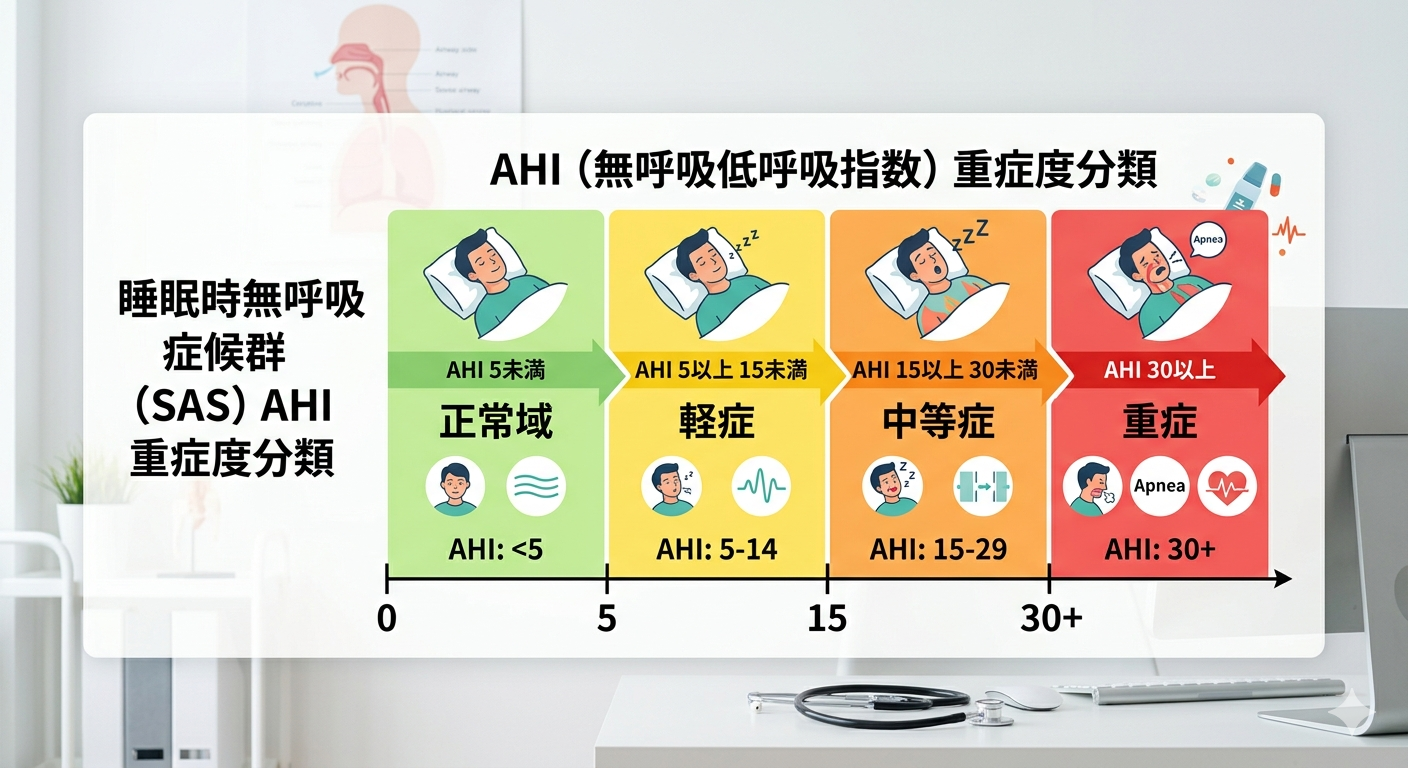
Below 5: Normal range. If symptoms are present, other causes should be explored.
5–15 (mild): Diagnosed as SAS when symptoms such as daytime sleepiness are present. Lifestyle changes and positional therapy are typically considered first.
15–30 (moderate): A confirmed SAS diagnosis. Risk of high blood pressure increases. Treatment is strongly recommended.
30 or higher (severe): Risk of cardiovascular disease, stroke, and type 2 diabetes rises significantly. Insurance-covered treatments such as CPAP therapy become the top priority.
5–15 (mild): Diagnosed as SAS when symptoms such as daytime sleepiness are present. Lifestyle changes and positional therapy are typically considered first.
15–30 (moderate): A confirmed SAS diagnosis. Risk of high blood pressure increases. Treatment is strongly recommended.
30 or higher (severe): Risk of cardiovascular disease, stroke, and type 2 diabetes rises significantly. Insurance-covered treatments such as CPAP therapy become the top priority.
Insurance Criteria for CPAP Therapy
CPAP (continuous positive airway pressure) therapy is the standard treatment for sleep apnea syndrome, and the criteria for insurance coverage differ depending on which test you take. As a general guide, coverage requires a Respiratory Event Index (REI) of 40 or higher on a home sleep test, or an AHI of 20 or higher on a PSG test together with symptoms such as daytime sleepiness. Ultimately, the decision is made by your doctor based on the full clinical picture — not the numbers alone, but also your symptoms and any related conditions.
💡 Why the AHI Threshold Differs Between Home Testing and PSG
Because home tests don’t include EEG monitoring, the number of events is divided by the total recording time. PSG testing, by contrast, uses EEG to precisely identify actual sleep time, which means the same patient’s AHI often comes out higher on a PSG test — and that’s why the CPAP coverage threshold for PSG is set lower (AHI ≥ 20). It’s not uncommon for someone whose home test fell short of the criteria to become eligible for treatment once they undergo a PSG test.
The Process and Approximate Cost of Insurance-Covered PSG Testing
Hearing “detailed testing” can make people worry about cost and inconvenience, but PSG testing is covered by Japan’s national health insurance. In particular, thanks to the growing availability of at-home PSG testing, it’s now possible to obtain detailed sleep data without being admitted to a hospital.
| Test Type | Where It’s Done | What’s Measured | Approx. Cost (30% co-pay) |
|---|---|---|---|
| Home sleep test (portable device) | At home | Nasal/oral airflow, chest and abdominal breathing, SpO₂, sleeping position, snoring | Approx. ¥2,700 |
| Detailed PSG test (inpatient) | One night at a medical facility | The above, plus EEG, eye movement, ECG, and muscle activity | Approx. ¥15,000–¥20,000 |
| At-home PSG test | At home | Multi-channel measurement comparable to a detailed PSG test | Varies by facility (insurance-covered) |
Detailed PSG testing is considered the gold standard in sleep medicine. By using EEG to accurately capture actual sleep time and sleep stages, it allows for a precise evaluation of apnea events. It also has the advantage of being able to assess other sleep disorders — such as restless legs syndrome — at the same time.
📋 Helpful Things to Prepare Before Your Appointment
- Your “Breathing Disturbances” PDF exported from the Apple Health app
- Screenshots of your smart ring’s SpO₂ graph and sleep scores (past 1–2 months)
- Score history from apps like SnoreLab
- Notes on your sleep from the past 1–2 weeks (bedtime, wake time, symptoms)
- A list of your medical history and medications (e.g., for high blood pressure, diabetes, or arrhythmia)
About the Sleep Specialty Outpatient Clinic at Ueno Snoring Clinic
👨⚕️
Physician, Ueno Snoring Clinic
Sleep Specialty Outpatient Clinic / Board-Certified Anesthesiologist | More Than 20,000 General Anesthesia Cases
“Very often, people who receive an alert from their Apple Watch or smart ring simply don’t know where to go, and end up doing nothing. Our clinic operates as a sleep specialty outpatient practice: we welcome wearable device data as helpful reference information, while delivering an accurate diagnosis through insurance-covered PSG testing. Drawing on my background in anesthesiology and expertise in airway and respiratory management, I work to propose the treatment best suited to each individual patient.”
Four Reasons Patients Choose Ueno Snoring Clinic
① A Sleep Specialty Clinic — Care Focused Specifically on Sleep
Rather than an ENT practice, we operate as a dedicated sleep specialty outpatient clinic, focused specifically on snoring and sleep apnea syndrome, with a comprehensive approach to evaluating sleep problems.
② The Expertise of an Anesthesiologist
Care is provided by an anesthesiologist with experience in more than 20,000 general anesthesia cases. As a specialist in airway and respiratory management, this brings a deep understanding of breathing disorders during sleep to every consultation.
③ Care Covered by Insurance
From your first visit through PSG testing and treatment, national health insurance applies — so you can seek care without worrying about cost.
④ Thoughtful Consultations That Make Use of Your Wearable Data
If you bring your Apple Watch PDF or smart ring data, we’ll use it as reference material during your consultation and exam, helping your first visit go smoothly.
Ueno Snoring Clinic offers a range of options tailored to each patient’s condition, including insurance-covered sleep testing and CPAP management, as well as self-pay laser treatment for snoring. If you’d like to find out which treatment is right for you, please book an initial consultation.
Details of the tests and treatments offered at Ueno Snoring Clinic can be found here
If Your Apple Watch Sends an Alert,
Turn to Ueno Snoring Clinic
“I got a notification — now what?” Bring us that question first.
An anesthesiologist with more than 20,000 general anesthesia cases will provide thoughtful, insurance-covered care.
🏥 Sleep Specialty Clinic
✅ Insurance-Covered
👨⚕️ Care by an Anesthesiologist
📍 Ueno / Okachimachi Area
Worried Because Your SnoreLab Score Is High?
SnoreLab is a useful way to get a first sense of your snoring’s volume and duration, but it can’t accurately determine whether sleep apnea is present or whether your oxygen levels are dropping.
If your score is high, a family member has mentioned that your breathing stops, or you don’t feel rested even after sleeping, we recommend getting tested at a medical clinic.
Frequently Asked Questions
Summary: Wearables Offer Awareness — Diagnosis Belongs at a Medical Clinic
Wearable devices like Apple Watch and smart rings have made major gains in sleep-detection accuracy heading into 2026, and for many people, they’ve become the first moment they realize their sleep might have a problem. That’s a meaningful advance for public health.
That said, these devices remain screening tools, nothing more. Confirming your AHI, determining severity, and deciding on a treatment plan all require an insurance-covered PSG test administered by a physician. Treating a device alert or a concerning reading as your entry point — and visiting a sleep specialty clinic at the right time — is the best step you can take to protect your health.
Free apps like SnoreLab are also useful awareness tools, but rather than reacting to every fluctuation in your score, use a persistent pattern of concerning readings as your signal to seek care.
✅ Key Takeaways
- Apple Watch (Series 9 and later) analyzes 30 days of “Breathing Disturbances” data to notify you of possible signs of apnea
- 2026’s newest smart rings — Oura Ring 4, Galaxy Ring, RingConn, and others — also support sleep apnea tendency analysis
- SnoreLab visualizes the sound of your snoring but can’t detect silent apnea events
- A persistent drop in overnight SpO₂ or an Apple Watch alert is a sign it’s time to see a doctor
- PSG testing (polysomnography) confirms your AHI, and is available with a 30% insurance co-pay
- Ueno Snoring Clinic is a sleep specialty outpatient clinic where an anesthesiologist provides insurance-covered care
[Insurance-Covered] If you’re concerned about snoring or sleep apnea, we offer a fully appointment-based system for reassuring, unhurried care.
Please feel free to contact Ueno Snoring Clinic [same-day appointments available]
📞0120-899-930
5F Ueno Silk Building, 4-8-8 Ueno, Taito-ku, Tokyo 110-0005, Japan

Please feel free to contact Ueno Snoring Clinic [same-day appointments available]
📞0120-899-930
5F Ueno Silk Building, 4-8-8 Ueno, Taito-ku, Tokyo 110-0005, Japan
Feel free to reach out to us on LINE ↓↓↓

English Support Available
We provide medical services for international patients. Please check our English website for details on how to visit our clinic.
Supervising Physician

Kazuyuki Sugaya, Director of Ueno Snoring Clinic
After graduating from Fujita Health University School of Medicine in 2004, Dr. Sugaya began his career as an anesthesiologist at Toho University Omori Medical Center. He has since gained extensive clinical experience at municipal hospitals and private clinics nationwide, administering general anesthesia in over 20,000 cases. In 2020, he founded the "Tokyo Spine Clinic," and has served as the Director of Ueno Snoring Clinic since 2025.
Related Columns

By Appointment Only
Specialized Snoring Treatment in Ueno
Ueno Snoring Clinic
Insurance-covered home testing available.
Following a physician’s consultation and result explanation,
we support the improvement of snoring and sleep apnea with "Dual Deep Thermia"—a non-surgical laser treatment, if necessary.
3-min walk from Ueno Station. Please feel free to consult us.