Ueno Snoring Clinic offers home-based simplified sleep testing, insurance-covered PSG (a detailed sleep study), and insurance-covered CPAP treatment, with no hospital stay required. If your family has told you that you stop breathing in your sleep, please feel free to talk to us.
Details of the tests and treatments offered at Ueno Snoring Clinic can be found here
Important: Snoring and Sleep Apnea Treatment Requires a Sleep Test
Some clinics that offer only self-pay care, and some cosmetic clinics, may not perform sleep testing. Before starting treatment, check whether the clinic performs a sleep test, or has a system for referring you to a medical institution where you can receive the necessary tests.
If sleep apnea is hidden behind your snoring and treatment begins without testing, it may be missed.
▶ Learn more about snoring and sleep apnea testing
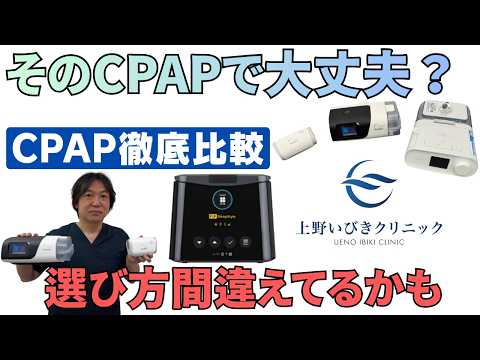
You’ll Want to Know This! A Complete Comparison of 5 CPAP Types — What Doctors Really Look For
Our doctor compares five different CPAP machines side by side and explains what actually matters when choosing one.
Watch the video
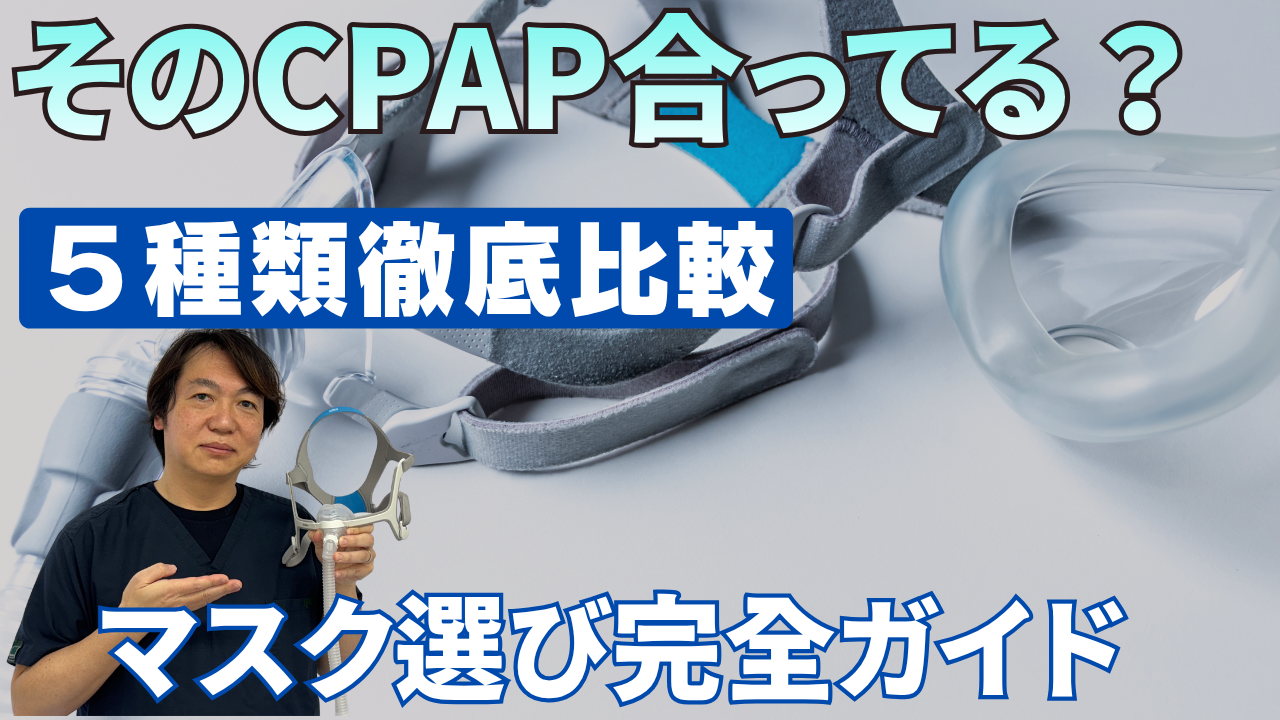
A Complete Comparison of CPAP Masks
We tried on and reviewed five different types of CPAP masks. 90% of CPAP comfort comes down to the mask.
Watch the video
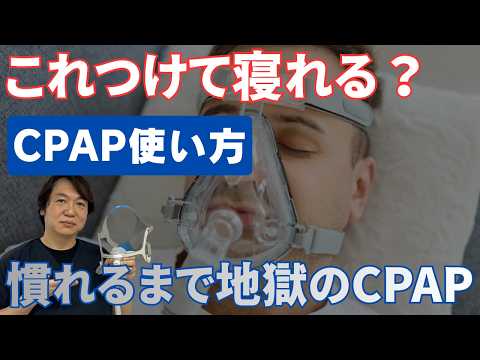
Do you have to use CPAP forever? A specialist explains how to use CPAP
A detailed explanation of how to use CPAP, with a real demonstration of what it feels like to wear the device.
Watch the video
Ueno Snoring Clinic was featured on Fuji TV’s “Live News It!” and on FNN Prime Online
Watch our clinic’s examination and explanation of sleep disorders, snoring, and sleep apnea.
Watch the video
Ueno Snoring Clinic was featured in an article on Nippon TV’s “news every.”
Please take a look as a starting point for thinking about getting evaluated for snoring, sleep apnea, or other sleep disorders.
Read the article
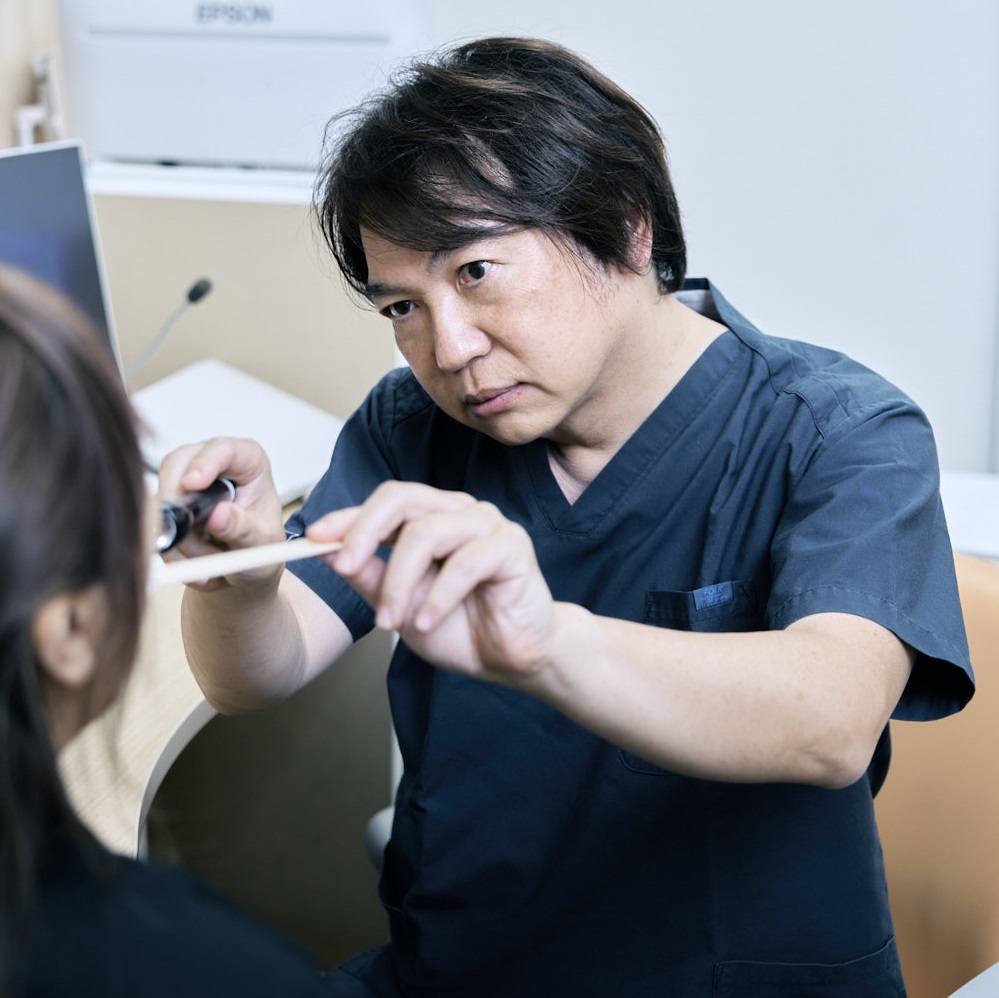
Reviewed by Our Director
Kazuyuki Sugaya
Director, Ueno Snoring Clinic / Anesthesiologist
Our director, with over 20,000 general anesthesia cases, focuses primarily on the diagnosis and treatment of snoring and sleep apnea, offering care tailored to each patient. [Insurance-Covered] Ueno Snoring Clinic
In this article, written for people whose family has noticed them stop breathing during sleep, our Director, Kazuyuki Sugaya, explains the steps of insurance-covered sleep testing (simplified testing and PSG), how to read the results, and the treatment options.
🩺Comprehensive Snoring Treatment at Ueno Snoring Clinic
At Ueno Snoring Clinic, insurance-covered simplified testing and PSG show whether apnea is present and how severe it is; based on the results and your symptoms, we propose a treatment plan, including CPAP where appropriate.
Insurance-Covered: Thorough Testing and Ongoing Treatment
- Simplified testing: Home screening for sleep apnea
- PSG testing: A detailed sleep study including brain waves, done at home
- CPAP treatment: The standard treatment for apnea that meets insurance criteria
Self-Pay: Address the Root Cause, Short-Term Focus
- Snoring laser treatment: For people whose testing confirms simple snoring
- Medically supervised weight loss: An option when weight gain is a contributing factor
*Insurance coverage for CPAP depends not only on test numbers but also on symptoms and the doctor’s assessment. We explain the details at your consultation.
Our Director’s book, “Curing Snoring with the Latest Treatments” (an Amazon Japan bestseller — #1 in General Medicine, #1 in Clinical Internal Medicine, #2 in Family Health & Wellness), also covers sleep apnea testing in detail.
New Book by Our Director
“Curing Snoring with the Latest Treatments”
A guide to the latest snoring treatments, written by an anesthesiologist who has overseen the sleep of more than 10,000 patients.
View on Amazon
Quick Answer
Being told you “stopped breathing” can be a sign of sleep apnea, so it’s worth getting tested rather than waiting. Under Japanese health insurance, you can start with a simplified sleep test done at home and, if needed, move on to PSG, the detailed sleep study (which some clinics, including ours, also perform at home). A hospital stay isn’t required. As a rough guide, a simplified test costs a few thousand yen at a 30% co-payment. Results are assessed by the AHI (the number of apneas and hypopneas per hour), and sleep apnea is diagnosed at an AHI of 5 or more with symptoms. In the June 2026 revision, the AHI thresholds for insurance-covered CPAP became 30 or more on a simplified test and 15 or more on PSG (previously 40 and 20). When choosing where to go, check that the clinic performs sleep testing before treatment.
📋 What This Article Covers
- Is “you stopped breathing” really dangerous?
- What sleep apnea is, and the signs to look for
- Where to go for an evaluation
- The steps of insurance-covered testing: simplified testing and PSG
- What the results tell you: the AHI and the CPAP insurance thresholds
- Treatment options with insurance coverage
Is “You Stopped Breathing” Really Dangerous?
A pause in breathing during sleep is called an apnea. Medically, an apnea is defined as airflow stopping for 10 seconds or longer. When these pauses repeat through the night and the AHI is 5 or more with symptoms, the condition is called sleep apnea syndrome (SAS).
Many people assume it’s “just heavy snoring.” But repeated apneas lower the oxygen level in the blood and are thought to strain the heart and blood vessels. Research has linked untreated sleep apnea with a higher risk of the following:
| Timeframe |
Possible effects |
| Short term |
Strong daytime sleepiness, poor concentration, morning headaches, forgetfulness, low mood, and dozing off at the wheel |
| Long term |
Links have been reported with high blood pressure, atrial fibrillation, heart attack, and stroke, as well as with type 2 diabetes and dementia |
Two findings give a sense of scale:
| Study or report |
What it found |
| Driving and car crashes (Tregear et al., 2009, systematic review and meta-analysis) |
Pooling 10 studies, drivers with obstructive sleep apnea had a crash risk about 2.4 times higher (95% confidence interval 1.21–4.89). Most of the studies were of limited quality, and results varied widely between them |
| Cardiovascular conditions (a Japanese review, 2007) |
Compared with the general population, people with sleep apnea were reported to have about twice the rate of high blood pressure, about three times the rate of ischemic heart disease, and three to five times the rate of cerebrovascular disease |
On blood pressure medication, but your numbers won’t come down?
Sleep apnea hiding behind high blood pressure is not unusual. If your blood pressure is hard to control, or you have morning headaches or daytime sleepiness, a sleep test is worth considering.
How large the risk is for any one person depends on how severe the apnea is, as well as age and other health conditions.
What Sleep Apnea Is, and the Signs to Look For
There are two main types of sleep apnea:
| Type |
How it happens |
Background and features |
| Obstructive sleep apnea (OSA) |
The throat muscles relax during sleep and the upper airway closes off. This accounts for most sleep apnea |
Risk factors include obesity, a thick neck, a small jaw, and enlarged tonsils. In Japanese people, a small jaw can cause it even in those who are slim |
| Central sleep apnea (CSA) |
The brain’s signal to breathe weakens or stops |
Often linked to heart failure, a past stroke, or opioid medication, and needs specialist management (see The 3 Types of Sleep Apnea) |
When family members notice someone stop breathing, OSA is the most likely explanation, but please don’t self-diagnose. An accurate diagnosis requires testing at a medical institution.
Signs of sleep apnea: because it happens while you’re asleep, it’s hard to notice yourself. If several of these apply, consider seeing a doctor:
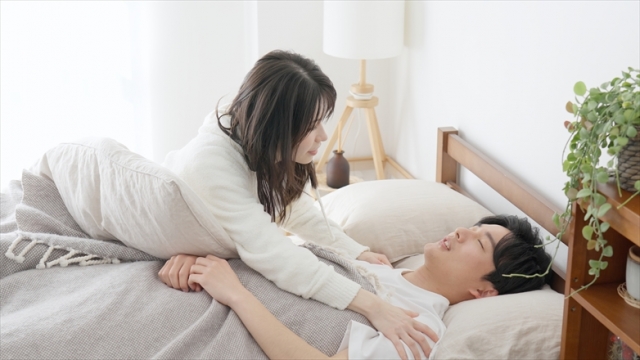
- Family or a partner says you snore loudly or stop breathing
- You feel very sleepy during the day despite enough time in bed
- You wake up with a heavy head or a headache
- You get up to use the toilet several times a night
- Your mouth is dry or your throat sore when you wake
- Your concentration or memory seems to be slipping
- Your blood pressure is on the high side, or medication doesn’t bring it down well
- Your BMI is 25 or more, or your neck is thick
For guidance on when an evaluation is worthwhile, see When Should You See a Snoring Specialist?
Where to Go for an Evaluation
For diagnosis and treatment of sleep apnea, the basic rule is to go to a medical institution that performs sleep testing. A clinic that specializes in snoring and sleep apnea can handle everything from the first visit through testing, diagnosis, and treatment, and can arrange home testing smoothly.
| What to check |
Why it matters |
| Does it perform sleep testing (simplified testing, PSG)? |
Starting treatment without confirming sleep apnea by testing risks missing it |
| If not, can it refer you somewhere that does? |
Prevents treatment from going ahead before the necessary tests |
| Does it offer home testing? |
Easier for people who can’t manage a hospital stay or long clinic visits |
| Can it continue to treatment (such as CPAP) under insurance? |
You can keep consulting the same place from testing through treatment |
We cover choosing a clinic in more depth in How to Choose a Snoring Clinic in Japan. Here is how Ueno Snoring Clinic works:
| Feature |
Details |
| Specialized in snoring and sleep apnea |
As a sleep-disorder clinic, we provide simplified testing, home PSG, and CPAP under insurance. Snoring laser treatment is self-pay |
| Home testing (no hospital stay) |
Both simplified testing and PSG can be done at home, convenient for people with work or family commitments |
| Fully appointment-based |
All visits are booked in advance |
Not sure where to start?
Tell us your symptoms at your first visit and we’ll suggest a testing plan that fits. It helps to jot down what your family noticed, such as how loud the snoring was or what the pauses in breathing looked like.
The Steps of Insurance-Covered Testing: Simplified Testing and PSG
Sleep apnea is diagnosed in stages. Insurance-covered testing falls into two main types, the simplified sleep test and PSG (overnight polysomnography), and at our clinic both can be done at home, with no hospital stay.
Step 1: The Simplified Sleep Test (at Home)
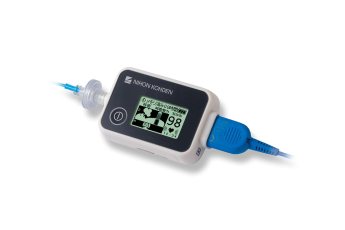
The first step is usually the simplified test. The clinic lends you a small device, and you simply sleep at home while it records. You return it the next morning.
| What it measures |
How |
| Blood oxygen saturation (SpO₂) |
A pulse oximeter on the fingertip records oxygen levels through the night. Each apnea tends to produce a dip, and the number and depth of the dips (the oxygen desaturation index, ODI) help with diagnosis |
| Airflow at the nose and mouth |
A small sensor in front of the nose and mouth detects breathing, recording how often and how long it stops, to capture apneas and hypopneas |
| Breathing movement, pulse, and more |
Depending on the device, chest and abdominal movement and pulse rate are recorded too |
As a rough guide, the test costs a few thousand yen under insurance at a 30% co-payment (it varies by facility and additional fees). Because you just return the device the next morning, it’s easy to fit around work. The simplified test has limits: it can’t pin down your actual sleep time, so the AHI can come out lower than it really is. For what this means, see Simplified Sleep Test vs. PSG.
Step 2: The Detailed Sleep Study, Overnight PSG (at Home)
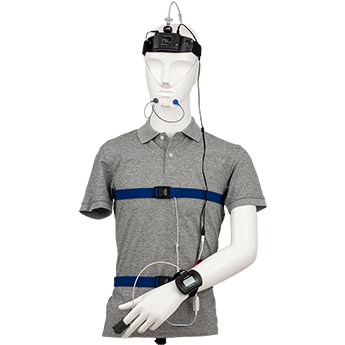
Overnight polysomnography (PSG) is used when the simplified test result is unclear, when symptoms are strong but the simplified test falls short of the thresholds, or when a more detailed assessment is needed. At Ueno Snoring Clinic, PSG can also be done at home.
| What it measures |
What it shows |
| Brain waves (EEG) |
Sleep depth and changes between sleep stages |
| Eye movements (EOG) |
Identifies REM sleep |
| Muscle activity (EMG) |
Body movement and periodic limb movements |
| Heart rhythm (ECG) |
Detects arrhythmias, helping assess links with atrial fibrillation |
| SpO₂, airflow, chest and abdominal movement |
The same measures as the simplified test, recorded at the same time |
PSG can assess the quality of sleep in detail. The key difference from the simplified test is that it tracks changes in sleep stage. It can also count arousals, the moments when deep sleep becomes lighter with each apnea, which helps set treatment priorities and plans. Side by side:
| Item |
Simplified test |
PSG |
| Role |
First-line screening |
The standard detailed study |
| Sleep time |
Actual sleep time can’t be identified |
Brain waves show sleep stages and awakenings |
| AHI tendency |
Can come out lower than the true value |
Assessed more accurately |
| AHI threshold for insurance-covered CPAP (from June 2026) |
30 or more |
15 or more |
What the Results Tell You: The AHI and the CPAP Insurance Thresholds
The central number in your results is the AHI (apnea-hypopnea index): the combined count per hour of apneas (airflow stopping for 10 seconds or more) and hypopneas (airflow dropping by a set amount, along with a fall in oxygen or similar). The fine details of the hypopnea definition differ between scoring rules.
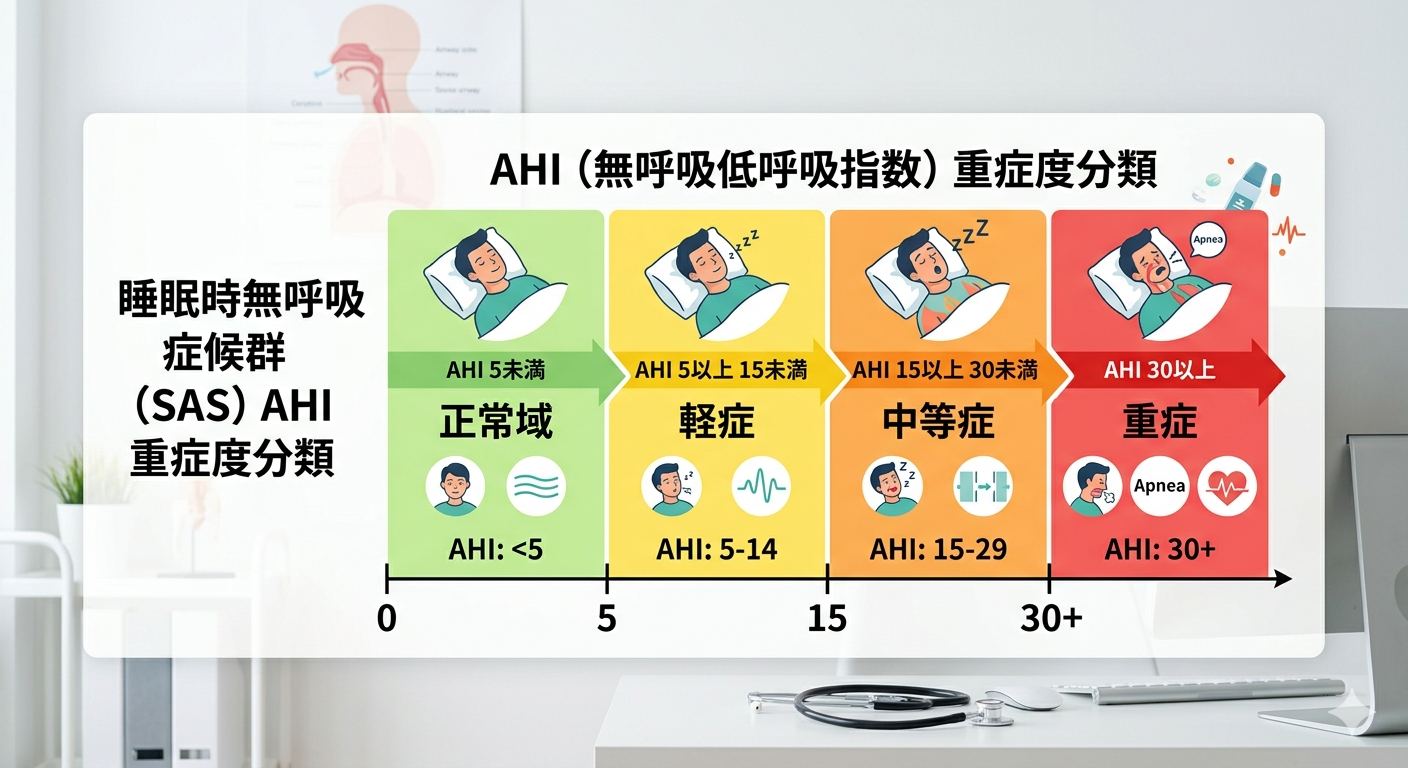
| AHI (per hour) |
Severity guide |
| Under 5 |
Normal range |
| 5 to under 15 |
Mild (diagnosed as sleep apnea when symptoms are present) |
| 15 to under 30 |
Moderate |
| 30 or more |
Severe |
The lowest SpO₂ reading also matters. When blood oxygen falls below 90% during sleep, and especially into the 80s, the strain on the heart and brain is thought to be greater. For more on the AHI, see What Is AHI?; for severe cases, see Severe Sleep Apnea (AHI 30+).
The AHI thresholds for insurance-covered CPAP changed in the June 2026 medical fee revision as follows. Be wary of older information that still says “AHI 20 or more.”
| Test |
Up to May 2026 |
From June 2026 |
| Simplified sleep test (home) |
AHI of 40+ |
AHI of 30+ |
| PSG (polysomnography) |
AHI of 20+ |
AHI of 15+ |
How to read these thresholds
- They are one of the conditions for starting CPAP under insurance, separate from the criteria for diagnosing sleep apnea or grading its severity.
- Besides the AHI number, the published billing requirements include symptoms such as strong daytime sleepiness or morning headaches that interfere with daily life. When the AHI is 30 or more, the symptom requirement becomes the main condition.
- Whether coverage applies is decided by the doctor at examination. For the exact requirements, check the official Ministry of Health, Labour and Welfare notices or ask a medical institution.
For more on the change in criteria, see Snoring Treatment in Japan: A Complete Guide.
Treatment Options With Insurance Coverage
Treatment is chosen according to severity, cause, and each patient’s circumstances. The main options are:
| Treatment |
Who it’s for and what it involves |
Key points |
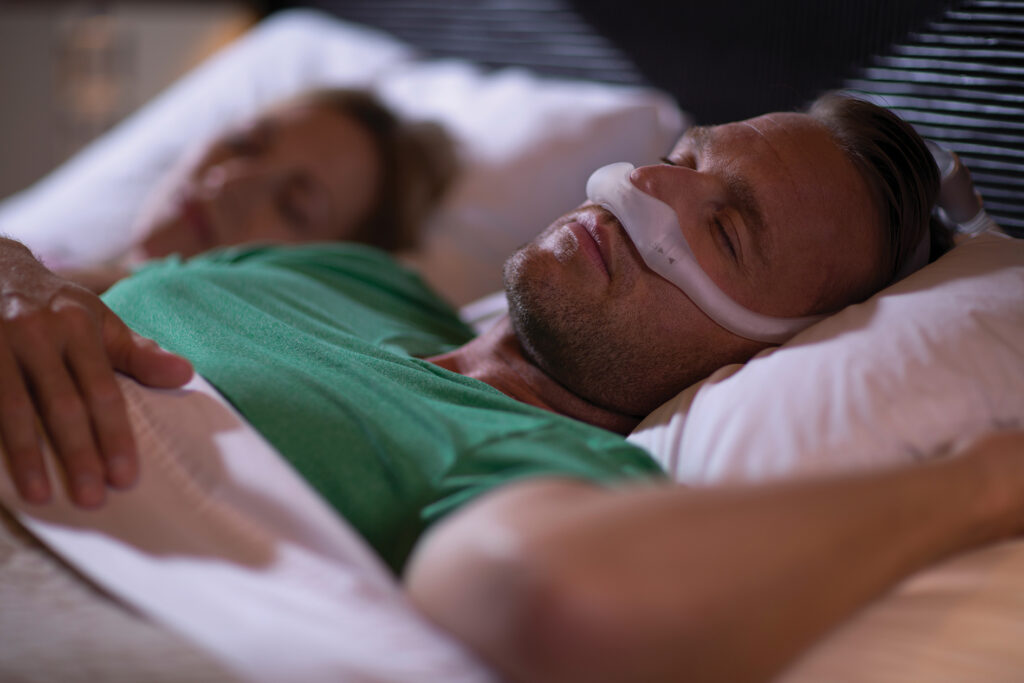
| CPAP (continuous positive airway pressure) |
The standard treatment for moderate to severe obstructive sleep apnea. A mask worn at night delivers steady air pressure that keeps the airway open. Insurance coverage depends on conditions such as the thresholds above |
Requires regular visits to manage and adjust the machine. As a rough guide, about ¥4,000–5,000 a month at a 30% co-payment, varying with additional fees. See CPAP Treatment in Japan |
| Nose and throat surgery |
Considered when there is a structural cause such as enlarged tonsils or a deviated septum (e.g., tonsillectomy, adenoidectomy, septoplasty) |
Especially important in children. Carried out with a medical institution specializing in ear, nose, and throat treatment |
| Lifestyle changes |
Weight loss if overweight, reviewing alcohol and sleeping pills, and positional therapy (sleeping on your side) |
Recommended alongside other treatment |
| Oral appliance (mouthpiece; not offered at our clinic) |
Mainly considered for mild to moderate cases, and made by a dentist |
Suitability and insurance handling are decided by the doctor and dentist |

On weight loss, a US study that followed 690 adults over four years (Peppard et al., 2000) estimated that a 10% drop in weight would lower the AHI by about 26%, while a 10% gain would raise it by about 32%. Lifestyle changes are best pursued alongside other treatment.
CPAP isn’t necessarily “for life”
If symptoms improve, for example through weight loss, CPAP can sometimes be stopped or paused under a doctor’s guidance. Starting treatment doesn’t mean continuing forever. The first step is to get examined and understand where you stand. If you’re thinking of stopping, read Can You Ever Stop Using CPAP? before deciding on your own.
What We Offer at Ueno Snoring Clinic
Ueno Snoring Clinic is a sleep-disorder clinic specializing in snoring and sleep apnea. We check for apnea and its severity with home simplified testing and insurance-covered PSG (also at home, with no hospital stay), and we handle insurance-covered CPAP from setup through usage checks and mask and pressure adjustments. If testing finds no apnea and the problem is snoring alone, we can also discuss self-pay options such as snoring laser treatment, with suitability decided at examination.
If your family has told you that you stop breathing in your sleep, please feel free to get in touch.
Summary: Don’t Wait. Start With One Visit
A family member noticing that you stop breathing is an important medical signal. Sleep apnea often causes few symptoms you notice yourself, and a family member’s observation is sometimes the only trigger for getting checked.
The key point is that testing and treatment can proceed step by step under health insurance. You can start with a simplified test where all you do is sleep at home, and once there’s a diagnosis, several effective treatments are available. When choosing where to go, confirm that the clinic performs sleep testing before treatment, and then take that first step.
Told You Stop Breathing at Night? Talk to Us
You’re welcome to ask about testing alone. From testing to CPAP adjustment, we’re here to help. By appointment only; same-day appointments are often available.
Frequently Asked Questions
Q. Is it OK to have snoring treatment at a self-pay-only clinic or a cosmetic clinic?
A. Some clinics that offer only self-pay care, and some cosmetic clinics, may not perform sleep testing. Before starting treatment, check whether the clinic performs a sleep test, or has a system for referring you to a medical institution where you can receive the necessary tests. If sleep apnea is hidden behind your snoring and treatment begins without testing, it may be missed. We recommend first checking your condition at a medical institution that offers sleep testing (simplified testing or PSG). For details, see
Simplified Sleep Test vs. PSG.
Q. My family says I stop breathing in my sleep. Where should I go?
A. Good places to start are clinics and departments that diagnose and treat sleep apnea: sleep clinics, snoring clinics, and respiratory medicine. Before treatment, check that it performs sleep testing (simplified testing or PSG), or can arrange the tests you need.
Q. Can the simplified sleep test be done at home?
A. Yes. You borrow a small device and simply sleep at home while it records. No hospital stay is needed, and you return the device the next morning. At Ueno Snoring Clinic, PSG, the detailed study, can also be done at home.
Q. How much does a sleep test cost?
A. The amount varies with what is done at your visit, your insurance, and whether you pay 10%, 20%, or 30%. As a rough guide, a simplified test costs a few thousand yen at a 30% co-payment. PSG costs more than the simplified test. Please confirm the exact amount at your visit.
Q. What are the conditions for insurance-covered CPAP?
A. In the June 2026 revision, the AHI thresholds became 30 or more on a simplified test (previously 40) and 15 or more on PSG (previously 20). Besides the AHI, conditions include symptoms such as strong daytime sleepiness or morning headaches that interfere with daily life. The doctor decides whether coverage applies; for the exact requirements, check the official Ministry of Health, Labour and Welfare notices or ask a medical institution.
Q. Can I have sleep apnea if I’m not overweight?
A. Yes. Compared with people of European descent, Japanese people tend to have a smaller or set-back jaw, so sleep apnea can develop even at a normal BMI. Being slim doesn’t rule it out. See
Snoring Isn’t Just About Weight.
Q. Do women get sleep apnea too?
A. Yes. It’s often thought of as a men’s condition, but it has been reported to become more common in women after menopause. In women it may show up less as snoring and more as insomnia, fatigue, or low mood, so it can be easy to overlook.
Q. I’m too busy to keep visiting a clinic. What can I do?
A. Both the simplified test and PSG can be done at home, with no hospital stay. You collect the device from the clinic, sleep at home, and return it the next morning, so there’s no need to take time off work for the test itself.
Q. Is a child’s snoring or pausing in breathing the same thing?
A. Sleep apnea in children is assessed with different criteria from adults. Because growth hormone is released mainly during deep sleep, disrupted sleep from sleep apnea raises concerns about growth and learning. For children, please consult a pediatrician or a medical institution specializing in ear, nose, and throat treatment first. When enlarged adenoids or tonsils are the cause, surgery often brings improvement.
Q. Can a smartwatch sleep score replace a sleep test?
A. Not at present. Smartwatch sleep analysis relies mainly on body movement and heart rate, which differs in accuracy from medical measurement of airflow and blood oxygen. It can be a clue that prompts screening, but a diagnosis and insurance-covered treatment require testing at a medical institution. See
Apple Watch Sleep Apnea Alert? What to Do Next.
Q. Once I start CPAP, do I have to use it for life?
A. Not necessarily. If symptoms improve, for example through weight loss, CPAP can sometimes be stopped or paused under a doctor’s guidance. Please don’t stop on your own; talk to your doctor first.
*This article is a general explanation, written for a broad audience and based on the sources above together with our clinic’s own clinical experience. It is not a substitute for medical advice. Costs shown are rough guides and vary with the care provided and your insurance. If you are concerned about snoring or sleep apnea, please consult a medical institution for a proper evaluation.