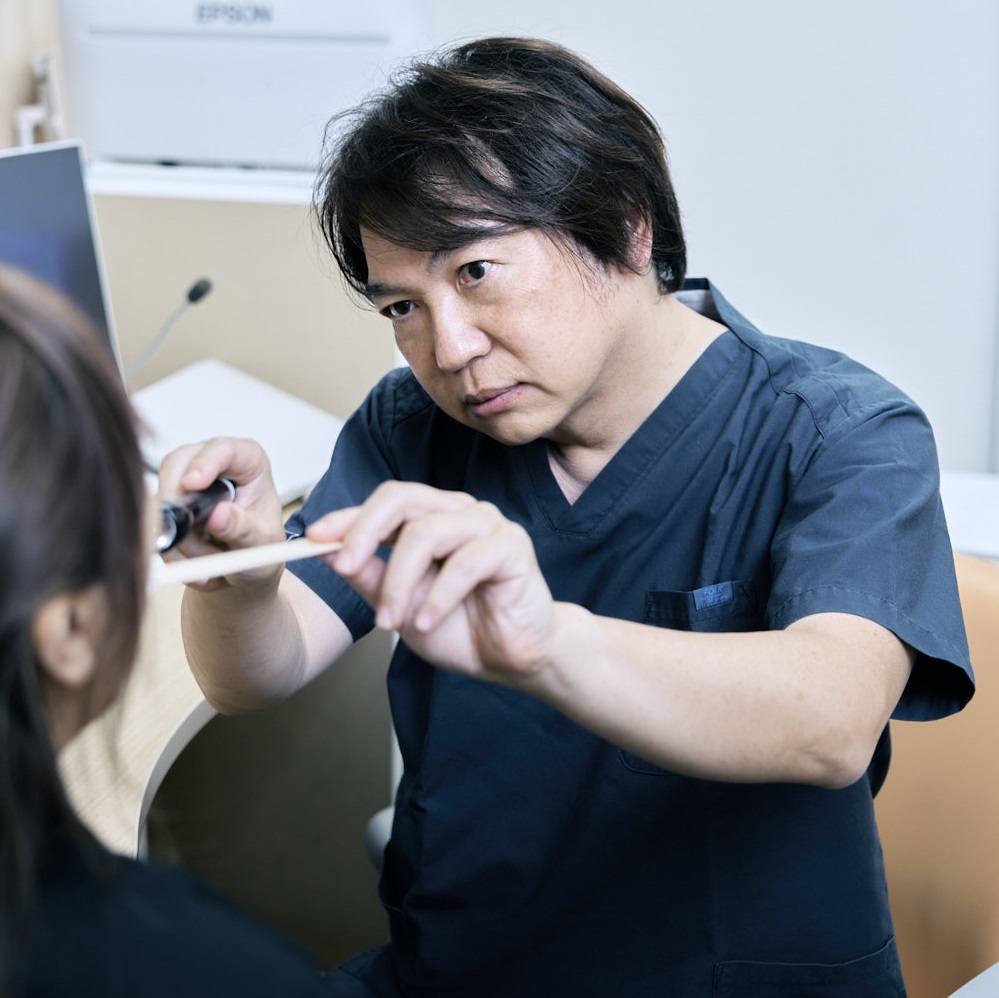
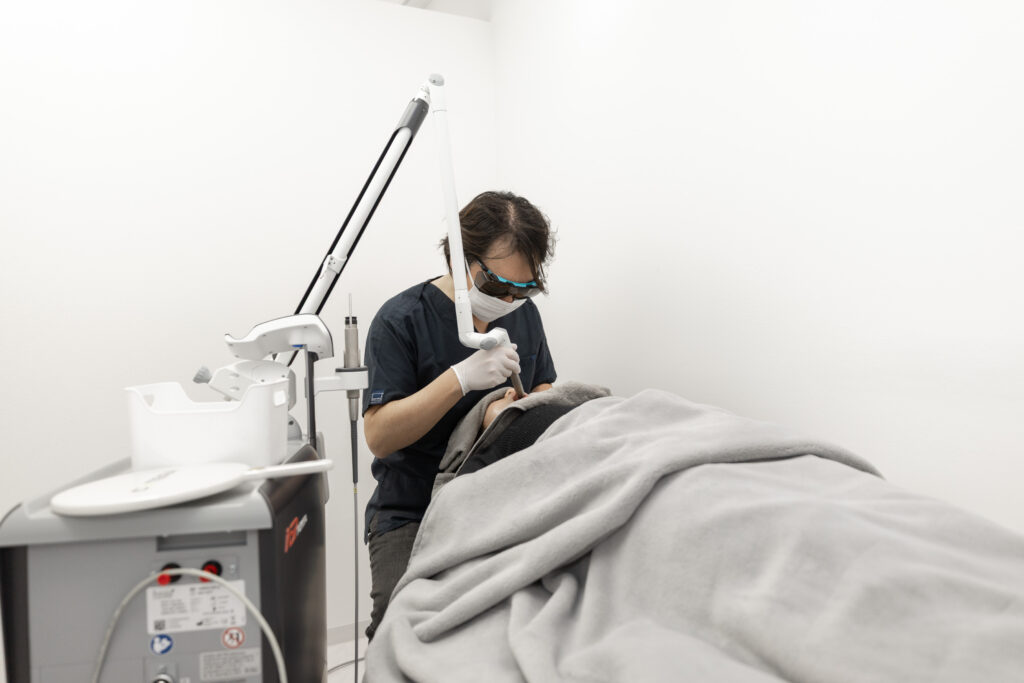
Ueno Snoring Clinic offers a range of options depending on your condition, including insurance-covered sleep testing and CPAP management, and self-pay snoring laser treatment. If you’d like to find out which treatment suits you, please start with an initial consultation.
Details of the tests and treatments offered at Ueno Snoring Clinic can be found here
Important: Snoring and Sleep Apnea Treatment Requires a Sleep Test
Some clinics that offer only self-pay care, and some cosmetic clinics, may not perform sleep testing. Before starting treatment, check whether the clinic performs a sleep test, or has a system for referring you to a medical institution where you can receive the necessary tests.
If sleep apnea is hidden behind your snoring and treatment begins without testing, it may be missed.
▶ Learn more about snoring and sleep apnea testing
You’ll Want to Know This! A Complete Comparison of 5 CPAP Types — What Doctors Really Look For
Our doctor compares five different CPAP machines side by side and explains what actually matters when choosing one.
Watch the video
A Complete Comparison of CPAP Masks
We tried on and reviewed five different types of CPAP masks. 90% of CPAP comfort comes down to the mask.
Watch the video
Do you have to use CPAP forever? A specialist explains how to use CPAP
A detailed explanation of how to use CPAP, with a real demonstration of what it feels like to wear the device.
Watch the video
Ueno Snoring Clinic was featured on Fuji TV’s “Live News It!” and on FNN Prime Online
Watch our clinic’s examination and explanation of sleep disorders, snoring, and sleep apnea.
Watch the video
Ueno Snoring Clinic was featured in an article on Nippon TV’s “news every.”
Please take a look as a starting point for thinking about getting evaluated for snoring, sleep apnea, or other sleep disorders.
Read the article
Reviewed by Our Director
Kazuyuki Sugaya
Director, Ueno Snoring Clinic / Anesthesiologist
Our director, with over 20,000 general anesthesia cases, focuses primarily on the diagnosis and treatment of snoring and sleep apnea, offering care tailored to each patient. [Insurance-Covered] Ueno Snoring Clinic
In this article, our Director, Kazuyuki Sugaya, explains the mixed feelings that can arise when a partner starts using CPAP, how insurance coverage for snoring and CPAP works in Japan, and practical ways to protect both partners’ sleep.
🩺Comprehensive Snoring Treatment at Ueno Snoring Clinic
At Ueno Snoring Clinic, we check for apnea with testing and propose a treatment plan, including CPAP, that matches the cause of your snoring and your condition.
Insurance-Covered: Thorough Testing and Ongoing Treatment
- Simplified testing: Home screening for sleep apnea
- PSG testing: A detailed sleep study including brain waves, done at home
- CPAP treatment: The standard treatment for apnea that meets insurance criteria
Self-Pay: Address the Root Cause, Short-Term Focus
- Snoring laser treatment: For people whose testing confirms simple snoring
- Medically supervised weight loss: An option when weight gain is a contributing factor
*Who a treatment suits, and how much it can help, differs between individuals; a medical assessment is the starting point.
Our Director’s book, “Curing Snoring with the Latest Treatments” (an Amazon Japan bestseller — #1 in General Medicine, #1 in Clinical Internal Medicine, #2 in Family Health & Wellness), also explains CPAP and other options in more detail.
New Book by Our Director
“Curing Snoring with the Latest Treatments”
A guide to the latest snoring treatments, written by an anesthesiologist who has overseen the sleep of more than 10,000 patients.
View on Amazon
Quick Answer
Feeling put off when your partner starts wearing CPAP is a natural reaction. It doesn’t mean you’re cold; in most cases it reflects a lack of information and some anxiety. CPAP is not a gadget for silencing loud snoring but a treatment for sleep apnea. If your partner has started using it, that usually means testing confirmed apnea and they have taken a step toward treatment. A U.S. study found that after CPAP treatment, bed partners’ quality of life also improved. The key is not to criticize the person, but to make “both of us can sleep” the shared goal, and the starting point for that is confirming the cause of the snoring with a test.
📋 What This Article Covers
- Why snoring alone rarely qualifies for insurance-covered CPAP
- Love isn’t enough: what lost sleep does to a relationship
- Three reasons a CPAP mask can be off-putting
- How the CPAP user feels, and what partners should know
- “Can I accept it?” A realistic answer
- The order of steps for reducing snoring: start with a test
- “Get used to the device” or “reduce the snoring” isn’t an either-or choice
Why Snoring Alone Rarely Qualifies for Insurance-Covered CPAP
Why might a CPAP mask make you uneasy? Before answering that, let’s clear up a common misunderstanding.
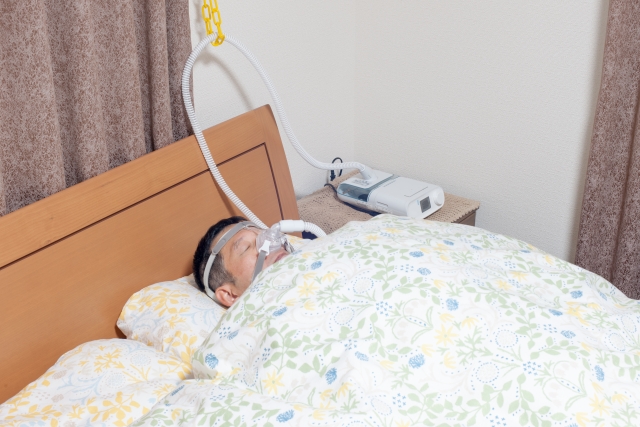
Put simply, CPAP is used as a treatment for sleep apnea. Jumping from “the snoring is loud” to “so CPAP will fix it” is a shortcut that doesn’t hold up, medically or within Japan’s insurance system. Of course, some heavy snorers turn out to have hidden sleep apnea, and if testing confirms it, CPAP becomes a treatment option. But when testing finds snoring without apnea, starting CPAP under insurance is not the usual path.
| Test result |
How CPAP fits in |
| No apnea found (snoring only) |
Starting CPAP under insurance is not usual. Options include lifestyle changes, nasal treatment, a mouthpiece, or self-pay laser treatment |
| Apnea present but below insurance thresholds |
If the AHI falls short of the insurance threshold, insurance-covered CPAP may not be available |
| Apnea present and meets insurance criteria |
CPAP becomes a standard treatment option |
The AHI thresholds used as a guide for insurance-covered CPAP in Japan were lowered in the medical fee revision that took effect in June 2026:
| Type of test |
Before (until May 2026) |
After (from June 2026) |
| Simplified test (done at home) |
AHI 40 or more |
AHI 30 or more |
| PSG (polysomnography) |
AHI 20 or more |
AHI 15 or more |
This is one of the conditions for insurance-covered CPAP; other requirements and the doctor’s clinical judgment also play a part. For the exact requirements, please check with a medical institution or the official Ministry of Health, Labour and Welfare notices. For an overview, see Snoring Treatment in Japan: A Complete Guide.
In other words, what is often going on is a mismatch like this:
| Who |
What they’re thinking |
| The snorer |
“My snoring is a problem, I’m sluggish in the daytime, I want to do something about it.” |
| The partner |
“It’s way too loud. I can’t sleep.” |
| How the system works |
Snoring alone doesn’t automatically lead to CPAP |
Talking it over without recognizing this gap usually ends in an argument. For the types of test and how they work, see Simplified Sleep Test vs. PSG.
Love Isn’t Enough: What Lost Sleep Does to a Relationship
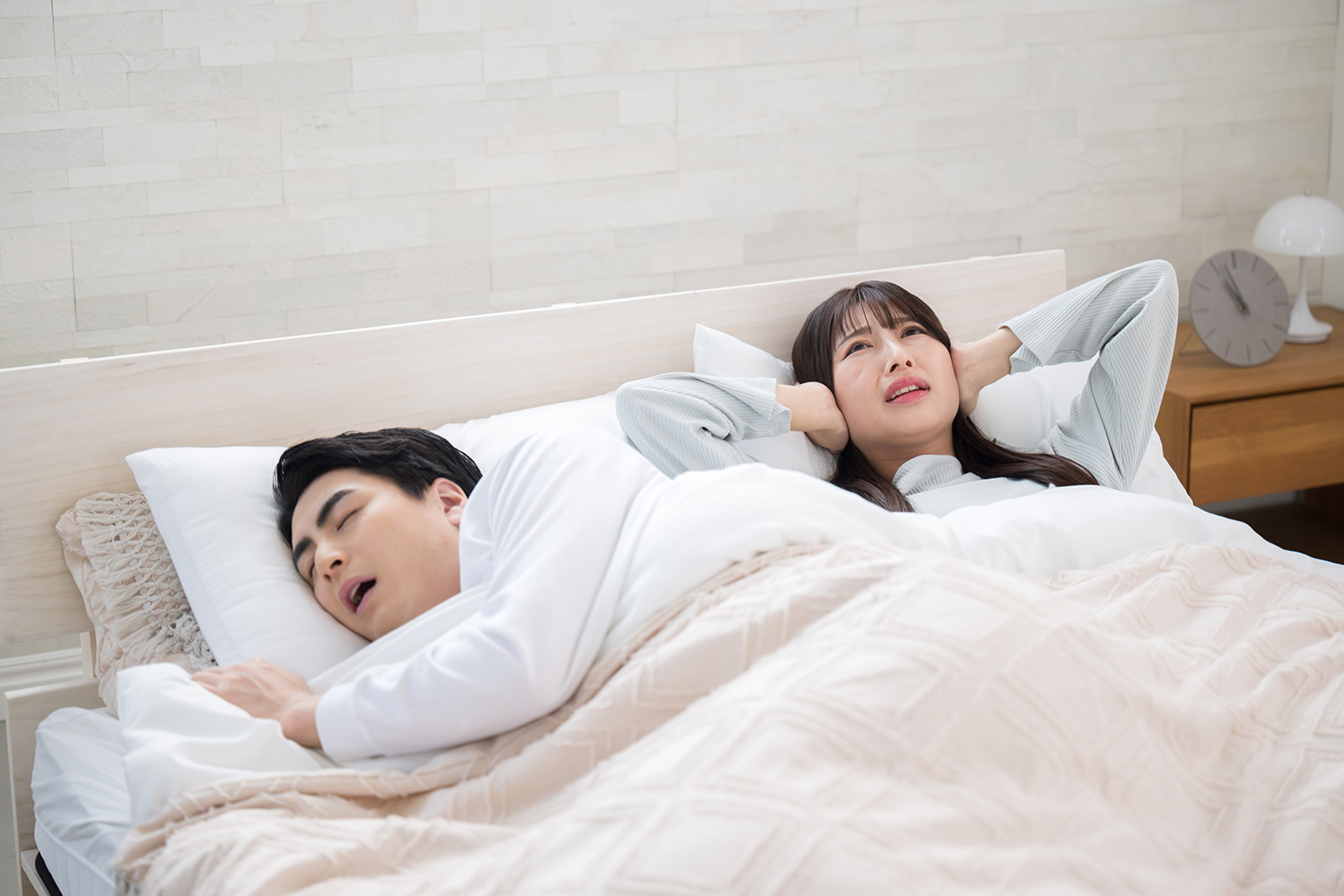
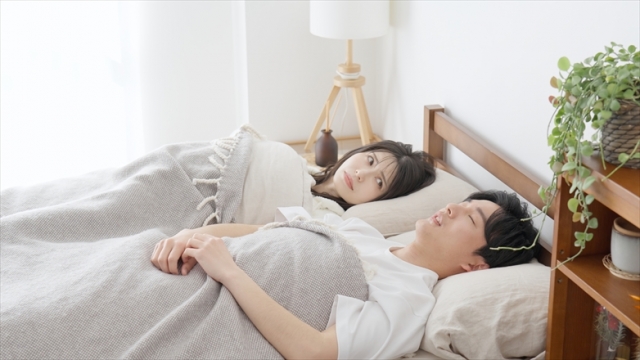
Let’s be frank: having your sleep taken away is intensely stressful. Lack of sleep is known to make emotions harder to manage and to make people more irritable. The same words grate on you; small household noises feel unbearable; you can’t be gentle. The person hasn’t become unkind. Simply not getting enough sleep can be enough to break a relationship.
Research supports this. A Swedish study comparing 351 women married to heavy snorers with 728 other women found the first group had about twice the rate of difficulty getting to sleep and staying asleep, excessive daytime sleepiness, and fatigue (Ulfberg et al., 2000).
“Breaking up over snoring?” you might think. In reality, snoring can set off a chain like this:
- Starting to sleep in separate rooms
- Dreading trips together
- Living together stops working
- Less physical closeness and time together at night
- Small grievances piling up
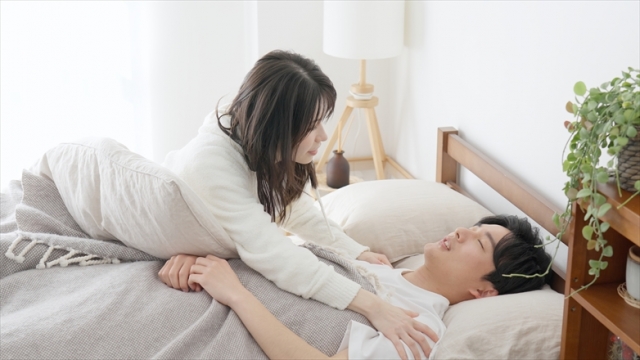
So if you, as the partner, find it hard to bear, that’s legitimate. Kindly keeping quiet often leads to an explosion later. It’s an awkward topic, but it’s a part of daily life that deserves to be faced.
Three Reasons a CPAP Mask Can Be Off-Putting
So why does it put you off when your partner starts wearing CPAP? Again, it’s not because you’re cold. There are three main reasons.
| Reason |
What’s going on |
Another way to see it |
| 1) Illness suddenly feels real |
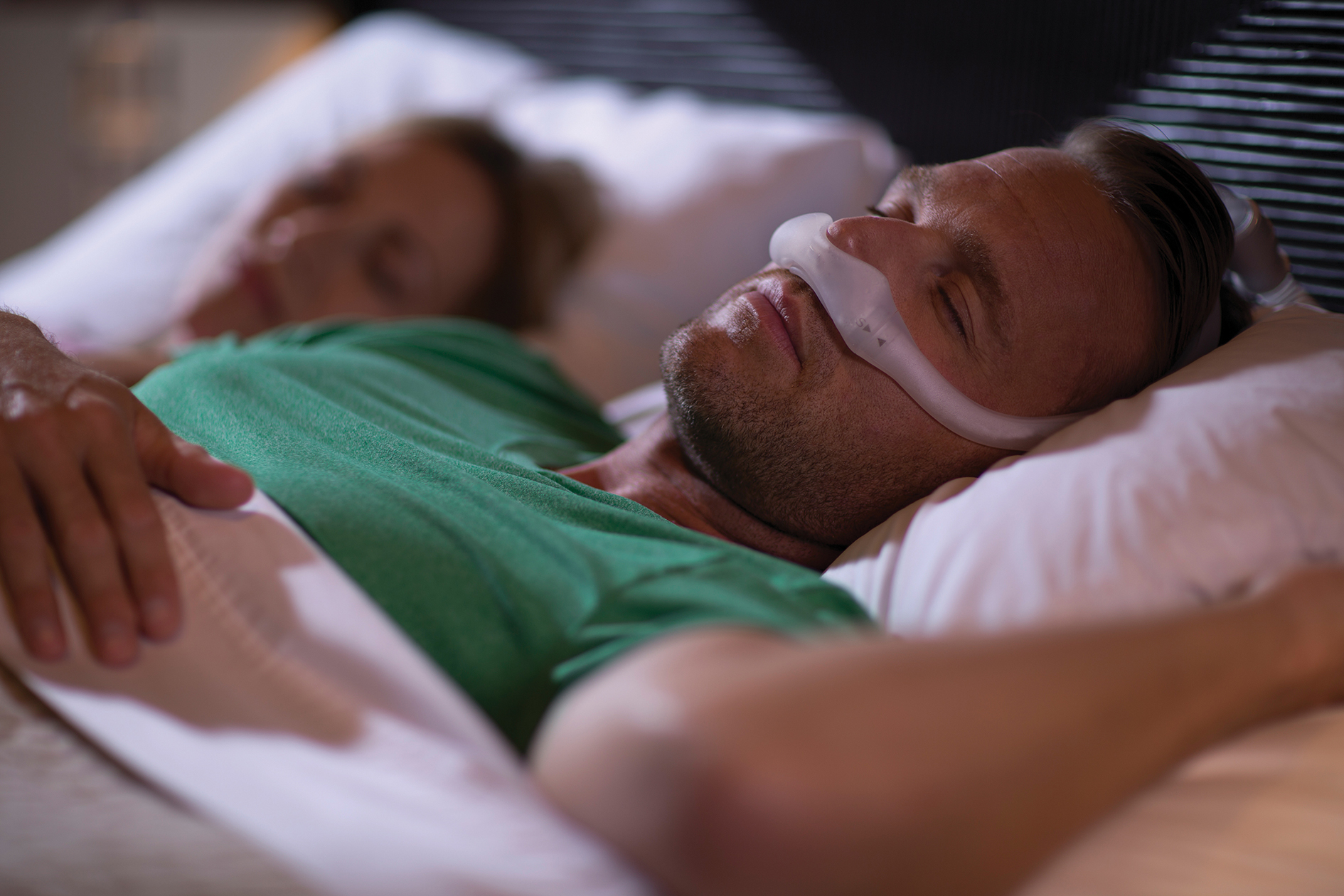
A mask and hose inevitably look medical. “Is it that bad?” can feel frightening, and worries about future health or caregiving surface |
Feeling scared is natural, but it also means treatment has begun, which is good news |
| 2) It looks very unromantic |
Pajamas are one thing; CPAP is another. The bedroom can start to feel like a treatment room, and the romance fades |
Different mask types look quite different, and this can be discussed with the doctor |
| 3) “Isn’t this just a workaround?” |
“What about the snoring in the end?” “Will it be forever?” “What about trips, or living together?” The future suddenly feels unclear |
The outlook for treatment is something you can ask the doctor about, and you can ask together |
Feeling put off isn’t wrong; it’s a sign of missing information and anxiety.
How the CPAP User Feels, and What Partners Should Know
The person who started CPAP has feelings too. Many begin treatment while feeling embarrassed and worried that their partner will be put off. Here are a few things partners should know:
- CPAP treats a medical condition, sleep apnea. Starting it means taking a step for their health.
- When CPAP controls the apnea, the user’s sleep can become deeper, and daytime sleepiness and similar symptoms can be expected to improve.
- In a Mayo Clinic study of 54 couples, bed partners’ quality of life, including vitality and mental health, improved after the patient’s CPAP treatment (Parish and Lyng, 2003).
- There are several mask types, so the look and feel can be changed (see Best CPAP Mask for You: 5 Types Compared).
- Machine noise differs between models (see CPAP Machine Comparison in Japan).
How much CPAP helps, and how much the partner’s sleep improves, varies from person to person. For more on mask types and how to use CPAP, see the videos above and CPAP Treatment in Japan. If your partner wants to stop using CPAP, encourage them not to quit on their own but to read Can You Ever Stop Using CPAP? first.
“Can I Accept It?” A Realistic Answer
Thinking in extremes makes both of you unhappy.
| Extreme view |
What happens |
| “If you love someone, you can put up with it” |
Endurance continues until lack of sleep breaks the relationship |
| “No way, that’s a turn-off” |
Hurts the partner’s dignity and dampens their motivation for treatment |
A realistic middle ground is this: respect their effort to look after their health, but shape things so that both of you can sleep. Conversations can follow a pattern like this:
| What you want to convey |
How you might say it |
| You’re not blaming them |
“I’m not trying to blame you. I’m just struggling with not sleeping.” |
| You care about their health too |
“I’m worried about your health as well, so I want us to sort this out together.” |
| You want to agree on house rules |
“Can we agree on some bedroom rules: noise, bedding, bedtimes?” |
| You want a time frame |
“Can we decide what we’ll try, and by when?” |
The key is to make it about planning your life together, not criticizing the person. “You’re loud” or “it’s a turn-off” sounds like an attack, while “my sleep is falling apart” and “tomorrow will be hard” are simply facts.
The Order of Steps for Reducing Snoring: Start With a Test
Tackling snoring at random is exhausting. Setting priorities also makes the relationship less likely to suffer.
| Step |
What to do |
| 1) Make the situation visible |
The snorer is often unaware, so note when it’s worst, whether they’re on their back or side, and whether alcohol plays a part (for sleeping position, see Why Side-Sleeping Stops Some People’s Snoring) |
| 2) Adjust the bedroom and habits |
Dryness, alcohol, lack of sleep, weight changes, a blocked nose. Some people improve with this alone, but pushing too hard (“it should go away if you try harder”) doesn’t last |
| 3) Check for apnea with a test |
Use simplified testing or similar to see whether sleep apnea is hidden. This is the fork in the road that decides the direction of treatment |
| 4) Choose treatment based on the results |
CPAP or similar if there is apnea; if not, discuss options suited to the cause of the snoring at a consultation |
In most cases, snoring happens because the airway narrows and its lining vibrates. The more pronounced this is, the sooner home measures hit their limit, which is why checking the condition early with a test is the shortcut. If the nose is involved, see also Hay Fever & Snoring.
“Get Used to the Device” or “Reduce the Snoring” Isn’t an Either-Or Choice
Arguing about whether to wear CPAP or not tends to wear both people out. The real goal is simpler: a situation in which both of you can sleep, without adding to the snorer’s burden and while easing the partner’s stress.
What matters is that the choice between CPAP and treatment to reduce snoring isn’t a matter of preference; it is decided by testing and examination.
| Test result |
Main options |
Key points |
| Sleep apnea confirmed (meets insurance criteria) |
CPAP (insurance-covered) |
The aim is to deal with broken sleep and health risks from apnea. If the look or noise bothers you, don’t quit on your own; ask about changing the mask |
| No sleep apnea (simple snoring) |
Lifestyle changes, nasal treatment, a mouthpiece (not offered at our clinic), self-pay snoring laser treatment, and others |
The aim is to reduce the snoring sound. Suitability is judged at consultation, and results vary (see Dual Deep Thermia® Laser Snoring Treatment) |
| Apnea present but below insurance thresholds |
Lifestyle changes, a mouthpiece, or other treatment, depending on the condition |
The approach depends on symptoms and severity; a doctor’s assessment is needed |
Rather than starting from the device or from a particular treatment, choosing after the cause is confirmed by testing is, in the end, the least roundabout path. For people who suit treatment that reduces the snoring itself, quieter nights can also ease the awkwardness of how things look and feel, making trips, business travel, and living together easier to manage. Not everyone gets the same result, however.
What Ueno Snoring Clinic Can Do
Ueno Snoring Clinic is a sleep-disorder clinic specializing in snoring and sleep apnea. We check whether you have apnea and how severe it is with simplified testing at home and insurance-covered PSG (also at home, no hospital stay), then guide you, according to the results and your symptoms, to options such as insurance-covered CPAP, self-pay snoring laser treatment, or medically supervised weight loss.
Many people come to us saying “my partner’s snoring is hard to live with” or “I’m struggling in my relationship with a partner who uses CPAP,” and many patients speak very openly about these worries. Couples are welcome to consult together.
Summary: Whether You Can Accept It Comes Down to Whether You Can Both Sleep
“Would I be put off if my partner wore CPAP?” There’s no black-and-white answer.
- Feeling put off by the sight of it is natural
- Struggling when your sleep is taken away is understandable
- But the more you blame your partner, the more the relationship suffers

The goal is for both of you to sleep. The realistic way there is to confirm the cause with a test first, then choose, according to the condition, CPAP or other treatment if there is apnea, and ways to reduce snoring if there isn’t. Snoring is not a question of love; it’s a question of daily life, so conversations and choices go better when they’re grounded in reality.
If you’ve been making efforts and nothing changes, or you’re anxious about moving in together or getting married, start by checking the condition with a test and having the cause assessed. When both of your sleep is protected, the relationship tends to recover too.
Check Your Partner’s Snoring With a Test First
Couples are welcome to consult together. By appointment only; same-day appointments are often available.
Frequently Asked Questions
Q. Is it OK to have snoring treatment at a self-pay-only clinic or a cosmetic clinic?
A. Some clinics that offer only self-pay care, and some cosmetic clinics, may not perform sleep testing. Before starting treatment, check whether the clinic performs a sleep test, or has a system for referring you to a medical institution where you can receive the necessary tests. If sleep apnea is hidden behind your snoring and treatment begins without testing, it may be missed. We recommend first checking your condition at a medical institution that offers sleep testing (simplified testing or PSG). For details, see
Simplified Sleep Test vs. PSG.
Q. Is it normal to feel put off when my partner starts using CPAP?
A. Yes, it’s a normal reaction. The medical look of the mask and hose, the change in appearance, and worries about the future all play a part, and none of it means you’re cold. In most cases, it reflects missing information and anxiety. CPAP treats sleep apnea, and starting it is a step your partner has taken for their health.
Q. Can CPAP be covered by insurance just because someone snores loudly?
A. When testing finds snoring without apnea, starting CPAP under insurance is not the usual path. CPAP treats sleep apnea, and insurance coverage depends on factors such as an AHI above a set threshold on testing. The first step is to check with a test whether there is apnea.
Q. What AHI is needed for insurance-covered CPAP in Japan?
A. Since the revision that took effect in June 2026, the guide is an AHI of 30 or more on simplified testing (previously 40) and 15 or more on PSG (previously 20). Other requirements and the doctor’s judgment also apply, so please confirm the exact requirements with a medical institution or the official Ministry of Health, Labour and Welfare notices.
Q. Does CPAP also help the partner?
A. In a Mayo Clinic study of 54 couples, bed partners’ quality of life improved after patients with obstructive sleep apnea were treated with CPAP. Results vary from person to person, however.
Q. The look and noise of CPAP bother me. Can anything be done?
A. There are several mask types, which change how it looks and feels, and machine noise varies by model. Rather than stopping on their own, the user should talk to their doctor about any concerns; adjusting the mask often solves the problem.
Q. Can snoring be reduced with treatment, without CPAP?
A. If testing finds no sleep apnea and the snoring is judged to be simple snoring, options include lifestyle changes, nasal treatment, a mouthpiece, and self-pay snoring laser treatment. Suitability and results vary and are assessed at consultation. If there is apnea, CPAP is the standard option.
Q. How should I bring up my partner’s snoring?
A. Frame it as a daily-life issue rather than a personal one, for example: “I’m not trying to blame you. I’m just struggling with not sleeping,” or “I’m worried about your health as well, so I want us to sort this out together.” Saying only “you’re loud” or “it’s a turn-off” can easily sound like an attack.
Q. Should we get tested before moving in together or getting married?
A. If someone has been told they snore loudly or stop breathing, or has strong daytime sleepiness, testing is well worth considering. Simplified testing can be done at home, and couples are welcome to consult together.
*This article is a general explanation, written for a broad audience and based on the sources above together with our clinic’s own clinical experience. It is not a substitute for medical advice. Insurance criteria and treatment suitability depend on individual circumstances. If you are concerned about snoring or sleep apnea, please consult a medical institution for a proper evaluation.