


いびきを最新治療で治す-表紙-1.png)
Told You Stop Breathing in Your Sleep? A Guide to Insurance-Covered Sleep Apnea Testing in Japan
Kumamoto Earthquake: Why CPAP Has No Backup Battery | Ueno Snoring Clinic
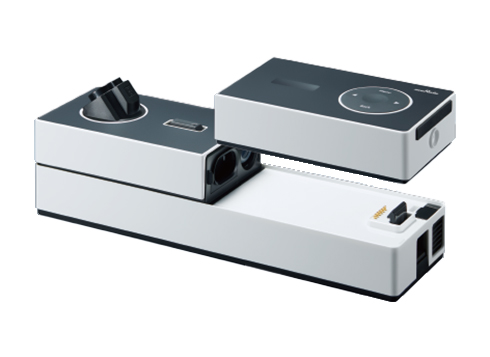
On July 28, 2025, an earthquake with a maximum intensity of 7 struck Kumamoto Prefecture, cutting power to as many as approximately 48,000 households across the prefecture. That blackout exposed a serious problem: patients with sleep apnea syndrome who rely on CPAP every night suddenly found themselves unable to continue their treatment.
This points to a fundamental issue worth highlighting. Home ventilators are legally required to include a built-in battery, but CPAP devices carry no such requirement. Despite both being classified as medical devices that support breathing, a significant gap exists in how well-prepared each is for a power outage.
In this article, our sleep specialty outpatient clinic offers a thorough explanation of the risk that CPAP stops working during a power outage, the regulatory gap compared with home ventilators, and concrete steps you can take right now — including how to choose a portable power station and an overview of leading products.
Ueno Snoring Clinic offers a range of options tailored to each patient’s condition, including insurance-covered sleep testing and CPAP management, as well as self-pay laser treatment for snoring. If you’re currently using CPAP, we also welcome questions about power-outage preparedness and equipment at your initial visit.
Details of the tests and treatments offered at Ueno Snoring Clinic can be found here
Reviewed by Our Director
Kazuyuki Sugaya
Director / Anesthesiologist, Ueno Snoring Clinic
With more than 20,000 general anesthesia cases, our director provides care centered on the diagnosis and treatment of snoring and sleep apnea, tailored to each patient. [Insurance-Covered] Ueno Snoring Clinic
This article has been medically reviewed by Director Kazuyuki Sugaya and explains, in plain and accurate terms, the challenge of continuing CPAP use during a power outage, the regulatory gap with home ventilators, and how to correctly choose a portable power station to prepare for disasters and blackouts.
🩺Comprehensive Snoring Treatment at Ueno Snoring Clinic
Ueno Snoring Clinic can support a wide range of needs based on each patient’s situation — from CPAP management and power-outage preparedness to self-pay options such as laser treatment.
Thorough Testing & Ongoing Treatment (Insurance-Covered)
- Home sleep test / PSG (polysomnography): Precise analysis of your sleep condition
- CPAP therapy: The standard treatment for moderate-to-severe apnea
Self-Pay Treatment for Root-Cause, Short-Term Results
- Latest laser snoring treatment: Incision-free, root-cause treatment
- Medical weight-loss support: Physically opening the airway through weight reduction
*As a clinic specializing in snoring treatment, we are committed to resolving “snoring that won’t stop” through both insurance-covered and self-pay options.
This topic is also covered in detail in our director’s book, “Curing Snoring with the Latest Treatments” (Amazon Japan Best Seller: #1 in General Medicine, #1 in Clinical Internal Medicine, #2 in Home Medical & Health)
New Book by Our Director
“Curing Snoring with the Latest Treatments”
Written by an anesthesiologist who has overseen the sleep of more than 10,000 patients, this book is a modern guide to the latest snoring treatments.
Quick Answer
CPAP is a medical device that stops working the moment the power goes out, and unlike home ventilators, it isn’t required to have a built-in battery. To prepare for an outage, you need a portable power station that provides (1) pure sine wave output and (2) at least 300Wh of capacity (600Wh or more if you use a humidifier). A USB-only mobile battery generally cannot power a CPAP. Products from established brands like Jackery, EcoFlow, and Anker are recommended for their reliability, and it’s essential to test your specific CPAP with your power station in advance, before a disaster strikes.
📋 What This Article Covers
- The Kumamoto earthquake blackout, and the reality CPAP patients faced
- The “built-in battery” gap: required for ventilators, but not for CPAP
- What you need to keep using CPAP during a power outage
- How to choose the right portable power station (pure sine wave and capacity)
- A comparison of leading portable power stations and how to choose
- Other outage preparations and important cautions
The Kumamoto Earthquake Blackout, and the Reality CPAP Patients Faced
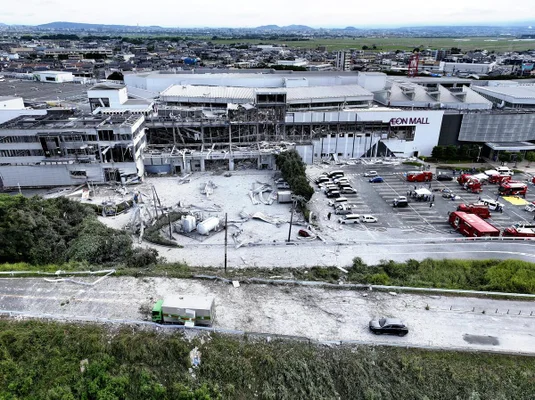
In the July 28, 2025 Kumamoto earthquake, roughly 48,000 households across the prefecture lost power, including about 12,000 in Uki City, which recorded an intensity of 7, and about 14,000 in Yatsushiro City, which recorded an intensity of upper 6. The timeline for restoring power was reported as “still being confirmed” — essential infrastructure had been cut overnight.
In this situation, patients with sleep apnea syndrome who use CPAP every night suddenly found themselves unable to continue treatment. CPAP simply doesn’t run without power — it’s a device that’s plugged into an outlet, and the moment the power goes out, so does the treatment.
⚠️ What Happens When a Power Outage Stops Your CPAP
- The continuous positive airway pressure is lost, and apnea and hypopnea events during sleep return
- For patients with severe SAS, repeated nighttime drops in oxygen can place added strain on the cardiovascular system
- The return of apnea is especially impactful when it coincides with the physical and psychological stress of evacuation life
- In a major disaster where power restoration takes several days, treatment may be interrupted for that entire period
SAS isn’t a condition that’s “cured” — it’s one that requires ongoing management. Even a few days without treatment can allow symptoms to return and potentially affect your long-term health. It’s precisely during a disaster that preparation to keep your treatment going matters most.
The “Built-In Battery” Gap: Required for Ventilators, but Not for CPAP
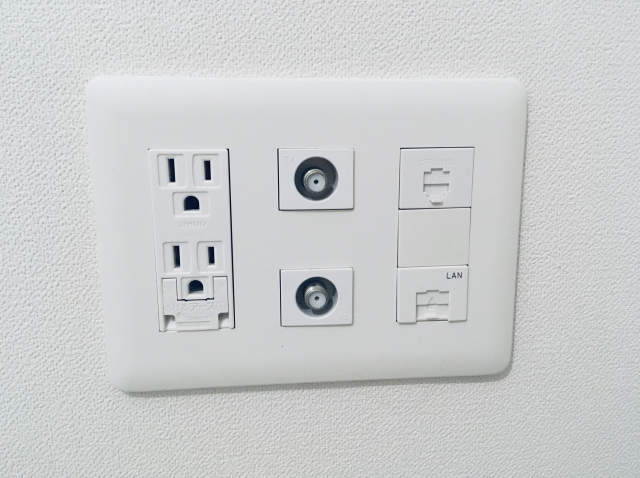
Here’s an important regulatory fact that many CPAP users aren’t aware of.
Home mechanical ventilators (HMV), used at home by patients who need ventilatory support, are required under medical device safety standards to include an internal battery. They’re designed so that even during a power outage, the built-in battery guarantees continued operation for a set period of time.
| Item | CPAP | Home Ventilator (HMV) |
|---|---|---|
| Primary condition treated | Sleep apnea syndrome (SAS) | Neuromuscular disease, chronic respiratory failure, and similar conditions |
| Built-in battery | ❌ None (not required) | ✅ Included (required) |
| Behavior during a power outage | Stops immediately | Continues running on its battery |
| User’s outage preparedness | Must be arranged by the user | Built into the device to some extent |
| Medical device classification | Controlled medical device | Highly controlled medical device |
💬 A Question Our Director Wants to Raise
SAS is estimated to affect more than 9 million people in Japan, making it a genuinely common condition, and CPAP users likely number in the hundreds of thousands nationwide. Yet unlike home ventilators, CPAP has no requirement for a built-in battery, which means preparing for a power outage is left entirely to the patient. Japan is highly earthquake-prone, and the risk of a blackout is something everyone faces. I believe the current state of CPAP — a medical device that remains defenseless against power outages — is an issue that deserves reconsideration at the regulatory level.
What You Need to Keep Using CPAP During a Power Outage
Rather than waiting for the regulations to change, it’s important to prepare with what’s available now. Here’s a rundown of your options.
| Preparation Method | Approx. Cost | Features and Cautions |
|---|---|---|
| Portable power station (the best option) | ¥30,000–¥80,000 | The most practical choice — requires AC output and pure sine wave |
| Car cigarette lighter socket + DC cable | From a few thousand yen | An emergency option if you have a car; requires a DC cable specific to your CPAP model |
| UPS (uninterruptible power supply) | ¥20,000–¥50,000 | Switches over instantly when it detects an outage, but isn’t portable |
| Gasoline generator | From ¥50,000 | Outdoor use only, noisy, and requires securing fuel — not very practical |
Balancing practicality, portability, and cost, a portable power station is the most realistic choice. That said, not every portable power station works with CPAP — we’ll go into detail in the next section.
How to Choose the Right Portable Power Station: Two Key Requirements for CPAP
Requirement 1: Pure Sine Wave Output
Because CPAP is a precision medical device, the “waveform” of the electricity it receives matters a great deal. There are three main types of output waveform.
| Waveform Type | Compatible With CPAP | Characteristics |
|---|---|---|
| Pure sine wave | ✅ Compatible | Equivalent to the waveform from a home outlet; safe for medical devices |
| Modified sine wave (quasi-sine wave) | ❌ Not compatible | Risk of malfunction or device damage; common in budget products |
| Square wave | ❌ Not compatible | Not suitable for use with precision equipment |
📌 Always Check Before You Buy
Choose a product whose specifications clearly state “pure sine wave” or “sine wave.” Products labeled “modified sine wave” or “quasi-sine wave” cannot be used with CPAP. Products from major brands like Jackery, EcoFlow, and Anker are almost all pure sine wave, but unbranded budget products should always be checked.
Requirement 2: Sufficient Capacity (Wh)
CPAP power consumption varies by model, but a typical night’s use (about 8 hours) is generally said to consume between 150Wh and 250Wh, making a capacity of at least 300Wh a reassuring baseline when choosing a power station.
If you use a humidifier, power consumption increases substantially. For a tabletop CPAP unit such as the AirSense 11, it’s best to plan for a battery capacity of 600Wh or more.
🔋 Capacity Guidelines (Based on 8 Hours of Use per Night)
- No humidifier, compact CPAP (e.g., AirMini): 300Wh or more as a guide
- No humidifier, standard CPAP (e.g., AirSense 11): 400Wh or more as a guide
- With humidifier, standard CPAP: 600Wh or more recommended
- For multiple days of use or an extended evacuation: 1,000Wh or more for peace of mind
You can estimate the actual runtime of a portable power station using the formula: battery capacity (Wh) × 0.8 ÷ power consumption (W). The 0.8 factor accounts for conversion losses, so roughly 80% of the rated capacity is a realistic working figure. Check your CPAP’s power consumption on the device’s label or in the instruction manual.
A Comparison of Leading Portable Power Stations and How to Choose
Below is a comparison of readily available, reliable products from three leading manufacturers. All of them support pure sine wave output.
| Product (Example) | Capacity | Rated Output | CPAP Suitability & Features |
|---|---|---|---|
| EcoFlow RIVER 3 | 230Wh | 300W | Suited to compact CPAP without a humidifier. Ultra-lightweight, quiet design, includes UPS function |
| Jackery 300 Plus | 288Wh | 300W | Long-lasting LiFePO4 battery. Covers 1–2 nights of use with a compact CPAP |
| Anker SOLIX C800 | 768Wh | 800W | Supports a standard CPAP plus humidifier. Excellent shock resistance and quiet operation |
| Jackery 600 Plus | 632Wh | 800W | Suited to a standard CPAP with humidifier. 60-minute fast charging and built-in UPS function |
| EcoFlow DELTA 3 Plus | 1,024Wh | 1,500W | Suited to multi-day evacuation or powering equipment for the whole family. Supports solar charging |
| Jackery 1000 New | 1,070Wh | 1,500W | A high-capacity model suited to extended evacuation or running multiple devices at once |
💡 Practical Advice for Choosing
- Check how quiet it is if you’ll keep it by your bedside: fan noise during charging or use can disturb your sleep
- Prioritize a UPS function: one that detects an outage and switches over instantly can handle a sudden blackout while you’re asleep
- Choose a model that supports solar panels: during an extended outage, having a way to keep recharging matters — a compatible unit lets you do that with solar power
- Always test it with your own CPAP before buying: trying it out in a store or through a rental is the ideal approach
Other Outage Preparations and Important Cautions
The Car Cigarette Lighter Socket + DC Cable Option
If you have a car, a dedicated cigarette lighter cable is often available for products from major manufacturers such as ResMed and Philips, and using a DC cable can dramatically improve battery life compared with going through an AC adapter, since there’s less conversion loss — in some cases, a car battery alone can power a CPAP through an entire night. That said, this requires keeping the engine running, so careful attention to fuel management and carbon monoxide poisoning is essential.
“USB-Only Mobile Batteries” Cannot Power a CPAP
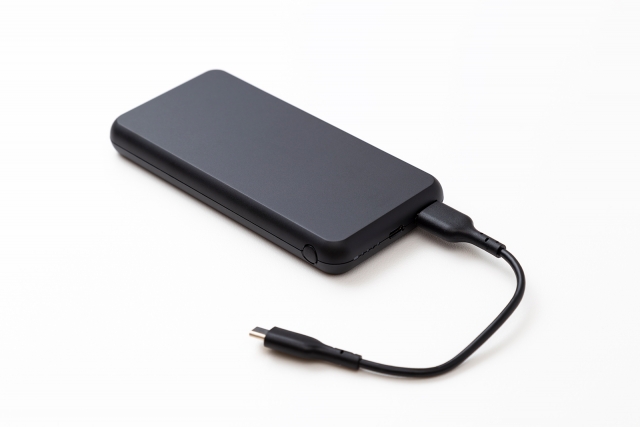
Running a CPAP requires a portable power station capable of AC or DC output — a USB-only mobile battery meant for charging smartphones isn’t suitable. USB output (5V) can’t meet the voltage a CPAP needs to run (typically AC 100V or DC 12V), so connecting one simply won’t work. The assumption that “I have a high-capacity mobile battery, so I’ll be fine” can be a dangerous misunderstanding.
Using CPAP at an Evacuation Shelter
Some evacuation shelters set up dedicated power outlets for medical equipment. Registering in advance with your local government or shelter administrators as a “CPAP user” can, in some cases, give you priority access to power. Having your regular clinic provide a certificate confirming you use CPAP, along with your device information, can also help things go smoothly at a shelter.
What Ueno Snoring Clinic Can Offer
Ueno Snoring Clinic is a sleep specialty outpatient clinic specializing in snoring and sleep apnea syndrome. We regularly hear from CPAP patients asking, “What should I do about power outages?”
Feel free to bring these questions up during your regular follow-up visits — we can check your CPAP model and power consumption, discuss compatibility with portable power stations, and help you think through an evacuation plan. And if you’re not yet using CPAP but want to find out whether you have SAS, you can start with a home sleep test.
Summary
The blackout caused by the Kumamoto earthquake (July 2025) served as a wake-up call about how unprepared many CPAP users are to keep their treatment going. Unlike home ventilators, CPAP has no requirement for a built-in battery, and treatment stops the moment the power does. This regulatory gap is an issue that deserves further discussion.
The most realistic step you can take on your own is preparing a portable power station in advance that supports pure sine wave output and provides sufficient capacity. Since the capacity you need varies significantly depending on whether you use a humidifier, it’s important to check your CPAP’s specifications before making a choice.
“I’ll figure it out when it happens” isn’t a viable approach to managing sleep apnea syndrome. Japan is highly prone to earthquakes. The preparation you make today can protect your health if disaster strikes tomorrow.
Get in Touch About CPAP Management and Power-Outage Preparedness
As a sleep specialty outpatient clinic, we’re happy to help — from checking your CPAP’s power consumption and its compatibility with a portable power station, to thinking through your evacuation plan.
Frequently Asked Questions
Q. Can I run my CPAP off a standard smartphone mobile battery?
No. The USB output (5V) from a mobile battery meant for charging smartphones can’t supply the voltage a CPAP needs to run (typically AC 100V or DC 12V). CPAP requires a portable power station with AC or DC output.
Q. How do I find out how much power my CPAP uses?
You can find the maximum power consumption (in watts) on your CPAP’s label — usually on the bottom or back of the unit — or in the specifications section of the instruction manual. Your regular clinic can also help you confirm this.
Q. If there’s a power outage, is it okay to go without CPAP for just one night?
For someone with mild SAS, a single night without treatment may not cause serious effects, but for those with moderate-to-severe SAS, even one night of returning apnea can place added strain on the cardiovascular system. Rather than assuming you’ll be fine, we strongly recommend preparing a portable power station in advance.
Q. Can I use CPAP at an evacuation shelter?
This varies by shelter. Some local governments set aside power for medical equipment users. Registering in advance as a “CPAP user” with your municipality’s welfare department or shelter contact point makes it easier to receive priority support. It’s also worth asking your regular clinic whether they can issue a certificate confirming your CPAP use.
Q. Where can I buy a portable power station?
They’re available through major online retailers and electronics stores, including Amazon, Rakuten, Yodobashi Camera, and Bic Camera. Before buying, always confirm that “pure sine wave” is listed in the specifications, and choose a model with enough capacity for your CPAP’s power consumption. If possible, we recommend testing the connection with your actual CPAP before you buy.
Concerned About Snoring or Sleep Apnea?
If you’re not yet using CPAP but are concerned about snoring or breathing pauses, you can start with a home sleep test. We’re insurance-covered and fully appointment-based.
[Insurance-Covered] If you’re concerned about snoring or sleep apnea, we offer a fully appointment-based system for reassuring, unhurried care.
Please feel free to contact Ueno Snoring Clinic [same-day appointments available]
📞0120-899-930
5F Ueno Silk Building, 4-8-8 Ueno, Taito-ku, Tokyo 110-0005, Japan

Please feel free to contact Ueno Snoring Clinic [same-day appointments available]
📞0120-899-930
5F Ueno Silk Building, 4-8-8 Ueno, Taito-ku, Tokyo 110-0005, Japan
Feel free to reach out to us on LINE ↓↓↓

English Support Available
We provide medical services for international patients. Please check our English website for details on how to visit our clinic.
Supervising Physician

Kazuyuki Sugaya, Director of Ueno Snoring Clinic
After graduating from Fujita Health University School of Medicine in 2004, Dr. Sugaya began his career as an anesthesiologist at Toho University Omori Medical Center. He has since gained extensive clinical experience at municipal hospitals and private clinics nationwide, administering general anesthesia in over 20,000 cases. In 2020, he founded the "Tokyo Spine Clinic," and has served as the Director of Ueno Snoring Clinic since 2025.
Related Columns

By Appointment Only
Specialized Snoring Treatment in Ueno
Ueno Snoring Clinic
Insurance-covered home testing available.
Following a physician’s consultation and result explanation,
we support the improvement of snoring and sleep apnea with "Dual Deep Thermia"—a non-surgical laser treatment, if necessary.
3-min walk from Ueno Station. Please feel free to consult us.