
How Loud Is Snoring, Really? Comparing Decibels to an Airplane
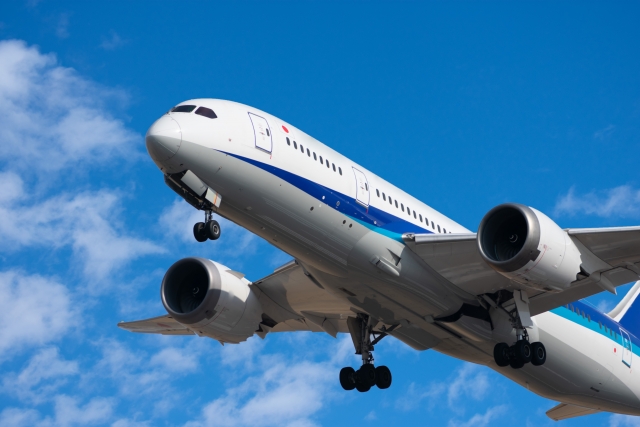
“Your snoring is as loud as being inside an airplane cabin.”
If you share a room with a family member or partner, there’s a good chance you’ve heard some version of this before.
In this article, we take a closer look at just how loud snoring really gets.
Ueno Snoring Clinic offers a range of options tailored to each patient’s condition, including insurance-covered sleep testing and CPAP management, as well as self-pay laser treatment for snoring. If you’d like to find out which treatment is right for you, please book an initial consultation.
Details of the tests and treatments offered at Ueno Snoring Clinic can be found here
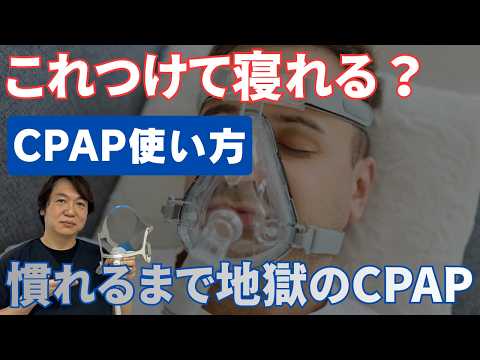


🩺Comprehensive Snoring Treatment at Ueno Snoring Clinic
The causes of snoring range from throat structure to obesity. Ueno Snoring Clinic is not limited to a single treatment method — we offer a wide range of evidence-based options so we can propose the plan best suited to each patient.
Thorough Testing & Ongoing Treatment (Insurance-Covered)
- Home sleep test / PSG (polysomnography): Precise analysis of your sleep condition
- CPAP therapy: The standard treatment for moderate-to-severe apnea
Self-Pay Treatment for Root-Cause, Short-Term Results
- Latest laser snoring treatment: Incision-free, root-cause treatment
- Medical weight-loss support: Physically opening the airway through weight reduction
*As a clinic specializing in snoring treatment, we are committed to resolving “snoring that won’t stop” through both insurance-covered and self-pay options.
Reviewed by Our Director
Reviewed by Our Director

Kazuyuki Sugaya
Director / Anesthesiologist, Ueno Snoring Clinic
With more than 20,000 general anesthesia cases, our director provides care centered on the diagnosis and treatment of snoring and sleep apnea, tailored to each patient. [Insurance-Covered] Ueno Snoring Clinic
This article has been medically reviewed by Director Kazuyuki Sugaya and explains accurate medical information about testing and treatment for snoring and sleep apnea syndrome (SAS) in plain language.
いびきを最新治療で治す-表紙-1.png)
New Book by Our Director
“Curing Snoring with the Latest Treatments”
Written by an anesthesiologist who has overseen the sleep of more than 10,000 patients, this book is a modern guide to the latest snoring treatments.
“Your snoring is as loud as being inside an airplane cabin.”
If you share a room with a family member or partner, there’s a good chance you’ve heard some version of this before.
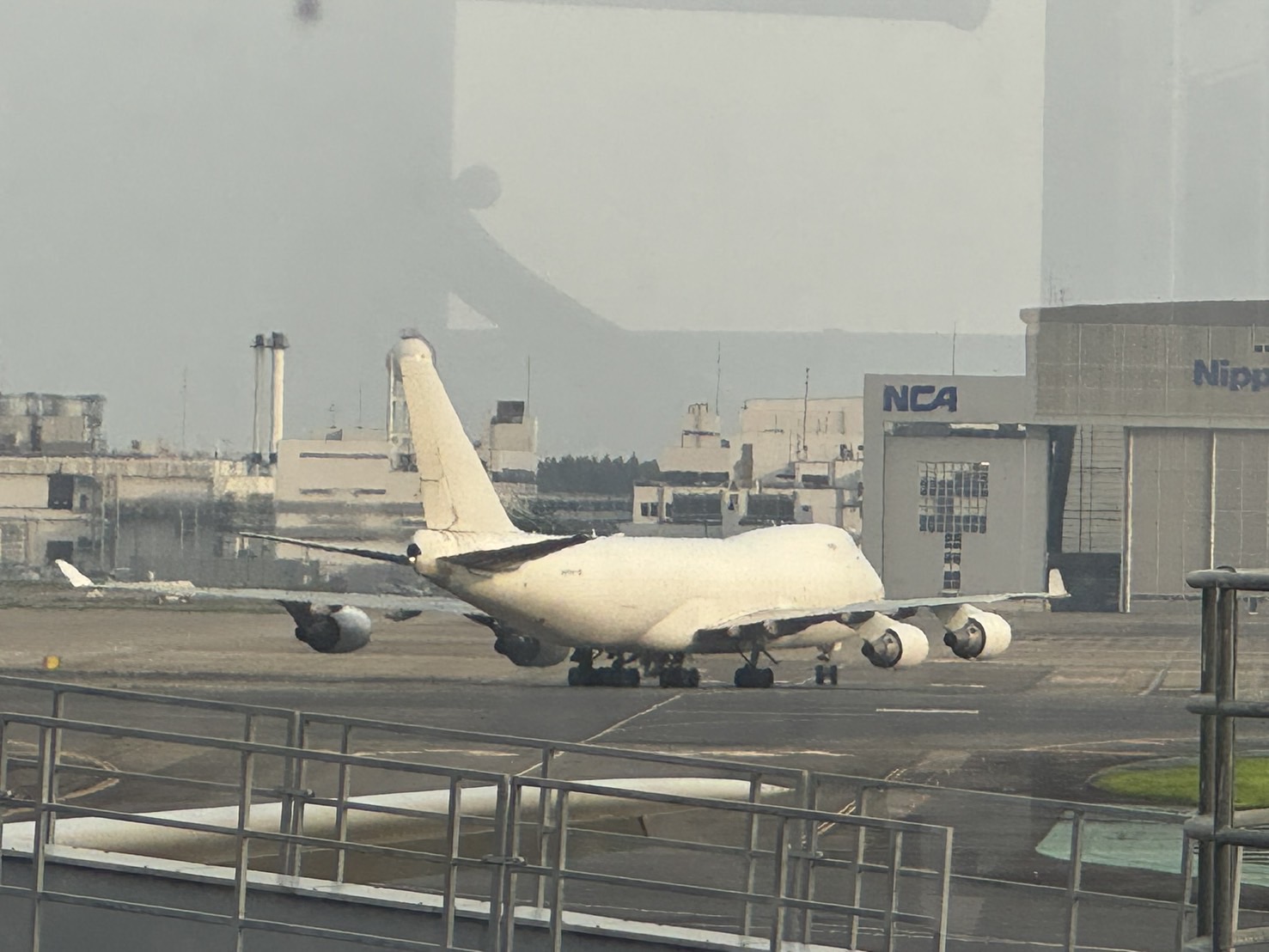
To answer the headline question directly: the noise of a jet heard from outside during takeoff is often cited at around 140 dB. Snoring obviously doesn’t reach that level — but in some cases, it does climb into a range comparable to the noise inside an airplane cabin.
It’s not unusual for snoring to exceed 50–60 dB, which is loud enough, under the right conditions, to genuinely erode someone’s quality of life. Reference material from the American Academy of Sleep Medicine classifies snoring intensity on a scale ranging from 40–45 dB (mild) up to 60+ dB (“very heavy”).
An airplane cabin is generally reported to run in the range of 60–88 dB, with 80–85 dB cited by experts as typical during cruising.
In other words, people with heavy snoring can genuinely reach a volume close to airplane cabin noise — so it’s not surprising at all when a partner describes it as sounding “just like being on a plane.”
In this article, we use decibels (dB) as a concrete unit of comparison between snoring and airplane noise, to explain why this becomes a real problem — and what should be prioritized to address it.
Understanding dB (Decibels) Reveals Just How Troublesome Snoring Really Is
Decibels (dB) are the unit used to measure sound intensity (sound pressure level). Two things are important to understand here.
1. dB Is Logarithmic, Not Additive
Put simply, a 10 dB increase feels dramatically louder to human ears than the number alone suggests.
Going from 40 dB → 50 dB → 60 dB tends to increase perceived stress far more than the numbers themselves would imply.
2. “Distance” and “Location” Make a Huge Difference
Even the exact same sound source feels completely different depending on whether it’s right next to your ear, a meter away, or behind a wall.
An aircraft engine is extremely loud when heard from outside, but cabin interiors are engineered with soundproofing and insulation to reduce that noise significantly. Snoring, by contrast, comes from a source (the throat) that’s typically just tens of centimeters to a few meters away, in the same room — with nowhere to escape it. This is exactly what makes it such a troublesome form of “household noise.”
2. How Loud Is Snoring, Really? From “Conversation Level” to “Heavy Noise”
Snoring volume varies significantly from person to person — it’s far from a fixed number. That said, research and clinical reports do offer a mild-to-severe classification. Reference material from the American Academy of Sleep Medicine classifies snoring intensity as: mild (40–45 dB), moderate (45–55 dB), severe (55–60 dB), and very heavy (60+ dB).
Other research, using peak dB measurement, has reported that a meaningful proportion of snoring episodes exceed 45 dB(A) — a level classified as genuinely loud “noise.”
A key point here is that snoring isn’t just about the average volume — it produces sudden peaks. People sleeping in the same room are often woken specifically by these peaks, and being repeatedly jolted awake by intermittent spikes tends to be far more exhausting than steady, “occasionally loud” background noise.
3. How Loud Is an Airplane, Really? “Cabin Noise” vs. “Outdoor Jet Takeoff” Are Very Different Things
Airplane noise varies enormously depending on the situation.
Cabin interior: Roughly 60–88 dB, with 80–85 dB typical during cruising
News reports commonly cite cabin noise in the range of 60–88 dB, with 80–85 dB typical during the cruising phase of flight.
Studies evaluating in-flight cabin environments have also found that a certain proportion of flights approach or exceed an 8-hour average of around 85 dB(A), raising questions about the effects of prolonged exposure.
Outdoors (Jet Takeoff): An Entirely Different World at 140 dB
Reference charts comparing household and environmental sound levels commonly cite jet takeoff (measured near the source) at around 140 dB.
This refers specifically to being close to the sound source — it doesn’t mean anything close to that level occurs in an actual bedroom. Still, it illustrates just how powerful the mental image of “airplane-level noise” really is.
4. Putting It All Together: How to Correctly Use the “Snoring = Airplane” Comparison
Here’s how the numbers stack up:
- Typical snoring: Generally falls in the 40–60 dB range (by classification)
- Heavy snoring: Can reach 60+ dB (classified as “very heavy”)
- Airplane cabin: Typically 60–88 dB, with 80–85 dB during cruising
- Jet takeoff (measured near the source): Around 140 dB
In other words, the viral claim you often see online — “snoring is as loud as a 140 dB jet takeoff!” — is usually a significant exaggeration. That said, heavy snoring genuinely can climb into a range close to airplane cabin noise, so it makes complete sense, numerically speaking, that a partner might describe it as sounding “just like being on a plane.”
5. It’s Not Just “Loud”: Nighttime Noise Erodes Sleep Quality
One of the most troublesome aspects of nighttime noise is that our ears don’t easily adapt to it.
The World Health Organization’s Night Noise Guidelines for Europe recommend an outdoor nighttime noise target (Lnight, outside) of 40 dB, with 55 dB proposed as an interim target where the lower goal isn’t achievable.
Of course, an actual measured dB level inside a bedroom isn’t the same thing as this outdoor benchmark. But the broader principle holds: the louder nighttime noise is, the more likely it is to fragment sleep and reduce next-day performance — and that relationship matters a great deal.
6. When Does Snoring “Turn Into an Airplane”? Why It Varies From Night to Night
There’s usually a clear reason behind nights when snoring suddenly gets much louder. Common causes include:
- Alcohol, sleep deprivation, or fatigue: These reduce muscle tone around the throat, making vibration more likely
- Sleeping on your back: Changes the shape of the tongue and throat, narrowing the airway more easily
- Nasal congestion / mouth breathing: Dries out the throat, making the mucous membrane more prone to vibrating
- Weight gain: Changes the volume of tissue around the neck and tongue, increasing airway narrowing
Addressing even a few of these factors is enough to reduce how often loud snoring peaks occur for some people.
That said, when the underlying cause (nose, throat, or tongue) is significant, self-care measures alone may hit a plateau.
7. Choose Your Approach Based on the “Location” of the Cause — Don’t Take the Long Way Around
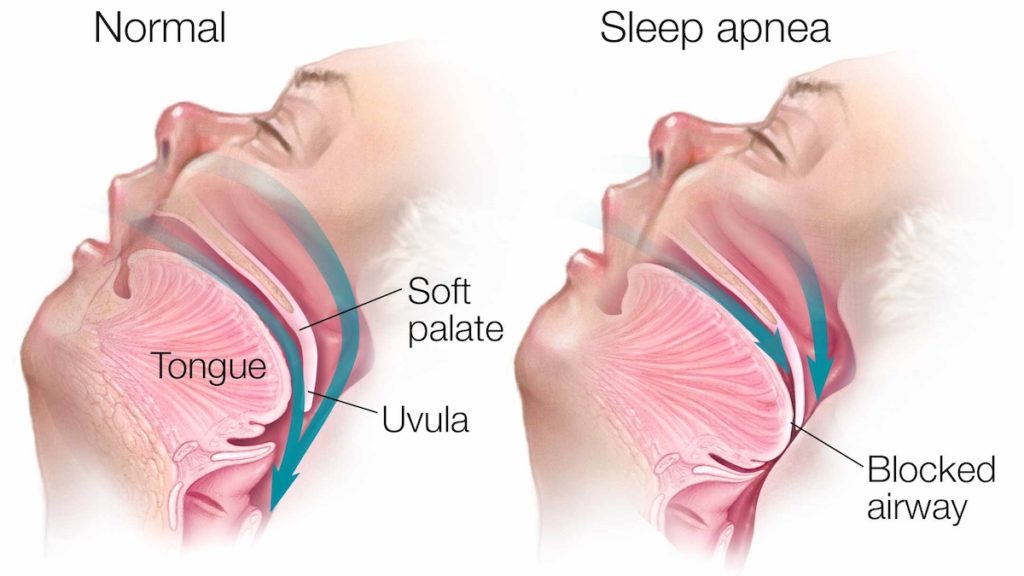
Rather than starting with whatever snoring remedy happens to be popular, it’s far more effective to choose an approach based on exactly where the airway is narrowing.
- If the nose is the primary factor: Prioritize addressing nasal congestion and mouth breathing
- If it’s a throat (soft palate) type: If the vibrating tissue can be clearly identified, targeting that specific area matters
- If the tongue is involved: Tends to worsen when lying on the back — sleep position and setup have a direct effect
Even with the same complaint of “loud snoring,” the most effective solution depends entirely on where the underlying cause is located.
Getting this wrong is exactly what leads to the frustrating cycle of “I stuck with it and nothing changed” or “it just came back.”
Ueno Snoring Clinic offers a range of options tailored to each patient’s condition, including insurance-covered sleep testing and CPAP management, as well as self-pay laser treatment for snoring. If you’d like to find out which treatment is right for you, please book an initial consultation.
Details of the tests and treatments offered at Ueno Snoring Clinic can be found here
8. Our Clinic’s Approach: Where Laser Snoring Treatment Fits In
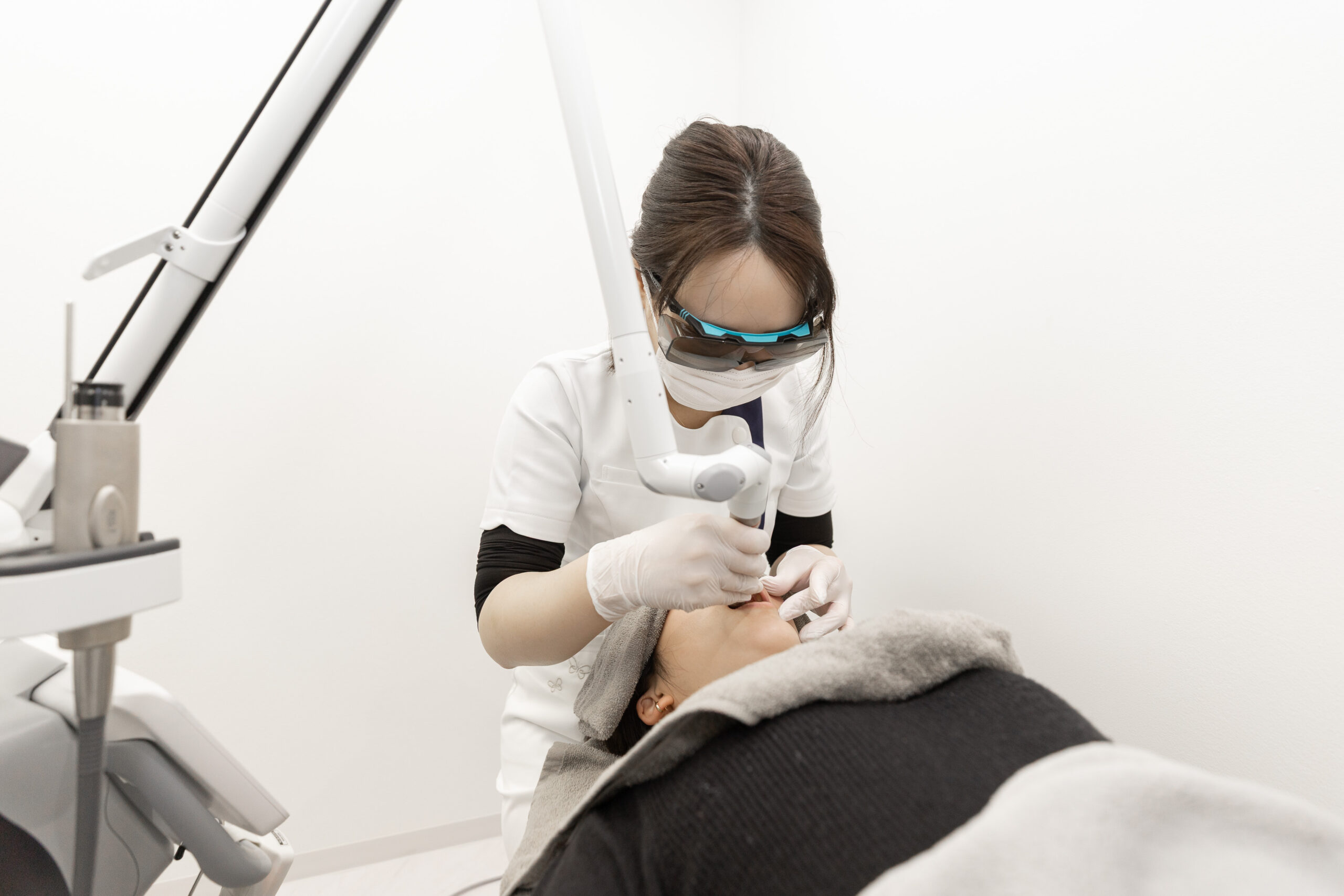
At Ueno Snoring Clinic, we organize snoring by the location of its underlying cause — nose, throat, or tongue — and build a treatment approach suited to that specific cause. In particular, when vibration is driven primarily by the throat (soft palate), the target area tends to be clearly identifiable, and laser snoring treatment can be a reasonable and effective option.
On the other hand, when nasal congestion, posture, or lifestyle factors play a significant role, ignoring those factors can make results harder to sustain. What matters most isn’t jumping straight into a specific treatment — it’s first identifying where the underlying cause actually is, and building a plan around that.
Conclusion
“Snoring as loud as an airplane” is sometimes an exaggeration — but for people with heavy snoring, volume can genuinely climb into a range close to airplane cabin noise, making it a serious noise problem for anyone sharing the room.
Even when the complaint sounds the same — “loud snoring” — the underlying cause differs from person to person. If you want the fastest path to real improvement, the first step is identifying what’s actually causing it. We look forward to helping at Ueno Snoring Clinic.
Sources: American Academy of Sleep Medicine (AASM) — “Snoring: a source of noise pollution and sleep apnea predictor”
The Washington Post — “Roaring engines, blasting movies: Is air travel hard on your hearing?”
American Family Physician (AAFP)
World Health Organization (WHO) — “Night Noise Guidelines for Europe”
[Insurance-Covered] If you’re concerned about snoring or sleep apnea, we offer a fully appointment-based system for reassuring, unhurried care.
Please feel free to contact Ueno Snoring Clinic
📞0120-899-930
5F Ueno Silk Building, 4-8-8 Ueno, Taito-ku, Tokyo 110-0005, Japan

Please feel free to contact Ueno Snoring Clinic
📞0120-899-930
5F Ueno Silk Building, 4-8-8 Ueno, Taito-ku, Tokyo 110-0005, Japan
Feel free to reach out to us on LINE ↓↓↓


Supervising Physician

Kazuyuki Sugaya, Director of Ueno Snoring Clinic
After graduating from Fujita Health University School of Medicine in 2004, Dr. Sugaya began his career as an anesthesiologist at Toho University Omori Medical Center. He has since gained extensive clinical experience at municipal hospitals and private clinics nationwide, administering general anesthesia in over 20,000 cases. In 2020, he founded the "Tokyo Spine Clinic," and has served as the Director of Ueno Snoring Clinic since 2025.
Related Columns
By Appointment Only
Specialized Snoring Treatment in Ueno
Ueno Snoring Clinic
Insurance-covered home testing available.
Following a physician’s consultation and result explanation,
we support the improvement of snoring and sleep apnea with "Dual Deep Thermia"—a non-surgical laser treatment, if necessary.
3-min walk from Ueno Station. Please feel free to consult us.