Ueno Snoring Clinic offers insurance-covered sleep testing and CPAP management, as well as self-pay laser treatment for snoring, tailored to your specific condition. If you’d like to find out which treatment fits you, please start with an initial consultation.
Details of the tests and treatments offered at Ueno Snoring Clinic can be found here
A Complete Comparison of CPAP Masks
We tried on and reviewed five different types of CPAP masks. 90% of CPAP comfort comes down to the mask.
Watch the video
Do you have to use CPAP forever? A specialist explains how to use CPAP
A detailed explanation of how to use CPAP, with a real demonstration of what it feels like to wear the device.
Watch the video
Ueno Snoring Clinic was featured on Fuji TV’s “Live News It!” and on FNN Prime Online
Watch our clinic’s examination and explanation of sleep disorders, snoring, and sleep apnea.
Watch the video
Ueno Snoring Clinic was featured in an article on Nippon TV’s “news every.”
Please take a look as a starting point for thinking about getting evaluated for snoring, sleep apnea, or other sleep disorders.
Read the article
Reviewed by Our Director
Kazuyuki Sugaya
Director, Ueno Snoring Clinic / Anesthesiologist
Our director, with over 20,000 general anesthesia cases, focuses primarily on the diagnosis and treatment of snoring and sleep apnea, offering care tailored to each patient. [Insurance-Covered] Ueno Snoring Clinic
This article was reviewed by our Director, Kazuyuki Sugaya, and explains accurate medical information about the testing and treatment of snoring and sleep apnea syndrome (SAS) in clear, accessible terms.
🩺Comprehensive Snoring Treatment at Ueno Snoring Clinic
The causes of snoring range from the structure of the throat to body weight. Ueno Snoring Clinic doesn’t rely on a single treatment approach — we’re set up to recommend the best plan for each patient from a broad, evidence-based range of options.
Insurance-Covered: Thorough Testing and Ongoing Treatment
- Simplified and PSG testing: A precise analysis of your sleep condition
- CPAP treatment: The standard treatment for moderate-to-severe apnea
Self-Pay: Address the Root Cause, Short-Term Focus
- Snoring laser treatment: A non-surgical approach to the underlying cause
- Medically supervised weight loss: Improving airway space through weight reduction
*As a clinic specializing in snoring treatment, we work to resolve “snoring that won’t stop” through both insurance-covered and self-pay options.
New Book by Our Director
“Curing Snoring with the Latest Treatments”
A guide to the latest snoring treatments, written by an anesthesiologist who has overseen the sleep of more than 10,000 patients.
View on Amazon
Quick Answer
Snoring conversations tend to go wrong not because of the snoring itself, but because of how it’s brought up. Leading with “I’m worried about your health” and “let’s figure this out together,” instead of “you’re too loud,” makes a partner far less likely to get defensive. Sticking to observed facts (breathing pauses, alcohol, sleep position) rather than blanket accusations, and framing a clinic visit as “just getting it checked out” rather than “starting treatment,” lowers the psychological barrier considerably. A short 1–2 minute phone recording of the snoring, along with simple notes on alcohol intake, sleep position, and fatigue that day, can also give a clinician valuable clues before the first visit.
📋 What This Article Covers
- Why snoring conversations with a partner tend to go wrong
- The three common pitfalls that turn snoring into a fight
- Ready-to-use scripts for bringing it up without conflict
- How to gather helpful “evidence” (a short recording) before a visit
- Home adjustments worth suggesting before pushing for a clinic visit
- Common questions about talking to a partner about snoring, answered
Why Snoring Conversations Get Complicated — And How to Ease Into a Doctor’s Visit

“It’s too loud, I can’t sleep.” “I want to sleep in a separate room.” A family member’s snoring wears away at more than just your sleep — it wears away at your mood as well. What makes it especially tricky is that snoring happens while the person is asleep, so they’re often completely unaware of it.
Meanwhile, for the person listening, it happens every single night. As sleep keeps getting chipped away, it starts affecting concentration and mood, daytime performance, and even the atmosphere at home. It’s common to reach a point where “I could handle it before, but lately I’m at my limit.”
On top of that, if you bring it up the wrong way, your partner may feel “attacked” or as if their character is being criticized, and the conversation can quickly go sideways. In many cases, it’s not the snoring itself but the communication around it that makes things worse. In fact, it’s often the “secondary damage” — ending up in an argument, feeling unheard, or starting to avoid the topic altogether out of awkwardness — that does the most damage to a household’s stress levels, more than the snoring itself.
Below, we lay out ready-to-use phrasing and preparation for bringing this up without a fight, in a way that naturally leads toward a doctor’s visit. The goal isn’t to force your partner to change — it’s to make it easier for them to take that step on their own.
The Three Pitfalls That Make Snoring Conversations Go Wrong
There are common pitfalls behind why snoring conversations tend to get complicated. Just being aware of them can make the conversation go much more smoothly.
Pitfall #1: They Don’t Experience the “Damage” Themselves
The impact of snoring is felt mainly by the person lying next to them, listening. Since the snorer is asleep, they naturally think, “is it really that bad?” And because they’re asleep, “sleeping = no problem” is an easy conclusion for them to reach, so there’s little sense of urgency. In other words, no matter how much you’re suffering, your partner is likely to be in a state where they simply can’t relate to it.
Pitfall #2: It Easily Comes Across as an Accusation
Snoring isn’t something anyone does on purpose. Precisely because of that, if you push the point too logically, your partner is likely to feel like they’re being blamed for something out of their control. Words like “you’re loud,” “it’s a nuisance,” or “cut it out already” tend to trigger a stronger defensive reaction. And once that defensiveness kicks in, people tend to react rather than think rationally.
Pitfall #3: The Conversation Drifts Off Topic
What starts as a conversation about snoring can drift into things like:
“You’re always like this.”
“I’ve told you before and nothing’s changed.”
— spilling over into character judgments or old grievances. Once that happens, it stops being about snoring and becomes “an item on the list of marital complaints,” moving you further away from an actual solution. This is exactly why a snoring conversation needs “structure” more than “emotion.” Here’s a concrete structure you can use.
A Ready-to-Use Script for Bringing It Up Without a Fight
There are three key points:
- Make “I’m worried” the subject — not “you’re too loud”
- State the facts plainly, without judgment
- Add “let’s solve this together”
These three points alone can completely change how your partner receives what you’re saying.
Words to avoid
The following phrases tend to trigger a defensive reaction:
- “You’re so loud” / “It’s such a nuisance”
- “Would you just stop already”
- “There you go again”
- “It’s not going to get better anyway, is it”
- “I can’t sleep because of you”
- “Most people would just do X, wouldn’t they”
It’s completely natural to want to say these things. But if your goal is “getting this fixed” rather than “winning the argument,” it’s strategically worth avoiding them — you’ll get better results.
Phrases You Can Use As-Is
Here are ready-to-use replacement phrases. Feel free to adjust the wording to match your own voice.
1) Make health concern the subject
“I’ve been having more nights lately where I can’t sleep because of your snoring, and I’m honestly worried about your health.”
“I’m not getting enough sleep either, and some days it’s really rough. I want us both to be able to sleep properly.”
2) State the facts plainly, without judgment
“There were a couple of moments where it looked like your breathing stopped while you were sleeping, and it made me a little anxious.”
“It seems like it gets louder on nights you sleep on your back.”
“It feels like it’s especially loud on the nights you’ve had a drink.”
*What matters here is not asserting “you are X” as a fact. Sticking to what you actually observed keeps the conversation from feeling like an attack.
3) Add “let’s solve this together”
“I’m not trying to blame you — I just want us both to be able to get proper sleep.”
“Let’s figure out what’s causing it first, and look for something that works for you together.”
“Even small steps are fine — it would help a lot if we could try things little by little.”
A Closing Line That Leads to an Actual Visit
The usual reasons someone hesitates to act are that it feels like “a big deal,” “scary,” “a hassle,” or “embarrassing if it doesn’t help.” That’s where these lines can be effective:
“It’s less about starting treatment and more about just having someone take a look at how things are — what do you think?”
“We can go once, and if it’s not a good fit, we can think of something else.”
“If there’s anything painful or scary involved, let’s ask about that first before deciding anything.”
“You don’t have to decide anything right now — think of it as just going to get some information.”
The key is not to make “seeing a doctor” sound like a big deal.
Timing matters too. It’s better to bring this up during a calm moment during the day rather than right before bed, since emotions tend to run higher when everyone’s tired at night.
Gathering “Evidence” That Helps Lead to a Visit (Just 1–2 Minutes of Recording Is Enough)
A partner tends to act once the issue feels like it’s genuinely “their own.” That’s where a simple phone recording can help.
If the word “evidence” sounds a bit harsh, framing it as “data to help confirm what’s going on” or “something to show the situation clearly” softens it considerably.
You don’t need an elaborate setup — even just 1–2 minutes can provide a useful clue.
Tips for Recording
- Placement: On the bedside table, a short distance from the pillow
- Timing: Once, either right after falling asleep or sometime late at night
- Format: Video or audio both work fine — as long as you can hear the sound clearly
The recording doesn’t need to be “clean audio” — some background noise is fine. What matters is being able to get a sense of the type and rhythm of the sound, and how it relates to sleep position.
A Strong Trio of Notes to Keep Alongside the Recording
- Alcohol that day (whether they drank, and roughly how much)
- Sleep position (on their back or on their side)
- Physical condition and fatigue (overtime work, lack of sleep, etc.)
Having these three details makes it much easier to narrow down the likely cause.
If you have the bandwidth, adding these two as well can improve the accuracy further:
- Bedroom dryness (whether a humidifier or heater was used)
- Nasal congestion (how clear their breathing through the nose was that day)
We also recommend using a snoring-tracking app, such as SnoreLab, to log snoring patterns over time.
Realistic Things to Try at Home Before a Doctor’s Visit (Suggestions That Won’t Start a Fight)
For a partner who’s hesitant about seeing a doctor, it helps to start with “things we can try at home first.” The key here, too, is to frame it as a suggestion rather than a demand.
1) Encourage Side-Sleeping
Use a body pillow or cushion to make it harder to roll onto their back
Place a cushion behind their back
For people whose snoring quiets down when side-sleeping, this alone can make a noticeable difference.
2) Address Bedroom Dryness
Use a humidifier (or a damp towel if you don’t have one)
Avoid direct airflow from the air conditioner
Dry air tends to aggravate throat vibration, so adjusting the environment is an area where you’re likely to see results.
3) Set Alcohol Guidelines Without Blame
“Just avoid drinking right before bed”
“Let’s have a few days where we cut back a bit”
“Let’s try this once” tends to land much better than “stop doing that.” These suggestions are less about “treating” the snoring and more about adjusting daily habits — which makes them easier to propose, and easier for a partner to accept.
What Can Happen If You Leave It Alone
Leaving snoring unaddressed chips away at the sleep of everyone around, adding stress to the household. And if the snorer’s own sleep quality is suffering, it may also lead to daytime grogginess and trouble concentrating for them as well.
Rather than writing it off as “just noise,” it’s worth taking the time to sort out what’s actually going on — especially if any of the following continue:
- The volume stays loud even after changing sleep position
- The breathing pattern is irregular enough that family members are concerned
- There’s noticeable daytime sleepiness or grogginess
Rather than assuming “they’re not worried about it, so it’s fine,” it’s more accurate to think, “it’s precisely because they’re not worried that someone needs to help organize the information for them.”
What Our Clinic Can Do (Lowering the Barrier of Anxiety)
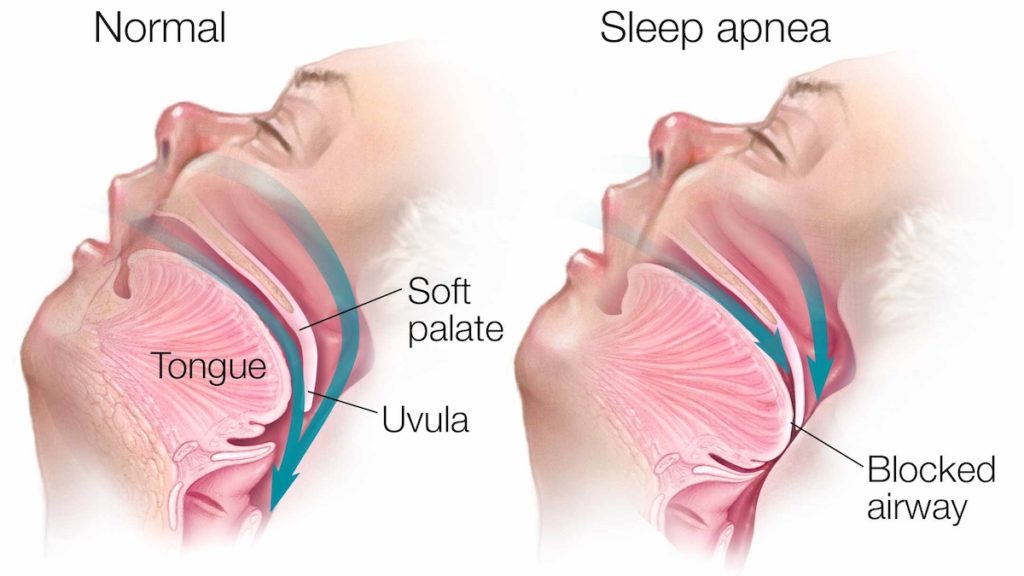
Snoring doesn’t always come down to a single cause. It can involve the nose, throat, and tongue, sleep position, alcohol, dryness, and more, often in combination. What matters most is identifying the primary cause and choosing an approach that fits.
If you’re thinking “I’m anxious about jumping straight into a painful treatment” or “I don’t know where to even start” — that’s a perfectly fine place to begin. We start with a consultation and work with you to sort through realistic, sustainable options together.
Bringing a recording or notes to your appointment also helps us understand the situation quickly. Even something as short as “is this recording even useful?” often turns out to be a helpful clue.
Summary: A Simple Change in Wording Can Move Things Forward

The outcome of a snoring conversation depends heavily on how you say it.
Centering the conversation on “I’m worried” and “let’s solve this together,” rather than accusatory language, tends to lower a partner’s resistance dramatically.
Here’s the shortest path you can start using today:
- Bring it up during a calm moment during the day
- Make “I’m worried about your health” the subject, not “you’re too loud”
- State only the facts, calmly
- Add “let’s solve this together”
- If possible, record just 1–2 minutes of the snoring
At Ueno Snoring Clinic, we share information and provide care every day, hoping to play a small part in restoring peace at home and healthy relationships between partners through the resolution of snoring.
Frequently Asked Questions
Q. What’s the best way to bring up snoring without starting a fight?
A. Make “I’m worried” or “I can’t sleep either” the subject, rather than “you’re too loud.” Stick to what you’ve actually observed, and add “let’s figure this out together.” Bringing it up during a calm daytime moment, rather than right before bed, also helps a great deal.
Q. Why does my partner get defensive whenever I mention their snoring?
A. Snoring isn’t something anyone does on purpose, so pointing it out directly can feel like being blamed for something outside their control. Words like “you’re loud” or “it’s a nuisance” tend to trigger a defensive reaction. Framing it around shared concern and health, instead, is far less likely to put them on the defensive.
Q. How long should I record for, and what should I record?
A. Just 1–2 minutes is enough — placed on the bedside table a short distance from the pillow, either right after they fall asleep or sometime late at night. Video or audio both work, as long as the sound is clear. It’s also useful to note that day’s alcohol intake, sleep position, and level of fatigue alongside the recording.
Q. What if my partner still refuses to see a doctor?
A. Try framing the visit as “just getting things checked out” rather than “starting treatment,” and reassure them that nothing has to be decided on the spot. Starting with realistic home adjustments first — like side-sleeping or addressing bedroom dryness — can also make the idea of eventually seeing a doctor feel much less daunting.
Q. Are there things we can try at home before seeing a doctor?
A. Yes — encouraging side-sleeping with a body pillow, using a humidifier to address bedroom dryness, and setting simple, non-judgmental guidelines around late-night drinking are all realistic starting points. These are lifestyle adjustments rather than treatment, which makes them easier to suggest and easier to accept.
Q. What happens at the first appointment?
A. We start with a consultation to understand your situation, then work together to identify realistic, sustainable options — there’s no need to commit to treatment on the first visit. Bringing a short recording or simple notes with you can help us understand the situation more quickly.










いびきを最新治療で治す-表紙-1.png)