





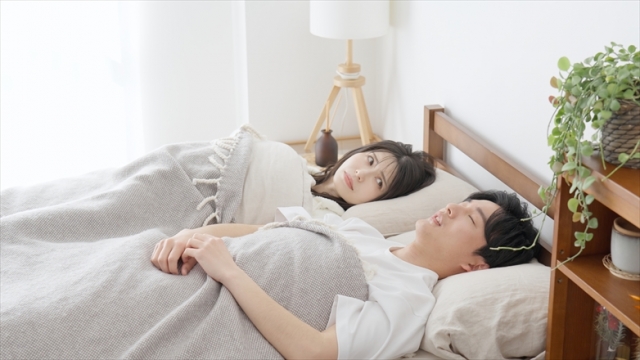
Told You Stop Breathing in Your Sleep? A Guide to Insurance-Covered Sleep Apnea Testing in Japan
The answer is not simply yes or no. Laser treatment is not a universal cure for all obstructive sleep apnea. However, for selected patients with snoring-dominant symptoms, simple snoring, mild obstructive sleep apnea, or some moderate cases where soft palate vibration and upper airway tissue looseness are major factors, non-surgical laser treatment may help reduce snoring and improve upper airway stability.
Quick Answer
Laser treatment may help some patients with snoring or mild to moderate obstructive sleep apnea when the main problem is vibration or looseness of the soft palate, uvula, or pharyngeal tissues. However, laser treatment should not be considered a replacement for CPAP in severe obstructive sleep apnea. CPAP remains the standard treatment for moderate to severe OSA, especially when AHI is high, oxygen levels drop, or cardiovascular risk is present. The key is not “Does laser work for sleep apnea?” but “Which type of sleep apnea patient may benefit from laser treatment?”
At Ueno Snoring Clinic, we offer options tailored to your condition, including insurance-covered sleep testing and CPAP management, as well as self-pay laser snoring treatment. If you would like to find the treatment that suits you, please start with an initial consultation.
You can find details on the examinations and treatments at Ueno Snoring Clinic here
Supervised by the Director
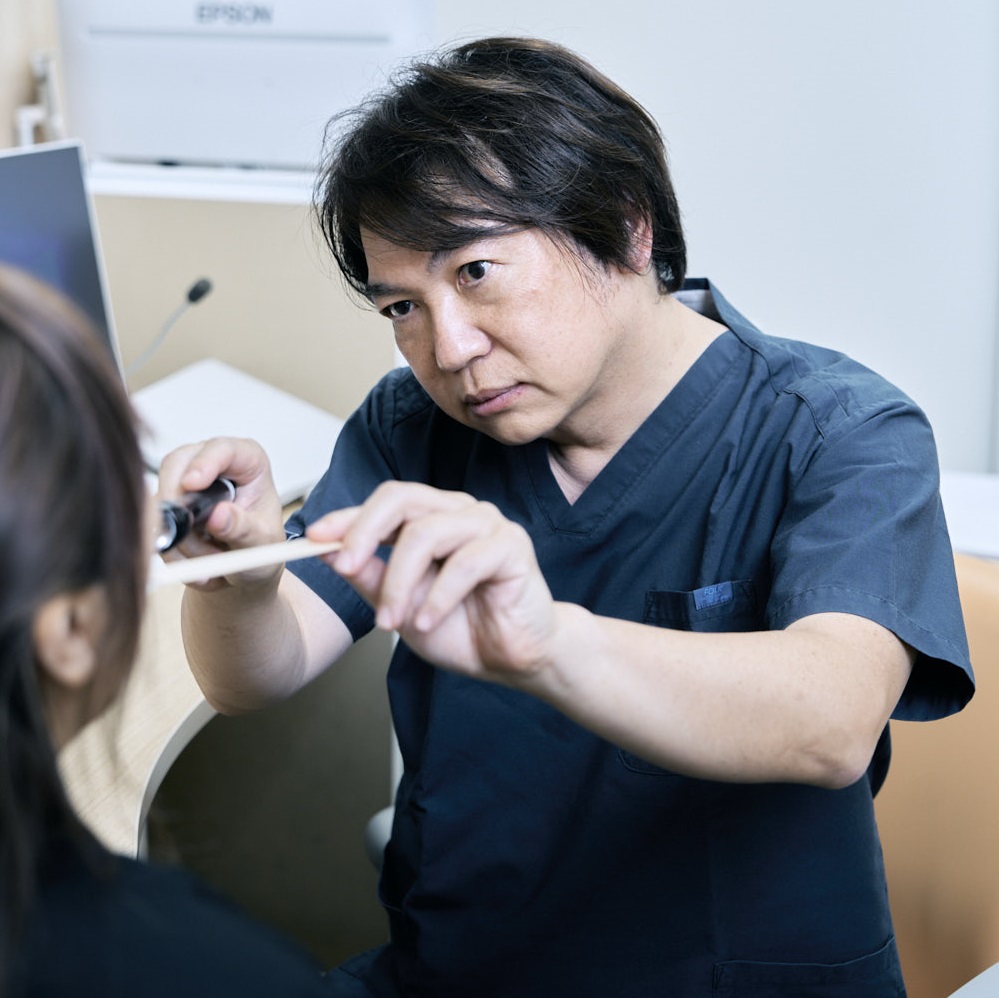
Kazuyuki Sugaya
Director, Ueno Snoring Clinic / Anesthesiologist
With experience in over 20,000 cases of general anesthesia, the director focuses primarily on the treatment of snoring and sleep apnea, providing care tailored to each individual patient. Ueno Snoring Clinic
This article has been supervised by Director Kazuyuki Sugaya to clearly explain accurate medical information regarding examinations and treatments for snoring, obstructive sleep apnea syndrome, and related conditions.
🩺Comprehensive Snoring Treatment at Ueno Snoring Clinic
Snoring and obstructive sleep apnea have many possible causes, including throat anatomy, tongue position, nasal congestion, obesity, alcohol, sleeping posture, and sleep depth. At Ueno Snoring Clinic, we provide a personalized treatment plan rather than relying on one single method.
Laser snoring treatment without surgery
- Dual Deep Thermia®: Non-surgical laser snoring treatment
- No cutting or hospitalization: Suitable for selected patients seeking minimal downtime
Sleep testing and medical evaluation
- Home sleep test / PSG: Evaluating breathing during sleep
- CPAP therapy: Standard treatment for moderate to severe obstructive sleep apnea
*As a clinic specializing in snoring treatment in Tokyo, we support patients through both self-pay laser treatment and insurance-covered medical evaluation when appropriate.
Can Laser Treatment Cure Sleep Apnea?
Laser treatment should not be described as a guaranteed cure for obstructive sleep apnea. OSA is a condition in which the airway repeatedly collapses during sleep. The cause is often multifactorial.
Common contributing factors include:
- Obesity and fat distribution around the neck and throat
- Small lower jaw or receding jaw
- Large tongue or tongue base collapse
- Enlarged tonsils
- Nasal obstruction
- Soft palate looseness and vibration
- Reduced muscle tone during sleep
- Alcohol, sedatives, and sleeping position
Laser treatment mainly addresses one part of this picture: soft palate and pharyngeal tissue looseness, vibration, and narrowing. Therefore, it may help selected patients, but it cannot correct every cause of sleep apnea.
Why Some People Say Laser Treatment “Does Not Work”
Laser treatment may be perceived as ineffective when the main cause of sleep apnea is not soft palate vibration.
For example, if airway obstruction is mainly caused by severe obesity, large tonsils, tongue base collapse, skeletal narrowing, or severe nasal obstruction, laser tightening of the soft palate alone may not be enough.
In simple terms, non-surgical laser treatment is designed to make the “soft wall” of the upper airway firmer and less likely to vibrate. It is not designed to change bone structure, remove large tonsils, or replace the air pressure support provided by CPAP.
One-Wavelength vs Two-Wavelength Laser: Why It Matters
Not all laser snoring treatments are the same. The wavelength determines how laser energy interacts with tissue, how deeply heat can reach, and which tissue layer can be targeted.
One-wavelength laser treatment: Er:YAG 2940 nm
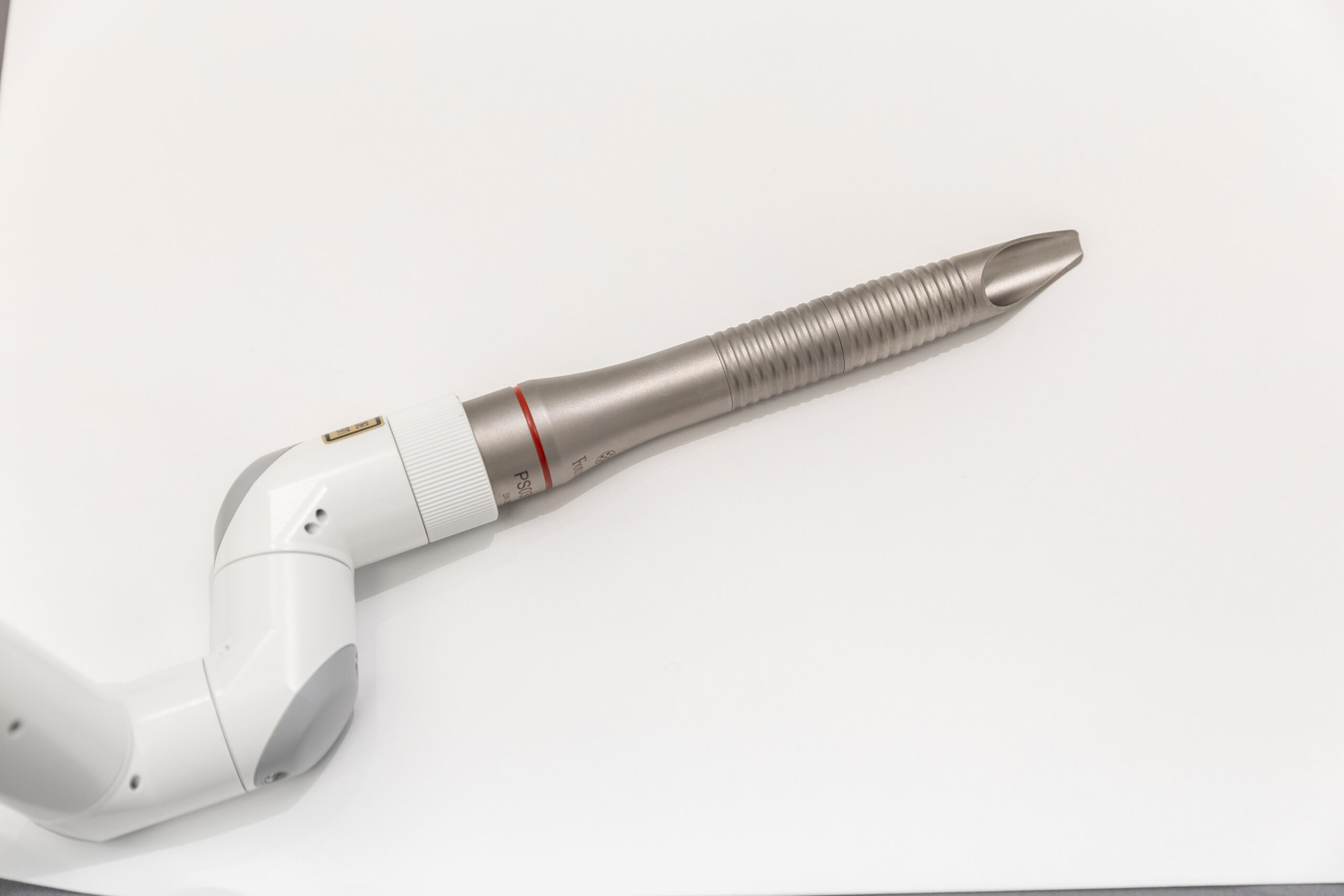
The Er:YAG laser is highly absorbed by water and is suitable for controlled heating of superficial mucosal tissue. It is often used in NightLase-style non-ablative laser snoring treatment.
This approach can be suitable for reducing vibration and looseness of the soft palate. Clinical reports and reviews suggest that selected patients with primary snoring, simple snoring, or mild sleep-disordered breathing may experience short- to medium-term improvement.
However, if only superficial tissue is treated, the effect may be limited or may gradually decline over time in some patients. This is one reason why some people feel that laser snoring treatment eventually “wears off.”
Two-wavelength laser treatment: Nd:YAG 1064 nm + Er:YAG 2940 nm
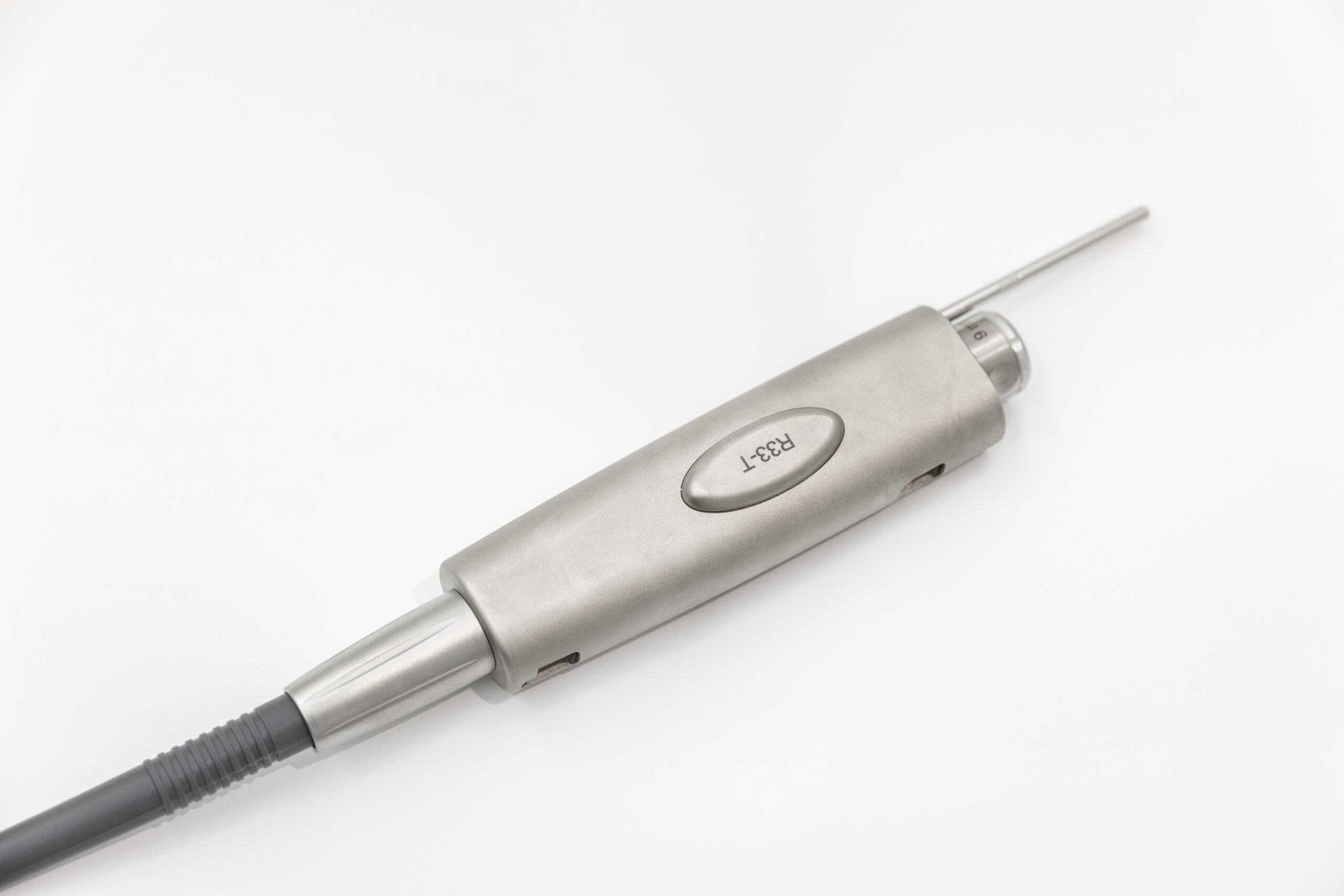
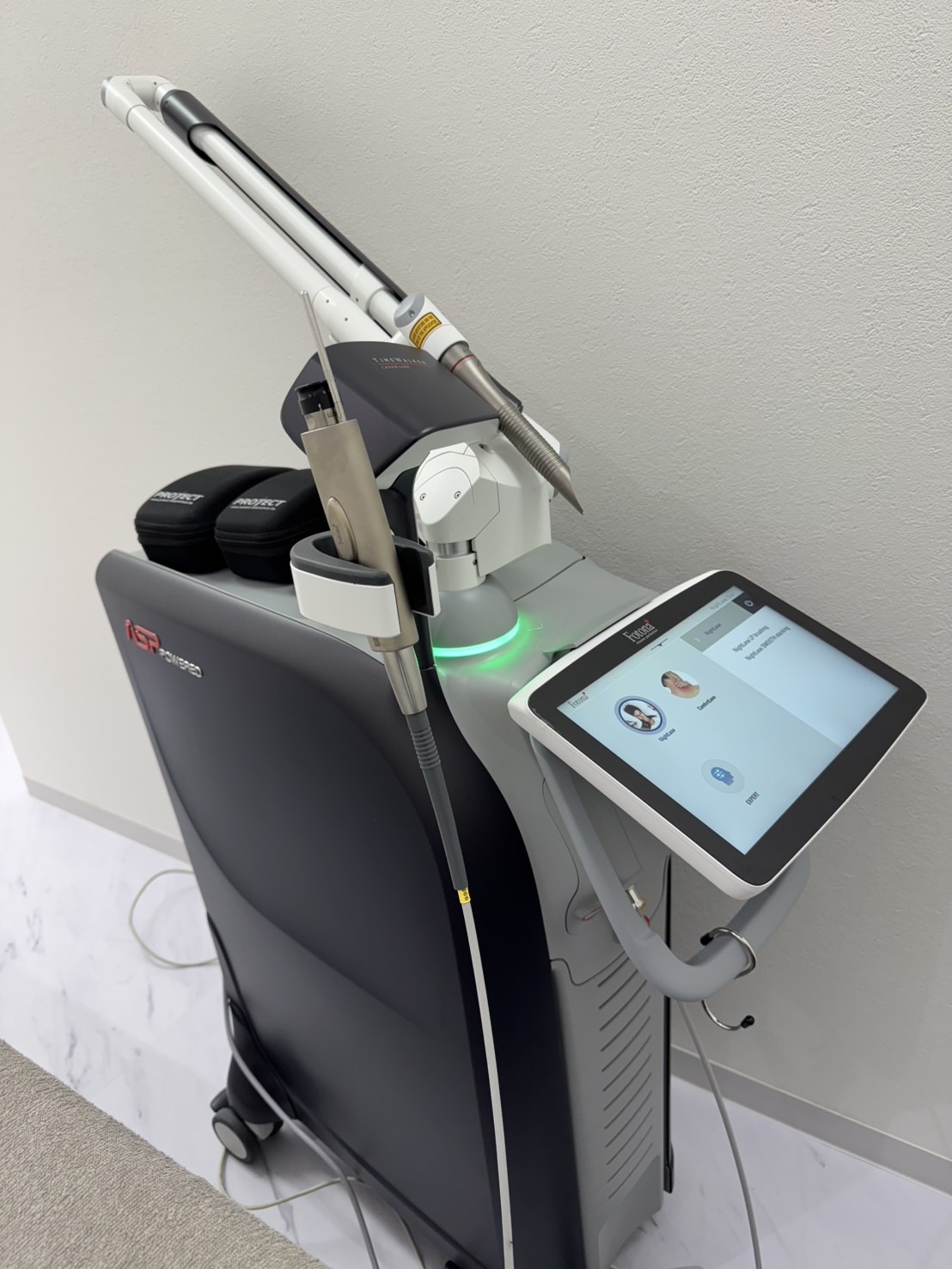
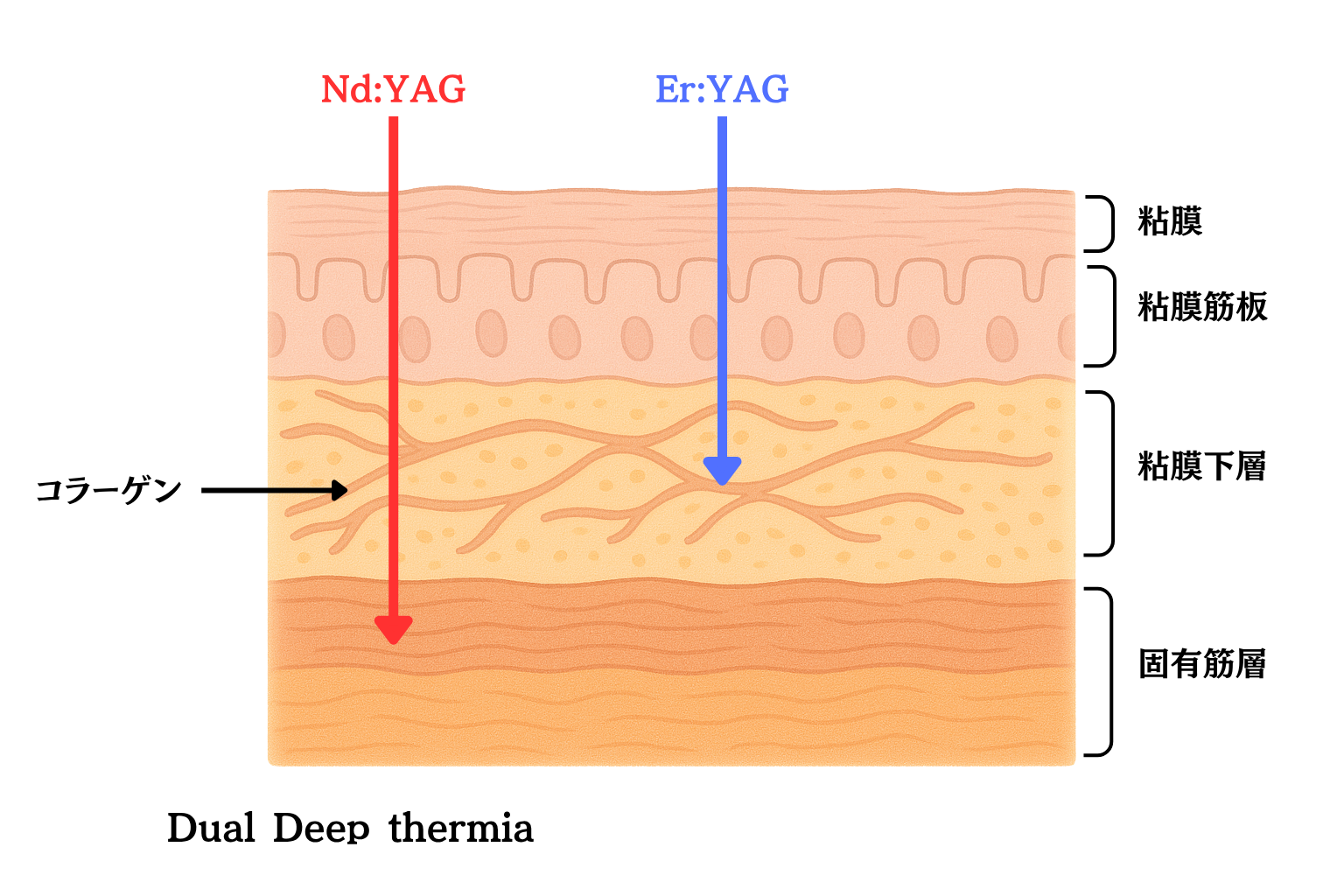
Dual Deep Thermia® uses a dual-wavelength approach. The concept is to target both superficial and deeper layers of the upper airway tissue.
- Er:YAG 2940 nm: Mainly supports superficial mucosal tightening
- Nd:YAG 1064 nm: May deliver deeper thermal stimulation to submucosal and supporting tissue layers
In other words, the goal is to combine superficial vibration control with deeper tissue support. This is the rationale behind the two-wavelength approach used at Ueno Snoring Clinic.
Evidence Summary: Is Laser Treatment Supported by Research?
The evidence should be interpreted carefully. Non-ablative Er:YAG laser treatments such as NightLase-style procedures have been studied mainly in selected patients with primary snoring, simple snoring, and mild to moderate obstructive sleep apnea.
The current evidence suggests:
- Short- to medium-term snoring reduction may occur in selected patients
- Some studies report improvement in subjective snoring scores and partner satisfaction
- Some reports suggest improvement in airway volume or apnea-hypopnea index in selected cases
- Long-term evidence is still limited
- Maintenance treatment may be needed
- Laser treatment should not be generalized to all OSA patients
Therefore, laser treatment is neither “useless” nor “universal.” It is best understood as a useful option when the patient is carefully selected.
Laser Treatment vs CPAP: Which Is Better?
This is not a competition. CPAP and laser treatment have different roles.
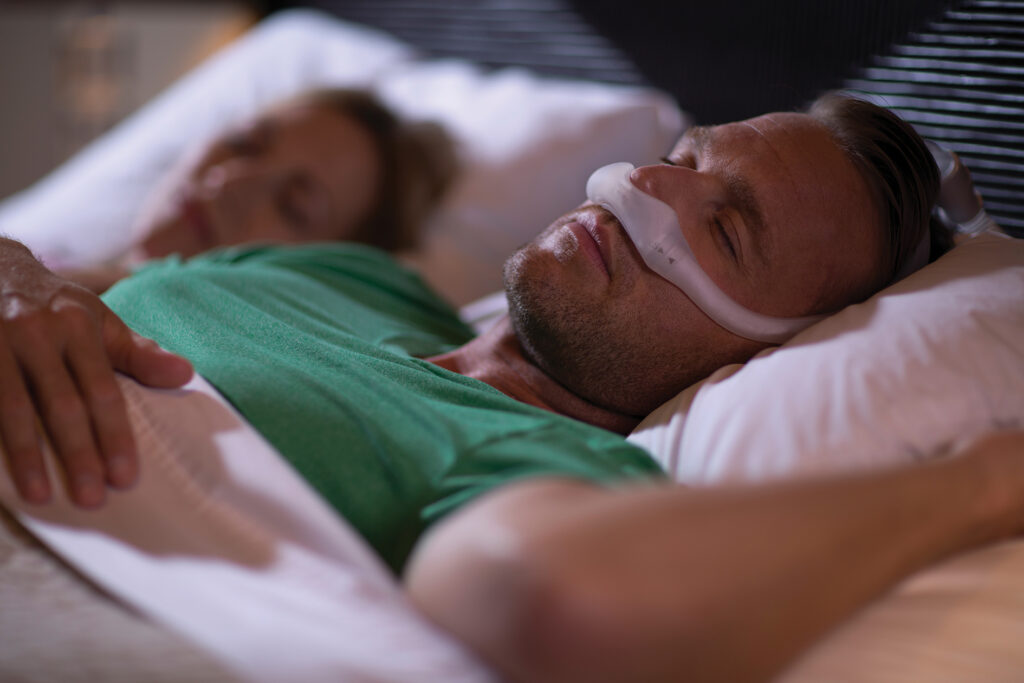
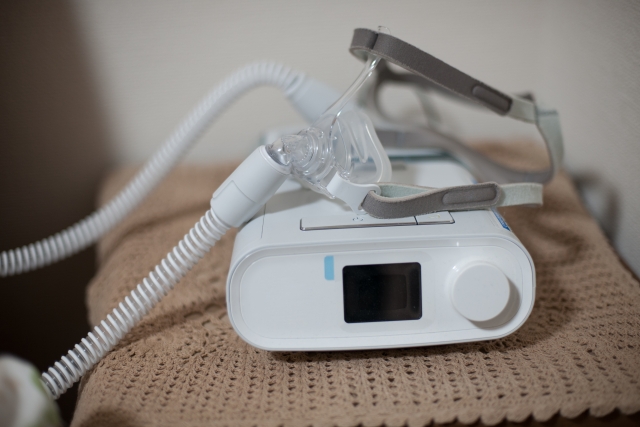
CPAP keeps the airway open by delivering air pressure during sleep. It is strongly supported as standard treatment for moderate to severe obstructive sleep apnea.
Laser treatment aims to reduce vibration and looseness of the soft palate and throat tissues. It may help snoring and selected mild to moderate cases, but it does not provide the same mechanical airway support as CPAP.
| Treatment | Main Role | Best Candidates | Limitations |
|---|---|---|---|
| CPAP | Keeps airway open with pressure | Moderate to severe OSA | Requires nightly mask use and adherence |
| Oral appliance | Moves lower jaw forward | Selected mild to moderate OSA or jaw-related snoring | May cause jaw discomfort or dental issues |
| Laser treatment | Reduces soft tissue vibration and looseness | Snoring, soft palate vibration, selected mild to moderate cases | Not a replacement for CPAP in severe OSA |
| Surgery | Removes or reconstructs obstructing tissue | Selected anatomical obstruction | Pain, bleeding, downtime, and surgical risk |
When Two-Wavelength Laser Treatment May Be Worth Considering
Dual Deep Thermia® may be worth discussing when the following apply:
- Snoring is the main concern
- Daytime sleepiness is mild to moderate
- Sleep testing shows simple snoring, mild OSA, or selected moderate OSA
- Soft palate or pharyngeal tissue looseness appears to be a major factor
- CPAP or oral appliance is difficult to continue
- The patient wants a non-surgical option with minimal downtime
- Weight, nasal symptoms, alcohol, and sleeping posture are also being addressed
However, laser treatment should not be performed simply because a patient wants to avoid testing. Proper evaluation of OSA severity is important before deciding on treatment.
Who Should Not Rely on Laser Treatment Alone?
Laser treatment alone is usually not appropriate when:
- AHI is high and OSA is severe
- Oxygen levels drop significantly during sleep
- Strong daytime sleepiness is present
- Cardiovascular risk is high
- Severe obesity is present
- Tongue base collapse is the dominant problem
- Large tonsils or structural obstruction are present
- Severe nasal obstruction is untreated
In these situations, CPAP, oral appliance, ENT evaluation, weight management, or surgical evaluation may be more appropriate depending on the case.
Why CPAP Is Still Important
In many countries, including Japan, CPAP is a standard treatment for moderate to severe obstructive sleep apnea. It can reduce breathing interruption during sleep by mechanically keeping the airway open.
However, CPAP does not permanently remodel the airway. It works while being used. Some patients tolerate it well, while others struggle with mask discomfort, dryness, pressure sensation, travel inconvenience, or sleep disturbance.
For patients who cannot continue CPAP or who mainly want to reduce snoring noise, laser treatment may be discussed as part of a broader plan. But for severe OSA, stopping CPAP without medical evaluation is not recommended.
Why Snoring Should Not Be Ignored
In Japan, insurance-covered CPAP usually requires meeting specific diagnostic criteria. This means that people with loud snoring alone may not always qualify for CPAP under insurance, even if their snoring causes serious distress.
However, snoring can be an early warning sign before sleep apnea becomes more serious. Over time, untreated sleep-disordered breathing may be associated with daytime sleepiness, poor concentration, high blood pressure, cardiovascular disease, and metabolic issues.
At Ueno Snoring Clinic, we want to support patients who are troubled by snoring even before severe sleep apnea develops.
Looking for a CPAP Alternative or Laser Snoring Treatment in Tokyo?
Dual Deep Thermia® may be an option for selected patients with snoring, mild sleep apnea, or CPAP intolerance. However, suitability depends on sleep test results and airway evaluation.
- English consultation available
- Sleep apnea evaluation
- CPAP management when medically indicated
- Non-surgical laser snoring treatment
- Convenient location near Ueno Station, Tokyo
Why International Patients Choose Ueno Snoring Clinic
- English-speaking doctor: Medical consultation is available in English
- Convenient Tokyo location: Near Ueno Station
- Sleep apnea evaluation: Medical assessment before deciding on laser treatment
- CPAP management: Standard treatment for moderate to severe sleep apnea
- Dual Deep Thermia®: Non-surgical laser snoring treatment for suitable patients
- International patients welcome: Helpful for foreign residents and visitors in Japan
Frequently Asked Questions
Q. Can laser treatment cure sleep apnea?
A. Laser treatment may help selected patients with snoring or mild to moderate sleep apnea, especially when soft palate vibration is a major factor. It is not a guaranteed cure and should not replace CPAP in severe OSA.
Q. Can laser treatment replace CPAP?
A. For severe obstructive sleep apnea, CPAP remains the standard treatment. Laser treatment may be considered as an adjunctive or alternative option only after medical evaluation in selected cases.
Q. Who is the best candidate for laser treatment?
A. Patients with snoring-dominant symptoms, soft palate vibration, simple snoring, mild OSA, or selected moderate cases may be better candidates.
Q. Why does laser treatment not work for everyone?
A. Because OSA has many causes. Laser treatment mainly addresses soft palate and throat tissue vibration, not severe obesity, skeletal narrowing, large tonsils, or severe tongue base collapse.
Q. What is Dual Deep Thermia®?
A. Dual Deep Thermia® is a two-wavelength laser treatment concept using Er:YAG and Nd:YAG lasers to target both superficial and deeper upper airway tissues.
Q. Is Dual Deep Thermia® the same as NightLase?
A. It is related in concept because both involve non-surgical laser treatment for snoring. However, Dual Deep Thermia® uses a dual-wavelength approach designed to treat different tissue layers.
Q. Is laser treatment painful?
A. Most patients describe warmth or mild discomfort rather than strong pain. Individual sensitivity varies.
Q. Is English consultation available?
A. Yes. Ueno Snoring Clinic provides English consultation for international patients and foreign residents in Japan.
Summary: Not “Does Laser Work?” but “Who Is It For?”
Laser treatment is not a universal treatment for all obstructive sleep apnea. It should not replace CPAP in severe OSA. However, for selected patients with snoring, soft palate vibration, simple snoring, mild sleep apnea, or some moderate cases, laser treatment may be a useful option.
The two-wavelength approach of Dual Deep Thermia® is designed to address both superficial vibration and deeper tissue support. This may make it a practical option for patients who want to reduce snoring, avoid surgery, or cannot tolerate nighttime devices.
The safest approach is to first evaluate sleep apnea severity and airway anatomy, then choose the treatment that matches the cause. At Ueno Snoring Clinic, we help patients set realistic goals: reducing snoring, improving sleep quality, improving daytime performance, and preventing progression where possible.
Book a Sleep Apnea and Laser Snoring Consultation in Tokyo
If you have been diagnosed with sleep apnea and want to know whether laser treatment may help, please consult Ueno Snoring Clinic.
*The applicability of insurance vs. self-pay treatment differs depending on your symptoms and test results. The important first step is to check your current condition.
References
- Clinical reports and reviews on non-ablative Er:YAG laser treatment for snoring and obstructive sleep apnea.
- Research on NightLase-style laser-assisted uvulopalatoplasty and snoring reduction.
- Clinical guidance on diagnosis and treatment of obstructive sleep apnea.
- Evidence on CPAP therapy for moderate to severe obstructive sleep apnea.
- Research on upper airway anatomy, soft palate vibration, tongue base collapse, and sleep-disordered breathing.