


いびきを最新治療で治す-表紙-1.png)
Masseter Botox for Teeth Grinding: Effects, Risks, Costs, and the Link With Sleep Apnea
Sleep Apnea Headache: The ICHD-3 Diagnosis Explained
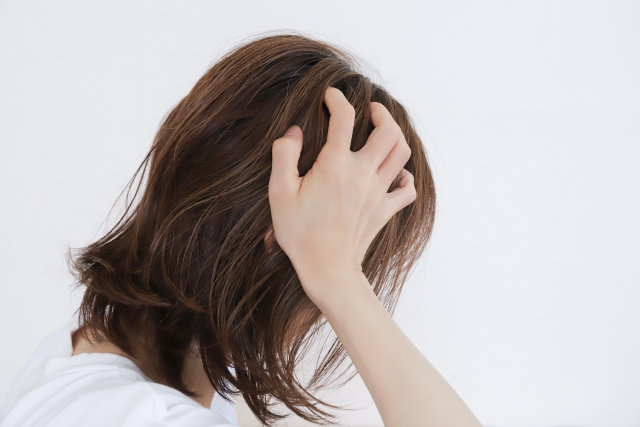
Does your head already feel heavy and tight the moment you wake up? If you’ve been chalking it up to “not enough sleep” or “built-up fatigue” and just reaching for a headache pill or migraine medication, it’s worth pausing to reconsider.
That “morning-only headache” could actually be a sign of sleep apnea syndrome (SAS).
We’ve previously covered the relationship between sleep quality and daytime sleepiness. In this article, we focus on another commonly overlooked sign — morning headaches — and explain the medical connection to SAS.
Strong daytime sleepiness has also been linked to reduced concentration and, in some cases, a genuinely serious risk of accidents. Understanding the underlying cause, rather than dismissing it as “just a headache,” is the first step toward protecting both your daytime performance and your safety.
Quick Answer: Key Points in This Article
Headaches caused by sleep apnea are formally recognized in the International Classification of Headache Disorders (ICHD-3) as “sleep apnea headache,” characterized by (1) occurring upon waking, (2) bilateral, pressing (non-throbbing) pain, and (3) resolving within 4 hours. The underlying cause is believed to be dilation of the brain’s blood vessels caused by low oxygen and elevated carbon dioxide levels from repeated breathing pauses during sleep. A Japanese hospital-based study of severe SAS patients found that approximately 37% (10 of 27 cases) reported headaches. Left untreated, this can also raise the risk of high blood pressure, arteriosclerosis, and stroke — so rather than assuming it’s “just a tired-morning headache,” it’s worth considering testing if snoring or daytime sleepiness is also present.
Ueno Snoring Clinic welcomes consultations even at the stage of simply being concerned about morning headaches. We offer a range of options tailored to each patient’s condition, including insurance-covered sleep testing and self-pay laser treatment.
Details of the tests and treatments offered at Ueno Snoring Clinic can be found here
Reviewed by Our Director
Kazuyuki Sugaya
Director / Anesthesiologist, Ueno Snoring Clinic
With more than 20,000 general anesthesia cases, our director provides care centered on the diagnosis and treatment of snoring and sleep apnea, tailored to each patient. [Insurance-Covered] Ueno Snoring Clinic
This article has been medically reviewed by Director Kazuyuki Sugaya, explaining the medical relationship between morning headaches and sleep apnea syndrome based on international diagnostic criteria and Japanese research data.
🩺Comprehensive Snoring Treatment at Ueno Snoring Clinic
Ueno Snoring Clinic welcomes consultations for symptoms beyond snoring too, including morning headaches and daytime sleepiness. We provide everything from insurance-covered sleep testing and CPAP management to self-pay laser treatment, recommending the plan best suited to your situation.
Thorough Testing & Ongoing Treatment (Insurance-Covered)
- Home sleep test / PSG (polysomnography): Precise analysis of your sleep condition
- CPAP therapy: The standard treatment for moderate-to-severe apnea
Self-Pay Treatment for Root-Cause, Short-Term Results
- Latest laser snoring treatment: Incision-free, root-cause treatment
- Medical weight-loss support: Physically opening the airway through weight reduction
*Even if you’ve already been evaluated at a headache clinic or neurology department with no abnormalities found, we encourage you to have the possibility of SAS checked separately.
📋 What This Article Covers
- What kind of headache does sleep apnea cause?
- Why does apnea cause headaches? (the mechanism)
- How common is this? (the data)
- How to distinguish it from “just a tired-morning headache”
- What happens if it’s left untreated
- Self-check: morning headaches × SAS
What Kind of Headache Does Sleep Apnea Cause?
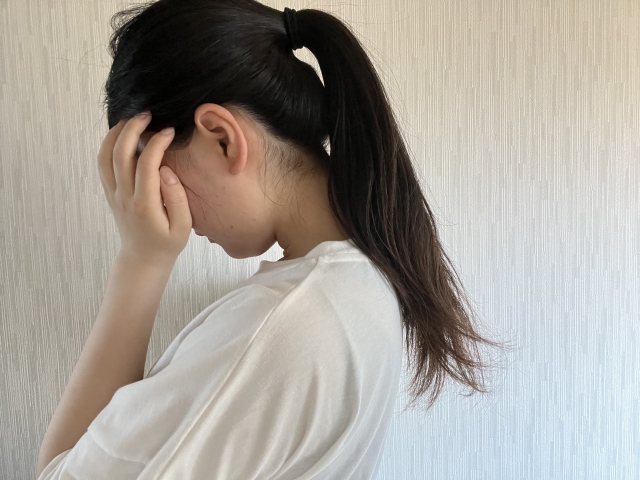
The International Classification of Headache Disorders (ICHD-3) includes a dedicated entry for “sleep apnoea headache.” Its defining features are as follows.
✅ Key Features of Sleep Apnea Headache
- Occurs upon waking: The headache is already present the moment you wake up
- Bilateral: Pain affects the whole head, or both sides equally
- A pressing, dull ache: Not a throbbing (pulsating) type of pain
- No nausea or sensitivity to light/sound: Lacks the accompanying symptoms common with migraines
- Resolves relatively quickly: Within 4 hours; some Japanese studies report resolution within 10 minutes to 2 hours
Why Does Apnea Cause Headaches?
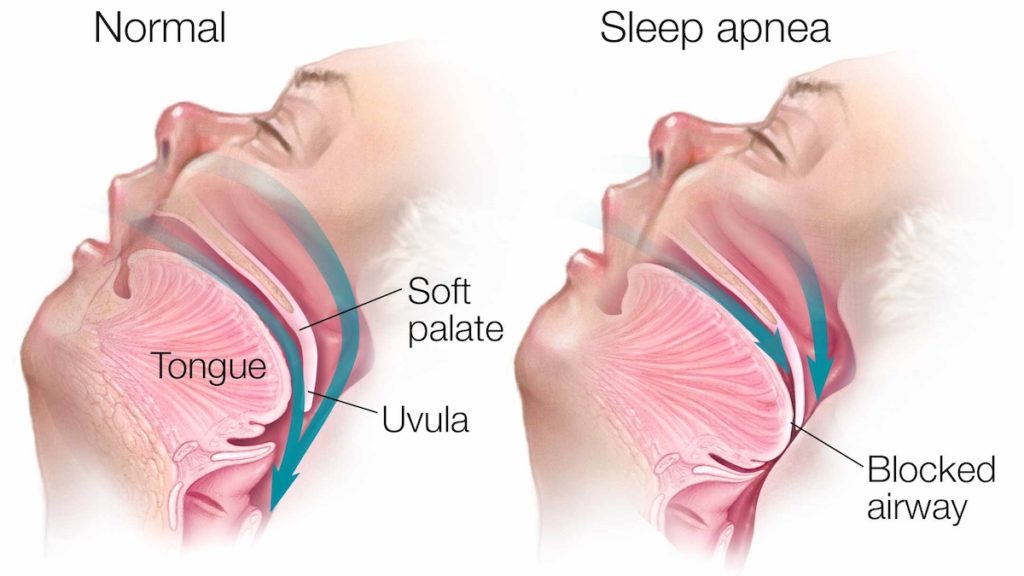
In sleep apnea syndrome, the airway repeatedly becomes blocked during sleep, causing breathing to stop over and over. This leads to reduced blood oxygen levels (hypoxemia) and a buildup of carbon dioxide (hypercapnia) in the body.
Because carbon dioxide has a dilating effect on cerebral blood vessels, when this cycle repeats throughout the night, the brain’s blood vessels remain dilated by morning. This dilation is thought to stimulate surrounding nerves, producing the sensation of a pressing headache. Elevated blood pressure resulting from the apnea itself has also been identified as a contributing factor.
How Common Is This?
In a Japanese study of hospitalized patients with severe sleep apnea syndrome, headaches were reported in 10 of 27 cases — roughly 37%. The headaches were typically bilateral, without a specific focal point, described as a dull, non-throbbing heaviness, lasting approximately 10 minutes to 2 hours.
In other words, more than one in three patients with severe SAS experience morning headaches. This is far from a rare symptom — it’s a sign that’s genuinely easy to overlook.
How to Distinguish It From “Just a Tired-Morning Headache”
There are many types of headaches, and self-diagnosis isn’t straightforward. That said, understanding the following distinctions can help you recognize when it’s worth seeking evaluation.
| Type | Characteristics |
|---|---|
| Sleep apnea headache | Occurs upon waking, bilateral, pressing dull ache, often accompanied by snoring and daytime sleepiness |
| Tension-type headache | Can occur at any time of day, often accompanied by neck and shoulder tension |
| Migraine | Often one-sided, throbbing/pulsating, frequently accompanied by nausea and sensitivity to light or sound |
| Simple sleep deprivation / dehydration | Improves with adequate sleep or hydration, with no accompanying symptoms like snoring |
If your headache reliably occurs upon waking, and is also accompanied by snoring or daytime sleepiness, we recommend not dismissing it as simple sleep deprivation and instead considering the possibility of SAS. If self-assessment feels difficult, evaluating from both a headache specialist’s and a sleep specialist’s perspective can be a useful approach.
What Happens If It’s Left Untreated

Because morning headaches often resolve within a few hours on their own, it’s easy to dismiss them with “I’ll just take a pain reliever.” But leaving the underlying SAS untreated allows other serious risks to accumulate beyond the headache itself.
💬 A Note From Our Director
A morning headache isn’t just a matter of “having a rough day.” Repeated overnight drops in oxygen and spikes in blood pressure gradually raise the risk of high blood pressure, arteriosclerosis, and stroke. On top of that, the strong daytime sleepiness that often comes with it can reduce concentration and, in some cases, contribute to serious accidents. Rather than simply “getting through it with pain medication,” I want people to look further — toward the underlying apnea itself.
We’ve also covered the relationship between SAS and traffic accident risk in our article on drowsy driving and sleep apnea. This is exactly why we recommend not treating headaches or daytime sleepiness as “something you can just push through,” and instead getting tested sooner rather than later.
Self-Check: Morning Headaches × SAS
If several of the following apply to you, SAS may be contributing to your morning headaches.
🔍 Morning Headache × SAS Self-Check
- Your headache reliably occurs right when you wake up
- The pain is a heavy, dull ache across the whole head or both sides, rather than a sharp throb
- The headache usually resolves on its own within a few hours
- You snore, or have been told by family that you snore
- You feel strong daytime sleepiness despite what should be enough sleep
- You’ve been told at a health checkup that your blood pressure is high
What Ueno Snoring Clinic Can Do for You
Ueno Snoring Clinic is a sleep specialty outpatient clinic focused on snoring and sleep apnea syndrome. Rather than an ENT practice, our physician — a board-certified anesthesiologist with more than 20,000 general anesthesia cases — draws on specialized expertise in airway and breathing management to diagnose and treat the underlying causes of SAS.
We also welcome patients who say, “I was told nothing was wrong at a headache clinic, but my morning headaches continue.” The first step can simply be a test to check your condition during sleep.
Our clinic operates on a fully appointment-based system, with same-day appointments available.
Conclusion
A bilateral, pressing headache that occurs upon waking is recognized in the International Classification of Headache Disorders as “sleep apnea headache” — one of the characteristic warning signs of SAS. It’s believed to result from dilation of the brain’s blood vessels caused by low oxygen and elevated carbon dioxide levels during sleep, and Japanese research has found headaches in roughly 37% of patients with severe SAS.
Because the headache itself often resolves within a few hours, it’s easy to dismiss. But leaving the underlying SAS untreated can contribute to high blood pressure, arteriosclerosis, stroke, and even accident risk from daytime sleepiness. If your headaches reliably occur upon waking and are also accompanied by snoring or daytime sleepiness, we encourage you not to write it off as simple sleep deprivation, and instead consider getting tested.
This topic is also covered in detail in our director’s book, “Curing Snoring with the Latest Treatments” (Amazon Japan Best Seller: #1 in General Medicine, #1 in Clinical Internal Medicine, #2 in Home Medical & Health)
New Book by Our Director
“Curing Snoring with the Latest Treatments”
Written by an anesthesiologist who has overseen the sleep of more than 10,000 patients, this book is a modern guide to the latest snoring treatments.
Concerned About Morning Headaches? Talk to Us
If you’ve been told “nothing abnormal” at a headache clinic, it may still be worth checking for SAS. We welcome consultations that start simply with testing.
Frequently Asked Questions
Q. I was evaluated at a headache clinic and told nothing was wrong. Could it still be SAS?
Yes, it’s possible. Headache clinics primarily check for abnormalities in the brain and blood vessels, but they don’t typically evaluate breathing patterns during sleep. If your headache reliably occurs upon waking and is accompanied by snoring or daytime sleepiness, we recommend considering testing at a sleep specialty clinic.
Q. Isn’t taking headache medication enough?
Headache medication only relieves the symptom temporarily — it doesn’t address the underlying SAS. As long as the low-oxygen state from apnea continues, headaches can keep recurring, and other risks such as high blood pressure and arteriosclerosis may continue to progress. Genuinely addressing the issue requires diagnosing and treating the SAS itself.
Q. Can morning headaches be related to SAS even if I don’t snore?
Yes, SAS can be present without noticeable snoring in some cases — particularly in women and thinner individuals, where apnea can occur without prominent snoring. Rather than ruling out SAS based on the absence of snoring alone, it’s worth considering testing based on other symptoms too, such as morning headaches and daytime sleepiness.
Q. How long should headaches continue before I see a doctor?
There’s no strict cutoff, but if headaches upon waking become a regular, recurring pattern, we recommend getting tested. If you’re unsure whether your symptoms warrant a visit, please don’t hesitate to reach out — we’re happy to help you figure out the right next step.
Start With an Initial Consultation
Whether you’re looking for testing, evaluating laser treatment eligibility, or ongoing CPAP management, we’re happy to help. Fully appointment-based, with same-day appointments available.
[Insurance-Covered] If you’re concerned about snoring or sleep apnea, we offer a fully appointment-based system for reassuring, unhurried care.
Please feel free to contact Ueno Snoring Clinic [same-day appointments available]
📞0120-899-930
5F Ueno Silk Building, 4-8-8 Ueno, Taito-ku, Tokyo 110-0005, Japan

Please feel free to contact Ueno Snoring Clinic [same-day appointments available]
📞0120-899-930
5F Ueno Silk Building, 4-8-8 Ueno, Taito-ku, Tokyo 110-0005, Japan
Feel free to reach out to us on LINE ↓↓↓

English Support Available
We provide medical services for international patients. Please check our English website for details on how to visit our clinic.
Supervising Physician

Kazuyuki Sugaya, Director of Ueno Snoring Clinic
After graduating from Fujita Health University School of Medicine in 2004, Dr. Sugaya began his career as an anesthesiologist at Toho University Omori Medical Center. He has since gained extensive clinical experience at municipal hospitals and private clinics nationwide, administering general anesthesia in over 20,000 cases. In 2020, he founded the "Tokyo Spine Clinic," and has served as the Director of Ueno Snoring Clinic since 2025.
Related Columns

By Appointment Only
Specialized Snoring Treatment in Ueno
Ueno Snoring Clinic
Insurance-covered home testing available.
Following a physician’s consultation and result explanation,
we support the improvement of snoring and sleep apnea with "Dual Deep Thermia"—a non-surgical laser treatment, if necessary.
3-min walk from Ueno Station. Please feel free to consult us.