


いびきを最新治療で治す-表紙-1.png)
Told You Stop Breathing in Your Sleep? A Guide to Insurance-Covered Sleep Apnea Testing in Japan
No Snoring, But Still Sleep Apnea? | Ueno Snoring Clinic Tokyo
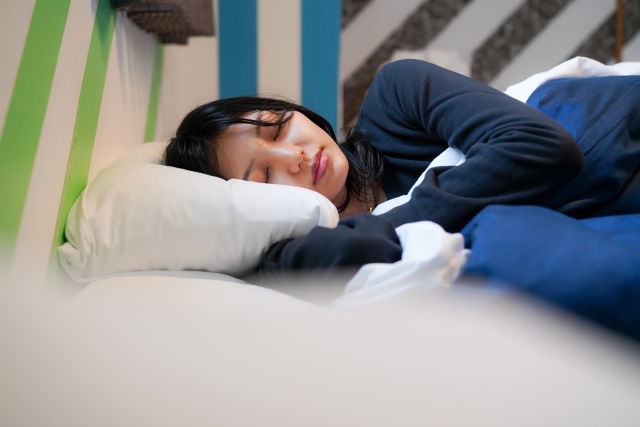
Some patients are diagnosed with sleep apnea even though they have never snored — or discover it only after taking a sleep test. In this article, we take a deep dive into “sleep apnea without snoring.”
Ueno Snoring Clinic offers a range of options tailored to each patient’s condition, including insurance-covered sleep testing and CPAP management, as well as self-pay laser treatment for snoring. If you’d like to find out which treatment is right for you, please book an initial consultation.
Details of the tests and treatments offered at Ueno Snoring Clinic can be found here
New Book by Our Director
“Curing Snoring with the Latest Treatments”
Written by an anesthesiologist who has overseen the sleep of more than 10,000 patients, this book is a modern guide to the latest snoring treatments.
Reviewed by Our Director
Reviewed by Our Director
Kazuyuki Sugaya
Director / Anesthesiologist, Ueno Snoring Clinic
With more than 20,000 general anesthesia cases, our director provides care centered on the diagnosis and treatment of snoring and sleep apnea, tailored to each patient. [Insurance-Covered] Ueno Snoring Clinic
This article has been medically reviewed by Director Kazuyuki Sugaya and explains accurate medical information about testing and treatment for snoring and sleep apnea syndrome (SAS) in plain language.
🩺Comprehensive Snoring Treatment at Ueno Snoring Clinic
The causes of snoring range from throat structure to obesity. Ueno Snoring Clinic is not limited to a single treatment method — we offer a wide range of evidence-based options so we can propose the plan best suited to each patient.
Thorough Testing & Ongoing Treatment (Insurance-Covered)
- Home sleep test / PSG (polysomnography): Precise analysis of your sleep condition
- CPAP therapy: The standard treatment for moderate-to-severe apnea
Self-Pay Treatment for Root-Cause, Short-Term Results
- Latest laser snoring treatment: Incision-free, root-cause treatment
- Medical weight-loss support: Physically opening the airway through weight reduction
*As a clinic specializing in snoring treatment, we are committed to resolving “snoring that won’t stop” through both insurance-covered and self-pay options.
“I don’t snore, so sleep apnea has nothing to do with me” — does that sound familiar?
In fact, it is possible to have sleep apnea syndrome (SAS) without snoring at all. Because there’s no snoring to prompt a test, many of these cases go unnoticed for years in clinical practice.
In this article, we explain — with the underlying medical mechanisms — why apnea can occur without any snoring.
Table of Contents
- What Is Sleep Apnea Syndrome?
- How Snoring Actually Happens
- 4 Reasons “Silent Apnea” Happens Without Snoring
- UARS: The Condition That Often Gets Missed
- Can You Trust a “Normal” Result from a Smart Device?
- Self-Check: Do You Have Silent Sleep Apnea?
- What Kind of Testing Should You Get?
- Frequently Asked Questions
1. What Is Sleep Apnea Syndrome?
Let’s start with the basics. Sleep apnea syndrome (SAS) is a condition in which breathing repeatedly stops during sleep.
Medical Definition
Sleep apnea syndrome is diagnosed when a person experiences “apnea” (breathing stops for 10 seconds or more) or “hypopnea” (airflow drops by 50% or more) at least 5 times per hour of sleep (AHI ≥ 5). The AHI (Apnea-Hypopnea Index) is the core measure of severity for this condition.
Severity Classification
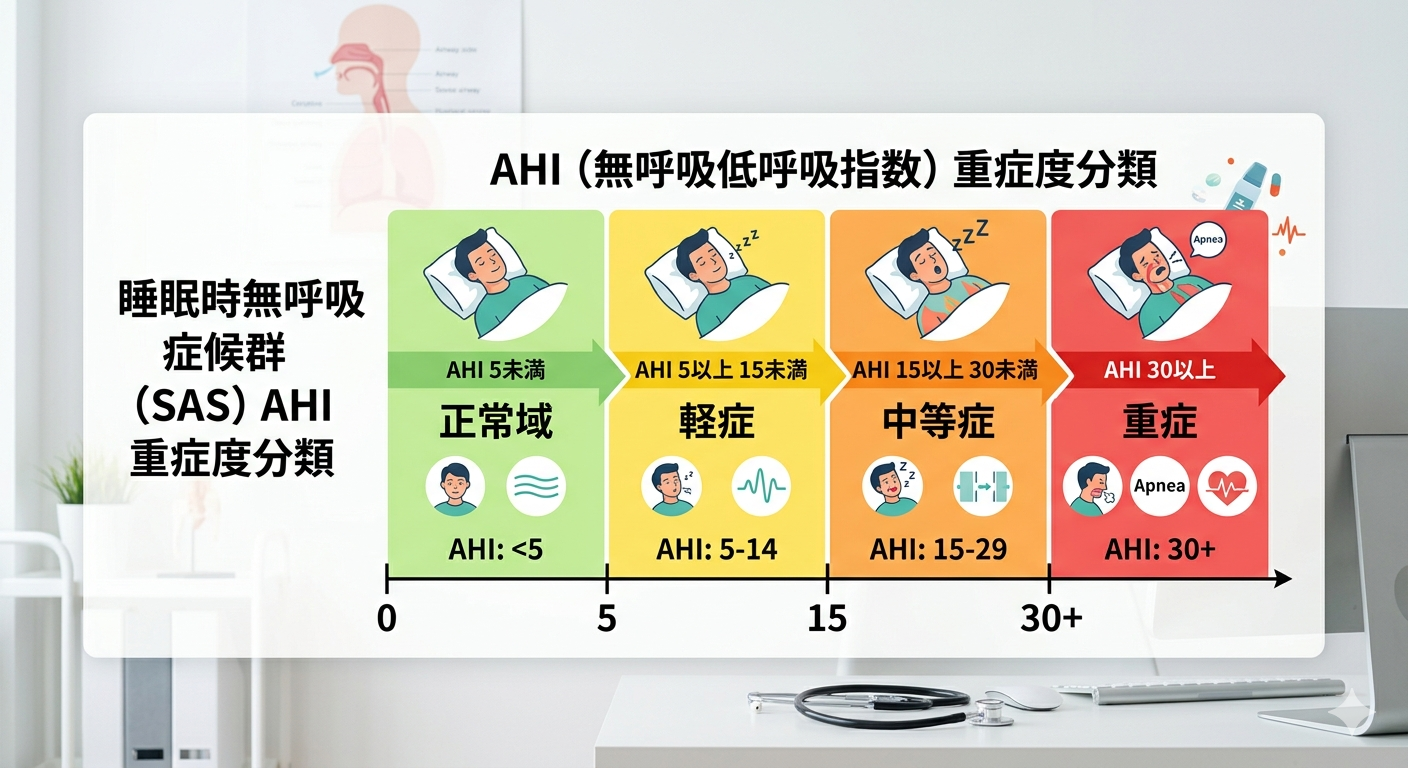
Patients with severe SAS may stop breathing more than 30 times per hour — roughly once every two minutes. And yet they are often completely unaware of it. This is one of the defining features of sleep apnea.
Obstructive (OSA) vs. Central (CSA) Sleep Apnea
There are two broad categories of sleep apnea.
| Type | Cause | Prevalence | Relationship to Snoring |
|---|---|---|---|
| Obstructive (OSA) | Throat muscles relax and physically block the upper airway | About 90% of all cases | Usually accompanied by snoring, but not always |
| Central (CSA) | The brain’s signal to the breathing muscles temporarily stops | About 10% of all cases | Almost never accompanied by snoring |
In central sleep apnea (CSA), the “command” to breathe itself is interrupted due to a problem in the brain and nervous system, so there is no vibration in the throat — meaning no snoring occurs at all.
Meanwhile, even in obstructive sleep apnea (OSA), which accounts for the vast majority of cases, snoring can sometimes be absent.
2. How Snoring Actually Happens
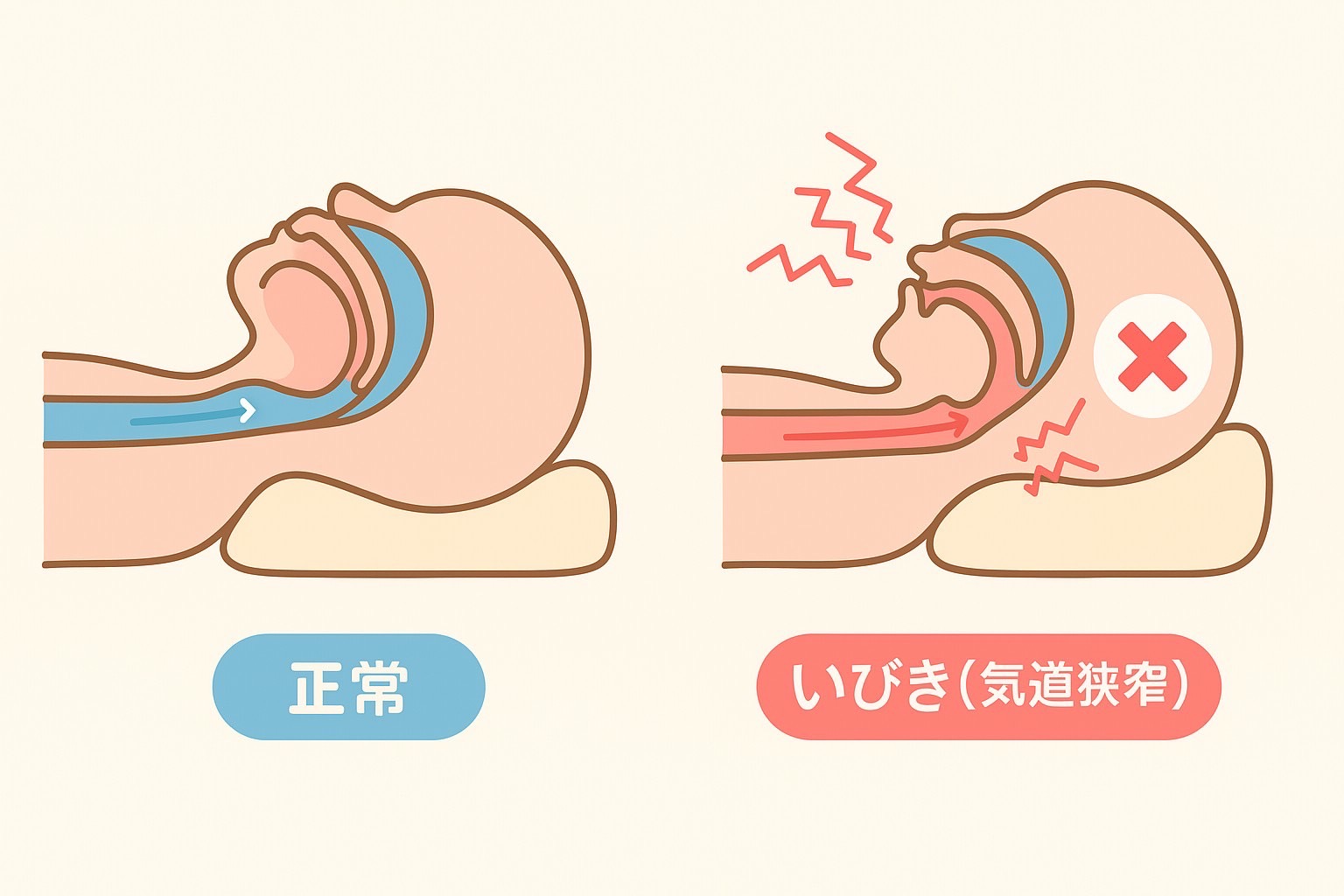
To understand “silent apnea,” it helps to first understand how snoring itself is produced.
When we fall asleep, muscles throughout the body relax — including the muscles surrounding the throat.
As these muscles relax, tissues such as the uvula, soft palate, tongue base, and tonsils sag under gravity, causing the upper airway — the passage air travels through — to narrow.
When air tries to pass through this narrowed passage on its way to the lungs, the soft surrounding tissue vibrates. That vibration is what we hear as “snoring.”
Key point:
Snoring is the sound of air vibrating as it squeezes through a narrowed passage. When the airway closes completely and airflow drops to zero, that vibration — and the sound — disappears.
Snoring is the sound of air vibrating as it squeezes through a narrowed passage. When the airway closes completely and airflow drops to zero, that vibration — and the sound — disappears.
In other words, in the most severe stage of obstructive sleep apnea — when the airway is completely blocked — the result, ironically, can be a “silent” episode of apnea.
3. Four Reasons “Silent Apnea” Happens Without Snoring
1. Complete blockage produces no sound
When the airway closes completely, airflow drops to zero and no vibration — and therefore no sound — is produced.
The “snoring phase,” when air is passing through a narrowed airway and creating vibration, and the “apnea phase,” when the airway is fully blocked and silent, can alternate throughout the night.
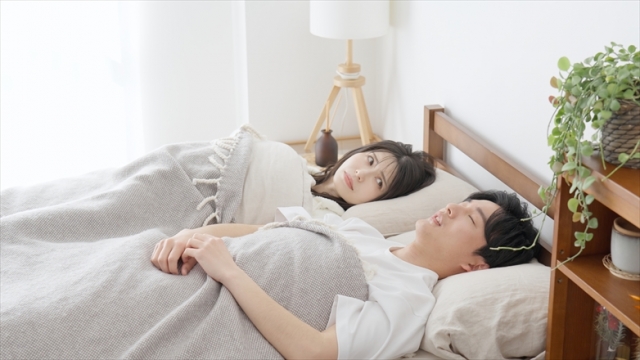
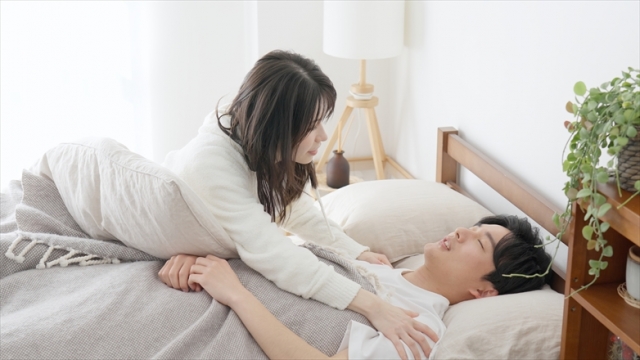
A partner sleeping in the same room may notice the moment the snoring “suddenly stops” — that moment is often exactly when complete blockage occurs. But for someone who sleeps alone, this silent apnea can be very difficult to notice.
2. Apnea patterns change with sleeping position
Obstructive sleep apnea tends to worsen when sleeping on your back.
When lying face-up, the tongue base and soft palate are more likely to fall backward under gravity, narrowing the airway.
Sleeping on your side changes the direction gravity pulls, easing pressure on the airway. People who habitually sleep on their side tend to experience less apnea and less snoring.
The Concept of Positional Sleep Apnea
When a person’s AHI while sleeping on their back is at least double their AHI while sleeping on their side, this is called “positional OSA.” Because these patients’ scores can be nearly normal when side-sleeping, their condition only appears under specific circumstances, making it particularly easy to overlook.
3. Alcohol, medication, and fatigue cause fluctuation
Alcohol has a muscle-relaxing effect that further loosens the muscles around the throat.
Someone who rarely snores may snore loudly — or experience more apnea events — only on nights they’ve been drinking.
Similarly, sleeping pills, anti-anxiety medications, and antihistamines can also worsen apnea.
Extreme fatigue can also cause unusually deep sleep, which suppresses the body’s normal arousal response and allows apnea episodes to last longer than they otherwise would.
4. Living alone or sleeping in separate rooms means no one notices
Snoring and breathing pauses are, by nature, generally inaudible to the person experiencing them.
Recognizing your own snoring or apnea usually requires someone else in the same room to notice it.
People who live alone, work away from family, or sleep in a separate room from their spouse often lack this opportunity for detection.
As a result, apnea can go unnoticed for years, with daytime sleepiness and fatigue simply written off as “being tired” or “getting older.”
Note:
Sleep apnea syndrome is a condition that goes undiagnosed in a large number of people. Never being told you snore does not mean you can rule out sleep apnea.
Sleep apnea syndrome is a condition that goes undiagnosed in a large number of people. Never being told you snore does not mean you can rule out sleep apnea.
4. UARS (Upper Airway Resistance Syndrome): The Condition That Often Gets Missed
There’s another important concept to understand when it comes to “apnea without snoring.”
It’s called UARS (Upper Airway Resistance Syndrome).
What Is UARS?
UARS is a condition in which, although airflow never drops enough to qualify as full apnea or clear hypopnea, increased resistance in the upper airway forces the body to work harder to breathe, repeatedly triggering arousal responses in the brain. Because it doesn’t meet the diagnostic threshold for AHI, standard sleep tests can come back “normal.”
Why UARS gets overlooked
Standard home sleep tests calculate the AHI primarily by counting episodes of apnea and hypopnea.
In UARS, the airway is never fully blocked and airflow is largely maintained, so these episodes often aren’t counted as apnea at all.
In reality, though, the extra effort required to keep air flowing through the narrowed airway puts ongoing strain on the body, repeatedly sending arousal signals to the brain.
This fragments sleep and prevents the person from reaching deeper stages of sleep.
Characteristic symptoms of UARS
Strong daytime sleepiness and fatigue
Feeling unrested despite getting enough hours of sleep, or hit by sudden, intense sleepiness in the afternoon.
Feeling unrested despite getting enough hours of sleep, or hit by sudden, intense sleepiness in the afternoon.
Insomnia and frequent nighttime waking
No trouble falling asleep, but waking up repeatedly throughout the night — often without realizing what’s causing it.
No trouble falling asleep, but waking up repeatedly throughout the night — often without realizing what’s causing it.
Morning headaches and dry mouth
Increased breathing effort and mouth breathing tend to leave the mouth dry upon waking.
Increased breathing effort and mouth breathing tend to leave the mouth dry upon waking.
Reduced concentration and memory
Without enough deep sleep, the brain doesn’t get adequate time to consolidate memories and recover.
Without enough deep sleep, the brain doesn’t get adequate time to consolidate memories and recover.
Important:
UARS often occurs without snoring and is also seen in people who are not overweight. This makes it easy to assume “I’m not the type to have sleep apnea” — which is exactly what makes it so easy to miss.
UARS often occurs without snoring and is also seen in people who are not overweight. This makes it easy to assume “I’m not the type to have sleep apnea” — which is exactly what makes it so easy to miss.
5. Can You Trust a “Normal” Result from a Smart Device?
Smartwatches and smart rings such as the Apple Watch, Garmin, Oura Ring, and Withings devices have increasingly added sleep apnea detection features in recent years.
Many people feel reassured when their device shows no abnormalities.
How smart devices actually measure sleep
Most of these devices combine accelerometers, optical heart-rate sensors, and SpO₂ sensors to estimate body movement and blood oxygen fluctuations during sleep.
However, their measurement method is fundamentally different from the home sleep tests used in medical settings.
| Item | Smartwatch / Smart Ring | Medical Home Sleep Test |
|---|---|---|
| Medical device certification | None, or varies by model | Certified |
| Direct airflow measurement | None / estimated | Direct measurement |
| AHI calculation | Generally not diagnostic-grade | Usable for diagnosis |
| Detection of mild/moderate cases | May be missed | Detectable |
| Detection of UARS | Difficult | Can also be difficult with a simplified test |
Even when a smart device shows “no abnormalities,” that doesn’t guarantee you don’t have sleep apnea.
If you continue to experience daytime sleepiness, fatigue, or reduced concentration, it’s important to be evaluated at a medical clinic.
How to Use Smart Devices the Right Way
Smart devices are best used as a prompt to seek medical evaluation, not as a source of reassurance. Rather than assuming everything is fine because the app shows no abnormalities, please get checked by a medical professional if you’re experiencing symptoms.
6. Self-Check: Do You Have Silent Sleep Apnea?
Even without any awareness of snoring, the symptoms below may indicate “silent apnea” or UARS.
Self-Check List
- ☐ I feel strong sleepiness during the day even after what should have been enough sleep
- ☐ I get suddenly and intensely sleepy in the afternoon, especially after meals
- ☐ My head feels heavy or aches when I wake up
- ☐ My mouth is dry or my throat hurts when I wake up
- ☐ I wake up multiple times during the night
- ☐ I don’t feel like I’ve really slept, or my sleep feels shallow
- ☐ I can’t stay focused during the day / I feel foggy
- ☐ I’ve become more forgetful or worry about mistakes at work
- ☐ My mood swings more than it used to, or I get irritated easily
- ☐ I end up oversleeping on my days off
- ☐ I’ve never been told I snore, but I live alone or sleep in a separate room
- ☐ I mostly sleep on my side, or find it hard to breathe when lying on my back
*This checklist is not intended for medical diagnosis. If three or more items apply to you, we recommend seeing a medical professional.
If you don’t snore but live alone, can only sleep comfortably on your side, or experience strong daytime sleepiness despite being a healthy weight, don’t rely on the self-check alone — we recommend getting a professional sleep test.
7. What Kind of Testing Should You Get?
Step 1: Home Sleep Test
This is the most accessible test used to diagnose sleep apnea.
You take a small monitoring device home and simply wear it while you sleep.
A pulse oximeter on your fingertip and an airflow sensor under your nose measure the number of apnea and hypopnea events per hour, along with fluctuations in blood oxygen saturation during sleep.
At Ueno Snoring Clinic, this home sleep test is available under national health insurance. We’ll explain how to use the device during your visit, so first-time patients can feel at ease.
Step 2: Polysomnography (PSG)
For cases that are difficult to assess with a home sleep test, cases where UARS is suspected, or cases requiring evaluation of treatment effectiveness, we perform an overnight polysomnography test.
This records brain waves, eye movement, muscle activity, breathing, blood oxygen level, and body position simultaneously, giving a detailed picture of overall sleep quality.
Step 3: Treatment Based on Test Results
CPAP Therapy
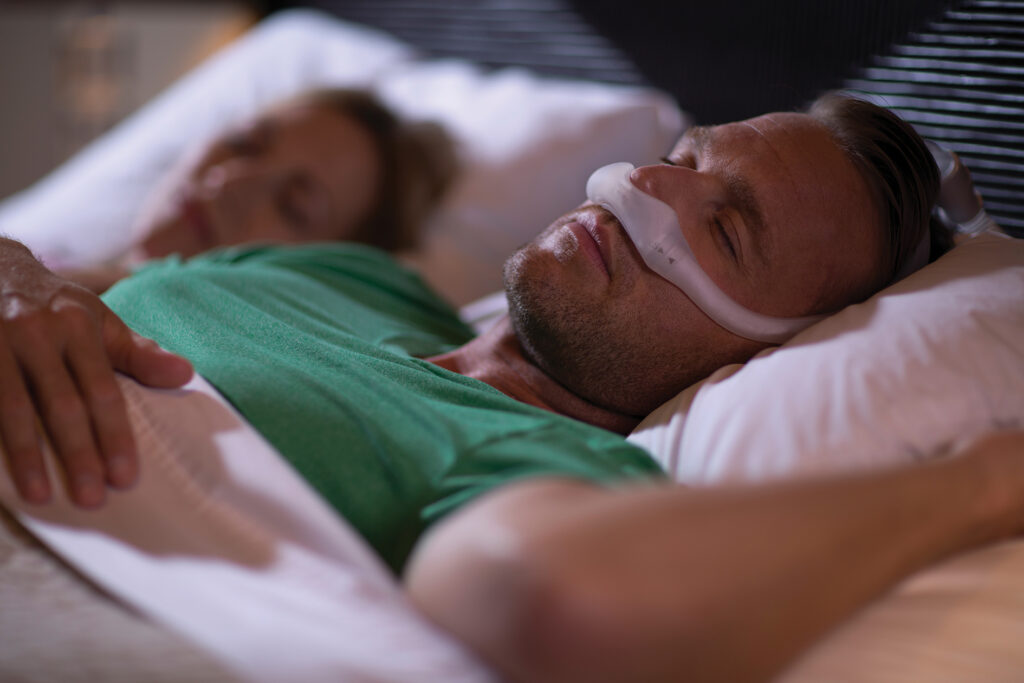
Typically used for moderate-to-severe apnea. A steady stream of pressurized air is delivered through a mask during sleep to keep the upper airway open. Managed under national health insurance.
Typically used for moderate-to-severe apnea. A steady stream of pressurized air is delivered through a mask during sleep to keep the upper airway open. Managed under national health insurance.
Laser Treatment and Other Root-Cause Approaches
For mild cases or certain forms of apnea, we may consider approaches that tighten the tissue of the throat as a more fundamental treatment.
For mild cases or certain forms of apnea, we may consider approaches that tighten the tissue of the throat as a more fundamental treatment.
Lifestyle Changes and Positional Therapy
For patients with positional OSA, consistently sleeping on their side can be effective. Limiting alcohol and managing weight are also important.
For patients with positional OSA, consistently sleeping on their side can be effective. Limiting alcohol and managing weight are also important.
About Our Clinic:
Ueno Snoring Clinic offers insurance-covered testing and treatment from the perspective of an anesthesiologist specializing in airway management. For patients for whom insurance-covered treatment is not suitable, laser snoring treatment can also be considered as a path to a root-cause solution.
Ueno Snoring Clinic offers insurance-covered testing and treatment from the perspective of an anesthesiologist specializing in airway management. For patients for whom insurance-covered treatment is not suitable, laser snoring treatment can also be considered as a path to a root-cause solution.
“I don’t snore, so I’m fine” may be an assumption worth questioning
If you’re concerned about any of the symptoms above, start with a home sleep test you can take from your own bed.
First-time patients are welcome to reach out for a consultation.
Book Online
Chat With Us on LINE
Ueno Snoring Clinic | Taito-ku, Tokyo — Ueno Area | Insurance-Covered Treatment Available
A sleep specialty clinic with airway management expertise from an anesthesiologist
Frequently Asked Questions
[Insurance-Covered] If you’re concerned about snoring or sleep apnea, we offer a fully appointment-based system for reassuring, unhurried care.
Please feel free to contact Ueno Snoring Clinic [same-day appointments available]
📞0120-899-930
5F Ueno Silk Building, 4-8-8 Ueno, Taito-ku, Tokyo 110-0005, Japan

Please feel free to contact Ueno Snoring Clinic [same-day appointments available]
📞0120-899-930
5F Ueno Silk Building, 4-8-8 Ueno, Taito-ku, Tokyo 110-0005, Japan
Feel free to reach out to us on LINE ↓↓↓

English Support Available
We provide medical services for international patients. Please check our English website for details on how to visit our clinic.
Supervising Physician

Kazuyuki Sugaya, Director of Ueno Snoring Clinic
After graduating from Fujita Health University School of Medicine in 2004, Dr. Sugaya began his career as an anesthesiologist at Toho University Omori Medical Center. He has since gained extensive clinical experience at municipal hospitals and private clinics nationwide, administering general anesthesia in over 20,000 cases. In 2020, he founded the "Tokyo Spine Clinic," and has served as the Director of Ueno Snoring Clinic since 2025.
Related Columns

By Appointment Only
Specialized Snoring Treatment in Ueno
Ueno Snoring Clinic
Insurance-covered home testing available.
Following a physician’s consultation and result explanation,
we support the improvement of snoring and sleep apnea with "Dual Deep Thermia"—a non-surgical laser treatment, if necessary.
3-min walk from Ueno Station. Please feel free to consult us.