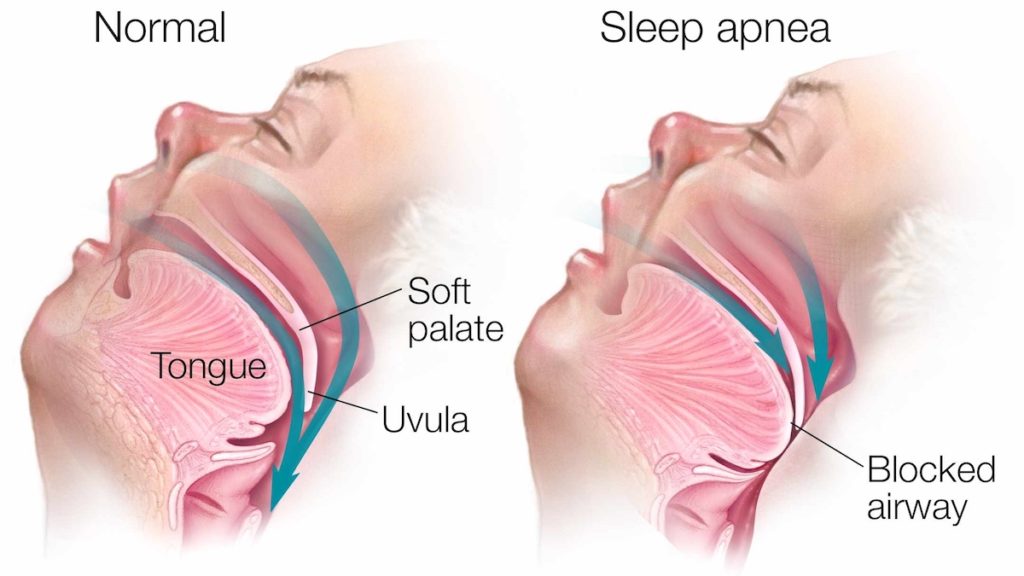
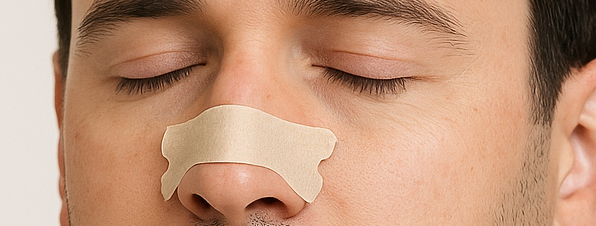
Ueno Snoring Clinic offers insurance-covered sleep testing and CPAP management, as well as self-pay laser treatment for snoring, tailored to your specific condition. If you’d like to find out which treatment fits you, please start with an initial consultation.
Details of the tests and treatments offered at Ueno Snoring Clinic can be found here
You’ll Want to Know This! A Complete Comparison of 5 CPAP Types — What Doctors Really Look For
Our doctor compares five different CPAP machines side by side and explains what actually matters when choosing one.
Watch the video
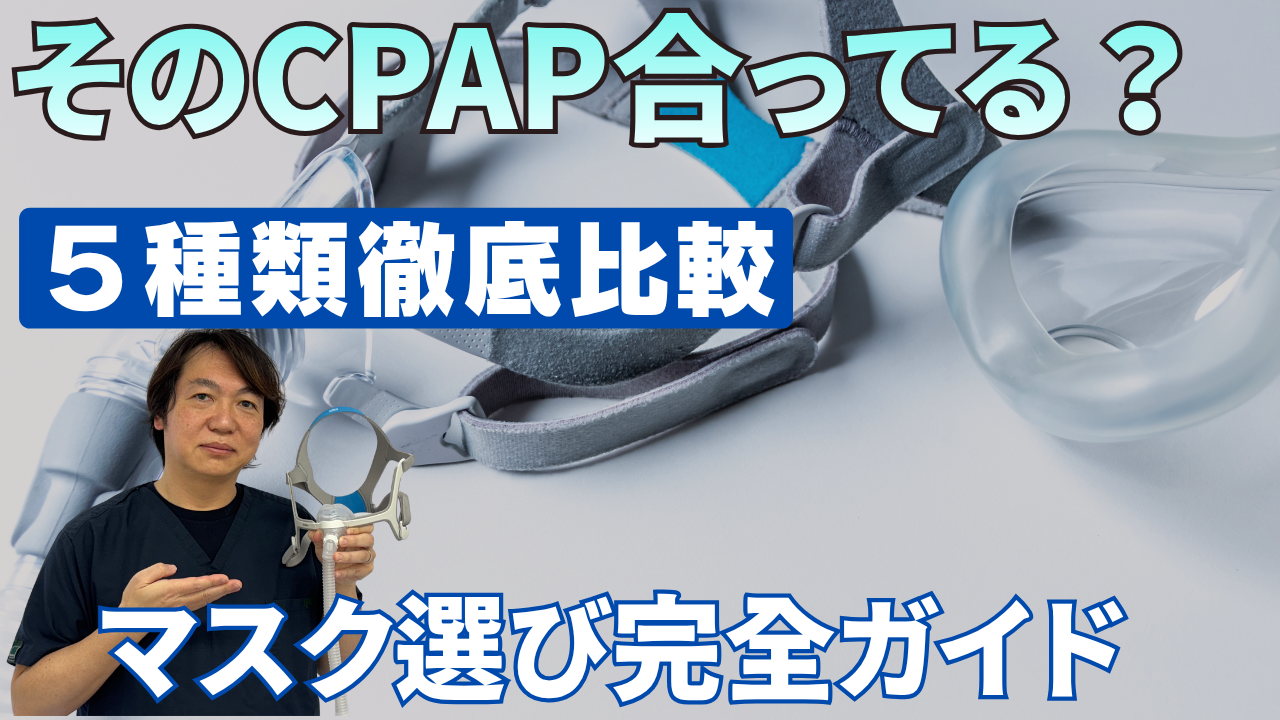
A Complete Comparison of CPAP Masks
We tried on and reviewed five different types of CPAP masks. 90% of CPAP comfort comes down to the mask.
Watch the video
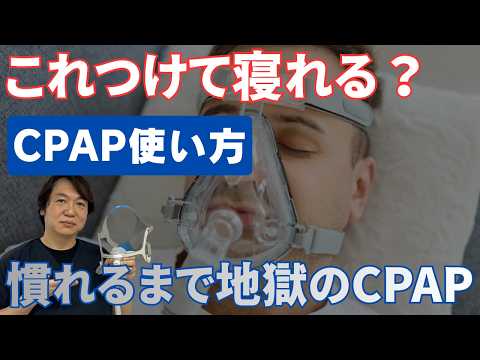
Do you have to use CPAP forever? A specialist explains how to use CPAP
A detailed explanation of how to use CPAP, with a real demonstration of what it feels like to wear the device.
Watch the video
Ueno Snoring Clinic was featured on Fuji TV’s “Live News It!” and on FNN Prime Online
Watch our clinic’s examination and explanation of sleep disorders, snoring, and sleep apnea.
Watch the video
Ueno Snoring Clinic was featured in an article on Nippon TV’s “news every.”
Please take a look as a starting point for thinking about getting evaluated for snoring, sleep apnea, or other sleep disorders.
Read the article
Reviewed by Our Director
Kazuyuki Sugaya
Director, Ueno Snoring Clinic / Anesthesiologist
Our director, with over 20,000 general anesthesia cases, focuses primarily on the diagnosis and treatment of snoring and sleep apnea, offering care tailored to each patient. [Insurance-Covered] Ueno Snoring Clinic
This article was reviewed by our Director, Kazuyuki Sugaya, and explains accurate medical information about the testing and treatment of snoring and sleep apnea syndrome (SAS) in an accessible way.
🩺Comprehensive Snoring Treatment at Ueno Snoring Clinic
The causes of snoring range from the structure of the throat to excess body weight. Ueno Snoring Clinic doesn’t lean on any single treatment approach — we’re set up to offer each patient the plan that best fits them, from a wide range of evidence-based options.
Insurance-Covered: Thorough Testing and Ongoing Treatment
- Simplified and PSG testing: A precise analysis of your sleep
- CPAP treatment: The standard treatment for moderate-to-severe apnea
Self-Pay: Address the Root Cause, Short-Term Focus
- The latest snoring laser treatment: A non-surgical, root-cause treatment
- Medically supervised weight loss: Helping secure the airway by reducing excess weight
*As a clinic specializing in snoring treatment, we’re committed to helping resolve snoring that just won’t stop — through both insurance-covered and self-pay options.
Our Director’s book, “Curing Snoring with the Latest Treatments,” also touches on how snoring can affect relationships and family life.
New Book by Our Director
“Curing Snoring with the Latest Treatments”
A guide to the latest snoring treatments, written by an anesthesiologist who has overseen the sleep of more than 10,000 patients.
View on Amazon
Quick Answer
Snoring often affects a bed partner’s sleep quality even more than it affects the person snoring, and it can put real strain on a marriage or relationship — leading to sleeping in separate rooms, less conversation, and emotional conflict. Rather than dismissing it as “just snoring,” it’s worth taking a partner’s concerns seriously and considering, together, a professional evaluation — including testing for sleep apnea syndrome (SAS) where appropriate. Addressing it as a shared issue, rather than one person’s problem, matters for both your health and your relationship.
📋 What This Article Covers
- How snoring can affect a bed partner’s sleep and health
- How separate bedrooms and emotional conflict can develop
- How snoring can affect dating and cohabiting couples, and future plans
- Frequently asked questions about snoring and relationships
- What to do together, as a couple
Snoring is often treated as “someone’s own problem” — a personal habit or quirk. In reality, though, it frequently has a serious effect on the people around the person snoring. For couples and families who share a bedroom, snoring can significantly lower quality of life.
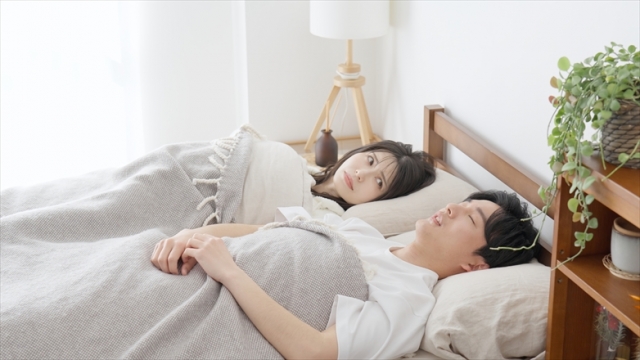
It’s not unusual for a spouse or partner to lose sleep or wake repeatedly night after night because of it, and over time this can lead to sleeping in separate rooms and less and less conversation — a pattern that can start to resemble a kind of “domestic separation caused by snoring.” This goes beyond a simple sleep problem — it can also erode trust and closeness between partners. A gap in perception often emerges: one partner feels “I’m sleeping fine, so it’s not a problem,” while the other is “suffering through sleepless nights,” and this mismatch can turn into real emotional conflict. Having your sleep disrupted by sound night after night is a stress that hits close to home emotionally, and it can affect daily life as a whole. In that sense, it can function almost like a kind of “silent aggression.”
How Snoring Affects Married Couples and Partners
For many couples, nighttime is a chance to reconnect after a day apart — a quiet space to feel close to each other. But when the “unconscious sound” of snoring intrudes on that space, a time meant for rest can start to feel like a test of patience instead.
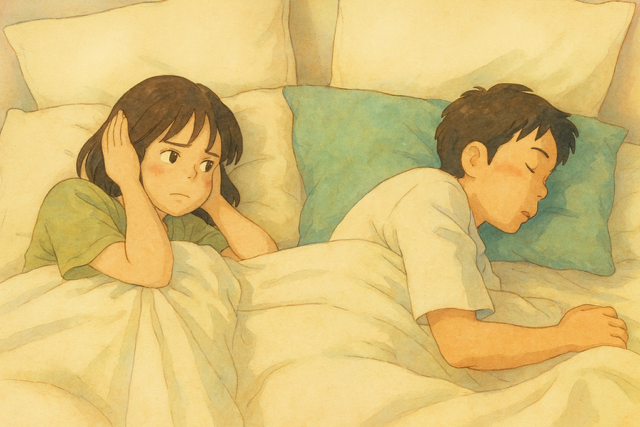
Reduced Sleep Quality and Health Effects
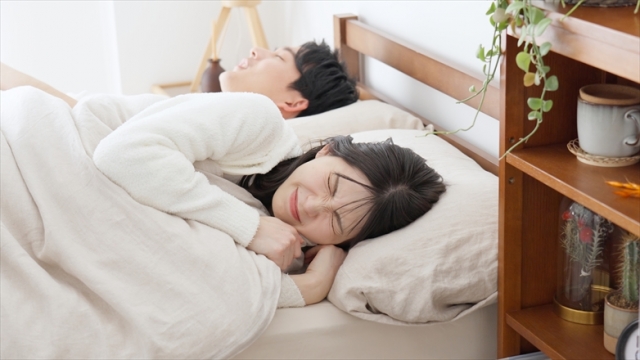
When a partner’s snoring interrupts sleep, the other person’s own sleep quality naturally suffers. Being repeatedly woken by the sound, or simply being unable to fall asleep because of it, can lead to accumulated fatigue, irritability, reduced concentration, and a weaker immune response if it continues over time. Some research also points to an elevated risk of worsening depression or anxiety in this kind of situation.
Emotional Distance From Separate Bedrooms
Quite a few couples, worn down by the sound of snoring, end up sleeping in separate rooms out of necessity. Once this becomes routine, everyday moments of closeness — physical affection, conversation before bed — can disappear, and emotional distance can grow. A sense of loneliness or isolation can build on both sides: one partner may feel guilty for “not being able to sleep together,” while the other may feel “left behind” or abandoned. This can naturally accelerate a loss of physical intimacy too, and that growing physical distance often shows up as emotional distance in the relationship. What starts as sleeping apart “because there’s no other choice” can, without anyone quite noticing, cool a relationship down — and in some cases, this pattern has been a factor in separation or divorce. Snoring, as just a “sound,” can end up building an invisible wall between two people.
Emotional Conflict and Misunderstanding
When one partner says “no matter how many times I’ve mentioned it, nothing changes” or “they get upset whenever I bring it up,” the issue can easily escalate into emotional conflict. It’s common for the person who snores to have little awareness of it, or little motivation to address it — responses like “it’s just snoring, don’t make a big deal of it” or “aren’t you being a little too sensitive?” can build resentment over time, eventually turning into anger or a sense of hopelessness. On the other hand, even when the person who snores feels genuinely apologetic, if their partner only expresses frustration — “how can you feel nothing when I can’t sleep like this?” — without either side finding common ground, cracks can form in the relationship. Exchanges like these expose a lack of mutual understanding and empathy, and once built-up frustration reaches a breaking point, the consequences can be difficult to undo. In fact, snoring is a theme that comes up not infrequently in couples counseling and divorce consultations, as one of the contributing factors.
Health Effects and Impact on Quality of Life
The effects of snoring aren’t limited to the psychological side. Reduced sleep quality can bring on daytime sleepiness, lower work performance, and difficulty concentrating, leading to chronic fatigue and irritability. Some recent research has also pointed to cases where a partner’s snoring appears to have contributed to depression or anxiety in the other person. Poor sleep and mental health are closely connected, and it’s not hard to see how a life of consistently disrupted sleep could take a toll on both mind and body.
Snoring Is a Problem for Both Partners to Face Together
Snoring isn’t simply “one person’s problem” — it’s a real issue that touches a family’s health and relationships directly. If your partner is struggling with your snoring, the first step is to listen without dismissing their concerns. Since it may point to a medical condition like sleep apnea syndrome rather than just a habit, it’s worth considering a professional evaluation together. And if you’re the one who snores, it’s worth remembering that even if you feel like you’re sleeping fine, your partner may be paying the price. Facing the issue honestly — rather than looking away — is what it takes to avoid becoming an unwitting source of harm.
It might seem like “just snoring.” But during sleep — one of our most vulnerable, unguarded times — a relationship meant to offer comfort can instead be strained by sound. Snoring carries not only the physical risk of sleep apnea syndrome, but also a relationship risk that comes from a lack of mutual understanding. What we want this article to convey is that snoring is a household-wide issue, and if left unaddressed, it has the potential to damage both health and relationships. That’s exactly why it’s worth facing together as a couple, rather than struggling with it alone — turning to medical or professional support where needed to restore both quiet nights and a warm relationship, which is really what treating snoring is about.
Effects on Dating and Cohabiting Couples
The Delicate Relationship Between Affection and Snoring
For couples who are dating, snoring can sometimes become an unexpected turning point emotionally. Early in a relationship, there’s often a sense of excitement in getting to know each other — but as the number of nights spent together increases, many couples run into the very practical issue of “sleep compatibility.”
Even for couples who aren’t yet married, or newlyweds, snoring can be a sensitive issue that puts real strain on the relationship. Some people have described being caught off guard by a partner’s snoring on their first trip together, and feeling anxious about the relationship going forward as a result.
Often, when a couple first moves in together, the snoring is written off as “maybe they’re just tired” or “it’s probably just loud tonight.” But once it becomes a nightly occurrence, patience has its limits. Once the issue becomes clear, it’s not unusual for one partner to start wondering, “can I really keep living like this?” Some people simply feel that they don’t want to be with a partner who snores, full stop. And in relationships where the snoring wasn’t apparent until the couple started spending nights together, the resulting sleep disruption can gradually turn shared time into something stressful, with the emotional distance between partners slowly growing. The partner who snores may also lose confidence under the pressure of feeling like a burden, becoming quieter or more withdrawn in conversation. Some couples have, in fact, ended a cohabiting relationship, or called off a planned marriage, over snoring.
Casting a Shadow Over the Future
For couples thinking about marriage or a shared future, snoring isn’t a trivial issue. Worries about “never being able to sleep together” long-term, or how bedroom arrangements might work once children are involved, can become a real obstacle to those plans.
For couples hoping to have children, it’s also worth being aware that some research has pointed to a possible link between snoring and male infertility, potentially connected to reduced sleep quality and hormonal effects — a consideration that’s hard to dismiss when thinking about the future.
Snoring can seem, at first glance, like a minor issue in a relationship. In reality, though, it touches something as fundamental as sleep, and it can meaningfully affect both the depth of trust between partners and their plans for the future. On the other hand, when a couple faces the issue directly together, understands each other, and works toward a solution as a team, the relationship can come out of it stronger.
Caring About Your Partner’s Health

Looking for a solution together, and being willing to set aside embarrassment to learn about treatment options — these are the kinds of steps that genuinely reflect a commitment to building a life together. Whether snoring is seen simply as an obstacle, or as a shared milestone on the way to a future you’re building together, may end up being an important fork in the road.
Frequently Asked Questions
Q. My partner’s snoring keeps me awake. What should I do first?
A. Rather than confronting your partner emotionally, a good first step is to reflect together on any recent changes — weight gain, nasal allergies, alcohol use, or fatigue — that might be involved. If the snoring is nightly, or you’ve noticed pauses in breathing, it can help to explain that this may be a treatable medical condition rather than just a habit, and suggest a professional evaluation.
Q. We’ve started sleeping in separate rooms because of snoring. Can the relationship recover?
A. Sleeping separately doesn’t necessarily damage a relationship right away, but less conversation and physical closeness can gradually widen emotional distance. Addressing the underlying cause of the snoring through testing and treatment, with the goal of sharing a bedroom again, is a realistic step toward repairing the relationship.
Q. My partner isn’t aware they snore and doesn’t take it seriously when I mention it. How should I bring it up?
A. Simply saying “you’re loud” tends to make people defensive. It can help to record it, or to frame the conversation around health — mentioning the possibility of sleep apnea syndrome — rather than the noise itself. Bringing in a third-party opinion, such as from a medical professional, can also help.
Q. We’re thinking about moving in together or getting married. Can snoring be treated?
A. It depends on the cause, but snoring linked to lifestyle factors — weight, nasal congestion, alcohol, or sleeping position — can often be improved. Where sleep apnea syndrome is also present, options include insurance-covered CPAP treatment or self-pay laser treatment for snoring. With future plans in mind, it’s worth getting evaluated sooner rather than later.
Q. Is there really a link between snoring and male infertility?
A. In severe sleep apnea syndrome, some research suggests reduced sleep quality and hormonal changes may affect sperm quality. If you and your partner are hoping to have children and snoring or apnea symptoms are present, it may be worth considering an evaluation sooner rather than later.
Q. Can I come to Ueno Snoring Clinic together with my partner?
A. Yes, you’re welcome to attend a consultation together with your partner. If the person who snores isn’t ready to see a doctor yet, we’re also happy to speak with family members or partners on their own first — please feel free to reach out.
In Summary
Snoring isn’t only “the snorer’s problem” — for married couples, dating couples, and couples thinking about moving in together or getting married, it’s an issue that can touch sleep quality, emotional distance, and future plans alike. Rather than enduring it or letting it go because “it’s just snoring,” listening to your partner’s concerns and considering, together, a visit to a medical professional — including the possibility of sleep apnea syndrome (SAS) — is a meaningful first step toward protecting both your health and your relationship.
A disturbing case linking snoring-related sleep deprivation to an alleged poisoning
Our previous article examines a troubling case from a medical perspective. It’s currently available only in Japanese — please contact the clinic directly if you’d like to know more.
How snoring can affect children and the whole family
Our previous article looks at the effects on children’s development and family life as a whole. It’s currently available only in Japanese — please contact the clinic directly if you’d like to know more.