
Snoring During IV Sedation: Is It Normal? An Anesthesiologist Explains

“I’m having IV sedation for an upcoming procedure, and I normally snore — I’m worried about what might happen during surgery.”
This is a question we hear often. In this article, we look at whether this concern is realistic, and explain the relationship between sedative anesthesia and snoring.


🩺Comprehensive Snoring Treatment at Ueno Snoring Clinic
The causes of snoring range from throat structure to obesity. Ueno Snoring Clinic is not limited to a single treatment method — we offer a wide range of evidence-based options so we can propose the plan best suited to each patient.
Thorough Testing & Ongoing Treatment (Insurance-Covered)
- Home sleep test / PSG (polysomnography): Precise analysis of your sleep condition
- CPAP therapy: The standard treatment for moderate-to-severe apnea
Self-Pay Treatment for Root-Cause, Short-Term Results
- Latest laser snoring treatment: Incision-free, root-cause treatment
- Medical weight-loss support: Physically opening the airway through weight reduction
*As a clinic specializing in snoring treatment, we are committed to resolving “snoring that won’t stop” through both insurance-covered and self-pay options.
Reviewed by Our Director
Reviewed by Our Director
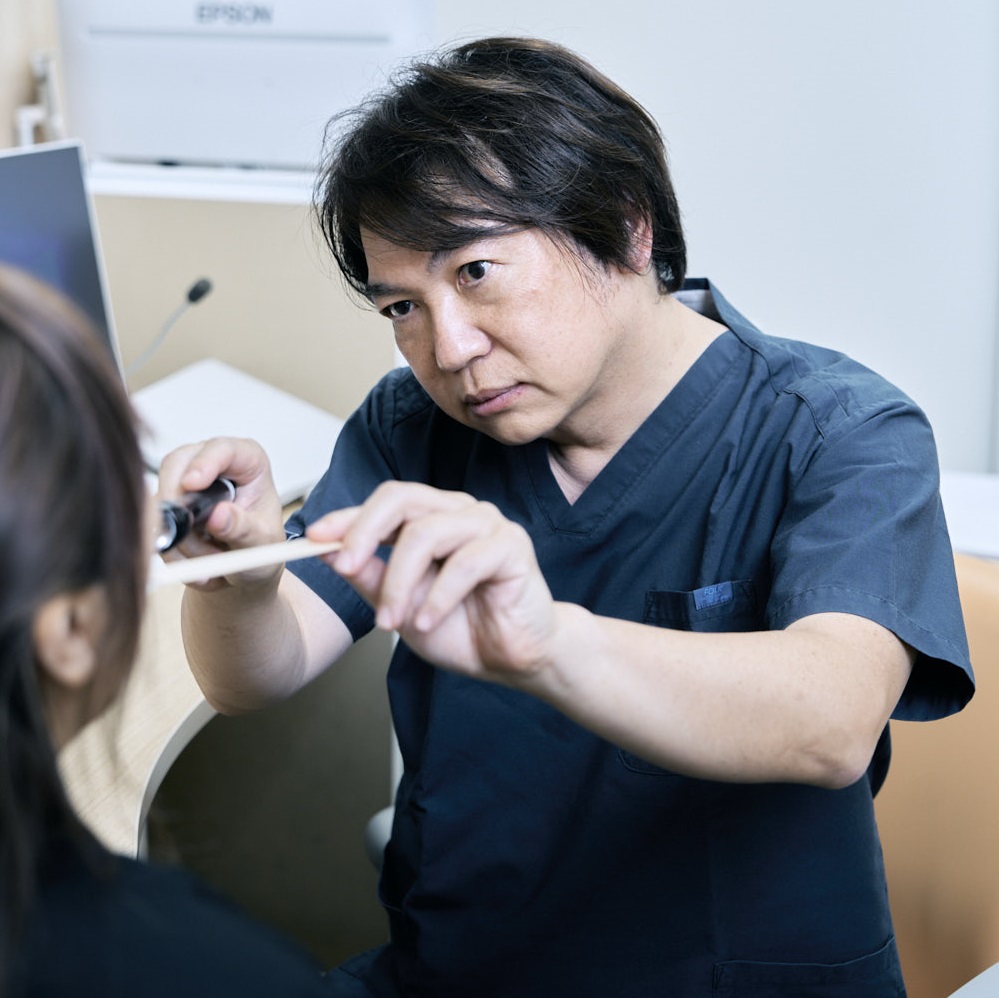
Kazuyuki Sugaya
Director / Anesthesiologist, Ueno Snoring Clinic
With more than 20,000 general anesthesia cases, our director provides care centered on the diagnosis and treatment of snoring and sleep apnea, tailored to each patient. [Insurance-Covered] Ueno Snoring Clinic
This article has been medically reviewed by Director Kazuyuki Sugaya and explains accurate medical information about testing and treatment for snoring and sleep apnea syndrome (SAS) in plain language.
In recent years, minimally invasive procedures performed under local anesthesia have become extremely common in orthopedics, plastic surgery, and cosmetic surgery.
Rather than full general anesthesia — where a breathing tube is placed and mechanical ventilation is used throughout — these minimally invasive procedures are often performed using a combination of local anesthesia and IV sedation.
But IV sedation makes a lot of people quite anxious.
“What if I snore while I’m sedated?”
“I’d be so embarrassed if the people around me heard it.”
Many patients worry about exactly this. But from inside the anesthesia field, snoring under IV sedation is, if anything, a very common sight — and patients themselves are almost never aware it’s happening. As an anesthesiologist who has spent years watching over “sleep” and “breathing” in the operating room, I’ve witnessed snoring under IV sedation many, many times.
In this article, I’ll explain — from an anesthesiologist’s perspective — why snoring happens so often under IV sedation, aiming for a balance: not something to be unnecessarily afraid of, but also not something to dismiss entirely.
The short version: rather than worrying about whether it’s embarrassing, it’s far more useful to treat it as a signal your body is sending you.
Quick Answer
Yes, it’s common to snore during IV sedation (conscious sedation), even if you don’t normally snore while awake and moving around. Sedative drugs like propofol relax the muscles supporting your airway — the same mechanism behind ordinary sleep snoring — so snoring under sedation is not embarrassing or dangerous on its own. However, if it’s accompanied by pauses in breathing, daytime sleepiness, or morning headaches, it may be worth having your airway evaluated for sleep apnea.
Ueno Snoring Clinic offers a range of options tailored to each patient’s condition, including insurance-covered sleep testing and CPAP management, as well as self-pay laser treatment for snoring. If you’d like to find out which treatment is right for you, please book an initial consultation.
Details of the tests and treatments offered at Ueno Snoring Clinic can be found here
Snoring During IV Sedation Is Not Unusual — There’s No Need to Feel Embarrassed
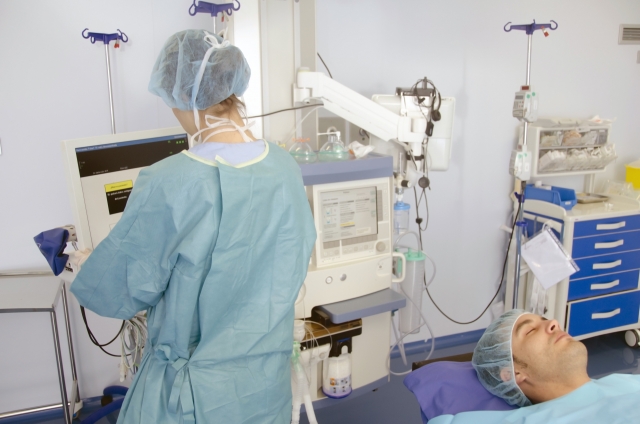
Under IV sedation, patients are not intubated — they fall asleep while continuing to breathe naturally, and the procedure is carried out in that state.
As a result, the upper airway can narrow in a state very close to natural sleep, and snoring can occur.
This happens routinely in the operating room, and staff treat it as a physiological phenomenon to be assessed calmly — not something out of the ordinary. It’s far less unusual than it may feel to the patient.
So if the question is “is it embarrassing,” the honest answer is: no, it isn’t.
What matters far more is the next step.
Why Does IV Sedation Cause Snoring?
IV sedation commonly uses a medication called propofol — a white liquid that’s administered continuously throughout the procedure. Propofol acts on the central nervous system (the brain) to reduce consciousness, and at the same time lowers muscle tone throughout the body. In other words, it causes a form of muscle relaxation.
It’s important to note that this “muscle relaxation” is different from the muscle relaxants used in general anesthesia (such as rocuronium), which block the peripheral neuromuscular junction and cause complete paralysis. What happens with propofol is more like a centrally mediated loss of muscle tension — something similar can also occur with sleeping pills or alcohol.
As a result, structures such as:
- The tongue and soft palate (the soft area at the back of the roof of the mouth)
- The lateral pharyngeal walls (the side walls of the throat)
- The muscle groups that support the lower jaw
tend to relax, making the airway more prone to narrowing.
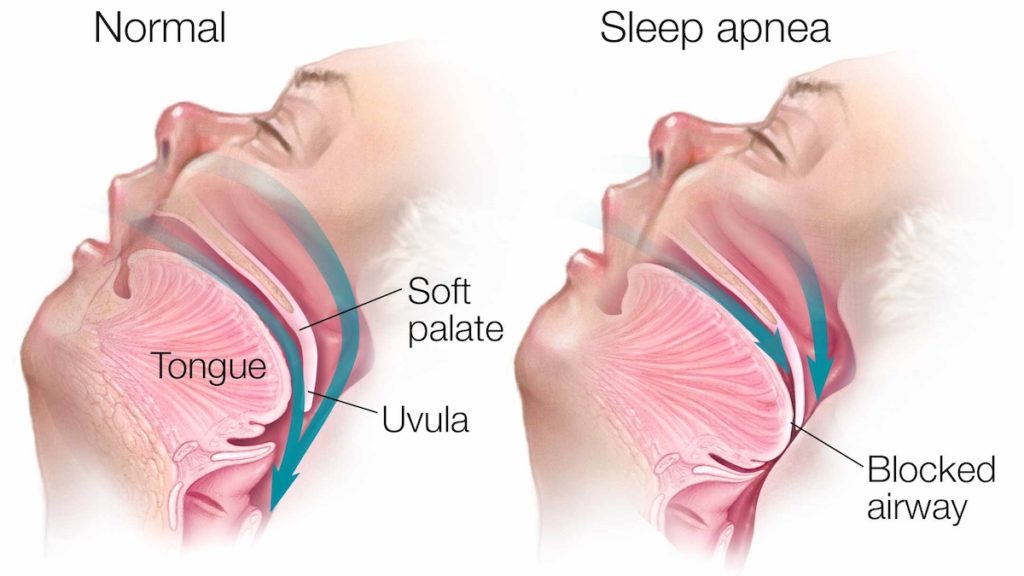
Snoring is, in essence, “the sound produced when tissue vibrates in response to the negative pressure of inhalation, at a point where the airway has narrowed.”
Under propofol sedation, the sequence generally looks like this:
- Support for the upper airway weakens (reduced muscle tone)
- Inhalation lowers pressure inside the chest, pulling the upper airway further inward (making it prone to collapse under negative pressure)
- Soft tissue in the narrowed area vibrates, producing snoring
As explained above, this is a normal effect of the medication — not something unusual or concerning in itself.
What Anesthesiologists Actually See in “Snoring” — Not Just a Sound, But a Sign of Airway Narrowing
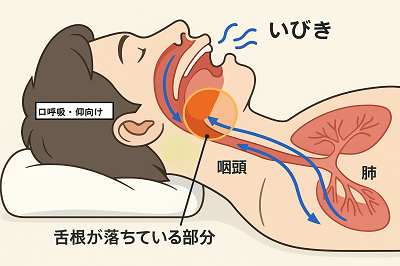
Snoring is the sound produced when muscle relaxation causes the base of the tongue to fall backward, narrowing the airway passage (from the nose through the throat to the entrance of the trachea), and the mucous membrane and soft tissue vibrate as a result.
Under IV sedation, muscle tone tends to relax easily, and in particular:
- The base of the tongue
- The soft palate (the soft area at the back of the roof of the mouth)
- The uvula
- The lateral pharyngeal walls (the sides of the throat)
tend to become “slack,” disrupting the smooth flow of air. The result is more pronounced snoring.
This isn’t a matter of embarrassment — it’s a matter of anatomy and physiology.
What’s more, anesthesiologists are constantly watching breathing waveforms and oxygen saturation on the monitor.
There are moments when louder snoring coincides with dips in oxygen levels, and that overlap is where the clinical significance lies.
Snoring Under IV Sedation May Mean It’s Also Happening in Everyday Sleep
Snoring under IV sedation occurs under conditions very similar to snoring during ordinary sleep. Namely:
- Lying on your back
- Reduced muscle tone
- Shallow breathing
When these conditions come together, snoring can surface even in people who had no idea they snored at all.
So if you’re told you snored during IV sedation, the reasonable way to think about it is: this was an opportunity to learn something about your own body that you didn’t know before.

One common misconception is assuming that “snoring = being overweight.” Body weight is certainly one contributing factor, but in reality, snoring almost always has multiple causes.
At Ueno Snoring Clinic, snoring rarely stems from a single cause alone — we build treatment plans tailored to each patient’s specific condition.
The Kind of Snoring an Anesthesiologist Pays Close Attention To — Evaluation Matters More Than Simply Ignoring It
Snoring on its own is common. What matters more is when snoring is accompanied by symptoms such as:
- A sensation that breathing stops or nearly stops
- Ongoing morning grogginess, headaches, or trouble concentrating
- Strong daytime sleepiness
- Family members reporting that your breathing “stopped” at times
In these cases, snoring isn’t just a sound — it becomes relevant to your sleep quality and the stability of your breathing.
As an anesthesiologist who has spent years watching over “sleep” and “breathing,” I’ve come to see snoring clearly as a kind of SOS signal from the body.
いびきを最新治療で治す-表紙-1.png)
New Book by Our Director
“Curing Snoring with the Latest Treatments”
Written by an anesthesiologist who has overseen the sleep of more than 10,000 patients, this book is a modern guide to the latest snoring treatments.
What Should You Do If You’ve Been Told You Snore?
Let’s bring this back to our main topic — IV sedation and snoring — and organize what to do next.
1. Have an anesthesiologist evaluate it from an “airway specialist” perspective
Our clinic also offers “snoring treatment led by an anesthesiologist.” This is a natural extension of a career spent watching over airways in the operating room — bringing that same expertise to the evaluation of snoring.
2. Start with a self-check
- When were you told about it — during IV sedation, during ordinary sleep, or after drinking?
- What exactly was said — was it loud, did someone notice you stop breathing, did you wake yourself up?
- How is it affecting your daytime life — sleepiness, concentration, morning grogginess, headaches?
Rather than staying quiet out of embarrassment, sharing this information is the fastest path to a solution.
3. Start with what you can do yourself
There are self-directed measures that can help with snoring, such as avoiding sleeping on your back, avoiding a nightcap before bed, staying physically active during the day, and losing weight if you’re carrying excess weight.
4. If self-directed efforts aren’t enough, seek medical help
If snoring doesn’t improve with self-directed measures, or if it has progressed to sleep apnea, we recommend seeing a medical professional.
Treatment is available affordably under national health insurance, and there are also self-pay options for the latest snoring treatments.
Each approach comes with its own advantages and drawbacks, so it’s worth considering which fits your lifestyle best.
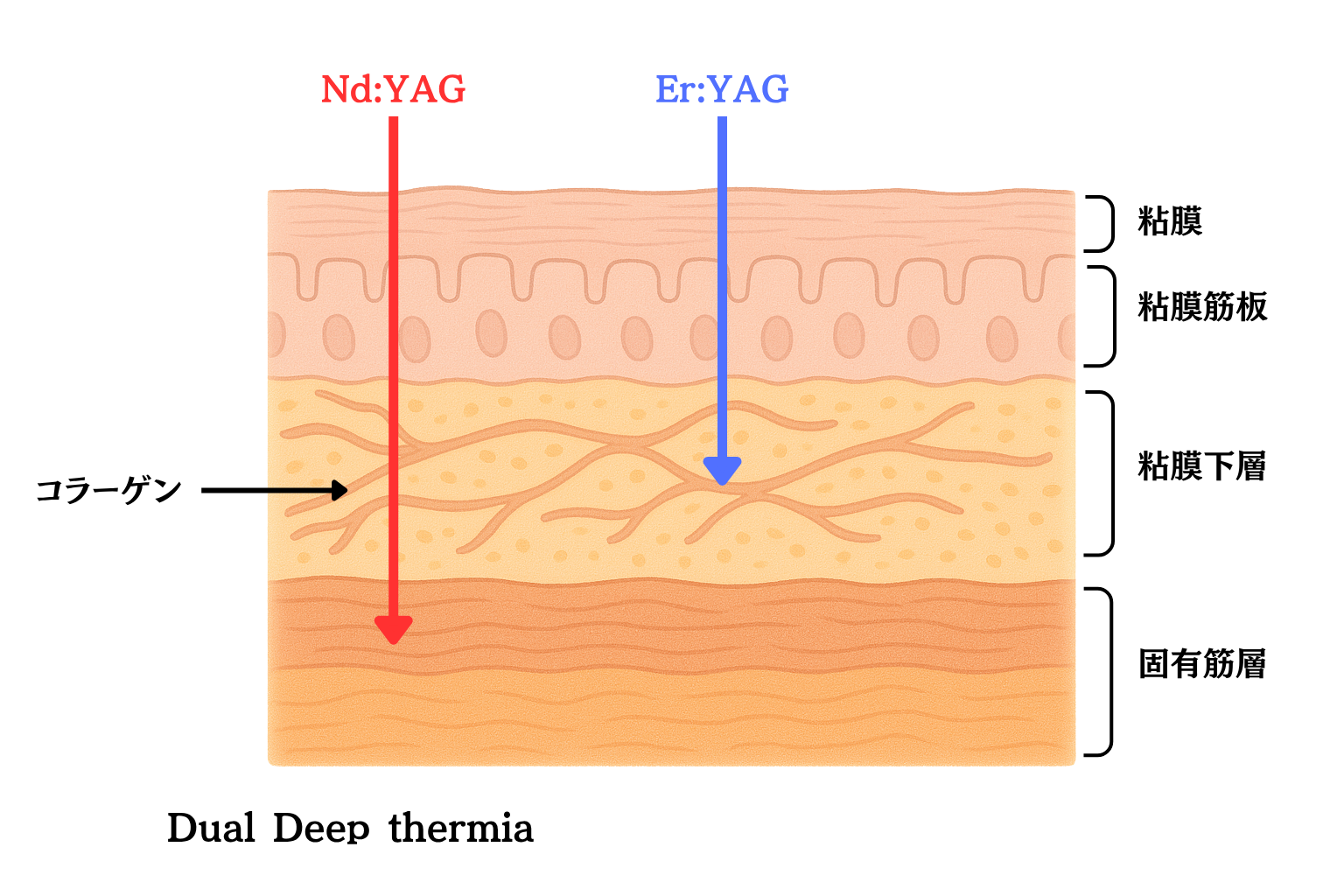
5. Incision-free dual-wavelength laser treatment: “Dual Deep Thermia”
Ueno Snoring Clinic uses “Dual Deep Thermia,” a treatment that combines two wavelengths (Nd:YAG and Er:YAG) to tighten the mucosal tissue in the oral and pharyngeal region, aiming to stabilize the airway.
It’s an incision-free, same-day, low-risk treatment with minimal discomfort.
Customized Treatment Design for Every Patient

Even with the same laser, applying the same intensity and the same number of sessions to every patient isn’t the right approach.
Each time, the physician adjusts the treatment intensity to minimize side effects while maximizing effectiveness, delivering a treatment plan tailored to each individual patient.
Ueno Snoring Clinic offers a range of options tailored to each patient’s condition, including insurance-covered sleep testing and CPAP management, as well as self-pay laser treatment for snoring. If you’d like to find out which treatment is right for you, please book an initial consultation.
Details of the tests and treatments offered at Ueno Snoring Clinic can be found here
Frequently Asked Questions
Conclusion: Treat It as a Signal, Not a Source of Embarrassment
Snoring under IV sedation is far from unusual — in fact, it’s something anesthesiologists see routinely.
But that moment may have revealed something meaningful: that your airway has certain characteristics that make it prone to narrowing.
At Ueno Snoring Clinic, we build individualized treatment plans grounded in an anesthesiologist’s perspective on airway and sleep physiology — using tools such as our dual-wavelength “Dual Deep Thermia” laser and medically supervised weight-loss support.
If being told you snored during IV sedation has left you feeling anxious, we encourage you to treat it not as something embarrassing, but as a starting point — and reach out to us anytime.
[Insurance-Covered] If you’re concerned about snoring or sleep apnea, we offer a fully appointment-based system for reassuring, unhurried care.
Please feel free to contact Ueno Snoring Clinic
📞0120-899-930
5F Ueno Silk Building, 4-8-8 Ueno, Taito-ku, Tokyo 110-0005, Japan

Please feel free to contact Ueno Snoring Clinic
📞0120-899-930
5F Ueno Silk Building, 4-8-8 Ueno, Taito-ku, Tokyo 110-0005, Japan
Feel free to reach out to us on LINE ↓↓↓

English Support Available
We provide medical services for international patients. Please check our English website for details on how to visit our clinic.
Supervising Physician

Kazuyuki Sugaya, Director of Ueno Snoring Clinic
After graduating from Fujita Health University School of Medicine in 2004, Dr. Sugaya began his career as an anesthesiologist at Toho University Omori Medical Center. He has since gained extensive clinical experience at municipal hospitals and private clinics nationwide, administering general anesthesia in over 20,000 cases. In 2020, he founded the "Tokyo Spine Clinic," and has served as the Director of Ueno Snoring Clinic since 2025.
Related Columns


By Appointment Only
Specialized Snoring Treatment in Ueno
Ueno Snoring Clinic
Insurance-covered home testing available.
Following a physician’s consultation and result explanation,
we support the improvement of snoring and sleep apnea with "Dual Deep Thermia"—a non-surgical laser treatment, if necessary.
3-min walk from Ueno Station. Please feel free to consult us.