
This time, we focus on the effects snoring can have on family life.
If a family member has ever told you your snoring is too loud, this article is for you.
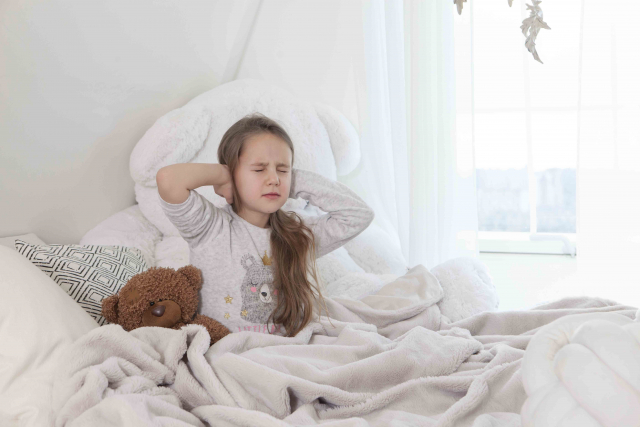
This time, we focus on the effects snoring can have on family life.
If a family member has ever told you your snoring is too loud, this article is for you.
Kazuyuki Sugaya
Director, Ueno Snoring Clinic / Anesthesiologist
Our director, with over 20,000 general anesthesia cases, focuses primarily on the diagnosis and treatment of snoring and sleep apnea, offering care tailored to each patient. [Insurance-Covered] Ueno Snoring Clinic
This article was reviewed by our Director, Kazuyuki Sugaya, and explains accurate medical information about the testing and treatment of snoring and sleep apnea syndrome (SAS) in clear, accessible terms.
The causes of snoring range from the structure of the throat to body weight. Ueno Snoring Clinic doesn’t rely on a single treatment approach — we’re set up to recommend the best plan for each patient from a broad, evidence-based range of options.
Insurance-Covered: Thorough Testing and Ongoing Treatment
Self-Pay: Address the Root Cause, Short-Term Focus
*As a clinic specializing in snoring treatment, we work to resolve “snoring that won’t stop” through both insurance-covered and self-pay options.
Quick Answer
Snoring’s effects reach far beyond the person snoring. In a household where family members share a room, it can disrupt a child’s sleep quality and, over time, affect growth and daytime concentration. Growing up around unaddressed snoring can also normalize it as “just something everyone does,” making a person less likely to seek treatment for their own snoring later in life. Beyond the home, sleep loss caused by a partner’s or family member’s snoring can affect concentration and safety at work. None of this needs to be endured in silence — snoring is a treatable medical condition, and approaching it with curiosity and care, rather than blame, is usually the fastest way to protect everyone’s health and the relationship itself.
📋 What This Article Covers

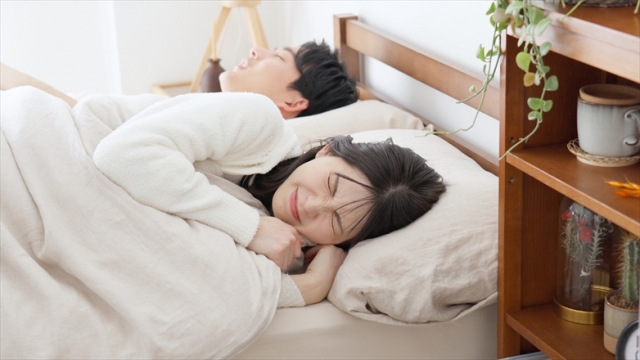
In Japan, where it’s common for family members to sleep in the same room, snoring can have a direct effect on a child’s sleep environment as well.
Parents often describe being caught completely off guard the day a young child — one who may not yet have the words to explain why — suddenly says, “I don’t want to sleep with Mom (or Dad) anymore.”
But for the child, this is often an instinctive reaction. Startled night after night by an unpleasant sound close to their ear and unable to sleep soundly, they try to create physical distance from the parent — which can also be a quiet emotional signal that something isn’t right.
The vibrating sound of snoring, along with the intermittent noise caused by breathing pauses, disrupts a child’s sleep cycle. When deep, non-REM sleep in particular is interrupted, growth hormone secretion can decrease, which is known to affect physical development. Nighttime sleep deprivation can also cause real harm to a child’s emotional and behavioral wellbeing during the day — emotional instability, reduced concentration, and weaker learning performance among them.
There are also reports suggesting that sleep disruption caused by snoring may contribute to sleep-related conditions such as bedwetting and night terrors.
When a child starts saying they “just don’t feel like” going to bed, it may actually be an unconscious rejection of the sound environment created by someone else’s snoring.
When a parent snores, children often come to accept it as simply “a normal thing that happens.” Rather than seeing snoring as a symptom that can be treated, they absorb the unspoken message that “everyone snores” — and when they eventually start snoring themselves, they’re more likely to leave it unaddressed as well.
This can become fertile ground for a kind of generational cycle, where chronic snoring and sleep disorders quietly repeat from parent to child.
When a child spends years observing patterns like “Dad snores every night” or “Mom keeps waking up because of it,” a household culture of simply enduring snoring can take root without anyone intending it.
Another risk worth taking seriously is a child coming to believe that “snoring is embarrassing.” Some children who were teased about snoring during a school trip or group overnight stay carry that experience as a lasting source of anxiety, developing an outsized fear around sleep environments, or an intense aversion to sleepovers and shared living situations later in life.
This can affect a child’s emotional independence and social development, which is exactly why early, thoughtful attention matters.
When it’s the child themselves who snores, an underlying medical cause — such as enlarged adenoids or tonsils — is often behind it, making an evaluation by an ENT specialist or pediatrician essential.
Snoring should never simply be written off as “just how someone’s body is.”
It’s closely tied to the whole family’s quality of life, and in a real sense, it functions like an “environmental pollutant” made of sound.
That’s exactly why, when someone in a household is struggling with snoring, the goal shouldn’t be quietly enduring it — it should be sharing it, talking about it, and addressing it together. Before complaining that it’s “too loud,” it helps to think about what might be going on for the person who snores — “maybe they’ve been tired lately,” “maybe it’s the weight gain” — and approach it with a bit of imagination. That mindset can be the first step toward protecting a family’s bond. And keeping the topic of snoring from becoming a household taboo — recognizing it as a treatable medical symptom rather than an embarrassment — is key to protecting the next generation’s health.
Beyond the home, snoring’s effects can extend into social and professional life as well.

This is a social issue serious enough to make the news from time to time.
People who are sleep-deprived because of another person’s snoring often experience strong daytime sleepiness and reduced concentration. This can lead to dozing off in meetings, more mistakes at work, and slower reaction times — sometimes read by others as “sloppiness” or “lack of motivation.”
Over time, this can lead to lower performance evaluations, delayed promotions, and even isolation in the workplace.
And that’s the milder end of the spectrum. In the most serious real-world cases, drivers of trains, buses, or trucks who fell asleep on the job due to sleep deprivation have caused major accidents that put many lives at risk.

As you’d expect, sleep is especially important during childhood. Sleep deprivation not only reduces concentration but can also interfere with learning itself.
What makes this a real problem isn’t a single bad night’s sleep — it’s when sleep disruption happens night after night, as a matter of routine.
Left unaddressed, this can affect a child’s future in real ways — including performance on entrance exams and other important tests — and in a very real sense, snoring within a household has the potential to derail someone’s life path.
In this article, we looked at how snoring can affect family life, relationships, and even work.
The first step is understanding that relationship friction caused by snoring stems from a treatable physical condition.
Friction around snoring — between spouses, family members, partners, or coworkers — can often be resolved with a combination of medical understanding and consideration for the other person.
Rather than dismissing it with “you’re too loud,” try: “I’m a little worried about you — would you consider seeing a doctor?”
Rather than blaming yourself with “I’m sorry,” try: “I want to improve this, so let’s look for a solution together.”
Conversations framed this way tend to be the first real step toward repairing the relationship and rebuilding trust.
If snoring is even a slight concern, it’s best to address it while it’s still mild — please don’t hesitate to see a medical provider early.



English Support Available
We provide medical services for international patients. Please check our English website for details on how to visit our clinic.
Supervising Physician

Kazuyuki Sugaya, Director of Ueno Snoring Clinic
After graduating from Fujita Health University School of Medicine in 2004, Dr. Sugaya began his career as an anesthesiologist at Toho University Omori Medical Center. He has since gained extensive clinical experience at municipal hospitals and private clinics nationwide, administering general anesthesia in over 20,000 cases. In 2020, he founded the "Tokyo Spine Clinic," and has served as the Director of Ueno Snoring Clinic since 2025.
Related Columns
By Appointment Only
Specialized Snoring Treatment in Ueno
Ueno Snoring Clinic
Insurance-covered home testing available.
Following a physician’s consultation and result explanation,
we support the improvement of snoring and sleep apnea with "Dual Deep Thermia"—a non-surgical laser treatment, if necessary.
3-min walk from Ueno Station. Please feel free to consult us.








いびきを最新治療で治す-表紙-1.png)