Ueno Snoring Clinic offers insurance-covered sleep testing and CPAP management, as well as self-pay laser treatment for snoring, tailored to your specific condition. If you’d like to find out which treatment fits you, please start with an initial consultation.
Details of the tests and treatments offered at Ueno Snoring Clinic can be found here
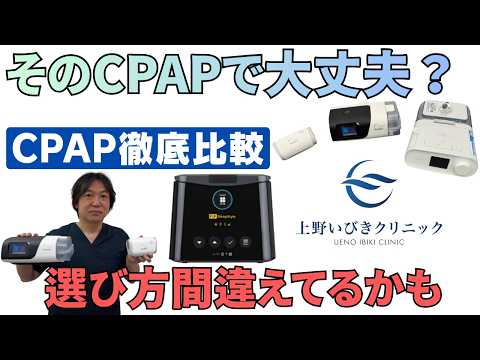
You’ll Want to Know This! A Complete Comparison of 5 CPAP Types — What Doctors Really Look For
Our doctor compares five different CPAP machines side by side and explains what actually matters when choosing one.
Watch the video
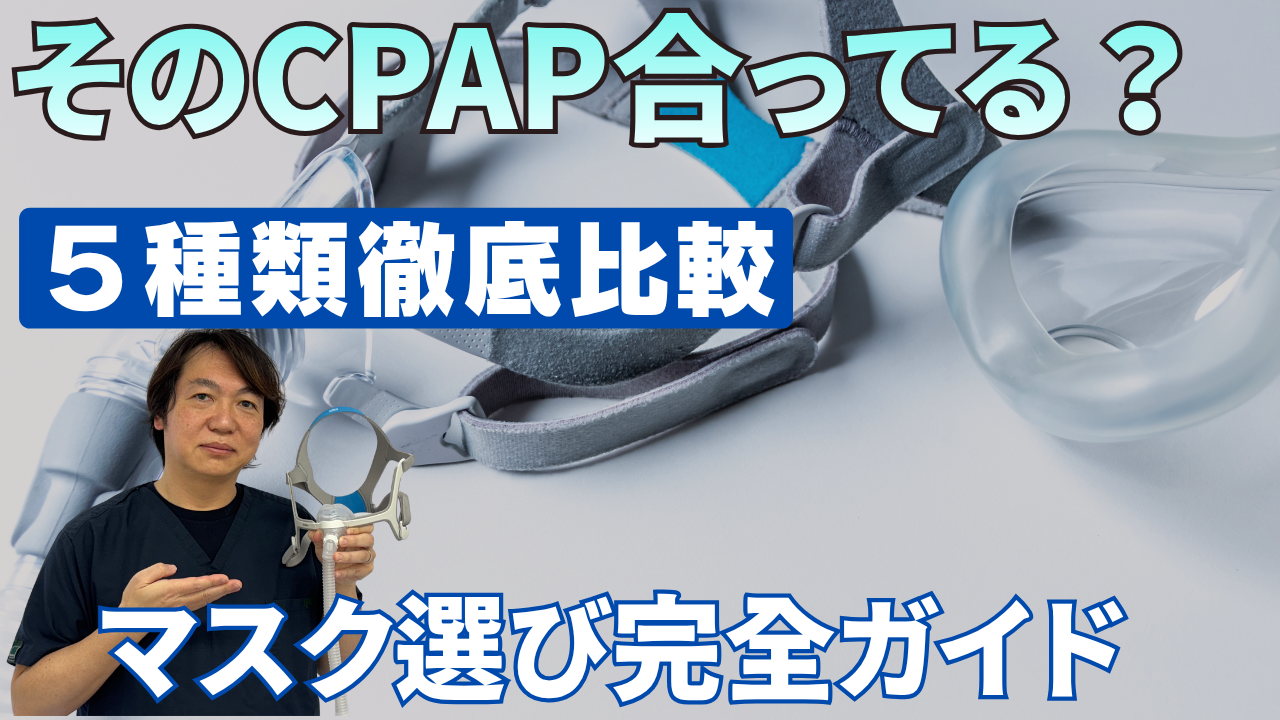
A Complete Comparison of CPAP Masks
We tried on and reviewed five different types of CPAP masks. 90% of CPAP comfort comes down to the mask.
Watch the video
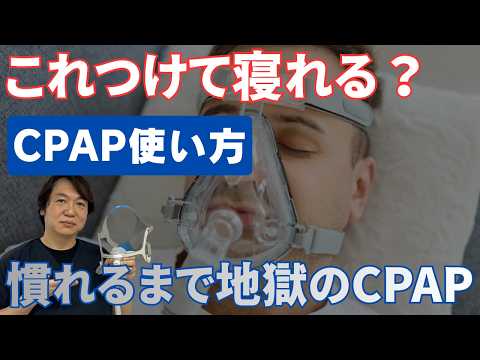
Do you have to use CPAP forever? A specialist explains how to use CPAP
A detailed explanation of how to use CPAP, with a real demonstration of what it feels like to wear the device.
Watch the video
Ueno Snoring Clinic was featured on Fuji TV’s “Live News It!” and on FNN Prime Online
Watch our clinic’s examination and explanation of sleep disorders, snoring, and sleep apnea.
Watch the video
Ueno Snoring Clinic was featured in an article on Nippon TV’s “news every.”
Please take a look as a starting point for thinking about getting evaluated for snoring, sleep apnea, or other sleep disorders.
Read the article
Reviewed by Our Director
Kazuyuki Sugaya
Director, Ueno Snoring Clinic / Anesthesiologist
Our director, with over 20,000 general anesthesia cases, focuses primarily on the diagnosis and treatment of snoring and sleep apnea, offering care tailored to each patient. [Insurance-Covered] Ueno Snoring Clinic
This article was reviewed by our Director, Kazuyuki Sugaya, and explains accurate medical information about the testing and treatment of snoring and sleep apnea syndrome (SAS) in clear, accessible terms.
🩺Comprehensive Snoring Treatment at Ueno Snoring Clinic
The causes of snoring range from the structure of the throat to body weight. Ueno Snoring Clinic doesn’t rely on a single treatment approach — we’re set up to recommend the best plan for each patient from a broad, evidence-based range of options.
Insurance-Covered: Thorough Testing and Ongoing Treatment
- Simplified and PSG testing: A precise analysis of your sleep condition
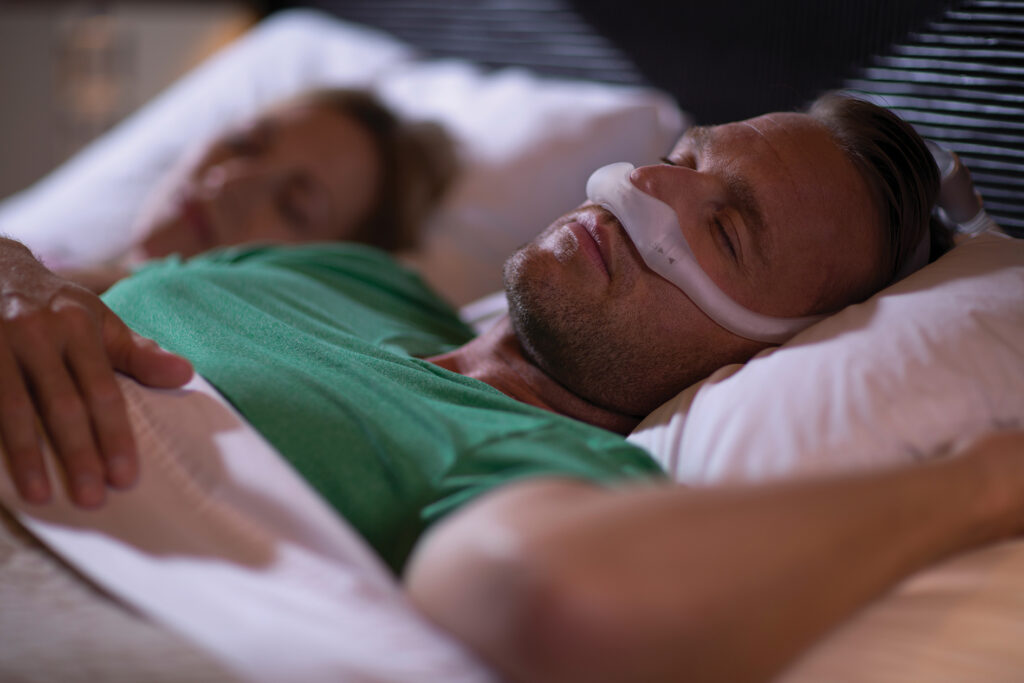
- CPAP treatment: The standard treatment for moderate-to-severe apnea
Self-Pay: Address the Root Cause, Short-Term Focus
- Snoring laser treatment: A non-surgical approach to the underlying cause
- Medically supervised weight loss: Improving airway space through weight reduction
*As a clinic specializing in snoring treatment, we work to resolve “snoring that won’t stop” through both insurance-covered and self-pay options.
New Book by Our Director
“Curing Snoring with the Latest Treatments”
A guide to the latest snoring treatments, written by an anesthesiologist who has overseen the sleep of more than 10,000 patients.
View on Amazon
Quick Answer
Sleep apnea syndrome falls into three types based on what’s actually causing the breathing to stop: obstructive (OSA), where the airway physically collapses and which accounts for more than 90% of cases; central (CSA), where the brain’s respiratory control center fails to send the signal to breathe, often linked to heart failure, stroke, certain medications, or high altitude; and mixed, which combines both patterns and can be especially difficult to diagnose and treat. Because treatment differs meaningfully by type — starting standard CPAP for what’s actually a central or mixed pattern can sometimes make things worse rather than better — getting an accurate diagnosis through proper sleep testing matters more than the label “sleep apnea” alone.
📋 What This Article Covers
- What distinguishes obstructive, central, and mixed sleep apnea
- The specific causes behind central sleep apnea
- Why mixed sleep apnea is especially difficult to diagnose
- Advanced respiratory support options for cases that don’t respond to standard CPAP
Understanding the 3 Types of Sleep Apnea Syndrome
Obstructive Sleep Apnea (OSA)
This is by far the most common type, accounting for more than 90% of cases. It happens when the upper airway — the passage air travels through — particularly the pharynx at the back of the throat, physically collapses during sleep, causing breathing to stop again and again. This pattern shows up in the vast majority of sleep apnea cases, with more than 90% classified as obstructive.
A defining feature is that the person is still trying to breathe, but no air actually gets through. The chest and abdomen keep moving — meaning the physical effort to breathe continues — even though the airway itself is blocked and oxygen can’t get in.
As a result, blood oxygen levels drop, and the brain senses the effective suffocation and forces a brief awakening in order to restart breathing. This “waking up” is often something the person has no memory of at all — in reality, apneas lasting anywhere from a few seconds to over ten seconds can repeat dozens, sometimes over a hundred times, in a single night. Without realizing it, the person ends up in a state where they should be asleep, but aren’t actually getting any real rest.
Breathing stops because the airway at the back of the throat — the pharynx — becomes physically blocked.
A simple analogy makes this easier to picture: imagine trying to drink through a straw that’s been pinched flat between your fingers — no matter how hard you suck, no air or liquid gets through. In OSA, the airway acts like that pinched straw, physically collapsed shut.
Making things worse, when this cycle repeats over and over, the entire rhythm of sleep gets fragmented — the body spends the whole night cycling through suffocation, waking, breathing resuming, and apnea again.
In a very real sense, it’s a quiet battle being fought where no one else can see it.
Central Sleep Apnea (CSA)
This type occurs when a malfunction in the brain’s respiratory control center causes breathing to stop. It’s more common in people with a history of heart failure or stroke. Unlike OSA, the airway isn’t blocked at all — breathing stops simply because the brain fails to send the signal to breathe.
Specifically, the neural activity in the brainstem and medulla that controls the breathing muscles temporarily halts, so no signal reaches the chest or diaphragm telling them to move.
In other words, unlike OSA — where the throat is physically blocked and air can’t get through — CSA involves no physical airway obstruction whatsoever. Breathing itself simply stops, due to a more central, neurological cause.
There are several known causes of CSA, broadly grouped as follows.
1. Heart Failure and Other Cardiovascular Conditions
In patients with heart failure, where the heart’s pumping function is reduced, a mismatch develops between blood flow and the respiratory control center, destabilizing the mechanism that regulates breathing timing and triggering CSA. This type of CSA often shows a pattern called Cheyne-Stokes breathing, where breaths alternate between shallow and deep — and it can also be a sign of worsening heart failure overnight.
2. Stroke and Cerebrovascular Disease
Damage to the brainstem or medulla can impair the nerves that control breathing itself, sometimes resulting in CSA.
3. Medication Effects
Long-term use of opioid pain medications in particular — such as morphine or fentanyl — is known to suppress the respiratory control center and can trigger CSA.
4. Sleeping at High Altitude
In low-oxygen environments such as high mountain regions, the respiratory control center can become either overstimulated or suppressed, leading to periodic fluctuations in breathing — a form of central apnea sometimes called “high-altitude CSA.” This is usually temporary.
It’s not an exaggeration to say this is a state where, overnight, the body essentially “forgets” to even try to breathe. Since the respiratory muscles aren’t working at all and there’s no airflow whatsoever, this type of apnea is often silent — with no snoring audible to people nearby — which makes it especially easy to miss.
Mixed Sleep Apnea
This type involves a combination of both OSA and CSA. A defining feature of mixed apnea is that it starts as a quiet apnea, and then the body gradually begins struggling to resume breathing.
Watching a patient with mixed apnea sleep, a distinct pattern often emerges: it begins in complete silence — not even snoring — and then breathing sounds gradually return, often accompanied by louder snoring and body movements as the person struggles to breathe.
This “silence → struggle → snoring resumes” sequence is the classic signature of mixed apnea.
Diagnosing mixed apnea is only possible through a thorough, overnight sleep study (polysomnography, or PSG). By using sensors to track respiratory effort — the movement of the chest and abdomen — clinicians can determine whether that effort is present, pointing to an obstructive component, or absent, pointing to a central one.
In particular, if a patient reports being unable to sleep, or feeling “off,” after starting CPAP therapy, mixed apnea should be strongly suspected. That’s because treatment aimed at OSA can sometimes unmask an underlying central component, making overall treatment less effective — or even counterproductive.
For these reasons, mixed sleep apnea can be genuinely difficult to diagnose.
Treating Mixed Apnea
The key lies in re-selecting the right form of respiratory support.
Simple CPAP therapy is often not enough for mixed sleep apnea. In particular, when the central component is significant, more advanced respiratory support options are considered, such as the following.
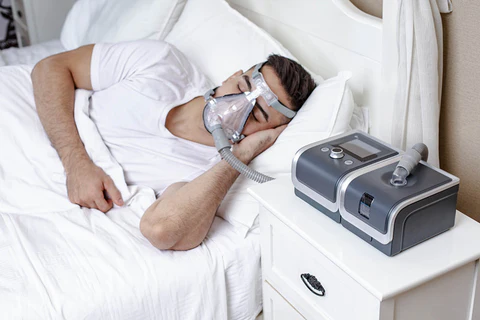
ASV (Adaptive Servo-Ventilation)
ASV is a state-of-the-art ventilation device that analyzes a patient’s breathing pattern in real time and automatically adjusts pressure and ventilation as needed. A major advantage is that it can address both central (CSA) and obstructive (OSA) sleep apnea. That said, it can be contraindicated in patients with certain forms of heart failure, so a careful evaluation of cardiac function is needed before starting it.
Bilevel NIPPV (Non-Invasive Positive Pressure Ventilation)
Bilevel NIPPV supports breathing by applying different pressure levels during inhalation and exhalation. In mixed apnea cases where the obstructive component is more prominent, it can help by assisting inhalation while reducing the effort needed to exhale. It tends to work well for patients whose mixed apnea leans more toward the OSA side.
Why Mixed Apnea Is Hard to Treat, and the Long-Term Approach
Mixed sleep apnea comes with three particular challenges:
- It’s easy to miss
- It’s easy to misdiagnose as a different type
- Standard treatments often don’t fit well
Because of this, diagnosis and ongoing monitoring by a specialist experienced in sleep medicine are essential.
It’s also important to maintain both device tolerability and quality of life. For each patient, the type of device, pressure settings, and mask shape need to be carefully adjusted and optimized over the long term.
Frequently Asked Questions
Q. Which type of sleep apnea is most common?
A. Obstructive sleep apnea (OSA) is by far the most common, accounting for more than 90% of all cases. It happens when the airway at the back of the throat physically collapses during sleep, blocking airflow even though the person is still trying to breathe.
Q. Can breathing stop during sleep even without any airway blockage?
A. Yes — this is central sleep apnea (CSA). It happens when the brain’s respiratory control center fails to send the signal to breathe, even though the airway itself is completely open. It’s more common in people with a history of heart failure, stroke, certain medication use, or exposure to high altitude.
Q. Why might CPAP not work well for someone with sleep apnea?
A. Standard CPAP is designed for obstructive sleep apnea. If a patient actually has central or mixed sleep apnea, CPAP alone may not resolve — or may even worsen — their symptoms. Feeling unable to sleep or feeling “off” after starting CPAP is a signal worth bringing back to your doctor, since a central component may be involved.
Q. How is mixed sleep apnea diagnosed and treated?
A. Mixed sleep apnea can only be properly diagnosed through an overnight sleep study (PSG) that tracks respiratory effort alongside airflow. Treatment often requires more advanced respiratory support than standard CPAP, such as ASV or Bilevel NIPPV, tailored to the specific balance of obstructive and central components involved.