







Told You Stop Breathing in Your Sleep? A Guide to Insurance-Covered Sleep Apnea Testing in Japan
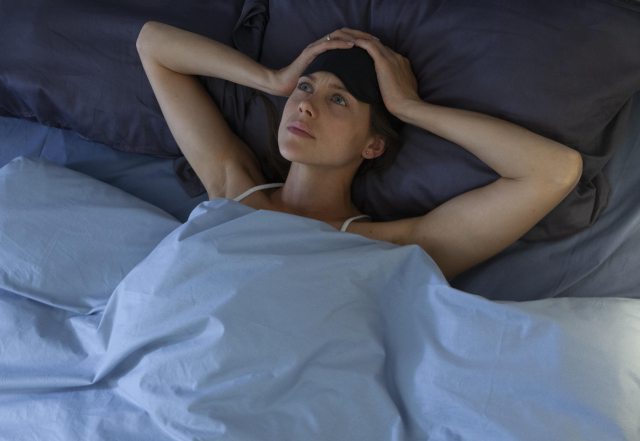
Do you wake up multiple times during the night? Does your sleep feel shallow? Do you wake up in the morning still not feeling rested?
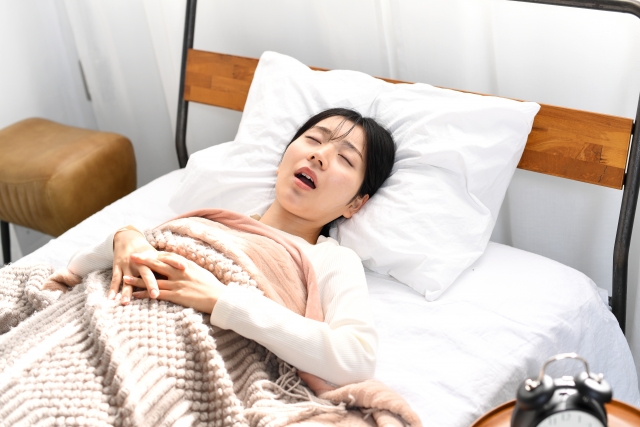
Most people assume the cause is simply age, stress, insomnia, or needing frequent bathroom trips. But in reality, there are cases where snoring or sleep apnea syndrome (SAS) is repeatedly forcing the brain to wake up during sleep.
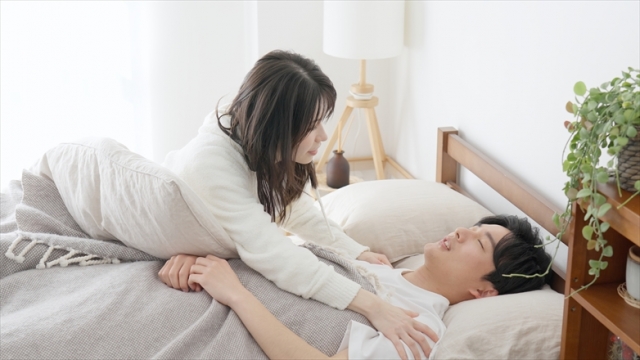
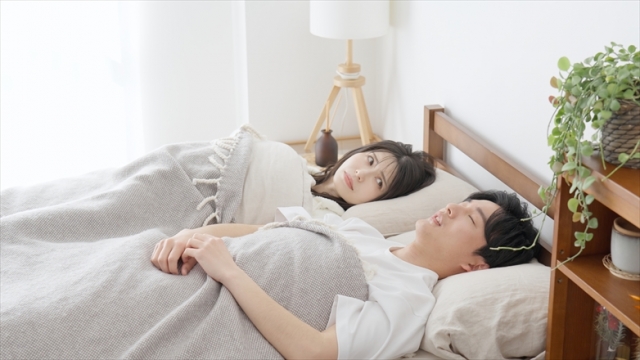
This is especially worth considering if family members have pointed out your snoring, if you experience strong daytime sleepiness, if you wake up tired every morning, or if you’ve been told you have high blood pressure — these can be signs of a breathing problem during sleep, not simple insomnia.
Ueno Snoring Clinic offers a range of options tailored to each patient’s condition, including insurance-covered sleep testing and CPAP management, as well as self-pay laser treatment for snoring. If you’d like to find out which treatment is right for you, please book an initial consultation.
Details of the tests and treatments offered at Ueno Snoring Clinic can be found here
Reviewed by Our Director
Reviewed by Our Director
Kazuyuki Sugaya
Director / Anesthesiologist, Ueno Snoring Clinic
With more than 20,000 general anesthesia cases, our director provides care centered on the diagnosis and treatment of snoring and sleep apnea, tailored to each patient. [Insurance-Covered] Ueno Snoring Clinic
This article has been medically reviewed by Director Kazuyuki Sugaya and explains accurate medical information about testing and treatment for snoring and sleep apnea syndrome (SAS) in plain language.
🩺Comprehensive Snoring Treatment at Ueno Snoring Clinic
The causes of snoring range from throat structure to obesity. Ueno Snoring Clinic is not limited to a single treatment method — we offer a wide range of evidence-based options so we can propose the plan best suited to each patient.
Thorough Testing & Ongoing Treatment (Insurance-Covered)
- Home sleep test / PSG (polysomnography): Precise analysis of your sleep condition
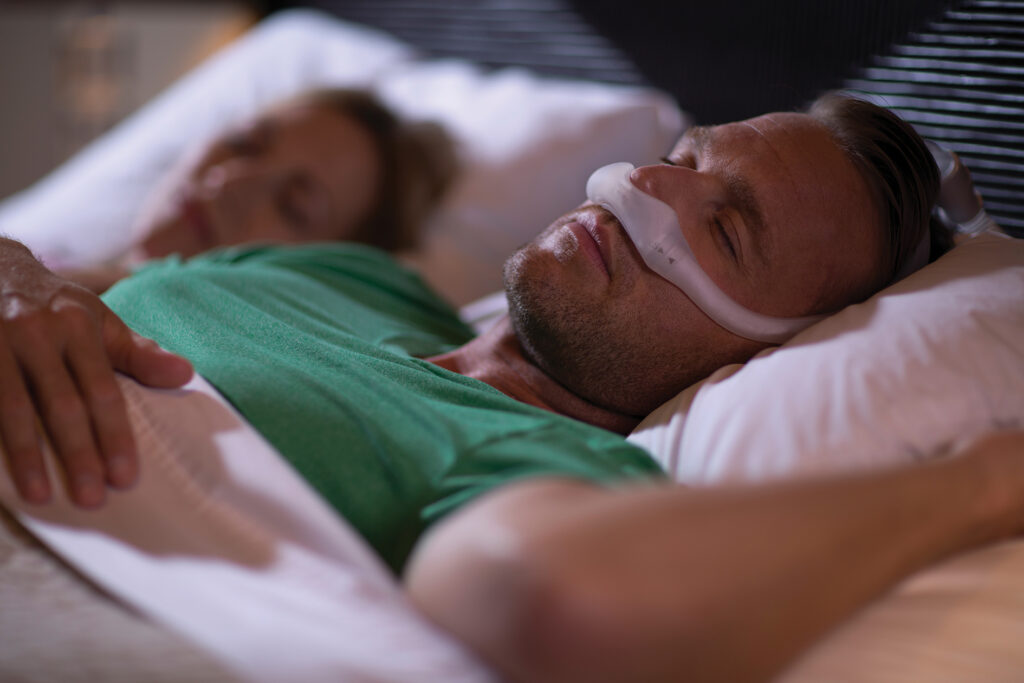
- CPAP therapy: The standard treatment for moderate-to-severe apnea
Self-Pay Treatment for Root-Cause, Short-Term Results
- Latest laser snoring treatment: Incision-free, root-cause treatment
- Medical weight-loss support: Physically opening the airway through weight reduction
*As a clinic specializing in snoring treatment, we are committed to resolving “snoring that won’t stop” through both insurance-covered and self-pay options.
Quick Answer
One common cause of waking up repeatedly during the night is “forced brain arousal” caused by sleep apnea syndrome. When breathing stops during sleep, the body lightens sleep to avoid oxygen deprivation. As a result, sleep becomes fragmented without the person realizing it, leading to mornings that never feel truly restful.
What This Article Covers
- Main causes of waking up repeatedly at night
- The relationship between snoring, sleep apnea syndrome, and nighttime waking
- The difference between insomnia and sleep apnea syndrome
- Signs that suggest you should get tested
- Testing and treatment available at Ueno Snoring Clinic
Want to Talk to Someone First?
If waking up during the night is combined with snoring, daytime sleepiness, or morning fatigue, you may be a candidate for sleep apnea testing.
What Does It Mean to Wake Up Repeatedly at Night?
Waking up multiple times during the night is medically known as nocturnal awakening (or sleep fragmentation).
Sometimes you fall right back asleep after waking; other times you can’t get back to sleep at all. People often describe this as “my sleep is shallow,” “I can’t sleep deeply,” or “I don’t feel like I actually slept.”
What’s important here is that the cause of waking up at night isn’t always purely psychological insomnia. If your breathing is irregular during sleep, your body may be sensing danger and repeatedly lightening your sleep as a protective response.
Main Causes of Waking Up Repeatedly at Night
There are several distinct patterns that can cause nighttime waking.
| Cause | Characteristics | How to Tell |
|---|---|---|
| Stress / anxiety | Racing thoughts make sleep shallow | Often also accompanied by trouble falling asleep |
| Aging | Less deep sleep, making waking easier | Can also increase early-morning waking |
| Alcohol | Falling asleep can be easy, but the second half of sleep becomes shallow | Snoring often becomes noticeably worse on drinking nights |
| Nighttime urination (nocturia) | Waking up repeatedly for the bathroom | The waking is sometimes actually caused by apnea first |
| Sleep apnea syndrome | Breathing pauses repeatedly force the brain awake | Often accompanied by snoring, daytime sleepiness, and morning fatigue |
Of these, the one that’s most commonly overlooked is nighttime waking caused by sleep apnea syndrome. The person only perceives “I woke up,” but in reality, their brain may be repeatedly reacting to episodes of stopped breathing.
How Sleep Apnea Syndrome Causes Nighttime Waking
Sleep apnea syndrome is a condition in which the airway at the back of the throat repeatedly narrows or closes during sleep, causing breathing to stop.
When breathing stops, blood oxygen levels drop. The brain then determines that “continuing to sleep this deeply is dangerous” and temporarily pulls the body back into lighter sleep. This is the arousal response caused by apnea.
The Sequence of Sleep Apnea-Related Arousal
- Throat muscles relax as you fall asleep
- The airway narrows, and snoring begins
- As it narrows further, breathing stops
- Oxygen levels drop, and the brain senses danger
- The brain lightens sleep to restart breathing
- This cycle repeats many times over the course of a night
Because these arousals are extremely brief, they often leave no memory at all. As a result, the person experiences it the next morning as “I feel like I woke up a lot last night,” “I’m tired even though I slept,” or “I never feel truly rested.”
Snoring Is a Sign That Your Airway Is Narrow
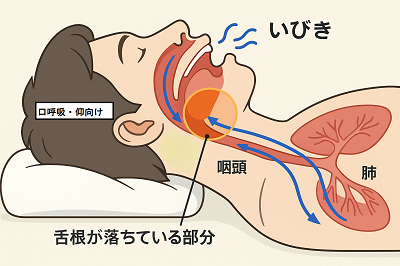
Snoring isn’t just a matter of sound. It’s the sound produced when the airway — the passage air travels through — narrows, and passing air causes the mucous membrane of the throat to vibrate.
In other words, people who snore heavily may have a narrowed airway during sleep. When the airway narrows further and becomes completely blocked, it leads to sleep apnea syndrome.
Note: Even if you think “I don’t snore,” family members may notice it while you’re unaware. There are also types of sleep apnea where snoring isn’t particularly prominent. If you experience daytime sleepiness or morning fatigue, it’s important not to rely on the presence or absence of snoring alone.
If you’re using a smartphone app to record your snoring, be aware that while these apps are useful for spotting general trends, they can’t accurately determine whether apnea or oxygen drops are actually occurring.
The Difference Between Insomnia and Sleep Apnea Syndrome
Many people assume “maybe I have insomnia” when they wake up repeatedly at night. However, insomnia and sleep apnea syndrome differ both in cause and in how they should be addressed.
| Comparison | Insomnia | Sleep Apnea Syndrome |
|---|---|---|
| Main cause | Stress, anxiety, disrupted routine, environment, etc. | Airway narrowing, breathing pauses, oxygen drops |
| Reason for waking | Difficulty maintaining sleep | Breathing stops, forcing the brain awake |
| Snoring | Often not particularly noticeable | Often accompanied by loud snoring |
| Morning condition | Strong sense of “I couldn’t sleep” | Tired despite sleeping, heavy-feeling head |
| Daytime sleepiness | Can occur, but not always | Often severe |
| Needed approach | Sleep habit changes, psychological support, medication, etc. | Sleep testing, CPAP, laser treatment, etc. |
Even if sleep medication helps someone fall asleep, if sleep apnea is the underlying cause, the actual breathing pauses may still remain. In other words, it’s important not to overlook cases where the real issue isn’t “I can’t sleep” but rather “my sleep is being broken by stopped breathing.”
Self-Check: Consider Testing If These Apply to You
If several of the following apply to you, sleep apnea syndrome may be involved.
If 2 or more of these apply to you — especially if you have “snoring,” “daytime sleepiness,” and “waking up repeatedly at night” together — we recommend considering testing for sleep apnea.
What Happens If Sleep Apnea Is Left Untreated?
Sleep apnea syndrome isn’t simply a matter of “shallow sleep” or “loud snoring.”
Repeated drops in oxygen throughout the night place strain on the brain, heart, and blood vessels. This can contribute to the following:
- Strong daytime sleepiness
- Reduced concentration
- Sleepiness at work or while driving
- High blood pressure
- Strain on the heart and blood vessels
- Morning headaches and fatigue
- Frequent nighttime urination
- Sleep disruption for your partner
Even if it feels like “just waking up at night,” if sleep apnea is behind it, it’s worth confirming sooner rather than later.
When You Should Get Tested
We recommend considering a sleep apnea test if any of the following apply to you:
- You continue to wake up repeatedly during the night
- Family members have pointed out your snoring or breathing pauses
- You’re tired every morning despite what should be enough sleep
- Daytime sleepiness is significant enough to interfere with work or driving
- Your blood pressure is high, or doesn’t come down easily even with medication
- You experience frequent nighttime urination, waking multiple times to use the bathroom
- A smartphone app has flagged your snoring as severe
Sleep apnea testing includes a home sleep test that can be done at home, as well as a more detailed PSG test.
What Ueno Snoring Clinic Can Do for You
Ueno Snoring Clinic provides comprehensive care for snoring and sleep apnea syndrome — from testing through treatment.
With just the symptom of “waking up repeatedly at night,” it can be genuinely difficult to tell on your own whether the cause is insomnia or sleep apnea. That’s exactly why an objective evaluation through consultation and testing matters.
Ready to Get to the Bottom of Why You’re Waking Up So Often?
If you have snoring, daytime sleepiness, or morning fatigue, you may be a candidate for sleep apnea testing. Please reach out to us first.
Frequently Asked Questions
Conclusion
- The cause of waking up repeatedly at night isn’t always insomnia
- In sleep apnea syndrome, stopped breathing forces the brain awake repeatedly
- Even brief arousals you’re not aware of can significantly reduce sleep quality
- Pay attention if you have snoring, daytime sleepiness, morning fatigue, high blood pressure, or nighttime urination
- Sleep apnea can be confirmed through testing
- Once the cause is identified, options such as CPAP or laser treatment can be considered based on your condition
It’s not uncommon for nighttime waking that someone attributed to “just my age” or “just stress” to actually turn out to be caused by a breathing problem during sleep.
If you wake up repeatedly at night, have been told you snore, don’t feel refreshed in the morning, or experience daytime sleepiness — it’s worth confirming with a sleep apnea test.
Reach Out to Ueno Snoring Clinic
If you wake up repeatedly at night, or have been told you snore or stop breathing, insurance-covered testing is available — please feel free to consult with us.
Ueno Snoring Clinic
Testing and treatment for snoring and sleep apnea syndrome
https://mdf.or.jp/ibiki-clinic/en/