Ueno Snoring Clinic offers sleep apnea testing (an at-home simplified test and insurance-covered PSG) and insurance-covered CPAP treatment and management. If you have surgery coming up and are worried about snoring or pauses in your breathing, please talk to us.
Details of the tests and treatments offered at Ueno Snoring Clinic can be found here
Important: Snoring and Sleep Apnea Treatment Requires a Sleep Test
Some clinics that offer only self-pay care, and some cosmetic clinics, may not perform sleep testing. Before starting treatment, check whether the clinic performs a sleep test, or has a system for referring you to a medical institution where you can receive the necessary tests.
If sleep apnea is hidden behind your snoring and treatment begins without testing, it may be missed.
▶ Learn more about snoring and sleep apnea testing
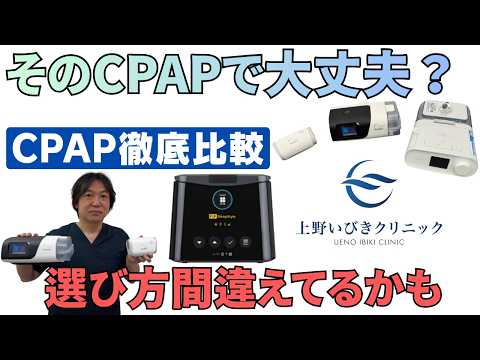
You’ll Want to Know This! A Complete Comparison of 5 CPAP Types — What Doctors Really Look For
Our doctor compares five different CPAP machines side by side and explains what actually matters when choosing one.
Watch the video
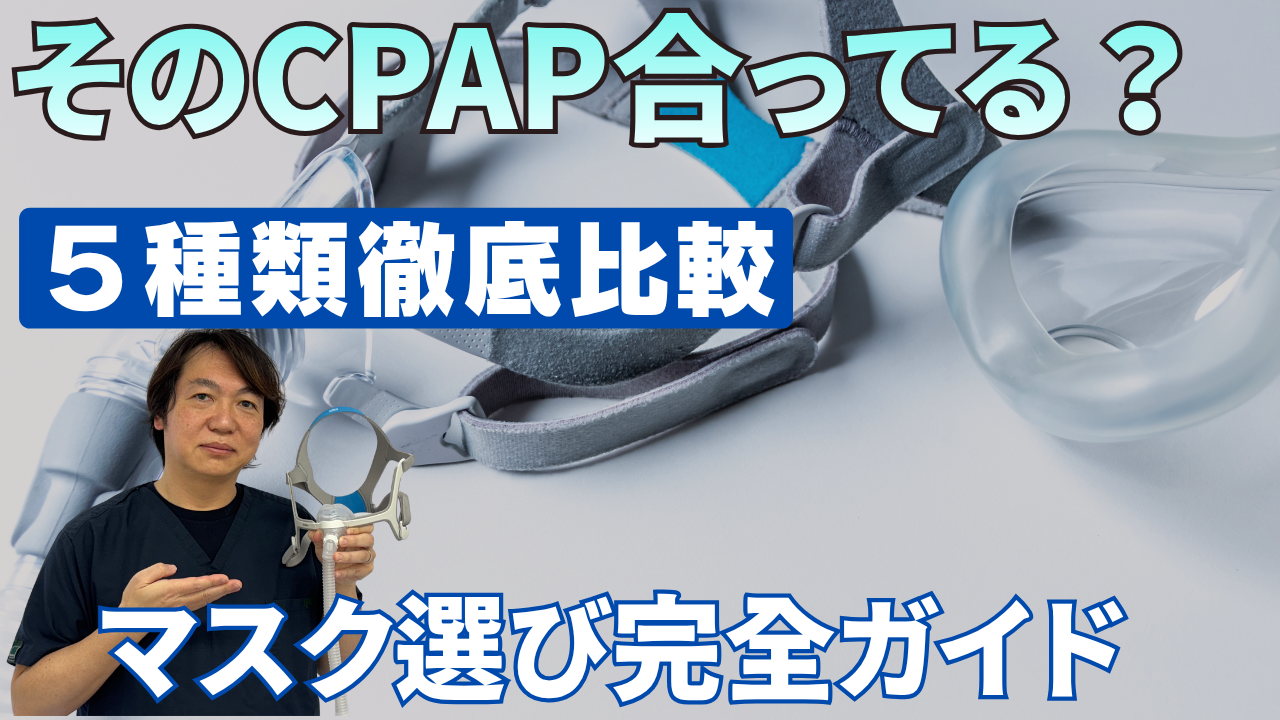
A Complete Comparison of CPAP Masks
We tried on and reviewed five different types of CPAP masks. 90% of CPAP comfort comes down to the mask.
Watch the video
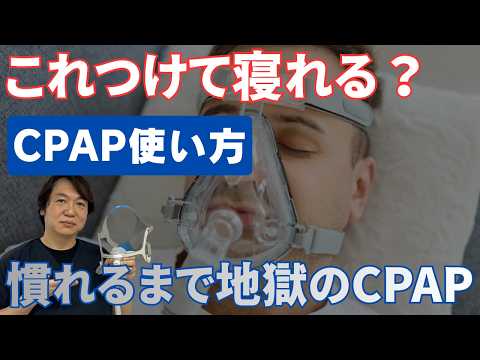
Do you have to use CPAP forever? A specialist explains how to use CPAP
A detailed explanation of how to use CPAP, with a real demonstration of what it feels like to wear the device.
Watch the video
Ueno Snoring Clinic was featured on Fuji TV’s “Live News It!” and on FNN Prime Online
Watch our clinic’s examination and explanation of sleep disorders, snoring, and sleep apnea.
Watch the video
Ueno Snoring Clinic was featured in an article on Nippon TV’s “news every.”
Please take a look as a starting point for thinking about getting evaluated for snoring, sleep apnea, or other sleep disorders.
Read the article
Reviewed by Our Director
Kazuyuki Sugaya
Director, Ueno Snoring Clinic / Anesthesiologist
Our director, with over 20,000 general anesthesia cases, focuses primarily on the diagnosis and treatment of snoring and sleep apnea, offering care tailored to each patient. [Insurance-Covered] Ueno Snoring Clinic
In this article, our Director, Kazuyuki Sugaya, who is also an anesthesiologist, explains why you should tell your care team about sleep apnea or snoring before general anesthesia, and the breathing risks after surgery, based on guidelines and published studies. Medically reviewed November 2026.
🩺Comprehensive Snoring Treatment at Ueno Snoring Clinic
For people with suspected snoring or sleep apnea, Ueno Snoring Clinic provides simplified testing and PSG at home and suggests a treatment plan based on the results. Decisions about the timing of surgery and the anesthetic method are made by the surgical team and anesthesiologist at the hospital performing the operation.
Insurance-Covered: Thorough Testing and Ongoing Treatment
- Simplified testing: Home screening for sleep apnea
- PSG testing: A detailed sleep study including brain waves, done at home
- CPAP treatment: The standard treatment for apnea that meets insurance criteria
Self-Pay: Address the Root Cause, Short-Term Focus
- Snoring laser treatment: For people whose testing confirms simple snoring
- Medically supervised weight loss: An option when weight gain is a contributing factor
*Whether a treatment is appropriate, and what it can achieve, differs from one person to the next, so an examination comes first.
Our Director’s book, “Curing Snoring with the Latest Treatments” (an Amazon Japan bestseller — #1 in General Medicine, #1 in Clinical Internal Medicine, #2 in Family Health & Wellness), explains snoring and sleep apnea from an anesthesiologist’s point of view.
New Book by Our Director
“Curing Snoring with the Latest Treatments”
A guide to the latest snoring treatments, written by an anesthesiologist who has overseen the sleep of more than 10,000 patients.
View on Amazon
Quick Answer
If you have been diagnosed with sleep apnea, or have been told you snore or stop breathing in your sleep, always tell your anesthesiologist and surgeon before general anesthesia. Because the airway is secured and breathing is managed during the operation, sleep-type apnea does not normally continue during surgery, but induction (mask ventilation and intubation) and extubation need extra care. In addition, apnea tends to worsen after surgery: one study found the number of apneas and hypopneas rose around the third night after surgery. Strong painkillers (opioids), sleeping pills, changes in sleep, and lying on your back all add up. If you speak up, your team can plan the anesthetic, choose pain relief, arrange oxygen monitoring after surgery, and discuss bringing your CPAP. If you use CPAP, check whether you can bring your machine and mask.
📋 What This Article Covers
- Should I tell my anesthesiologist that I snore or have sleep apnea?
- Why does it matter? The stages of general anesthesia and where the risks lie
- What do research and guidelines show?
- Why does sleep apnea get worse after surgery?
- What should I tell my anesthesiologist, and how should I prepare?
- What if I’m undiagnosed but have been told I snore?
- Should I get a sleep test before surgery?
Should I Tell My Anesthesiologist That I Snore or Have Sleep Apnea?
Short answer: Yes. Tell your anesthesiologist and surgeon if you have sleep apnea, use CPAP, or have been told you snore loudly or stop breathing in your sleep, even if you have never been diagnosed.

If any of the following apply, be sure to mention it at your pre-operative assessment or anesthesia consultation:
- You have been diagnosed with sleep apnea (whether or not you use CPAP)
- Family or a partner has said you snore loudly or stop breathing in your sleep
- You have strong daytime sleepiness, morning headaches, or never feel well rested
- A sleep apnea test was recommended, but you haven’t had one
- After a previous general anesthetic or sedation, you were told your breathing became shallow or you were slow to wake up
People often leave this out, thinking it has nothing to do with the operation, but it is important information for the anesthesiologist. It shapes the preparation for anesthesia, management during surgery, and plans for pain relief and monitoring afterward. Even without a diagnosis, “I’ve been told I snore” is enough to prompt a pre-operative assessment.
Why Does It Matter? The Stages of General Anesthesia and Where the Risks Lie
Short answer: The airway is protected during the operation itself, but the moments of going to sleep, waking up, and the first few nights afterward are when sleep apnea can cause airway and breathing problems.
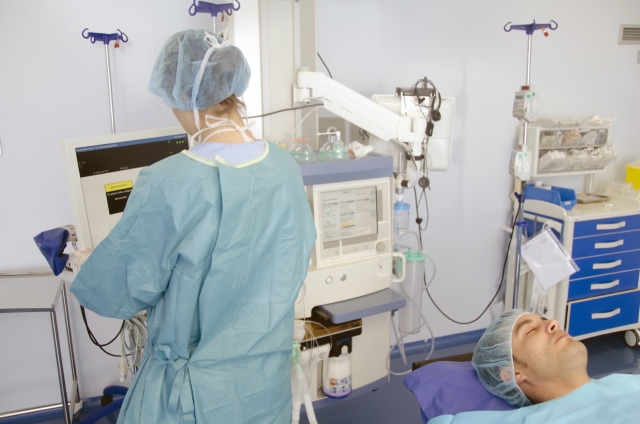
In general anesthesia, anesthetic drugs and muscle relaxants put you to sleep and weaken your own breathing, so the anesthesiologist secures the airway and ventilates you as needed. This applies to everyone, with or without sleep apnea. On top of that, here are the stages where extra care is needed for people with sleep apnea:
| Stage |
Why extra care is needed with sleep apnea |
Typical response (examples) |
| Induction (going to sleep) |
Muscles around the throat relax and the airway closes easily. Ventilating with a mask over the nose and mouth (bag-mask ventilation) can become difficult |
Preparing for a difficult airway: having equipment and extra staff ready |
| During surgery (airway secured) |
A breathing tube or similar device keeps the airway open, so sleep-type apnea does not normally continue. However, people with sleep apnea are thought to be more sensitive to anesthetics and painkillers |
Choosing drugs and doses with breathing after surgery in mind |
| Extubation and waking up |
Once the breathing tube is removed, the airway can collapse again. Lingering drug effects can make breathing shallow |
Confirming the muscle relaxant has fully worn off and extubating only when fully awake; positioning |
| Recovery room |
Effects of anesthesia linger and you drift off easily, so snoring and apneas are likely |
Oxygen saturation monitoring, checking responsiveness, and observation |
| Ward (nights after surgery) |
Painkillers, sleeping pills, and disrupted sleep can increase apneas during sleep |
Monitoring, adjusting pain relief, using CPAP, and positioning |
So while problems are unlikely during the operation itself, induction, extubation, and the post-operative period are where advance information and preparation directly improve safety.
What Do Research and Guidelines Show?
Short answer: Studies link snoring and sleep apnea with difficult mask ventilation and show apneas increasing after surgery; the American Society of Anesthesiologists recommends screening, careful drug choice, monitoring, and continuing CPAP.
| Source |
Design |
Findings |
Points to note |
| Kheterpal et al. (Anesthesiology, 2006) |
Prospective observational study of 22,660 attempts at mask ventilation during anesthesia |
Difficult mask ventilation occurred in 1.4% and impossible mask ventilation in 0.16%. Snoring was among the independent predictors of difficulty, and sleep apnea was a predictor of difficult mask ventilation combined with difficult intubation |
In most cases, difficulty is manageable by the anesthesiologist. Single-center study |
| Roggenbach et al. (Patient Saf Surg, 2014) |
37 inpatients without a sleep apnea diagnosis having major surgery; breathing recorded by a portable device before and on nights after surgery |
Median AHI rose from 6.0 before surgery to 16.9 on the third night, and stayed significantly higher than before surgery on the third and later nights |
Small numbers; single-center study |
| Chung et al. (CHEST, 2017) |
Randomized trial of 123 people with previously undiagnosed sleep apnea, with or without oxygen for 3 nights after surgery |
Median AHI after surgery was 8.0 with oxygen versus 15.6 without. However, about 11% of patients had significant carbon dioxide retention, nearly all of them in the oxygen group |
Oxygen alone isn’t a guarantee of safety; monitoring matters |
| American Society of Anesthesiologists (ASA) practice guidelines (2014 update) |
Recommendations for the perioperative care of patients with obstructive sleep apnea |
Covers pre-operative assessment and preparation, choice of anesthetic and drugs, monitoring and pain relief after surgery, and continuing CPAP (see the table below) |
A US guideline; practice in Japan varies by hospital |
The main points of the ASA guideline are:
| Timing |
Key recommendations (summary) |
| Before surgery |
Start the assessment early if sleep apnea is suspected. Consider starting CPAP before surgery where appropriate. Prepare for a difficult airway. Decide in advance whether surgery should be inpatient or day surgery |
| During surgery |
Choose drugs with the greater sensitivity to sedatives, opioids, and inhaled anesthetics in mind. For surface procedures, consider local anesthesia or nerve blocks. In some situations, general anesthesia with a secured airway is preferable to deep sedation. Extubate only when the patient is fully awake |
| After surgery |
Reduce reliance on systemic opioid painkillers. Avoid lying flat on the back. People who use CPAP at home should continue it after surgery (their own device may be used). Monitor oxygen saturation continuously. Do not discharge until the risk of breathing depression has passed |
These recommendations can only be built into your plan if your team knows about your snoring or sleep apnea. For a closer look at how sedatives and the airway interact, see Michael Jackson, Propofol, and Sleep Apnea: An Anesthesiologist Explains.
Why Does Sleep Apnea Get Worse After Surgery?
Short answer: Several factors overlap after surgery: opioid painkillers and sleeping pills, lingering anesthetic effects, rebound deep sleep a few days later, and lying on your back.
| Factor |
Details |
| Painkillers (opioids) |
Strong painkillers weaken breathing and increase drowsiness, which may increase apneas during sleep |
| Sleeping pills and sedatives |
They relax muscles and blunt the drive to breathe, making the airway easier to close |
| Lingering anesthetics and muscle relaxants |
Throat muscles can remain weaker than normal even after waking up |
| Changes in sleep |
Sleep is light and broken right after surgery; a few days later, deep sleep and REM sleep return, and apneas can increase at that point (in research, around the third night) |
| Lying on your back |
On your back, the tongue and soft tissues fall back and the airway closes more easily |
| Pain, IV fluids, and fluid shifts |
Pain makes breathing shallow, and fluid-related swelling may also affect the tissues around the throat |
| Effects of oxygen therapy |
Oxygen keeps blood oxygen up, but it can mask apneas and make it easier to miss carbon dioxide building up |
Not everyone’s apnea worsens after surgery; it depends on the size of the operation, the drugs used, and how severe the sleep apnea is. But because worsening around the third night has been reported, monitoring in hospital and care at home after discharge matter for the first few days.
Warning signs after surgery
• Loud snoring with pauses in breathing or choking during sleep • Being hard to wake, or persistent heavy drowsiness • Bluish lips or poor color, or complaints of breathlessness. If you notice any of these, tell the medical staff immediately (after discharge, contact a medical institution or emergency services). Ask family members to keep an eye on your breathing during sleep for the first few nights after surgery.
What Should I Tell My Anesthesiologist, and How Should I Prepare?
Short answer: Share your diagnosis and test results, your CPAP details, snoring and daytime symptoms, medicines and alcohol, past anesthesia experiences, and other conditions. If you use CPAP, confirm in advance whether you can bring it.

| What to tell them |
Examples |
| Diagnosis and severity |
Whether you have been diagnosed with sleep apnea; your AHI and severity (bring a copy of the test report if you have one) |
| CPAP use |
Whether you use it, the model, mask type, pressure setting, and how often. Ask whether you can bring CPAP into hospital |
| Snoring or witnessed apneas |
Since when and how often; what your family has noticed |
| Daytime symptoms |
Strong sleepiness, morning headaches, unrefreshing sleep, drowsiness while driving |
| Medicines and alcohol |
Sleeping pills, anti-anxiety medicines, painkillers, and drinking habits (these interact with drugs given after surgery) |
| Past anesthesia or sedation |
Being slow to wake or having shallow breathing after previous anesthesia |
| Other conditions |
High blood pressure, heart disease, obesity, diabetes, asthma, and so on |
If you use CPAP, it’s reassuring to check the following with the hospital before surgery:
- Whether you may bring your CPAP machine and mask when you are admitted
- Whether CPAP can be used in the recovery room and on the ward
- For day surgery, whether you will need CPAP right after the operation
If you bring it, remember the machine, mask, tubing, power cord, and humidifier water (as instructed by the hospital). If you normally use CPAP every night, make sure you can do so the night before surgery too. For the basics of CPAP, see CPAP Treatment in Japan.
What If I’m Undiagnosed but Have Been Told I Snore?
Short answer: Say so honestly. Many people with sleep apnea are undiagnosed, and pre-operative questionnaires such as STOP-Bang are used to flag people who need extra monitoring.
Sleep apnea is thought to go undiagnosed in many people, including some who are about to have surgery. At the pre-operative assessment, questions like these (from questionnaires such as STOP-Bang) may be used to check the likelihood:
| Question |
What it asks |
| Snoring |
Do you snore loudly? |
| Tired |
Do you often feel tired or sleepy during the day? |
| Observed |
Has anyone seen you stop breathing during sleep? |
| Pressure |
Do you have, or are you being treated for, high blood pressure? |
| BMI, Age, Neck, Gender |
A high BMI, age over 50, a large neck, male sex |
These questionnaires are screening tools that estimate the likelihood of sleep apnea, not a diagnosis. If many items apply, the anesthesiologist may increase monitoring after surgery or recommend testing beforehand. Don’t play it down as “just snoring”: answer honestly.
Should I Get a Sleep Test Before Surgery?
Short answer: It depends on how urgent the surgery is and how severe your symptoms are. The surgical team decides whether to change the schedule; if there is time, a sleep test and sharing the result with the hospital can help.
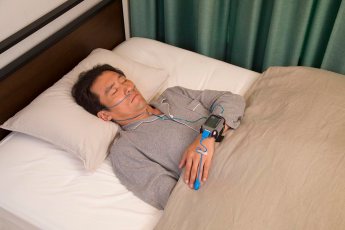
When surgery has already been scheduled, whether sleep apnea should be tested for or treated beforehand depends on the urgency of the operation, the severity of the condition, and the anesthetic plan. The ASA guideline also says that starting CPAP may be considered in severe cases, and that the surgeon and anesthesiologist should decide together.
- Whether the surgery date needs to change is decided by the surgeon and anesthesiologist at the hospital performing the operation. Don’t postpone surgery on your own.
- If there is time before surgery and you’re worried about snoring or apnea, having a sleep test (simplified test or PSG) and sharing the results with the hospital can help.
- If you’ve already been diagnosed, use CPAP regularly and tell your surgeon and anesthesiologist how well you’re using it.
For the types of sleep test, see Simplified Sleep Test vs. PSG.
What Ueno Snoring Clinic Can Do for You
Based in Ueno, Tokyo, Ueno Snoring Clinic focuses on diagnosing and treating snoring and obstructive sleep apnea. Our Director has provided more than 20,000 general anesthetics as an anesthesiologist. We use simplified testing and PSG (both can be done at home) to check whether you have sleep apnea and how severe it is, and provide insurance-covered CPAP treatment and management for those who need it.
If you have surgery coming up and are worried about snoring, or were told you might have sleep apnea but haven’t been tested, please talk to us. Decisions about the timing of surgery and the anesthetic method are made by the surgeon and anesthesiologist at the hospital performing the operation.
Summary: Always Mention Snoring or Sleep Apnea Before General Anesthesia
During general anesthesia, the anesthesiologist secures the airway and manages breathing, so sleep-type apnea does not normally continue during the operation. But induction, extubation, and the recovery period after surgery need extra care in people with sleep apnea. After surgery in particular, painkillers and changes in sleep can make apnea worse, with one study reporting an increase around the third night.
If you have been diagnosed with sleep apnea, or told that you snore or stop breathing, always tell your anesthesiologist and surgeon before general anesthesia. If you use CPAP, check whether you can bring it. Telling your team in advance is one of the simplest ways to make anesthesia and recovery safer.
Check Your Sleep Before Surgery
If you have surgery coming up and have been told you snore or stop breathing, please talk to us. We offer at-home sleep apnea testing and CPAP management, both insurance-covered when the criteria are met. Appointments only; same-day visits are often possible.
Frequently Asked Questions
Q. Is it OK to have snoring treatment at a self-pay-only clinic or a cosmetic clinic?
A. Some clinics that offer only self-pay care, and some cosmetic clinics, may not perform sleep testing. Before starting treatment, check whether the clinic performs a sleep test, or has a system for referring you to a medical institution where you can receive the necessary tests. If sleep apnea is hidden behind your snoring and treatment begins without testing, it may be missed. We recommend first checking your condition at a medical institution that offers sleep testing (simplified testing or PSG). For details, see
Simplified Sleep Test vs. PSG.
Q. Will my sleep apnea cause problems during general anesthesia?
A. Not usually during the operation itself, because the anesthesiologist secures your airway and ventilates you as needed. Induction (mask ventilation and intubation) and extubation are the moments that need extra care in people with sleep apnea.
Q. Should I mention it even if I only snore?
A. Yes. Snoring can be a sign of sleep apnea, and many people are undiagnosed. It helps your anesthesiologist plan monitoring after surgery and choose pain relief.
Q. Why does apnea get worse after surgery?
A. Opioid painkillers, sleeping pills, lingering anesthetics, changes in sleep, and lying on your back all overlap. One study found apneas and hypopneas increased around the third night after surgery, although this varies from person to person.
Q. I use CPAP. Should I bring it to hospital for surgery?
A. In most cases, yes, it’s worth arranging. The ASA guideline recommends continuing CPAP after surgery and notes that using your own device can help. Hospital practice varies, so confirm in advance whether you can bring it and use it in recovery and on the ward.
Q. Do I need a sleep test before surgery?
A. It depends on the operation, its urgency, and your symptoms. If you snore, have been told you stop breathing, or are very sleepy during the day, talk to the surgeon and anesthesiologist at your hospital. If there is time, getting tested and sharing the results can help.
Q. Will sleep apnea cause my surgery to be refused or postponed?
A. Having sleep apnea doesn’t mean you can’t have surgery. In most cases, it is managed by adjusting the anesthetic and post-operative care. In severe, untreated cases, starting treatment before surgery may be considered. The hospital performing the surgery makes that decision.
Q. Do I need to mention it for day surgery?
A. Yes. With day surgery, the effects of painkillers or sleeping pills may appear on the first night at home. If you have sleep apnea, check beforehand whether day surgery is suitable and what precautions to take after you get home.
Q. Is there anything to watch out for with painkillers and sleeping pills after surgery?
A. In people with sleep apnea, strong painkillers (opioids) and sleeping pills may weaken breathing. Your doctors will adjust the type and dose once they know about your sleep apnea; take medicines exactly as prescribed, and don’t add alcohol or over-the-counter sleep aids on your own.
Q. What should family members watch for after surgery?
A. Keep an eye on the person’s breathing during sleep for the first few nights. If you notice loud snoring with pauses in breathing, difficulty waking them, or bluish lips or poor color, contact medical staff immediately.
*This article is a general explanation, written for a broad audience and based on the sources above together with our clinic’s own clinical experience. It is not a substitute for medical advice. Costs shown are rough guides and vary with the care provided and your insurance. If you are concerned about snoring or sleep apnea, please consult a medical institution for a proper evaluation.