Ueno Snoring Clinic offers testing for snoring and sleep apnea (an at-home simplified test and insurance-covered PSG) and insurance-covered CPAP treatment and follow-up. If your CPAP mask is causing skin problems, please talk to us.
Details of the tests and treatments offered at Ueno Snoring Clinic can be found here
Important: Snoring and Sleep Apnea Treatment Requires a Sleep Test
Some clinics that offer only self-pay care, and some cosmetic clinics, may not perform sleep testing. Before starting treatment, check whether the clinic performs a sleep test, or has a system for referring you to a medical institution where you can receive the necessary tests.
If sleep apnea is hidden behind your snoring and treatment begins without testing, it may be missed.
▶ Learn more about snoring and sleep apnea testing
You’ll Want to Know This! A Complete Comparison of 5 CPAP Types — What Doctors Really Look For
Our doctor compares five different CPAP machines side by side and explains what actually matters when choosing one.
Watch the video
A Complete Comparison of CPAP Masks
We tried on and reviewed five different types of CPAP masks. 90% of CPAP comfort comes down to the mask.
Watch the video
Do you have to use CPAP forever? A specialist explains how to use CPAP
A detailed explanation of how to use CPAP, with a real demonstration of what it feels like to wear the device.
Watch the video
Ueno Snoring Clinic was featured on Fuji TV’s “Live News It!” and on FNN Prime Online
Watch our clinic’s examination and explanation of sleep disorders, snoring, and sleep apnea.
Watch the video
Ueno Snoring Clinic was featured in an article on Nippon TV’s “news every.”
Please take a look as a starting point for thinking about getting evaluated for snoring, sleep apnea, or other sleep disorders.
Read the article
Reviewed by Our Director
Kazuyuki Sugaya
Director, Ueno Snoring Clinic / Anesthesiologist
Our director, with over 20,000 general anesthesia cases, focuses primarily on the diagnosis and treatment of snoring and sleep apnea, offering care tailored to each patient. [Insurance-Covered] Ueno Snoring Clinic
In this article, our Director, Kazuyuki Sugaya, explains the causes of skin irritation, redness, and marks from CPAP masks, and when to adjust the mask or seek care, based on published research. Medically reviewed November 2026.
🩺Comprehensive Snoring Treatment at Ueno Snoring Clinic
At Ueno Snoring Clinic, we review your CPAP data (leak, pressure, hours of use) and suggest changes to the mask or settings to match your symptoms. If skin symptoms are severe, a dermatologist’s examination may also be needed.
Insurance-Covered: Thorough Testing and Ongoing Treatment
- Simplified testing: Home screening for sleep apnea
- PSG testing: A detailed sleep study including brain waves, done at home
- CPAP treatment: The standard treatment for apnea that meets insurance criteria
Self-Pay: Address the Root Cause, Short-Term Focus
- Snoring laser treatment: For people whose testing confirms simple snoring
- Medically supervised weight loss: An option when weight gain is a contributing factor
*Whether a treatment is appropriate, and what it can achieve, differs from one person to the next, so an examination comes first.
Our Director’s book, “Curing Snoring with the Latest Treatments” (an Amazon Japan bestseller — #1 in General Medicine, #1 in Clinical Internal Medicine, #2 in Family Health & Wellness), includes practical advice on living with CPAP.
New Book by Our Director
“Curing Snoring with the Latest Treatments”
A guide to the latest snoring treatments, written by an anesthesiologist who has overseen the sleep of more than 10,000 patients.
View on Amazon
Quick Answer
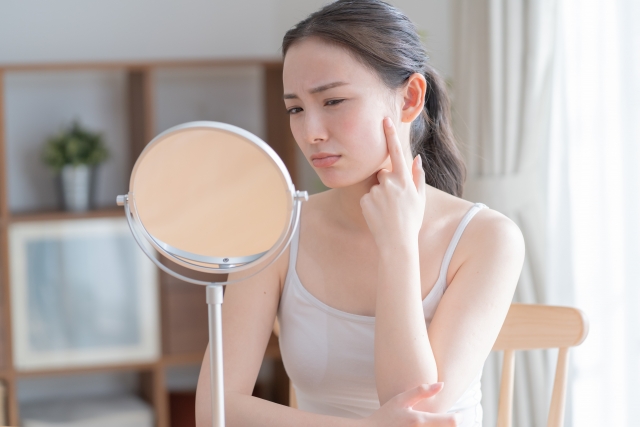
Skin problems from CPAP usually come from a combination of pressure, mask movement, a mask that does not fit your face, over-tightened headgear, dirt and skin oil, dryness, and reactions to materials. Morning redness or mask lines that fade within about 30 minutes can often be watched, but that is only a rough guide. Marks that last, broken or weeping skin, or strong itching or pain call for a mask review and, if needed, a skin examination. A Japanese study of patients on mask ventilation (Fujimoto et al., Kanazawa University) found pressure injuries most often on the bridge of the nose, and more often when the mask size did not fit. Tightening the straps to stop leaks can make things worse. Do not stop CPAP or change the pressure on your own; ask the clinic that prescribed it about changing the mask type or size.
📋 What This Article Covers
- Are skin irritation, redness, and marks from CPAP common?
- What causes skin problems from a CPAP mask?
- What does research show?
- Which signs can you watch, and which need attention?
- What can you do yourself, and what should you avoid?
- When should you seek help, and from whom?
- Does CPAP affect your looks?
- What to consider before giving up on CPAP
Are Skin Irritation, Redness, and Marks From CPAP Common?
Short answer: Yes, they are not unusual. In a 1994 UK survey of 66 home mask-ventilation users, 17% had broken skin or open sores, although reliable figures for modern CPAP alone are lacking.
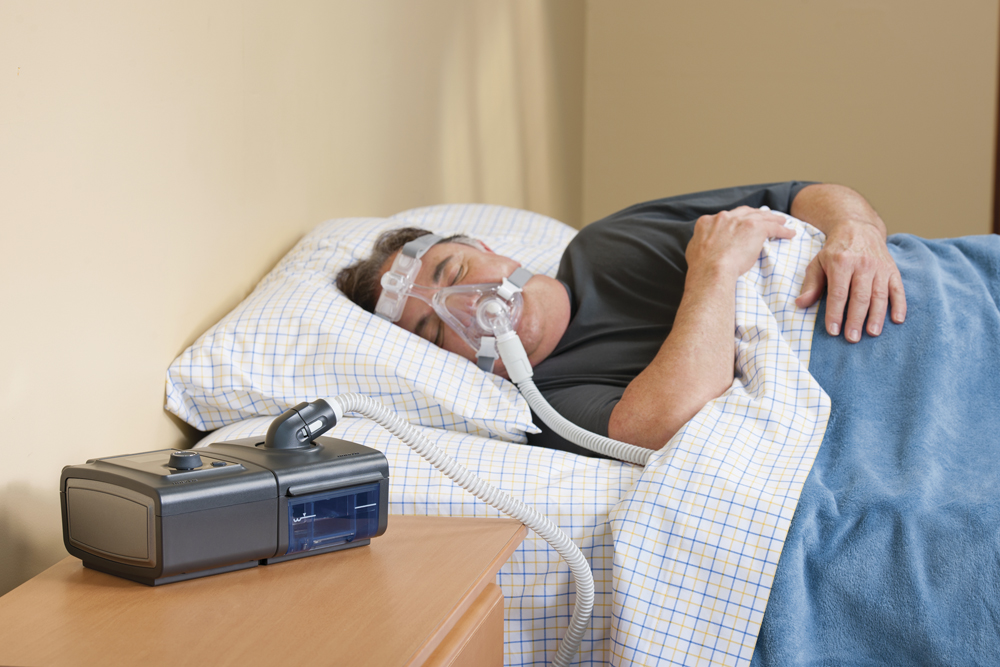
Skin problems from CPAP masks are not rare. In a postal questionnaire of 66 patients using nasal masks at home (Jones et al., Thorax, 1994), 11 (17%) had broken skin or open sores, and 35 (53%) said mask discomfort alone had disrupted their treatment. That survey combined home ventilation (NIPPV) and nasal CPAP users and is decades old, so it may not reflect today’s equipment. We did not find a reliable figure for how often skin problems occur with CPAP alone.
| Symptom |
Typical complaint |
Common background (examples) |
| Redness |
Redness left on the bridge of the nose, cheeks, or chin in the morning |
Mask pressure, movement, friction on the skin |
| Mask lines |
The outline of the mask takes a long time to fade |
Over-tightening, poor fit, reduced skin elasticity |
| Itching or rash |
Itchy skin or red bumps where the mask sits |
Build-up of dirt and skin oil, reaction to materials, dryness |
| Spots and breakouts |
Spots where the mask touches the face |
Skin oil and sweat, a dirty mask, a damp environment |
| Dryness and flaking |
Flaky or tight skin on the cheeks or around the nose |
Air leaks, dry air, over-washing |
| Broken skin or sores |
Skin breaks down, weeps, or hurts |
Ongoing strong pressure or rubbing |
These causes are examples only, and several often occur together.
What Causes Skin Problems From a CPAP Mask?
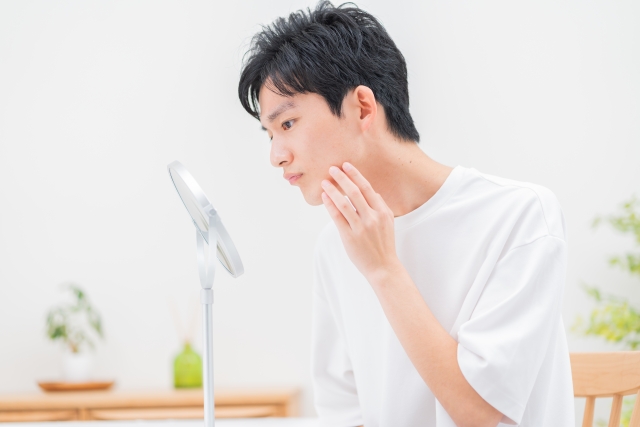
Short answer: Pressure concentrated on bony areas such as the nasal bridge, friction when the mask moves, over-tight straps, a poorly fitting mask, dirt and oil, dry air from leaks, and reactions to materials or cleaning products.
| Cause |
Why it harms the skin |
What to review |
| Pressure and movement (friction) |
Pressure concentrates over bony areas such as the bridge of the nose; long-lasting pressure damages the skin, and a moving mask adds friction (shear) |
How the mask sits; whether it shifts when you turn over |
| Over-tightening |
Pulling the headgear tight to stop air leaks increases pressure |
Tighten only enough to stop leaks; if leaks persist, review the mask itself |
| Wrong size or shape |
A mask that does not fit your face is more likely to leak or press; weight or facial changes can alter fit |
Re-fitting (size and type) |
| Dirt and skin oil |
Oil and dirt building up on the cushion can lead to redness or spots |
Daily cleaning |
| Dryness and leaks |
Leaking air blows on the skin and dries it; humidification may not suit you |
Humidifier settings; check leak data |
| Material reactions |
The mask material or leftover cleaning product can cause redness or itching |
Change cleaning products; try a mask made of a different material |
| Beard or facial hair |
A beard makes it harder for the mask to seal, so it leaks more |
Trim or groom facial hair |
Pressure injury is classically explained as occurring when pressure on the skin stays above capillary pressure (often quoted as about 32 mmHg) long enough to reduce blood flow. For mask devices, the usual advice is to tighten the headgear only enough to stop leaks.
What Does Research Show About CPAP Mask Skin Problems?
Short answer: Studies show the nasal bridge is the most vulnerable area and that a poorly fitting mask is linked to skin injury. Good data on home CPAP users specifically, and on prevention methods, are limited.
| Study |
Who and what |
Findings |
Points to keep in mind |
| Jones et al. (Thorax, 1994) |
Postal questionnaire of 66 people using nasal masks at home |
53% (35) had treatment disrupted by mask discomfort alone; 17% (11) had broken skin or open sores. A way to manage ulceration at the nasal bridge while continuing treatment was described |
Combined home ventilation (NIPPV) and nasal CPAP users; old equipment |
| Fujimoto et al. (Journal of the Tsuruma Health Science Society, Kanazawa University, vol. 39(2)) |
Prospective observation of 51 patients on mask ventilation (NPPV) |
Cumulative pressure-injury rate 60.8%; most often on the bridge of the nose, usually as persistent redness. Injuries were significantly more common when the mask size did not fit, and rubbing (shear) was seen alongside irregular-shaped wounds |
Mostly hospital patients in acute care, so conditions differ from home CPAP |
What these studies suggest is that the bridge of the nose is especially vulnerable, and a mask that does not fit your face is linked to a higher risk of skin injury. Tightness is not the only factor, so loosening the straps will not necessarily fix the problem either. We did not find enough data on rates among home CPAP users or on how well specific prevention methods work.
Which Signs Can You Watch, and Which Need Attention?
Short answer: Marks that fade within about 30 minutes after removing the mask can usually be watched. Marks lasting hours, darkening each day, broken skin, pain, blisters, or pus need prompt advice.
| Problem |
Usually fine to watch |
Signs that need attention |
| Morning marks and redness |
Fade within about 30 minutes of taking off the mask (a rough guide only) |
Still visible hours later, getting darker each day, or always in the same spot |
| Itching or mild rash |
Improves once mask cleaning is adjusted |
Spreading, weeping, or persistent strong itching |
| Dryness and flaking |
Improves with moisturizer or a change in humidifier settings |
Cracking, bleeding, or strong pain |
| Spots |
Watch while improving how you clean the mask and your face |
Painful, pus-filled, increasing in number, or slow to heal |
| Redness on the nasal bridge |
Watch closely, as this area takes a lot of pressure |
Deep color, broken skin, or pain: seek advice early |
Seek advice soon if you notice
Broken, raw, or weeping skin; strong pain or warmth to the touch; redness spreading day by day or blisters; marked redness or itching around the eyes (air may be leaking toward them); fever or pus.
What Can You Do Yourself, and What Should You Avoid?
Short answer: Clean the mask cushion daily, wash your face before bed, tighten straps only enough to stop leaks, review mask size and type, check leak data, and moisturize. Do not over-tighten, stop CPAP, or change the pressure yourself.
| Action |
How |
Notes |
| Wash the mask and cushion daily |
Wash gently in lukewarm water with a mild, unscented soap, rinse well, and let it dry completely |
Avoid detergents with fragrance, dyes, or moisturizers; follow the manufacturer’s instructions |
| Wash your face before putting the mask on |
Remove skin oil, hair products, and make-up before bed |
Do not overdo moisturizer, as it can make the mask slip |
| Adjust the headgear |
Tighten only enough to stop leaks; shift the position slightly to avoid pressing on the same spot |
If leaks continue even when tight, the mask itself needs reviewing |
| Review size and type |
Switch to a size and style that suit your face (nasal, nasal pillow, full face, and so on) |
Recheck the fit after weight or facial changes (see CPAP Mask Comparison Guide) |
| Mask liners |
Thin fabric covers between skin and mask can soften marks and friction |
Check whether your mask is compatible; they may not be covered by insurance |
| Check leak data |
Look at the leak readings in your CPAP usage data |
High leak can cause dryness and red eyes (see CPAP Treatment in Japan) |
| Moisturize |
Moisturize in the morning after removing the mask, or after washing |
If a product does not suit your skin, ask a dermatologist |
What not to do
Do not tighten the headgear hard to stop leaks: more pressure can make skin damage worse. Do not stop CPAP on your own because of skin problems: the effects of sleep apnea may return. Do not change the pressure setting yourself: you may no longer get the pressure you need. Do not keep using the mask over broken or raw skin: it can get worse, so seek advice early. Do not use over-the-counter creams for long periods on your own: if the cause is different, they may make things worse.
For cleaning and replacement schedules, see CPAP Mask and Hose Cleaning and Replacement.
When Should You Seek Help, and From Whom?
Short answer: Talk to the clinic that prescribed your CPAP about mask fit, size, leaks, and humidification, and see a dermatologist for rashes, sores, spots, or suspected contact dermatitis. If symptoms are severe, consult both.

If skin symptoms persist, it can help to consult both the clinic that prescribed your CPAP and a doctor who can examine your skin.
| Where to go |
What they can help with |
| The clinic that prescribed your CPAP |
Reviewing usage data (leak, pressure, hours), changing mask type, size, or strap tension, and adjusting humidification |
| A dermatologist |
Diagnosing and treating redness, rashes, sores, and spots (for example with creams), and checking for contact dermatitis |
At Ueno Snoring Clinic, we review your CPAP data and suggest changes to the mask or settings to make CPAP easier to continue. If skin symptoms are severe, we may recommend seeing a dermatologist as well.
Does CPAP Affect Your Looks?
Short answer: We found no evidence that CPAP itself ages the face. Poor sleep can make people look less healthy, so reducing mask problems while continuing treatment is likely better for both health and appearance.
Some people feel, “If CPAP ruins my skin, I would rather not use it.” But in sleep apnea, poor sleep itself may affect how your face looks. In an experiment by Axelsson and colleagues (BMJ, 2010), 65 observers rated photographs of 23 young adults taken after normal sleep and after sleep deprivation; the sleep-deprived faces were judged less healthy, less attractive, and more tired. That study did not involve people with sleep apnea.
Reducing CPAP skin problems while continuing sleep apnea treatment is likely to benefit both your health and your appearance. However, changes in appearance or skin vary from person to person and cannot be promised as a treatment effect. For more, see Mouth Breathing and Bad Breath, CPAP Nosebleeds and Dryness, and Snoring in Women.
What to Consider Before Giving Up on CPAP
Short answer: If your sleep apnea needs treatment, stopping CPAP brings the apneas back. First try a different mask type or size, adjust strap tension and cleaning, review leak and humidifier settings, and see a dermatologist.
When skin problems are uncomfortable, wanting to stop CPAP is understandable. But if your sleep apnea needs treatment, stopping CPAP means the apneas during sleep will return. Before stopping, consider:
- Changing the mask type or size (for example, one that does not rest on the nasal bridge)
- Adjusting strap tension and position
- Reviewing how you clean the mask and cushion, and which cleaning products you use
- Reviewing settings such as leak and humidification
- Having your skin examined by a dermatologist
Under Japanese insurance, CPAP usage is also part of your follow-up. If you are managing only a few nights a week, do not stop on your own; talk to your clinic early. See Can You Stop CPAP Treatment?.
What Ueno Snoring Clinic Can Do for You
Ueno Snoring Clinic, based in Ueno, Tokyo, is a sleep medicine clinic for snoring and obstructive sleep apnea. We confirm sleep apnea with a simplified test or PSG (both can be done at home) and provide insurance-covered CPAP where it is needed. Using your CPAP data, we help you adjust the mask and settings so treatment is easier to continue.
Whether your skin has become irritated since starting CPAP, or you were prescribed CPAP elsewhere and cannot use it because the mask does not fit, please feel free to contact us.
Summary: Don’t Put Up With Skin Problems; Review the Mask
Skin irritation, redness, and mask marks from CPAP result from a mix of pressure, movement, poor fit, dirt, dryness, and material reactions. Research on mask devices shows the nasal bridge is most affected and that poor mask fit is a key factor. Over-tightening to stop leaks can make things worse.
Marks that fade within about 30 minutes can usually be watched, but seek advice early if they last, the skin breaks down, or itching or pain is strong. Above all, do not stop CPAP or change the pressure on your own. If it is getting you down, do not struggle alone; talk to the clinic that prescribed it.
Don’t Put Up With CPAP Mask Problems Alone
If your mask is causing redness, marks, itching, or air leaks, please talk to us. We review your data and help you find a mask and settings that work. Appointments only; same-day visits are often possible.
Frequently Asked Questions
Q. Is it OK to have snoring treatment at a self-pay-only clinic or a cosmetic clinic?
A. Some clinics that offer only self-pay care, and some cosmetic clinics, may not perform sleep testing. Before starting treatment, check whether the clinic performs a sleep test, or has a system for referring you to a medical institution where you can receive the necessary tests. If sleep apnea is hidden behind your snoring and treatment begins without testing, it may be missed. We recommend first checking your condition at a medical institution that offers sleep testing (simplified testing or PSG). For details, see
Simplified Sleep Test vs. PSG.
Q. Why does my CPAP mask cause skin irritation or redness?
A. It usually comes from a combination of pressure, mask movement, a mask that does not fit your face, over-tight headgear, dirt and skin oil, dryness from air leaks, and reactions to materials. The bridge of the nose is especially prone to pressure.
Q. How quickly should morning mask marks fade?
A. As a rough guide, marks that fade within about 30 minutes of removing the mask can usually be watched. If they last for hours, get darker each day, or the skin breaks or hurts, the mask needs reviewing and you may need an examination.
Q. My mask leaks. Should I tighten the straps more?
A. No, that is not recommended. Tighter straps increase pressure and can make skin problems worse. Persistent leaks often mean the mask size or type does not suit your face, so ask the clinic that prescribed it.
Q. How often should I wash my CPAP mask?
A. Follow the manufacturer’s instructions; generally, the cushion that touches your face should be washed gently every day. Use lukewarm water and a mild soap, rinse well, let it dry completely, and avoid scented detergents.
Q. I’ve been getting more spots since starting CPAP. Is CPAP the cause?
A. It may be related to dirt on the mask, skin oil, sweat, or a damp environment. Start by improving how you clean the mask and your face and how you moisturize; if spots become painful, fill with pus, or increase, see a dermatologist.
Q. My skin is so irritated I want to stop CPAP. Is that OK?
A. Stopping CPAP on your own is not recommended, because the effects of sleep apnea may return. Ask the clinic that prescribed it about changing the mask type, size, or strap tension so you can keep going.
Q. Will using CPAP make my face look older?
A. We found no evidence that CPAP causes facial aging. Research does suggest that poor sleep itself can make a face look less healthy and more tired.
Q. Should I see a dermatologist or my CPAP clinic?
A. Go to the clinic that prescribed your CPAP for mask fit, size, and leak problems, and to a dermatologist for redness, rashes, or sores. If symptoms are severe, consult both.
Q. Can Ueno Snoring Clinic help with CPAP mask problems?
A. Yes. We review your CPAP data and suggest changes to the mask and settings. If skin symptoms are severe, we may also recommend seeing a dermatologist.
*This article is a general explanation, written for a broad audience and based on the sources above together with our clinic’s own clinical experience. It is not a substitute for medical advice. Costs shown are rough guides and vary with the care provided and your insurance. If you are concerned about snoring or sleep apnea, please consult a medical institution for a proper evaluation.