Ueno Snoring Clinic offers an at-home simplified sleep test and insurance-covered PSG, which is also done at home, so no hospital stay is needed. We explain what your results mean and whether a repeat test is worthwhile, and we provide insurance-covered CPAP and self-pay laser treatment for snoring.
Details of the tests and treatments offered at Ueno Snoring Clinic can be found here
Important: Snoring and Sleep Apnea Treatment Requires a Sleep Test
Some clinics that offer only self-pay care, and some cosmetic clinics, may not perform sleep testing. Before starting treatment, check whether the clinic performs a sleep test, or has a system for referring you to a medical institution where you can receive the necessary tests.
If sleep apnea is hidden behind your snoring and treatment begins without testing, it may be missed.
▶ Learn more about snoring and sleep apnea testing
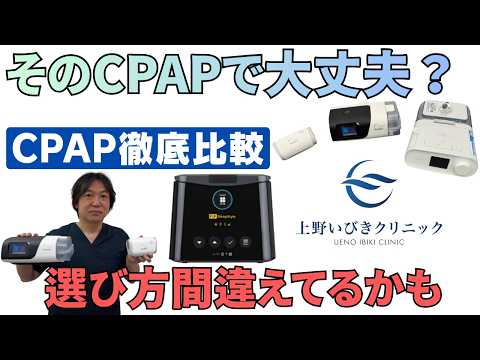
You’ll Want to Know This! A Complete Comparison of 5 CPAP Types — What Doctors Really Look For
Our doctor compares five different CPAP machines side by side and explains what actually matters when choosing one.
Watch the video
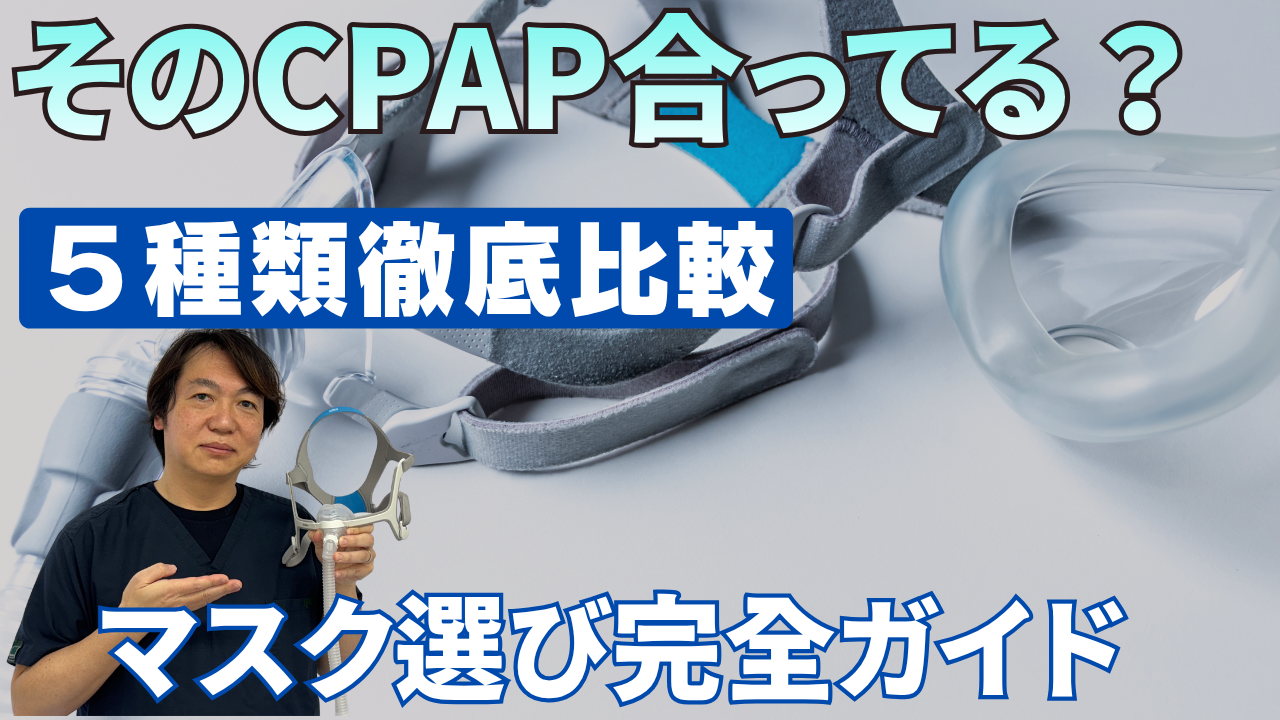
A Complete Comparison of CPAP Masks
We tried on and reviewed five different types of CPAP masks. 90% of CPAP comfort comes down to the mask.
Watch the video
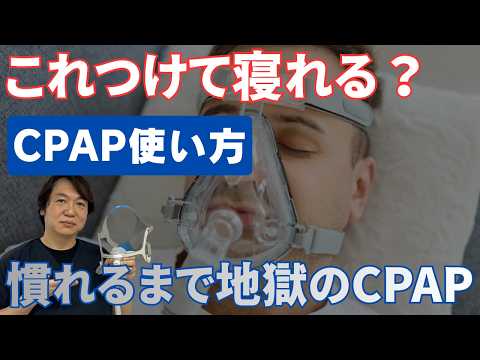
Do you have to use CPAP forever? A specialist explains how to use CPAP
A detailed explanation of how to use CPAP, with a real demonstration of what it feels like to wear the device.
Watch the video
Ueno Snoring Clinic was featured on Fuji TV’s “Live News It!” and on FNN Prime Online
Watch our clinic’s examination and explanation of sleep disorders, snoring, and sleep apnea.
Watch the video
Ueno Snoring Clinic was featured in an article on Nippon TV’s “news every.”
Please take a look as a starting point for thinking about getting evaluated for snoring, sleep apnea, or other sleep disorders.
Read the article
Reviewed by Our Director
Kazuyuki Sugaya
Director, Ueno Snoring Clinic / Anesthesiologist
Our director, with over 20,000 general anesthesia cases, focuses primarily on the diagnosis and treatment of snoring and sleep apnea, offering care tailored to each patient. [Insurance-Covered] Ueno Snoring Clinic
In this article, our Director, Kazuyuki Sugaya, draws on a systematic review and other studies to explain why AHI changes from night to night, how to interpret results that differ, and the advantages of testing at home. Medically reviewed November 2026.
🩺Comprehensive Snoring Treatment at Ueno Snoring Clinic
At Ueno Snoring Clinic, a doctor interprets your simplified test or PSG results, takes night-to-night variation into account, and recommends a plan that fits your symptoms. Whether a repeat test is needed is decided from your symptoms, results, and how close they are to the treatment thresholds.
Insurance-Covered: Thorough Testing and Ongoing Treatment
- Simplified testing: Home screening for sleep apnea
- PSG testing: A detailed sleep study including brain waves, done at home
- CPAP treatment: The standard treatment for apnea that meets insurance criteria
Self-Pay: Address the Root Cause, Short-Term Focus
- Snoring laser treatment: For people whose testing confirms simple snoring
- Medically supervised weight loss: An option when weight gain is a contributing factor
*Whether a treatment is appropriate, and what it can achieve, differs from one person to the next, so an examination comes first.
Our Director’s book, “Curing Snoring with the Latest Treatments” (an Amazon Japan bestseller — #1 in General Medicine, #1 in Clinical Internal Medicine, #2 in Family Health & Wellness), also explains how to read sleep test results.
New Book by Our Director
“Curing Snoring with the Latest Treatments”
A guide to the latest snoring treatments, written by an anesthesiologist who has overseen the sleep of more than 10,000 patients.
View on Amazon
Quick Answer
AHI (apneas and hypopneas per hour of sleep) changes from night to night. A systematic review of 24 studies with 3,250 participants (Roeder et al., Thorax, 2020) found that the average difference between night 1 and night 2 was small (about 1.7 events/hour, not statistically significant), yet about 41% of individuals changed by more than 10 events/hour, about 49% changed severity category at least once across repeated tests, and a single night missed the diagnosis in roughly 10–12%. Causes include the amount of REM sleep, time spent on your back, broken sleep, alcohol, sleeping pills, fatigue, nasal congestion, and the test setting. When two results disagree, do not rely on just one: weigh your symptoms, the conditions on each night, and how close the numbers are to treatment thresholds, and consider a repeat test or moving from a simplified test to PSG. How many nights are ideal is still unresolved. At Ueno Snoring Clinic, both the simplified test and PSG are done at home.
📋 What This Article Covers
- Does AHI change from night to night? What research shows
- Why do the first and second results differ?
- What should you do when two results disagree?
- Can sleep tests be done at home?
- Why get tested before snoring laser treatment?
Does AHI Change From Night to Night? What Research Shows
Short answer: Yes. Group averages barely move, but in a 2020 meta-analysis about 41% of individuals changed by more than 10 events/hour between nights, about half changed severity category at least once, and a single night missed roughly 1 in 10 diagnoses.
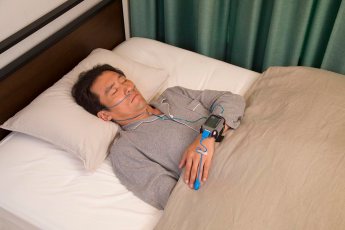
AHI (apnea–hypopnea index) is the number of apneas and hypopneas per hour of sleep. It is used to grade sleep apnea severity and, in Japan, to decide whether CPAP is covered by insurance. For how to read it, see AHI Explained: Severity Levels and CPAP.
AHI is never exactly the same every night. Even when the same person sleeps under what seem like the same conditions, the number moves up and down. This is known in sleep medicine as night-to-night variability.
A systematic review and meta-analysis of 24 studies with 3,250 participants (Roeder et al., Thorax, 2020) found:
| What was measured |
Result |
| Group average |
The average difference between night 1 and night 2 was about 1.7 events/hour, not statistically significant |
| Individual change |
About 41% of people changed by more than 10 events/hour from one night to another (13 studies) |
| Severity category |
About 49% moved between mild, moderate, and severe at least once across repeated tests (6 studies); after the first night, about 15% moved to a milder and about 18% to a more severe category |
| Missed diagnosis with one night |
About 10–12%, depending on the diagnostic threshold (AHI 5, 10, or 15 events/hour) |
In other words, even when the group average hardly changes, an individual’s result can move a lot. A study of 188 people who had two consecutive nights of PSG at home (Sforza et al., Frontiers in Physiology, 2019) also found large individual differences. In mild cases, AHI rose significantly on the second night along with more time on the back; in severe cases it fell, regardless of position. Because the changes were greatest in mild cases, the authors suggest a second night can be offered when the clinical picture is uncertain.
|
What it means |
| What is known |
Night-to-night differences are small on average, but a substantial share of individuals change by more than 10 events/hour or switch severity category. Differences in the amount of REM sleep between nights were the only factor significantly linked to the size of the change in the meta-analysis. In the home PSG study, time on the back and sleep fragmentation also contributed |
| What is not yet known |
How many nights are needed for diagnosis (the authors call it a question for future research); how much sleep position matters (only four studies reported it, so it could not be analyzed); how much alcohol and sleeping pills matter (only six studies took them into account); and how well one night predicts a person’s “usual” AHI |
The review’s authors also note limitations: the studies used different devices and scoring rules, and the results varied widely between studies.
Why Do the First and Second Results Differ?
Short answer: The main drivers are how much REM sleep you get, how long you sleep on your back, how broken your sleep is, alcohol, sedating medicines, fatigue, nasal congestion, and the test setting, including sensors that slip.
| Factor |
How it affects AHI |
| Amount of REM sleep |
In the meta-analysis, the bigger the difference in REM time between nights, the bigger the difference in AHI (the only factor found to be significant) |
| Sleeping position |
Nights with more time on the back tend to have a higher AHI. In the home PSG study, more back-sleeping on night two went with a higher AHI in mild cases |
| Broken sleep |
Nights with more awakenings or more shifts between sleep stages tend to give more variable results |
| Alcohol, sleeping pills, fatigue |
Alcohol and some medicines, such as benzodiazepines, can relax the throat muscles and disturb breathing. Do not stop a sleeping pill on your own; talk to your doctor |
| Nasal congestion, health |
On nights when the nose is blocked, mouth breathing increases and the airway may narrow |
| Test setting and equipment |
An unfamiliar setting or the first night wearing sensors can make sleep lighter, and a sensor that slips or comes off changes the numbers |
For how position affects AHI, see Positional vs. Non-Positional Snoring.
What Should You Do When Two Results Disagree?
Short answer: Do not decide from one number. Look at your symptoms, the conditions on each test night, and how close the results are to the treatment thresholds; if they still conflict, a repeat test or PSG may help.
For example, your first result might be “moderate” and your second “severe” or “mild.” What matters is not to judge from either number alone.
Three things to look at
1. Symptoms: daytime sleepiness, fatigue, snoring, or pauses in breathing noticed by family. 2. Test conditions: sleeping position, alcohol, health, and whether the sensors stayed on that night. 3. Distance from the threshold: in Japan, insurance covers CPAP at AHI 30 or more on a simplified test or AHI 15 or more on PSG, with symptoms such as daytime sleepiness required at any AHI; at AHI 15–29, PSG must also show findings such as fragmented sleep. Is your result close to these thresholds or far from them?
| Situation |
How to approach it |
| Strong symptoms, but the test was mild or normal |
Options include switching from a simplified test to PSG, or repeating the test |
| Result close to the insurance threshold |
One night can change eligibility; the doctor decides together with your symptoms and other results |
| Mild symptoms, but a high number |
Check sleeping position, alcohol, and sensor quality that night; a repeat test under better conditions may be considered |
| Both results in the same category |
You have more to go on, but the decision still takes your symptoms into account |
Do not conclude “normal after one test” or “severe after one test”
The review found that a single night may miss the diagnosis in about 10–12% of cases. If a simplified test was normal but symptoms continue, see Simplified Sleep Test vs. PSG. On the other hand, every extra test adds cost and effort, and how many tests are “enough” has not been settled. Whether to repeat a test is decided by the doctor based on your symptoms and results.
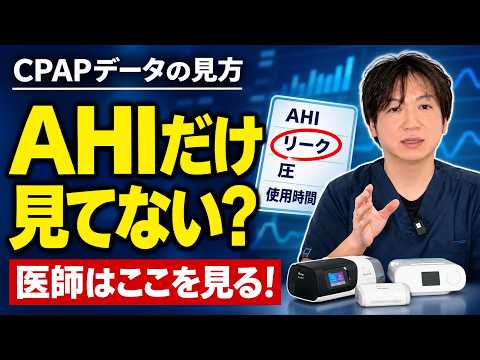
Once you start CPAP, the machine records data every night (hours of use, residual AHI, mask leak, pressure), so settings and the mask can be adjusted while watching night-to-night changes; available items vary by model. For more, see the video at the top of this page and CPAP Treatment in Japan. For the insurance criteria, see Told You Stop Breathing in Your Sleep? A Sleep Test Guide.
Can Sleep Tests Be Done at Home?
Short answer: Yes. At Ueno Snoring Clinic, both the simplified test and PSG are done at home, which records sleep closer to your usual night and makes a repeat test easier when results vary.
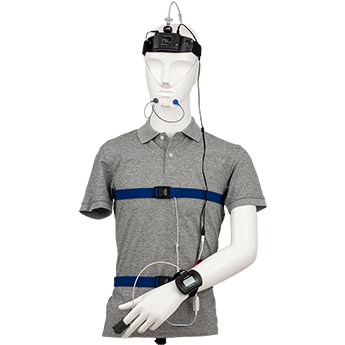
Many people assume a detailed sleep study (PSG) requires a hospital stay, but at Ueno Snoring Clinic, PSG as well as the simplified test can be done in your own home.
| Comparison |
Testing at home |
Testing in hospital |
| Time and cost |
Easy to fit around work and family |
A hospital stay can take more time and cost more |
| Sleep environment |
Your own bedroom and bedding, closer to a usual night |
An unfamiliar setting can change how you sleep |
| Repeat testing |
Easier to repeat when needed |
Another admission is needed, which adds to the burden |
| Points to note |
If a sensor comes off, the data may be incomplete |
In some facilities staff can check the equipment overnight |
Precisely because results vary from night to night, home testing that captures sleep close to your usual night and can be repeated when needed is valuable. For what to expect, see Flagged for Snoring at a Health Checkup?.
Why Get Tested Before Snoring Laser Treatment?
Short answer: Loud snorers sometimes have sleep apnea with a high AHI, and AHI varies between nights. Laser treatment is an option only after testing confirms simple snoring.

Starting laser treatment without testing risks missing sleep apnea that needs treatment
Among people who snore loudly, some have sleep apnea with a high AHI, and AHI changes from night to night. Laser treatment (self-pay) becomes an option only after testing, and a repeat test if needed, confirms simple snoring.
For more on why testing comes first and how simple snoring differs from sleep apnea, see Snoring Laser Treatment: Why a Sleep Test Comes First and Simple Snoring, CPAP, Insurance, and Laser Treatment.
What Ueno Snoring Clinic Can Do for You
Ueno Snoring Clinic is a Tokyo sleep medicine clinic in Ueno focused on snoring and obstructive sleep apnea. We offer the at-home simplified test and insurance-covered PSG, and we explain in plain terms what the numbers on your report mean, how much they can vary from night to night, and how they relate to your symptoms.
If your first and second results differed, or you were told your test was normal but you are still sleepy, please talk to us.
Summary: AHI Varies by Night, So Judge It With Symptoms and Conditions
AHI changes from night to night with sleeping position, REM sleep, alcohol, and health. Even when group averages differ little, about 4 in 10 people change by more than 10 events/hour, and a single test may miss about 1 in 10 diagnoses.
When results differ, weigh your symptoms, the test conditions, and the distance from treatment thresholds, and consider a repeat test or a different type of test if needed. The ideal number of nights is still undecided. At our clinic, both the simplified test and PSG are done at home. If you are considering laser treatment, get tested first. You are welcome to contact Ueno Snoring Clinic.
Results That Don’t Match? Let’s Read Them Together
If your first and second tests disagree, or you were told everything is normal but you are still sleepy, please contact us. Both tests are done at home. Appointments only; same-day visits are often possible.
Frequently Asked Questions
Q. Is it OK to have snoring treatment at a self-pay-only clinic or a cosmetic clinic?
A. Some clinics that offer only self-pay care, and some cosmetic clinics, may not perform sleep testing. Before starting treatment, check whether the clinic performs a sleep test, or has a system for referring you to a medical institution where you can receive the necessary tests. If sleep apnea is hidden behind your snoring and treatment begins without testing, it may be missed. We recommend first checking your condition at a medical institution that offers sleep testing (simplified testing or PSG). For details, see
Simplified Sleep Test vs. PSG.
Q. My AHI is different from last time. Does that mean the test was wrong?
A. Not necessarily. Research shows AHI varies from night to night with sleeping position, REM sleep, alcohol, and health. Test conditions, such as a sensor slipping, can also play a part.
Q. My severity changed between the first and second test. Which result should I believe?
A. Neither on its own. The doctor weighs your symptoms, the conditions on each night, and how close the results are to treatment thresholds, and may suggest a repeat test or moving from a simplified test to PSG.
Q. How many sleep tests do I need for a reliable answer?
A. That has not been settled by research. One night may miss about 10–12% of diagnoses, but more tests also mean more cost and effort, so a repeat test is usually considered when symptoms or numbers leave doubt.
Q. My simplified test was normal, but I still have symptoms. What should I do?
A. A simplified test depends heavily on how you slept that night. If symptoms continue, ask your doctor whether PSG or a repeat test is needed.
Q. Do I need to stay in hospital for PSG?
A. Not at our clinic. PSG is done in your own home, so there is no hospital stay and you sleep in your usual bedroom.
Q. Is there anything I should do before a sleep test?
A. Sleep as you normally would. Follow your doctor’s instructions about alcohol and sleeping pills before the test, and do not stop any medication on your own.
Q. A clinic recommended laser treatment without a sleep test. What should I do?
A. Get tested first. Some loud snorers have sleep apnea with a high AHI, so laser treatment should be considered only after testing confirms simple snoring.
Q. Does Japanese health insurance cover sleep tests and CPAP?
A. Yes, when criteria are met. Sleep tests are covered when a doctor considers them necessary, and CPAP is covered when your AHI and symptoms meet the national criteria, which are revised from time to time, so we will confirm them at your visit.
*This article is a general explanation, written for a broad audience and based on the sources above together with our clinic’s own clinical experience. It is not a substitute for medical advice. Costs shown are rough guides and vary with the care provided and your insurance. If you are concerned about snoring or sleep apnea, please consult a medical institution for a proper evaluation.